Disclosure: As an Amazon Associate, airfryerkitchensupply.com earns from qualifying purchases. Links on this page are affiliate links; they cost you nothing extra. Prices and availability change often, so check the current Amazon listing before you buy.
Dinnerware set pros and cons deserve a fair hearing rather than a sales pitch, because a coordinated set is both the best and the most limiting way to equip a table. This page weighs the dinnerware set pros and cons the way owners discover them — the daily pleasures first, the honest frustrations second, and then what the balance means for different households. If you finish undecided, the fault will not be a lack of candour on either side.
Dinnerware Set Pros and Cons: Quick Verdict and Key Takeaways
Buy a set if you value a calm table, one decision instead of forty, and pieces engineered to stack and store together. Think twice if your household breaks things at a heroic rate, your taste changes with the seasons, or your cupboard is so small that a single material’s stacking profile becomes a daily fight. Suits: settled households, hosts, first kitchens being equipped properly. Does not suit: collectors who love mixing, households mid-renovation, and anyone who has not measured the cabinets yet.
- Material decides more than pattern: laminated glass for lightness and chip resistance, stoneware for heat and presence, porcelain for refinement.
- Fit comes before beauty — check cabinet depth, shelf height, dishwasher clearance and microwave space for the largest piece.
- Open-stock availability and pattern longevity decide whether a set lasts five years or twenty.
- Retire chipped or cracked pieces from food use, keep vintage and brightly hand-painted ware out of daily acidic service, and never put a cold stoneware plate straight into a hot oven.
- Buy for the meals you cook every week, not the banquet you imagine once a year.
In this guide
The Pros
A Table That Always Looks Intentional
A matching set makes an ordinary Tuesday supper look considered, because coordination does visually what garnish does for food. Guests read a unified table as care, even when the meal is simple, and the cook gets that effect for free every single night. Mixed collections can achieve charm, but they achieve it by accident or by talent; a set achieves it by default, which is a genuine quality-of-life feature in a busy house.
One Decision Instead of Forty
Choosing pieces individually means forty small judgements about size, shape, weight and finish, each capable of being wrong in a different way. A set collapses that into a handful of judgements — material, shape family, pattern, count — made once, with the pieces guaranteed to agree with each other. For anyone equipping a kitchen under time pressure, that compression of effort is worth real money, and it is why sets dominate first kitchens and wedding lists alike.
Pieces Designed to Live Together
Sets stack evenly, nest predictably and present the dishwasher with a uniform load, because they were designed as a system. That sounds minor until you compare it with a mixed cupboard where every stack is a negotiation and every wash is a jigsaw. Over years, system behaviour also means even wear: the pieces age together, so the table never develops the shabby-and-smart split that mixed collections drift toward.
Better Value Per Piece
Bundled sets almost always cost less per piece than the same items bought individually, and the saving grows with the count. That value is what lets a mid-tier budget reach a better material than piece-by-piece buying would allow. The honest caveat — that you may pay for pieces you rarely use — belongs in the cons, but for households that use the standard four pieces daily, the arithmetic of the set is firmly favourable.
A Replacement System, Not a Lottery
When the range is open-stock and long-running, a set comes with a future: broken pieces can be reordered, counts can grow, and the table can be restored after accidents. That system quality is invisible at purchase and priceless at year three. It also disciplines the purchase toward established makers, which quietly filters out much of the category’s junk before you spend anything.
Easier Care, Because the Rules Are Uniform
One material means one set of care rules for the whole cupboard — one answer for the dishwasher, the microwave and the oven. Mixed collections demand piece-by-piece memory, which in practice means the rules get ignored and the most delicate piece pays. Uniformity is a safety feature as much as a convenience, especially in households where several people wash up.
The Cons
One Material, One Set of Weaknesses
A set marries you to a material’s flaws: stoneware’s weight and thermal caution, glass’s lightness of feel, porcelain’s care needs, earthenware’s fragility. A mixed collection can hedge — glass for the week, porcelain for occasions — while a single set must serve every mood with one temperament. Households with sharply split needs, daily chaos plus formal hosting, feel this limit most and often end up owning a second set anyway.
You Pay for Pieces You May Never Use
Boxed sets assume a standard table, and not every household eats that way. The mugs may duplicate a beloved collection, the salad plates may sit untouched by a household that serves salad in bowls, and the cupboard pays rent on all of it. The waste is rarely huge, but it is real, and it is the strongest argument for open-stock buying by households with settled, unusual habits.
Breakage Feels Worse, and Matches Can Vanish
A broken plate from a set is not just a broken plate; it is a gap in a pattern, and if the pattern has been discontinued the gap is permanent. Fashion-led sets are the riskiest, because their designs rotate fastest. The emotional tax is real too — owners report treating set pieces more anxiously than odd plates, which slightly dims the pleasure the set was bought to provide.
Pattern Lock-In Over a Long Life
Dinnerware outlasts most tastes. A bold pattern chosen in one decorating era must be lived with through the next two, at every meal, and regret has no cheap exit because replacing a whole set is a considered purchase. Plain sets dodge this by being boring safely; strongly characterised sets gamble that your future self agrees with your present one, and the gamble is placed daily for years.
Weight and Storage Are All-or-Nothing
A heavy set is heavy everywhere: every stack, every shelf, every dishwasher load. A wide-plated set is wide in every cabinet. Mixed buying lets a household tune piece by piece, while a set forces one profile on the whole kitchen. In small or awkward kitchens this is the con that bites hardest, and it is entirely predictable with a tape measure — which does not stop it being the most reported disappointment.
Uniformity Can Feel Impersonal
Some tables want character: the inherited plate, the market find, the mug from a trip. A set deliberately irons that out, and for collectors and sentimental mixers the result can feel like a showroom rather than a home. This is a matter of temperament rather than quality, but temperament is a legitimate reason to buy differently, and no review should argue a household out of its own pleasures.
What the Trade-Offs Mean for You
The cheapest set is the one you buy once, and the most expensive is the one you replace three times. Premium tiers buy glaze quality, consistency between pieces, colour depth and the confidence of a maker who keeps patterns available. Entry tiers buy freedom: the freedom not to flinch at a breakage, which for young households and busy rentals is a real feature, not a compromise. Spending on the pieces you use daily and saving on the rarely used extras is the allocation almost every experienced buyer ends up recommending.
Pattern is the most visible choice and the one most likely to be regretted, which argues for restraint on the pieces you use daily. Strongly decorated rims frame food beautifully but can clash with colourful cooking and limit how the pieces mix with other sets. Reactive and matte glazes add texture and hide minor marks well, though matte surfaces can show pale trails where cutlery crosses them. A classic compromise is plain pieces for daily use and pattern in the serving layer, where it is seen for an hour rather than lived with for years.
With children at the table, dinnerware stops being decor and becomes equipment. Rim chips are the predictable failure, which is why chip-resistant glass-based sets and thick stoneware dominate real family kitchens. Low, wide bowls contain enthusiastic eating better than plates for younger children, and mugs with two-handed-friendly handles reduce the drop rate. Melamine has a place at the toddler table and outdoors, but keep it out of the microwave and retire it when the surface crazes or cracks.
Context: Sets Against the Alternatives
Against open-stock buying, the set wins on value, speed and coordination, and loses on precision — the open-stock buyer owns nothing unused. Against an inherited mixed collection, the set wins on storage, stacking and hygiene certainty, and loses on cost and character. Against running two specialised sets, one for daily use and one for occasions, the single set wins on cupboard space and simplicity, and loses whenever one household genuinely lives both lives. The alternatives each have their own champions in this cluster: the flatware set pros and cons runs the same honest ledger for cutlery, and the live guide to the best serving bowl sets shows the serving layer that every option still needs.
How to Buy Smart
Buy the con you can live with. If weight is your fear, start with Corelle Vitrelle. If pattern regret is your fear, choose Fiesta colour you can reorder or a plain stoneware from Stone Lain. If breakage anxiety is your fear, Gibson Home’s entry tier turns losses into shrugs. In every case, check the pattern’s time on the market, measure the kitchen, and read the single-set evidence in our dinnerware set review before committing.

Corelle Vitrelle
Corelle Vitrelle is the lightweight benchmark in this category, made from a laminated glass material that feels almost impossibly thin in the hand compared with stoneware, yet shrugs off the daily knocks that chip heavier plates. The pieces stack into a remarkably shallow pile, which makes them the natural answer for small cabinets, caravans, dorm rooms and any kitchen where shelf height is the real constraint. The surface is smooth and non-porous, so tomato sauces and turmeric-heavy dishes rinse away without staining, and the plain white and lightly patterned designs sit comfortably under almost any table styling. The trade-offs are feel and warmth: the plates carry little heft, they can feel less ceremonial at a formal table, and the glass, while tough, deserves the same thermal common sense as any glass in a hot oven context. For busy family tables, first flats and anyone who unloads the dishwasher half asleep, this is the low-friction default that keeps working year after year. On value, treat this as a entry-to-mid tier choice and check price on Amazon against the current listing before you buy, since availability of individual patterns and colours changes often. Best for: households whose habits match the strengths described above. Not suited for: buyers whose priorities run directly against its trade-offs, however attractive the photographs look.
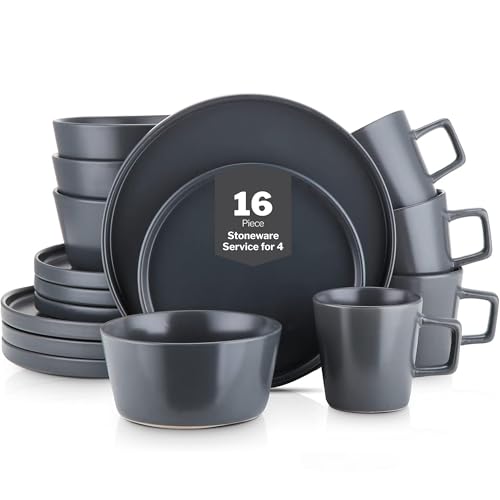
Stone Lain Stoneware
Stone Lain builds its dinnerware around modern stoneware shapes: coupe plates with gently raised edges, deep bowls that suit pasta and grain dishes, and mugs with a satisfying, grounded weight. The glazes lean contemporary, with matte and reactive finishes that photograph beautifully and make simple food look deliberate. Stoneware holds heat well, so a plated dinner stays warm through a long conversation, and the body feels substantial without tipping into restaurant-heavy. The honest limitations are the usual stoneware ones: pieces are heavier in a full stack, matte glazes can show pale metal marks from cutlery over time, and a cold plate should never go straight into a hot oven because thermal shock can crack it. Treat it as the design-led everyday choice for cooks who plate carefully, host often and are willing to stack with a little attention rather than tossing pieces together. On value, treat this as a mid tier choice and check price on Amazon against the current listing before you buy, since availability of individual patterns and colours changes often. Best for: households whose habits match the strengths described above. Not suited for: buyers whose priorities run directly against its trade-offs, however attractive the photographs look.
Fiesta
Fiesta is the colour-first American classic: vitrified ceramic in a spectrum of saturated, mix-and-match colours, with a distinctive ringed design that has barely changed because it never needed to. The pieces are thick, reassuringly heavy and made for households that want the table itself to be the decoration — buy one colour for order, or several and let every place setting differ. Open-stock availability is a genuine long-term advantage, because a broken plate can usually be replaced in the same colour family rather than retiring the whole set. The limitations are weight in the cupboard, a bolder look that will not suit a minimalist table, and the fact that the very saturation that makes it joyful also dates a single-colour choice if your taste changes. For entertainers, colour lovers and anyone buying a set they intend to keep and add to for decades, Fiesta is the personality pick with real staying power. On value, treat this as a mid-to-premium tier choice and check price on Amazon against the current listing before you buy, since availability of individual patterns and colours changes often. Best for: households whose habits match the strengths described above. Not suited for: buyers whose priorities run directly against its trade-offs, however attractive the photographs look.
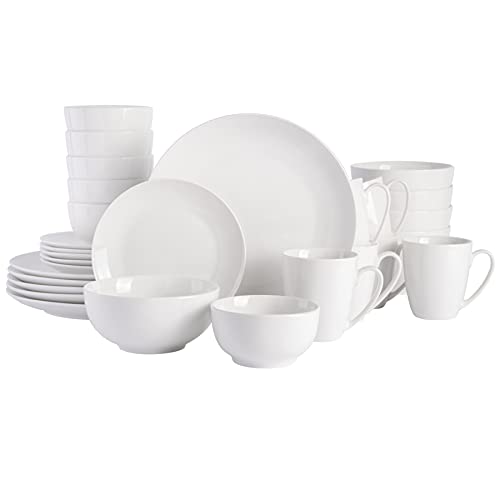
Gibson Home
Gibson Home is the wide-catalogue, value-first name in dinnerware, with stoneware and porcelain sets in everything from plain white to bold reactive glazes and seasonal patterns. The appeal is straightforward: a coordinated table for a first apartment, a rental, a holiday home or a growing family, at an entry tier that does not make a chipped plate feel like a financial event. Shapes tend toward the generous, with roomy dinner plates and bowls that suit hearty, informal serving. The trade-offs sit in consistency and longevity: glazes and weights can vary more between production runs than the premium makers, patterns rotate faster so exact replacements may be harder to find years later, and thinner pieces deserve gentler stacking. Judged on what it promises — an attractive, complete, affordable table without preciousness — it delivers, and it is often the sensible first set while you learn what your household actually uses. On value, treat this as a entry tier choice and check price on Amazon against the current listing before you buy, since availability of individual patterns and colours changes often. Best for: households whose habits match the strengths described above. Not suited for: buyers whose priorities run directly against its trade-offs, however attractive the photographs look.
Safety, Damage and When to Retire a Piece
Every household should run one simple rule: a chipped or cracked piece leaves food service. Cracks harbour bacteria in places a sponge and a dishwasher jet cannot reliably reach, and a chipped rim can cut a lip, a tongue or the hand that washes it. This is not preciousness — it is the same reasoning that retires a cracked cutting board. Retired pieces can hold keys, catch drips under a plant or organise a drawer, so retiring a piece from food does not have to mean throwing away something you love.
On glazes, keep the concern in proportion and pointed at the right category. Vintage pieces, older imports and brightly hand-painted ware are where lead and cadmium caution belongs, because their glazes predate or sit outside modern food-safety certification. Modern certified dinnerware from reputable makers is the safe default for daily food, and there is no reason to feel anxious about a current set from an established brand. If you inherit a beautiful older set, enjoy it for decoration or for dry, occasional serving, and let a modern set carry the daily work with acidic foods like tomatoes and citrus.
Thermal shock is the third rule, and it is pure physics rather than chemistry. Stoneware and glass can crack when a cold plate goes straight into a hot oven, or when a hot dish is set on a cold, wet counter. Warm pieces gradually, let hot pieces rest on a dry trivet, and the risk largely disappears. Finally, melamine: it is a useful, light material for children and outdoor eating, but it is not microwave-safe, so food should be reheated in a ceramic or glass vessel and served onto the melamine afterwards. In the dishwasher, load pieces so they cannot knock together — pieces that touch in the rack chip each other as the water moves them, which is the most preventable damage of all.
Setup and Care That Reduce the Cons
Most cons shrink under decent habits. Separators between plates prevent the stacking wear that makes sets look tired. Spaced dishwasher loading prevents the chips that start the mismatch spiral. Gradual temperature changes prevent the cracks blamed on stoneware. A spare setting bought early prevents the discontinued-pattern heartbreak. And the retirement rule — chipped or cracked pieces leave food service at once, because cracks harbour bacteria and edges cut — keeps the set safe as well as smart. The complete care routine is in how to clean a dinnerware set, and the value question behind the whole purchase is settled in is a dinnerware set worth it.
Bottom Line
The pros of a dinnerware set are structural — coordination, system storage, value, replaceability — and the cons are mostly about fit: fit with your kitchen, your breakage rate and your future taste. Structural advantages age well and fit problems are predictable before purchase, which is why the balance favours the set for most households, bought with a tape measure and a preference for long-running patterns. Buy plain if you fear regret, buy colour if you fear boredom, and buy replaceable above all.
More Detail Worth Knowing Before You Decide
Inherited and secondhand pieces can be wonderful, provided they enter the kitchen with their eyes open. Inspect every piece against the light for hairline cracks, check rims with a fingertip for chips, and listen for the clear ring of a sound plate versus the dull note of a damaged one. Sound, modern secondhand sets from known makers are a genuinely economical and sustainable way to build a table. A mixed table built from sound pieces in a shared colour family looks intentional rather than accidental.
Hosting exposes a dinnerware set in ways daily use never does, because courses multiply pieces and guests notice the table as a whole. Serving bowls and platters are the gap in most boxed sets, so hosts should check what the set leaves out and plan the serving layer separately. A second, simpler set for large gatherings is often smarter than stretching a good set with mismatched survivors from an old one. If you host monthly, buy for the party and let daily use follow; if you host twice a year, buy for the week and borrow or improvise for the party.
The cheapest set is the one you buy once, and the most expensive is the one you replace three times. Entry tiers buy freedom: the freedom not to flinch at a breakage, which for young households and busy rentals is a real feature, not a compromise. Premium tiers buy glaze quality, consistency between pieces, colour depth and the confidence of a maker who keeps patterns available. Spending on the pieces you use daily and saving on the rarely used extras is the allocation almost every experienced buyer ends up recommending.
Pattern is the most visible choice and the one most likely to be regretted, which argues for restraint on the pieces you use daily. Plain white is not a failure of imagination: it makes food look better, mixes with everything you already own and never fights the table linen. Reactive and matte glazes add texture and hide minor marks well, though matte surfaces can show pale trails where cutlery crosses them. A classic compromise is plain pieces for daily use and pattern in the serving layer, where it is seen for an hour rather than lived with for years.
Every long-lived set is really a system: the original purchase plus the replacements that quietly keep it whole. Fast-rotating fashion patterns are the opposite bargain — beautiful now, unmatchable later, and effectively disposable at the first serious loss. Open-stock ranges, where plates and bowls are sold individually for years, turn a breakage into a small errand instead of the start of a mismatched decline. A set that can be repaired by reordering will always outlast a slightly prettier set that cannot.
Care habits decide the lifespan of a set more than the purchase price does. Metal marks — the grey trails cutlery leaves on light glazes — are usually deposits from the cutlery itself and lift with a gentle, non-abrasive cleaner rather than scrubbing. Hard water leaves a mineral film that dulls glazes over months; a periodic rinse with a mild acidic solution, where the maker allows it, restores the shine. None of this is precious or time-consuming; it is thirty seconds of attention at the sink, repaid in years of service.
The safety rules for dinnerware are simple, calm and worth stating plainly, because they are about habits rather than fear. Vintage, imported and brightly hand-painted pieces are the category to treat with caution for everyday food use, since older and less-regulated glazes are where lead and cadmium concerns belong; modern certified pieces from reputable makers are the safe default. Melamine is not microwave-safe, so it belongs at the table and the picnic, never in the microwave, however convenient that would be. When a favourite piece retires, demote it to holding keys or plants rather than throwing it away, and it leaves the food rotation without leaving the house.
Mugs are the most personal piece in a set and the one guests judge without realising it. Thick stoneware mugs hold heat through a slow coffee, while fine porcelain feels refined and suits tea drinkers who reheat or refill often. Mugs are also the first piece to run short, because they migrate to desks, sofas and bedrooms in a way plates never do. If your household drinks a lot of hot drinks, consider extra mugs beyond the set’s count while the pattern is available.
The bowl is the piece people reach for when the plate is wrong, which makes its design worth real attention. Stacking bowls of identical profile saves remarkable space, while nesting sets of graduated sizes earn their cupboard room at serving time. Very deep, narrow bowls chill soup at the top and overheat hands at the base; a balanced, open shape serves more kinds of food. Two bowl sizes cover almost every household better than one compromise size used for everything.
Rim shape changes how food behaves on the plate more than most buyers expect. Coupe plates, with a gentle continuous curve and no flat rim, keep saucy food contained and suit the pasta, grain-bowl and curry style of modern eating. Wide flat rims frame plated food elegantly and give servers a clean grip, but they shrink the usable centre and demand wider cabinets. Match the rim to your cooking: saucy, one-plate meals want containment, while dry, composed plates can afford elegance.
With children at the table, dinnerware stops being decor and becomes equipment. Low, wide bowls contain enthusiastic eating better than plates for younger children, and mugs with two-handed-friendly handles reduce the drop rate. Rim chips are the predictable failure, which is why chip-resistant glass-based sets and thick stoneware dominate real family kitchens. Melamine has a place at the toddler table and outdoors, but keep it out of the microwave and retire it when the surface crazes or cracks.
How a set stacks decides whether your cupboard feels generous or impossible, and whether the rims survive the year. Simple felt or fabric separators between plates cost almost nothing and remove most of that grinding, especially for stoneware and decorated porcelain. In the dishwasher, pieces loaded so they touch will chip each other as the water moves them; a finger’s width of separation is the cheap insurance. Before buying, picture the stack in your shallowest cupboard, not the tallest — the shallow shelf is the one that will veto the purchase later.
Secondhand and inherited dinnerware deserve a calm, practical assessment rather than either nostalgia or alarm. Unknown older pieces, especially brightly painted imports and pre-regulation vintage ware, are best kept for decoration or dry, occasional use rather than daily acidic food. Sound, modern secondhand sets from known makers are a genuinely economical and sustainable way to build a table. Keep the pieces with real sentimental value in gentle roles, and let a modern certified set carry the daily, acidic, microwaved workload.
A set earns its keep at a dinner party, when the cooking is only half of what your guests experience. A second, simpler set for large gatherings is often smarter than stretching a good set with mismatched survivors from an old one. Serving bowls and platters are the gap in most boxed sets, so hosts should check what the set leaves out and plan the serving layer separately. The best hosting set is the one you are not precious about, because relaxed hosts use their good things instead of apologising for them.
Value in dinnerware is cost spread over years of daily use, which makes durability and replaceability worth more than a low ticket. A mid-tier set that survives a decade of daily meals costs less per use than an entry set replaced twice, even before counting the frustration. Premium tiers buy glaze quality, consistency between pieces, colour depth and the confidence of a maker who keeps patterns available. Judge value against your stage of life — a household in flux should buy replaceable, a settled household should buy lasting.
Taste changes faster than dinnerware wears out, so the pattern decision deserves a longer horizon than the purchase usually gets. Reactive and matte glazes add texture and hide minor marks well, though matte surfaces can show pale trails where cutlery crosses them. Plain white is not a failure of imagination: it makes food look better, mixes with everything you already own and never fights the table linen. Choose the pattern you can imagine under a plain Tuesday supper, not only under the holiday table.
Replacement availability is the hidden feature that decides whether a set lasts five years or twenty. Keeping one spare place setting in reserve, bought while the pattern is current, is the cheapest insurance a careful buyer can arrange. Open-stock ranges, where plates and bowls are sold individually for years, turn a breakage into a small errand instead of the start of a mismatched decline. Ask how long the pattern has been sold before you commit; longevity on the market is the best predictor of longevity in your cupboard.
Most dinnerware damage is not bad luck; it is a handful of repeatable habits, each of them fixable. Hard water leaves a mineral film that dulls glazes over months; a periodic rinse with a mild acidic solution, where the maker allows it, restores the shine. Storing plates upright in a rack, or flat with separators, prevents the slow base-ring abrasion that roughens a stack over a year. Read the maker’s care guidance for your specific material once, properly, and follow that rather than generic internet advice.
Safety with dinnerware is mostly about knowing when a piece should stop touching food. Stoneware and glass both dislike thermal shock, so a cold plate should never go straight into a hot oven, and a hot dish should rest on a dry, room-temperature surface rather than a cold or wet one. Melamine is not microwave-safe, so it belongs at the table and the picnic, never in the microwave, however convenient that would be. None of this requires anxiety — it requires a ten-second inspection when you unload the dishwasher and the willingness to let a damaged piece go.
A set can survive an ordinary plate, but a bad mug is noticed every single morning. Mugs are also the first piece to run short, because they migrate to desks, sofas and bedrooms in a way plates never do. Thick stoneware mugs hold heat through a slow coffee, while fine porcelain feels refined and suits tea drinkers who reheat or refill often. A mug that chips at the lip should leave service at once — a damaged rim against the mouth is both unpleasant and unhygienic.
Bowls do more work in a modern kitchen than any other piece, from breakfast to soup to the grain bowls that anchor weeknight cooking. A good everyday bowl holds a generous portion without a precarious fill line, sits steadily on the table and spoons cleanly from its curve. Very deep, narrow bowls chill soup at the top and overheat hands at the base; a balanced, open shape serves more kinds of food. Count your bowl habits honestly — cereal, soup, noodles, salads, ice cream — and let the count, not the box, decide how many you need.
The edge of the plate is working equipment, not just decoration. Wide flat rims frame plated food elegantly and give servers a clean grip, but they shrink the usable centre and demand wider cabinets. Coupe plates, with a gentle continuous curve and no flat rim, keep saucy food contained and suit the pasta, grain-bowl and curry style of modern eating. If in doubt, the gentle coupe is the shape most households find forgiving across the widest range of food.
Family use is a stress test of drops, clashes, hurried stacking and food that stains, repeated three times a day. A set you can replace piece by piece matters more with children, because losses are a certainty rather than a risk. Rim chips are the predictable failure, which is why chip-resistant glass-based sets and thick stoneware dominate real family kitchens. Buy the family set for resilience and easy replacement, and keep any delicate pieces for adult-only shelves until the drop years pass.
Stacking is where dinnerware quietly succeeds or fails, because pieces spend far more of their lives stacked than on the table. In the dishwasher, pieces loaded so they touch will chip each other as the water moves them; a finger’s width of separation is the cheap insurance. Unprotected stacking lets base rings grind against glazed faces, which is how fine scratches and dull patches appear on otherwise good plates. A set that stacks badly gets used reluctantly, and reluctance is the beginning of a cupboard full of mismatched survivors.
Inherited and secondhand pieces can be wonderful, provided they enter the kitchen with their eyes open. Sound, modern secondhand sets from known makers are a genuinely economical and sustainable way to build a table. Unknown older pieces, especially brightly painted imports and pre-regulation vintage ware, are best kept for decoration or dry, occasional use rather than daily acidic food. A mixed table built from sound pieces in a shared colour family looks intentional rather than accidental.
Hosting exposes a dinnerware set in ways daily use never does, because courses multiply pieces and guests notice the table as a whole. Matching pieces calm a busy table; when the food is colourful and the glasses vary, plain plates let the meal be the decoration. Serving bowls and platters are the gap in most boxed sets, so hosts should check what the set leaves out and plan the serving layer separately. If you host monthly, buy for the party and let daily use follow; if you host twice a year, buy for the week and borrow or improvise for the party.
The cheapest set is the one you buy once, and the most expensive is the one you replace three times. Premium tiers buy glaze quality, consistency between pieces, colour depth and the confidence of a maker who keeps patterns available. A mid-tier set that survives a decade of daily meals costs less per use than an entry set replaced twice, even before counting the frustration. Spending on the pieces you use daily and saving on the rarely used extras is the allocation almost every experienced buyer ends up recommending.
Pattern is the most visible choice and the one most likely to be regretted, which argues for restraint on the pieces you use daily. Strongly decorated rims frame food beautifully but can clash with colourful cooking and limit how the pieces mix with other sets. Plain white is not a failure of imagination: it makes food look better, mixes with everything you already own and never fights the table linen. A classic compromise is plain pieces for daily use and pattern in the serving layer, where it is seen for an hour rather than lived with for years.
Every long-lived set is really a system: the original purchase plus the replacements that quietly keep it whole. Open-stock ranges, where plates and bowls are sold individually for years, turn a breakage into a small errand instead of the start of a mismatched decline. Keeping one spare place setting in reserve, bought while the pattern is current, is the cheapest insurance a careful buyer can arrange. A set that can be repaired by reordering will always outlast a slightly prettier set that cannot.
Care habits decide the lifespan of a set more than the purchase price does. Letting very hot pieces cool before washing, and washing cold pieces in warm rather than scalding water, keeps thermal stress out of the daily routine. Storing plates upright in a rack, or flat with separators, prevents the slow base-ring abrasion that roughens a stack over a year. None of this is precious or time-consuming; it is thirty seconds of attention at the sink, repaid in years of service.
The safety rules for dinnerware are simple, calm and worth stating plainly, because they are about habits rather than fear. Melamine is not microwave-safe, so it belongs at the table and the picnic, never in the microwave, however convenient that would be. Vintage, imported and brightly hand-painted pieces are the category to treat with caution for everyday food use, since older and less-regulated glazes are where lead and cadmium concerns belong; modern certified pieces from reputable makers are the safe default. When a favourite piece retires, demote it to holding keys or plants rather than throwing it away, and it leaves the food rotation without leaving the house.
Mugs are the most personal piece in a set and the one guests judge without realising it. Capacity, handle comfort and lip thickness decide the drinking experience: a handle that fits two fingers without pinching, and a rim that feels smooth, are the marks of a mug done well. Thick stoneware mugs hold heat through a slow coffee, while fine porcelain feels refined and suits tea drinkers who reheat or refill often. If your household drinks a lot of hot drinks, consider extra mugs beyond the set’s count while the pattern is available.
Living With the Trade-Offs: A Dinnerware Set After the First Month
The honest test of any dinnerware set starts after the novelty fades, when the advantages you bought it for meet the small frictions of ordinary weeks. This section looks at how the balance described earlier plays out in month two and beyond, which drawbacks shrink once you adapt, and which ones grow louder the longer you live with them.
On the plus side, the strengths of a good dinnerware set compound quietly. Week after week of everyday meals and hosting without mismatched plates, the convenience stops registering as a benefit and simply becomes how the household runs, which is the real sign a purchase has landed. The advantage is largest for households whose routine matches the design brief, and smallest for anyone who bought it for an occasional job it happens to do adequately.
The drawbacks, though, have a pattern worth naming: they concentrate at the extremes. The recurring disappointment is chips appearing first on the pieces used daily, which is why matching replacement availability matters. Add the steady upkeep, because checking dishwasher and microwave guidance per material and stacking with protection for glazed edges, and you have the true cost of ownership, which is measured in attention rather than money. None of these cons arrive on day one; they accumulate, which is why short first-impression reviews so rarely mention them.
Weighing the two sides comes down to frequency. If your household hits the strong cases several times a week and the weak cases rarely, the balance is clearly favourable. If your routine leans the other way, the honest answer flips, and a simpler or different design will serve you better. Test your own pattern against the edge case too: holiday hosting, when serving pieces, not place settings, turn out to be the real shortage. How often that happens in your home is the single best predictor of which side wins.
A Final Decision Checklist
- Credit the plus side only where it repeats weekly, starting with whether it suits everyday meals and hosting without mismatched plates.
- Debit the minus side honestly: the recurring complaint is chips appearing first on the pieces used daily, which is why matching replacement availability matters.
- Count upkeep as a standing cost, because checking dishwasher and microwave guidance per material and stacking with protection for glazed edges.
- Check the fit claims against your home, since how many place settings your household and typical guest count genuinely need.
- Test the con that matters most, because holiday hosting, when serving pieces, not place settings, turn out to be the real shortage.
- Write down your two most frequent uses and ask which side of the ledger each one lands on.
- Keep packaging and paperwork until the first full week shows whether the cons are liveable.
- Photograph the setup once it works well, so later frustration can be compared with the good baseline.
- Revisit every included part against the listing description on arrival day, while an exchange is still painless.
- Revisit the upkeep into an existing routine, because checking dishwasher and microwave guidance per material and stacking with protection for glazed edges only happens reliably when it rides on a habit.
- Count honestly the footprint with tape on the floor for a day if space is tight, and live around the outline first.
Frequently Asked Questions
What is the biggest advantage of a dinnerware set?
Coordination with system behaviour: pieces that match on the table and were designed to stack, store and wash together in the cupboard. That double benefit — beauty in use, efficiency in storage — is what individual pieces bought separately rarely achieve. Add set pricing, which lowers the cost per piece, and the structural case is strong. The advantage compounds daily, which is why owners who switch from mixed collections rarely switch back.
What is the biggest disadvantage?
Lock-in. One material’s weaknesses, one pattern’s lifespan and one size profile apply to your whole table at once. If the pattern is discontinued, replacements vanish; if the plates are wide, every cabinet feels it; if the material is heavy, every stack is heavy. None of these is hidden — all are checkable before purchase — but they cannot be diversified away the way a mixed collection diversifies them.
Is a set or open-stock buying better value?
A set is better value per piece for the standard pieces a household uses daily. Open stock is better value per use for households with unusual habits, because they never pay for pieces that will sit untouched. The hybrid most experienced buyers recommend is a set as the foundation, topped up with open-stock extras of the pieces that run short — almost always bowls and mugs — while the pattern is current.
How do I stop a set becoming mismatched over time?
Choose a long-running, open-stock range, buy a spare setting early, and reorder replacements promptly after breakages rather than letting gaps accumulate. Handle stacking and dishwasher loading so chips stay rare, and retire damaged pieces from food use instead of demoting them to everyday seconds, which is how shabby-and-smart splits begin. The system works when it is maintained as a system.
Are plain white sets boring or sensible?
Both, and the sensibleness usually wins. White makes food look its best, mixes with every serving piece and linen you will ever own, never dates, and is the easiest colour to replace across makers in an emergency. Interest can live in the serving layer, the table linen and the food itself. Households that fear boredom and choose bold patterns happily are not wrong — they are simply accepting pattern risk with their eyes open.
Does a set make sense for a household that breaks a lot of dishes?
Yes, provided it is the right set: light, chip-resistant, entry or mid tier, and endlessly reorderable. What does not make sense in a high-breakage household is a premium, delicate or discontinued-pattern set, where every loss is expensive or permanent. Match the tier to the breakage rate, keep melamine for the garden and the youngest children — out of the microwave — and the set becomes the calmest option rather than the riskiest.
Related Guides and Next Steps
Keep exploring with the dinnerware set buying guide.
Keep exploring with how to choose a dinnerware set.
Keep exploring with the flatware set pros and cons.
Keep exploring with the best cutlery trays.