Disclosure: As an Amazon Associate, airfryerkitchensupply.com earns from qualifying purchases. Links on this page are affiliate links; they cost you nothing extra. Prices and availability change often, so check the current Amazon listing before you buy.
A good dinnerware set buying guide should save you from the two mistakes that account for most returns: buying a material that fights your household, and buying dimensions that fight your kitchen. This dinnerware set buying guide works through types, sizes, stacking, care and replacement in plain language, then names the picks that suit each kind of buyer. No price ladders and no hype — just the decisions, in the order they should be made, with the trade-offs stated honestly.
Dinnerware Set Buying Guide: Key Takeaways
- Material decides more than pattern: laminated glass for lightness and chip resistance, stoneware for heat and presence, porcelain for refinement.
- Fit comes before beauty — check cabinet depth, shelf height, dishwasher clearance and microwave space for the largest piece.
- Open-stock availability and pattern longevity decide whether a set lasts five years or twenty.
- Retire chipped or cracked pieces from food use, keep vintage and brightly hand-painted ware out of daily acidic service, and never put a cold stoneware plate straight into a hot oven.
- Buy for the meals you cook every week, not the banquet you imagine once a year.
In this guide
What a Dinnerware Set Does and the Main Types
Laminated Glass Sets
Glass-based sets, led by Corelle Vitrelle, are the light, thin, chip-resistant workhorses. They stack into the least space, shrug off family service and clean without staining. They suit small kitchens, busy households and anyone whose wrists vote against stoneware. Their limits are presence and ceremony: at a formal table they can feel slight, and their designs lean practical rather than luxurious.
Stoneware Sets
Stoneware is the warm, weighty, glaze-rich option, from Stone Lain’s contemporary coupe shapes to the Le Creuset Vancouver collection’s composed colours. It holds heat, photographs beautifully and makes weeknight food feel served rather than dished. Its disciplines are thermal — never cold into a hot oven — and physical: stacks are heavy, and pieces loaded touching in a dishwasher will chip each other.
Porcelain and Bone China Sets
Porcelain, represented here by Mikasa, is the refined end: hard, fine, lighter than stoneware and made for plated meals and dressed tables. Bone china adds translucency and surprising strength for its delicacy. These sets reward households that eat in courses and handle pieces with reasonable care, and they punish sinks full of clashing pans and toddlers in charge of clearing.
Colour-Driven and Value Sets
Fiesta proves colour can be a system rather than a pattern: saturated pieces that mix across colours and reorder for years. Gibson Home proves the opposite virtue — a complete coordinated table at an entry tier, ideal while tastes and households are still forming. Neither is a compromise; they are different answers to different briefs, which is the theme of this entire guide. The neighbouring purchase is covered by the flatware set buying guide.
Top Picks at a Glance
Badges, in words rather than trophies: Best Overall for daily life — Corelle Vitrelle. Best for Modern Tables — Stone Lain Stoneware. Best Premium — Le Creuset Vancouver. Best for Colour — Fiesta. Best for Occasions — Mikasa. Best Budget Start — Gibson Home. Treat each as a mid, premium or entry tier choice respectively and check price on Amazon before buying.

Corelle Vitrelle
Corelle Vitrelle is the lightweight benchmark in this category, made from a laminated glass material that feels almost impossibly thin in the hand compared with stoneware, yet shrugs off the daily knocks that chip heavier plates. The pieces stack into a remarkably shallow pile, which makes them the natural answer for small cabinets, caravans, dorm rooms and any kitchen where shelf height is the real constraint. The surface is smooth and non-porous, so tomato sauces and turmeric-heavy dishes rinse away without staining, and the plain white and lightly patterned designs sit comfortably under almost any table styling. The trade-offs are feel and warmth: the plates carry little heft, they can feel less ceremonial at a formal table, and the glass, while tough, deserves the same thermal common sense as any glass in a hot oven context. For busy family tables, first flats and anyone who unloads the dishwasher half asleep, this is the low-friction default that keeps working year after year. On value, treat this as a entry-to-mid tier choice and check price on Amazon against the current listing before you buy, since availability of individual patterns and colours changes often. Best for: households whose habits match the strengths described above. Not suited for: buyers whose priorities run directly against its trade-offs, however attractive the photographs look.
Stone Lain Stoneware
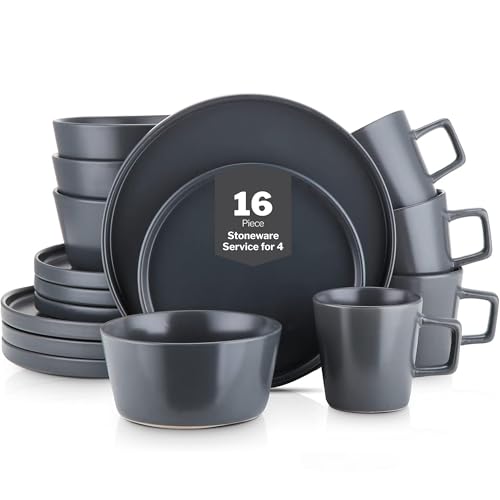
Stone Lain builds its dinnerware around modern stoneware shapes: coupe plates with gently raised edges, deep bowls that suit pasta and grain dishes, and mugs with a satisfying, grounded weight. The glazes lean contemporary, with matte and reactive finishes that photograph beautifully and make simple food look deliberate. Stoneware holds heat well, so a plated dinner stays warm through a long conversation, and the body feels substantial without tipping into restaurant-heavy. The honest limitations are the usual stoneware ones: pieces are heavier in a full stack, matte glazes can show pale metal marks from cutlery over time, and a cold plate should never go straight into a hot oven because thermal shock can crack it. Treat it as the design-led everyday choice for cooks who plate carefully, host often and are willing to stack with a little attention rather than tossing pieces together. On value, treat this as a mid tier choice and check price on Amazon against the current listing before you buy, since availability of individual patterns and colours changes often. Best for: households whose habits match the strengths described above. Not suited for: buyers whose priorities run directly against its trade-offs, however attractive the photographs look.
Le Creuset Vancouver
The Le Creuset Vancouver dinnerware collection carries the cookware brand’s stoneware language to the table: dense, even-glazed pieces in graduated signature colours, with dinner plates, salad plates, bowls and mugs that feel composed rather than merely matched. The stoneware body holds heat gracefully, the glaze resists everyday staining, and the weight signals occasion even on a Tuesday. It pairs naturally with the brand’s casseroles and serving pieces, which matters if you cook and serve in the same vessels. The trade-offs are the premium tier itself, the heft of a full stack in a high cupboard, and the standard stoneware cautions — avoid sudden temperature swings, stack so rims and bases do not grind, and retire any piece that chips or cracks. This is the considered purchase for a household that hosts properly, keeps things for a long time and wants the tableware to match the ambition of the cooking. On value, treat this as a premium tier choice and check price on Amazon against the current listing before you buy, since availability of individual patterns and colours changes often. Best for: households whose habits match the strengths described above. Not suited for: buyers whose priorities run directly against its trade-offs, however attractive the photographs look.
Fiesta
Fiesta is the colour-first American classic: vitrified ceramic in a spectrum of saturated, mix-and-match colours, with a distinctive ringed design that has barely changed because it never needed to. The pieces are thick, reassuringly heavy and made for households that want the table itself to be the decoration — buy one colour for order, or several and let every place setting differ. Open-stock availability is a genuine long-term advantage, because a broken plate can usually be replaced in the same colour family rather than retiring the whole set. The limitations are weight in the cupboard, a bolder look that will not suit a minimalist table, and the fact that the very saturation that makes it joyful also dates a single-colour choice if your taste changes. For entertainers, colour lovers and anyone buying a set they intend to keep and add to for decades, Fiesta is the personality pick with real staying power. On value, treat this as a mid-to-premium tier choice and check price on Amazon against the current listing before you buy, since availability of individual patterns and colours changes often. Best for: households whose habits match the strengths described above. Not suited for: buyers whose priorities run directly against its trade-offs, however attractive the photographs look.

Mikasa
Mikasa occupies the polished, occasion-friendly end of everyday dinnerware, with porcelain and bone china patterns that range from clean modern white to fine metallic-banded designs made for a dressed table. The porcelain body is refined and lighter than stoneware while still standing up to daily service when it is handled sensibly, and the shapes — rimmed plates, elegant bowls, well-balanced cups — suit plated, course-by-course meals better than most casual sets. The honest limitations follow the material: finer china deserves hand-washing discipline for decorated pieces, it is not the set to hand to toddlers or stack carelessly in a sink, and replacement patterns depend on the range staying current. Choose Mikasa when the table is part of the pleasure — dinner parties, holidays and households that eat casually on something else and keep this for when it counts. On value, treat this as a mid-to-premium tier choice and check price on Amazon against the current listing before you buy, since availability of individual patterns and colours changes often. Best for: households whose habits match the strengths described above. Not suited for: buyers whose priorities run directly against its trade-offs, however attractive the photographs look.
Gibson Home
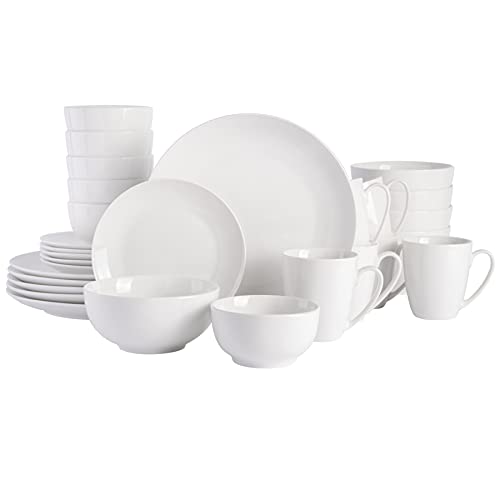
Gibson Home is the wide-catalogue, value-first name in dinnerware, with stoneware and porcelain sets in everything from plain white to bold reactive glazes and seasonal patterns. The appeal is straightforward: a coordinated table for a first apartment, a rental, a holiday home or a growing family, at an entry tier that does not make a chipped plate feel like a financial event. Shapes tend toward the generous, with roomy dinner plates and bowls that suit hearty, informal serving. The trade-offs sit in consistency and longevity: glazes and weights can vary more between production runs than the premium makers, patterns rotate faster so exact replacements may be harder to find years later, and thinner pieces deserve gentler stacking. Judged on what it promises — an attractive, complete, affordable table without preciousness — it delivers, and it is often the sensible first set while you learn what your household actually uses. On value, treat this as a entry tier choice and check price on Amazon against the current listing before you buy, since availability of individual patterns and colours changes often. Best for: households whose habits match the strengths described above. Not suited for: buyers whose priorities run directly against its trade-offs, however attractive the photographs look.
How Much Capacity Do You Actually Need?
Count mouths, then count habits. A setting per regular eater, plus settings for your realistic guest count, covers almost every household; the once-a-year crowd can be served by topping up an open-stock range later or by a simple secondary set. Bowls and mugs deserve separate arithmetic because they are used between meals — cereal, soup, tea, desk coffee — and they run short first. If your household grazes, snacks and works from home, weight your purchase toward extra bowls and mugs while the pattern is current, and let the dinner plates, which only work at meals, stay at the standard count. The worked examples in how to choose a dinnerware set put numbers-shaped thinking to three real households.
Which Size and Shape Fit Your Kitchen and Your Cooking?
Measure the cabinet, the dishwasher and the microwave before admiring a single glaze, and let the largest plate and tallest mug pass all three tests. Then match shape to cooking: coupe plates for saucy, modern one-plate meals; rimmed plates for composed, drier dishes and formal service; deep bowls for noodles and soups; open bowls for salads and grain dishes. Households that cook across all of those should favour the forgiving middle — gentle coupes and two bowl sizes — over any extreme. Serving pieces sit outside most sets, so plan them alongside: the live guide to the best serving bowl sets and a good fruit bowl complete more tables than another four dinner plates.
Fit and Form, Piece by Piece
Measure before you fall in love: more dinnerware disappointments are measured in centimetres of shelf than in any question of taste. Microwave turntables and dishwasher racks impose their own limits, so the largest plate and the tallest mug deserve a test against all three spaces. Deep bowls are the surprise failure — they fit the cupboard but stack so tall that four bowls consume the space of eight plates. A set that fits everywhere without negotiation simply gets used more, which is the entire point of owning it.
Rim shape changes how food behaves on the plate more than most buyers expect. A modest raised edge is the practical middle: it catches sauce, stacks reasonably and still looks composed under a carefully plated main. Wide flat rims frame plated food elegantly and give servers a clean grip, but they shrink the usable centre and demand wider cabinets. Match the rim to your cooking: saucy, one-plate meals want containment, while dry, composed plates can afford elegance.
The bowl is the piece people reach for when the plate is wrong, which makes its design worth real attention. A good everyday bowl holds a generous portion without a precarious fill line, sits steadily on the table and spoons cleanly from its curve. Very deep, narrow bowls chill soup at the top and overheat hands at the base; a balanced, open shape serves more kinds of food. Two bowl sizes cover almost every household better than one compromise size used for everything.
Mugs are the most personal piece in a set and the one guests judge without realising it. Thick stoneware mugs hold heat through a slow coffee, while fine porcelain feels refined and suits tea drinkers who reheat or refill often. Capacity, handle comfort and lip thickness decide the drinking experience: a handle that fits two fingers without pinching, and a rim that feels smooth, are the marks of a mug done well. If your household drinks a lot of hot drinks, consider extra mugs beyond the set’s count while the pattern is available.
How Durable Is Durable Enough?
Durability has three separate meanings that marketing happily blurs. Impact durability is surviving knocks and drops, where laminated glass leads. Surface durability is resisting stains, metal marks and fading, where smooth glossy glazes lead. System durability is still being replaceable in five years, where established open-stock makers lead. A household should rank the three honestly: families rank impact first, hosts rank surface first, and anyone buying a keeper set should rank the system first, because a set you cannot repair is a set with an expiry date. The balanced ledger is set out in our dinnerware set pros and cons.
Safety, Damage and When to Retire a Piece
Every household should run one simple rule: a chipped or cracked piece leaves food service. Cracks harbour bacteria in places a sponge and a dishwasher jet cannot reliably reach, and a chipped rim can cut a lip, a tongue or the hand that washes it. This is not preciousness — it is the same reasoning that retires a cracked cutting board. Retired pieces can hold keys, catch drips under a plant or organise a drawer, so retiring a piece from food does not have to mean throwing away something you love.
On glazes, keep the concern in proportion and pointed at the right category. Vintage pieces, older imports and brightly hand-painted ware are where lead and cadmium caution belongs, because their glazes predate or sit outside modern food-safety certification. Modern certified dinnerware from reputable makers is the safe default for daily food, and there is no reason to feel anxious about a current set from an established brand. If you inherit a beautiful older set, enjoy it for decoration or for dry, occasional serving, and let a modern set carry the daily work with acidic foods like tomatoes and citrus.
Thermal shock is the third rule, and it is pure physics rather than chemistry. Stoneware and glass can crack when a cold plate goes straight into a hot oven, or when a hot dish is set on a cold, wet counter. Warm pieces gradually, let hot pieces rest on a dry trivet, and the risk largely disappears. Finally, melamine: it is a useful, light material for children and outdoor eating, but it is not microwave-safe, so food should be reheated in a ceramic or glass vessel and served onto the melamine afterwards. In the dishwasher, load pieces so they cannot knock together — pieces that touch in the rack chip each other as the water moves them, which is the most preventable damage of all.
How to Prioritise by Use Case
The busy family prioritises chip resistance, light weight, shallow stacking and reordering, in that order, and buys Corelle-pattern glass or sturdy stoneware without preciousness. The host prioritises heat retention, presence and a complete serving layer, and buys stoneware or porcelain plus the serving pieces the box omits. The small-kitchen buyer prioritises stack height and plate diameter above all, because a set that does not fit is a set that gets returned. The keeper buyer — settled house, settled taste — prioritises pattern longevity and glaze quality, buys premium once, and adds a spare setting while it is easy. First-flat buyers should reverse the keeper logic entirely: buy Gibson Home-tier replaceability now, learn your habits, and spend properly later, a sequence defended in is a dinnerware set worth it.
Storage, Care and the Secondhand Question
How a set stacks decides whether your cupboard feels generous or impossible, and whether the rims survive the year. Simple felt or fabric separators between plates cost almost nothing and remove most of that grinding, especially for stoneware and decorated porcelain. In the dishwasher, pieces loaded so they touch will chip each other as the water moves them; a finger’s width of separation is the cheap insurance. Before buying, picture the stack in your shallowest cupboard, not the tallest — the shallow shelf is the one that will veto the purchase later.
Most dinnerware damage is not bad luck; it is a handful of repeatable habits, each of them fixable. Storing plates upright in a rack, or flat with separators, prevents the slow base-ring abrasion that roughens a stack over a year. Hard water leaves a mineral film that dulls glazes over months; a periodic rinse with a mild acidic solution, where the maker allows it, restores the shine. Read the maker’s care guidance for your specific material once, properly, and follow that rather than generic internet advice.
Secondhand and inherited dinnerware deserve a calm, practical assessment rather than either nostalgia or alarm. Unknown older pieces, especially brightly painted imports and pre-regulation vintage ware, are best kept for decoration or dry, occasional use rather than daily acidic food. Sound, modern secondhand sets from known makers are a genuinely economical and sustainable way to build a table. Keep the pieces with real sentimental value in gentle roles, and let a modern certified set carry the daily, acidic, microwaved workload.
First Setup and Care Essentials
Unbox onto a clear counter, wash everything, and inspect each rim and base in good light before the packaging goes. Stack the complete set in its intended cupboard and run one full dishwasher load with pieces spaced so they cannot touch; both tests are easier inside the return window than outside it. From then on the routine is light: cool hot pieces before cold water, keep cold stoneware out of hot ovens, lift metal marks gently, and retire chips the day they appear. The full routine lives in how to clean a dinnerware set, and your mugs will last longer alongside a note from the live guide to the best mug warmers — warm mugs, not microwaved melamine, are the safe habit.
Mistakes to Avoid
Buying by photograph without measuring. Buying a fashion pattern with no replacement future. Buying premium before the toddler years have passed. Assuming serving pieces are included. Loading the dishwasher with pieces touching and blaming the set for the chips. Putting a cold stoneware plate into a hot oven and blaming the set for the crack. Keeping chipped pieces in food service because they are favourites. Every one of these is common, every one is avoidable, and the single-set evidence behind them is gathered in our dinnerware set review.
Final Recommendation
Decide material by household, size by kitchen, pattern by replacement future, and tier by how long you will keep the set. Do that, in that order, and the shortlist writes itself: glass for busy lightness, stoneware for warm presence, porcelain for occasions, Fiesta for colour, Gibson Home for a gentle start. A dinnerware purchase made in that order is very rarely regretted.
More Detail Worth Knowing Before You Decide
Inherited and secondhand pieces can be wonderful, provided they enter the kitchen with their eyes open. Inspect every piece against the light for hairline cracks, check rims with a fingertip for chips, and listen for the clear ring of a sound plate versus the dull note of a damaged one. Sound, modern secondhand sets from known makers are a genuinely economical and sustainable way to build a table. A mixed table built from sound pieces in a shared colour family looks intentional rather than accidental.
Hosting exposes a dinnerware set in ways daily use never does, because courses multiply pieces and guests notice the table as a whole. Serving bowls and platters are the gap in most boxed sets, so hosts should check what the set leaves out and plan the serving layer separately. A second, simpler set for large gatherings is often smarter than stretching a good set with mismatched survivors from an old one. If you host monthly, buy for the party and let daily use follow; if you host twice a year, buy for the week and borrow or improvise for the party.
The cheapest set is the one you buy once, and the most expensive is the one you replace three times. Entry tiers buy freedom: the freedom not to flinch at a breakage, which for young households and busy rentals is a real feature, not a compromise. Premium tiers buy glaze quality, consistency between pieces, colour depth and the confidence of a maker who keeps patterns available. Spending on the pieces you use daily and saving on the rarely used extras is the allocation almost every experienced buyer ends up recommending.
Pattern is the most visible choice and the one most likely to be regretted, which argues for restraint on the pieces you use daily. Plain white is not a failure of imagination: it makes food look better, mixes with everything you already own and never fights the table linen. Reactive and matte glazes add texture and hide minor marks well, though matte surfaces can show pale trails where cutlery crosses them. A classic compromise is plain pieces for daily use and pattern in the serving layer, where it is seen for an hour rather than lived with for years.
Every long-lived set is really a system: the original purchase plus the replacements that quietly keep it whole. Fast-rotating fashion patterns are the opposite bargain — beautiful now, unmatchable later, and effectively disposable at the first serious loss. Open-stock ranges, where plates and bowls are sold individually for years, turn a breakage into a small errand instead of the start of a mismatched decline. A set that can be repaired by reordering will always outlast a slightly prettier set that cannot.
Care habits decide the lifespan of a set more than the purchase price does. Metal marks — the grey trails cutlery leaves on light glazes — are usually deposits from the cutlery itself and lift with a gentle, non-abrasive cleaner rather than scrubbing. Hard water leaves a mineral film that dulls glazes over months; a periodic rinse with a mild acidic solution, where the maker allows it, restores the shine. None of this is precious or time-consuming; it is thirty seconds of attention at the sink, repaid in years of service.
The safety rules for dinnerware are simple, calm and worth stating plainly, because they are about habits rather than fear. Vintage, imported and brightly hand-painted pieces are the category to treat with caution for everyday food use, since older and less-regulated glazes are where lead and cadmium concerns belong; modern certified pieces from reputable makers are the safe default. Melamine is not microwave-safe, so it belongs at the table and the picnic, never in the microwave, however convenient that would be. When a favourite piece retires, demote it to holding keys or plants rather than throwing it away, and it leaves the food rotation without leaving the house.
Mugs are the most personal piece in a set and the one guests judge without realising it. Thick stoneware mugs hold heat through a slow coffee, while fine porcelain feels refined and suits tea drinkers who reheat or refill often. Mugs are also the first piece to run short, because they migrate to desks, sofas and bedrooms in a way plates never do. If your household drinks a lot of hot drinks, consider extra mugs beyond the set’s count while the pattern is available.
The bowl is the piece people reach for when the plate is wrong, which makes its design worth real attention. Stacking bowls of identical profile saves remarkable space, while nesting sets of graduated sizes earn their cupboard room at serving time. Very deep, narrow bowls chill soup at the top and overheat hands at the base; a balanced, open shape serves more kinds of food. Two bowl sizes cover almost every household better than one compromise size used for everything.
Rim shape changes how food behaves on the plate more than most buyers expect. Coupe plates, with a gentle continuous curve and no flat rim, keep saucy food contained and suit the pasta, grain-bowl and curry style of modern eating. Wide flat rims frame plated food elegantly and give servers a clean grip, but they shrink the usable centre and demand wider cabinets. Match the rim to your cooking: saucy, one-plate meals want containment, while dry, composed plates can afford elegance.
With children at the table, dinnerware stops being decor and becomes equipment. Low, wide bowls contain enthusiastic eating better than plates for younger children, and mugs with two-handed-friendly handles reduce the drop rate. Rim chips are the predictable failure, which is why chip-resistant glass-based sets and thick stoneware dominate real family kitchens. Melamine has a place at the toddler table and outdoors, but keep it out of the microwave and retire it when the surface crazes or cracks.
Stacking is where dinnerware quietly succeeds or fails, because pieces spend far more of their lives stacked than on the table. In the dishwasher, pieces loaded so they touch will chip each other as the water moves them; a finger’s width of separation is the cheap insurance. Unprotected stacking lets base rings grind against glazed faces, which is how fine scratches and dull patches appear on otherwise good plates. A set that stacks badly gets used reluctantly, and reluctance is the beginning of a cupboard full of mismatched survivors.
Inherited and secondhand pieces can be wonderful, provided they enter the kitchen with their eyes open. Sound, modern secondhand sets from known makers are a genuinely economical and sustainable way to build a table. Unknown older pieces, especially brightly painted imports and pre-regulation vintage ware, are best kept for decoration or dry, occasional use rather than daily acidic food. A mixed table built from sound pieces in a shared colour family looks intentional rather than accidental.
A set earns its keep at a dinner party, when the cooking is only half of what your guests experience. A second, simpler set for large gatherings is often smarter than stretching a good set with mismatched survivors from an old one. Serving bowls and platters are the gap in most boxed sets, so hosts should check what the set leaves out and plan the serving layer separately. The best hosting set is the one you are not precious about, because relaxed hosts use their good things instead of apologising for them.
Value in dinnerware is cost spread over years of daily use, which makes durability and replaceability worth more than a low ticket. A mid-tier set that survives a decade of daily meals costs less per use than an entry set replaced twice, even before counting the frustration. Premium tiers buy glaze quality, consistency between pieces, colour depth and the confidence of a maker who keeps patterns available. Judge value against your stage of life — a household in flux should buy replaceable, a settled household should buy lasting.
Taste changes faster than dinnerware wears out, so the pattern decision deserves a longer horizon than the purchase usually gets. Reactive and matte glazes add texture and hide minor marks well, though matte surfaces can show pale trails where cutlery crosses them. Plain white is not a failure of imagination: it makes food look better, mixes with everything you already own and never fights the table linen. Choose the pattern you can imagine under a plain Tuesday supper, not only under the holiday table.
Replacement availability is the hidden feature that decides whether a set lasts five years or twenty. Keeping one spare place setting in reserve, bought while the pattern is current, is the cheapest insurance a careful buyer can arrange. Open-stock ranges, where plates and bowls are sold individually for years, turn a breakage into a small errand instead of the start of a mismatched decline. Ask how long the pattern has been sold before you commit; longevity on the market is the best predictor of longevity in your cupboard.
Most dinnerware damage is not bad luck; it is a handful of repeatable habits, each of them fixable. Hard water leaves a mineral film that dulls glazes over months; a periodic rinse with a mild acidic solution, where the maker allows it, restores the shine. Storing plates upright in a rack, or flat with separators, prevents the slow base-ring abrasion that roughens a stack over a year. Read the maker’s care guidance for your specific material once, properly, and follow that rather than generic internet advice.
Safety with dinnerware is mostly about knowing when a piece should stop touching food. Stoneware and glass both dislike thermal shock, so a cold plate should never go straight into a hot oven, and a hot dish should rest on a dry, room-temperature surface rather than a cold or wet one. Melamine is not microwave-safe, so it belongs at the table and the picnic, never in the microwave, however convenient that would be. None of this requires anxiety — it requires a ten-second inspection when you unload the dishwasher and the willingness to let a damaged piece go.
A set can survive an ordinary plate, but a bad mug is noticed every single morning. Mugs are also the first piece to run short, because they migrate to desks, sofas and bedrooms in a way plates never do. Thick stoneware mugs hold heat through a slow coffee, while fine porcelain feels refined and suits tea drinkers who reheat or refill often. A mug that chips at the lip should leave service at once — a damaged rim against the mouth is both unpleasant and unhygienic.
Bowls do more work in a modern kitchen than any other piece, from breakfast to soup to the grain bowls that anchor weeknight cooking. A good everyday bowl holds a generous portion without a precarious fill line, sits steadily on the table and spoons cleanly from its curve. Very deep, narrow bowls chill soup at the top and overheat hands at the base; a balanced, open shape serves more kinds of food. Count your bowl habits honestly — cereal, soup, noodles, salads, ice cream — and let the count, not the box, decide how many you need.
The edge of the plate is working equipment, not just decoration. Wide flat rims frame plated food elegantly and give servers a clean grip, but they shrink the usable centre and demand wider cabinets. Coupe plates, with a gentle continuous curve and no flat rim, keep saucy food contained and suit the pasta, grain-bowl and curry style of modern eating. If in doubt, the gentle coupe is the shape most households find forgiving across the widest range of food.
Family use is a stress test of drops, clashes, hurried stacking and food that stains, repeated three times a day. A set you can replace piece by piece matters more with children, because losses are a certainty rather than a risk. Rim chips are the predictable failure, which is why chip-resistant glass-based sets and thick stoneware dominate real family kitchens. Buy the family set for resilience and easy replacement, and keep any delicate pieces for adult-only shelves until the drop years pass.
How a set stacks decides whether your cupboard feels generous or impossible, and whether the rims survive the year. Plates that share the same profile nest tightly and waste no vertical space, while mixed shapes and wide rims eat shelf height fast. Unprotected stacking lets base rings grind against glazed faces, which is how fine scratches and dull patches appear on otherwise good plates. Before buying, picture the stack in your shallowest cupboard, not the tallest — the shallow shelf is the one that will veto the purchase later.
Secondhand and inherited dinnerware deserve a calm, practical assessment rather than either nostalgia or alarm. Inspect every piece against the light for hairline cracks, check rims with a fingertip for chips, and listen for the clear ring of a sound plate versus the dull note of a damaged one. Unknown older pieces, especially brightly painted imports and pre-regulation vintage ware, are best kept for decoration or dry, occasional use rather than daily acidic food. Keep the pieces with real sentimental value in gentle roles, and let a modern certified set carry the daily, acidic, microwaved workload.
Hosting exposes a dinnerware set in ways daily use never does, because courses multiply pieces and guests notice the table as a whole. Matching pieces calm a busy table; when the food is colourful and the glasses vary, plain plates let the meal be the decoration. Serving bowls and platters are the gap in most boxed sets, so hosts should check what the set leaves out and plan the serving layer separately. If you host monthly, buy for the party and let daily use follow; if you host twice a year, buy for the week and borrow or improvise for the party.
Before You Commit: A Dinnerware Set Fit and Compatibility Checklist
A buying guide earns its keep in the last ten minutes before you order, when broad advice has to become a yes or no for one specific home. Use this section as that final pass for a dinnerware set: it turns the criteria covered earlier into checks you can physically make, in order, so the version you choose fits your space, your habits and the other items it has to work alongside.
Work through fit before features, in this exact order. First confirm the plate diameters against your cupboard depth, microwave and dishwasher racks; write the numbers down, because memory rounds measurements in the direction of the product you already want. Then settle compatibility in plain terms: how many place settings your household and typical guest count genuinely need. Only once both pass should you compare the shortlist, and when a listing names a model such as Corelle Vitrelle, confirm the exact variant and included parts on that listing rather than assuming every version is identical.
Now price the decision in effort rather than money. The upkeep reality is simple: checking dishwasher and microwave guidance per material and stacking with protection for glazed edges. If that routine fits a habit you already keep, ownership will feel easy; if it demands a new ritual you know you will skip, the dinnerware set will age badly no matter how well it scores elsewhere. The same honesty applies to storage, setup time and the person who will actually do the cleaning, whose opinion deserves the casting vote.
Close the decision with the hardest test, not the easiest: holiday hosting, when serving pieces, not place settings, turn out to be the real shortage. If the dinnerware set you favour handles that case and your two most frequent uses comfortably, stop researching and buy it. If it fails either test, walk away even from an attractive offer, because you will re-live that failure every time the situation repeats, long after the saving is forgotten.
A Final Decision Checklist
- Start the shortlist with size: confirm the plate diameters against your cupboard depth, microwave and dishwasher racks before comparing any features.
- Then settle fit with what you already own: how many place settings your household and typical guest count genuinely need.
- Ask how it fails before how it shines: the usual story is chips appearing first on the pieces used daily, which is why matching replacement availability matters.
- Check the upkeep suits your routine, since checking dishwasher and microwave guidance per material and stacking with protection for glazed edges.
- End with the hardest regular test, because holiday hosting, when serving pieces, not place settings, turn out to be the real shortage.
- Judge finalists against your two most frequent uses, written down, not against occasional ones.
- Keep packaging and paperwork until a full week of real use has passed without a problem.
- Photograph the setup once it works well, so you can restore it after cleaning or rearranging.
- Confirm the storage spot honestly: if putting it away is awkward, the dinnerware set will slowly stop being used.
- Put on the list and check the person who cleans it most a veto, because their friction decides how long it stays in service.
Frequently Asked Questions
What is the best material for an everyday dinnerware set?
For most households, the honest answer is laminated glass or a sturdy stoneware, chosen by weight preference. Glass is lighter, stacks smaller and resists chips best, which suits families and small kitchens. Stoneware feels more substantial, holds heat and dresses a table better, which suits hosts and careful households. Porcelain is the occasion choice. There is no universal winner — there is a winner per household, and this guide’s job is matching, not crowning.
How do I know if a set will fit my cabinets and dishwasher?
Measure three things before ordering: cabinet depth and shelf height, the dishwasher’s clearance for the tallest plate angle, and microwave width if you reheat on dinner plates. Compare them with the maker’s listed dimensions for the largest pieces. When the set arrives, stack it fully in its real cupboard and run one wash before discarding packaging. Fit failures discovered in week one are exchanges; discovered in month two, they are regrets.
Should I buy a set or open-stock pieces?
A set is cheaper per piece, coordinated and fast — the right start for most kitchens. Open stock costs more per piece but lets you buy exactly the pieces you use, in the counts you use them, and skip the rest. Many households do both in sequence: a set as the foundation, then open-stock extras of the pieces that run short, usually bowls and mugs. The deciding factor is whether the range stays on sale long enough to support that plan.
Are serving bowls and platters included in dinnerware sets?
Usually not, or only minimally. Most sets cover place pieces — dinner plates, side plates, bowls and mugs — and leave the serving layer to you. Budget and cupboard space for serving bowls and a platter from the start, or the first dinner party will expose the gap at the worst moment. Coordinating rather than exactly matching is fine: plain serving pieces in a shared colour family look intentional beside almost any set.
How important is it that a pattern stays in production?
It is the difference between a set and a countdown. Breakages are certain over years of daily use; a pattern that remains orderable turns each one into a small errand, while a discontinued pattern turns the first serious loss into the beginning of a mismatched decline. Prefer makers with long-running ranges, ask how long the pattern has been sold, and consider one spare setting bought early as cheap insurance.
Can I mix a new set with pieces I already own?
Yes, and done deliberately it looks designed rather than accidental. Keep one element constant — colour family, material or shape language — and let the other elements vary. Plain white is the great mixer because it sits calmly beside almost everything. Retire from the mix any inherited piece that is chipped, cracked or of unknown older glaze for daily acidic food, and let modern certified pieces carry the everyday workload.
Related Guides and Next Steps
Keep exploring with how to choose a dinnerware set.
Keep exploring with the dinnerware set reviews.
Keep exploring with is a flatware set worth it.
Keep exploring with the best countertop dishwashers with glassware cycles.