Disclosure: As an Amazon Associate, airfryerkitchensupply.com earns from qualifying purchases. Links on this page are affiliate links; they cost you nothing extra. Prices and availability change often, so check the current Amazon listing before you buy.
Start with the honest summary: how to choose a canister vacuum is a question about fit, not fashion. The right answer depends on your floors, your stairs, your storage, and how your household actually cleans week to week, and this article works through each of those in turn so the conclusion rests on your home rather than on advertising.
Key Takeaways
This guide puts how to choose a canister vacuum in plain, practical terms for real homes. The format separates the motor body from the cleaning head, keeps the wand light, reaches under furniture easily, and asks for simple habits around dust disposal, stairs, and cord care in return. Readers short on time can take the verdict sections first, then return for the detailed reasoning, the model notes, and the care routine that keeps any of these machines performing well.
In this guide
How to Choose a Canister Vacuum: The Criteria That Decide It
Bagged and bagless designs divide buyers more than almost any other choice here. A bag gives you tidy, contained disposal and tends to suit people who dislike seeing or handling collected dust, at the cost of buying replacements and remembering to keep spares in the cupboard. A bagless bin removes that running errand and lets you see exactly what was picked up, which some people find satisfying, at the cost of a dustier emptying moment and filters that need regular washing or replacement. Neither answer is wrong. The honest question is which small recurring chore your household will actually keep doing without resentment.
The cleaning head matters more than most first-time buyers expect. A simple suction-only floor tool is quiet, light, and excellent on hard floors and flat rugs, but it can skate over deeper carpet without agitating the pile. A powered brush head brings its own motor or air-driven turbine to work carpet fibres, which helps lift embedded grit and hair, and it adds weight, noise, and one more thing to maintain. Match the head to the floor you actually have in the rooms you clean most, not to the most impressive demonstration you saw, and check whether extra heads are included or sold separately before comparing headline value.
Reach is a quiet strength worth testing in your imagination room by room. The combination of hose, wand, and cord usually lets the body stay parked in the middle of a room while you work into corners, along skirting, up curtains, and across upholstery without moving furniture or hunting for another outlet. Ceiling corners, stair treads, car interiors reached from a driveway, and the tops of bookshelves all become realistic targets rather than special projects. When you compare models, picture your own largest room and your own longest hallway, because comfortable reach in your home matters more than a specification measured in a warehouse.
What You Need to Know Before Comparing
Noise is a lived experience, not a number on a chart. Canister bodies place the motor away from your ears and hands, and many feel calmer to use than their cleaning power suggests, especially on hard floors with a suction-only tool. Powered heads add their own sound, and early mornings, sleeping children, nervous pets, and thin apartment walls all change what counts as acceptable. If noise shapes your routine, favour the models owners describe as civilised in real homes, plan carpet sessions for sociable hours, and remember that a slightly slower pass at a calmer setting often cleans as well as a hurried one.
Storage sounds trivial until the machine lives with you. The body needs a cupboard corner or a closet footprint, the hose loops or hangs, and the wand ideally parks upright against the body rather than leaning in a hallway. Homes with a utility closet barely notice any of this. Small apartments feel every centimetre, and a compact body that stands on end or tucks under a shelf can be the difference between a machine that is easy to grab and one that is buried behind coats. Measure your storage spot before you fall for a larger body, and include the attachments you will genuinely keep in that measurement.
Attachments separate a floor cleaner from a whole-home tool. A crevice tool reaches along oven edges and between cushions, an upholstery nozzle lifts dust from sofas without dragging fabric, and a soft dusting brush treats shelves, blinds, and electronics gently. Onboard storage keeps those pieces with the machine, which sounds minor until you are mid-clean with dusty hands. Ask whether the tools are full-size and well made or token extras, whether they fit the wand securely, and whether the set covers the surfaces your home actually has, from car mats to ceiling fans, rather than collecting novelty pieces you will never touch.
Maintenance is refreshingly modest when it stays routine. Bags get changed before they are packed solid, bins get emptied before debris reaches the fill line, and filters get cleaned or replaced on the maker’s schedule rather than when performance collapses. Brush heads reward a monthly check for wrapped hair and thread, which snip away easily if caught early and become a wrestling match if ignored for a season. Wheels, hose cuffs, and seals deserve an occasional wipe and glance. None of this needs a workshop or special skill, and a machine kept on this light routine tends to feel strong and willing for years.
How to Choose a Canister Vacuum in Seven Steps
Step: Map Your Floors Honestly
Build quality shows in the details you touch daily. Hose cuffs that click positively, wands that lock without wobble, pedals that work under a shoe, and a body shell that shrugs off door frames all signal a machine designed for a decade of Tuesdays rather than a season of demonstrations. Premium makers have built reputations on exactly this durability, while entry-level models cut cost in plastics and fittings that still clean perfectly well on day one. The fair comparison is not new against new, but year five against year five, and that is where spending more sometimes quietly pays, and sometimes simply costs more.
Pet hair deserves its own honest paragraph in any household with animals. Hair on hard floors and upholstery is easy work for this format, and the wand makes sofas, stairs, and pet beds simple to keep on top of. Hair in deep carpet is the harder test, and there the powered head, used slowly in overlapping passes, earns its place. No machine removes the need for routine, because animals shed on their own schedule, not yours. The realistic promise is that frequent, quick sessions become pleasant enough to actually happen, and a home that gets vacuumed often always looks better than a home waiting for a heroic monthly effort.
Step: Decide Bagged or Bagless
Manoeuvrability is where owners tend to become quietly loyal. The body follows at heel like a well-trained companion once you learn to move in gentle arcs and let the hose lead, and the head slips sideways into spaces a wider machine must approach head-on. Under beds, between chair legs, and around table pedestals, that slim profile saves the constant furniture shifting that makes cleaning feel like a workout. The learning curve is real but short. Most people need two or three sessions to stop catching the body on door frames, after which the format feels natural and oddly satisfying to steer.
Weight is often misunderstood in this category. The total machine may not be light, yet the weight you hold, push, and lift during cleaning is only the wand and head, because the body rolls behind you and the floor carries its share. That distinction matters for anyone whose wrists, shoulders, or back complain during housework, and for anyone cleaning a large area in one session. The moments when total weight does count are carrying the body between floors and lifting it into a car or cupboard, so be honest about your stairs and your storage when you weigh up larger, more powerful bodies against compact ones.
Step: Match the Cleaning Head to Your Carpet
Running costs are a matter of habits and consumables rather than drama. Bags, filters, and the occasional belt or brush strip are the recurring story, and they arrive gradually rather than all at once. Bagless models shift the balance toward filter care, bagged models toward keeping spare bags in stock. Electricity use during ordinary weekly cleaning is a minor part of household consumption for most homes, and far less important than whether the machine gets used regularly. The sensible approach is to note what your shortlisted model consumes, where those supplies are sold, and whether you will genuinely keep them in the house before you need them.
Floors are changing in many homes, and that trend flatters this format. Open-plan spaces that mix timber or tile with a large rug, plus stairs, plus upholstered furniture, ask for a tool that changes heads and roles without fuss. A canister treats that mix as its home ground. Single-surface homes ask an easier question, and if every room is deep carpet, other formats make a stronger case, which the comparison sections of this cluster discuss without pretending otherwise. The right purchase starts from your floor plan and your furniture, works through your storage and your stairs, and only then arrives at brands and badges.
Step: Check Reach Against Your Largest Room
Technique improves results more than upgrades do. Slow, overlapping passes give the airflow time to lift debris instead of skating across it, and a second pass at right angles to the first picks up a surprising amount on rugs. Edges deserve their own deliberate run with the crevice tool rather than hopeful passes with the floor head. Empty rooms clean fastest, but moving small items as you go, lifting mats, and working from the far corner toward the door keeps a session flowing. These habits are free, they transfer to any model you buy, and they explain why two owners of the same machine can report very different results.
Children, guests, and real life belong in the decision too. A machine that lives within easy reach gets used for the crumb spill before dinner and the glitter incident after craft time, and those quick rescues are where household cleanliness is actually won or lost. A body that parks neatly, a hose that reaches the hallway without unplugging, and tools stored on the machine turn a five-minute tidy into a two-minute one. When a vacuum makes small messes cheap to fix, the whole home stays closer to clean all week, which is a more valuable outcome than any single deep-cleaning triumph on a Saturday morning.
Step: Judge Filtration in Plain Terms
Buying well means reading listings with a cool head. Check exactly which heads and tools are in the box, because the same model name can ship in bundles that differ more than the machines themselves. Confirm which bags or filters it uses and that they are easy to source, look at hose and wand fittings if you hope to add tools later, and treat breathless marketing words as decoration rather than evidence. A calm comparison of the practical details, the storage fit, and the floor match will serve you better than chasing the longest feature list, and it is the approach every article in this cluster tries to model.
The basic layout explains most of what follows. The motor and dust collection sit in a wheeled body that trails behind you, while your hand holds only a wand and a cleaning head connected by a flexible hose. That separation is the whole idea. The heavy work stays low and rolls along the floor, and the part you steer stays comparatively light, which changes how a long cleaning session feels on your wrist, your shoulder, and your back. It also changes where the machine can go, because a slim head on a wand slides under sofas, beds, and low cabinets in a way a one-piece machine rarely manages without a struggle.
Step: Measure Your Storage Before Falling in Love
Hard floors are where this format earns its keep most clearly. A soft parquet brush or a bare-floor tool glides instead of scattering debris ahead of it, and the head can sit flat against baseboards while the body waits a comfortable distance behind. In kitchens, entryways, and hallways with mixed rugs, swapping heads takes seconds and feels like part of the routine rather than an interruption. Homes that are mostly hard flooring with a few area rugs tend to notice the advantage within the first session, while wall-to-wall deep carpet asks more of the powered brush head and rewards choosing that head carefully.
Suction at the tool is only part of the story, because how a machine behaves across an hour matters as much as how it behaves across a single pass. A canister that follows willingly, turns without tipping, and parks neatly against a wall invites regular use, and regular use is what actually keeps a home clean. Small frustrations compound in the other direction. A hose that kinks, wheels that catch on thresholds, or a body that flips when tugged will quietly shorten sessions, and a vacuum that annoys its owner spends more time in the closet than on the floor regardless of its laboratory numbers.
Step: Compare Bundles, Consumables and Build
Filtration deserves honest, plain language. A well-sealed body with a good filter and, on bagged models, a self-sealing bag does a credible job of keeping fine dust inside the machine while you clean, and that matters for everyday comfort in the room. What it does not do is treat, cure, or prevent any health condition, and no vacuum should be bought as a medical device. Think of filtration as good housekeeping rather than therapy. If dust sensitivity shapes your household decisions, the practical habits in this guide, such as emptying debris away from living areas, matter alongside the machine itself.
Emptying and disposal are unglamorous, and they decide how clean the process feels. Take bags or bins outside, or at least well away from living space and soft furnishings, so the dust you just collected does not drift straight back onto the room you cleaned. Close a bagged model by its collar before it leaves the machine, tap a bagless bin gently rather than shaking it, and wash your hands afterwards as a simple, sensible habit. These small steps cost almost nothing, take under a minute, and do more for how fresh the home feels afterwards than many headline features printed on a box.
Gear for This Guide

Kenmore Bagged Canister Vacuum — Best Overall
Children, guests, and real life belong in the decision too. A machine that lives within easy reach gets used for the crumb spill before dinner and the glitter incident after craft time, and those quick rescues are where household cleanliness is actually won or lost. A body that parks neatly, a hose that reaches the hallway without unplugging, and tools stored on the machine turn a five-minute tidy into a two-minute one. When a vacuum makes small messes cheap to fix, the whole home stays closer to clean all week, which is a more valuable outcome than any single deep-cleaning triumph on a Saturday morning.
Buying well means reading listings with a cool head. Check exactly which heads and tools are in the box, because the same model name can ship in bundles that differ more than the machines themselves. Confirm which bags or filters it uses and that they are easy to source, look at hose and wand fittings if you hope to add tools later, and treat breathless marketing words as decoration rather than evidence. A calm comparison of the practical details, the storage fit, and the floor match will serve you better than chasing the longest feature list, and it is the approach every article in this cluster tries to model.
Best for: households whose floors and routines match this model’s strengths as described above. Not suited for: buyers whose main rooms demand the opposite trade-offs. Treat this as a entry-level option in qualitative terms, and check the current listing for the exact bundle before deciding.

Dyson Big Ball — Best for Hard Floors
Filtration deserves honest, plain language. A well-sealed body with a good filter and, on bagged models, a self-sealing bag does a credible job of keeping fine dust inside the machine while you clean, and that matters for everyday comfort in the room. What it does not do is treat, cure, or prevent any health condition, and no vacuum should be bought as a medical device. Think of filtration as good housekeeping rather than therapy. If dust sensitivity shapes your household decisions, the practical habits in this guide, such as emptying debris away from living areas, matter alongside the machine itself.
Emptying and disposal are unglamorous, and they decide how clean the process feels. Take bags or bins outside, or at least well away from living space and soft furnishings, so the dust you just collected does not drift straight back onto the room you cleaned. Close a bagged model by its collar before it leaves the machine, tap a bagless bin gently rather than shaking it, and wash your hands afterwards as a simple, sensible habit. These small steps cost almost nothing, take under a minute, and do more for how fresh the home feels afterwards than many headline features printed on a box.
Best for: households whose floors and routines match this model’s strengths as described above. Not suited for: buyers whose main rooms demand the opposite trade-offs. Treat this as a mid-range option in qualitative terms, and check the current listing for the exact bundle before deciding.

Eureka WhirlWind — Best Simple Value
The cleaning head matters more than most first-time buyers expect. A simple suction-only floor tool is quiet, light, and excellent on hard floors and flat rugs, but it can skate over deeper carpet without agitating the pile. A powered brush head brings its own motor or air-driven turbine to work carpet fibres, which helps lift embedded grit and hair, and it adds weight, noise, and one more thing to maintain. Match the head to the floor you actually have in the rooms you clean most, not to the most impressive demonstration you saw, and check whether extra heads are included or sold separately before comparing headline value.
Reach is a quiet strength worth testing in your imagination room by room. The combination of hose, wand, and cord usually lets the body stay parked in the middle of a room while you work into corners, along skirting, up curtains, and across upholstery without moving furniture or hunting for another outlet. Ceiling corners, stair treads, car interiors reached from a driveway, and the tops of bookshelves all become realistic targets rather than special projects. When you compare models, picture your own largest room and your own longest hallway, because comfortable reach in your home matters more than a specification measured in a warehouse.
Best for: households whose floors and routines match this model’s strengths as described above. Not suited for: buyers whose main rooms demand the opposite trade-offs. Treat this as a premium option in qualitative terms, and check the current listing for the exact bundle before deciding.
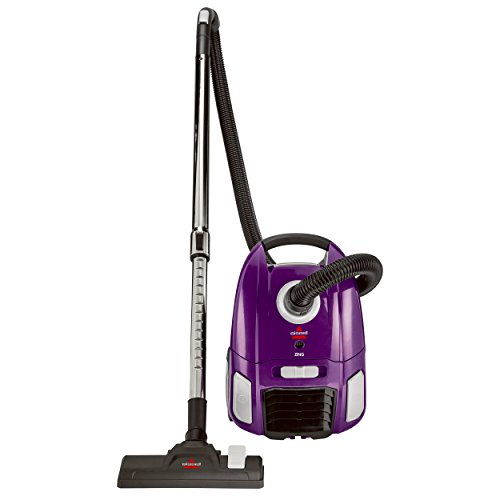
Bissell Zing — Best Premium
Maintenance is refreshingly modest when it stays routine. Bags get changed before they are packed solid, bins get emptied before debris reaches the fill line, and filters get cleaned or replaced on the maker’s schedule rather than when performance collapses. Brush heads reward a monthly check for wrapped hair and thread, which snip away easily if caught early and become a wrestling match if ignored for a season. Wheels, hose cuffs, and seals deserve an occasional wipe and glance. None of this needs a workshop or special skill, and a machine kept on this light routine tends to feel strong and willing for years.
Build quality shows in the details you touch daily. Hose cuffs that click positively, wands that lock without wobble, pedals that work under a shoe, and a body shell that shrugs off door frames all signal a machine designed for a decade of Tuesdays rather than a season of demonstrations. Premium makers have built reputations on exactly this durability, while entry-level models cut cost in plastics and fittings that still clean perfectly well on day one. The fair comparison is not new against new, but year five against year five, and that is where spending more sometimes quietly pays, and sometimes simply costs more.
Best for: households whose floors and routines match this model’s strengths as described above. Not suited for: buyers whose main rooms demand the opposite trade-offs. Treat this as a mid-range option in qualitative terms, and check the current listing for the exact bundle before deciding.
Common Mistakes
Stairs deserve a direct safety word, because they are the one place this format asks for technique. Set the canister body on a step below you, where it sits stable and lower than your working position, and clean upward from there. Never balance the body precariously on a narrow edge, on the top step, or on top of anything unstable, and never stretch the hose so far that a tug could pull the machine down toward you. When you need to move the body between floors, carry it by its handle with the wand secured, one trip at a time, rather than dragging it up step by step by the hose.
Cord habits are equally plain. Keep the cord behind the machine and out of the path of the cleaning head, and never run over the cord with a powered brush, because a spinning brush can damage the outer covering in a single careless pass. Before each session, run a quick eye over the cord for cuts, kinks near the plug, or crushed sections, and stop using the machine if the covering looks damaged rather than taping over a problem and carrying on. Retractable cords are convenient, but guide the last stretch in by hand instead of letting it whip back against furniture and ankles.
Bagged and bagless designs divide buyers more than almost any other choice here. A bag gives you tidy, contained disposal and tends to suit people who dislike seeing or handling collected dust, at the cost of buying replacements and remembering to keep spares in the cupboard. A bagless bin removes that running errand and lets you see exactly what was picked up, which some people find satisfying, at the cost of a dustier emptying moment and filters that need regular washing or replacement. Neither answer is wrong. The honest question is which small recurring chore your household will actually keep doing without resentment.
Pro Tips
The cleaning head matters more than most first-time buyers expect. A simple suction-only floor tool is quiet, light, and excellent on hard floors and flat rugs, but it can skate over deeper carpet without agitating the pile. A powered brush head brings its own motor or air-driven turbine to work carpet fibres, which helps lift embedded grit and hair, and it adds weight, noise, and one more thing to maintain. Match the head to the floor you actually have in the rooms you clean most, not to the most impressive demonstration you saw, and check whether extra heads are included or sold separately before comparing headline value.
Reach is a quiet strength worth testing in your imagination room by room. The combination of hose, wand, and cord usually lets the body stay parked in the middle of a room while you work into corners, along skirting, up curtains, and across upholstery without moving furniture or hunting for another outlet. Ceiling corners, stair treads, car interiors reached from a driveway, and the tops of bookshelves all become realistic targets rather than special projects. When you compare models, picture your own largest room and your own longest hallway, because comfortable reach in your home matters more than a specification measured in a warehouse.
Worked Examples
The Mixed-Floor Family Home
The cleaning head matters more than most first-time buyers expect. A simple suction-only floor tool is quiet, light, and excellent on hard floors and flat rugs, but it can skate over deeper carpet without agitating the pile. A powered brush head brings its own motor or air-driven turbine to work carpet fibres, which helps lift embedded grit and hair, and it adds weight, noise, and one more thing to maintain. Match the head to the floor you actually have in the rooms you clean most, not to the most impressive demonstration you saw, and check whether extra heads are included or sold separately before comparing headline value.
The Small Apartment With Stairs
Reach is a quiet strength worth testing in your imagination room by room. The combination of hose, wand, and cord usually lets the body stay parked in the middle of a room while you work into corners, along skirting, up curtains, and across upholstery without moving furniture or hunting for another outlet. Ceiling corners, stair treads, car interiors reached from a driveway, and the tops of bookshelves all become realistic targets rather than special projects. When you compare models, picture your own largest room and your own longest hallway, because comfortable reach in your home matters more than a specification measured in a warehouse.
The Pet Household on Carpet and Timber
Noise is a lived experience, not a number on a chart. Canister bodies place the motor away from your ears and hands, and many feel calmer to use than their cleaning power suggests, especially on hard floors with a suction-only tool. Powered heads add their own sound, and early mornings, sleeping children, nervous pets, and thin apartment walls all change what counts as acceptable. If noise shapes your routine, favour the models owners describe as civilised in real homes, plan carpet sessions for sociable hours, and remember that a slightly slower pass at a calmer setting often cleans as well as a hurried one.
A Closer Look at Everyday Ownership
Weight is often misunderstood in this category. The total machine may not be light, yet the weight you hold, push, and lift during cleaning is only the wand and head, because the body rolls behind you and the floor carries its share. That distinction matters for anyone whose wrists, shoulders, or back complain during housework, and for anyone cleaning a large area in one session. The moments when total weight does count are carrying the body between floors and lifting it into a car or cupboard, so be honest about your stairs and your storage when you weigh up larger, more powerful bodies against compact ones.
Running costs are a matter of habits and consumables rather than drama. Bags, filters, and the occasional belt or brush strip are the recurring story, and they arrive gradually rather than all at once. Bagless models shift the balance toward filter care, bagged models toward keeping spare bags in stock. Electricity use during ordinary weekly cleaning is a minor part of household consumption for most homes, and far less important than whether the machine gets used regularly. The sensible approach is to note what your shortlisted model consumes, where those supplies are sold, and whether you will genuinely keep them in the house before you need them.
Floors are changing in many homes, and that trend flatters this format. Open-plan spaces that mix timber or tile with a large rug, plus stairs, plus upholstered furniture, ask for a tool that changes heads and roles without fuss. A canister treats that mix as its home ground. Single-surface homes ask an easier question, and if every room is deep carpet, other formats make a stronger case, which the comparison sections of this cluster discuss without pretending otherwise. The right purchase starts from your floor plan and your furniture, works through your storage and your stairs, and only then arrives at brands and badges.
Technique improves results more than upgrades do. Slow, overlapping passes give the airflow time to lift debris instead of skating across it, and a second pass at right angles to the first picks up a surprising amount on rugs. Edges deserve their own deliberate run with the crevice tool rather than hopeful passes with the floor head. Empty rooms clean fastest, but moving small items as you go, lifting mats, and working from the far corner toward the door keeps a session flowing. These habits are free, they transfer to any model you buy, and they explain why two owners of the same machine can report very different results.
Children, guests, and real life belong in the decision too. A machine that lives within easy reach gets used for the crumb spill before dinner and the glitter incident after craft time, and those quick rescues are where household cleanliness is actually won or lost. A body that parks neatly, a hose that reaches the hallway without unplugging, and tools stored on the machine turn a five-minute tidy into a two-minute one. When a vacuum makes small messes cheap to fix, the whole home stays closer to clean all week, which is a more valuable outcome than any single deep-cleaning triumph on a Saturday morning.
Buying well means reading listings with a cool head. Check exactly which heads and tools are in the box, because the same model name can ship in bundles that differ more than the machines themselves. Confirm which bags or filters it uses and that they are easy to source, look at hose and wand fittings if you hope to add tools later, and treat breathless marketing words as decoration rather than evidence. A calm comparison of the practical details, the storage fit, and the floor match will serve you better than chasing the longest feature list, and it is the approach every article in this cluster tries to model.
Notes From Real Rooms and Real Routines
Maintenance is refreshingly modest when it stays routine. Bags get changed before they are packed solid, bins get emptied before debris reaches the fill line, and filters get cleaned or replaced on the maker’s schedule rather than when performance collapses. Brush heads reward a monthly check for wrapped hair and thread, which snip away easily if caught early and become a wrestling match if ignored for a season. Wheels, hose cuffs, and seals deserve an occasional wipe and glance. None of this needs a workshop or special skill, and a machine kept on this light routine tends to feel strong and willing for years.
Build quality shows in the details you touch daily. Hose cuffs that click positively, wands that lock without wobble, pedals that work under a shoe, and a body shell that shrugs off door frames all signal a machine designed for a decade of Tuesdays rather than a season of demonstrations. Premium makers have built reputations on exactly this durability, while entry-level models cut cost in plastics and fittings that still clean perfectly well on day one. The fair comparison is not new against new, but year five against year five, and that is where spending more sometimes quietly pays, and sometimes simply costs more.
Pet hair deserves its own honest paragraph in any household with animals. Hair on hard floors and upholstery is easy work for this format, and the wand makes sofas, stairs, and pet beds simple to keep on top of. Hair in deep carpet is the harder test, and there the powered head, used slowly in overlapping passes, earns its place. No machine removes the need for routine, because animals shed on their own schedule, not yours. The realistic promise is that frequent, quick sessions become pleasant enough to actually happen, and a home that gets vacuumed often always looks better than a home waiting for a heroic monthly effort.
Manoeuvrability is where owners tend to become quietly loyal. The body follows at heel like a well-trained companion once you learn to move in gentle arcs and let the hose lead, and the head slips sideways into spaces a wider machine must approach head-on. Under beds, between chair legs, and around table pedestals, that slim profile saves the constant furniture shifting that makes cleaning feel like a workout. The learning curve is real but short. Most people need two or three sessions to stop catching the body on door frames, after which the format feels natural and oddly satisfying to steer.
Weight is often misunderstood in this category. The total machine may not be light, yet the weight you hold, push, and lift during cleaning is only the wand and head, because the body rolls behind you and the floor carries its share. That distinction matters for anyone whose wrists, shoulders, or back complain during housework, and for anyone cleaning a large area in one session. The moments when total weight does count are carrying the body between floors and lifting it into a car or cupboard, so be honest about your stairs and your storage when you weigh up larger, more powerful bodies against compact ones.
Cord habits are equally plain. Keep the cord behind the machine and out of the path of the cleaning head, and never run over the cord with a powered brush, because a spinning brush can damage the outer covering in a single careless pass. Before each session, run a quick eye over the cord for cuts, kinks near the plug, or crushed sections, and stop using the machine if the covering looks damaged rather than taping over a problem and carrying on. Retractable cords are convenient, but guide the last stretch in by hand instead of letting it whip back against furniture and ankles.
A Step-by-Step Fit Check Before You Choose a Canister Vacuum
Choosing a canister vacuum goes wrong most often not through ignorance but through sequence: people fall for a style or a feature before checking the basics that decide whether it works at home. This section gives you a deliberate order of operations, from measuring to shortlisting, so each decision narrows the field for a practical reason.
Step one is to measure before you look at a single product: confirm the hose reach, cord length and canister footprint against your rooms and storage cupboard, and photograph the space or item with the tape in frame, so you can check listings later without re-measuring. Step two is to define the job in one sentence, which for most households is mixed floors, stairs and above-floor cleaning around furniture. Any option that does not serve that sentence is out, however attractive, because features outside your actual job are decoration you will pay for in size, upkeep or complexity.
Step three is the compatibility pass: floor head fit for your mix of hard floors and carpet, plus bag or bin capacity for your household size. Do this against your real home, not the imagined renovated version, and be strict, because almost-fits are the source of most returns in this category. Step four is to shortlist two or three survivors and compare them on upkeep, asking honestly whether you will sustain the routine, since emptying or changing the bag before it is packed full and washing filters on the maker schedule. If a shortlisted name such as Kenmore Bagged Canister Vacuum is in play, verify its exact variant and included parts on the listing itself at this stage.
The final step is the edge-case rehearsal: pet hair wrapping the brush roll and long hallways that test cord reach on every clean. Picture it in detail with each finalist, including the cleaning afterwards and where everything gets put away. Then stop. Choosing well is mostly the discipline of eliminating for practical reasons in the right order, and once one option survives measurement, job, compatibility, upkeep and edge case, further comparison produces anxiety, not better decisions.
A Final Decision Checklist
- Step one, measure: confirm the hose reach, cord length and canister footprint against your rooms and storage cupboard and photograph the space with the tape visible.
- Step two, name the job in one sentence: mixed floors, stairs and above-floor cleaning around furniture.
- Step three, the compatibility pass: floor head fit for your mix of hard floors and carpet, plus bag or bin capacity for your household size, judged against your home as it is today.
- Step four, shortlist on upkeep you will actually sustain, since emptying or changing the bag before it is packed full and washing filters on the maker schedule.
- Step five, rehearse the edge case with each finalist, because pet hair wrapping the brush roll and long hallways that test cord reach on every clean.
- Write down your two most frequent uses and eliminate any option that serves neither.
- Keep packaging and paperwork until the first full week confirms the choice.
- Photograph the setup once it works well, so the winning arrangement is easy to restore.
- Decide in advance the shortlist against your written criteria, not against whichever listing photographs best.
- Step through seasonal differences, since heat, guests and holiday loads test a canister vacuum differently from ordinary weeks.
- Work the list on the storage spot honestly: if putting it away is awkward, the canister vacuum will slowly stop being used.
- Shortlist by the largest regular job, not the largest imaginable one, when judging whether the size is right.
- Eliminate options by the person who cleans it most a veto, because their friction decides how long it stays in service.
- Shortlist by the upkeep into an existing routine, because emptying or changing the bag before it is packed full and washing filters on the maker schedule only happens reliably when it rides on a habit.
- Step through notes on what worked, in the room where the canister vacuum is used, where future-you will actually find them.
- Step through instructions photographed on your phone, so troubleshooting never starts with a search through drawers.
- Shortlist by every included part against the listing description on arrival day, while an exchange is still painless.
- Work the list on compatibility once more before ordering parts or accessories, remembering that floor head fit for your mix of hard floors and carpet.
- Decide in advance the footprint with tape on the floor for a day if space is tight, and live around the outline first.
- Step through the fit again after a week of real use, when the hose reach can be judged against experience rather than hope.
Frequently Asked Questions
How often should the bag or bin be emptied?
Empty a bin before debris reaches its fill line and change a bag before it feels packed and firm, because airflow falls away as collection fills up. Take bags and bins away from living space to empty them, close bag collars before removal, and wash your hands afterwards. Households with pets or heavy foot traffic will reach that point sooner, so a quick weekly glance keeps performance steady without turning maintenance into a project.
Is a canister easier on stairs than other formats?
It can be, provided you use sensible technique. Rest the body on a step below you where it sits stable, work upward with the wand, and never balance the machine precariously on a narrow edge or stretch the hose until a tug could pull it loose. Carry the body by its handle between floors. Used that way, the light wand makes treads and risers straightforward, and the body never has to be held in your arms while you clean.
Which floors suit this format best?
Hard floors, mixed flooring, stairs, and homes with plenty of furniture to clean under and around are its natural territory. Suction-only tools glide on timber, tile, and laminate, while powered heads handle area rugs and carpeted rooms. A home that is entirely deep-pile carpet asks the hardest question of the format, and there the choice of powered head matters most. Match the head to your largest and most-used rooms first, then check the smaller spaces against that decision.
What should I check about the cord before cleaning?
Give the cord a quick visual check for cuts, crushed sections, or damage near the plug, keep it behind the machine while you work, and never run over it with a powered brush head. If the outer covering looks damaged, stop and have the machine assessed rather than covering the damage and carrying on. Guide a retracting cord in by hand for its last stretch so it does not whip against furniture, and store it without tight kinks.
Do I need a powered brush head?
Only your floors can answer that. Mostly hard flooring with flat rugs manages beautifully with a suction-only tool, which is lighter and quieter. Deeper carpet, rugs that hold grit, and homes with shedding pets benefit from powered agitation used in slow, overlapping passes. Some bundles include both kinds of head, which suits mixed homes best. Check the exact box contents on the listing, because bundles under the same model name can differ in ways that matter more than small specification gaps.
How long does routine care actually take?
Minutes, spread across the month, rather than a dedicated afternoon. Changing a bag or emptying a bin takes a moment when done away from living areas, filters follow the maker’s schedule, and a monthly snip of wrapped hair from the brush keeps the head working freely. The cost of skipping that routine is gradual rather than dramatic: airflow fades, cleaning takes longer, and small annoyances grow. A light, regular habit protects both performance and the pleasure of using the machine.
