A macerating toilet uses a small grinder and pump to move waste through narrow pipes, which can make it possible to add a bathroom where a standard drain is hard to reach. We have not used these products ourselves, so this guide does not rank anything. It helps you compare design and build features.
These units differ in pump power, how far and how high they can move waste, and how much noise they make. Some include the toilet and macerator in one piece, while others use a rear unit that connects to a separate bowl. Check local building rules and consider asking a qualified plumber to plan the install. Think about the space behind a wall, the type of pipe you will use and whether you need to connect other fixtures like a basin or shower. Look for clear maker guidance on what may and may not go down the unit. Sensible planning avoids awkward surprises once the walls are closed up.
As an Amazon Associate we earn from qualifying purchases. Links on this site are affiliate links, and they do not change the information we give.
In this guide
Quick Picks
| Pick | Product | Best For |
|---|---|---|
| 1 | Saniflo SaniPLUS Macerating Pump (002) | Best for full basement bathrooms |
| 2 | Saniflo SaniBest Pro Upflush Toilet Kit | Best for heavy-duty grinder power |
| 3 | Saniflo SaniCompact (023) | Best for small half-baths |
| 4 | Liberty Pumps Ascent II Macerating Unit | Best for high lift and easy servicing |
| 5 | MaceratingFlo 750W Macerating Toilet System | Best complete kit on a budget |
Our Picks
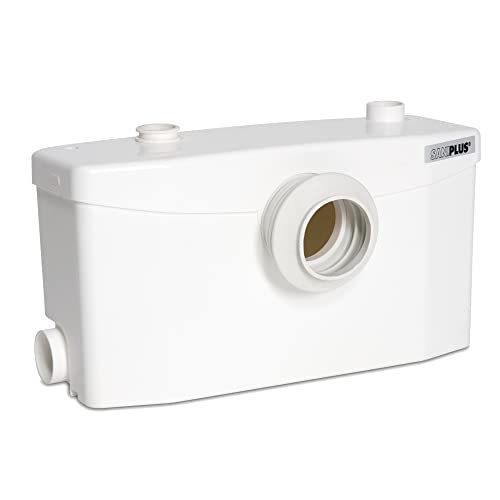
1. Saniflo SaniPLUS Macerating Pump (002) — Best for full basement bathrooms
The SaniPLUS is the workhorse rear-discharge macerating pump behind many Saniflo basement bathrooms. Its 1/2 HP motor liquefies waste and pumps it through a small-diameter discharge line up to 15 feet vertically or 150 feet horizontally, so the toilet does not need to sit next to a main drain. Beyond the toilet itself, the pump accepts gray water from a sink, shower, or bathtub through low side inlets, which makes it a practical core for a full bathroom rather than just a toilet. It pairs with Saniflo’s rear-discharge bowls in round or elongated form, sits behind the bowl, and can be concealed behind the wall with an optional extension pipe. Choose the SaniPLUS if you want the most established macerating setup for a complete below-grade bathroom.

2. Saniflo SaniBest Pro Upflush Toilet Kit — Best for heavy-duty grinder power
The SaniBest Pro is the step up when a standard macerator is not enough. Instead of blades that only handle normal waste and toilet paper, its 1 HP grinder pump is built for heavier use, including items that should not be flushed but sometimes are, such as sanitary products. It discharges up to 25 feet vertically or 150 feet horizontally, and Saniflo rates its noise at about 63 dBA. This listing is the full system — grinder pump, elongated bowl, and tank — so everything arrives matched. Extra inlets let you add a sink and a tub or shower, and the pump can even take a washing machine’s discharge indirectly through a laundry sink. Pick the SaniBest Pro for rentals, workshops, and busy households that need the strongest Saniflo option.
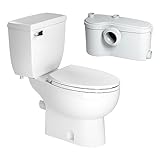

3. Saniflo SaniCompact (023) — Best for small half-baths
The SaniCompact takes a different approach: the macerator is built into a one-piece toilet, so there is no separate pump box behind the bowl. That makes it one of the neatest ways to add a half-bath in a closet, an under-stair nook, or a small basement corner. It connects directly to the water supply, uses a dual flush of 1 or 1.28 gallons, and its pump can push waste up to 9 feet vertically or 120 feet horizontally. A side inlet can also accept drainage from a small sink, and Saniflo rates its noise at about 53 dBA, quieter than most full-size macerators. The trade-off is capacity — it suits a toilet-and-sink half-bath rather than a full bathroom with a shower — but for compact spaces it is hard to beat.

4. Liberty Pumps Ascent II Macerating Unit — Best for high lift and easy servicing
Liberty Pumps’ Ascent II is the main alternative to Saniflo, and its macerating unit is designed around servicing. A removable access panel on the unit lets you reach the cutter assembly for maintenance without disconnecting the toilet or the plumbing — a real advantage years down the line. The system discharges up to 25 feet vertically or 150 feet horizontally through a 1-inch line, and Liberty’s RazorCut system uses stainless steel blades to shred waste before pumping. The unit connects to the matching Ascent II round-front or elongated bowls, and side inlets accept a sink, shower, or tub for a full bathroom layout. If long-term service access and a high lift rating matter more than an all-in-one kit, the Ascent II is the one to shortlist.
View Liberty Pumps Ascent II on Amazon

5. MaceratingFlo 750W Macerating Toilet System — Best complete kit on a budget
If the brand-name systems stretch the budget, this complete kit from MaceratingFlo covers the same job for less. Its 750W macerator offers four inlets, so the toilet, a sink, a shower, and a washing machine can all drain through the one unit, and the brand rates it to pump up to 36 feet vertically — higher than most residential systems. The package includes a two-piece rimless toilet with a 1.28-gallon flush and an extension pipe, which lets the pump sit behind the wall for a cleaner look. MaceratingFlo rates the noise at around 45 dB, although as with all macerators you should still expect to hear it run. It is a newer brand with a shorter track record than Saniflo or Liberty, but on paper it delivers the most complete budget package here.

What to Look For
| Factor | Why it matters | What to check |
|---|---|---|
| Pump power | Stronger pumps move waste further and higher. | Compare the stated vertical and horizontal discharge limits. |
| Configuration | One-piece and rear-unit designs fit spaces differently. | Measure the room and check the unit’s depth and height. |
| Noise level | The macerator makes sound during each flush cycle. | Look for the maker’s stated sound figures and housing details. |
| Extra connections | Some units take a basin, shower or bidet as well. | See how many inlets there are and what they accept. |
| Bowl and seat | Shape, height and seat style affect comfort. | Compare bowl dimensions and seat type. |
| Access for service | You may need to reach the unit for maintenance. | Check how panels open and where parts can be reached. |
Setup and Care Tips
- Follow local building rules and consider a qualified installer.
- Use only the pipe size and fittings named in the maker’s guide.
- Flush only what the maker lists as suitable for the unit.
- Descale with a product the maker approves, as advised in the manual.
- Keep the area around the unit clear so you can reach it.
Mistakes to Avoid
- Flushing wipes or items the maker says to avoid.
- Ignoring the maximum discharge height and distance.
- Boxing the unit in so it cannot be reached for service.
- Using the wrong pipe size or poor joints.
- Overlooking noise when the bathroom is near a bedroom.
How the Grinder and Pump Actually Work
Understanding the mechanism makes the specifications easier to read. When you flush, waste and water drop into a small chamber where a motor-driven blade breaks the solids down. A pump then pushes the resulting slurry out through a narrow discharge pipe, usually much smaller than the pipe a standard toilet uses. Because the pipe is slim, it can run through a stud wall, along a floor void or up to a higher drain, which is why these units suit basements and conversions.
The cycle is automatic. A sensor or float switch detects the level in the chamber and starts the motor, then stops it once the chamber has emptied. This is also why a macerating toilet is not a quiet, instant-flush appliance: you will hear the motor for a short time after each use.
What matters for you as a buyer is what the manufacturer says the machine is built to handle. Makers generally limit the unit to toilet tissue and human waste, plus water from any connected fixtures their guide approves. Items such as wet wipes, cotton products, hygiene products and similar materials are commonly listed as things to keep out because they can wrap around the blade or block the pump. Read the manual before purchase, not after, and decide whether everyone in the household is likely to follow those rules. A house with young children or frequent guests may want clear signage in the bathroom.
Also check whether the unit includes a built-in vent or needs a separate air vent connection, and whether the chamber has an access hatch for clearing blockages.
Planning the Discharge Route Before You Buy
The discharge route is the part of the project most likely to cause regret, so plan it on paper first. Sketch the path from the toilet to the point where the waste joins your main drain or soil stack. Note every horizontal run, every vertical rise and every bend. Maker guidance typically shows that raising the waste upward reduces how far it can travel sideways, so a unit rated for a long run at floor level may handle much less distance if it must also lift waste to a higher pipe. Check the manual for how the maker describes this trade-off, and add some margin rather than working at the stated limit.
- Keep the pipe run as straight and short as practical; each tight bend adds resistance.
- Use the pipe diameter, materials and fittings the manual specifies, and make sure joints are watertight.
- Include a non-return valve if the manufacturer requires or supplies one, so waste cannot flow back.
- Avoid dips where waste might settle; a steady rise or fall is better than a sag.
- Think about where the pipe will be concealed and whether you can still reach joints later.
Check how the unit will be vented, since good venting helps the pump run properly and keeps smells out. Local rules often cover connections to the main drain, so confirm requirements with your local authority or a qualified plumber before the walls are closed.
Floor-Standing, Rear-Unit and Wall-Hung Layouts
Macerating systems are sold in a few layouts, and the right one depends on how much space you can give up and how finished you want the room to look. A compact one-piece design has the grinder tucked behind or inside the bowl, so the whole thing is a single visible fixture. This is usually the simplest to install in a spare corner but can be bulkier at the back.
Rear-unit systems keep the macerator as a separate box that sits behind a standard-looking bowl, often inside a boxed-in panel or a stud wall. This can give a neater look and allow a wider choice of bowl, but you need to plan the cabinet space and an access panel for service. Some systems pair with wall-hung bowls, hiding the unit in a frame for a clean, easy-to-mop floor, though this needs a suitable wall build and extra planning.
- Check whether the bowl and the macerator are sold together or separately, and confirm they are compatible.
- Look for the exact bowl outlet and connection type the unit accepts.
- Confirm whether the system can be installed against a wall in the position you have in mind, using the listed dimensions.
- Consider how a future owner or tradesperson will reach the unit.
Choose the layout that matches the room first, then compare features within it. A good fit saves more trouble than any extra setting.
Power, Noise and Placement in the Home
A macerating toilet is an electrical appliance in a wet room, so safety planning is essential. The unit needs a power supply, and many regions require specific protection for bathroom electrics, such as a fused connection or a residual current device. Requirements differ by country and building type, so ask a qualified electrician or your local authority rather than assuming that a standard socket will do. Follow the maker’s instructions on where the supply must be placed relative to water.
Noise is the most common practical complaint, as the motor runs briefly with each flush. Placement makes a difference. A bathroom directly beside a bedroom or a living space will make the sound more noticeable than one in a basement. Soft mounting, insulation around the housing and solid wall construction can reduce transmitted sound, but results depend on the building, so avoid expecting a silent result.
- Read the maker’s description of sound levels and think about when the toilet is likely to be used.
- Consider whether the room above, below or beside the unit is a quiet space.
- Make sure ventilation is adequate, because small bathrooms can hold odours and damp.
- Leave clear space around the unit for air circulation and servicing.
Some units are also designed to cope with warm water from basins and showers, while others are not. Do not connect extra fixtures unless the manual explicitly allows them.
Servicing, Common Faults and When to Replace
Routine care keeps a macerating toilet reliable. The most important habit is to keep the wrong items out of it. After that, follow the maker’s descaling schedule if you live in a hard water area, because mineral buildup can strain the pump and blade. Use only the descaler the manufacturer approves, and do not use harsh chemicals that might damage seals.
Pay attention to early warning signs. These often show up as changes in sound or behaviour:
- The motor runs longer than it used to, or starts without a flush.
- Slow draining, gurgling or water that lingers in the bowl.
- Unusual grinding, humming or a motor that cuts out partway through a cycle.
- Leaks at joints, seals or the base of the unit.
- Persistent odours despite good venting.
Switch the unit off at the supply before you investigate anything, and do not open sealed parts unless the manual says that you can. Many blockages can be cleared through an access panel if the maker provides one, but if you are unsure, call a qualified plumber. Frequent faults, rising repair needs or difficulty finding replacement blades, seals or pumps are signs that replacement may make more sense than repair. Before buying, ask about spare parts availability and the length of the warranty, and keep the manual and receipt somewhere safe.
Planning a Bathroom Where No Drain Exists: A Step-by-Step Outline
A grinder-style toilet is often chosen because a standard drain is not available, such as in a basement, garage or attic space. That makes planning more important than usual. The outline below shows the order in which most projects unfold.
- Check local rules first. Building and plumbing codes vary by region, and some require permits or a licensed plumber for this kind of installation. Contact your local building office early.
- Map the route. Decide where the discharge pipe will run to reach the main drain or soil stack. Note the length and height of the run, and compare it with the maximum figures in the maker’s specifications.
- Confirm the vent. The system and fixtures may need proper venting. The maker’s installation guide describes what applies to your model.
- Plan the power supply. The unit needs a suitable electrical connection, and any new outlet or wiring should be handled by a licensed electrician.
- Choose the fixtures. Many units can serve a sink, shower or both in addition to the toilet. Read what each model supports before you plan extra fixtures.
- Leave access. Keep the unit reachable for servicing, rather than burying it behind a fixed wall.
Rough-in dimensions, such as the distance from the wall to the outlet, differ between models. Compare your floor plan with the dimension diagrams on each product page before you commit.
What Goes Down the Toilet: A Plain-Language Guide
These toilets use a grinder to break down waste, but the narrow pipes and the pump are sensitive to the wrong materials. Most makers publish a list of acceptable and unacceptable items, and that list deserves a place on the bathroom wall.
| Generally acceptable | Generally not acceptable |
|---|---|
| Human waste | Wet wipes, even those labeled flushable |
| Toilet paper in normal amounts | Feminine hygiene products |
| Water from connected sinks or showers, if the model supports them | Cotton swabs, dental floss and hair |
| Paper towels, cloth and rags | |
| Grease, oils, chemicals and solvents |
Treat the maker’s own list as the final word, since it covers warranty terms and equipment limits. Keep a small covered bin in the bathroom so guests and family members have an easy place for items that should stay out of the system.
If the unit begins making unusual noises, runs longer than usual or flushes slowly, stop using it and consult the manual or a plumber who knows these systems. Regular descaling with a product the maker approves can prevent mineral buildup in hard water areas.
FAQ
Where is a macerating toilet useful?
It is often considered for basements, loft rooms or extensions where a conventional drain run is difficult. Always check your local rules and plan the pipe route before you buy.
Are macerating toilets noisy?
The macerator makes a short noise when it runs. Makers describe sound levels in different ways, so look at what is stated and think about where the bathroom sits in your home.
What should never be flushed down a macerating toilet?
Makers commonly list wet wipes, cotton products, hygiene items, kitchen waste and anything non-toilet-paper as things to avoid. The exact list is in your unit's manual, so read it and follow it closely.
Do macerating toilets need a vent?
Venting is usually part of the design, either through a built-in filter or an external vent connection. Check which approach your unit uses and what local rules require.
Can I install one myself?
Some people handle the plumbing and fitting, but electrical connections and drain connections often have local rules. Consider a qualified plumber and electrician, especially for concealed pipework.
How often does a macerating toilet need maintenance?
It depends on water hardness and use. Many makers recommend periodic descaling and a check of the access areas, so follow the schedule in your manual.
What happens during a power cut?
Without power, the pump and grinder will not run, so the unit cannot empty its chamber. Check the manual for guidance on how many flushes may be possible and what to do.
Can the discharge pipe go up and along a long distance?
Makers state limits for both vertical and horizontal runs, and the two interact. Plan the route with the manual's figures and leave a margin rather than designing right at the limit.
Is a macerating toilet suitable for a full-time home bathroom?
Many people use them as everyday toilets, but suitability depends on the model and the household. Check the maker's description of intended use and think about backup arrangements.
A Deeper Look at Choosing Macerating Toilets
A macerating toilet exists to solve one problem: putting a bathroom where gravity drainage cannot easily go. That makes the buying decision less about styling and more about plumbing reality — pipe runs, discharge height, noise tolerance and how the unit will be serviced in five years. Work through those practical questions first and the choice between models becomes much clearer.
Discharge route and vertical lift
Everything starts with where the waste must travel. Measure the route from the unit to the soil stack: the horizontal distance, the vertical rise and the number of bends. A system working well within its comfortable range runs quieter and lasts longer than one pushed to its limit on every flush. Plan the pipe run on paper before choosing, because the route, not the showroom, decides which units are candidates.
What else will connect to it
Many macerating systems accept a basin, shower or bath as well as the toilet, which turns a simple WC into a full bathroom solution. List every fixture you intend to connect, now and later, and confirm the unit and its inlets suit that plan. Retrofitting extra connections afterwards is far harder than choosing a unit that already allows them.
Noise and where the unit sits
The macerator runs briefly on each flush, so noise matters more in a bedroom-adjacent ensuite than in a utility space. Consider what sits on the other side of the wall, when the bathroom gets used at night, and whether the unit will be boxed in. Boxing can soften sound but must preserve access for servicing, so plan the enclosure and the access panel together.
Servicing and parts availability
A macerating toilet is a machine as well as a fixture, and one day it will need attention. Favour designs that allow the motor unit to be serviced without removing the whole installation, and check that spares and support are realistically available where you live. Easy access, a nearby isolation point and clear instructions turn a future repair from a project into an errand.
Macerating Toilets in Real Life: Use Cases Buyers Actually Face
Basement bathrooms
Below-ground rooms are the classic use case, since waste must be lifted to reach the main drain. Measure the lift honestly, including the route the pipe actually takes rather than the straight-line height. Basements also reward attention to backflow protection and to what happens during a power cut, so plan those details before the first fixture is fitted.
Loft and garage conversions
In conversions, the appeal is avoiding major drainage work through finished rooms. A macerating system lets the bathroom sit where the layout wants it rather than where the soil stack dictates. Check floor structure, water supply routing and frost protection for pipework in unheated spaces, and confirm the conversion’s building-control requirements before installation begins.
Adding an ensuite in a small home
Where space is tight, the compact nature of these systems helps, but so does honest planning of the room itself. Ventilation, a basin that does not crowd the WC, and an access route for servicing all compete for the same few square metres. Sketch the room to scale; the toilet choice and the room layout should be decided together, not one after the other.
Getting Set Up and Building a Routine
Preparing the installation
Before fitting, confirm the water supply, electrical supply and discharge route are all in place and meet local rules. Electrical work near bathrooms has specific requirements in many regions, so use a qualified installer where required. Dry-fit the unit, check the discharge pipe gradient on horizontal runs, and make sure every joint will remain reachable once the room is finished.
Commissioning and first checks
Once connected, run several flushes and check every joint while the system is working, not just standing idle. Test the other connected fixtures too, one at a time and then together, listening for strain or unusual noise. Small leaks and slow drainage are easiest to fix now, before boxing-in and decorating hide the pipework from view.
Teaching the household the rules
A macerating system handles toilet waste and paper; it is not a general waste disposal. Make sure everyone using the bathroom knows that wipes, sanitary items and cotton products go in a bin, never the bowl. Most call-outs trace back to something that should never have been flushed, so a small bin and a brief conversation protect the system better than any feature.
Care, Cleaning and Storage
Routine care and cleaning
Clean the bowl and exterior with products the maker approves, avoiding harsh chemicals that can damage seals and internal components. Descaling matters in hard-water areas; use the maker’s recommended product and schedule rather than improvised alternatives. A system that is descaled and used correctly can run for years with little more attention than a conventional toilet receives.
Watching for early warning signs
Changes in sound, longer running after a flush, or slower drainage from connected fixtures are early signals worth investigating promptly. Catching a partial blockage or a tired component early is far cheaper than waiting for a complete failure. Keep the installer’s details and the unit’s documentation together so a call for help starts with the right information.
Access and storage of spares
Never tile or build over the unit so completely that it cannot be reached. Keep the access route clear in everyday use too — a cupboard that must be emptied before every service visit adds cost to every visit. Store the manual, warranty details and any spare seals together, and note the installation date where future owners or plumbers will find it.
How the Picks in This Guide Compare With Each Other
Every macerating toilets in the table above was chosen for a different reason, so a flat ranking would mislead you. The more useful exercise is to compare the picks by the job each one was picked to do, and then match that job to your own circumstances. Work through the comparisons below, then go back to the individual reviews for the details that settle your shortlist.
The Saniflo SaniPLUS Macerating Pump (002) is the option this guide positions as best for full basement bathrooms. Treat that label as a pointer to the job it was chosen for, not as a blanket verdict. If that job matches your own situation, the detailed review above is where to confirm the construction, sizing and everyday details that will decide whether it suits you. If it does not match, a neighbouring pick in the table will usually serve you better, even when the products look similar at first glance.
In the line-up above, the Saniflo SaniBest Pro Upflush Toilet Kit carries the role of best for heavy-duty grinder power. That positioning matters most when you compare it with the picks either side of it: ask what you gain and what you give up as you move between them, and whether the trade-off points toward your priorities or away from them. Buyers who start from their own use case, rather than from the longest feature list, tend to land on this pick for the right reasons.
The Saniflo SaniCompact (023) earns its place here as best for small half-baths. Read its review alongside the others with one question in mind: does the strength it was picked for solve a problem you actually have? Strengths you will never use are not worth trading against weaknesses you will meet every week. Where two picks seem evenly matched, the deciding factor is usually fit with your space, your routine and the people who will share the purchase with you.
As best for high lift and easy servicing, the Liberty Pumps Ascent II Macerating Unit is aimed at a specific kind of buyer, and the comparison only makes sense once you decide whether you are that buyer. Set it against the pick you were first drawn to and list, honestly, which of the two better matches your space, your habits and your tolerance for upkeep. That short exercise, done before ordering, prevents most of the returns and regrets that follow a purchase made on impulse.
The MaceratingFlo 750W Macerating Toilet System is presented in this guide as best complete kit on a budget. Use that framing when you weigh it against the rest of the table: the right comparison is not which product has the most features, but which one’s strengths line up with the tasks you repeat most often. The detailed section above gives the honest limitations as well, so read those before deciding, especially where a limitation touches something you will do daily.
Notice that none of these comparisons depends on a single headline feature. With macerating toilets, ownership is a long series of small interactions — setting up, using, cleaning, storing and living with the choice — and the pick that handles those small interactions best for you is the right one, whichever position it holds in the table.
Trade-Offs and Mistakes Worth Avoiding
Planning the bathroom around the wrong drain
The costliest mistake is designing the room first and discovering the drainage problem afterwards. Decide the discharge route before fixing the positions of fixtures, because moving a soil connection later means opening floors or walls. A short conversation with a plumber at the sketch stage routinely saves the entire budget of the unit itself.
Treating it like a conventional toilet
Flushing unsuitable items, using harsh chemical cleaners and ignoring early warning noises all shorten the system’s life. A macerating toilet asks for slightly more respect than a gravity toilet, and in return it makes bathrooms possible where none could exist. Buyers who accept that small bargain from the start are rarely disappointed; those who expect it to swallow anything usually are.
Before You Order: A Final Checklist
Run through this short list before you commit to any macerating toilets in this guide. It takes five minutes and catches the mismatches that most often lead to returns.
- Discharge route measured, including lift and bends
- All fixtures to be connected listed
- Electrical and water supplies confirmed suitable
- Access for future servicing preserved in the design
- Noise considered for neighbouring rooms
- Local plumbing and building rules checked
If an item on the list raises a doubt, go back to the detailed review of your leading pick and check that specific point rather than starting the whole search again. One verified answer is worth more than another hour of browsing.
More Questions Buyers Ask
What happens during a power cut?
The unit cannot pump without power, so the bathroom should not be used until power returns. For a home’s only bathroom this is worth thinking about in advance; where the macerating toilet serves an additional bathroom, the main gravity toilet remains available, which is one reason these systems are most often used for extra bathrooms.
Can visitors use it normally?
Yes, with one conversation: nothing but toilet paper goes in the bowl. Guests unfamiliar with macerating systems are the most common source of blockages, so a discreet bin in the room and a word when people stay over prevents most problems without any awkward signage.
How long should the system last?
Longevity depends on correct installation, sensible use and water quality, with descaling in hard-water areas making a real difference. Treat changes in noise or running time as prompts to investigate rather than background, and keep up the maker’s maintenance guidance; systems that are looked after generally serve far longer than neglected ones.
Is it suitable as the only toilet in a home?
It can be, but weigh the power-cut limitation and the servicing needs honestly. Many households prefer a macerating unit for an additional bathroom while keeping a conventional toilet as the main one. If it will be the only toilet, choose a model with strong local support and keep the installer’s number handy.
It also helps to think about timing. Many buyers replace macerating toilets only when the old one has clearly given up, which forces a rushed decision. Choosing while you still have a working option lets you compare calmly, wait for the configuration you actually want, and set everything up without pressure. If your current setup still functions, treat that as an advantage and use the time to measure, list your priorities and read the detailed reviews above with those priorities in front of you.
Households rarely use a purchase in exactly one way, so ask who else will rely on this macerating toilet. A choice that suits the person who did the research can still frustrate a partner, a parent, a child or a guest if their needs were never considered. Walk through the main shared scenarios — everyday use by someone else, use when you are not there to help, and use in a hurry — and check your leading pick against each one before you order.
Keep the paperwork and your own notes after the purchase. A short record of when you bought the macerating toilet, which configuration you chose and any settings or adjustments that worked well makes future maintenance, warranty questions and replacement decisions far easier. Photograph the installed or assembled result as well; if something changes over time, that early photo is the clearest reference for what normal looked like when everything was new.
Accessories and consumables deserve a thought before, not after, the main purchase. Most macerating toilets work best with a small set of supporting items, and realising that a week later means a second order and a delay. Read the review of your chosen pick for what the maker includes and what it assumes you already own, then decide which extras are genuinely needed on day one and which can wait until you know your routine.
Finally, give any new purchase a fair settling-in period before judging it. The first days with a different macerating toilet often feel unfamiliar rather than worse, and small adjustments to placement, settings or routine resolve most early complaints. Note what still bothers you after a couple of weeks of normal use; those remaining points are the real mismatches, and they are the ones worth acting on while returns or exchanges are still straightforward.
Budget deserves one honest pass as well. The sensible way to compare macerating toilets is by total cost of ownership: the purchase itself, the extras it needs, the consumables or upkeep it implies, and how long you realistically expect it to serve. A cheaper option replaced early can cost more than a better-matched one kept for years, while the most expensive option only earns its price if its strengths match the way you actually live and work.
Think, too, about how this purchase fits the things you already own. The best macerating toilets rarely work in isolation: they cooperate with what is already in the room, the wardrobe, the garage or the routine. Before ordering, run a quick compatibility pass in your head — sizes against spaces, routines against schedules, new habits against old ones. Purchases that slot into an existing life get used daily; purchases that demand a new life around them are the ones that quietly stop being used by the second month.
There is also a seasonal rhythm to owning macerating toilets well. The demands of the busiest season — the hottest month, the wettest weeks, the holiday rush, the start of term — are the true specification, not the average day. If your leading pick handles your hardest season comfortably, it will cruise through the rest of the year. If it only just copes on an average day, the hard season will expose it, so weight your judgement toward the conditions you dread most.
Consider buying once, properly, where the category rewards it. With macerating toilets, the cheapest route in often becomes the most expensive route overall when an early replacement, a workaround or a second purchase follows. That does not mean buying the most expensive option; it means buying the option whose quality matches your intended years of use. Decide the lifespan you are shopping for first, and let that number, rather than the shelf edge, sort the picks into sensible and false economy.
Second-hand and hand-me-down routes deserve an honest mention in this category. A used macerating toilet can be excellent value when its condition can be inspected and its wear parts are replaceable, but it deserves more scrutiny, not less: check the parts that wear, confirm nothing structural is tired, and walk away from anything whose history you cannot read. The same inspection habits protect you with new purchases, where display models and first-week checks serve the same purpose.
Finally, plan the exit as well as the entrance. Knowing in advance what you will do when this macerating toilet reaches the end of its life — repair, resell, pass on, recycle — makes you a better buyer today, because repairable, pass-on-able purchases announce themselves during the choosing. Makers who sell parts and publish guidance are telling you something about how long they expect their product to serve, and that expectation is worth buying into.
One more habit separates satisfied owners from frustrated ones: they revisit the decision once, deliberately, a month in. Not to regret it, but to tune it — an adjustment here, a routine change there, an accessory that the first month proved necessary rather than merely attractive. That single review converts a decent purchase into a settled one, and it costs nothing but attention. Schedule it when you order, while the intention is fresh, and keep the notes with the paperwork.
If you are still torn between two options in this guide, use the ordinary-week test. Picture the most typical week in which you will use this macerating toilet — not a holiday, not a crisis, not the day guests come — and ask which pick serves that week with the least friction. The product that wins the ordinary week is almost always the right purchase, because ordinary weeks are where ownership actually happens, week after week, long after the excitement of choosing has faded.
It is also worth deciding what would make you replace this purchase one day. Naming the failure or frustration that would end the relationship — wear, a changed household, a new requirement — helps you judge which of the picks above is built to delay that day longest. A purchase chosen with its ending in mind tends to be maintained better, used more fully and replaced more calmly than one bought on impulse and judged in hindsight.
The Short Version
Choose a macerating toilet by pump limits, layout, noise and extra inlets, and plan the pipe route with care. Follow the maker’s list of what may be flushed. Good planning gives a bathroom in places where a normal drain would be hard to run.
Related Guides
- How to Choose the Best Smart Toilets: Buyer's Guide (2026)
- How to Choose the Best Composting Toilets: Buyer's Guide (2026)
- How to Choose the Best One Piece Toilets: Buyer's Guide (2026)
- How to Choose the Best Toilets: Buyer's Guide (2026)
- How to Choose the Best Wall Hung Toilets: Buyer's Guide (2026)


