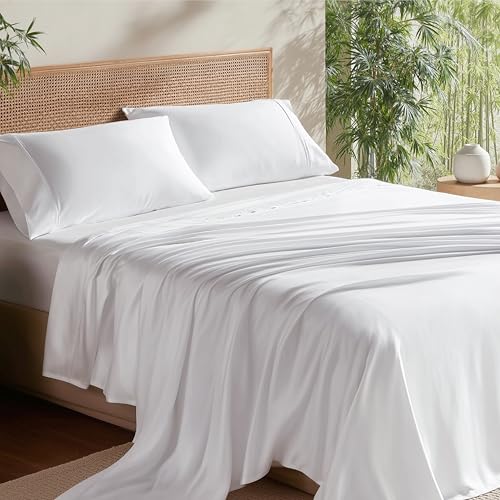
Linen sheets have a relaxed, textured look and a loyal following among people who like natural fibres. We have not used these products ourselves, so this guide does not rank anything. It helps you compare the features that shape how a set looks, feels and ages.
Linen is made from flax, and its character depends on thread count, fabric weight and finishing. Heavier cloth feels sturdy and drapes with a crisp hand, while lighter cloth feels softer from the first day. Many sets are pre-washed to reduce stiffness, and colours range from natural oatmeal to deep tones. Before you shop, check your mattress depth, decide which pieces you need and think about how much laundry effort you are happy with. Linen wrinkles as part of its charm, so if you prefer a smooth, pressed look, set your expectations before you buy. A set that suits your habits will feel better over the years than one chosen for looks alone.
As an Amazon Associate we earn from qualifying purchases. Links on this site are affiliate links, and they do not change the information we give.
In this guide
Quick Picks
| Pick | Product | Best For |
|---|---|---|
| 1 | DAPU Pure Linen Sheets Set, Queen | Normandy flax with a classic natural finish |
| 2 | Simple&Opulence 100% Linen Sheet Set, 4 Piece, Queen | The widest colour range and a 15-inch pocket |
| 3 | SONORO KATE 100% French Pure Linen Sheets, Queen | A 16-inch deep pocket for tall mattresses |
| 4 | Talasily 100% French Pure Linen Sheets Set, Queen | Stone-washed softness with OEKO-TEX certification |
| 5 | CHUFFED 100% French Linen Sheets Set, Queen | A stone-washed set with a 16-inch pocket |
Our Picks

1. DAPU Pure Linen Sheets Set, Queen — Best for Normandy flax
DAPU builds its bedding around one claim: the flax is French, grown in Normandy, and the cloth is 100% linen with no cotton or synthetic blended in. The Queen set has four pieces, a flat sheet, a fitted sheet and two pillowcases, and the fitted sheet uses elastic all the way around so it grips the mattress corners instead of relying on straps. The cloth is stone washed, which takes the first stiffness out of new linen and gives it the relaxed texture the guide describes. The natural linen colour shows the fibre’s character, flecks and all, which suits the lived-in look; if you want a dyed colour, DAPU offers the same set in other shades. Care follows the usual linen pattern of a gentle wash. Choose this set if fibre origin matters to you and you want a straightforward, undyed starting point.


2. Simple&Opulence 100% Linen Sheet Set, 4 Piece, Queen — Best for colour choice
Simple&Opulence is the set to look at when colour is the deciding factor: the listing offers the same 100% French linen cloth in a long list of shades, from natural linen and white through sage, dusty blue, rust and lilac. In Queen, the flat sheet measures 90 x 102 inches and the fitted sheet is 60 x 80 inches with a 15-inch pocket, deep enough for many pillow-top mattresses, and two 20 x 30 inch pillowcases complete the four pieces. The fabric is OEKO-TEX Standard 100 certified, and the brand washes the cloth so it starts softer than raw linen. Check the pocket depth against your own mattress before ordering, since 15 inches will not cover the very deepest mattresses plus a topper. Choose it if you want genuine linen in a specific colour rather than the usual natural or white.

3. SONORO KATE 100% French Pure Linen Sheets, Queen — Best for tall mattresses
The headline figure on this set is the pocket: the fitted sheet is made with a 16-inch deep pocket and elastic all around, which is the combination the guide recommends checking for tall mattresses and toppers. The set is 100% French linen in four pieces, flat sheet, fitted sheet and two pillowcases, shown here in the natural linen shade. The brand states the fabric is OEKO-TEX Standard 100 certified and machine washable, and it describes the cloth as anti-tear, a nod to linen’s natural fibre strength. As with all linen, expect texture and creasing rather than a pressed cotton finish, and wash gently to protect the fibres. Measure your mattress depth first; if it is close to 16 inches including a topper, this is the set in the group built for it. Choose it for fit security on a deep bed.
View SONORO KATE 100% French Pure Linen Sheets on Amazon
4. Talasily 100% French Pure Linen Sheets Set, Queen — Best for hot sleepers
Talasily aims its set squarely at warm sleepers: the listing leans on linen’s breathability and moisture handling, and the cloth is stone washed French linen, so it feels broken-in sooner than unwashed flax. The four-piece Queen set pairs a flat sheet and two pillowcases with a fitted sheet that has a 16-inch deep pocket, so it suits taller mattresses as well. The fabric carries OEKO-TEX certification, and the brand says the set is machine washable, which keeps care to the gentle routine linen prefers. The natural linen colour keeps the fibre’s texture visible, wrinkles included, so it fits the relaxed style described in the guide rather than a crisp hotel look. If you sleep hot and want the deep pocket as insurance against corners popping loose at night, this is a sensible combination of the two features in one set.
View Talasily 100% French Pure Linen Sheets Set on Amazon

5. CHUFFED 100% French Linen Sheets Set, Queen — Best stone-washed value pick
CHUFFED covers the same checklist as the better-known names: 100% French linen, stone washed before sale so the first night is not a stiff one, and OEKO-TEX certification for the finished cloth. The Queen set has four pieces, and the fitted sheet is made with a 16-inch deep pocket, which puts it alongside the deepest fits in this group and makes it worth checking if your mattress runs tall. The listing positions the set for all-season use and for hot sleepers, leaning on the fibre’s airflow and moisture absorption, and the natural linen shade keeps the woven texture on show. Follow the maker’s wash guidance and keep the cycle gentle, as the guide advises for linen generally. Choose this set if you want the stone-washed finish and deep pocket, and you are comfortable buying from a smaller bedding brand.

What to Look For
| Factor | Why it matters | What to check |
|---|---|---|
| Fabric weight | Weight changes drape, warmth and how the cloth feels. | Look for the maker’s stated grams per square metre. |
| Fibre source | Flax origin and processing affect softness and consistency. | Read the description for fibre content and any stated certifications. |
| Pre-washing | Pre-washed cloth is softer and less likely to shift in size. | Check whether the listing mentions stone washing or enzyme washing. |
| Fit and depth | Fitted sheets must suit your mattress height. | Compare pocket depth with your mattress measurements. |
| Set contents | Some sets include pillowcases, others sell them apart. | List what you need and see what each set contains. |
| Care label | Washing rules decide how easy the sheets are to keep. | Check recommended wash temperature and drying advice. |
Setup and Care Tips
- Wash new sheets before first use to remove finishing residue.
- Use a gentle cycle and mild detergent, and skip fabric softener.
- Do not overload the machine, so the cloth can move freely.
- Shake sheets out and dry them on a low setting or on a line.
- Store spare sets folded in a dry cupboard with a little airflow.
Mistakes to Avoid
- Expecting linen to feel like smooth cotton on day one.
- Skipping the care label and washing on a hot cycle.
- Ordering the wrong size without checking mattress depth.
- Choosing a very light weight when you want a sturdy feel.
- Ironing at the wrong heat and scorching the cloth.
From Flax Field to Finished Sheet
Knowing how linen is made helps you read a product page with more confidence. Flax plants are harvested, soaked and processed to separate the long fibres from the woody stem. Those fibres are spun into yarn and woven into cloth. Because flax fibres are naturally long and strong, linen fabric is known for durability.
The finish applied after weaving shapes how the sheets feel on day one. Some are washed with stones or enzymes to soften them, which gives a relaxed, slightly crumpled look. Others are left crisper and soften gradually with use. If a listing mentions a washing process, it is telling you something about the first-night feel.
Natural variation is part of the charm. Slubs, tiny thick spots in the yarn, give linen its textured surface. They are not defects, but a trait of the fibre. If you want a perfectly even weave, linen may not be the right fabric. If you enjoy a lived-in look, it probably is.
Decoding Fabric Weight
For linen, weight tells you more than thread count. Weight is usually given in grams per square metre, often shortened to GSM. A lighter fabric drapes softly and suits warm rooms, while a heavier one feels sturdier and holds warmth better.
| Weight band | General feel | Suits |
|---|---|---|
| Lighter | Airy, flowing, wrinkles easily | Warm climates and summer beds |
| Medium | Balanced drape and body | Year-round use |
| Heavier | Substantial, durable, a little stiffer at first | Cooler rooms and long wear |
Thread count is less meaningful for linen than for cotton, since flax yarns are thick and uneven. If a listing does not give a weight, look for a description such as lightweight or midweight, and check the maker’s details if you want certainty.
Remember that heavier fabric takes longer to dry and may feel stiff until it has been washed a few times.
Origin Labels and What to Check
You will see claims about where the flax was grown or where the cloth was woven and sewn. These can vary and not every claim means the same thing. Flax grown in one country may be spun and woven in another, so read the listing carefully.
- Look for plain statements about fibre content, such as one hundred percent linen.
- Watch for blends that include cotton or other fibres, which behave differently.
- If a label mentions a quality certification, check the maker’s page for details on what it covers.
- Treat vague marketing phrases cautiously and look for specifics.
An origin label can speak to the supply chain, but it does not by itself tell you how the sheets will feel. Use it as one piece of information next to weight, finish and care instructions.
Fit, Pockets and Bed Details
Great fabric still disappoints on a badly fitting sheet. Measure your mattress depth, including any topper, and compare it to the pocket depth in the listing. Linen has little stretch compared to knit sheets, so a corner that is too tight will pull and wear.
Fitted sheet features
Look for deep pockets, elastic that runs around the full edge and reinforced corners. Some sets use elastic only at the corners, which can slip on a thick mattress.
Flat sheet and cases
Generous dimensions allow tucking and give the sheet a relaxed fall at the sides. Pillowcase style matters too: envelope closures keep pillows in place, while open ends are simpler.
Set contents
Check how many pieces are included. A set may have a flat sheet, a fitted sheet and two cases, or it may have fewer. Duvet covers are sold separately in many cases.
Colour, Light and Bedroom Style
Linen takes dye in a soft, slightly mottled way, so colours look earthy rather than glossy. Photos on a listing can vary from real life because of screen settings and room light.
- Neutrals such as oatmeal, white and stone suit most rooms and hide wrinkles best.
- Deeper shades such as charcoal or navy make a bolder statement and may fade slightly with washing.
- Soft pastels feel calm but can show marks sooner.
Think about the rest of your bedroom, including walls, curtains and bed frame. Linen mixes well with other natural textures such as wood and cotton. If you plan to layer a blanket or duvet cover, pick shades that sit comfortably together.
When in doubt, order a neutral. You can add colour through throws and cushions without committing the entire bed.
Washing and Drying Routine
Linen is tougher than its delicate look suggests, but it responds best to gentle care. Always follow the care label first, since dyes and finishes vary.
- Wash on a gentle or regular cycle at the temperature the label advises.
- Use a mild detergent and skip fabric softener, which can coat the fibres.
- Avoid overloading the drum so the sheets can move freely.
- Dry on a low setting or hang to air dry, and remove them while slightly damp if you want fewer creases.
- Smooth them by hand or make the bed right away.
Wash new sheets before first use to remove finishing residues. Wash dark colours separately the first few times.
Ironing is optional. Many people enjoy the crumpled look, and a quick shake after drying usually does the job.
Troubleshooting Linen Problems
Stiffness after a first wash
This is common. A few more washes and nights of use usually relax the fabric.
Pilling or fuzz
Linen pills less than many fabrics, but friction can cause small balls. Wash inside out and avoid rough items in the same load.
Shrinkage
Linen can shrink a little, particularly in hot water or a hot dryer. Check the care label and choose a lower heat.
Creases that will not relax
Spritz with water and smooth by hand, or use a warm iron following the label.
Colour fading
Wash on a cooler setting, avoid direct sunlight when drying and keep strong detergents away.
Odd smells
Air the sheets thoroughly and wash again. Make sure the drum is clean and that sheets are fully dry before storing.
Layering, Storage and Seasonal Use
Linen adapts through the year when you layer it well. In warm months, use the sheets alone or with a light cover. In cooler weather, add a blanket, quilt or duvet on top. Because linen breathes, many people find it comfortable across seasons, though personal comfort varies.
Storing a spare set
Keep clean, fully dry sheets in a cool, ventilated cupboard. A cotton bag or loose fold works better than tight plastic. Avoid tight creasing in the same spot for months.
Rotating sets
Owning two sets lets you alternate, which spreads wear and gives each set time to rest.
Quick buying checklist
- Confirm fibre content and fabric weight.
- Measure mattress depth against pocket depth.
- Check what pieces are in the set.
- Read the care label before you buy.
- Pick a colour that suits your room.
Linen Compared with Cotton, Bamboo and Blends
Most shoppers arrive at linen after living with another fabric, so a side-by-side view helps set expectations.
| Fabric | Typical feel | Care notes |
|---|---|---|
| Linen | Textured, airy, relaxed look | Softens with washing, wrinkles naturally |
| Cotton percale | Crisp and smooth | Easy care, can crease |
| Cotton sateen | Silky with a slight sheen | Can be less crisp, check label |
| Bamboo-based fabric | Soft and drapey | Follow the maker’s wash advice |
| Linen-cotton blend | Softer from day one, less texture | Often simpler to iron |
Linen is not trying to feel like any of these. It has its own character: slightly rustic, breathable and long-lived. If you prefer a perfectly smooth, tight surface, a cotton option may suit you better. If you like a casual, lived-in bed, linen is a natural fit.
Blends can be a stepping stone. They give some of the look while easing the transition for people unsure about the texture.
Common Mistakes When Buying Linen Bedding
A little knowledge prevents most disappointments.
- Expecting instant silkiness. Linen usually needs a few washes to relax.
- Choosing by thread count, which means little for this fibre.
- Ignoring mattress depth and then fighting with slipping corners.
- Skipping the care label and washing too hot.
- Assuming every product labelled linen is pure. Check the fibre content line.
- Buying a bold colour online without allowing for screen differences.
Another trap is overpacking the washing machine. Linen is bulky when wet and needs room to move. If the drum is crammed, sheets can come out creased and unevenly cleaned.
Finally, remember to check delivery details and the return terms, so you have a way out if the set does not suit you.
Who May Prefer to Skip Linen
No fabric suits every sleeper or every household, and honesty about that saves money.
Those who dislike texture
If you want a flat, glossy surface, the natural slubs of linen may feel rough at first.
People who want zero wrinkles
Linen creases. That is part of the style, but if tidy bedding matters to you, it could irritate.
Households with heavy laundry loads
Linen is easy to wash, yet it dries slowly in thick weights. If you rotate bedding daily, plan for drying time.
Sensitive skin
Some people find textured fabrics irritating. If you have a skin condition, ask a health professional and consider a small purchase first.
None of this makes linen a poor fabric. It simply means your preferences should lead the decision.
Bedroom Setup to Show Linen Off
A few styling touches bring out the best in a linen bed.
- Leave the sheets a little rumpled, because the soft folds are the appeal.
- Pair with cotton pillows or wool throws for contrast in texture.
- Choose a duvet cover in a related shade for a calm, layered effect.
- Keep bedside lighting warm to bring out the natural tones.
Rotate pillow positions and fold a throw across the foot of the bed for balance. If you share the bed, check that both people like the layout of the covers and the weight of what is on top.
Seasonal Layering and Room Conditions
Bedroom conditions change through the year, and so does the best way to dress the bed. Linen is flexible, but a few adjustments help.
Warm months
Use a single sheet, or a light cover on top. Keep windows and curtains arranged to let air move through the room.
Cool months
Add a wool blanket or a quilt over the sheets. Heavier linen holds up well under extra layers.
Humid rooms
Air the bed each morning by folding back the covers for a short while. Make sure sheets are fully dry before storing them.
Dry heating
Linen may feel crisper in very dry air. A few extra washes soften it.
Comfort is personal, so experiment with different combinations and notice what feels right for you. If you share the bed, try to find a mix that both people like.
Keep a note of which layers you used in each season, so you can repeat what worked.
Gifting, Sets and Sizing Notes
Linen makes a thoughtful gift, though sizing needs care. Mattress sizes differ between regions, and names such as queen or king do not always match from one country to another. Check the measurements on the listing and compare them with your bed.
- Measure your mattress length, width and depth, including toppers.
- Compare with the fitted sheet dimensions and pocket depth.
- Check the flat sheet width for tucking room.
- Look at the pillowcase size against your pillows.
If buying for someone else, a neutral colour and a clear return option reduce the risk. Matching sets are convenient, but mixing a flat sheet and cases in related shades creates a relaxed, layered look. Always read the care label before wrapping the gift, and pass the details along to the recipient.
Choosing Linen sheets Around Real Life, Not Just the Listing
The picks above were chosen for sleepers who run warm and like a relaxed, breathable bed. Even so, the right set of linen sheets for one household can be the wrong one for the next, because the deciding factors are usually about daily life rather than headline features. Before you settle on a model, picture a normal week with it in place at the main bed through summer and layered with blankets in winter. Think about who else will use it, move it, clean it or walk past it, and what happens on the busiest day rather than the quietest one. A choice that still makes sense on that busy day is usually the choice you stay happy with.
Start with the main job, then the second job
Most people buy linen sheets for one main job and then quietly expect a second job as well. Write both down, in plain words, before you compare models. If the second job matters every week, it deserves real weight in the decision, and it may push you towards a different pick than the main job alone would suggest. If the second job happens twice a year, do not let it overrule the features you will feel every day. This simple ordering step prevents the most common disappointment with linen sheets: a product that is excellent at the thing you rarely do and merely adequate at the thing you do constantly.
Match the choice to the space you actually have
Space decides more purchases of linen sheets than any feature list. Measure the spot at the main bed through summer and layered with blankets in winter, then measure it again with the doors open, the chairs out, the people standing where people stand. Allow room to get round the sides for cleaning and room to step back and look at the result. A set of linen sheets that fits on paper but blocks a route, a drawer or a view will annoy you daily, while one size down that leaves the room easy to live in rarely feels like a compromise after the first week. Photograph the space on your phone and compare it honestly with the room scenes in the listing pictures, which are almost always larger than they look.
Think about who else is involved
Children, guests, pets, housemates and colleagues all change what good looks like for linen sheets. Ask who will touch it, lean on it, spill on it or be woken, dazzled or tripped by it. Features that sound like extras, such as rounded edges, washable parts, quiet operation or a finish that hides marks, often matter more in a shared home than in a single person household. If the set of linen sheets will be used by someone less strong, less tall or less patient than you, test your shortlist against their hands and habits, not just your own.
The Details That Decide Whether Linen sheets Earn Their Keep
Build quality you can check, not just admire
Listings for linen sheets all promise solid construction, so judge by the parts you can inspect in photographs and descriptions. Look at joints, fixings, seams, edges and the underside or back, where makers save money first. Even, tight joins and finished edges suggest care throughout; rough finishing in the visible places usually means rougher finishing where you cannot see. Weight can be a clue, since a set of linen sheets built from denser materials often feels more settled in use, but weight alone proves nothing without tidy construction behind it. Where the article above comments on build for a specific pick, trust those notes over generic listing language.
Materials and how they age
The best material for linen sheets is the one that ages gracefully in your conditions, not the one that sounds most premium. Ask how the main surfaces handle moisture, sunlight, knocks and cleaning products, because those four things decide how a set of linen sheets looks after a year. Some materials forgive daily scuffs and can be refreshed with simple care; others look wonderful for a month and then show every mark. If your home is busy, damp, sunny or dusty, favour the forgiving option and save the delicate finish for a quieter room. Honest ageing, where a surface mellows evenly, beats a finish that chips, peels or stains in patches.
Comfort, fit and everyday feel
Specifications cannot tell you how linen sheets feel in use, so lean on the proportions and adjustments the article describes for each pick. Think about reach, grip, height, angle and the effort involved in the main action you will repeat. Small ergonomic annoyances compound: something slightly awkward gets used hundreds of times, and each time it quietly argues against itself. Where a pick offers adjustment, check the range suits the shortest and tallest users in the home, and check the adjustment is easy enough that people will actually bother with it rather than leaving the set of linen sheets set wrong for months.
Running costs and the cost of putting things right
The purchase is only the first payment for linen sheets. Consumables, replacement parts, batteries, treatments and repairs all add up, and they add up fastest on models with unusual fittings or sealed parts you cannot service. Before buying, check which parts wear out, whether those parts are standard and easy to find, and what a simple repair involves. A slightly plainer set of linen sheets with common, replaceable parts often costs far less over its life than a cleverer one that needs specialist attention. Keep the receipt, the manual and any spare fixings together in one place from day one; future you will be grateful.
How the Picks Above Compare in Everyday Use
The shortlist above covers DAPU Pure Linen Sheets Set, Queen; Simple&Opulence 100% Linen Sheet Set, 4 Piece, Queen; SONORO KATE 100% French Pure Linen Sheets, Queen; Talasily 100% French Pure Linen Sheets Set, Queen; CHUFFED 100% French Linen Sheets Set, Queen. Rather than hunting for a single winner, read it as a set of trade offs. Each pick earned its place by being strong at something specific, and the notes in the reviews above, covering who each one suits, its honest limitation and when to skip it, are the fastest way to narrow the list to two.
Take the DAPU Pure Linen Sheets Set, Queen. Judge it against your main job first: picture it at the main bed through summer and layered with blankets in winter on your busiest day, and check the limitation noted in its review above does not collide with that picture. If the limitation touches something you do rarely, it is a fair trade for its strengths. If it touches your main job, move on without regret, because another pick in this list was included precisely for buyers in your position.
Take the Simple&Opulence 100% Linen Sheet Set, 4 Piece, Queen. Judge it against your main job first: picture it at the main bed through summer and layered with blankets in winter on your busiest day, and check the limitation noted in its review above does not collide with that picture. If the limitation touches something you do rarely, it is a fair trade for its strengths. If it touches your main job, move on without regret, because another pick in this list was included precisely for buyers in your position.
Take the SONORO KATE 100% French Pure Linen Sheets, Queen. Judge it against your main job first: picture it at the main bed through summer and layered with blankets in winter on your busiest day, and check the limitation noted in its review above does not collide with that picture. If the limitation touches something you do rarely, it is a fair trade for its strengths. If it touches your main job, move on without regret, because another pick in this list was included precisely for buyers in your position.
Take the Talasily 100% French Pure Linen Sheets Set, Queen. Judge it against your main job first: picture it at the main bed through summer and layered with blankets in winter on your busiest day, and check the limitation noted in its review above does not collide with that picture. If the limitation touches something you do rarely, it is a fair trade for its strengths. If it touches your main job, move on without regret, because another pick in this list was included precisely for buyers in your position.
Take the CHUFFED 100% French Linen Sheets Set, Queen. Judge it against your main job first: picture it at the main bed through summer and layered with blankets in winter on your busiest day, and check the limitation noted in its review above does not collide with that picture. If the limitation touches something you do rarely, it is a fair trade for its strengths. If it touches your main job, move on without regret, because another pick in this list was included precisely for buyers in your position.
A useful final test is to read the reviews of your top two picks back to back and list, for each one, the chore it makes easier and the chore it leaves unchanged. The better set of linen sheets for you is the one whose easier chore is the one you do most often. Price differences within a shortlist usually reflect materials, finish and extra features rather than basic competence, so buy the competence your routine needs and let the rest go.
Getting Set Up and Settled In
Unbox your set of linen sheets somewhere with room to lay the parts out, and keep the packaging until you have checked everything over and used it once. Photograph the contents before you start if the parts are numerous; the photo settles any later argument about what was in the box. Read the maker’s instructions once through before touching anything, because the order of steps matters more with linen sheets than most people expect, and undoing a step usually costs more time than reading would have.
Work in the spot where the set of linen sheets will live, at the main bed through summer and layered with blankets in winter, rather than building or preparing it elsewhere and carrying it in. Check levels, clearances and access as you go, not at the end. If two people are recommended for lifting or holding, wait for a second person; most damage to linen sheets happens in the first hour, through one rushed lift or one fixing forced at an angle. Tighten, fit and adjust in the sequence given, then stand back and look at the result from the doorway, which is how the room will actually be seen.
Expect a short settling period. New linen sheets often need small adjustments after the first days of real use, as parts bed in, materials relax and you discover your own preferences. Keep the tools that came in the box, or the ones you used, somewhere near the set of linen sheets for the first fortnight so those tweaks actually happen. After a month, do one deliberate review: what still niggles, what has surprised you pleasantly, and what small change of position, setting or habit would fix the niggle. Most niggles with linen sheets are fixed by that one review rather than by replacing the product.
Using It Well: Habits That Make the Difference
Good results with linen sheets come more from small habits than from premium models. Use the set of linen sheets for the job it was designed for, at the pace it was designed for, and resist improvising with it on tasks it clearly was not built to handle. Keep the immediate area tidy, because clutter around linen sheets causes more accidents, damage and quiet frustration than the product itself ever will. If other people share it, agree the basics once, out loud: where it lives, how it is left after use, and who deals with problems. Five minutes of agreement prevents months of low level irritation.
Learn the early signs that something needs attention: a new noise, a looser feel, a mark that was not there last week, a part that needs more force than it used to. With linen sheets, small changes noticed early are nearly always cheap and quick to put right, while the same issues ignored become the repair or replacement you did not budget for. Build a light routine around washing cool and gentle, line drying where possible and storing folded in a dry cupboard, and fold it into something you already do weekly so it never becomes a special expedition.
Cleaning, Care and Storage Over the Long Term
Care for linen sheets is mostly about little and often. The routine that works is washing cool and gentle, line drying where possible and storing folded in a dry cupboard, done on a rhythm rather than in a panic before guests arrive. Use the gentlest cleaning method that works, start with a dry cloth or brush, and only move to water or cleaning products when dry methods fail. Test any product on a hidden patch first, keep moisture away from joints, electrics and mechanisms unless the maker says otherwise, and dry everything thoroughly before putting the set of linen sheets away or covering it.
Storage matters as much as cleaning. Keep your set of linen sheets somewhere dry, out of strong direct sunlight and away from heat sources that dry out materials unevenly. If it folds, packs down or comes apart, practise the sequence once while you are calm rather than first attempting it in a hurry. Keep small parts, spare fixings and the manual together in a labelled bag or box stored with it, because the part you lose is always the part the maker no longer sells separately. Photographing how cables, straps or parts route before you pack away saves real frustration next time you set up.
When Something Feels Wrong: Troubleshooting in Order
When linen sheets disappoint, work through the simple causes before blaming the product. First, position: is the set of linen sheets where it should be, level, clear and with the access it needs at the main bed through summer and layered with blankets in winter? Second, setup: has a fixing loosened, a setting drifted or a part been refitted the wrong way round after cleaning? Third, expectations: is the job you are asking of it the job it was chosen for, or has the job quietly grown since you bought it? A surprising share of problems with linen sheets resolve at one of those three steps, with no tools and no spending.
If the problem survives those checks, look for wear in the obvious places and consult the manual’s troubleshooting section before searching online, because the maker has usually seen your exact issue. Take a photo of the problem before you adjust anything; if you later need support or a replacement part, that photo is the clearest evidence you can offer. And keep perspective: a set of linen sheets that needs one part replaced after honest service has not failed you, it has simply reached the point where a small repair buys years more use.
FAQ
Do linen sheets soften over time?
Most owners find that linen becomes softer with repeated washing, as the fibres relax. How quickly this happens depends on fabric weight and whether the cloth was pre-washed before it was sold.
Is linen hard to look after?
Not usually. A gentle wash and a low dry are enough for many sets, though you should always follow the maker’s own label. Wrinkles are normal and many people simply enjoy the lived-in look.
How long should linen sheets last with normal use?
With the routine care described above, a well chosen set of linen sheets should give years of service. Lifespan depends far more on how closely the model matches its workload than on the badge it carries. A pick matched to your main job and cared for little and often will outlast a heavier duty model that is misused, overloaded or neglected, so buy for your real routine and keep up the simple checks.
What is the most common buying mistake with linen sheets?
Buying for the photograph instead of the floor plan. Shoppers fall for how linen sheets look in a large styled room, then discover the proportions fight their own space at the main bed through summer and layered with blankets in winter. Measure first, including the routes in and out, and be honest about the second job you expect the set of linen sheets to do. The second most common mistake is skipping the limitation notes in the reviews above; every pick has one, and the right pick is the one whose limitation you will never meet.
Can I manage with a smaller or simpler option?
Often, yes. If your main job is modest and occasional, a simpler set of linen sheets used happily beats an elaborate one that dominates the room and demands attention. The case for the larger or richer featured option rests on frequency and load: daily use, several users or a growing need. Decide by how many days a month the extra capacity will genuinely be used, not by the one big occasion you can imagine.
How do I keep linen sheets looking good in a busy home?
Choose forgiving finishes where you can, put protection under or behind the parts that take knocks, and deal with marks the day they happen rather than at the weekend. Keep the basic care kit, cloth, brush and any treatment the maker recommends, stored with the set of linen sheets itself. In busy homes the difference between shabby and handsome linen sheets is rarely the model chosen; it is whether washing cool and gentle, line drying where possible and storing folded in a dry cupboard happens in small regular moments.
What should I check when my set of linen sheets first arrives?
Check the contents against the parts list before disposing of packaging, inspect edges, surfaces and moving parts for transit damage, and confirm everything operates smoothly before the first real use. Photograph any damage immediately and keep the delivery paperwork. Then run one gentle first use rather than the biggest job you have; a calm first run reveals setup issues while they are still easy to correct.
When is it worth replacing rather than repairing?
Repair while the frame, body or core of the set of linen sheets is sound and the fault sits in a replaceable part. Replace when the structure itself is tired, when several systems fail together, or when the product no longer fits the job your life now asks of it. A good test: if a repair restores the set of linen sheets you would happily buy again, repair it. If you would choose differently today, let the replacement be that different choice, informed by everything the old one taught you.
The Short Version
Choose linen sheets by weight, washing treatment, fit and care needs. Decide how much texture you enjoy, measure your mattress and read the care label before you commit. Those simple checks lead to a set you will happily use for years.