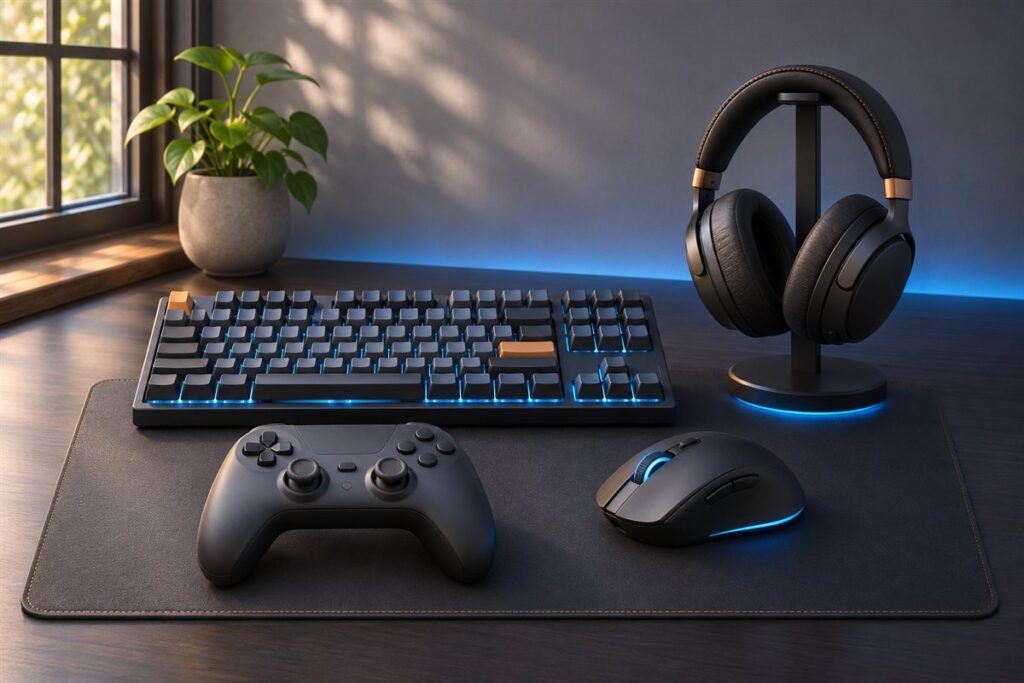
A corner gaming desk gives you room for several monitors, a keyboard, a console and the gear that comes with them. Listings add extras such as cup holders, light strips and headset hooks, so it helps to know which features matter. This guide covers them in order.
We have not used these products ourselves, so we do not describe personal experience with any desk. Instead, we focus on construction and the details makers publish, and we show you what to check on each listing before you choose. Sorting the necessary features from the decorative ones keeps your choice focused. Gaming gear changes often, so a desk that adapts to new screens and consoles is a sensible choice.
As an Amazon Associate we earn from qualifying purchases. Links on this site are affiliate links, and they do not change the information we give.
What to Look For
| Factor | Why it matters | What to check |
|---|---|---|
| Surface area | Multiple screens need depth and width | Compare both sides of the L with your monitor setup |
| Frame strength | Heavy gear and energetic play can shake a desk | Look for steel legs, cross braces and leveling feet |
| Desktop finish | Mouse tracking and wear depend on the surface | Check the material and whether it resists scratches |
| Cable routing | A gaming setup has many cords | Look for grommets, trays and a rear channel |
| Extras | Hooks, shelves and lights add convenience | Check which extras are included and whether they are removable |
| Power needs | Built-in lighting needs an outlet | Read how any lighting is powered and controlled |
Setup and Care Tips
- Build the desk in the room where it will sit, as a finished corner desk is hard to move.
- Level the feet and check each joint before you place your equipment.
- Route cables through the grommets and tray before connecting your devices.
- Wipe the surface with a soft cloth and avoid harsh cleaners that might mark the finish.
- Check the fasteners every few months and tighten any that have loosened.
Mistakes to Avoid
- Buying for looks and overlooking the frame, which decides how steady the desk feels.
- Ignoring the room size, then finding the corner desk leaves little space for movement.
- Counting on built-in lighting to suit your taste without checking the controls.
- Skipping cable planning, which leaves a tangle behind the desk.
- Placing heavy gear on one side without checking the load limit.
FAQ
How much desk depth do I need for two monitors?
Depth affects how far your screens sit from you. A deeper surface lets you move screens back, while a shallow one keeps them close. Compare the stated depth with your monitor stands and your preferred viewing distance.
Are built-in lights worth having?
They are a matter of taste. Some people like the look, while others prefer separate lights they can place freely. If the lights are removable, you can decide later. Think about how you play, since a desk for long sessions rewards comfort details such as surface depth and edge shape more than flashy extras. Depth, width and monitor arm compatibility are worth noting before you buy, because they decide how your screens sit.
The Short Version
Choose a desk that fits your room, holds your monitors and gear on a solid frame, and offers a tidy way to route cables. Compare the details above, then pick the extras that suit the way you play.