Disclosure: airfryerkitchensupply.com is reader-supported. When you buy through links on our site, we may earn an affiliate commission at no extra cost to you.
Where to buy
For readers comparing the best shoe cleaning door rugs, this category splits into two machines for the same job: brush scrapers that actively scrub soles, and coir mats that scrape passively as you wipe. The links below cover both — start with the Kings County wooden mat if you want a built-in shoe-cleaner brush in a full doormat, the NINAMAR if you want a compact pure boot scraper, and the Kempf if your door needs a classic thick coir mat that also scrapes. Every pick’s scraping feature is stated in its verified title. Check the current price on Amazon before ordering.
- Kings County Tools Wooden Door Mat with Built-In Shoe Cleaner Brush, 31.5 x 14 — Check the current price on Amazon
- NINAMAR Natural Coir Boot Scraper Door Mat, 13 x 12 — Check the current price on Amazon
- Kempf Natural Woven Coco Coir Doormat, 1 Inch Thick, 18 x 30 — Check the current price on Amazon
- Calloway Mills Snow and Mud Scraper Doormat, 18 x 30 — Check the current price on Amazon
- Stalwart Boot and Shoe Cleaner Scrubber Brush Scraper Mat — Check the current price on Amazon
- SCRUBIT Boot Scrubber Shoe Scraper Door Mat, 14.2 x 10 — Check the current price on Amazon
The best shoe cleaning door rugs earn their place at the exact moment a normal doormat fails: mud season, the building site, the garden in November, the dog walk that ended in a field. A decorative welcome mat absorbs a little moisture and prints a greeting; a shoe-cleaning door rug is a tool — brushes, coir bristles or scraper edges that physically strip mud, grit and snow from soles before they cross the threshold. This guide only includes rugs and mats whose verified titles state that cleaning function: boot scraper, shoe cleaner brush, scraper mat, or a heavy-duty coir build made to be worked against.
The six picks split by mechanism. Three are active brush scrapers — a wooden doormat with a built-in PVC shoe-cleaner brush, a compact natural coir boot scraper, and two scrubber mats (one by Stalwart, one by SCRUBIT) built purely for scrubbing soles. Two are passive heavyweights — a one-inch-thick woven coir doormat and a snow-and-mud scraper doormat — that clean by wiping and scraping underfoot. Choosing between them is choosing how your household actually arrives home: stomping and scrubbing, or wiping on the way through.
Sizes in this category are honest and small — these are tools, not area rugs — and the spec boxes print them all. What the titles do not state, such as backing materials on some picks, is marked ‘Not stated’ rather than assumed, because a scraper that slides around while you scrub is a scraper that does not get used.
In this guide
Quick Picks
Best Overall — Kings County Tools Wooden Door Mat with Built-In Shoe Cleaner Brush, 31.5 x 14. The complete article: a full wooden doormat with a built-in PVC shoe-cleaner brush, a boot-brush scraper function and a nonslip rubber backing — all stated in the title. Check on Amazon
Best Compact Scraper — NINAMAR Natural Coir Boot Scraper Door Mat, 13 x 12. A pure tool: a natural coir boot scraper at 13 x 12 inches — no decoration, no greeting, just stiff coir edges to work a boot against beside any door. Check on Amazon
Best Classic Coir Mat — Kempf Natural Woven Coco Coir Doormat, 1 Inch Thick, 18 x 30. The traditional answer at full specification: one inch of natural woven coconut fibre, 18 x 30, titled outright as a heavy-duty scraper mat for front door, entryway and porch. Check on Amazon
Best for Snow and Mud — Calloway Mills Snow and Mud Scraper Doormat, 18 x 30. Named for the two worst arrivals — snow and mud — in the standard 18 x 30 doormat size: a scraper doormat for climates where boots come home wearing the weather. Check on Amazon
Best Scrubber Mat — Stalwart Boot and Shoe Cleaner Scrubber Brush Scraper Mat. A scrubber-brush scraper mat positioned by its own record for entryways, mudrooms and garages — and for the specific trio of dirt, mud and grass. Check on Amazon
Best Boot Scrubber — SCRUBIT Boot Scrubber Shoe Scraper Door Mat, 14.2 x 10. A dedicated boot scrubber with stiff bristles and stated dimensions — 14.2 x 10 inches of wood shoe cleaner for mud, snow and ice, needing no installation, for porch and garage. Check on Amazon
Key Takeaways
- Shoe-cleaning door rugs are tools: every pick states a scraper, boot brush or shoe-cleaner function in its verified title — no decorative mats were admitted.
- Active brush scrapers (Kings County, NINAMAR, Stalwart, SCRUBIT) scrub soles; passive coir mats (Kempf, Calloway Mills) scrape as you wipe — match the mechanism to your mud.
- Compact scrapers (13 x 12, 14.2 x 10) live beside the door, not under it; full doormats (18 x 30, 31.5 x 14) work underfoot at the threshold.
- Coir is the classic scraper fibre: stiff, absorbent and hard-wearing, but it sheds early fibres and prefers a covered porch to open rain.
- Placement decides performance — a scraper positioned where boots actually stop gets used; one stored neatly does not.
How These Picks Were Chosen
We searched Amazon listing data for boot scrapers, shoe-cleaner mats and coir doormats, then applied the functional filter that defines this search: the title must state the cleaning mechanism. ‘Boot Scraper’, ‘Shoe Cleaner Brush’, ‘Scraper Mat’, ‘Scraper Doormat’ — those phrases, or a coir doormat specification clearly built for scraping, were the admission ticket. Pretty entry mats, absorbent-only mats and rug runners were excluded however well they sell, because absorbing is not cleaning.
Within the qualifiers we balanced the two mechanisms and the two footprints. Brush scrapers are represented at full-mat size (Kings County), compact size (NINAMAR) and scrubber-mat size (Stalwart, SCRUBIT), because households differ in whether they will park a tool beside the door. Passive mats are represented by the thickest coir build we could verify (the one-inch Kempf) and a dedicated snow-and-mud scraper doormat (Calloway Mills) for winter climates.
Finally we checked each title for placement honesty: indoor, outdoor or both, sizes in inches, and any stated backing. A nonslip rubber backing is stated on the Kings County mat; where backing is unstated, the spec box says so and the review advises a mat base or a recessed placement to keep the tool still while it is worked.
Best shoe cleaning door rugs — the six picks in depth

Kings County Tools Wooden Door Mat with Built-In Shoe Cleaner Brush, 31.5 x 14 — Best Overall
The Kings County mat suits the household that wants one fixture at the door doing both jobs: stand on the wooden slats to wipe, work each sole across the built-in brush to scrub. Gardeners, dog owners and anyone whose boots come home loaded will use the brush daily; the mat beneath catches what the brush removes.
Strengths
- Built-in PVC shoe cleaner brush bristles stated — an active scrubber, not just a surface
- Nonslip rubber backing stated, so the mat stays put while you work a boot across the brush
- Full doormat footprint (31.5 x 14) — a landing zone and a cleaning tool in one piece
Trade-offs
- Wooden construction wants a covered entry; standing water and full weather will age it faster than coir or rubber
- The brush is fixed in position — you scrub where the mat is, so placement must match where boots stop
- At 14 inches deep it is narrower than a standard doormat; measure your threshold
Key specs (from the verified listing title):
- Size stated: 31.5 x 14 in
- Cleaning feature stated: Built-in PVC shoe cleaner brush bristles; boot brush scraper
- Backing stated: Nonslip rubber backing
- Build stated: Wooden door mat
- Placement stated: Outdoor mat, front entrance
Integration is this mat’s whole argument. Separate boot brushes get kicked into corners and forgotten; a brush built into the doormat you are already standing on gets used every single arrival, which is the only metric that matters for a cleaning tool. The wooden slatted top gives boots a draining, wiping surface, the PVC brush does the active scrubbing of treads and welts, and the stated nonslip backing keeps the whole fixture honest while you lean into the scrub.
Treat it as outdoor furniture, not as a rubber mat. Wood at an entrance wants a porch roof or at least a storm door’s shelter; left in open rain it will weather seasons sooner than coir. The depth is the other check — 14 inches is a working surface, not a grand entrance mat, so pair it with an indoor absorbent mat if your hallway needs a second line of defence. As a single purchase that actually changes how clean your floors stay, it leads this guide.
Best for: muddy-boot households wanting one fixed cleaning station at the door / Not suited for: unsheltered entries in wet climates, or thresholds needing a deep mat
Check on Amazon — check price on Amazon before you decide, since sizes and finishes change what a listing includes.
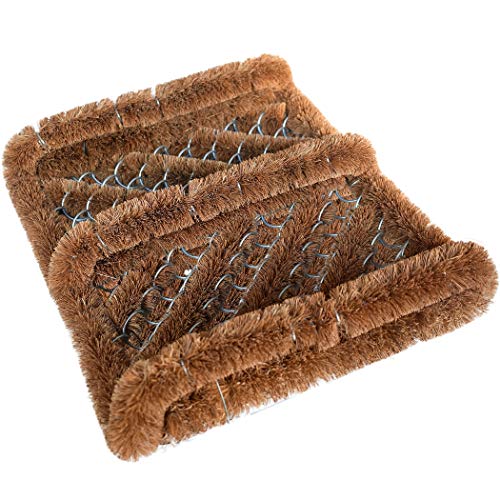
NINAMAR Natural Coir Boot Scraper Door Mat, 13 x 12 — Best Compact Scraper
The NINAMAR suits the household that already has a doormat and still tracks mud past it. It is the add-on scraper: park it beside the door, the garage entrance or the back step, and give each boot four seconds of edge-work before the mat even sees it.
Strengths
- Natural coir stated — the stiff, scraping fibre boot scrapers have used for generations
- Compact 13 x 12 footprint fits beside doors, in mudrooms and by garage entries where a mat cannot go
- Single-purpose design: it exists to scrape, so its edges and density serve that one job
Trade-offs
- It is not a doormat — no landing zone, no absorbency to speak of; pair it with a mat
- Backing is not stated in the title; on smooth floors it may need a base or a corner placement to stay put while scrubbing
- Coir sheds loose fibres early in its life, especially under aggressive boot work
Key specs (from the verified listing title):
- Size stated: 13 x 12 in
- Material stated: Natural coir
- Function stated: Boot scraper door mat
- Backing: Not stated
- Placement: Door-side, indoor or outdoor
There is a honesty to a single-purpose tool that multi-function products rarely match. The NINAMAR does not absorb your hallway’s worth of rainwater or welcome your guests; it presents stiff natural coir at boot height’s natural working angle and invites you to strip the sole before entering. In mudrooms and farmhouse entries, that division of labour — scraper beside the door, mat under the door — outperforms any single product trying to do both.
Its limits are the flip side of its focus. It will not serve as your only door mat, and on a polished floor an unstated backing means you should test its grip or bed it into a corner where the wall stops its travel. Coir’s early shedding is normal and settles. Bought as what it is — the cheapest, simplest upgrade to a muddy household’s entry routine — it is close to unbeatable.
Best for: adding real scraping power beside an existing doormat / Not suited for: households needing one product that scrapes and absorbs
Check on Amazon — check price on Amazon before you decide, since sizes and finishes change what a listing includes.
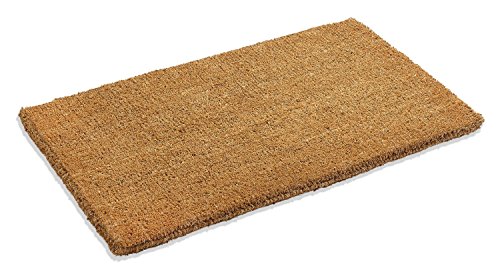
Kempf Natural Woven Coco Coir Doormat, 1 Inch Thick, 18 x 30 — Best Classic Coir Mat
The Kempf is for the buyer who wants the classic — a thick coir mat that scrapes as you wipe, sized for a standard front door, with the depth to hold a day’s worth of grit in its fibre until shaking-out time. It is the passive mechanism at its best.
Strengths
- Thickness stated: a full 1 inch of woven coir — deeper scraping pile than standard mats
- Scraper mat stated in the title; heavy-duty coconut fibre named as the material
- Standard 18 x 30 door size, the fit most front doors are built around
Trade-offs
- One inch of coir needs door clearance — check the swing, especially over interior thresholds
- Coir performs best under cover; saturated coir in open rain dries slowly
- Passive cleaning only: it scrapes what you wipe across it, so technique (three good wipes) matters
Key specs (from the verified listing title):
- Size stated: 18 x 30 in
- Thickness stated: 1 in
- Material stated: Natural woven coco coir (coconut fibre)
- Function stated: Heavy-duty scraper mat
- Placement stated: Front door, entryway, porch
Coir’s scraping power scales with depth, and the Kempf states the deepest build in this guide: a full inch of woven coconut fibre. That depth is a reservoir — grit and mud worked off your soles fall into the fibre and stay there instead of being tracked onward, and the stiff woven surface keeps presenting fresh scraping edges as you wipe. It is the doormat equivalent of a good boot brush, for households whose arrival style is wipe-and-go rather than stop-and-scrub.
Two checks before ordering. Door clearance: an inch of coir under a low-swinging door is a daily friction you will curse, so measure. And shelter: coir is a natural fibre that handles a porch beautifully and a downpour poorly — under cover it lasts for years, in open weather it ages in seasons. Meet those two conditions and the Kempf is the set-and-forget pick of this guide: no brushes to position, no technique to learn, just a thick honest mat doing the old job well.
Best for: covered front porches and wipe-and-go households wanting classic coir / Not suited for: low-clearance doors or fully exposed, rain-soaked entries
Check on Amazon — check price on Amazon before you decide, since sizes and finishes change what a listing includes.

Calloway Mills Snow and Mud Scraper Doormat, 18 x 30 — Best for Snow and Mud
The Calloway Mills mat suits northern and mountain households, where the door problem is not dust but accumulation: packed snow in treads, mud over it, and a meltwater trail behind both. A scraper doormat at the threshold is the first and cheapest line of defence for the floors inside.
Strengths
- Purpose stated in the name: snow and mud scraper — built for accumulation, not dust
- Standard 18 x 30 size fits the main door without measuring surprises
- A doormat-format scraper: passive, always in position, no separate tool to fetch or store
Trade-offs
- Material and backing are not stated in the title, so this guide cannot specify its fibre or grip — check the listing for both
- Scraper mats remove the bulk; an indoor absorbent mat is still needed for meltwater
- Single-purpose winter strength is overkill for dry-climate dust control
Key specs (from the verified listing title):
- Size stated: 18 x 30 in
- Function stated: Snow and mud scraper doormat
- Material: Not stated
- Backing: Not stated
- Model stated: 112981830
Some titles tell you exactly the day a product was designed for, and ‘Snow and Mud Scraper’ is one of them. This is the mat for the February arrival: stomp, scrape, and leave the weather’s solid fraction outside, where it can melt on the porch instead of the hall floor. In the standard 18 x 30 footprint it drops into the spot your current mat occupies, upgrading the job description without changing the layout.
The title’s brevity cuts both ways, and this guide marks the unstated rows honestly: fibre and backing are for the listing to confirm, and a scraper mat on a smooth surface wants its grip verified before the first icy morning tests it. Pair it with an absorbent indoor mat — scrapers remove solids, absorbents take the melt — and a winter entry is properly defended in two layers, which is how every cold-climate household that has solved this problem actually solves it.
Best for: snow-belt and mud-season households defending a main door / Not suited for: dry climates, or buyers who need materials specified in the title
Check on Amazon — check price on Amazon before you decide, since sizes and finishes change what a listing includes.

Stalwart Boot and Shoe Cleaner Scrubber Brush Scraper Mat — Best Scrubber Mat
The Stalwart suits the working household: gardeners, tradespeople, smallholders and sports families whose footwear collects grass as reliably as mud. Its stated placements — mudroom and garage as well as entryway — recognise that the dirtiest door in the house is rarely the front one.
Strengths
- Function stated three ways: boot and shoe cleaner, scrubber brush, scraper mat
- Targets stated: dirt, mud and grass — the grass call-out gardeners and pitch-side parents will appreciate
- Placements stated for entryways, mud rooms and garages — buy it for the door that needs it
Trade-offs
- Dimensions are not stated in the title; confirm the footprint fits your mudroom or garage door
- A scrubber mat is a working tool, not a decorative mat — its home is the utility door
- Backing is not stated in the title; test grip on your floor surface
Key specs (from the verified listing title):
- Function stated: Boot and shoe cleaner; scrubber brush scraper mat
- Targets stated: Dirt, mud and grass
- Placements stated: Home entryways, mud room, garages
- Dimensions: Not stated
- Backing: Not stated
The Stalwart’s record reads like it was written by someone who has hosed a hallway. Scrubber brush plus scraper is the two-action clean — brush the treads, scrape the edges — and the explicit mention of grass separates it from mud-only tools: grass clippings and pitch debris cling differently and need bristle action, not just a wiping surface. The garage and mudroom positioning is equally realistic; the front door gets the pretty mat, the working doors get this.
Size is the homework: the title does not state dimensions, and a scrubber mat must fit the swing and standing space of its door, so confirm the footprint on the listing. Grip, likewise unstated, should be tested where it lands — a scrubber that travels under a working boot is worse than none. Placed well at the right door, this is the hardest-working square footage in the house’s whole cleaning system.
Best for: gardeners, trades and sports households at mudroom and garage doors / Not suited for: front-door presentation, or buyers needing dimensions in the title
Check on Amazon — check price on Amazon before you decide, since sizes and finishes change what a listing includes.
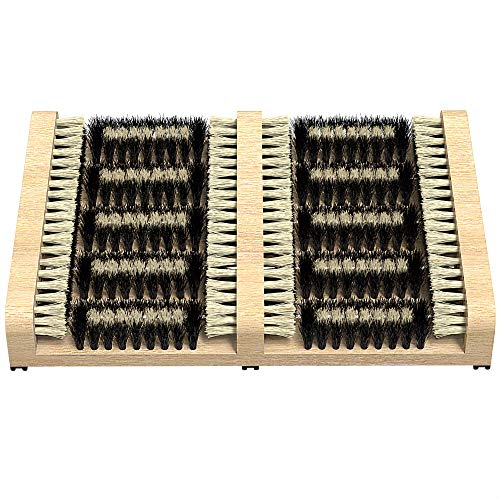
SCRUBIT Boot Scrubber Shoe Scraper Door Mat, 14.2 x 10 — Best Boot Scrubber
The SCRUBIT is for the boot wearer proper: work boots, hiking boots, wellingtons. A scrubber format — stiff bristles you work the boot through — cleans sides and welts that flat mats never touch, and at this size it lives permanently by the porch or garage door.
Strengths
- Stiff bristles stated — the scrubbing action that reaches treads, welts and boot sides
- Targets stated: mud, snow and ice; wood build; porch and garage positioning stated
- No installation needed, stated — place it and use it the same minute
Trade-offs
- A scrubber is sized for boots, not for a family’s parade of trainers — households may want a mat as well
- Stiff bristles are aggressive; delicate fashion footwear should use the coir mat instead
- At 14.2 x 10 it is a station, not a landing zone — you stand beside it, not on it
Key specs (from the verified listing title):
- Size stated: 14.2 x 10 in
- Bristles stated: Stiff bristles
- Build stated: Wood shoe cleaner
- Targets stated: Mud, snow & ice
- Installation stated: No installation needed
Flat mats clean the bottom of a tread pattern and nothing else. Anyone who has watched mud survive a doormat on the welt of a boot understands the scrubber’s reason to exist: bristles on multiple faces that you push and pull the boot through, stripping sides, heel breast and sole in a few strokes. The SCRUBIT states that tool plainly — stiff bristles, wood body, sized and placed for porch and garage, effective on mud, snow and ice — and asks for no installation, which in practice is why such tools actually get used.
Keep it in its lane. It is a boot station: heavy footwear goes through it brilliantly, delicate shoes should not, and it complements rather than replaces the threshold mat that handles wiping and absorbing. In a working household the pairing is natural — SCRUBIT by the door for the boots, coir at the door for everything else — and between them the hallway floor’s mud season simply ends.
Best for: work-boot and wellington households at porch and garage doors / Not suited for: delicate footwear, or as a home’s only door mat
Check on Amazon — check price on Amazon before you decide, since sizes and finishes change what a listing includes.
Comparison Table
| Pick | Badge | Key spec | Best for |
|---|---|---|---|
| Kings County Tools Wooden Door Mat with Built-In Shoe Cleaner Brush, 31.5 x 14 | Best Overall | 31.5 x 14 wooden mat, built-in shoe-cleaner brush, nonslip backing | muddy-boot households wanting one fixed cleaning station at the door |
| NINAMAR Natural Coir Boot Scraper Door Mat, 13 x 12 | Best Compact Scraper | 13 x 12 natural coir boot scraper — compact add-on tool | adding real scraping power beside an existing doormat |
| Kempf Natural Woven Coco Coir Doormat, 1 Inch Thick, 18 x 30 | Best Classic Coir Mat | 18 x 30, 1 in thick woven coir scraper mat | covered front porches and wipe-and-go households wanting classic coir |
| Calloway Mills Snow and Mud Scraper Doormat, 18 x 30 | Best for Snow and Mud | 18 x 30 snow and mud scraper doormat, material not stated in title | snow-belt and mud-season households defending a main door |
| Stalwart Boot and Shoe Cleaner Scrubber Brush Scraper Mat | Best Scrubber Mat | Scrubber brush scraper mat for mudrooms and garages, size not stated in title | gardeners, trades and sports households at mudroom and garage doors |
| SCRUBIT Boot Scrubber Shoe Scraper Door Mat, 14.2 x 10 | Best Boot Scrubber | 14.2 x 10 boot scrubber, stiff bristles, wood, no installation | work-boot and wellington households at porch and garage doors |
How to Choose a Shoe-Cleaning Door Rug
Name your dirt first. Dry dust and grit need only a good coir wipe. Wet mud needs scraping edges and depth to hold what comes off. Packed snow and ice need aggressive scraping and a melt plan indoors. Grass and garden debris need bristles. The six picks here divide exactly along those lines, and the wrong mechanism for your dirt will feel like a broken product when it is only a mismatched one.
Then choose the mechanism. Active scrubbers — brushes and bristle stations — clean the whole boot: sole, welt and sides. They demand a stop-and-scrub habit of a few seconds per boot. Passive scrapers — coir mats and scraper doormats — clean soles as you wipe, demanding nothing but three deliberate wipes. Households that will not stop should buy passive and place it well; households with serious mud should buy active, or layer both, which is what most mud-country homes end up doing.
Finally, fit the tool to the door. Measure the threshold width (18 x 30 is the standard front-door mat; compact scrapers run 10–14 inches), check door swing clearance over thick coir, and decide the scraper’s station: beside the door for scrubbers, under the door for mats. A cleaning tool’s effectiveness is mostly its placement.
- Identify your dirt: dust, mud, snow or grass — each has its mechanism.
- Choose active (brush/scrubber) for whole-boot cleaning, passive (coir/scraper mat) for wipe-through cleaning.
- Layer for serious mud: scraper outside, absorbent mat inside.
- Check the 1-inch coir clearance against your door swing before ordering.
- Place the tool where boots actually stop — beside the door for scrubbers, at the threshold for mats.
Coir, Brushes and Bristles: How the Cleaning Actually Works
Coir — coconut husk fibre — scrapes by stiffness and spring. Each fibre is a tiny rigid brush; woven thickly, as in the one-inch Kempf, a coir mat presents thousands of scraping points that flex under a sole and flick grit out of treads. It also absorbs a useful amount of water into the fibre bed. Its limits are weather (it prefers shelter) and delicacy (it is too honest a surface for fine shoes).
Brush systems clean by geometry. A built-in brush like the Kings County’s PVC bristles, or a scrubber’s stiff bristles like the SCRUBIT’s, reach where flat surfaces cannot: tread grooves, the welt seam, the heel. That reach is why brush tools outperform mats on boots and why mats outperform brushes on quick wipe-through traffic. Neither is ‘better’ — they clean different parts of the shoe, which is why the layered entry outperforms both alone.
The Two-Layer Entry: Scraper Outside, Absorbent Inside
Every household that has truly solved tracked-in dirt uses the same architecture: a cleaning layer outside the door and an absorbing layer inside it. The outside layer — any of this guide’s six — removes the solid fraction: mud, grit, snow, grass. The inside layer, a washable absorbent mat, takes the liquid fraction: rain and meltwater. One layer alone always half-fails: scrapers leave wet footprints, absorbent mats clog with mud and stop absorbing.
Size the inside mat to two full strides if your hallway allows; the first two steps inside carry most of what the scraper missed. Wash it on a rhythm in mud season. And keep the outside tool maintained — a scraper clogged with last week’s mud is a decoration, which is what the care section below is for.
Season by Season: What Your Door Rug Faces
Spring is mud and pollen: the scraper earns its keep on garden soil while the indoor mat quietly collects the yellow dust that coats every surface. This is coir’s best season — wet enough to need scraping, dry enough for the mat to dry between arrivals. Summer is grit and grass: dry particles that a worn mat stops catching, which is why the shake-out rhythm matters most when the weather seems too good to bother. The Stalwart’s grass-stated scrubbing and the SCRUBIT’s bristles are summer’s tools as much as winter’s.
Autumn is the layered season — leaves, then rain on leaves, then the first mud — and it is when the two-layer entry proves itself, because no single product handles debris and water together. Winter is accumulation: snow packed into treads, grit spread by every council and neighbour, and meltwater behind all of it. The Calloway Mills exists for this quarter. Read your door’s calendar honestly and you will find most households need the scraper most in two seasons and merely benefit in the other two — which is still a purchase that pays for itself in floor wear alone.
Door Rugs for Renters and Shared Entries
Renters face a version of this problem with constraints: no drilling, no permanent fixtures, and often a shared entry where your mat is also the neighbours’ first impression. The good news is that everything in this guide is freestanding — the SCRUBIT even states no installation needed. In a shared hallway, favour the full doormat formats (Kempf, Calloway Mills) that read as furnishing rather than equipment, keep them inside your door’s swing line, and maintain them visibly: a clean scraper mat signals care, a clogged one signals the opposite to everyone who shares the landing.
Small flats should think vertically about the routine rather than horizontally about the mat. A compact scraper like the NINAMAR beside the door, a hook above it for the dog towel, and a washable absorbent mat inside that can go in the machine weekly — that trio defends a small entry better than one oversized mat that never quite fits the space. When you move, the whole system lifts out in one trip, which is the renter’s definition of a good installation.
Apartments, Hallways and the Sound Question
Scraping is not silent, and in flats and shared buildings the acoustics of a door tool are a real specification. A boot scrubber worked enthusiastically at 11 p.m. announces itself through a timber floor; a coir mat is nearly silent. Households with thin floors and late arrivals should weight the passive picks — the Kempf and Calloway Mills mats — more heavily, and place any brush tool on the porch side of the door where the building’s structure absorbs the sound, rather than in a resonant hallway.
Hallway width is the second apartment constraint. A compact scraper at 13 x 12 or 14.2 x 10 inches fits the strip of floor beside a flat’s door without becoming the thing every visitor trips over; a full 18 x 30 mat needs a hallway that can spare the rectangle. Measure the actual landing zone — door swing included — before choosing the format, because in a small entry the difference between a tool that fits the pause point and one that fits the catalogue is the difference between daily use and daily annoyance.
The third apartment fact is the shared stairwell: your scraper defends your floor, but the building’s grit still arrives on the stairs themselves. A compact scraper inside your own door remains the answer you control — which is, in the end, the philosophy of this entire category.
What to Do When the Mud Wins Anyway
Even a perfect entry system has a worst day: the storm arrival, the burst pipe, the dog who found the one mud patch in a dry county. The recovery protocol matters more than the blame. Lift the indoor mat first — it has done its absorbing duty and needs washing before it becomes a source. Work the floor from the door inward with a damp mop, changing the water once; mud is mostly patience and dilution. Let the coir and scraper dry fully before their next shift, because a saturated scraper spreads more than it strips.
Then audit the failure like an engineer, because it is almost never the product. The usual findings: the scraper was bypassed by a side door, the indoor mat was in the wash, a guest did not know the house routine, or the season changed faster than the setup did. Each finding has a cheap fix — a second compact scraper, a spare indoor mat, a word to guests that is welcome rather than warning, a seasonal swap of tools. The households with permanently clean hallways are not the ones with the best mats; they are the ones that treat the entry as a system and maintain it like one.
How to Place and Maintain a Boot Scraper and Coir Mat
These tools are simple, but their performance is set by placement and a small maintenance rhythm. Set them up once with these steps.
- Place a scrubber or compact scraper immediately beside the door on the opening side, where a person naturally pauses — not across the porch where it will be admired and unused.
- Place a full scraper mat directly at the threshold, centred on the door, with its long edge parallel to the door line.
- Check door swing over the mat: open and close the door fully; a 1-inch coir mat that grazes the door will be kicked aside within a week.
- Test grip: work a boot across the scraper firmly. If the tool travels, bed it against a wall or step edge, or add a non-slip base beneath it.
- For the first week of mud season, make the routine explicit for the household: stop, scrape or scrub each sole, then step in. Habits form in days and last for years.
- Shake coir mats out weekly in season — take them outside, beat them against a step or rail, and let them dry fully if they are damp.
- Clear brush scrapers with a stiff hand brush or an old screwdriver along the bristle rows; compacted mud between bristles is the main cause of ‘the brush stopped working’.
- At season’s end, wash down wooden and brush tools, dry them completely, and store or leave them dry — stored-damp is how natural fibres and wood age fastest.
If tracking continues despite a good setup, audit the path, not the product: most ‘failing’ scrapers are bypassed by a side route — a garage shortcut or a garden gate path that needs its own compact scraper, which is exactly the NINAMAR and SCRUBIT’s job.
Common Buying Mistakes
Buying a decorative mat for a cleaning job. Printed welcomes and absorbent chenille are not shoe-cleaning tools. If the title does not state a scraper, brush or cleaning function, the product does not have one — this guide admitted nothing without that statement.
One layer, half a system. A scraper alone leaves wet prints; an absorbent mat alone clogs with mud. The two-layer entry — cleaner outside, absorber inside — is the actual solution.
Ignoring door clearance on thick coir. A one-inch mat under a low door gets kicked, folded and finally removed. Measure the swing first; if clearance is tight, choose a lower-profile scraper doormat.
Placing the scrubber where it looks tidy. Scrubbers work where boots stop — beside the opening side of the door. Every step of distance between the tool and the natural pause halves its use.
Never cleaning the cleaner. Coir beds compact with grit and brush rows clog with mud. A weekly shake-out and a seasonal clear-out restore the tool; neglect quietly converts it into a dirty rug.
Using stiff bristles on delicate shoes. Scrubbers are boot tools. Suede, soft leather and fashion footwear should meet the coir mat, not the bristle station — match the tool’s aggression to the shoe.
Final Recommendation
For most households, the Kings County wooden mat is the single best purchase: a real doormat with the shoe-cleaner brush built in, on a nonslip backing, at the door where it will be used daily. If you already own a good mat, add the NINAMAR coir scraper beside the door and feel the difference in a week. Traditionalists with a covered porch should take the one-inch Kempf and enjoy the classic; snow-belt homes should take the Calloway Mills and pair it with an absorbent mat inside. Gardeners and boot wearers should put the Stalwart or the SCRUBIT at the working door — the mudroom and garage are where these tools earn their keep.
Whichever mechanism you choose, place it where boots stop and maintain it on the weekly rhythm. Check the current price on Amazon, measure your threshold, and let this be the last mud season your hallway floor endures.
Related reading on this site: Best Affordable Jute Rugs, Best Bamboo Rugs, Best Area Rugs For Homes With Dogs, Best Area Rugs For Grey Floors, Best Area Rugs For Vinyl Floors.
Frequently Asked Questions
What is the difference between a boot scraper and a doormat?
A doormat is a surface you wipe on; a boot scraper is a tool you work a boot against — coir edges or brush bristles that strip the sole, welt and sides. The best entries use both: a scraper for the heavy cleaning and a mat as the landing and wiping zone, as this guide’s layered-entry section explains.
Does coir really clean shoes, or just absorb water?
Both, in that order. Coir’s stiff fibres scrape grit from treads as you wipe — that is why coir mats are titled scraper mats — and the fibre bed then holds a useful amount of moisture. A thick woven coir mat like the one-inch Kempf maximises both functions.
Where should a boot scraper be placed?
Beside the door on its opening side, exactly where a person pauses before entering — or at the porch and garage doors where boots actually come off. A scraper stored neatly away from the natural pause point will not be used, however good it is.
Can these mats stay outside all year?
The brush and scrubber tools are positioned by their titles for outdoor, porch and garage use, and coir mats suit covered porches well. Fully exposed natural fibre weathers faster; if your entry has no shelter, favour the brush tools and bring coir under whatever cover you have.
How do I stop a scraper from sliding while I use it?
Place it against a wall, step edge or door frame so the structure stops its travel, or put a non-slip base under it. The Kings County mat states a nonslip rubber backing; where a title does not state backing — marked ‘Not stated’ in this guide — plan one of those placements from the start.
How often do coir mats and scrapers need replacing?
A quality coir mat under cover serves for years; its signal to retire is a fibre bed worn smooth and compacted that no longer scrapes after a shake-out. Brush tools last until bristles bend flat or clog beyond clearing — with the weekly maintenance in this guide, that is a long service life.


