Disclosure: airfryerkitchensupply.com is reader-supported. When you buy through links on our site, we may earn an affiliate commission at no extra cost to you.
Where to buy
Every model shortlisted as one of the best men’s slippers for cold feet in this guide is listed below with its badge. Every slipper below is a men’s house slipper sold on Amazon and verified against its listing before earning a link. This guide is the warmth specialist companion to this site’s general men’s slippers guide — every pick here earns its place through insulation stated in its verified title: shearling, sheepskin, fleece, sherpa, or plush lining.
- PROJECT CLOUD Men’s Genuine Leather Shearling Slippers (Best Overall Warmth) — check price on Amazon
- Old Friend Men’s Bootee Slipper, Chestnut (Best Bootie Coverage) — check price on Amazon
- Orthofeet Tuscany Men’s Moccasin Slippers, Wide (Best Support for Cold Feet) — check price on Amazon
- RockDove Men’s Sherpa Lined Memory Foam Clog (Best Clog for Cold Feet) — check price on Amazon
- VLLy Men’s Moccasin Slippers, Warm Fleece Lined (Best Washable Warmth) — check price on Amazon
- Zizor Men’s Warm Winter Slippers (Best Enclosed Winter Slipper) — check price on Amazon
The best men’s slippers for cold feet solve a physics problem, not a fashion one: feet lose heat to cold floors through thin soles and to cold air through open, unlined uppers, and a man whose feet run cold needs a slipper that defends both fronts. This guide’s six picks were verified as men’s house slippers whose titles state their insulation outright — genuine shearling, a removable sheepskin insole, faux fur lining framed for cold weather, sherpa lining, warm fleece lining, and plush winter lining — because in this category the lining is the product, and a lining that is not stated is a lining you cannot count on.
One framing note, in the spirit of this site’s honesty rules: cold feet have many causes, and this guide treats the shopping question only — which slippers are built warmest. Nothing here diagnoses or treats anything. A man whose feet are persistently, unusually cold, or cold with color changes or pain, should raise it with a clinician; a man whose feet are cold because his floors are cold and his slippers are thin is in exactly the right place.
The six picks form a warmth ladder. At the top sit the natural insulators — shearling and sheepskin — which regulate as well as warm. The middle rungs are the lined synthetics: faux fur, sherpa, and fleece, each stated in its title. The final pick is the enclosed winter slipper with plush lining and a hard sole, for houses where the cold comes up through the floor itself. Coverage matters as much as material — a bootie or a lined moccasin defends the ankle that a scuff leaves bare — and each review says plainly which parts of the foot its pick actually covers.
In this guide
Quick Picks
Best Overall Warmth: PROJECT CLOUD Men’s Genuine Leather Shearling Slippers — 100% genuine leather with Australian shearling and a memory foam insole — the title states warm and cozy, and water resistant (not waterproof). — Check on Amazon
Best Bootie Coverage: Old Friend Men’s Bootee Slipper, Chestnut — a warm bootie with flip-up sides, a plush fleece cuff, and a removable sheepskin insole — sized 7–16 including wide and extra wide. — Check on Amazon
Best Support for Cold Feet: Orthofeet Tuscany Men’s Moccasin Slippers, Wide — a faux fur lined moccasin with arch support and a wide toe box, framed in its title for cold weather — warmth plus structure. — Check on Amazon
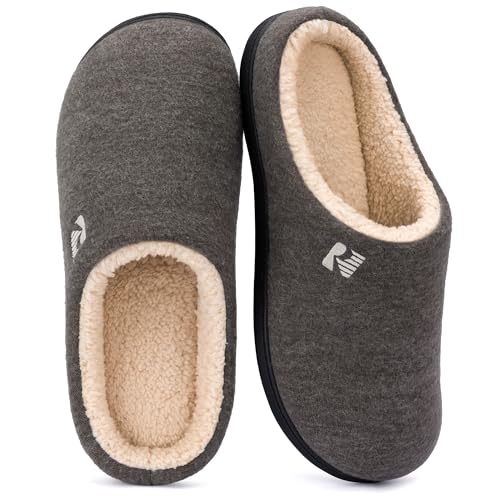
Best Clog for Cold Feet: RockDove Men’s Sherpa Lined Memory Foam Clog — a sherpa lined memory foam clog with a breathable felt upper — warm, machine washable, non-slip — in grey at 9–10. — Check on Amazon
Best Washable Warmth: VLLy Men’s Moccasin Slippers, Warm Fleece Lined — a fleece lined moccasin with memory foam arch support and a rubber sole — machine washable warmth in brown at size 10. — Check on Amazon
Best Enclosed Winter Slipper: Zizor Men’s Warm Winter Slippers — an enclosed winter slipper with plush lining, memory foam insole, knit upper with elastic gusset, and a hard rubber sole — black, size 11. — Check on Amazon
Key Takeaways
- Insulation must be stated to be trusted: every pick names its lining — shearling, sheepskin, faux fur, sherpa, fleece, or plush — in its verified title.
- Coverage is half of warmth: booties and lined moccasins defend the ankle; open scuffs defend only the sole.
- Natural shearling and sheepskin insulate and breathe; synthetic linings warm well and usually wash easier.
- A hard or rubber sole matters on cold floors — it is the barrier between your foot and the slab.
- This guide covers warmth as a comfort question only; persistent or painful cold feet deserve a clinician, not a shopping cart.
How These Picks Were Chosen
Candidates were verified by brand and model through the site’s own product data feed. For this guide the bar was higher than the general slipper guide’s: a pick needed men’s house-slipper status and an insulation claim in its own title — a named lining material or an explicit warm/winter/cold-weather framing. Unlined and merely cushioned slippers, however good, were excluded, as were women’s models, outdoor boots, and heated gadgets that are footwear accessories rather than slippers.
The six were then spread across insulation types and coverage shapes so the guide compares philosophies, not duplicates: genuine shearling in a leather slipper, sheepskin underfoot in a fleece-cuffed bootie, faux fur in a supportive moccasin framed for cold weather, sherpa in a clog, fleece in a washable moccasin, and plush in an enclosed winter slipper with a hard rubber sole. Specs repeat only verified title content; where a title does not state a detail, the box says Not stated.
No prices are printed. Warm slippers span a wide tier range — natural shearling sits at the top — and prices move with the season, so each linked pick says check price on Amazon and the budget section argues in tiers.
The 6 Best Men’s Slippers for Cold Feet

PROJECT CLOUD Men’s Genuine Leather Shearling Slippers — Best Overall Warmth
The PROJECT CLOUD leads this guide on the strength of the two most credible words in warm-slipper retail: genuine shearling. Its verified title states 100% genuine leather and Australian shearling, a memory foam insole, a water resistant finish, and warm, cozy framing for everyday comfort. Shearling is the category’s reference insulator because it does two jobs — the wool pile traps warm air, and the hide gives the slipper structure — and a title that states it outright, with the leather to match, is making the strongest claim this guide can verify.
Strengths
- Genuine shearling stated in the title — the benchmark natural insulation for slippers
- Leather upper gives structure and durability that knit and fleece uppers cannot match
- Water resistant finish shrugs off porch damp and kitchen splashes (resistant — not waterproof, and this guide keeps the distinction)
Trade-offs
- Premium tier within this guide’s set — natural materials price accordingly; check the current price on Amazon
- Shearling care is brush-and-air, not machine wash; men who want to launder slippers should choose the fleece pick below
- Coverage is a slipper profile, not a bootie — the ankle stays open to cold air
| Insulation (verified title) | Australian shearling |
| Upper | 100% genuine leather |
| Insole | Memory foam |
| Water claim | Water resistant (per title) |
| Washable | Not stated |
Shearling’s quiet advantage is regulation. Synthetic piles warm a cold foot and keep warming it until the foot sweats, at which point the moisture chills it again — the cycle every cold-footed man knows. Wool shearling buffers that swing, absorbing moisture vapor while it insulates, which is why it has been the cold-climate footwear lining for a century. In a slipper worn for hours at a desk or by a fire, that buffering is the difference between warm feet and merely heated ones.
The leather upper earns its keep in a cold house specifically: it blocks the drafts that pass through knit, and it makes the slipper presentable enough to answer the door in January without apology. Treat the water resistance honestly — it is splash and damp resistance for porches and kitchens, not a license to walk through slush.
Shearling care is simpler than its reputation: brush the pile when it mats, air the slippers after long wears, and keep them away from direct radiator heat, which dries leather and wool alike. Treated that way, a shearling pair’s second winter is as warm as its first — the pile’s loft, not the calendar, is the insulation — and the leather upper will take on the polished look of a favorite shoe rather than the tired look of a worn-out slipper.
Who should step down a tier instead: the man whose cold feet are an evening-only, sofa-side affair, for whom the sherpa clog or fleece moccasin delivers the needed warmth at a mid tier and with machine washing included. Genuine shearling earns its premium across long daily wear and genuinely cold houses; bought for an hour a night, its virtues are real but underemployed.
Best for: the coldest feet in the house and buyers who want natural insulation / Not suited for: anyone who machine-washes slippers, or needs ankle coverage
Check on Amazon — check the current price on Amazon before you decide.

Old Friend Men’s Bootee Slipper, Chestnut — Best Bootie Coverage
The Old Friend Bootee attacks cold from the coverage side: its verified title describes warm men’s slippers with flip-up sides, a plush fleece cuff, and a removable sheepskin insole, in chestnut at size 10, with sizes running 7 to 16 in wide and extra wide. The bootie shape is the point — cold ankles are the leak that sole-focused slippers ignore, and a cuff that rises and folds around the ankle closes it.
Strengths
- Bootie coverage with flip-up sides and a fleece cuff defends the ankle, where scuffs and moccasins leave skin bare
- Removable sheepskin insole puts natural insulation directly underfoot — and can be aired or replaced
- The widest stated size range in this guide: 7–16, with wide and extra wide options
Trade-offs
- A bootie is warmer and bulkier — overkill for a well-heated apartment
- Removable insoles shift if the fit is loose; size carefully rather than generously
- Chestnut at size 10 on this listing; the wide options live in the variant selector
| Insulation (verified title) | Sheepskin insole (removable), fleece cuff |
| Coverage | Bootie, flip-up sides |
| Sizes (per title) | 7–16, wide & extra wide |
| Color | Chestnut II |
| Washable | Not stated |
The flip-up side is a small piece of honest engineering: sides down, it is a slipper you can step into half-asleep; sides up, it is a bootie that seals the ankle gap where cold air pours into every low slipper. Men with cold feet usually blame the sole and forget the ankle — the foot’s heat escapes at its thinnest-covered point, and this design covers it with fleece.
The removable sheepskin insole deserves its own sentence. Insoles are where slippers die — they compress, they absorb a season of moisture — and a removable, replaceable one extends the whole slipper’s life while putting the best natural underfoot insulator exactly where floor cold attacks. Air it weekly and the slipper stays fresh far longer than sealed-insole rivals.
The bootie also solves a specific cold-house geometry: the chair with a draft beneath it. Reading chairs and desk chairs in old houses sit in rivers of floor-level cold air, and ankles parked in that river for an evening undo the work of any sole. A fleece-cuffed bootie is the wearable answer to a problem the house itself will not fix — which is why this pick, more than any other here, is the old-house recommendation.
The size range deserves a second mention because it solves a quiet problem: men at the extremes — a size 7 or a size 16, wide or extra wide — are used to footwear categories abandoning them. A warm bootie that states 7 through 16 with widths in its own title is a manufacturer taking the whole market seriously, and for the man at either end of it, this pick may be the only fully suitable one in the guide.
Best for: cold ankles, drafty houses, and hard-to-fit sizes up to 16 / Not suited for: warm apartments, or men who want the lightest possible slipper
Check on Amazon — check the current price on Amazon before you decide.

Orthofeet Tuscany Men’s Moccasin Slippers, Wide — Best Support for Cold Feet
The Tuscany is the pick for the man whose feet are cold and who also needs his slippers to be built like shoes. Its verified title states a faux fur lined, supportive house slipper with arch support, ergonomic cushioning, and a wide toe box for cold weather, in brown at size 13 wide. The cold-weather framing is the maker’s own, and the combination — insulation plus support architecture — is one no other pick in this guide offers.
Strengths
- Faux fur lining with an explicit cold-weather framing in the title
- Arch support and ergonomic cushioning for men who stand on hard, cold floors
- Wide toe box in a wide size — room for toes and for the thick socks cold feet often wear
Trade-offs
- Faux fur warms well but does not regulate like genuine shearling; very warm houses may find it much
- Support structure makes it the firmest-feeling pick here — plush-seekers should look at the sherpa clog
- This is comfort footwear, not a medical device; foot conditions belong with a clinician
| Insulation (verified title) | Faux fur lined |
| Stated framing | For cold weather |
| Support | Arch support (per title) |
| Size (verified listing) | 13 Wide |
| Toe box | Wide |
Cold floors and long standing are natural partners — the kitchen in January, the workshop, the garage-adjacent mudroom — and they punish feet twice: cold from below, ache from unsupported standing. The Tuscany is built for exactly that compound problem, lining a supportive moccasin with faux fur so the foot is defended from the slab and held up while it stands on it.
The wide toe box has a cold-weather logic beyond comfort: toes that can spread and move generate and keep warmth better than toes compressed in a narrow toe, and the wide fit leaves honest room for a real sock. A cold-feet slipper that only fits over bare feet has misunderstood its own assignment; this one has not.
For the man combining warmth with support, the daily pattern to aim for is boring consistency: same slippers for the standing hours, every day, rather than heroic use on weekends. Support and warmth both pay out cumulatively — feet that are held up and kept warm through a winter of evenings are the product here, and the Tuscany’s wide, lined, structured build is designed to disappear into that routine.
One fitting note for wide, sock-wearing feet: try this moccasin on with the sock you actually intend to wear indoors, at the end of the day. A wide toe box that feels generous over a bare morning foot can be exactly right over a winter sock on an evening foot — and that second fitting, not the first, is the one the slipper will live in.
Best for: cold floors plus long standing, and wide feet that wear socks indoors / Not suited for: anyone seeking treatment for a foot condition
Check on Amazon — check the current price on Amazon before you decide.
RockDove Men’s Sherpa Lined Memory Foam Clog — Best Clog for Cold Feet
The RockDove sherpa clog is the warmth pick for men who live in clogs and refuse to give them up for winter. Its verified title states a sherpa lined memory foam clog slipper with a breathable felt upper — non-slip, machine washable, lightweight, and warm — in grey at size 9-10. Sherpa is the synthetic pile that most closely imitates shearling’s loft, and lining a clog with it keeps the clog’s step-in ease while closing its one weakness, the bare cold footbed.
Strengths
- Sherpa lining warms the footbed and walls of an open clog — the cold-clog problem solved
- Machine washable, which natural-lining picks here cannot claim
- Felt upper breathes enough to keep the sherpa from turning the clog into a sauna
Trade-offs
- A clog still leaves the heel and ankle open — warmer than any unlined clog, cooler than the bootie
- Sherpa pile compresses under the heel over a season of daily wear
- Grey at 9-10 on this listing; sherpa in other colors lives in the variants
| Insulation (verified title) | Sherpa lined |
| Upper | Felt, breathable |
| Insole | Memory foam |
| Washable | Machine washable |
| Size (verified listing) | 9-10 |
The clog-plus-sherpa combination respects how men actually wear slippers: kicked off under the desk, stepped into without hands, worn to the porch and back. Every enclosed warm slipper asks for a small effort at the door of each wearing; the clog asks none, and the sherpa ensures that convenience no longer costs warmth. For the man who has rejected three pairs of ‘proper’ warm slippers by leaving them in the closet, the warm pair he will actually wear beats the warmer pair he will not.
Machine washability is the clog’s second quiet win. Sherpa and fleece linings collect a household’s dust at floor level, and a lining that can go through the wash monthly stays lofty and fresh; a lining that cannot slowly mats into a thin, gray disappointment. Wash it, air-dry it, and the pile comes back.
A sherpa clog tip for the coldest mornings: keep the pair beside the bed, not by the door. The first ten steps of the day, on the coldest floor at the coldest hour, are when a warm slipper earns its entire price — and a clog you can step into without bending, eyes half open, is the format that guarantees those steps happen in the slipper rather than in socks on the way to find it.
Sherpa’s loft compresses fastest where the heel strikes, so rotate the pair’s role if you own two: the pair that served mornings this month serves evenings next. Even without a second pair, a weekly airing and a brush of the heel zone slows the matting. The clog’s warmth is a maintained property, and the maintenance is measured in minutes per month.
Best for: committed clog wearers who need winter warmth without changing habits / Not suited for: cold ankles — the clog’s open heel is its honest limit
Check on Amazon — check the current price on Amazon before you decide.

VLLy Men’s Moccasin Slippers, Warm Fleece Lined — Best Washable Warmth
The VLLy moccasin is the practical warmth pick: its verified title states warm fleece lining, memory foam with arch support, a non-slip rubber sole, and machine washable construction, in an indoor/outdoor house shoe in brown at size 10. It is the only pick here that combines a stated warm lining with full machine washability and a rubber sole — the trifecta for a cold, hard-floored house where slippers work for a living.
Strengths
- Warm fleece lining plus machine washable — warmth that can be laundered back to fresh
- Rubber sole is the right barrier over cold tile, concrete, and stone floors
- Memory foam with stated arch support, a step up from flat foam footbeds
Trade-offs
- Fleece warms but does not regulate like shearling; in a heated house it may run hot by evening
- Moccasin coverage stops at the ankle, as moccasins do
- Brown at size 10 on this verified listing; other sizes are the listing’s variants
| Insulation (verified title) | Warm fleece lined |
| Sole | Rubber, non-slip |
| Insole | Memory foam, arch support |
| Washable | Machine washable |
| Size (verified listing) | 10 US |
The rubber sole is this pick’s underappreciated half. On cold floors, the sole is not just grip — it is insulation, the sealed layer between foot and slab. Thin fabric soles transmit floor cold almost as if they were not there; a rubber sole interrupts it, and paired with fleece above, the foot sits in a defended pocket. Men whose cold feet trace to tile or concrete floors will feel this pick’s logic in the first evening.
Washability completes the working-slipper argument. A fleece lining in a working house picks up flour, sawdust, and mudroom grit; being able to machine wash the whole slipper — as the title states — turns it from a seasonal purchase into maintained equipment. This is the pick to buy two of and rotate through the wash.
Because this moccasin washes, it is the pick that tolerates the working house’s worst habit: the quick trip to the garage, the bin run, the dog’s emergency garden visit in January. A rubber sole shrugs at the cold concrete, the fleece keeps the foot defended for the minute it takes, and the wash resets whatever the trip tracked in. Warm slippers that can be used without preciousness get used — and warmth only works when it is worn.
This moccasin is also the pick to hand a houseguest problem: keep a washed spare pair in the sizes your regular guests wear, and a cold-floored house becomes famous for its hospitality instead of its floors. It is a small, practical luxury that the pick’s washability and tier make reasonable — and guests remember warm feet longer than almost any other courtesy.
Best for: cold hard floors, working houses, and wash-and-rotate ownership / Not suited for: men who want natural fibers, or ankle coverage
Check on Amazon — check the current price on Amazon before you decide.

Zizor Men’s Warm Winter Slippers — Best Enclosed Winter Slipper
The Zizor closes the guide as the enclosed winter specialist: its verified title describes men’s warm winter slippers with plush lining, a memory foam insole, a knit upper with an elastic gusset, a hard rubber sole, and machine washable construction, in black at size 11, for indoor and outdoor house use. Where the clog defends the footbed and the moccasin the top of the foot, an enclosed winter slipper defends the whole foot at once.
Strengths
- Plush lining in a fully enclosed upper — no open heel or ankle gap for cold air
- Hard rubber sole is the strongest floor barrier in this guide, suited to the coldest slabs
- Elastic gusset keeps the enclosed fit forgiving — on and off without a shoehorn struggle
Trade-offs
- The warmest enclosure is also the most likely to run hot in a well-heated home
- Knit upper breathes less than felt; this is a winter tool, not a year-round slipper
- Black at size 11 on this listing; sizing runs through the listing’s variants
| Insulation (verified title) | Plush lining |
| Style | Enclosed winter slipper |
| Sole | Hard rubber |
| Insole | Memory foam |
| Washable | Machine washable |
Think of this pick as the slipper equivalent of a winter boot’s little brother: enclosed, lined, hard-soled, built for the house whose floors are a season behind the thermostat — stone entries, unheated additions, farmhouse kitchens. In those houses the limiting factor is not the lining’s loft but the openings, and the Zizor’s design closes them one by one: gusset at the opening, plush throughout, rubber below.
It is also the honest pick for the man who wears slippers to take the bins out in January. The hard rubber sole and enclosed upper tolerate the cold porch and the frosty path better than anything else here — briefly, as a house slipper should, but without the wince. Buy it for the coldest room in your life and it will justify itself nightly.
The enclosed design has one more audience: men who sleep cold and keep slippers on into the evening’s last hour — readers in bed-adjacent chairs, late gamers, anyone whose feet stay out of the blankets until lights-out. An enclosed, plush-lined slipper is effectively a soft boot for the house’s cold season, and in a house with an unheated bedroom wing, that is not an eccentricity; it is the correct equipment.
Finally, a note on the elastic gusset’s quiet importance: enclosed slippers fail at the entry, where a tight opening fights every donning until the upper tears at the flex point. A gusset that gives at entry and recovers at rest is what lets an enclosed winter slipper survive its own design. It is stated in this title, and it is a detail worth more than several loftier claims.
Best for: the coldest houses, stone and concrete floors, and full-coverage warmth / Not suited for: well-heated apartments, where it will simply be too much slipper
Check on Amazon — check the current price on Amazon before you decide.
Comparison Table
| Pick | Badge | Key spec | Best for |
|---|---|---|---|
| PROJECT CLOUD Men’s Genuine Leather Shearling Slippers | Best Overall Warmth | Genuine shearling, leather, water resistant | the coldest feet in the house and buyers who want natural insulation |
| Old Friend Men’s Bootee Slipper, Chestnut | Best Bootie Coverage | Bootie, sheepskin insole, sizes 7–16 | cold ankles, drafty houses, and hard-to-fit sizes up to 16 |
| Orthofeet Tuscany Men’s Moccasin Slippers, Wide | Best Support for Cold Feet | Faux fur, cold-weather framing, wide | cold floors plus long standing, and wide feet that wear socks indoors |
| RockDove Men’s Sherpa Lined Memory Foam Clog | Best Clog for Cold Feet | Sherpa lined clog, washable | committed clog wearers who need winter warmth without changing habits |
| VLLy Men’s Moccasin Slippers, Warm Fleece Lined | Best Washable Warmth | Fleece lined, rubber sole, washable | cold hard floors, working houses, and wash-and-rotate ownership |
| Zizor Men’s Warm Winter Slippers | Best Enclosed Winter Slipper | Plush lined, enclosed, hard rubber sole | the coldest houses, stone and concrete floors, and full-coverage warmth |
How to Choose Slippers for Cold Feet: Lining, Coverage, Sole
Judge warm slippers on three independent axes, because a failure on any one of them leaves feet cold. Lining is the insulation around the foot — shearling, sheepskin, faux fur, sherpa, fleece, and plush are the stated materials in this guide, roughly in descending order of regulating sophistication. Coverage is the shape’s honesty about openings — bootie, enclosed, moccasin, clog — from most to least defended. Sole is the barrier underfoot — hard rubber, rubber, and home soles in descending order of floor-cold resistance. A sherpa clog and a fleece moccasin can have similar linings and deliver very different warmth, because coverage and sole differ. Score all three before you buy.
Then match the total to your house, not to an abstract winter. A drafty farmhouse with stone floors wants the enclosed, hard-soled end of this guide. A modern apartment with one cold bathroom wants a lined moccasin and a bath mat. Overshooting warmth is a real failure mode — feet that sweat in overbuilt slippers end the evening damper and colder than they started — which is why the regulating natural linings hold the top of this guide despite their tier.
Natural vs. Synthetic Insulation: Shearling, Sheepskin, Fleece, Sherpa
Shearling and sheepskin — the PROJECT CLOUD and Old Friend picks — insulate with wool’s crimped pile, which traps air and buffers moisture vapor at the same time. That buffering is why natural linings feel warm without feeling sweaty across a long evening, and it is a property synthetics approximate but do not fully match. Their costs are care and tier: they ask for brushing and airing rather than machine washing, and they sit at the premium end.
The synthetics — faux fur, sherpa, fleece, plush — win on maintenance and price tier. They warm by loft alone, they tolerate machine washing in the picks that state it, and modern piles are genuinely cozy. Their honest limits are moisture: they do not buffer vapor like wool, so in marginal cases they can feel clammy by late evening. For most houses and most feet, the synthetics are the rational buy; for the coldest feet and the longest wear, the naturals earn their premium.
Socks, Fit, and the Warmth System Around the Slipper
A warm slipper works as part of a system. A thin or medium sock inside a lined slipper adds a second insulating layer and keeps the lining cleaner — and a wide toe box, like the Tuscany pick’s, is what makes room for that sock without compressing the toes, since compressed toes lose warmth fastest. If your slippers only fit over bare feet, they are fair-weather slippers regardless of lining.
Fit matters thermally in the other direction too: a slipper a full size too large pumps cold air at every step. The right warm fit is close without pressure — the foot fills the lining, the lining touches everywhere, and no bellows action stirs the warm air out. When between sizes in a lined slipper, remember that pile compresses in the first weeks; a first fit that is snug usually becomes the correct warm fit, while a loose first fit becomes a drafty one.
Budget Tiers for Warm Men’s Slippers
No prices are printed here; warm-slipper pricing is seasonal in the extreme, peaking exactly when your feet are coldest. The tiers, though, are structural. The premium tier is natural insulation — genuine shearling and sheepskin — bought once and kept for years. The mid tier is the lined synthetics with real construction: the sherpa clog, the fleece moccasin, the enclosed winter slipper. Support-plus-warmth, the Tuscany’s combination, prices by its architecture as much as its lining.
The false economy in this category is the thin, cheap ‘winter’ slipper whose lining is a whisper of pile over a fabric sole. It will be cold by the second week, when the pile mats. A mid-tier lined pick with a rubber sole — the VLLy is the template — costs its tier once and stays warm for seasons, which is the only arithmetic that matters at 11 p.m. on a cold floor.
The Cold-Floor Audit: Fixing the Room Around the Slipper
Before upgrading slippers a second time, audit the floor. The coldest surfaces in most houses are predictable: tile over a slab, stone entries, bathrooms, and any floor above an unheated garage or crawl space. A washable rug or runner on the worst of those surfaces changes the thermal problem more than any lining can — the slipper then defends against room air rather than against a refrigerator disguised as a floor. Slipper and surface are one system; buy them as one.
Two smaller fixes compound with the right slipper: door sweeps on the exterior doors that leak floor-level drafts, and a pair of warm slippers kept where the cold actually is — by the bed, by the desk — rather than in a central closet. Cold feet are usually a local problem wearing a general disguise, and the local fix is almost always cheaper than the second premium pair.
A Final Word on Warmth Claims
Close this guide where it began: with the discipline of the stated lining. The warm-slipper market is full of photography — fireplaces, snowfall, wool socks borrowed from another product’s shoot — and short on sentences. The six titles in this guide make their warmth claims in words: shearling, sheepskin, faux fur for cold weather, sherpa, warm fleece, plush. Hold every future warm-slipper purchase to that same standard, and the category’s honest products will keep winning your money from the ones selling weather instead of insulation.
How to Keep Warm Slippers Warm: Care for Linings and Insoles
Insulation is loft, and loft is maintained or lost by habit. These steps keep a warm slipper performing like the one you bought.
- Air lined slippers out of the closet after wear — an hour of open air lets the lining release the day’s moisture, which is what keeps pile lofty instead of matted.
- Brush shearling and fleece piles gently when they flatten; a few strokes restore the air-trapping loft that does the insulating.
- Remove and air removable insoles — the Old Friend pick’s sheepskin insole is built for this — at least weekly in heavy wear.
- Wash only the picks whose titles state machine washable, on the stated cycle, and air-dry fully before wearing; never put a damp lining back on a cold foot.
- Rotate two pairs if your feet are cold daily — a lining given a rest day recovers loft, and rotation is the cheapest warmth upgrade there is.
- Store off-season clean, dry, and uncompressed; a shearling slipper crushed under a storage bin all summer starts winter with its insulation already flattened.
Retire a warm slipper when its lining stays matted after brushing and airing, or when the sole’s insulation layer thins at the heel — at that point it is a regular slipper wearing a warm slipper’s name.
Common Buying Mistakes
Buying warmth by adjective instead of by material. ‘Cozy’ and ‘comfy’ in a title promise nothing. Every pick in this guide names its lining — shearling, sheepskin, faux fur, sherpa, fleece, plush. If the lining is not named, assume it is not there.
Ignoring coverage. A deeply lined clog still leaves the ankle in the weather. If your cold concentrates at the ankles, the bootie and enclosed picks exist for you; no lining upgrade fixes an opening.
Forgetting the sole on cold floors. Floor cold comes through the bottom. On tile, stone, or concrete, a hard or rubber sole is insulation, not just grip — fabric-soled ‘warm’ slippers fail exactly there.
Overshooting into sweat. The warmest possible slipper in a heated house produces damp feet, and damp feet get cold. Match the build to your house’s actual cold, and value regulating natural linings for long wear.
Treating cold feet as purely a shopping problem. Ordinary cold feet in a cold house are a footwear matter. Feet that are persistently, painfully, or discoloredly cold are a health matter — raise those with a clinician, not a cart.
Final Recommendation
For the coldest feet, start at the top of the ladder: the PROJECT CLOUD’s genuine shearling is the strongest verified insulation story in this guide. If your cold lives at the ankle, the Old Friend bootie is the answer; if it lives in long standing on cold floors, the Orthofeet Tuscany pairs faux fur with support. The RockDove sherpa clog keeps clog lovers warm, the VLLy fleece moccasin is the washable working pick, and the Zizor’s enclosed plush build is for the coldest houses of all.
Score any slipper you consider on lining, coverage, and sole before you buy — a warm purchase is one that defends all three.
Related guides on this site: Best Men’s Slippers; Best Comfortable Warm Slippers; Best Arch Support Slippers Mens; Best Cushioned Slippers Mens; Best Comfort Slippers Men Inexpensive; Best Big And Tall Slippers.
Frequently Asked Questions
What is the warmest lining for men’s slippers?
Genuine shearling, as in the PROJECT CLOUD pick, is the benchmark: wool pile insulates and buffers moisture at once. Sheepskin underfoot, in the Old Friend bootie, applies the same material where floor cold attacks. The synthetics — sherpa, fleece, faux fur, plush — warm well and usually wash easier.
Are lined slippers enough for really cold floors?
Lining is only one of three defenses. On stone, tile, or concrete, the sole is the barrier that matters most — choose a rubber or hard rubber sole, like the VLLy and Zizor picks, and consider coverage that reaches the ankle.
Should I wear socks with warm slippers?
A thin or medium sock adds a second insulating layer and keeps linings cleaner. Just make sure the slipper has room for it — a wide toe box helps — because toes compressed by a tight fit lose warmth fastest.
Can I machine wash warm slippers?
Only the ones whose titles say so. The RockDove sherpa clog, VLLy fleece moccasin, and Zizor winter slipper state machine washable; the shearling and sheepskin picks are brush-and-air care. Check your pick’s spec box in this guide.
Why do my feet sweat, then get colder, in warm slippers?
Synthetic piles warm without buffering moisture, so long wear can leave feet damp — and damp feet chill. Natural shearling regulates better across a long evening, and rotating pairs or airing linings after wear helps any lining.
When should cold feet be checked by a doctor instead?
When cold feet are persistent beyond a cold environment, painful, one-sided, or come with color changes or slow-healing skin. Those are health questions. This guide covers the ordinary case — cold house, cold floors, thin slippers — as a comfort purchase only.


