Disclosure: airfryerkitchensupply.com is reader-supported. When you buy through links on our site, we may earn an affiliate commission at no extra cost to you.
Where to buy
Every pillow below is a down and/or feather pillow whose listing positions it for side sleepers — or whose firm, gusseted, or chambered construction serves that position — confirmed through Amazon’s own product data, with fill descriptions kept in each listing’s own words. Check the current price on Amazon for each: Pacific Coast Goose Feather and Down Firm Pillows, King, Pacific Coast 3-Chamber Pillows, Queen, Continental Bedding 50/50 Down Feather Pillow, APSMILE 3-Chamber Goose Feathers & Down Pillows, King, White Duck Down & Feather Pillow, 2 Pack, and DOWNLITE Luxury White Goose Down Chamber Pillow, King.
Introduction
The best down feather pillows for side sleepers solve a geometry problem before they solve a comfort one. A side sleeper’s head rests roughly a shoulder-width above the mattress, and the pillow’s job is to fill that gap so the neck stays in line with the spine — which means side sleeping is the one position where soft, sinky pillows genuinely fail. Pure down, for all its luxury, compresses too much for most side sleepers; that is why this category belongs to feather blends, firm constructions, gusseted edges, and chamber designs that put supportive feather cores where the load is and softer down where the face lands. This guide compares six verified pillows built on those principles — two Pacific Coast constructions, a stated 50/50 blend, two three-chamber designs, and a classic duck down-and-feather two-pack — with every fill claim taken from the listings themselves. A note on scope: this article discusses sleep comfort and pillow fit only. It makes no medical claims, and a pillow that fits your position well is a comfort purchase, not a treatment for neck or shoulder conditions. If you take one idea from this guide, take the pairing principle: pillow firmness means nothing in isolation, because your mattress supplies half the geometry — the sections below return to that partnership from several angles, since it decides more side-sleeper purchases than any brand, species, or thread count ever will.
In this guide
Quick Picks
- Best Overall: Pacific Coast Goose Feather and Down Firm Pillows, King — a firm, gusseted set of 2 with a 100% cotton shell, positioned by the listing for side and back sleepers. Check the current price on Amazon
- Best Chamber Design: Pacific Coast 3-Chamber Pillows, Queen — a goose feather and down pillow in a 3-chamber hotel construction, as a queen set of 2 for side and back sleepers. Check the current price on Amazon
- Best Stated Ratio: Continental Bedding 50/50 Down Feather Pillow — an even 50/50 blend with side sleeper support in its listing title, in a breathable 300TC cotton shell. Check the current price on Amazon
- Best Organic Cotton Shell: APSMILE 3-Chamber Goose Feathers & Down Pillows, King — a gusseted 3-chamber set of 2 with an organic cotton shell and a 750 fill power down outer layer per the listing, in medium support. Check the current price on Amazon
- Best Value Two-Pack: White Duck Down & Feather Pillow, 2 Pack — a standard-size pair with soft-medium support positioned for side and back sleepers. Check the current price on Amazon
- Best Down-Around-Feather Design: DOWNLITE Luxury White Goose Down Chamber Pillow, King — feathers surrounded by down in a chamber construction, described by the listing as hypoallergenic, in king size 20 x 36. Check the current price on Amazon
How These Picks Were Chosen
The screening logic followed the physics of the position. First, support architecture: every pick had to offer what side sleeping requires — a firm designation, a gusset, a chambered core, or an explicit side-sleeper positioning in its listing. Soft pure-down pillows, however luxurious, were excluded from this guide (they headline our general down pillow guide instead). Second, fill honesty: blends are called blends, ratios are quoted only where listings state them (the Continental’s 50/50), and chamber constructions are described as the listings describe them. Third, size coverage: the six picks span king and queen and standard, because side sleepers’ shoulder widths and bed sizes vary. One certification note handled with care: the Continental listing’s title references RDS and an OEKO-TEX-related term, but the title text available to us is truncated mid-word at that point, so this guide does not complete or claim that certification for the pillow — it is documented in our sources note exactly as it appears. Everything else — firmness words, shell fabrics, chamber counts — is quoted only where the listing states it.
The exclusion list deserves a sentence, because it is long and deliberate. The catalog’s soft pure-down pillows — including genuinely excellent ones that headline our general down guide — were all screened out for this article regardless of price or prestige, because a side-sleeper guide that recommends compressible fill for the least compressible position would be failing its only job. Likewise excluded: synthetic pillows (a different guide’s territory), throw-pillow inserts mislabeled by search as bed pillows, and any product whose side-sleeper suitability we would have had to invent rather than read. What remains is narrower than the catalog and more useful for it: six pillows whose own listings, constructions, or both argue for the side position in verifiable terms.
The 6 Best Down Feather Pillows for Side Sleepers
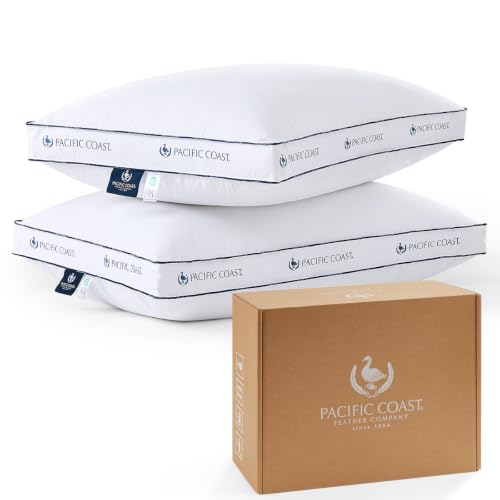
Pacific Coast Goose Feather and Down Firm Pillows, King — Best Overall
This is the straightforward answer to the side-sleeper brief: a firm pillow — the listing’s word — in a gusseted construction, filled with goose feather and down, shelled in 100% cotton, sold as a king-size set of 2, and positioned by Pacific Coast for side and back sleepers in its hotel collection. The gusset is the key structure: a sidewall panel that lets the pillow keep squared, usable height at its edges instead of tapering to a wedge, so the shoulder-gap-filling loft is present where your head actually rests. It suits dedicated side sleepers, larger-framed sleepers whose shoulder gap is widest, and king-bed households furnishing both sides in one purchase.
Strengths
- Firm designation plus gusset — the two features side sleepers need most, both stated in the listing
- King size suits wide shoulders and king beds; set of 2 covers the bed
- 100% cotton shell and hotel-collection construction
Trade-offs
- Firm is firm — back and stomach sleepers sharing the bed may find it too much
- King pillows need king cases and suit larger beds
- Feather content means some quill presence versus pure down
Spec snapshot (from the listing): goose feather and down; firm; gusseted; king size; set of 2; 100% cotton shell; for side and back sleepers.
Pacific Coast’s hotel heritage shows in the priorities: support first, stated plainly, in a construction a housekeeper can fluff back to shape daily. For the side sleeper who has already discovered that soft pillows are the problem, this set is the least complicated correction available — buy the firm gusseted pair, add protectors, and give your neck a level platform. If your shoulders are narrow or your mattress is very soft (which reduces the gap the pillow must fill), the medium options below may fit you better; firmness is a fit question, not a quality ranking.
Best for: dedicated side sleepers, broad shoulders, king beds / Not suited for: stomach sleepers or very soft mattresses needing less height
Check the current price on Amazon

Pacific Coast 3-Chamber Pillows, Queen — Best Chamber Design
The second Pacific Coast pick solves the same problem with architecture instead of firmness: a 3-chamber construction in which the fill is distributed among compartments — the classic hotel approach of a supportive feather core with softer down toward the surfaces — in a queen-size set of 2 positioned for side and back sleepers. Chambers matter because they stop fill from migrating away from the head’s pressure point, the slow flattening that afflicts single-chamber blends by mid-night. It suits combination sleepers who spend most of the night on their side but not all of it, and queen-bed households who want the chamber design at the most common size.
Strengths
- 3-chamber design resists fill migration and mid-night flattening
- Queen size set of 2 — the most versatile furnishing option in this guide
- Side-and-back positioning suits combination sleepers
Trade-offs
- Chamber feel is structured — pure-down devotees will notice the engineering
- Less sheer height than the firm king gusset for the broadest shoulders
- Natural fill still needs daily fluffing to perform as designed
Spec snapshot (from the listing): goose feather and down; 3-chamber; queen size; set of 2; hotel pillow for side and back sleepers.
Choose between the two Pacific Coast picks by how you sleep. Mostly-side, all night, on a firm mattress: the firm king gusset. Side-dominant but restless, rolling to your back and returning: this chambered queen, whose distributed fill behaves better across positions. The chamber design is also the better long-term bet for shape retention, because compartment walls do mechanically what fluffing does temporarily — they keep the fill where the pillow’s designer put it.
Best for: combination sleepers, queen beds, shape-retention priorities / Not suited for: the broadest shoulders wanting maximum firm height
Check the current price on Amazon

Continental Bedding 50/50 Down Feather Pillow — Best Stated Ratio
Continental Bedding prints its recipe in the title: a 50/50 down feather pillow — half down, half feather — described as fluffy hotel quality with side sleeper support, in a breathable 300 thread count cotton shell. An even split is the most balanced natural-fill formula: enough feather quill structure to hold a side sleeper’s head at height, enough down to keep the surface kind. It suits side sleepers who want transparency about what they are buying and a single-pillow purchase before committing to pairs. As noted in our methodology, this listing’s title also references RDS and an OEKO-TEX-related term in text that reaches us truncated; we therefore make no certification claim for this pillow in this guide, and the pillow earns its place on its stated ratio and construction alone.
Strengths
- Stated 50/50 ratio — the most transparent fill description in this guide
- Side sleeper support is the listing’s own positioning
- Breathable 300TC cotton shell
Trade-offs
- Sold singly — pairs require two purchases
- Even-split balance is a compromise for sleepers at either extreme
- Certification text in the title is truncated in the data available to us, so we claim none
Spec snapshot (from the listing): 50% down / 50% feather; 300TC cotton shell; side sleeper support positioning; hotel quality.
The 50/50 formula has survived a century of hotel use because it is the ratio least likely to be wrong for an unknown sleeper. For a first natural-fill purchase by a side sleeper — especially someone graduating from a synthetic pillow and unsure how much structure they want — it is the rational starting point: structured enough to hold height, soft enough to forgive. Buy one, sleep on it for two weeks, and you will know whether your next pillow should move toward the firmer Pacific Coast king or toward softer chambered designs; that diagnostic value is part of what this pick sells.
Best for: first-time natural-fill side sleepers, ratio transparency / Not suited for: sleepers certain they want maximum firmness
Check the current price on Amazon

APSMILE 3-Chamber Goose Feathers & Down Pillows, King — Best Organic Cotton Shell
APSMILE’s entry pairs the chamber idea with a materials upgrade: a 3-chamber goose feather and down pillow in a gusseted design with an organic cotton shell, a down outer layer the listing rates at 750 fill power, and medium support, as a king-size set of 2 in a hotel collection. The construction logic is face-friendly: the down-rich outer layer is what your cheek meets, while the chambered interior carries the support work. The listing positions the support as medium for all sleepers, so side sleepers should read this as the softer end of this guide’s range — best for narrower shoulders, softer mattresses, and side sleepers who dislike a firm pillow’s pushback.
Strengths
- Organic cotton gusseted shell — the materials headline of this guide
- 750 fill power down outer layer per the listing for a soft face feel
- 3-chamber structure with king-size set-of-2 furnishing
Trade-offs
- Medium support is the soft end of this guide — broad shoulders on firm mattresses may bottom out
- King size only in this pick
- Premium materials positioning within the category
Spec snapshot (from the listing): goose feathers and down; 3-chamber; gusseted; organic cotton shell; 750FP down outer layer; medium support; king; set of 2.
What this pillow understands is that side sleepers have two interfaces with a pillow: the load-bearing one at the neck and the sensory one at the face. Firm pillows serve the first and can neglect the second; the APSMILE’s layered construction serves both deliberately, and the organic cotton shell extends the same care to the fabric layer. For the side sleeper who found the firm gusseted archetype slightly harsh, this is the refinement — support with a softer handshake — provided your mattress and shoulder width do not demand the guide’s maximum height.
Best for: side sleepers wanting softer feel with structure, organic cotton fans / Not suited for: broad shoulders on firm mattresses
Check the current price on Amazon

White Duck Down & Feather Pillow, 2 Pack — Best Value Two-Pack
The value pick is a standard-size two-pack of white duck down and feather pillows with soft-medium support, positioned for side and back sleepers. Duck fill is the quiet bargain of the natural-fill world: functionally similar to goose in a blend context, typically priced a step below it, and entirely respectable in a pillow whose job is structure. Soft-medium support places this pair at the gentler end of the guide — suited to smaller-framed side sleepers, softer mattresses, guest beds that host side sleepers, and households furnishing several beds in natural fill without premium outlay.
Strengths
- Two-pack value in genuine natural fill
- Soft-medium support suits smaller frames and softer mattresses
- Standard size fits every bed and case you already own
Trade-offs
- Soft-medium is insufficient for broad shoulders on firm mattresses
- Duck blends can carry more natural scent when new than goose — airing helps
- Less architectural structure than the chambered and gusseted picks
Spec snapshot (from the listing): white duck down and feather; 2 pack; standard size; soft-medium support; for side and back sleepers.
Every guide needs the pick that respects a budget without apologizing, and this is it. The honest framing: you give up the engineered structures — no gusset claims, no chambers — and in exchange you get real down-and-feather fill in a pair at the accessible end of the category. For a guest room, a teenager’s bed, or a first natural-fill experiment for a smaller side sleeper, that trade is correct more often than the premium picks’ marketing would suggest. Add protectors, fluff daily, and this pair will out-serve the synthetic pillows it replaces.
Best for: smaller side sleepers, guest beds, budget natural fill / Not suited for: broad shoulders or firm-mattress height needs
Check the current price on Amazon
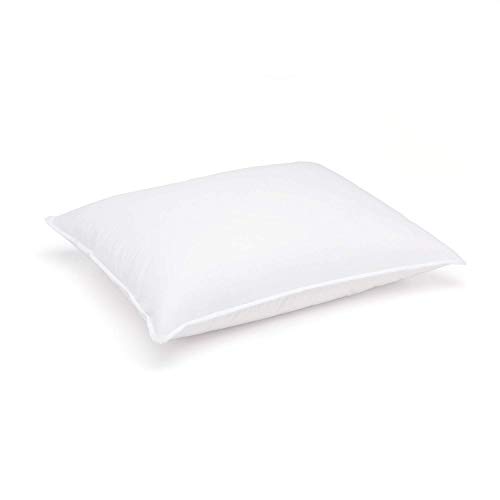
DOWNLITE Luxury White Goose Down Chamber Pillow, King — Best Down-Around-Feather Design
DOWNLITE’s chamber pillow inverts the usual blend: instead of mixing fills evenly, it surrounds a feather core with down — the listing’s own description is “feathers surrounded by down” — in a king 20 x 36 pillow from its luxury line, described as hypoallergenic and popularized in hotel use. The design intent is precise for side sleepers: the feather core carries the load and holds height, while the down envelope means the sleeper’s face and ear meet only the softest fraction. It suits side sleepers who love down’s feel but need feather’s spine, and king-bed owners who want a single statement pillow rather than a set.
Strengths
- Down-surround construction puts softness at the surface and support at the core
- King 20 x 36 size gives side sleepers length to work with
- Hospitality-proven pattern from a specialist maker
Trade-offs
- Sold as a single pillow at a premium tier
- King length overwhelms smaller beds and standard cases
- Chamber designs feel structured compared with loose-fill down
Spec snapshot (from the listing): white goose down chamber construction; feathers surrounded by down; king 20 x 36; hypoallergenic per listing.
If the APSMILE is the layered design in queen-friendly form, the DOWNLITE is the original expression of the idea at king scale: core for structure, down for grace. Side sleepers who curl around their pillow — hugging, tucking, repositioning it through the night — tend to love chamber pillows because the pillow keeps its architecture wherever it is grabbed. For a primary bedroom where one pillow is the nightly instrument, this is the connoisseur’s pick of the guide, and its hotel pedigree suggests it will hold that architecture for years of fluffing.
Best for: down lovers needing support, king beds, pillow-huggers / Not suited for: standard-size bedding or budget furnishing
Check the current price on Amazon
Comparison Table
| Pick | Badge | Key spec | Best for |
|---|---|---|---|
| Pacific Coast Firm King | Best Overall | Firm, gusseted, king set of 2 | Dedicated side sleepers |
| Pacific Coast 3-Chamber Queen | Best Chamber Design | 3-chamber, queen set of 2 | Combination sleepers |
| Continental 50/50 | Best Stated Ratio | 50/50 blend, 300TC cotton | First natural-fill purchase |
| APSMILE 3-Chamber King | Best Organic Cotton Shell | Organic cotton, 750FP down outer layer | Softer structured feel |
| White Duck 2 Pack | Best Value Two-Pack | Duck down and feather, soft-medium | Smaller frames, guest beds |
| DOWNLITE Chamber King | Best Down-Around-Feather | Feather core surrounded by down, 20×36 | Down lovers needing support |
Key Takeaways
- Side sleeping needs height and structure: firm fills, gussets, and chambers — not soft pure down.
- Chamber designs (Pacific Coast, APSMILE, DOWNLITE) keep fill from migrating away from the head’s pressure point.
- Match firmness to the system: broad shoulders plus a firm mattress need the most pillow; narrow shoulders plus a soft mattress need less.
- Ratios are quoted only where listings state them; one pick’s certification text was truncated in the source data, so this guide claims none for it.
- Protectors and daily fluffing are what make natural fill perform as designed, night after night.
- Judge any natural-fill pillow after a two-week test, not on night one — loft and trust both take time to arrive.
- Buy pillows as singles when partners sleep differently; matching cases can coordinate what matching firmness cannot.
How to Choose a Down Feather Pillow for Side Sleeping
Begin with the gap. Lie on your side on your own mattress, without a pillow, and have someone note or photograph the distance between the mattress surface and the side of your head where a pillow must reach to keep your neck level. Broad shoulders and a firm mattress create the largest gap and point to this guide’s firm and king end — the Pacific Coast firm gusset above all. Narrow shoulders and a plush mattress or topper shrink the gap and open the medium options: APSMILE’s layered medium, the duck two-pack’s soft-medium. Most sleepers live between those poles, which is precisely the territory of the chambered designs and the 50/50 blend.
Next, be honest about position discipline. A sleeper who stays on one side all night can optimize fully for that position. A combination sleeper should weight the chambered and balanced picks, because a pillow tuned exclusively for side height will feel like a wedge during back-sleeping intervals. Then consider the hug factor: side sleepers who hold their pillow should favor chambered construction, which survives grabbing and repositioning with its shape intact. Finally, size the pillow to the bed and the body together — king pillows serve king beds and broad sleepers; standard and queen serve everyone else with less case-shopping friction. Buy one pillow first if you are changing firmness categories; two weeks of sleep is the only honest test, and this guide’s singles (Continental, DOWNLITE) exist partly to make that test affordable.
How to Set Up and Test Your Pillow Over the First Two Weeks
Natural fill arrives compressed and needs a day of airing and fluffing before it shows its real loft — do not judge any pick in this guide on night one. Fit a protector from the start; it changes feel negligibly and protects the investment materially. Then run a simple two-week protocol. Nights one to three: sleep normally and note only whether your head feels held at height or sinks by morning — mid-night sinking points to fill migration (favor chambers next time) or insufficient firmness for your gap. Nights four to seven: adjust one variable — a folded towel under the pillow to simulate more loft, or a night without the pillow-topper if your bed has one — and notice whether level improves. By week two, you should know your category definitively: more structure, less structure, or this structure in a different size. Keep notes like a scientist for a fortnight and you will never buy a wrong pillow again, because you will own the two numbers that matter — your gap and your mattress’s contribution to it. That knowledge outlasts any single product in this guide.
How to Care for Down and Feather Pillows
Feather blends ask for rhythm more than effort. Fluff every morning — two hands, pushing air and fill back toward the center and edges — because a blend’s support depends on fill distribution that sleep disturbs nightly. Use protectors and wash those monthly instead of washing the pillows themselves; when a pillow does need washing, follow its maker’s instructions, use a large-capacity machine, and dry with patience and dryer balls until the fill is completely dry and lofted, since a damp-stored feather pillow is a ruined one. Air pillows in indirect sunlight occasionally to refresh them. Expect quills to settle: a new blend can feel slightly crunchy for the first nights as feathers orient, and this typically fades. Rotate the pillow head-to-foot weekly so wear distributes across the fill rather than carving one permanent head-shaped valley. With this routine, the chambered and gusseted constructions in this guide should hold their architecture for years; without it, even the best construction slowly becomes the flat pillow you replaced.
One care point is specific to side sleepers: because your pillow works harder — it carries more load, at a steeper angle, than a back sleeper’s — rotate and flip it on a stricter schedule than the generic advice suggests. A pillow slept on in one orientation carves a permanent head valley months earlier than a rotated one, and the gusseted and chambered designs resist this longest precisely because their structure redistributes the load you concentrate nightly in the same square inches.
Common Buying Mistakes
The signature mistake is buying softness for a position that needs structure — a cloud-soft pillow under a side sleeper’s head guarantees the neck bends downward all night. Second: ignoring the mattress — the same pillow is too tall on a plush mattress and too flat on a firm one, and returns blamed on pillows are often mattress interactions. Third: assuming a stated ratio tells the whole story; two 50/50 pillows can feel different because chambering, fill weight, and shell change the result — which is why this guide weighs construction as heavily as recipe. Fourth: buying king pillows for a queen bed and standard cases. Fifth: skipping the protector and then washing feather pillows too often, shortening their lives in the name of hygiene. Sixth: expecting a pillow to resolve persistent neck or shoulder pain — fit helps comfort, but ongoing pain is a medical question, and this guide deliberately makes no claims in that direction.
Anatomy of a Chamber Pillow: Why the Architecture Works
Three of this guide’s six picks use chambered construction, so the design deserves a full explanation. A conventional blend pillow is one bag of mixed fill: every night, your head’s weight and movement push fill outward, and by morning the center — where support is needed — holds the least material. Fluffing resets this, but the pillow spends its working hours migrating toward flat. A chamber pillow divides the interior with fabric walls. In the Pacific Coast and APSMILE three-chamber pattern, compartments distribute different fills or densities across the pillow’s zones. In the DOWNLITE pattern, the chamber is concentric: a feather core for load-bearing, wrapped in down for surface feel. Both architectures attack the same physics — fill migration — by giving the fill nowhere to go. The side-sleeper benefit is consistency: the pillow you lie down on at eleven is much closer to the pillow supporting you at four. The trade-offs are equally physical: chambered pillows feel more structured and less moldable than loose fill, cost more to manufacture, and reward makers with genuine construction discipline — a badly sewn chamber is worse than none. That is why this guide’s chamber picks come from hospitality suppliers whose entire business is this construction executed at scale.
Mattress Pairing: The Other Half of Side-Sleeper Fit
A pillow review that ignores the mattress is half a review, so here is the pairing logic in full. On a firm mattress, your shoulder cannot sink, so the entire shoulder-to-head distance must be bridged by the pillow: this is the maximum-demand case, and it is where the Pacific Coast firm gusset earns its overall badge. On a medium mattress, the shoulder sinks modestly and the chambered middle of this guide — Pacific Coast 3-chamber, Continental 50/50 — is calibrated correctly. On a plush mattress or a thick pillow-top or topper, the shoulder sinks deeply, the gap narrows, and firm king pillows overshoot: the APSMILE’s medium or the duck pack’s soft-medium become the right answers. Adjustable beds add a wrinkle — raising the head section changes the geometry nightly — and favor moldable blends over rigid structures. If you are changing mattresses and pillows in the same season, change the mattress first and sleep a week before choosing the pillow; the pillow decision depends on the mattress’s final contribution, and buying both blind is how households end up with a firm pillow on a plush bed, each blaming the other. Every firmness word in this guide should be read through this section: firm, medium, and soft-medium are positions in a system, not grades on a shelf.
Goose or Duck? Fill Species for Side Sleepers
Species is the most over-weighted variable in natural fill, so a brief calibration helps. Goose down clusters are typically larger than duck down clusters, which shows up as higher achievable fill power and a price premium; in blends — which is to say, in every pick in this guide — the practical difference narrows considerably, because feather structure, chambering, and fill weight dominate the sleeping result. The guide’s own lineup demonstrates the point: its overall pick is a goose blend chosen for firmness and gusseting, while its value pick is a duck blend chosen for honest soft-medium support at a two-pack price, and neither choice was made on species. Where species does matter practically: duck products can carry a stronger natural scent when new (airing resolves most cases), and goose commands its premium most defensibly in high-fill-power pure down — a category this side-sleeper guide deliberately excludes. For side sleepers shopping blends, spend on construction first, shell second, and species last; the listings that lead with species and whisper about construction are selling the story in the wrong order.
When to Replace a Side Sleeper’s Pillow
Natural fill gives clear retirement signals if you know the tests. The fold test: fold the pillow in half and release — a healthy down-feather pillow springs back toward flat; one that stays folded or recovers limply has lost the resilience side sleeping depends on. The morning test: if you increasingly wake with the pillow’s center compressed into a valley that fluffing no longer corrects by evening, fill migration or quill breakdown has won. The support test: lie on your side and have a partner check your neck’s line — if it sags downward despite correct setup, the pillow’s working height is gone. Chambered pillows announce failure differently: a ruptured internal wall lets fill pool to one side, creating a pillow that is simultaneously too thick and too thin, and that is a replacement, not a fluffing problem. Timelines vary with care and construction, but the pattern is consistent: protectors, rotation, and fluffing stretch a good blend’s service across years, while neglect compresses the same pillow’s useful life into a fraction of that. When replacement time comes, buy within the architecture that suited you — a chamber sleeper who replaces with loose fill usually returns it — and use your two-week protocol notes from the last purchase to skip the diagnostic phase entirely.
Pillow Height by Build: Practical Starting Points
General guidance, offered as starting points for the two-week test rather than as rules: petite side sleepers (narrow shoulders, smaller frames) should start at this guide’s soft-medium end — the duck two-pack — especially on anything softer than a firm mattress. Average builds on medium mattresses are the chambered center’s home ground: the Pacific Coast 3-chamber queen or the Continental 50/50, with the APSMILE as the softer-textured alternative. Broad-shouldered sleepers, and anyone on a firm or extra-firm mattress, should start at the firm king gusset and treat anything softer as a probable return. Sleepers who also use a pillow between the knees — a common side-sleeping comfort habit — should know it does not change the head pillow’s job, though it often makes a slightly firmer head pillow feel better by stabilizing the whole position. And sleepers transitioning from back to side during recovery from a snoring complaint or a partner’s complaint should expect an adjustment week: the position is new, not the pillow wrong, and the two-week protocol exists to tell those apart.
Furnishing for Side Sleepers You Do Not Live With: Guest Beds and Shared Rooms
A shorter, practical note for the beds you buy for but do not sleep in. Guest rooms host unknown positions, so the balanced middle wins: a 50/50-style blend or a chambered queen gives a side-sleeping guest real support without the firm king’s commitment, and the duck two-pack covers budget guest furnishing in genuine natural fill. In a shared primary bed where one partner side-sleeps and the other does not, buy pillows as singles, not as a matched set — this guide’s Continental and DOWNLITE singles exist for exactly that asymmetry, and the bed will look coordinated in matching cases while sleeping uncoordinated, which is the correct priority order. For teenagers transitioning to adult beds, the standard-size picks avoid the case-shopping and scale problems of king pillows in smaller rooms. And for a spare pillow kept for the couch-napping side sleeper in every family, a chambered design holds its shape in storage better than loose fill, which emerges from the closet pre-flattened. These are small decisions, but pillows are bought in systems across a house, and the system view is what this guide’s six picks were assembled to serve.
Travel and Second-Home Notes for Committed Side Sleepers
A short coda for readers who sleep in more than one place. Side sleepers are the position group most betrayed by unfamiliar pillows — hotel and guest pillows skew soft and low, which is precisely wrong for them — and the fixes are worth knowing. In hotels, ask for a second firm pillow rather than stacking two soft ones; a single firmer pillow under your head, with the soft one reserved for between the knees or the arms, reproduces home geometry better than any stack. In a second home or a partner’s place, the economical move is to duplicate your winning architecture rather than your exact pillow: if the Pacific Coast firm gusset works at home, a chambered or firm blend of similar height works there, and your two-week protocol notes tell you the target height to shop for. For frequent travelers, a compressed spare of your home pillow in the car beats every improvisation at the destination. Side sleeping is a geometry habit; carry the geometry with you and the location stops mattering.
Final Recommendation
Most side sleepers should start with the Pacific Coast Firm King set for maximum stated structure, or the Pacific Coast 3-Chamber Queen set if they split the night between side and back. First-time natural-fill buyers get the diagnostic value of the Continental 50/50; softness-seekers with structure get the APSMILE; smaller frames and guest beds get the duck two-pack; and down devotees get the DOWNLITE chamber pillow. For the wider down pillow landscape, see Best Feather And Down Pillows, Best Down Surround Pillows, Best Medium Pillows For Side Sleepers, Best Duck Feather And Down Pillows, and Best Cold Pillows For Side Sleepers.
Whatever you order, run the experiment properly: protector on from night one, a day of airing before judgment, two weeks of notes before verdict. Side sleepers abandon more good pillows in the first three nights than in the following three years, because natural fill needs time to reach its working loft and bodies need time to trust a new height. Give the pillow its fortnight and it will give you a straight answer — and a level neck line — in return.
Frequently Asked Questions
Why are feather blends better for side sleepers than pure down?
Structure. Feather quills resist compression and hold the head at height, while pure down clusters compress to a fraction of their loft under load. Side sleeping is the position that most needs sustained height, so blends, chambers, and gussets — the constructions in this guide — outperform soft pure down for it, however luxurious pure down feels in the hand.
What does a gusset actually do?
A gusset is a fabric sidewall sewn around the pillow’s edge, turning a tapered pillow into a box-shaped one. The practical effect is usable height across the pillow’s full surface — including where a side sleeper’s head actually rests — instead of loft that exists only in the center. The Pacific Coast firm pick and the APSMILE both use gusseted designs.
How firm should my pillow be if I am a small side sleeper?
Less firm than the marketing suggests. Your shoulder gap is smaller, and a very firm, high pillow will push your head upward into the opposite bend. The soft-medium duck two-pack or the medium APSMILE are this guide’s fits for smaller frames; use the two-week test in this article to confirm rather than trusting any label — including ours.
Chamber or mixed blend — which lasts longer?
Chambered constructions generally hold their intended shape longer, because compartment walls mechanically prevent the fill migration that slowly flattens mixed blends. Both outlast their care: protectors, fluffing, and rotation matter more to lifespan than the construction difference between the two.
Can back sleepers use these pillows too?
Several picks are positioned by their listings for side and back sleepers — both Pacific Coast models and the duck two-pack among them. Dedicated back sleepers who never side-sleep should generally choose less height than this guide’s firm end; combination sleepers are exactly who the chambered middle of this guide serves.
Why does my feather pillow feel crunchy at first?
Feather quills need a short settling period to orient inside a new pillow, and blends commonly feel slightly textured for the first several nights. Daily fluffing speeds the process. Persistent poking through the shell is different from settling crunch — that suggests a shell weave too loose for the fill, which is a quality issue worth raising with the maker while the return window is open.
Should I use two pillows stacked for side sleeping?
Almost never as a permanent arrangement: stacked pillows slide against each other, bend the neck at the junction, and change height unpredictably through the night. One correctly chosen pillow — the exercise this entire guide works through — outperforms two improvised ones. If you are stacking because your current pillow is too flat, treat that as the replacement signal described in this article and buy the height in a single structured pillow.
What certifications do these pillows carry?
We report certifications only where listing data states them completely. The DOWNLITE listing describes its pillow as hypoallergenic; the Continental listing’s title references RDS and an OEKO-TEX-related term in text that reaches us truncated mid-word, so — rather than guess at the completion — this guide claims no certification for that pillow and documents the truncation in its sources. When certifications matter to your purchase, verify them on the live listing and the maker’s site.

