Disclosure: airfryerkitchensupply.com is reader-supported. When you buy through links on our site, we may earn an affiliate commission at no extra cost to you.
Where to buy
Every pick in this guide to the best washable mudroom rugs was confirmed against Amazon listing data before it earned a link. Prices change constantly, so we never print a fixed price here — use the links below to check the current price on Amazon for the exact size and colour you want, and confirm the listing still matches the product described before you order.
- GORILLA GRIP SoakSTOPPER Indoor Door Mat (48″ x 30″) — Best Overall. Check the current price on Amazon.
- OLANLY Dog Door Mat for Muddy Paws (44″ x 32″) — Best Extra-Absorbent. Check the current price on Amazon.
- Tindbea Dog Door Mat for Mud Paws (24″ x 59″) — Best Runner-Length Mud Mat. Check the current price on Amazon.
- BEQHAUSE Dirt Trapper Door Mat (24″ x 36″) — Best for Grit and Gravel. Check the current price on Amazon.
- hicorfe Dirt Trapper Door Mat (32″ x 20″) — Best Compact Mudroom Mat. Check the current price on Amazon.
- Hazo Haus Washable Runner Rug (2×6, Navy Blue) — Best Decorative Mudroom Runner. Check the current price on Amazon.
The best washable mudroom rugs are not really rugs in the decorative sense — they are the washable floor armour of the hardest-working room in the house. A mudroom absorbs what no other room will: soaked boots, dripping coats, dog paws straight off wet grass, sports bags, garden tools and the grit of every season. This guide picks six washable rugs and mats that were each confirmed against live Amazon listing data, chosen specifically for that punishment, and it is honest about the difference between a mat that traps dirt and a rug that merely sits where dirt lands.
A mudroom differs from a front entry in one crucial way: people do not just pass through it, they stop in it. Shoes come off there, dogs get towelled there, bags get dropped there. That means the rug needs to cover a working area rather than a doorway strip, tolerate standing water without holding it against the floor, and survive being washed far more often than any other rug you own. Decorative washable rugs designed for living rooms often fail here within a season — the backing gives up, the edges curl, or the pile simply cannot release caked mud in a normal wash.
The six picks below are weighted toward absorbent chenille mud mats and rubber-backed dirt trappers — the constructions that actually work in a mudroom — with one long runner for mudrooms that are really converted hallways. We never print prices or ratings, since both change constantly; use the links to check the current price on Amazon in the size your room needs.
One more thing before the picks: a mudroom rug is a system component, not a solo act. It works with the boot tray, the towel hook, the bench and the floor itself, and the households with the cleanest mudrooms are rarely the ones with the most expensive rug — they are the ones whose rug, layout and washing routine were chosen together. This guide therefore spends as much time on layout, layering and care as on the six products, because that is where the result is actually decided.
Key Takeaways
- Mudrooms need working coverage, not a doorway strip: size the rug for the stop-and-undress zone where boots actually come off.
- Chenille mud mats absorb the most water from boots and paws; rubber-backed dirt trappers scrape and contain grit best — many mudrooms benefit from one of each.
- Wash frequency is the real specification: pick the rug you can wash weekly without dreading it, in a size your home machine can actually handle.
- Never leave a soaked rug sitting on the floor — lift it, dry the underside and the floor, or the rug becomes the moisture problem it was bought to solve.
- A long runner suits hallway-style mudrooms; a wide mat suits square rooms with a bench and hooks.
In this guide
Quick Picks
Best Overall — GORILLA GRIP SoakSTOPPER Indoor Door Mat (48″ x 30″): a generously sized 48×30 chenille mud mat, listed as a soak-stopping absorbent mat for muddy paws and quick drying — the benchmark working mat for a busy mudroom door.
Best Extra-Absorbent — OLANLY Dog Door Mat for Muddy Paws (44″ x 32″): a 44×32 chenille mud mat listed as extra absorbent and machine washable, with a non-slip build — the largest absorbent footprint in this guide.
Best Runner-Length Mud Mat — Tindbea Dog Door Mat for Mud Paws (24″ x 59″): a long 24×59 chenille dirt-trapper mat in charcoal, listed as absorbent, non-slip and washable with a soft rubber backing — built for the walk from door to bench.
Best for Grit and Gravel — BEQHAUSE Dirt Trapper Door Mat (24″ x 36″): a rubber-backed dirt trapper in a practical 24×36 size, listed as non-slip, washable, dirt resistant and absorbent, with a low profile for tight doors.
Best Compact Mudroom Mat — hicorfe Dirt Trapper Door Mat (32″ x 20″): a compact 32×20 washable dirt trapper with a non-slip build and low profile — the right scale for small mudrooms, side doors and laundry-room entries.
Best Decorative Mudroom Runner — Hazo Haus Washable Runner Rug (2×6, Navy Blue): a 2×6 washable runner explicitly listed for mudroom use, with a non-slip rubber backing and low-pile, stain-resistant build — for mudrooms that are also seen by guests.
How These Picks Were Chosen
We filtered the verified washable rug and door mat listings down to mudroom duty with strict rules: complete rugs or mats only (no boot trays, pads or accessories), washable per the listing, a construction built for moisture and grit — absorbent chenille, dirt-trapping textured faces or rubber-backed runners — and sizes that cover a working zone rather than a single doorstep. Purely decorative area rugs that merely list a mudroom among possible rooms were cut unless their construction genuinely suited wet work.
The final six split into three absorbent chenille mud mats at different scales, two rubber-backed dirt trappers for grit-heavy doors, and one 2×6 runner explicitly listed for mudroom use. Two picks are dog-focused designs, which is realistic rather than a limitation: in most households the dog is the mudroom’s heaviest user, and mats designed for muddy paws are simply the most absorbent mats in the category. Badges describe the job each pick does best. As with every guide in this series, claims from listing titles are reported as listing claims, not laboratory results.
The 6 Best Washable Mudroom Rugs

GORILLA GRIP SoakSTOPPER Indoor Door Mat (48″ x 30″) — Best Overall
The verified listing describes a 48 x 30 inch indoor door mat in beige soft chenille, positioned as an absorbent mud mat that stops soak-through, quick drying, and aimed at dogs with muddy paws and entryway use. At four feet wide, it covers the full landing zone of a standard mudroom door with room for a person and a dog side by side, which is exactly the geometry that defeats smaller mats.
Strengths
- 48-inch width covers a person-plus-dog landing zone
- Chenille pile absorbs water from boots and paws on contact
- Quick-dry positioning suits daily wet use
Trade-offs
- Beige shows mud plainly — expect frequent washing
- Chenille needs vigorous shaking to release trapped grit
- Size makes for a heavy load when soaked
| Detail (from the verified listing title) | Value |
|---|---|
| Listing size | 48″ x 30″ |
| Material (per listing title) | Soft chenille |
| Surface behaviour | Absorbent mud mat, quick dry (per listing title) |
| Colour in listing | Beige |
This is the mat to buy when the mudroom door is the household’s main entrance and the floor beyond it is worth protecting. The chenille construction is the point: looped microfiber fingers present a large absorbent surface to wet treads and paw pads, pulling water in on the first step instead of letting it pool and spread. The honest costs are the ones chenille always carries — it holds grit deep in the pile, so it wants a hard outdoor shake several times a week, and in beige it will look dirty quickly, which is really just the mat showing you the dirt it stopped. Wash it on the routine in the care section below and it will outwork any decorative rug in this room.
Best for: main mudroom doors with dog traffic and wet boots / Not suited for: households wanting a decorative rug look
Check on Amazon — check the current price on Amazon before you buy.

OLANLY Dog Door Mat for Muddy Paws (44″ x 32″) — Best Extra-Absorbent
The verified listing describes a 44 x 32 inch dog door mat for muddy paws in beige chenille, positioned as extra absorbent, absorbing moisture and dirt, non-slip and machine washable, and quick in its drying character (the title in our records is truncated, so we report only what it confirms). The 32-inch depth is the detail that matters: it gives a dog room to take two full steps and a person room to stand and wipe, all on the mat.
Strengths
- Deep 32-inch footprint catches the full paw-and-boot zone
- Extra-absorbent chenille positioning for serious wet traffic
- Non-slip build for hard mudroom floors
Trade-offs
- Large size is a full washing load on its own
- Chenille pile needs regular shake-outs
- Beige colour shows soil between washes
| Detail (from the verified listing title) | Value |
|---|---|
| Listing size | 44″ x 32″ |
| Material (per listing title) | Chenille |
| Surface behaviour | Extra absorbent, absorbs moisture and dirt (per listing title) |
| Care | Machine washable, non-slip (per listing title) |
Depth is the most under-bought dimension in mud mats. Width gets the attention, but a dog that steps off the back edge of a shallow mat after one pace has only been half-served; 32 inches of depth means paws land on chenille twice before they reach your floor. The machine-washable confirmation in the listing matters at this size, because a mat this large that could only be hosed and spot-cleaned would become a chore its owner avoids. Pair it with a towel hook by the door — mat for the water that drips, towel for the dog itself — and a mudroom with hard floors stays genuinely manageable through the wettest months.
Best for: dog households and deep mudroom landing zones / Not suited for: small mudrooms or doors with very low clearance
Check on Amazon — check the current price on Amazon before you buy.

Tindbea Dog Door Mat for Mud Paws (24″ x 59″) — Best Runner-Length Mud Mat
Many mudrooms are not square; the traffic runs in a line from the door to the bench, the hooks or the inner door. The verified listing describes a 24 x 59 inch charcoal dog door mat for mud paws, a dirt trapper mud mat that absorbs moisture, non-slip and washable, with a soft rubber backing, for front inside doors. Nearly five feet of absorbent runway covers that whole line.
Strengths
- Runner length covers door-to-bench traffic lines
- Charcoal colour hides mud between washes
- Rubber backing grips and contains moisture
Trade-offs
- 24-inch width is narrow for side-by-side standing
- Long chenille is awkward to shake out alone
- Charcoal shows light dust and lint
| Detail (from the verified listing title) | Value |
|---|---|
| Listing size | 24″ x 59″ |
| Colour in listing | Charcoal |
| Backing | Soft rubber backing (per listing title) |
| Care | Washable, non-slip, absorbs moisture (per listing title) |
The charcoal colour is a quietly excellent mudroom decision: mud dries grey-brown, and on charcoal chenille the interval between washes stops being visible from across the room, which means the mat gets washed when it needs it rather than when it looks embarrassing. The rubber backing earns its place in a runner format, because long mats on smooth floors creep forward a centimetre at a time until they bunch at the bench — grip is what keeps the runway where you laid it. If your mudroom traffic is a straight line, this shape will outperform a bigger square mat placed hopefully by the door.
Best for: hallway-style mudrooms and door-to-bench traffic lines / Not suited for: square mudrooms needing a wide standing zone
Check on Amazon — check the current price on Amazon before you buy.
BEQHAUSE Dirt Trapper Door Mat (24″ x 36″) — Best for Grit and Gravel
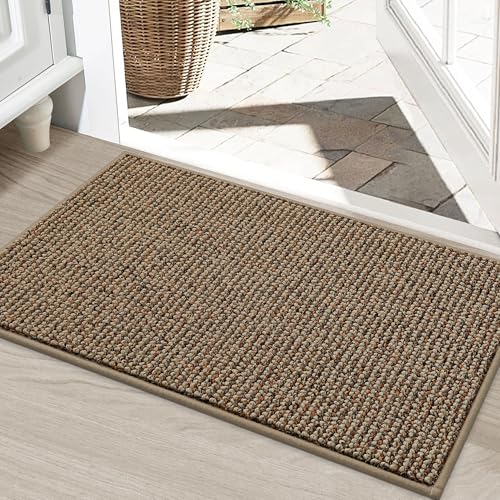
Where the mudroom problem is grit — gravel drives, sandy soil, garden paths — scraping and trapping matter more than soaking. The verified listing describes a 24 x 36 inch dirt trapper door mat in beige, non-slip and washable, dirt resistant and absorbent, a low-profile entrance mat. The textured trapper face is built to pull grit out of boot treads and hold it below the walking surface until you shake or wash it out.
Strengths
- Dirt-trapper face scrapes grit from treads effectively
- Low profile clears tight-swinging mudroom doors
- 24×36 is an easy size to wash frequently
Trade-offs
- Absorbs less standing water than chenille mats
- Trapped grit must be shaken out or it re-deposits
- Beige shows mud, though less than it shows on chenille
| Detail (from the verified listing title) | Value |
|---|---|
| Listing size | 24″ x 36″ |
| Profile | Low profile (per listing title) |
| Surface behaviour | Dirt resistant and absorbent (per listing title) |
| Care | Washable, non-slip (per listing title) |
Think of this pick as the gravel-drive specialist. Chenille drinks; a dirt trapper scrapes, and on gritty soil the scraping is what saves your floors, because grit under a heel is sandpaper. The modest size is a feature in disguise: at 24×36 it washes and dries quickly, so it can go through the machine twice as often as a giant mat without dominating laundry day, and in mud season frequency beats size. It also layers well — put it at the door as the first contact, with a chenille mat or runner behind it, and you have built the two-stage system the guide below recommends.
Best for: gravel, sand and garden-grit households / Not suited for: standing-water problems that need maximum absorbency
Check on Amazon — check the current price on Amazon before you buy.

hicorfe Dirt Trapper Door Mat (32″ x 20″) — Best Compact Mudroom Mat
Not every mudroom is a room; plenty are a tiled corner by the side door or a strip of laundry-room floor. The verified listing describes a 32 x 20 inch black dirt trapper door mat for indoor entrances, non-slip and washable, low profile, for front and back entrances. It brings the trapper construction down to a footprint that fits those small working corners.
Strengths
- Compact size fits small mudrooms and side doors
- Black colour hides soil between washes
- Low profile suits almost any door swing
Trade-offs
- Small footprint only covers a single-step zone
- Less absorbent than chenille alternatives
- Black shows light dust in dry seasons
| Detail (from the verified listing title) | Value |
|---|---|
| Listing size | 32″ x 20″ |
| Colour in listing | Black |
| Profile | Low profile (per listing title) |
| Care | Washable, non-slip (per listing title) |
Small mudrooms fail when owners buy big-rug advice: an oversized mat that folds up a wall or slides under a bench protects nothing and trips everyone. This pick respects the actual geometry — one person, one door, boots off in a square metre of tiled floor. In black, it also tolerates the visual reality of a working corner far better than pale mats. Its limits are honest ones: it is a first-contact mat, not a whole-room solution, and in a wet household it should be the start of a system rather than the whole of it. For the side door that only the family uses, it is frequently all the system that door needs.
Best for: small mudrooms, side doors and laundry entries / Not suited for: main family entrances with heavy multi-person traffic
Check on Amazon — check the current price on Amazon before you buy.
Hazo Haus Washable Runner Rug (2×6, Navy Blue) — Best Decorative Mudroom Runner
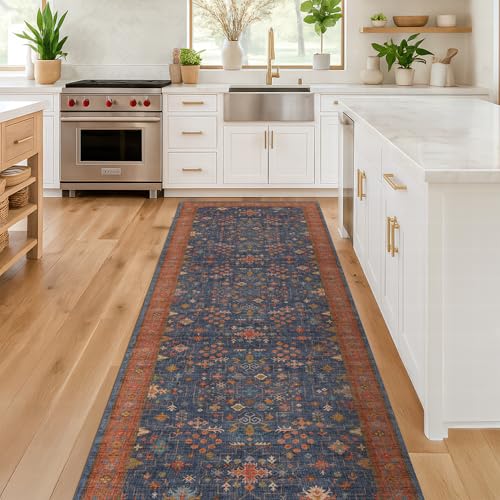
Some mudrooms double as the home’s front hall, and a purely industrial mat is not welcome there. The verified listing describes a navy blue 2×6 runner rug listed for kitchen, hallway, mudroom, laundry room and bathroom use, washable, with a non-slip, non-skid rubber backing and a low-pile, stain-resistant build (the title in our records is truncated at that point). It is a real rug in appearance with a working rug’s specification.
Strengths
- Explicitly listed for mudroom use among its rooms
- Rubber backing keeps a long runner in place
- Low pile vacuums and washes easily; navy hides soil
Trade-offs
- Low pile absorbs far less water than chenille
- Decorative face needs a partner mat at very muddy doors
- Runner shape does not suit square mudrooms
| Detail (from the verified listing title) | Value |
|---|---|
| Listing size | 2 x 6 ft |
| Colour in listing | Navy blue |
| Backing | Non-slip, non-skid rubber backing (per listing title) |
| Pile | Low pile, stain resistant (per listing title) |
This is the compromise pick, and it knows it. The low-pile face will not drink a soaked boot dry the way chenille does, so at a genuinely muddy door it works best as the second stage: a compact trapper at the threshold, this runner carrying the cleaned traffic to the bench in a way that looks like interior design rather than flood defence. In return you get the easiest maintenance in this guide — low pile releases dirt to a vacuum, washes without drama and dries fast — and a navy colour that forgives the weeks between washes. For the mudroom that guests walk through, that trade is usually the right one.
Best for: guest-facing mudrooms and hallway-style layouts / Not suited for: standing-water mudrooms needing chenille absorbency
Check on Amazon — check the current price on Amazon before you buy.
Comparison Table
| Pick | Badge | Key spec | Best for |
|---|---|---|---|
| GORILLA GRIP SoakSTOPPER Indoor Door Mat (48″ x 30″) | Best Overall | 48″ x 30″ chenille absorbent mud mat | main mudroom doors with dog traffic and wet boots |
| OLANLY Dog Door Mat for Muddy Paws (44″ x 32″) | Best Extra-Absorbent | 44″ x 32″ extra-absorbent chenille | dog households and deep mudroom landing zones |
| Tindbea Dog Door Mat for Mud Paws (24″ x 59″) | Best Runner-Length Mud Mat | 24″ x 59″ chenille runner, rubber backing | hallway-style mudrooms and door-to-bench traffic lines |
| BEQHAUSE Dirt Trapper Door Mat (24″ x 36″) | Best for Grit and Gravel | 24″ x 36″ low-profile dirt trapper | gravel, sand and garden-grit households |
| hicorfe Dirt Trapper Door Mat (32″ x 20″) | Best Compact Mudroom Mat | 32″ x 20″ compact dirt trapper, black | small mudrooms, side doors and laundry entries |
| Hazo Haus Washable Runner Rug (2×6, Navy Blue) | Best Decorative Mudroom Runner | 2×6 ft low-pile runner, rubber backing | guest-facing mudrooms and hallway-style layouts |
How to Choose Washable Mudroom Rugs
Map the room before you shop. Stand in the mudroom doorway and watch where feet actually go: the landing inside the door, the path to the bench or hooks, the spot where the dog gets towelled. That map, not the room’s total floor area, is what the rug must cover. Most mudrooms need coverage of a working zone roughly the width of the door plus the undressing space beside it; hallway mudrooms need length instead. Every sizing mistake in this category comes from covering the room’s geometry rather than the traffic’s geometry.
Then decide whether your enemy is water or grit, because the constructions differ. Water — rain, snowmelt, wet paws — calls for absorbent chenille, whose looped pile drinks on contact. Grit — gravel, sand, dried mud — calls for a textured dirt trapper that scrapes treads and holds particles below the surface. Many real mudrooms fight both, which is why the strongest setups layer: trapper at the threshold, chenille behind it. The picks in this guide were chosen so those layers can be built from within the list.
Washability is the real specification
A mudroom rug may be washed weekly in season — more often than any textile you own except towels. So judge washability as a system: does the size fit your machine with room to agitate, does it dry within a day in your home, and can one person shake it out without help? A 44×32 chenille mat is a serious wet load; a 24×36 trapper is a trivial one. If your laundry reality is a small machine and no outdoor line, favour the smaller, faster picks and wash them twice as often — frequency is a legitimate strategy.
Floors, backing and moisture discipline
Mudroom floors are usually chosen for abuse — tile, stone, vinyl, sealed concrete — but wood and laminate mudrooms exist and need care. Rubber backings grip smooth floors best and help contain moisture on top of the mat; whatever the backing, the rule is absolute: never leave a soaked rug in place for days. Water migrates, and a rug that holds moisture against any floor will eventually damage finishes and grow odours. Lift, hang and dry the rug; wipe the floor; relay when both are dry.
Mudroom Rug Layouts That Actually Work
The bench layout is the classic: a wide absorbent mat spanning the door and the bench front, so every stage of arrival — step in, sit, boots off, stand in socks — happens on the rug. The runway layout suits long rooms: a runner from door to inner doorway, ideally with a trapper at the threshold. The dog-station layout adds a dedicated absorbent mat under the towel hook, because a dog shakes where it stands, not where you planned. In all three layouts, leave a border of bare floor visible around the rug; a rug wall-to-wall in a wet room traps moisture at the edges and is harder to lift for drying.
Boot storage interacts with the rug more than people expect. Boots should drip on a tray or a washable mat zone, not on the rug’s main walking area, or the rug becomes a permanent damp sponge. If your current setup has boots standing on the rug, rearranging that one habit will do more for mudroom cleanliness than upgrading the rug itself.
Budget Tiers for Mudroom Rugs
We do not print prices, but the tier logic is consistent. Budget mudroom mats are compact trappers: effective on grit, quick to wash, limited on water. Mid-range buys the chenille absorbency and the sizes that cover a real landing zone. Premium spend goes to the largest absorbent mats and the decorative runners that let a mudroom double as a hall. The smart money in this room usually splits: one genuinely absorbent workhorse for the wet door, one cheap spare in the cupboard so laundry day never leaves the floor bare. A bare mudroom floor for one wet weekend undoes a season of good habits.
Mud Season, Snow Season and the Rotation System
Mudrooms have seasons, and a single rug rarely serves all of them equally. In mud season the enemy is volume: repeated loads of wet soil that saturate any pile. In snow season it is meltwater and road salt, which is gritty, corrosive to finishes and relentless for weeks. Dry summer traffic, by contrast, is mostly dust and grass. Households that rotate two washable rugs — one in service, one clean in reserve — handle all three seasons better than households with one premium rug, because the rotation removes the scheduling pressure that causes rugs to stay down dirty and floors to stay wet.
Rotation also extends rug life. A chenille mat washed weekly without rest degrades faster than two mats washed fortnightly in alternation, because drying fully between cycles is what protects backings from mildew and cracking. Store the reserve rug clean, fully dry and flat or loosely rolled; a rug stored damp in a cupboard will announce itself the moment it is unrolled. If you buy only one upgrade this year, make it the second rug — it is the purchase that turns mudroom care from a chore you postpone into a swap that takes ninety seconds.
Salt and grit: the winter floor protocol
Road salt deserves its own habit. Salt crystals tracked onto hard floors scratch finishes underfoot and, dissolved in meltwater, leave white tide marks that look like damage. In salt season, shake the mudroom rug outside far more often than you wash it — daily in the worst weeks is not excessive — and mop the bare floor under it weekly, because fine salt dust migrates through and under any rug. The rug’s job is to catch the bulk; the mop finishes what the rug cannot.
What Mudroom Rugs Cannot Do
Honesty about limits prevents most disappointment in this category. No washable rug makes a mudroom maintenance-free; it concentrates the dirt in one washable place, which is valuable, but the concentrating only works if the rug is actually washed. No absorbent mat fully dries a soaked dog — it handles drips and paws, while the dog itself still needs a towel. And no rug fixes a drainage problem: if water pools at the threshold because the exterior grade slopes toward the door, the rug will saturate and the floor will suffer until the exterior issue is addressed. Buy the rug for the job rugs do — catching, holding and releasing dirt on laundry day — and it will do that job well for years.
Choosing Mudroom Rugs for Dogs, Kids and Sports Gear
Different households load a mudroom differently, and the rug should follow the load. Dog households generate the most water per square foot: paws arrive wet even when boots do not, and the shake happens wherever the dog decides. That argues for the deepest absorbent coverage you can fit, positioned where the dog actually enters and pauses, plus a towel within arm’s reach. A mat placed two steps too far inside is a mat the dog has already walked past.
Kid-heavy mudrooms generate chaos rather than volume: shoes kicked off mid-stride, bags dropped wherever, sports kit shedding dried field dirt for days. Here the winning properties are soil-hiding colour, a surface that releases dried dirt to a vacuum, and a size that covers the drop zone in front of cubbies rather than just the door. The charcoal Tindbea and the navy Hazo Haus in this guide exist for exactly this pattern — they keep the room looking civilised between washes, which in a family mudroom is half the battle.
Sports and garden households add a third profile: infrequent but extreme loads. One afternoon of gardening or a muddy match can exceed a week of normal traffic in a single arrival. For that pattern, the layered system matters most — a trapper that takes the extreme first hit and can be hosed or shaken immediately, protecting the absorbent rug behind it from being overwhelmed. Judge your household by its worst regular week, not its average day, and size the system for that.
Materials deserve a final word, because mudroom marketing leans heavily on fibre names. Chenille in these listings is a construction — soft looped pile — usually in microfiber, and its absorbency comes from surface area rather than from any exotic fibre. Dirt trappers are typically textured synthetic faces over rubber, chosen because they scrape well and shrug off washing. Low-pile printed runners trade absorbency for release: dirt sits on the surface and vacuums away. None of these is objectively best; each maps to a dirt type. The one material claim worth scepticism anywhere in this category is any suggestion that a rug is self-cleaning or maintenance-free — in a mudroom, maintenance is the product, and the honest specification is how easily the rug lets you do it.
Edge finishing is the quiet predictor of lifespan. Mudroom rugs are lifted, shaken and dragged more than any other rug in the house, and the edges take that abuse first. Bound or densely finished edges survive it; thin, loosely finished edges fray, then curl, then trip. When you compare two similar listings, the one that describes its edging and backing construction in concrete terms is usually the one built by people who expect it to be washed a hundred times — which is exactly the expectation a mudroom sets.
How to Wash and Maintain a Mudroom Rug
The routine below is built for frequency, because a mudroom rug washed often in small efforts outlasts one rescued monthly in a heroic effort.
Step 1 — Shake outside, every few days. Take the rug out and shake it hard, pile down. In mud season this single habit removes most of the load and stretches the interval between washes.
Step 2 — Let caked mud dry before washing. Trying to wash wet, caked mud smears it through the pile and the machine. Let the rug dry, shake and vacuum the loosened dirt out, then wash.
Step 3 — Vacuum both sides. Face first for embedded grit, then the backing; grit under a mudroom rug grinds into the floor with every step.
Step 4 — Machine wash cool and gentle. Use a cool, gentle cycle with mild detergent, following your rug’s care instructions. Balance the load — a soaked chenille mat is heavy — and wash mudroom rugs separately from clothing and household laundry.
Step 5 — Dry fully, both sides. Line dry or lay flat, flipping once so the backing dries too. Do not relay a rug that is still damp underneath; that is how odours start.
Step 6 — Wipe the floor while the rug is up. Mudroom floors collect fine grit under rugs. A quick mop while the rug dries resets the whole system.
In the worst weeks, run the rotation: spare rug down, working rug in the wash. The swap takes minutes and means the floor is never bare when the next wet arrival comes through the door.
Common Buying Mistakes
Covering the doorway but not the undressing zone
Boots come off beside the bench, not on the doorstep. A mat that only covers the threshold misses the exact square metre where mud concentrates. Map where shoes actually come off and cover that.
Buying one beautiful rug for a working room
A decorative rug in a true mudroom becomes a dirty decorative rug, and its owner starts avoiding the room’s purpose. Buy the workhorse first; add the good-looking runner when the system works.
Leaving the rug down wet for days
A soaked rug left in place holds moisture against the floor, grows odour and can damage finishes. Lift it, hang it, dry the floor — every time it gets saturated, not just on wash day.
Washing caked mud straight away
Wet mud smears. Dried mud shakes out. Letting a filthy rug dry before the shake-and-wash routine gets it cleaner with less effort and is kinder to your machine.
Skipping the spare
Without a reserve rug, every wash leaves the floor bare and the system collapses on the first rainy laundry day. A modest spare is the cheapest reliability upgrade in the room.
Judging a mudroom rug by its first week
Every new rug performs well in week one. The honest test is week ten of a wet season: does the backing still grip, do the edges still lie flat, does the pile still release dirt in a normal wash? Buy for that week — construction and edging over first impressions — and read the care requirements before ordering, because a rug whose care routine you will not sustain is already failing that test on day one.
Forgetting the floor underneath
Owners inspect the rug and ignore the floor it covers, yet fine grit migrates under every rug and grinds there with each step. Lift the rug monthly even when it does not need washing, sweep or mop beneath it, and you protect the floor finish that the whole system exists to save.
Final Recommendation
Short on time? The three safest starting points are GORILLA GRIP SoakSTOPPER Indoor Door Mat (48″ x 30″), OLANLY Dog Door Mat for Muddy Paws (44″ x 32″), Tindbea Dog Door Mat for Mud Paws (24″ x 59″) — check the current price on Amazon for each in the size you need, and start with the one that matches your door clearance and traffic type.
For the classic mudroom — one busy door, dogs, boots, weather — the GORILLA GRIP SoakSTOPPER is the workhorse to start with, and the OLANLY 44×32 is its equal if your landing zone is deeper than it is wide. Grit households should anchor on the BEQHAUSE dirt trapper, and long thin mudrooms on the Tindbea runner-length mat.
Small mudrooms are served honestly by the compact hicorfe trapper, and mudrooms that double as front halls by the Hazo Haus runner — ideally with a small trapper at the threshold doing the first, dirtiest work. Whichever combination you choose, add the spare-rug rotation and the lift-and-dry habit, and the room will stay what it is meant to be: the place where the outdoors stops.
A last practical note on ordering: mudroom rugs are one of the categories where buying the size from the listing title matters more than the brand name on it. Confirm the exact dimensions on the listing page for the variant you select, because several of these product families are sold in multiple sizes under near-identical titles, and a mat that arrives a foot narrower than the landing zone will underperform a cheaper mat in the right size every single day of its working life. Measure first, then order with confidence.
Related guides in this series: Best Washable Entry Rugs; Best Washable Rugs For Living Room; Best Washable Rugs For Bathroom; Best Entry Rugs For Wet Weather; Best Door Entry Rugs To Protect Floor.
Frequently Asked Questions
What is the difference between a mudroom rug and a normal entry rug?
Coverage and construction. Entry rugs serve a doorway strip where people pass through; mudroom rugs must cover a working zone where people stop, sit and remove footwear, and they need absorbent or dirt-trapping constructions that tolerate weekly washing. Many decorative entry rugs are too delicate for true mudroom duty.
Chenille or dirt trapper — which does my mudroom need?
Water problems need chenille’s absorbency; grit problems need a trapper’s scraping face. If your soil is wet clay or you have dogs coming off grass, start with chenille. If it is gravel, sand or dried garden soil, start with a trapper. Both problems together means layering the two.
How big should a mudroom rug be?
Big enough to cover the landing inside the door plus the zone in front of the bench or hooks where boots come off. For many rooms that is a mat around 44–48 inches wide, or a runner of about 2×6 feet in a long room. Measure the traffic map, not just the door.
How often should a mudroom rug be washed?
Shake it out every few days and wash it whenever the pile feels gritty or looks grey in the traffic lane — weekly in mud season for busy households is normal. A spare rug in rotation makes that frequency painless.
Can a mudroom rug sit on wood or laminate floors?
Yes, with discipline: use a non-slip backing suitable for the finish, and never leave the rug down while saturated. Lift and dry both the rug and the floor after wet days. On tile, stone or vinyl the same habit prevents odours even though the floor itself is tougher.
My mudroom rug smells even after washing — what helps?
Odour usually means the rug is being relayed damp or stored before it is fully dry, especially in the backing. Wash it, then dry it completely on both sides — flip it midway — and wipe the floor beneath before relaying. If the smell persists in the backing itself, the rug has likely reached the end of its service life.


