Disclosure: airfryerkitchensupply.com is reader-supported. When you buy through links on our site, we may earn an affiliate commission at no extra cost to you.
Where to buy
Every product below was verified — including a fresh API search run for this exact keyword — and the results taught the lesson this guide is built on: there is no pillow whose listing honestly promises to be “anti-mold”, because mold resistance is not a pillow feature, it is a moisture system. What the API actually returns for this search is the system itself — waterproof zippered encasements that keep moisture out of the pillow core, plus pillows whose fills breathe, dry fast or can be washed whole. That is the list below, labelled honestly for what each item is. Use the links to check the current price on Amazon.
HOSPITOLOGY PRODUCTS Pillow Encasement — check price on Amazon
SureGuard Pillow Protectors — check price on Amazon
JOTOM Natural Talalay Latex Pillow — check price on Amazon
Dunlop Dual-Zone Latex Bed Pillow — check price on Amazon
Beans72 Organic Buckwheat Pillow — check price on Amazon
Ella Jayne Gel Fiber Pillows — check price on Amazon
Best Anti Mold Pillows: Keep the Pillow Dry, and Mold Has Nowhere to Live
The best anti mold pillows are not treated with magic; they are kept dry. Mold needs three things — moisture, warmth and something to feed on — and a pillow supplies warmth and food (skin cells, oils, dust) every night by design. The variable you control is moisture: the sweat and humidity that soak into a pillow core and linger there, especially in humid climates, unventilated bedrooms and the beds of warm sleepers. Every strategy in this guide attacks that one variable. Seal the core behind a waterproof zippered encasement so moisture never gets in. Choose fills that do not hold water — latex that breathes through its structure, buckwheat hulls that air moves freely through. Or choose a pillow that can be washed whole, resetting its moisture and hygiene completely. A pillow managed this way does not need an anti-mold claim; it simply never offers mold a home.
It is also worth saying what this guide is not claiming, because the distinction is the difference between advice and advertising. Keeping a pillow dry is ordinary household hygiene with ordinary, compounding benefits — a fresher bed, a pillow that lasts its full life, laundry that smells like laundry. It is not a shield against illness, not a substitute for treating a damp building, and not a reason to keep a pillow that has already gone musty at its core. The products below are good at exactly the jobs their listings describe, and this guide recommends them for those jobs and no others. That restraint is deliberate, and it is why the recommendations can be trusted at full strength within their proper territory.
Two honesty boundaries govern everything below. First, this guide makes no medical claims: nothing here treats, prevents or cures allergies, asthma or any condition, and where a listing uses words like hypoallergenic, we report them as the maker’s product language, not as a health promise. Second, where a listing makes an antimicrobial-style claim, we attribute it to the brand — a listing’s claim is the brand’s claim, repeated here as product information, not as our verified fact. What we can stand behind is the physics, and the physics is enough: dry pillows do not grow mold.
In this guide
Quick Picks
Best Encasement — HOSPITOLOGY PRODUCTS Pillow Encasement. A zippered, waterproof encasement in a standard-size set of two, per its listing. This is the barrier half of the system: the pillow you already own, sealed against the moisture that feeds mold. Check the current price on Amazon
Best Waterproof Protector — SureGuard Pillow Protectors. Its fresh-verified listing states 100% waterproof, zippered cotton covers in a set of two standard size. The cotton-faced alternative to the encasement, with the same moisture logic. Check the current price on Amazon
Best Latex Pillow — JOTOM Natural Talalay Latex Pillow. A 100% natural Talalay latex pillow per its listing, in a queen low-loft format for side and back sleepers. Latex’s open structure does not hold moisture the way dense foams can, and it never needs fluffing back to life. Check the current price on Amazon
Best Breathable Latex — Dunlop Dual-Zone Latex Bed Pillow. Its listing specifies 100% Dunlop latex with small and large pinholes, described as breathable and cooling, with GOLS/GOTS certification named in the listing. The pinhole structure is the airflow story, printed by the maker. Check the current price on Amazon
Best Airflow Fill — Beans72 Organic Buckwheat Pillow. A buckwheat-hull pillow in standard size. Air moves through hulls as it moves through gravel — the fill cannot stay damp the way a solid or fibrous fill can, and the loft adjusts by adding or removing hulls. Check the current price on Amazon
Best Fully Washable Pillow — Ella Jayne Gel Fiber Pillows. A king-size set of two gel fiber pillows whose listing positions them as washable. When the whole pillow can go through the wash, moisture management stops being a strategy and becomes a routine. Check the current price on Amazon
How These Picks Were Chosen
Every pick was cross-checked against Amazon listing data. For this search we additionally ran a fresh API search on the site’s own account for “anti mold pillow” and a second for antimicrobial phrasing: the first returned ten items dominated by zippered pillow protectors and encasements — not pillows making anti-mold claims — and the second returned no items at all. We report that plainly because it is the most useful fact in this guide: the market does not sell an anti-mold pillow; it sells the components of a dry-pillow system, and any article that lists six pillows “proven to resist mold” is inventing its evidence. Our six picks are those components, each verified, each labelled as what it is — two barriers, three pillows whose fills manage moisture by structure, and one pillow that manages it by being washable.
Within the pillow picks, fill structure was the filter. Latex qualified on its open, breathable construction — with the Dunlop pick’s own listing stating the pinhole airflow design — buckwheat on the air movement through loose hulls, and gel fiber on whole-pillow washability stated in its listing. Dense memory foam pillows, however comfortable, were excluded from the linked picks because a solid foam core is the fill least able to dry once damp; they appear in the prose discussion so the reasoning is transparent. Prices are never printed; tiers are described in words.
Key Takeaways
- Mold is a moisture problem: control the moisture and there is nothing to “anti-”. No verified listing here claims anti-mold properties, and this guide claims none for them.
- The system has three parts: a waterproof zippered barrier over the pillow, a fill that breathes or dries fast, and a wash-and-dry routine that resets everything.
- Latex (pinhole-ventilated, per the Dunlop listing) and buckwheat hulls manage moisture by structure; washable gel fiber manages it by laundering.
- Any antimicrobial or hypoallergenic wording in a listing is the brand’s claim, reported as such — comfort and dryness are what this guide promises.
- A pillow that already smells musty has already lost: replace it, then protect the replacement from day one.
- Foam is the exception that proves the rule: a solid foam core is the fill least able to dry once damp, which is why no foam pillow is a linked pick here — foam owners should treat the waterproof barrier as their entire strategy and apply it without exception.
- The room is part of the product: ventilation, a morning hour with the bed open, and pillows aired while sheets wash will do as much for freshness as any single purchase in this guide.
The 6 Best Anti Mold Pillows and Protectors

1. HOSPITOLOGY PRODUCTS Pillow Encasement — Best Encasement
Labelled precisely: this is an encasement, not a pillow — a zippered cover that fully encloses the pillow you already own, in a standard size (20 x 26 inches, per the listing) sold as a set of two, with waterproof construction stated in the listing’s own words. Its role in the anti-mold system is the most important one: prevention at the boundary. Sweat, humidity and spills meet the encasement instead of the pillow core, the encasement itself can be washed, and the core inside stays as dry as the day it was bought. Most pillows that “suddenly” smell musty at six months were never protected at all; this is the product that changes that timeline.
Strengths
- Waterproof, zippered, full enclosure per the listing — moisture is stopped at the surface, not managed after the fact.
- Protects the pillow you already like: no need to change your pillow to change its hygiene.
- Set of two covers both pillows on a bed in one purchase.
Trade-offs
- It adds a layer you can feel; sleepers who love a bare pillow’s exact hand should choose the cotton-faced SureGuard instead.
- An encasement protects a clean pillow — it does not rehabilitate one that is already musty inside.
- The zipper must be fully closed to work; a half-zipped encasement is a pillowcase with ambitions.
Key specs (from the Amazon listing)
- Type: zippered pillow encasement, waterproof
- Size: Standard, 20 in H x 26 in W
- Quantity: set of 2
Buy the encasement first if your current pillows are good and unprotected — it is the cheapest intervention in this guide and the one with the largest effect per dollar of effort, per hour of laundry, and per night of sleep thereafter. In humid homes it is close to non-negotiable equipment, in the same category as a mattress protector: unglamorous, decisive.
Best for: protecting existing pillows in humid homes and warm sleepers’ beds. / Not suited for: reviving an already-musty pillow, or sleepers who dislike any cover layer.
Check the current price on Amazon

2. SureGuard Pillow Protectors — Best Waterproof Protector
SureGuard’s protectors cover the same ground as the encasement with a different hand: the fresh Amazon listing for this exact product states a set of two standard-size protectors, 100% waterproof, with premium zippered cotton covers in a smooth finish. Cotton facing is the comfort answer to the encasement’s more technical feel — the barrier sits under a familiar cotton surface, so the bed feels like bedding rather than equipment, while the moisture logic underneath is identical: liquid and humidity stop at the protector, the protector washes, the core stays dry.
Strengths
- 100% waterproof claim stated in the listing, in a zippered full-cover format.
- Cotton covers: the barrier with a natural bedding feel.
- Fresh-verified for this guide through the site’s own Amazon listing data search.
Trade-offs
- “100% waterproof” is the brand’s listing claim, reported as such; treat it as product information, not as our laboratory result.
- Cotton facing absorbs a little surface moisture itself — which is why it still needs regular washing.
- Standard size in this listing; measure oversized pillows before ordering.
Key specs (from the Amazon listing)
- Type: zippered pillow protectors, waterproof
- Cover: cotton, smooth finish
- Size: Standard
- Quantity: set of 2
Choose SureGuard when the encasement idea is right but its feel is wrong — guest beds, children’s beds, and any bed where the barrier must be invisible to the sleeper. Between this and the HOSPITOLOGY pick you are choosing a surface, not a strategy; the strategy is the same, and it works.
Best for: invisible moisture protection with a cotton hand. / Not suited for: buyers wanting a technical encasement’s maximum barrier feel, or non-standard pillow sizes.
Check the current price on Amazon

3. JOTOM Natural Talalay Latex Pillow — Best Latex Pillow
Turning to pillows themselves: the JOTOM’s listing specifies a premium 100% natural Talalay latex pillow, in a queen size at low loft, positioned for side and back sleepers. Latex earns its place in a moisture guide structurally. It is a solid but open-celled material that does not wick and hold water the way fibrous fills do, it springs back instead of packing down into damp clumps, and a latex pillow’s interior is a far less hospitable long-term residence for the things that colonise damp fibre. Talalay latex in particular is produced with a consistent, airy cell structure — the listing’s “100% natural Talalay” wording is the relevant credential, and we claim nothing beyond it.
Strengths
- Natural Talalay latex per the listing: resilient, shape-holding, and not a moisture sponge.
- Low-loft queen format suits back sleepers and slimmer side sleepers who find hotel pillows pushy.
- Latex does not need fluffing or shaking back to life, so the pillow’s airflow geometry stays as designed.
Trade-offs
- Latex cannot be machine washed like the gel fiber pick — its moisture strategy is structural, so pair it with a protector from this list.
- Low loft is wrong for broad-shouldered side sleepers; loft fit is personal and this one is specific.
- Premium tier among this list’s pillows.
Key specs (from the Amazon listing)
- Fill: 100% natural Talalay latex
- Size/loft: Queen, low loft
- Positioning: side and back sleepers
Buy the JOTOM if you want the pillow itself — not just its cover — to be part of the dry system, and your sleep position matches its low loft. Under a zippered protector, a latex pillow is the closest thing this category has to a fit-and-forget answer.
Best for: back and slimmer side sleepers wanting a structurally dry fill. / Not suited for: high-loft seekers, or anyone wanting a machine-washable pillow.
Check the current price on Amazon

4. Dunlop Dual-Zone Latex Bed Pillow — Best Breathable Latex
The Dunlop pick makes the airflow argument in its own listing: 100% Dunlop latex in a dual-zone design, with small and large pinholes for head and neck support, described by the maker as breathable and cooling, with a cotton cover, in a standard-size two-pack, and with GOLS/GOTS certification named in the listing. The pinholes are the point for this guide — they are ventilation channels moulded through the latex, so air and moisture vapour have a path out of the pillow’s core instead of a sealed residence inside it. We name the certifications precisely as the listing does — GOLS for the latex, GOTS for the organic textile chain — and conflate them with nothing else.
Strengths
- Pinhole ventilation stated in the listing: the airflow mechanism is the maker’s own description, not our inference.
- Dual-zone design gives different support densities for head and neck in one pillow.
- Two-pack in standard size: both sides of the bed in one purchase.
Trade-offs
- Dunlop latex is firmer and denser than Talalay; plush seekers should look at the washable gel fiber pick instead.
- Like all latex, it is spot-clean rather than machine-washable — pair with a protector.
- Certification language is the listing’s; buyers who audit certificates should verify current status with the maker.
Key specs (from the Amazon listing)
- Fill: 100% Dunlop latex, dual-zone
- Ventilation: small and large pinholes, per listing
- Cover: cotton
- Quantity: 2-pack, Standard
- Certifications named in listing: GOLS / GOTS
Choose the Dunlop pair if you prefer a firmer latex feel and want the ventilation story printed by the manufacturer rather than inferred by a reviewer. As a two-pack with cotton covers, it is also the most complete out-of-the-box latex solution here — add protectors and the system is finished.
Best for: firmer-support sleepers wanting maker-stated ventilation. / Not suited for: plush-pillow devotees or machine-wash absolutists.
Check the current price on Amazon
5. Beans72 Organic Buckwheat Pillow — Best Airflow Fill
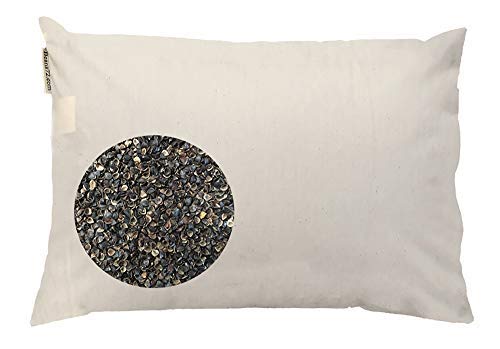
Buckwheat is the oldest technology in this guide and, for airflow, still the most extreme: a pillow filled with loose buckwheat hulls, through which air circulates almost as freely as it does through the open air. A fill that cannot trap a pocket of warm, damp stillness is a fill with no mold habitat to defend — moisture that enters on a humid night leaves with the morning’s air movement. The Beans72 listing offers the organic version of the idea in a twin/standard size (20 x 26 inches). Buckwheat also adjusts: add or remove hulls and the loft is yours, a property no moulded pillow can match.
Strengths
- Loose hull fill: maximal airflow by construction, nothing to stay damp.
- Adjustable loft — the fill is the adjustment mechanism.
- Firm, moulding support that sleepers either love or hate, with no ambiguous middle.
Trade-offs
- Buckwheat rustles when you move; light sleepers and their partners should trial it knowingly.
- It is heavy and firm — nothing like a hotel pillow, and not trying to be.
- Hulls are not washable as a fill; the case washes, and the hulls themselves can be aired and sun-dried, which is part of the traditional routine.
Key specs (from the Amazon listing)
- Fill: organic buckwheat hulls
- Size: Twin/Standard, 20 x 26 in
Buy the Beans72 if your moisture problem is severe — tropical humidity, a basement bedroom, a pillow that has never once dried fully since the day it was bought — or if you already know you are a buckwheat sleeper. It is the maximal-airflow answer, with a feel that is a genuine preference rather than a compromise.
Best for: humid climates and firm, adjustable support. / Not suited for: plush seekers, noise-sensitive sleepers, or anyone wanting a washable fill.
Check the current price on Amazon
6. Ella Jayne Gel Fiber Pillows — Best Fully Washable Pillow
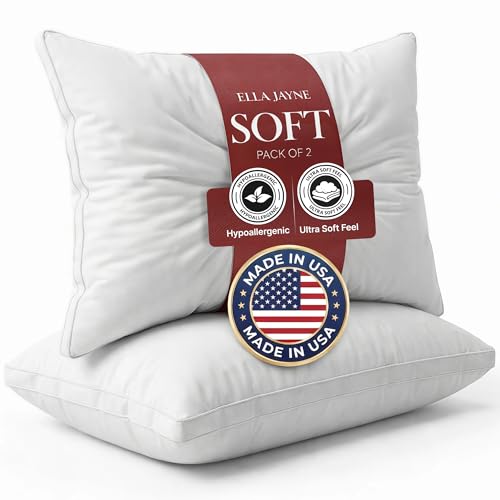
The third moisture strategy is the simplest: wash the whole pillow. Ella Jayne’s listing offers a king-size set of two gel fiber pillows, firm, positioned for side and back sleepers, and — the operative word — washable. A pillow that goes through a full wash and dry cycle on a regular rhythm never accumulates the months of moisture history that a spot-clean-only pillow carries. Gel fiber fills suit this role because they tolerate laundering and dry more readily than dense natural fills, and the firm profile here answers the common washable-pillow complaint that washable means flat.
Strengths
- Whole-pillow washable per the listing’s positioning: the hygiene reset button, built in.
- Firm gel fiber profile for side and back sleepers, in a king set of two.
- No special care products or routines: the washing machine is the system.
Trade-offs
- Washable only works if you wash: the routine is monthly-ish in humid homes, and the pillow must dry completely before use.
- King size in this listing; standard-size beds should confirm dimensions.
- Fibrous fills eventually clump with repeated washing — plan on replacement cycles rather than permanence, and still use a protector to stretch the intervals.
Key specs (from the Amazon listing)
- Fill: gel fiber
- Firmness: firm, per listing
- Size: King, set of 2
- Care: washable, per listing positioning
Choose Ella Jayne if your household actually launders bedding on a rhythm and wants the pillow inside that rhythm — families, guest rooms, rental properties, student houses, and anyone whose anti-mold plan is a calendar rather than a material, a cover or a claim printed on a box. Paired with a protector to guard between washes, it is the most maintainable system in this guide.
Best for: households that wash pillows regularly and want firm support. / Not suited for: set-and-forget buyers, or standard-size purists who dislike king dimensions.
Check the current price on Amazon
Comparison Table
| Pick | Badge | Key spec (from listing) | Best for |
|---|---|---|---|
| HOSPITOLOGY Pillow Encasement | Best Encasement | Zippered, waterproof; Standard 20 x 26 in; set of 2 | Protecting existing pillows |
| SureGuard Pillow Protectors | Best Waterproof Protector | 100% waterproof claim; zippered cotton covers; set of 2 | Invisible barrier, cotton feel |
| JOTOM Talalay Latex Pillow | Best Latex Pillow | 100% natural Talalay latex; Queen low loft | Back and slimmer side sleepers |
| Dunlop Dual-Zone Latex Pillow | Best Breathable Latex | 100% Dunlop latex; pinhole ventilation; GOLS/GOTS named; 2-pack | Firmer support, stated airflow |
| Beans72 Buckwheat Pillow | Best Airflow Fill | Organic buckwheat hulls; Standard 20 x 26 in | Severe humidity, firm support |
| Ella Jayne Gel Fiber Pillows | Best Fully Washable | Gel fiber, firm; King set of 2; washable | Wash-routine households |
How to Choose an Anti-Mold Pillow Setup
Assemble the system in layers, in this order. Layer one is the barrier, and it is not optional in a humid home: a waterproof zippered encasement or protector over every pillow, washed monthly, turns the pillow core into a dry archive that moisture never reaches. Choose between the two here by feel — technical (HOSPITOLOGY) or cotton-faced (SureGuard) — not by strategy, because the strategy is identical.
Layer two is the fill, chosen by how it handles the moisture that arrives before the barrier or in unprotected use. Latex manages moisture by structure: it does not wick and hold water like fibre, and the Dunlop’s pinholes give vapour a road out. Buckwheat manages it by openness: there is no “inside” to a hull fill for damp to hide in. Gel fiber manages it by surrender: it expects to be washed, and the wash is the management. Dense solid foams manage it worst, which is why none is a linked pick here despite their comfort popularity — if you love a foam pillow, the barrier layer becomes doubly important and the protector is your whole strategy.
Layer three is the room. A bedroom held at moderate humidity, a pillow that gets air and light rather than being sealed under a heavy duvet all day, and a pillowcase changed weekly do more quiet work than any product claim. Judge your own situation honestly: a dry, air-conditioned bedroom needs layer one and a decent fill; a humid, unventilated one needs all three layers and the buckwheat-or-latex end of the fill choices.
How to Keep a Pillow Mold-Free: The Routine
1. Protect from day one. Fit the waterproof zippered protector before the pillow’s first night, not after its first musty smell.
2. Wash the protector monthly, the pillowcase weekly. The barrier only works clean; a loaded protector is just another damp layer.
3. Air the pillow weekly. Stand it where air and, ideally, daylight reach it while the bed is stripped — an hour of airing does more than a week of being slept on and covered.
4. Wash washable pillows on schedule, and dry them completely. A washable pillow put back damp is worse than an unwashed one; full drying is the step that matters.
5. Air and sun buckwheat hulls seasonally, per tradition: empty, spread, dry, refill. Latex pillows get airing and spot care only — never a machine wash.
6. Replace on evidence, not on age. A pillow that smells musty after a full wash and complete dry has a colonised core; no protector fixes it after the fact. Replace it, protect the new one from night one, and the cycle ends.
Common Buying Mistakes
Believing an “anti-mold pillow” label. Our own fresh API search for this search returned protectors, not miracle pillows. Mold resistance is a system property; a pillow alone, however marketed, is one layer of it.
Protecting a pillow that is already musty. A barrier seals the present in as efficiently as it seals the future out. Start protection with a new or verified-clean pillow.
Choosing the densest foam for a humid room. Comfort and moisture management pull in opposite directions in solid foams. If the room is humid and the pillow is foam, the protector stops being optional.
Washing without drying. The most common self-inflicted mold event in this category is a “washed” pillow returned to the bed still damp at the core. Dry it fully — then one hour more.
Sealing the bed every morning. The beautifully made bed is a moisture trap in a humid home: duvet over pillows at 8 a.m. locks the night’s damp in for the day. Air first, make later — an hour of open bed does more than any spray, and the pillows at the head of the bed benefit most of all.
Buying six pillows and no protectors. The most expensive version of this mistake fills a checkout with premium pillows and leaves the one decisive layer unpurchased. However the budget divides, the barrier is bought first in this category; pillows chosen from this list will keep their dryness far longer under a protector than any unprotected upgrade ever will.
Treating brand health claims as verified facts. Hypoallergenic and antimicrobial wording in listings is the maker’s language. This guide repeats it only as product information and promises you dryness and comfort, which are the things a pillow purchase can actually deliver.
How Much System Do You Need? Climate, Sleepers and Rooms
Humid and tropical climates. The full system, no shortcuts: barrier on every pillow, latex or buckwheat fills, weekly airing, protectors washed monthly at minimum. In genuinely humid air, an unprotected fibrous pillow can go musty within a single season, and the buckwheat pick exists for exactly this reader.
Temperate climates with heated winters. Indoor air swings from humid summers to very dry heated winters. The barrier plus any fill from this list suffices; the risk season is summer, so time your deep cleans and protector purchases for spring, and let winter’s dry air do free work.
Warm sleepers and night sweats, any climate. Your pillow’s moisture load is personal, not climatic: it arrives nightly, from you. Prioritise the waterproof barrier — this is the reader the encasement was invented for — and the washable gel fiber strategy, and expect to wash protectors more often than the monthly baseline.
Basement and ground-floor bedrooms. Rooms that smell faintly earthy are telling you their humidity. Treat them as humid-climate rooms whatever the map says, and consider that the pillow may be the messenger rather than the problem: a room-level fix (ventilation, a dehumidifier) protects everything in it, pillows included.
Guest rooms and rentals. Low use, long stillness — the opposite risk profile: pillows sit made-up and unaired for weeks. Washable pillows plus protectors, aired whenever the room is turned over, are the maintainable answer, and the Ella Jayne pair is sized and priced for exactly this duty.
When the Problem Is the Room, Not the Pillow
A pillow is a small, replaceable part of a bedroom’s moisture economy, and sometimes it is the witness rather than the culprit. If pillows go musty quickly despite barriers, if the mattress smells the same way, if windows run with condensation and wardrobe clothes feel cool and damp, the room itself is holding more moisture than bedding strategy can outmanoeuvre. The honest sequence then is: ventilate the room daily, even briefly; keep the bed unmade for an hour each morning so the night’s moisture leaves instead of being sealed under a duvet; move the bed off a cold external wall if condensation gathers behind it; and dehumidify if the climate demands it. None of those products is in this guide’s picks, because this guide sells pillows — but a guide that blamed your pillow for your room’s humidity would be selling you a replacement cycle, not a solution. Fix the room to the level you can, then run the pillow system in this article, and both will finally hold.
The same honesty applies at the other extreme: in a dry, well-ventilated room, a modest setup — a protector and a sensibly chosen fill — will keep a pillow fresh for years, and the full buckwheat-and-encasement apparatus would be enthusiasm beyond need. Match the system to the room, and let the pillow be the last thing you blame or the first thing you over-buy.
The Layers Around the Pillow: Cases, Duvets and Habits
The pillowcase is the system’s skin, and it earns a paragraph: it intercepts the night’s oils and moisture first, and it is the cheapest, most washable layer you own. Two cases per pillow in rotation, changed weekly, washed hot enough for bedding, keep the protector’s load light and the whole system honest. Heavy duvets and bedspreads thrown over the bed each morning work against you in humid homes — they seal the night’s moisture into the bed for the day — so the made-bed aesthetic should yield to an hour of open airing before the covers go on. Pillow sprays and scented fresheners deserve a plain word: they perfume a damp pillow without drying it, and a musty smell wearing fragrance is still a musty pillow. Dryness is the deodoriser; everything else is costume. Build the layers in the right order — case washed weekly, protector monthly, pillow aired always, room ventilated daily — and the “anti-mold pillow” turns out to be a thing you do, assembled from the six verified products above.
Reading Pillow Listings for Moisture Honesty
Since the market will keep selling this search harder than the evidence allows, here is how to read any pillow listing with moisture in mind. Trust construction words: waterproof, zippered, encasement, washable, latex, hulls, pinholes, ventilation — these describe physical things you can reason about, and every linked pick in this guide was chosen on exactly such words from its own listing. Discount atmosphere words: fresh, pure, clean, healthy, guard, shield, defense — these describe feelings, and they appear on products with every conceivable construction, including the dense foams this guide excludes. Treat health words — hypoallergenic, antimicrobial, anti-bacterial — as the brand’s claims about its own product: repeat them, if you repeat them at all, with the brand’s name attached, and never let them substitute for the moisture question, which is the only question mold asks. A listing that tells you its fill, its cover, its care method and its size has told you everything a buyer can verify; a listing that tells you mainly what the pillow will protect you from has told you about its marketing department. Buy the first kind.
Replacement Economics: What the Dry System Costs Over Time
The dry system is also, quietly, the economical one. An unprotected pillow in a humid home is a consumable with a short, smell-defined life; its replacements arrive early and often, and each arrives unprotected to repeat the cycle. The system’s costs run the other way: a protector pair is a small, one-time purchase that stretches a pillow’s life by years; latex pillows cost more upfront and hold their shape and dryness across a span in which fibrous pillows are replaced repeatedly; the washable gel fiber pair accepts a shorter individual life in exchange for hygiene you control completely, at a set-of-two price that makes the cycle painless. Buckwheat may be the extreme case — hulls can be aired, topped up and kept for years beyond any foam’s span. None of this requires printing prices, which this guide never does: the shape of the arithmetic is visible from the tiers alone. Spend once on the barrier, choose the fill your room demands, and the anti-mold problem becomes a line in the laundry routine rather than a recurring purchase — which is what a solved problem looks like.
The First Month With the System: What Changes, and When
Week one is installation: protectors fitted, pillowcases doubled in the drawer, the airing hour pencilled into the morning. Nothing smells different yet, and that is fine — the system is preventative, and its first victory is invisible. By week two the routine has a rhythm: cases changed on the same day as sheets, pillows standing in the air while the bed is stripped, the made bed happening an hour after rising instead of immediately. The first protector wash, at the month mark, is the moment the system explains itself: the protector comes off carrying the month’s intercepted moisture history, and the pillow beneath it comes out dry and neutral — the contrast with every unprotected pillow you have ever owned is the whole review, written by your own laundry. From there the system asks only to be continued, and its results compound in the direction of nothing happening: no smell at month three, none at month six, a pillow that is simply still a pillow. Boredom, in this category, is the product working.
Final Recommendation
Build the system in order: a HOSPITOLOGY encasement or SureGuard cotton-faced protector over every pillow, starting tonight. When a pillow itself is due for replacement, choose its fill by your room — the JOTOM Talalay for a low-loft latex answer, the Dunlop dual-zone for firmer, maker-ventilated latex, the Beans72 buckwheat for severe humidity and maximal airflow, or the Ella Jayne gel fiber pair if your household’s real strategy is the washing machine. Dry pillows do not grow mold; these six verified products are how a pillow stays dry, night after night, season after season.
Related guides in this series: Best Washable Bed Pillows, Best Latex Pillows For Sleep, Best Natural Talalay Latex Pillows, Best Latex Pillows Low Loft, Best Washable Outdoor Pillows.
Frequently Asked Questions
Is there really no such thing as an anti-mold pillow?
Not as a verified product claim. When we searched this site’s own Amazon listing data for the term, the results were waterproof protectors and encasements — the barrier layer — rather than pillows claiming anti-mold properties. Mold resistance comes from keeping a pillow dry, which is a system of barrier, breathable or washable fill, and routine. That system is what this guide recommends, product by product.
How do I know if my pillow has mold?
The reliable household signal is smell: a musty, earthy odour that survives a full wash and complete drying means the core is colonised, and the pillow should be replaced. Visible spotting on the ticking is a later sign of the same thing. Do not rely on a protector to rehabilitate it — protect the replacement instead.
Does latex really resist moisture better than memory foam?
Structurally, yes, in the ways that matter here: latex does not wick and hold water through a fibrous network, it keeps its shape instead of packing into damp clumps, and ventilated designs like the Dunlop’s pinholes give vapour a path out. That is a statement about moisture behaviour, not a medical claim — and it is why both latex picks sit in this guide while dense foams do not.
How often should I wash the protector?
Monthly is a good rhythm for most homes; more often for warm sleepers, humid rooms and during illness in the house. The protector is the layer that intercepts everything, and it only intercepts well when it is itself clean and fully dry when refitted.
Can I just wash a regular pillow instead of buying protectors?
Washing is one valid layer — it is the Ella Jayne strategy — but many pillows (latex, buckwheat, most foams) cannot be machine washed, and even washable ones degrade with very frequent laundering. A protector is what makes the wash rhythm sustainable, which is why the guide recommends the barrier first and the washable pillow as its partner, not its rival.
What about pillow sprays and fresheners?
They scent a pillow; they do not dry one. A spray on a damp, musty pillow produces a fragranced damp, musty pillow, and the moisture — the only variable mold cares about — is unchanged. Spend the same money and effort on the barrier and the airing habit, and use scent, if you like it, on a pillow that is already dry.
Should children and guest beds use the same system?
Yes, and arguably more strictly: children’s beds see spills and accidents that are pure moisture events, and guest pillows sit unaired for long stretches, which is its own risk. Waterproof protectors on every pillow in the house, washable pillows where laundry is easy, and an airing whenever a guest room is opened up — the system scales by simply being applied everywhere.
Will these products help my allergies?
This guide makes no medical claims, and no pillow or protector here is presented as a treatment for allergies or any condition. What the system delivers is a drier, cleaner pillow, maintained by barrier and routine. Questions about allergy management belong with a clinician; questions about keeping a pillow dry belong here, and the answer is the system above.

