Disclosure: airfryerkitchensupply.com is reader-supported. When you buy through links on our site, we may earn an affiliate commission at no extra cost to you.
Where to buy
The best small vacuum for rugs is decided by format — cordless sticks, compact canisters and one corded handheld — and the right format follows your cleaning rhythm, your rug types and your storage reality more than any suction claim. Every machine below was confirmed through the airfry site’s Amazon listing data before being linked, with runtimes, wattage and noise figures quoted from the Amazon listing titles where stated.
- Shark Pet Cordless Stick Vacuum IX141, 40-Min Runtime — Check on Amazon
- Bissell Featherweight Cordless Stick Vacuum 3061 — Check on Amazon
- Eureka Whirlwind Bagless Canister Vacuum NEN110A — Check on Amazon
- Bissell Zing Bagless Canister Vacuum 2156A — Check on Amazon
- Eureka Bagless Canister Vacuum NEN180 WhirlWind — Check on Amazon
- Dirt Devil Scorpion Plus Handheld Vacuum — Check on Amazon
Check the current price on Amazon from any link; this guide prints no prices, because they change — and confirm rug-head settings on the listing before running any machine over a delicate or antique rug.
Introduction: rugs need a different kind of small vacuum
The best small vacuum for rugs is not simply a small vacuum. Rugs concentrate everything that makes vacuuming hard: grit sinks to the base of the pile where weak suction cannot reach it, fibers shed into the machine, edges and fringe punish careless brushrolls, and the whole job is usually a few square meters at a time — too small to justify hauling out a full-size upright, too dirty to skip. The best small vacuum for rugs therefore has to be light enough to grab for one rug, strong enough to matter on pile, and gentle or adjustable enough not to eat fringe and bindings.
This roundup covers the three formats that meet that brief: cordless sticks for grab-and-go cleaning, compact canisters for corded thoroughness in small homes, and a corded handheld for stairs and mats. Each pick’s stated figures come from its verified Amazon listing. What the guide will not do is crown the most powerful machine the winner — on rugs, the vacuum that gets used three times a week beats the powerhouse used monthly, because grit damage happens between deep cleans, not during them. There is also a budget honesty point to make at the outset: this category tempts buyers to solve a rhythm problem with a specifications purchase. If your rugs are dirty because the vacuum is heavy, a lighter vacuum is the fix; if they are dirty because the pile is deep and the household is large, no small vacuum is the fix, and this guide says so in the relevant places rather than letting a compact machine be bought for a full-size job.
In this guide
Quick Picks
Best Overall — Shark Pet Cordless Stick Vacuum IX141, 40-Min Runtime. The Shark IX141 is the small vacuum most rug owners actually need: a cordless stick light enough to grab for a single rug, with a removable handheld for edges and stairs, an XL dust cup that does not demand emptying mid-job, and LED headlights that reveal the grit rugs hide along baseboards. Check on Amazon
Best Ultralight for Quick Rug Passes — Bissell Featherweight Cordless Stick Vacuum 3061. The Bissell Featherweight Cordless is the lightest-touch option here: a self-standing cordless stick built for the two-minute rug pass — the entry rug before guests arrive, the kitchen runner after cooking, the bath mat that collects hair daily. Check on Amazon
Best Compact Canister for Rugs — Eureka Whirlwind Bagless Canister Vacuum NEN110A. The Eureka Whirlwind NEN110A is the corded counter-argument: a lightweight canister whose suction never fades with a battery, small enough to store in a coat closet, and listed for carpets and hard floors alike. Check on Amazon
Best Budget Canister — Bissell Zing Bagless Canister Vacuum 2156A. The Zing 2156A is Bissell’s compact bagless canister: the budget-tier way to get canister handling — a light wand, a trailing body, suction-only flexibility around rug edges — without paying for a full-size machine. Check on Amazon
Best for Rugs Over Hard Floors — Eureka Bagless Canister Vacuum NEN180 WhirlWind. The Eureka NEN180 is the pick for the most common small-home layout: rugs laid over hard floors. Check on Amazon
Best Handheld for Small Rugs and Stairs — Dirt Devil Scorpion Plus Handheld Vacuum. The Scorpion Plus is the specialist: a corded handheld with a flip-down crevice tool, built for the rugs a full vacuum cannot reach properly — stair runners, entry mats, bath mats, the small rug in front of the sink. Check on Amazon
How These Picks Were Chosen
Every machine was cross-checked against the airfry site’s Amazon listing data: the Amazon listing title is the source for each runtime, wattage, noise figure and format claim, and only listing-confirmed listings received Amazon links. Where a listing does not state a figure — the Featherweight’s runtime, for instance — the review says so rather than estimating it. Filtration wording follows each listing’s own tier: the NEN180’s title states HEPA, and this guide repeats it as stated, without upgrading any other machine’s filtration language.
Selection filters: the machine had to be genuinely small-format (sticks, compact canisters, handhelds — no full-size uprights); suited to rugs as a primary or clearly stated surface; and a complete vacuum, not an accessory, filter or replacement part. Robot vacuums were excluded from this roundup — they are a different ownership proposition and are covered by their own guides — as were carpet shampooers and steam cleaners, which wash rather than vacuum. The six survivors split deliberately across formats and power sources so the comparison is about fit, not about six versions of the same stick.
One further methodological note: this guide treats manufacturer runtime and power figures as listing claims, quoted as stated, rather than as laboratory results. Cordless runtimes in particular are measured by brands under gentle conditions, and the reviews discount them accordingly in plain language. Where two machines compete closely, the deciding factors used here are the ones a listing cannot inflate: format, storage, dust capacity and the maintenance each design demands.
The 6 Best Small Vacuum for Rugs Picks

Shark Pet Cordless Stick Vacuum IX141, 40-Min Runtime — Best Overall
The Shark IX141 is the small vacuum most rug owners actually need: a cordless stick light enough to grab for a single rug, with a removable handheld for edges and stairs, an XL dust cup that does not demand emptying mid-job, and LED headlights that reveal the grit rugs hide along baseboards. Its 40-minute listed runtime covers an apartment’s worth of rugs several times over between charges.
Strengths
- Cordless stick format suits the grab-and-go pattern rug cleaning actually follows
- Removable handheld handles rug edges, stairs and the car without a second machine
- XL dust cup and LED headlights are practical, not decorative, on textured rugs
Trade-offs
- Cordless suction on the highest setting shortens the listed runtime considerably
- Brushroll care is on you — rug fringe and long hair wrap, as with any stick
- No corded fallback when the battery is flat mid-clean
| Runtime | 40 minutes (per listing title) |
| Format | Cordless stick with removable handheld |
| Features | XL dust cup, LED headlights (per listing title) |
Rugs fail vacuums in two ways: they hide debris deep in the pile where weak suction leaves it, and they shed fibers that clog small machines. The IX141’s answer is a full-size stick’s cleaning path in a compact body, plus the handheld conversion for the perimeter work rugs always need — the border where grit migrates and sticks miss. Use it on the rug’s traffic lanes weekly and the deep clean becomes a monthly event instead of a rescue. As with any brushroll machine, keep it off delicate fringe and check the listing for its rug and floor settings before running it over anything antique or hand-knotted.
Best for: Apartment and small-home owners whose cleaning is mostly rugs / Not suited for: Owners of large wall-to-wall carpeted homes.
Check on Amazon — check the current price on Amazon.
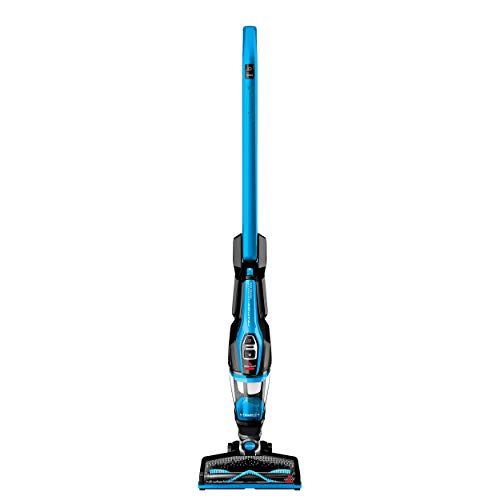
Bissell Featherweight Cordless Stick Vacuum 3061 — Best Ultralight for Quick Rug Passes
The Bissell Featherweight Cordless is the lightest-touch option here: a self-standing cordless stick built for the two-minute rug pass — the entry rug before guests arrive, the kitchen runner after cooking, the bath mat that collects hair daily. Its Featherweight name is the spec that matters; a vacuum this light gets used for jobs a heavier machine would be left in the closet for.
Strengths
- Featherweight build makes single-rug cleanups genuinely effortless
- Self-standing storage suits small apartments without closet space
- Cordless format moves from rug to rug with no replugging
Trade-offs
- Lightweight format means a smaller dust cup and more frequent emptying
- Not the deep-clean answer for thick, high-pile rugs
- Runtime and suction figures are not stated in the Amazon title — confirm on the listing
| Format | Cordless stick vacuum, self-standing (per listing title) |
| Colorway in listing | Electric Blue / Black |
| Brand | Bissell |
Judge the Featherweight by frequency, not by force. Rug care research and common sense agree on the same point: gritty soil does its damage by sitting in the pile and being ground in by foot traffic, so a light vacuum used every few days preserves a rug better than a powerful one used monthly. This Bissell is engineered for exactly that cadence — always out, always charged, never a production. Pair it with a periodic deeper clean from a full-size machine (or a borrowed one) and the combination covers a small home completely. If your rugs are plush or high-pile, though, step up to the Shark or a canister in this roundup.
Best for: Small apartments and daily light rug maintenance / Not suited for: Thick or high-pile rugs needing deep extraction.
Check on Amazon — check the current price on Amazon.

Eureka Whirlwind Bagless Canister Vacuum NEN110A — Best Compact Canister for Rugs
The Eureka Whirlwind NEN110A is the corded counter-argument: a lightweight canister whose suction never fades with a battery, small enough to store in a coat closet, and listed for carpets and hard floors alike. For rug owners in small homes who distrust cordless runtimes, it is the compact machine that behaves like a full-size one — plug in, clean every rug in the home, done.
Strengths
- Corded power means full suction on the last rug, not just the first
- Canister format with a wand reaches under furniture that sticks straddle
- Bagless design keeps running costs at zero beyond filter care
Trade-offs
- The cord and canister trail behind you — less grab-and-go than a stick
- Canister wheels and hose storage take a different closet shape than a stick
- Floor head settings for delicate rugs should be confirmed on the listing
| Format | Lightweight bagless canister, corded (per listing title) |
| Surfaces | Carpets and hard floors (per listing title) |
| Colorway in listing | Blue |
Canisters hold a structural advantage on rugs: the motor’s weight stays on the floor while the wand and head stay light in the hand, so you can work a rug’s surface thoroughly without arm fatigue, and the head can be swapped or adjusted for pile height more readily than most sticks. The Whirlwind packages that advantage at a compact size and a budget tier. It is the pick for the one-vacuum household in a small space — provided your cleaning style is the weekly full session rather than the daily touch-up, because a canister you must uncoil will lose the daily-touch-up contest to the Featherweight every time.
Best for: One-vacuum small homes that clean in weekly sessions / Not suited for: Households wanting daily cordless touch-ups.
Check on Amazon — check the current price on Amazon.
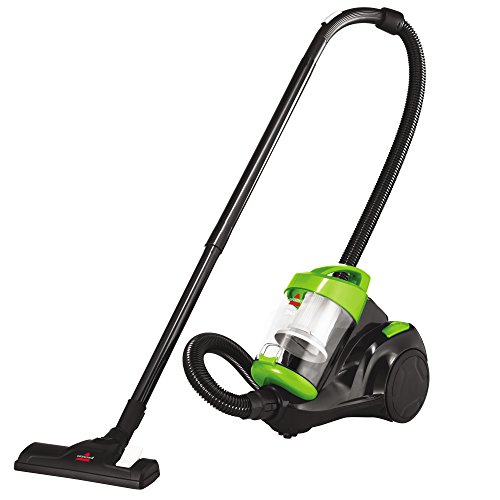
Bissell Zing Bagless Canister Vacuum 2156A — Best Budget Canister
The Zing 2156A is Bissell’s compact bagless canister: the budget-tier way to get canister handling — a light wand, a trailing body, suction-only flexibility around rug edges — without paying for a full-size machine. In a roundup of small vacuums for rugs, it is the value anchor among the corded options.
Strengths
- Budget tier among compact canisters
- Bagless — no ongoing bag purchases
- Canister wand handles rug borders and under-furniture strips easily
Trade-offs
- Shares its name with the bagged Zing 2154A — check the model number when ordering
- Budget build means simpler fittings and filtration than premium canisters
- Compact body still needs cord management and closet space
| Format | Bagless canister vacuum (per listing title) |
| Model | 2156A (per listing title) |
| Brand | Bissell |
A naming warning first, because it causes real ordering mistakes: Bissell sells both this bagless Zing (2156A) and a bagged Zing (2154A, which appears in this batch’s under-$200 household guide). They are different machines with different running costs. This bagless version suits rug owners who clean often and empty often — bagless compact canisters reward that rhythm and punish neglect with clogged filters. On rugs, its virtues are control and price: you can work a small rug deliberately, edge to center, without wrestling an upright, and the purchase leaves budget for the rug pad and care supplies that extend a rug’s life more than any vacuum upgrade.
Best for: Budget buyers wanting canister control for small rugs / Not suited for: Anyone who will not maintain bagless filters on schedule.
Check on Amazon — check the current price on Amazon.

Eureka Bagless Canister Vacuum NEN180 WhirlWind — Best for Rugs Over Hard Floors
The Eureka NEN180 is the pick for the most common small-home layout: rugs laid over hard floors. Its listing specifies 1000W of power, noise at or under 82 dBA, automatic cord rewind and HEPA filtration as stated in the title, and positions the machine for hardwood and carpet together — which means transitions from bare floor to rug and back are its home territory.
Strengths
- Spec’d for the rug-over-hard-floor mix most small homes actually have
- Auto cord rewind removes the most annoying part of canister storage
- Stated noise ceiling (≤82 dBA) lets apartment dwellers judge it against thin walls
Trade-offs
- 1000W corded draw is strong but the machine is still compact-class for dust capacity
- Filtration wording follows the listing title; check the listing for filter specifics
- Canister format will not match a cordless stick for quick single-rug jobs
| Power | 1000W (per listing title) |
| Noise | ≤82 dBA (per listing title) |
| Features | Auto cord rewind, HEPA (as stated in listing title) |
| Surfaces | Hardwood floor and carpet (per listing title) |
Rugs over hard floors create a two-surface problem: the vacuum must be gentle and effective on the bare perimeter, then capable on the rug itself, several times per room. The NEN180’s listing reads like it was written for that loop, and the auto-rewind cord matters more than it sounds — compact canisters live or die by whether putting them away is a ten-second job or a wrestling match. The stated ≤82 dBA figure is also genuinely useful information most listings omit; it is not quiet, but it is a number, and apartment buyers can plan cleaning times around it honestly.
Best for: Homes with rugs layered over hardwood or tile / Not suited for: Wall-to-wall carpet homes needing an upright’s agitation.
Check on Amazon — check the current price on Amazon.

Dirt Devil Scorpion Plus Handheld Vacuum — Best Handheld for Small Rugs and Stairs
The Scorpion Plus is the specialist: a corded handheld with a flip-down crevice tool, built for the rugs a full vacuum cannot reach properly — stair runners, entry mats, bath mats, the small rug in front of the sink. Corded handhelds trade the cordless convenience story for unlimited runtime and consistent suction in a body that stores in a drawer.
Strengths
- Corded — full suction for as long as the stair runner takes
- QuickFlip crevice tool handles rug edges and stair corners without attachments to lose
- Drawer-sized storage; always ready for one-mat jobs
Trade-offs
- Handheld format means kneeling for floor rugs — it complements, not replaces, a main vacuum
- Cord limits range to the nearest outlet
- Small capacity fills fast on shedding rugs
| Format | Corded handheld vacuum (per listing title) |
| Tool | QuickFlip crevice tool (per listing title) |
| Traits | Powerful suction, lightweight (per listing title) |
Every rug household has surfaces the main vacuum does badly: carpeted stairs are the classic case, where an upright is dangerous and a stick is awkward. The Scorpion Plus exists for those surfaces, and its corded design is a deliberate choice — stair runners collect ground-in grit that rewards sustained suction over battery convenience. Keep it where the small rugs are, not with the main vacuum, and it will be used weekly; store it across the house and it becomes another forgotten appliance. Paired with any other pick in this roundup, it closes the coverage gaps that make ‘mostly clean rugs’ the usual household outcome.
Best for: Stair runners, entry mats and spot duty alongside a main vacuum / Not suited for: Anyone wanting it to be their only vacuum.
Check on Amazon — check the current price on Amazon.
Comparison Table
| Pick | Badge | Key spec | Best for |
|---|---|---|---|
| Shark Pet Cordless IX141 — Check on Amazon | Best Overall | Cordless stick, 40-min runtime, handheld conversion | Apartment and small-home owners whose cleaning is mostly rugs |
| Bissell Featherweight Cordless 3061 — Check on Amazon | Best Ultralight for Quick Rug Passes | Cordless stick, featherweight, self-standing | Small apartments and daily light rug maintenance |
| Eureka Whirlwind NEN110A — Check on Amazon | Best Compact Canister for Rugs | Corded bagless canister, lightweight | One-vacuum small homes that clean in weekly sessions |
| Bissell Zing Bagless 2156A — Check on Amazon | Best Budget Canister | Corded bagless canister, budget tier | Budget buyers wanting canister control for small rugs |
| Eureka NEN180 WhirlWind — Check on Amazon | Best for Rugs Over Hard Floors | Corded canister, 1000W, ≤82 dBA, auto rewind | Homes with rugs layered over hardwood or tile |
| Dirt Devil Scorpion Plus — Check on Amazon | Best Handheld for Small Rugs and Stairs | Corded handheld, QuickFlip crevice tool | Stair runners, entry mats and spot duty alongside a main vacuum |
Key Takeaways
- On rugs, frequency beats force: a light vacuum used every few days prevents the grit damage a monthly deep clean cannot undo.
- Format follows rhythm — cordless sticks for touch-ups, compact canisters for weekly sessions, a corded handheld for stairs and mats.
- Protect the rug as well as cleaning it: keep brushrolls off delicate fringe, and confirm head settings for antique or hand-knotted pieces.
- Stated figures beat adjectives: runtime, wattage and noise numbers in this guide come from the verified listings themselves.
- Most small homes are best served by a pair — one stick or canister plus the handheld — rather than one machine asked to do everything.
- Dust capacity is a first-order spec in shedding and pet households: small cups lose suction well before they look full, so empty early and often.
- Apartment buyers should treat stated noise figures as gold — most listings omit them — and plan around daytime cleaning either way.
How to Choose a Small Vacuum for Rugs
Start by inventorying your rugs, not vacuums — count, pile, backing, age and value all change what “best” means for your home. Count them, note their pile — low and flat-woven, medium, or plush — and note which sit over hard floors. Low-pile and flat-woven rugs are the easy case: almost any pick here cleans them, and format convenience should decide. Medium-pile rugs reward suction consistency, which argues corded or a stronger cordless stick. Plush and high-pile rugs are the hard case: they need real agitation and suction together, and in this roundup that means the Shark stick worked slowly, or stepping outside the small format entirely for a full-size machine’s periodic visit.
Then be honest about rhythm. If your pattern is frequent small messes — entry grit, kitchen crumbs on the runner, pet hair on the bath mat — a cordless stick that lives out of the closet will outperform everything else in this guide in practice. If your pattern is one thorough weekly session, a compact canister’s corded consistency and wand control win. Most households honestly have both patterns, which is why the handheld-plus-main-machine pairing appears in the Final Recommendation.
Pile height and brushroll judgment
A rotating brushroll is a tool, not a default. On low and medium synthetic pile it lifts debris effectively. On wool, hand-knotted, antique or fringed rugs, it can fuzz fibers, pull bindings and shred fringe — use suction-only settings or a canister head without agitation, keep the machine moving, and never let a brushroll sit spinning on one spot. When a listing does not state its head settings, treat that as a required check on the product page before the machine touches a rug you care about. The safest universal technique: vacuum the rug’s back occasionally too — beating grit out from beneath loosens what surface passes miss.
Suction claims, translated
Small-vacuum listings advertise in incompatible units — watts for corded machines, air watts or runtime for cordless, and adjectives for everyone. Within this guide, the only honest cross-format comparisons are behavioral: corded machines hold their suction indefinitely; cordless machines trade runtime for power on their highest settings; handhelds concentrate modest power through small nozzles, which is why the Scorpion Plus performs above its size on stairs. Choose by format and rhythm first, and treat any single-number suction claim as a within-brand comparison only.
Dust capacity: the specification small rugs stress most
Rugs shed. New rugs shed loose fiber for months; wool rugs shed indefinitely; pet households add hair to every pass. Small vacuums carry small cups and bins, and a compact machine’s suction falls off well before its container looks full, because airflow — not volume — is what filling restricts. Practical consequences: favor the largest cup in the format you choose (one reason the Shark’s XL cup is highlighted), empty after every rug-heavy session rather than on a schedule, and shake or beat rugs outdoors before vacuuming during heavy shedding periods. If your home combines large dogs with multiple rugs, treat dust capacity as a first-order specification, on par with power source, and lean toward the canisters, whose bins and airflow paths tolerate load best in this class.
Storage: the small-home constraint
A small vacuum that cannot be stored where it is used will not be used. Sticks want a wall or a corner and a charging point; the Featherweight’s self-standing design removes the wall requirement. Canisters want a closet shelf shape and reward auto-rewind cords. The handheld wants a drawer near the stairs or entry. Measure your storage before choosing the format — in small homes this mundane check decides satisfaction more reliably than any performance figure.
Small Vacuums in Apartments: Noise, Neighbors and Storage
Apartment living adds constraints this category is well suited to — if you read the listings carefully. Noise is the first: most small-vacuum listings omit it entirely, which is why the NEN180’s stated ≤82 dBA deserves credit as information, whatever you conclude from it. As a rough orientation, that figure is in the normal full-size vacuum range; genuinely quiet machines advertise lower numbers proudly. If your building has thin floors and stricter hours, plan rug cleaning for daytime regardless of model, and favor the formats whose work is quick — the stick and handheld — over long canister sessions.
Storage is the second constraint, already flagged in the buying guide but worth pressing: in a small apartment the vacuum’s home is often visible, which makes self-standing sticks and drawer-sized handhelds worth a premium in daily satisfaction over a canister that must be fetched from a packed closet. The third constraint is flooring mix: apartments concentrate rugs over hard floors in small footprints, the exact pattern the NEN180 addresses, and transitions multiply — a machine that handles the perimeter and the rug in one pass, without a head change, saves the friction that otherwise turns a five-minute job into a skipped one.
Finally, apartment rug care has one advantage to exploit: scale. The entire rug inventory of a small apartment can be maintained in fifteen minutes a week by a small vacuum, which means the deep-clean-or-nothing mindset that governs big homes is simply unnecessary. Buy for the fifteen-minute version of the job and the rugs will look better, longer, than a powerhouse bought for a monthly marathon that keeps being postponed.
How to Vacuum Rugs Properly
Technique multiplies whatever machine you buy — a mid-tier machine used slowly and completely will out-clean a stronger machine hurried across the pile, because suction needs dwell time at the base of the pile to lift embedded grit loose, every time, without fail. Go slower than feels natural — a slow pass lets suction work at the pile’s base where grit lives — and overlap passes by half. Work the traffic lanes in two directions; pile leans, and the second direction lifts what the first laid down. Empty the dust cup or check the bag before it is full: small machines lose suction early as they fill, and a half-full compact canister is a noticeably weaker tool. Keep brushrolls clear of wrapped fiber and hair after every few sessions, wash or replace filters on the maker’s schedule, and give fringed edges a handheld or hose pass rather than running the main head over them. Finally, vacuum new rugs more often, not less — new pile sheds loose fiber for months, and removing it promptly is care, not a defect.
Two technique details separate thorough rug cleaning from going through the motions. First, the edges: the last six inches of any rug collect a disproportionate share of soil, because foot traffic pushes debris outward and furniture shields the border from casual passes — work the perimeter deliberately with the main head’s edge or a hose tool, especially along baseboards and under the front edges of sofas. Second, the pad beneath: grit that works through the pile accumulates on and under the pad, so a few times a year, lift the rug, vacuum the floor and both sides of the pad, and vacuum the rug’s back before relaying it. Small vacuums handle every part of that job comfortably, and households that do it find their surface cleaning suddenly more effective, because the reservoir of grit under the pile has been emptied.
Matching the Vacuum to the Rug: A Type-by-Type Guide
Flat-woven and low-pile synthetic rugs — the workhorses of entries, kitchens and dining rooms — are the easiest to serve. They release debris readily, tolerate brushrolls, and reward frequency over power. Any pick in this roundup maintains them; the Featherweight’s daily-pass logic is at its most persuasive here, because these rugs live exactly where grit arrives, and a two-minute pass after the day’s traffic keeps the pile’s base clean. Dining rugs add one wrinkle: crumbs work to the edges and under the table, where a canister wand or the Shark’s handheld mode earns its keep.
Medium-pile rugs, the default in living rooms and bedrooms, are the balanced case. They hide enough soil to need real suction and enough texture to benefit from agitation, but they forgive both cordless and corded formats. This is the Shark IX141’s home ground and the Whirlwind canisters’ design brief. Technique matters more than hardware here: slow, overlapping, two-direction passes, and a dust cup emptied before it looks full.
Plush and high-pile rugs are where honesty is required. Small vacuums can maintain them — removing surface litter and preventing matting in low-traffic areas — but deep extraction of a thick pile is a full-size machine’s job, and shag styles can actively resist small heads and tangle brushrolls. If your home’s main rug is plush, buy the small vacuum as the maintenance tool it is, plan a periodic deep clean by other means, and favor the corded canisters here, whose sustained suction does the most with the format’s limits.
Wool and natural-fiber rugs — jute, sisal, hand-knotted wool — invert the priorities: gentleness first. Suction-only cleaning, no beater action on the pile, handheld attention to edges, and prompt attention to spills matter more than extraction power. The canister picks, used with appropriate heads, and the Scorpion Plus for edges and small pieces, are the suitable tools; the brushroll sticks should be kept to their suction settings or off these rugs entirely. A rug worth real money deserves the listing check this guide keeps repeating: confirm the head and settings before the first pass, not after the first pulled thread.
Finally, the specialty cases: stair runners, which only the handheld truly serves; bath mats, whose rubber backings and daily hair load suit quick handheld or stick passes and periodic laundering; and outdoor or garage rugs, whose coarse grit will fill small dust cups quickly — shake them outside first, then vacuum, and the small machine copes fine.
Ownership Reality: Filters, Batteries and Running Costs
Small vacuums are cheap to buy and easy to neglect, and their performance curves are mostly maintenance curves. Bagless models — most of this roundup — trade bag costs for filter duties: a washable filter washed on schedule and dried fully before refitting, or a replaceable one swapped when suction sags. The failure mode is universal and quiet: suction fades a few percent a week, the owner adapts by pressing harder and going slower, and the machine is declared weak a year later with a filter that has never been touched. Put filter care on the same calendar as the cleaning itself and every pick here holds its performance.
Cordless ownership adds a battery reality: runtimes in listings are measured on standard settings, and maximum-power modes — the ones rugs tempt you to use — drain several times faster. The IX141’s 40 minutes is a standard-mode figure; used judiciously, with max power reserved for traffic lanes, it covers a small home’s rugs with room to spare. Batteries also age; a stick that will be your only vacuum should come from a brand whose replacement batteries are easy to source, which is one quiet reason the roundup favors established names.
Corded ownership has its own ledger: no batteries to age, but cords, hoses and canister wheels wear, and compact machines’ parts support varies by brand. The total-cost picture still favors corded for the weekly-session household — the Eureka and Bissell canisters here ask for filters and nothing else — while the cordless premium buys the frequency that protects rugs. Neither ledger is hidden; the mistake is failing to keep either one.
Common Buying Mistakes
Buying by suction adjectives instead of format fit is the first mistake. Second is running a brushroll over fringe, wool or antiques without checking settings. Third is expecting a handheld to serve as a whole home’s only vacuum. Fourth is ignoring storage until the machine arrives. Fifth is confusing the bagged and bagless Zing models when ordering. Sixth is neglecting filters and brushrolls until suction fades, then blaming the machine. Seventh — the quiet one — is vacuuming too rarely because the only vacuum in the house is heavy; that is the failure this entire category exists to fix. Eighth is buying a second machine identical in format to the first, duplicating its blind spots — stairs, edges, under-furniture strips — instead of covering them; the pairings recommended here are deliberately unlike each other.
Final Recommendation
For most rug owners, the Shark IX141 is the small vacuum to buy: cordless convenience, handheld conversion, and enough cup and runtime for a small home’s full rug inventory. Choose the Bissell Featherweight if daily light passes are your real pattern, a canister — Eureka Whirlwind for all-round value, NEN180 for rugs over hard floors, Zing for the tightest budget — if you clean in weekly corded sessions, and add the Dirt Devil Scorpion Plus wherever stairs or mats defeat your main machine.
If you are furnishing from zero, sequence the purchases: the main machine first, in the format your rhythm dictates, then live with it for a month before adding the handheld — the gaps that remain after a month of real use are the true gaps, and they are sometimes different from the ones predicted at the start (many households discover the handheld matters most not on stairs but at the entry mat and the litter-box rug). Buying in that order also spreads cost and keeps every purchase justified by an observed need, which is the closest thing this category has to a guarantee of satisfaction.
Rug care starts with the rug itself: our guide to the Best Area Rugs For Homes With Dogs covers pile choices that survive pets and vacuum well, and the Best Dining Room Rugs For Families With Kids roundup pairs with the handheld pick for spill-prone zones. For whole-house machines rather than small formats, see the companion guide to the Best Household Vacuums Under $200, and for the budget upright angle, Best Affordable Upright Bagless Vacuums.
Frequently Asked Questions
Can a small vacuum really clean a rug properly?
Yes, if “properly” means removing surface debris and the grit at the pile’s base on a regular schedule. Compact sticks and canisters do this well on low and medium pile. Plush, high-pile rugs benefit from an occasional pass by a full-size machine, but frequency with a small vacuum prevents most of the damage that makes deep cleaning necessary.
Is a cordless or corded small vacuum better for rugs?
Cordless wins on frequency — it gets used more. Corded wins on consistency — suction never fades and runtime never ends. Households that clean in short bursts should go cordless; households that clean in weekly sessions should go corded; households with stairs often add the corded handheld either way.
Will a brushroll damage my rug?
It can damage fringe, loose bindings, wool and antique or hand-knotted rugs. For those, use suction-only cleaning, keep the head moving, and handle edges with a hose or handheld. For ordinary low and medium-pile synthetic rugs, a brushroll used normally is beneficial — it lifts debris that suction alone leaves behind.
How often should rugs be vacuumed?
High-traffic rugs — entry, hallway, kitchen runner — benefit from a light pass every two to three days and a thorough clean weekly. Low-traffic bedroom rugs can go weekly. The logic is grit: the longer abrasive soil sits in the pile under foot traffic, the more fiber it cuts, and no deep clean reverses that wear.
Bagged or bagless for a compact canister?
Bagless costs nothing to run but demands filter discipline; bagged costs bags but seals dust away at emptying and keeps suction consistent longer between services. This roundup includes both — the bagless Zing 2156A and Whirlwind among them — and the right answer is whichever maintenance style you will actually keep up.
Do I need a separate vacuum for carpeted stairs?
Functionally, yes — stairs are where full-size machines are at their worst and most awkward. A corded handheld like the Scorpion Plus, or the handheld mode of a convertible stick like the Shark IX141, covers stair treads and risers safely. If your stairs are a main traffic route, weight this heavily; it is the most common reason households end up owning two picks from this roundup.
My rug is shedding everywhere. Is the vacuum at fault?
Almost never. New rugs release manufacturing fiber for weeks to months, and wool rugs shed as a material trait. Frequent gentle vacuuming is the correct response — it removes loose fiber before it migrates — but avoid aggressive brushroll settings on a new wool rug’s first weeks, empty the machine often, and expect the shedding to taper rather than stop on a schedule.
What should I check on the listing before ordering?
Confirm the runtime or cord length against your home’s layout, the floor-head settings for your rug types, the dust capacity against your shedding load, and the exact model number — the Zing naming overlap in this very roundup shows how easily the wrong variant gets ordered. Figures quoted here come from the verified Amazon titles and should be re-confirmed at checkout.


