Disclosure: airfryerkitchensupply.com is reader-supported. When you buy through links on our site, we may earn an affiliate commission at no extra cost to you.
Where to buy
All six picks in this guide to the best slippers for warm weather are sold on Amazon, and every link points to a listing we confirmed through Amazon’s catalog data before writing this guide. We do not print fixed prices — slipper prices move with size, color, and season — so use the “Check on Amazon” link under any pick to see the current price in your size. Sizing is the thing to get right with house slippers: several picks here use combined size ranges or Japanese-style sizing, so read the fit notes in each review before ordering.
- Japanese Style Linen House Slippers, Open Toe — Check on Amazon
- Odor-Resistant Japanese Bamboo House Slippers — Check on Amazon
- COCOMUSE Ultralight Open Toe Cotton Linen Slippers — Check on Amazon
- EitCaton Unisex Linen House Slippers — Check on Amazon
- Fadezar Japanese Slippers, Machine Washable — Check on Amazon
- Epsion Linen Slippers for Women — Check on Amazon
Introduction: warm-weather slippers are a different product
Shopping for the best slippers for warm weather means unlearning everything the winter slipper market taught you, starting with the idea that softer and thicker automatically means better. The features that sell slippers in January — plush fleece, shearling, memory foam that wraps the whole foot, closed bootie collars — are exactly the features that make feet sweat in July. A warm-weather house slipper is built on the opposite logic: an open toe so heat escapes, a breathable woven upper in linen, cotton, or bamboo fiber instead of synthetic plush, a thin sole that does not insulate, and as little material touching the foot as a slipper can manage while still staying on. Every pick in this guide is a true house slipper built that way — open-toe, woven-fabric, warm-climate designs, most of them in the Japanese house-slipper tradition, which comes from a culture that has worn indoor shoes through humid summers for a very long time. You will not find sandals, slides, or flip-flops here, and you will not find fuzzy winter mules dressed up as summer picks; where one pick runs warmer than the others — the fleece-lined Epsion — we say so plainly and badge it for the air-conditioned niche where that warmth is actually the point.
One honest note about the category: warm-weather house slippers are a niche, and the verified market is dominated by unbranded and small-brand woven slippers rather than the big winter names. That is not a flaw in this guide; it is the shape of the real market. We confirmed every listing below through Amazon’s catalog data, and we would rather give you six real, breathable house slippers than pad the list with winter products that happen to be famous.
It is also worth naming who this guide is for, because warm weather is not one condition. There is the dry desert heat of a Phoenix summer, where any woven slipper feels fine and the enemy is hot floors; the humid Gulf and Southeast summer, where sweat and odor are the battle and bamboo and washability earn their badges; the coastal pattern of warm days and genuinely cool evenings, where the lined pick stops being a contradiction; and the air-conditioned interior summer, where the outdoors is hot and the indoors — where slippers actually live — can be cold enough to want coverage. The badges in this guide map onto those four summers, so identify yours before you pick, and the right choice usually makes itself.
In this guide
Quick Picks
- Best Overall — Japanese Style Linen House Slippers, Open Toe: breathable linen, anti-skid sole, unisex, and the most versatile warm-weather slipper here. Check on Amazon
- Best for Hot, Sweaty Feet — Odor-Resistant Japanese Bamboo House Slippers: bamboo-fiber build made to keep feet dry and cool through summer, and easy to clean. Check on Amazon
- Best Ultralight — COCOMUSE Ultralight Open Toe Cotton Linen Slippers: a featherweight cloth-bottom slipper that absorbs sweat and barely registers on the foot. Check on Amazon
- Best Cushioned — EitCaton Unisex Linen House Slippers: open-toe linen with a memory foam footbed and machine-washable build, for people who want airflow and padding. Check on Amazon
- Best Washable and Travel — Fadezar Japanese Slippers: machine washable, quiet, breathable lining, and light enough to live in a suitcase or guest room. Check on Amazon
- Best for Air-Conditioned Rooms — Epsion Linen Slippers for Women: a linen upper with a fleece lining — the warmest pick here, for cool floors and cranked-up AC. Check on Amazon
How These Picks Were Chosen
We applied the warm-weather filter first and the popularity filter never. To qualify, a slipper had to be a genuine house slipper — not a sandal, slide, or flip-flop — with a breathable woven upper (linen, cotton, or bamboo fiber), an open or minimally covered toe, and no plush winter lining; the single exception, the Epsion, is badged and reviewed honestly as an air-conditioning pick rather than a heat pick. We excluded ballet and dance slippers, massage shoes, and baby footwear entirely, and we excluded listings whose main pitch is medical — comfort is a fair claim, treatment is not one we repeat. Each surviving product was confirmed against Amazon’s catalog data, checking that the listing title and description matched the breathable house slipper we intended to recommend; only confirmed listings received product links. The six slots were then balanced across real warm-weather needs: an all-rounder, a sweat-fighter, an ultralight, a cushioned option, a washable travel option, and one warmer slipper for air-conditioned homes.
The 6 Best Slippers for Warm Weather

1. Japanese Style Linen House Slippers, Open Toe — Best Overall
This is the template the rest of the category follows: a linen upper in the Japanese house-slipper style, an open toe, a lightweight build, and an anti-skid sole, made for women and men in a minimalist design that goes with any house and any pajamas. Linen is the right fiber for this job — it is breathable, it absorbs moisture and dries quickly, and it does not hold odor the way synthetic plush does. The open toe vents the part of the foot that overheats first, and the thin profile means the slipper protects your sole from hot tile, grit, and splinters without wrapping your foot in insulation. The listing describes them for the bedroom, living room, and guest use, which is exactly right: this is also the pair to buy in multiples for a guest basket in a warm-climate home.
Strengths
- Linen upper breathes and dries fast — the core warm-weather fiber, done in a proven open-toe pattern.
- Anti-skid sole adds security on tile, wood, and bathroom floors without a heavy rubber tread.
- Unisex, minimalist styling suits guest rooms and households that do not want his-and-hers slipper clutter.
Trade-offs
- The footbed is thin by design; if you stand for hours on hard kitchen tile, the cushioned EitCaton below is the better match.
- Linen softens and molds to the foot with wear — comfortable, but the crisp new look relaxes over the season.
- Japanese-style sizing can run differently from US shoe sizing; check the listing’s size guidance before ordering.
| Mini spec — as stated in the verified listing | |
|---|---|
| Upper | Linen, Japanese style |
| Toe | Open toe |
| Sole | Anti-skid, soft, lightweight |
| Fit | Unisex — women and men |
| Stated uses | Bedroom, living room, guest use |
What makes this the overall pick is the absence of mistakes. Nothing about it traps heat, nothing about it is precious, and nothing about it limits it to one room or one person. In a warm house, the best slipper is the one you forget you are wearing until you step on something sharp or cold — and then you are glad it was there.
Best for: most people in warm homes, guest rooms, and anyone buying their first summer house slipper. / Not suited for: long hours of standing on hard floors, where a cushioned footbed matters more.
Check the current price on Amazon

2. Odor-Resistant Japanese Bamboo House Slippers — Best for Hot, Sweaty Feet
If your problem with slippers in summer is not just heat but what heat does — damp footbeds and the smell that follows — this is your pick. These Japanese house slippers are built with bamboo fiber, and the listing states their purpose without decoration: keep feet dry and cool for summer. Bamboo-fiber fabrics are chosen for warm-weather footwear because they wick moisture and resist the odor buildup that plush synthetics develop within weeks in a humid house. The soft, non-slip sole suits tatami and indoor floors, and the listing notes they are easy to clean — a practical mercy, because the honest truth about any summer slipper is that it should be washed or rinsed more often than a winter one, and a slipper that tolerates cleaning survives the season in better shape.
Strengths
- Bamboo-fiber construction aimed squarely at dry, cool feet — the listing’s stated purpose matches this guide’s brief exactly.
- Odor-resistant positioning that addresses the real failure mode of summer slippers, not just the temperature.
- Easy to clean, with a soft non-slip sole that is gentle on tatami, wood, and tile.
Trade-offs
- The soft sole is an indoor sole; it is not the pick for garages, patios, or repeated outdoor trips.
- Bamboo-fiber blends vary in feel — expect a smooth, slightly crisp fabric rather than a cushioned one.
- Sizing follows the listing’s own size system (the verified listing shows a women’s numeric range); read its chart carefully.
| Mini spec — as stated in the verified listing | |
|---|---|
| Upper | Japanese bamboo fiber |
| Stated purpose | Keep feet dry and cool for summer; odor-resistant |
| Sole | Non-slip, soft |
| Care | Easy to clean |
| Stated uses | Tatami and indoor floors |
Warm-weather slipper advice often stops at “open toe,” but anyone who has worn a synthetic open-toe slipper through August knows airflow alone does not solve dampness. Fiber choice is the second half of the answer, and bamboo is the fiber this category reaches for when dryness is the priority. Pair these with a wash rhythm — rinse or wash weekly in peak summer — and they stay fresher than anything plush could.
Best for: hot, humid homes and anyone whose slippers develop odor by midsummer. / Not suited for: indoor-outdoor use or anyone wanting a thick, padded sole.
Check the current price on Amazon

3. COCOMUSE Ultralight Open Toe Cotton Linen Slippers — Best Ultralight
The COCOMUSE makes the warm-weather argument in its purest form: an ultralight, open-toe slipper in a cotton-linen cloth with a cloth bottom, designed to absorb sweat and otherwise stay out of the way. There is almost nothing to it, and that is the point. In serious heat, every gram of foam and every layer of lining is a liability, and a cloth slipper like this one is closer to a protective sock with a sole than to a shoe — it keeps your foot off hot, gritty, or splintery floors while letting air move across nearly the whole foot. The listing specifies a women’s slipper that absorbs sweat, and the soft cloth bottom makes it the quietest pick here on hard floors.
Strengths
- Ultralight cloth construction — the least insulating thing you can wear that still counts as a slipper.
- Cotton-linen fabric absorbs sweat instead of letting feet slide on a synthetic footbed.
- Soft cloth bottom is silent on wood and tile — kind to light sleepers and thin apartment floors.
Trade-offs
- A cloth bottom offers minimal protection from sharp objects and no real water resistance — spills soak through.
- Minimal structure means minimal support; this is a heat solution, not a standing-all-day solution.
- Cloth soles wear faster than rubber or anti-skid soles on rough floors; treat them as a seasonal item.
| Mini spec — as stated in the verified listing | |
|---|---|
| Upper | Cotton linen, open toe |
| Build | Ultralight, soft |
| Bottom | Cloth bottom |
| Stated feature | Absorbs sweat |
| Fit | Women’s house slippers |
Think of the COCOMUSE as the slipper for the hottest three months and the hottest rooms — the upstairs bedroom, the sunroom, the apartment with no air conditioning. It will not be the only slipper you own, but on the days when even the linen picks feel like too much shoe, it is the one you will reach for.
Best for: peak-heat weeks, no-AC homes, and anyone who hates the feeling of footwear in summer. / Not suited for: wet floors, rough surfaces, or anyone needing sole protection and structure.
Check the current price on Amazon

4. EitCaton Unisex Linen House Slippers — Best Cushioned
The standing objection to breathable slippers is that they are all thin — fine for padding to the bathroom, miserable for a morning of cooking on tile. The EitCaton answers it: an open-toe linen slipper with a memory foam footbed, so the top of the foot vents heat while the bottom gets real cushioning. The listing confirms the warm-weather credentials around that foam — cotton fabric, breathable, open-toe, non-slip, soft bottom — and adds the practical one: machine washable. It is a unisex design with explicit size pairing in the listing (the verified title shows Navy, sized 9-10 women / 7-8 men), which makes it the easiest pick here for a shared household. One honest caution belongs with any foam in summer: foam holds more warmth and moisture than cloth, so this is the cushioned compromise — cooler than any closed winter slipper, warmer than the pure cloth picks above it.
Strengths
- Memory foam footbed under an open, breathable top — the only pick that seriously addresses hard-floor standing.
- Machine washable, which matters doubly for a foam footbed in summer.
- Unisex sizing with clear men/women pairing in the listing; non-slip soft bottom suits mixed floor types.
Trade-offs
- Foam retains more heat and moisture than the cloth-bottom picks — the price of the cushion.
- Memory foam softens and compresses over a season of daily wear; expect to replace more often than a firm slipper.
- The listing even mentions outdoor use, but we would keep it indoors — a soft bottom and foam footbed are not patio equipment.
| Mini spec — as stated in the verified listing | |
|---|---|
| Upper | Cotton fabric, linen style, open-toe |
| Footbed | Memory foam |
| Sole | Non-slip, soft bottom |
| Care | Machine washable |
| Fit | Unisex (verified listing: Navy, 9-10 Women / 7-8 Men) |
Choose this pick by your floors, not your thermometer. On carpet, the thin picks win. On the tile, stone, and sealed concrete that stay cold-looking but stand hard all day, the EitCaton’s cushion is worth its small warmth trade — especially since the open toe does the venting work where feet actually overheat.
Best for: hard-floor homes, home cooks, and anyone who stands a lot indoors in summer. / Not suited for: the hottest, most humid rooms, where cloth beats foam.
Check the current price on Amazon
5. Fadezar Japanese Slippers — Best Washable and Travel
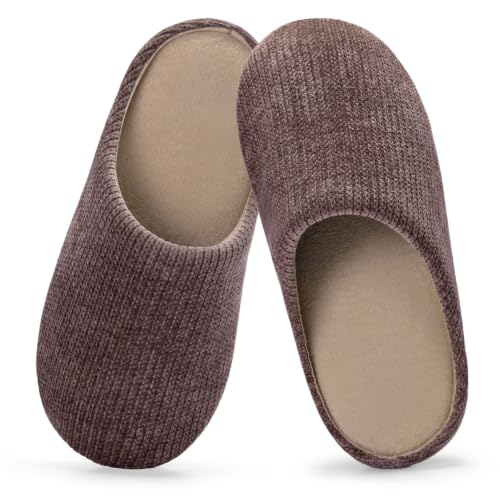
Summer slippers live harder lives than winter ones: they meet wet bathroom floors, kitchen spills, sunscreened feet, and guest duty. The Fadezar is built for that reality — a Japanese-style slipper with a breathable lining that the listing confirms is machine washable, quiet on floors, non-slip, and lightweight, with stated use across bedroom, hotel, and travel. That last word is why it earns this slot. A slipper that washes clean and weighs almost nothing is the one that goes in the suitcase for the beach rental, the one that lives in the guest room and gets laundered between visitors, and the one you do not mind replacing after a season of heavy rotation. The verified listing shows a brown colorway in a combined size range (10-11 women / 8-9 men).
Strengths
- Machine washable — the headline feature for summer hygiene and guest-room turnover.
- Quiet, lightweight build with breathable lining; kind to hotel floors, hosts, and sleeping households.
- Non-slip sole and unisex combined sizing make it an easy spare pair for any visitor.
Trade-offs
- Like all lightweight woven slippers, support is minimal — it is a cleanliness and convenience pick, not a cushioning pick.
- Combined size ranges fit fewer feet precisely than single sizes; between sizes, follow the listing’s guidance.
- Frequent washing is its strength but also its lifespan: expect the fabric to soften and fade across many cycles.
| Mini spec — as stated in the verified listing | |
|---|---|
| Style | Japanese slippers, women and men |
| Lining | Breathable |
| Care | Machine washable |
| Sole | Non-slip, lightweight, quiet |
| Stated uses | Bedroom, hotel, travel (verified listing: Brown, 10-11 Women / 8-9 Men) |
Every warm-climate household should own one washable pair even if it is not their daily driver. Floors get mopped, feet get sandy, guests arrive — and the Fadezar is the pair that absorbs all of that chaos and comes out of the wash ready for more.
Best for: travelers, guest rooms, and hygiene-first households. / Not suited for: anyone wanting cushioning or structure for long standing.
Check the current price on Amazon

6. Epsion Linen Slippers for Women — Best for Air-Conditioned Rooms
We include the Epsion with its trade-off printed on the label: the listing describes a linen upper in the Japanese style with a fleece lining, a soft sole, and an anti-skid finish. That fleece lining makes it the warmest slipper in this guide — which disqualifies it for a sweltering porch but qualifies it for a real and common niche: the aggressively air-conditioned home, the cold tile bathroom at 6 a.m., the summer evening when the AC has been winning for hours. The linen outer keeps it from feeling like a winter bootie, and the soft anti-skid sole suits the smooth floors of cooled interiors. Buy it as a warm-weather pick only if your warm weather is the indoor kind; for genuine heat, the five picks above are the honest choices, and we would rather tell you that than let a badge do quiet misleading.
Strengths
- Linen outer with a fleece lining splits the difference — presentable and breathable outside, warm where the foot sits.
- Soft sole with anti-skid finish suits tile, wood, and bathroom floors in cooled homes.
- The most finished, feminine styling in this lineup, in the Japanese house-shoe pattern.
Trade-offs
- Fleece lining traps heat — wrong for hot rooms, un-air-conditioned homes, and peak summer afternoons.
- Women’s sizing only, per the listing.
- The lining will hold moisture longer than the unlined picks; air it out between wears in humid weather.
| Mini spec — as stated in the verified listing | |
|---|---|
| Upper | Linen, Japanese style |
| Lining | Fleece |
| Sole | Soft sole, anti-skid |
| Fit | Women’s house shoes |
Plenty of “summer slipper” lists quietly include a lined pick and hope you will not notice. We would rather badge it honestly: this is the evening-and-AC slipper, and in that role — cold floors, cool rooms, a bit of softness after a day in sandals — it is genuinely the best tool here.
Best for: air-conditioned homes, cool summer evenings, and cold bathroom floors. / Not suited for: real heat — choose any of the five unlined picks instead.
Check the current price on Amazon
Comparison Table
| Pick | Badge | Key spec | Best for |
|---|---|---|---|
| Japanese Style Linen House Slippers | Best Overall | Linen, open toe, anti-skid sole | Everyday warm-weather wear, guests |
| Japanese Bamboo House Slippers | Best for Hot, Sweaty Feet | Bamboo fiber, odor-resistant, easy clean | Humid homes, odor control |
| COCOMUSE Ultralight Slippers | Best Ultralight | Cotton linen, cloth bottom, absorbs sweat | Peak heat, no-AC rooms |
| EitCaton Unisex Linen Slippers | Best Cushioned | Memory foam footbed, machine washable | Hard floors, long standing |
| Fadezar Japanese Slippers | Best Washable and Travel | Machine washable, quiet, lightweight | Travel, guest rooms |
| Epsion Linen Slippers | Best for Air-Conditioned Rooms | Linen upper, fleece lining, anti-skid | Cool interiors, summer evenings |
Key Takeaways
- Warm-weather slippers invert winter logic: open toes, woven natural-fiber uppers, thin soles, no plush.
- Fiber is the decision — linen for all-round breathability, bamboo for dryness and odor, cotton-linen cloth for minimum insulation.
- Every pick here is a true house slipper, not a sandal or slide, and each was confirmed through Amazon’s catalog data before linking.
- Cushioning costs coolness: the one foam pick (EitCaton) and the one lined pick (Epsion) are badged for the niches where that trade is worth it.
- Washability is a summer feature, not a bonus — summer slippers should be cleaned weekly in peak heat.
- “Warm weather” is four different summers — dry heat, humid heat, coastal cool evenings, and the air-conditioned interior — and the badges in this guide are organized by which of those you actually live in, so start from your climate pattern rather than from a brand name.
How to Choose Slippers for Warm Weather
Start with the upper material. The upper is where heat is trapped or released. Woven linen is the all-round champion: breathable, moisture-absorbing, quick to dry, and durable enough for a full season of daily wear. Bamboo fiber is the specialist for damp feet and odor. Cotton and cotton-linen cloth are the lightest and coolest, at the cost of structure and sole life. What to avoid is easier to list: synthetic plush, faux fur, fleece (outside the air-conditioning niche), and any closed upper with no venting. If the product photo looks cozy for December, it is wrong for July, whatever the listing calls it.
Then the toe and the sole. An open toe is the single most effective warm-weather feature, because toes are where feet dump heat and where slippers feel most confining. Closed-toe woven slippers can still work in mild warmth, but for real heat, open wins. Soles trade protection against insulation: cloth bottoms are coolest and quietest but wear fast and soak through; thin anti-skid soles (the overall pick) are the balanced choice; memory foam footbeds buy standing comfort with warmth. Match the sole to your floors — grit and splinters demand a real sole, smooth apartment tile forgives cloth.
Budget honestly. This is a category where spending more does not buy proportionally more summer. The verified market clusters at accessible price tiers, and the differences that matter — fiber, toe, sole, washability — are construction choices, not price tiers. A second inexpensive pair for rotation will improve your summer more than one premium pair worn daily into odor and compression. Save the splurge instinct for winter slippers, where materials like shearling genuinely scale with price; here, let the checklist do the work and check the current price on Amazon for the pick that matches it.
Fit deserves more care than usual.
Warm feet swell slightly, and several picks here use combined or Japanese-style size ranges rather than single US sizes. Read the listing’s own size notes, and when you fall between sizes in an open-toe slipper, the slightly larger size is usually the safer summer bet — a heel that overhangs a short sole is worse than a little extra room at the toe. Finally, buy for your actual climate pattern: a household that runs air conditioning all summer lives in a different slipper world from one that opens windows, and this guide’s badges are organized around exactly that difference.
How to Wash and Care for Summer House Slippers
Warm-weather slippers need a care rhythm winter slippers never demanded, because they work barefoot against skin, in humidity, every day. The routine is simple, and it is the difference between a pair that stays pleasant through September and a pair that gets banished to the back of the closet by the Fourth of July. Air them out nightly — stand them where air moves rather than leaving them flat in a closed closet, and rotate two pairs if you wear slippers all day; a rest day doubles the freshness of both. Wash on the rhythm the material allows: the Fadezar and EitCaton are confirmed machine washable in their listings — use a gentle cycle, cold water, and air-dry away from direct heat. For the cloth and linen picks that do not state machine washing, hand-wash in cool water with mild soap, press the water out in a towel, and dry in moving air; bamboo-fiber slippers rinse clean easily per their listing and should be dried fully before wearing, because a damp slipper defeats its own purpose. Never put woven slippers in a hot dryer — heat warps soles and shrinks natural fibers. Replace summer slippers when the sole cloth wears thin, the anti-skid pattern smooths out, or odor survives a wash; in daily use, treat them as a one-to-two-season item and let the low prices of the category work in your favor.
Linen vs. Bamboo vs. Cotton: The Warm-Weather Fibers Compared
Since the upper fiber is the biggest decision in this category, it deserves a direct comparison. Linen, woven from flax, is the durability champion of the three: it breathes well, absorbs a surprising amount of moisture before feeling damp, dries quickly in moving air, and actually gets softer and more comfortable across a season of wear without losing its shape. Its weaknesses are a slightly crisp hand feel when new and a tendency to wrinkle — neither of which matters much in a house shoe. It is the right default for a daily driver, which is why the overall pick and the washable travel pick both live in the linen family.
Bamboo fiber — usually bamboo viscose or a bamboo blend — is the moisture and odor specialist. It feels smoother and cooler against the skin than linen on first touch, wicks sweat away from the foot, and resists the bacterial odor buildup that is the number-one reason summer slippers get thrown away. Its trade-offs are gentleness: bamboo fabrics are typically less abrasion-resistant than linen, and they prefer easy cleaning over aggressive washing. Choose bamboo when your feet run hot and damp, when the house is humid rather than merely warm, or when a previous pair of summer slippers died of smell before it died of wear.
Cotton and cotton-linen cloth are the minimalists. A cloth slipper like the COCOMUSE is barely a shoe at all — maximum airflow, minimum insulation, silent soles — and cotton’s sweat absorption keeps feet from sliding on the footbed. The costs are structural: cloth soles wear through faster than any other bottom in this guide, offer no protection from a dropped kitchen knife or a wet bathroom floor, and give the foot nothing to stand on during long cooking sessions. Cotton is the peak-heat answer and the travel-light answer, not the everyday answer for hard-floor homes. A practical household strategy emerges from the comparison: one linen pair as the default, one bamboo or cloth pair for the hottest weeks and for rotation on wash days. That two-pair system costs less than a single premium winter slipper and covers the whole summer honestly.
Choosing by Scenario: Guests, Apartments, and Hot Floors
The guest basket. Warm-climate hospitality runs on spare slippers — guests arrive in sandals and appreciate not going barefoot on unfamiliar floors. For a guest basket, buy the unisex linen picks in two combined sizes, favor washable builds like the Fadezar, and launder between visitors. Unisex styling matters here: a basket of obviously gendered slippers in guessed sizes helps no one, while neutral linen pairs in a small and a large range cover almost every foot that walks in.
The apartment problem. Thin floors change the brief: the slipper must be quiet. Cloth bottoms and soft soles — the COCOMUSE and the Fadezar are the standouts — keep your footsteps out of your downstairs neighbor’s evening, while hard anti-skid soles can click on tile. Apartment dwellers in warm cities also tend to have the least storage, which favors the flat, packable woven picks over anything with structure.
Hot floors are real. Sun-struck tile, dark wood in a south-facing room, and radiant-heated floors left warm can make bare feet genuinely uncomfortable in summer — the slipper’s job flips from warmth to insulation from the floor’s heat. A thin sole is enough barrier; the anti-skid overall pick handles this best, because its sole separates foot from floor without adding a heat-holding foam layer. The reverse scenario matters too: aggressively cooled stone and tile can be cold enough at dawn to want the Epsion’s lining, which is why that pick exists in a warm-weather guide at all.
Barefoot households and floor hygiene. In homes where outdoor shoes stop at the door, house slippers carry the whole day’s foot traffic, and summer multiplies the sweat involved. This is the scenario where the wash rhythm in the care section stops being advice and becomes the product requirement — and where owning the machine-washable EitCaton or Fadezar, even as a second pair, pays for itself in a single season.
Matching the Slipper to Your Floors
Floor type quietly decides which of these six picks will actually work in your house. Tile and stone — the classic warm-climate floors — are hard, sometimes slick, and cold only in air conditioning. They reward an anti-skid sole and punish cloth bottoms with wear; the overall linen pick and the cushioned EitCaton are the tile answers, the first for grip and balance, the second for standing time in kitchens. Hardwood and laminate want soft, quiet soles that will not scuff and will not announce you; the cloth-bottom COCOMUSE and the soft-soled Fadezar are the polite choices, and all six picks avoid the hard plastic soles that can mark softer finishes. Tatami and delicate natural floors are the native habitat of the Japanese slipper pattern itself — the bamboo pick’s listing names tatami explicitly — and the rule there is soft soles only, no exceptions. Carpet is the forgiving case: any pick works, thin cloth included, and the choice reverts to fiber and washability. Concrete and sealed garage-adjacent floors are the one indoor surface where we would steer you away from cloth bottoms entirely; grit destroys them, and the anti-skid linen pair is the minimum viable equipment. When a household has mixed floors — most do — buy for the hardest, slickest room you cross daily, because that room sets the safety requirement the slipper has to meet.
What We Left Out, and Why
A guide is also its exclusions, and this category’s exclusions are instructive. Fuzzy and plush slippers dominate slipper best-seller lists year-round, and every one of them was disqualified here on construction alone — plush is insulation, and insulation is the problem in warm weather. Shearling and wool slippers get marketed with a “wool regulates temperature” argument that is genuinely true for socks and genuinely misleading for a lined house shoe in a hot room; the wool picks in the wider market are winter products, and we treated them that way. Sandals, slides, and flip-flops were excluded by the definition of the task — they are open footwear, not house slippers — even though several are perfectly good summer products in their own category. Massage and reflexology slippers were excluded because their main pitch is a wellness mechanism we do not make claims about, and their knobbed footbeds are the opposite of the unobtrusive comfort a house slipper should offer. Ballet, dance, and kung-fu style shoes occasionally surface in slipper searches; they are activity footwear, not house slippers, and they are out. Finally, a word about the big winter brands: several famous names sell a token open-toe style, but where we could not confirm a genuinely breathable, unlined house slipper through catalog data, we did not force a famous logo into the list. Six verified, fit-for-purpose slippers beat ten famous ones that would make your feet sweat.
Common Buying Mistakes
- Buying winter slippers on sale in spring. The plush mule at a discount is still a plush mule in August. Warm-weather slippers are a separate product, not a season of the same one.
- Choosing slides or sandals and calling them house slippers. Open footwear tracks outdoor dirt in and offers no cozy house feel; this guide’s picks are house shoes with house soles, which is a different job.
- Ignoring the lining. A breathable linen upper over a fleece lining is a warm slipper wearing a summer costume. Read for the lining, not just the upper — our Epsion pick is badged for exactly this reason.
- Guessing at Japanese or combined sizing. These ranges fit differently from US shoe sizes. Two minutes with the listing’s size guidance prevents the most common return in this category.
- Never washing them. Bare feet, heat, and daily wear guarantee odor in any unworn-in summer slipper. If a pick cannot be washed or rinsed easily, it will not survive July smelling acceptable.
- Expecting one pair to do everything. Cloth slippers hate wet floors; foam slippers run warm; lined slippers are for cool rooms. The low cost of this category makes a two-pair rotation the smart buy, not an extravagance.
Final Recommendation
Start with the Japanese Style Linen House Slippers — the balanced, breathable, anti-skid all-rounder. If odor and dampness are your real enemies, go straight to the bamboo pair; if your floors are hard and your mornings are spent standing, choose the EitCaton and accept its small warmth trade. The COCOMUSE is the peak-heat specialist, the Fadezar is the washable traveler and guest-room hero, and the Epsion is honestly for air-conditioned evenings only. For more warm-weather angles, see our guides to Best House Slippers For Florida, Best House Summer Slippers For Women, Best Indoor Slippers For Summer, Best Men’s Slippers For Hot Weather, and Best Cool Indoor Slippers For Men.
Related guides
Frequently Asked Questions
What makes a slipper good for warm weather?
Three things: an open toe so heat escapes, a breathable woven upper in a natural fiber like linen, cotton, or bamboo, and a thin sole with no plush lining. If a slipper would look at home in a winter gift guide, it fails the warm-weather test no matter how it is marketed.
Are open-toe slippers better than closed-toe in summer?
For genuine heat, yes — the open toe vents the part of the foot that overheats first and feels least confined when feet swell slightly in warmth. Closed-toe woven slippers are fine for mild warmth and air-conditioned rooms, which is why the one lined pick in this guide is badged for exactly that setting.
How do I stop summer slippers from smelling?
Choose a fiber that fights the problem — bamboo is the odor-resistant pick here — air the pair out nightly, rotate two pairs if you wear them all day, and wash them weekly in peak heat. If odor survives a proper wash, the slipper is done; replace it rather than masking it.
Can I wear house slippers outside in summer?
Briefly, on a dry patio, most anti-skid soles will cope — but these are indoor shoes. Cloth bottoms soak through and wear fast outdoors, soft soles pick up grit that then scratches indoor floors, and the listings’ stated uses are indoor. Keep a separate pair of sandals by the door for real outdoor trips.
How should Japanese-style slipper sizing be handled?
Expect combined ranges (one size spanning two US sizes) and a fit that can differ from your shoe size. Read the listing’s size notes, measure if they give measurements, and in an open-toe style prefer the slightly larger option when you fall between ranges — summer feet swell, and a small overhang at the heel is the fit failure to avoid.
Should I wear socks with summer slippers?
You can, and a thin cotton sock changes the equation in your favor: it absorbs the sweat that would otherwise go into the footbed, which stretches the time between washes and slows odor. The trade is a little extra warmth and a less barefoot feel. Many wearers land on socks for mornings and bare feet for evenings; either way, the breathable picks here work with both.
How long do warm-weather slippers last?
Treat them as a one-to-two-season item in daily use. Natural fibers and cloth soles wear faster than winter rubber-soled slippers, and freshness has its own lifespan. The category’s low prices make planned replacement more sensible than buying one heavy pair and suffering through its third summer.

