Disclosure: airfryerkitchensupply.com is reader-supported. When you buy through links on our site, we may earn an affiliate commission at no extra cost to you.
Where to buy
Every linked pick in this guide was verified against Amazon’s catalog on this site’s connection, so the sizes, pack counts, and constructions quoted below match the listings you will land on. If water is on your carpet right now, start with the CODOHI Extra Large Microfiber Cleaning Cloths — big floor cloths made for exactly this kind of work — or the SMINDER 1200 GSM microfiber drying towels if the spill is deep and you need maximum absorbency per towel. For a whole-room flood, the bulk cotton options further down, led by the Utopia Towels bar mops, are the economical way to keep dry towels rotating. Check the current price on Amazon from any pick’s link before ordering.
The best towels for soaked carpet are not your good bath towels, and the first honest thing this guide can tell you is why. When carpet gets soaked — a burst pipe, an overflowing washer, a pet accident that went unnoticed, a roof leak during a storm — the job is not drying yourself; it is extracting as much water as possible from carpet pile and padding before mildew gets its foothold, which it can do within a day or two. That job rewards a specific set of towel traits: maximum absorbency per square inch, enough surface area to work a room systematically, a construction that releases water when wrung so the same towel can go back for more, and a price and pack size that let you treat towels as tools rather than linens.
That is why this roundup looks different from a bath-towel guide. You will find oversized microfiber floor cloths, a heavyweight microfiber drying towel sold for cars (chosen purely for its verified construction, and labelled as such), bulk cotton bar mops, and a bulk pack of cotton shop towels alongside two genuinely large, absorbent bath-sheet options. Each earned its place on extraction performance, not on softness or bathroom looks. Every pick was verified: the sizes, GSM figures, and pack counts quoted are the ones the listed in the listing titles, and where a title carried a marketing flourish we could not verify, we left it out of the article and noted it in our sources.
One boundary before the picks: towels are the first-response tool for soaked carpet, not the whole cure. Towels extract surface and pile water brilliantly; water already in the padding underneath needs airflow, dehumidification, and time, and a large or sewage-contaminated flood needs professional extraction. The how-to section below walks through the full sequence. But the first hour belongs to towels, and the right towels make that hour count.
In this guide
Quick Picks
Six extraction tools, from precision microfiber floor cloths to flood-scale bulk cotton. Badges stay consistent through the reviews and comparison table.
| Pick | Badge | Why it earns its slot |
|---|---|---|
| CODOHI Extra Large Microfiber Cleaning Cloths, 20 x 30 in, 6 Pcs | Best Overall | Oversized microfiber floor cloths — the format designed for laying down, weighting, and wringing over wet floors. |
| SMINDER 1200 GSM Microfiber Drying Towels, 36 x 24 in, 2-Pack | Most Absorbent | A 1200 GSM double-twist-pile microfiber towel — sold for car drying, chosen here purely for verified absorbency construction. |
| Utopia Towels Kitchen Bar Mops, Pack of 12, 16 x 19 in | Best Bulk Cotton | Twelve 100% cotton bar mops — the hospitality industry’s workhorse, perfectly sized for press-and-wring carpet work. |
| Simpli-Magic Cotton Shop Towels, 14 x 12 in, 145 Pack | Best for Big Floods | A 145-count pack of reusable cotton shop towels — the sacrificial fleet for water you would not put good towels in. |
| White Classic Luxury Bath Sheets, 2 Pack, 35 x 70 in, 700 GSM Turkish Cotton | Best Large Coverage | Two genuinely huge 700 GSM Turkish cotton bath sheets — the biggest single-towel footprint in the roundup. |
| JML Microfiber Bath Towel, 2 Pack, 30 x 60 in | Best Bath-Towel Format | Full bath-towel dimensions in quick-drying microfiber, with a hanging loop — the bridge pick between bathroom and utility kit. |
How These Picks Were Chosen
Verification worked the same way as every guide in this program: we searched Amazon listing data connected to this site for each product, matched the returned listing title to the towel we intended to recommend, and attached a purchase link only where that match was confirmed, using the ASIN the listed. Pack counts, dimensions, and GSM figures in this article come from those verified titles. Two honesty notes follow from that process. First, the SMINDER pick is listed as a car drying towel; we chose it because its verified construction — 1200 GSM microfiber in a large 36 x 24 inch format — is exactly what carpet extraction rewards, and the article says plainly that it is a car towel doing carpet duty. Second, one listing title (the JML towel) carries an absorbency multiplier claim we cannot verify; we do not repeat it as fact anywhere in this guide.
The selection criteria were extraction-specific. Absorbency per towel, measured by the verified construction: microfiber GSM and cotton weight are the honest proxies available. Coverage: a soaked room is worked in sections, and larger towels cover a section in fewer placements. Wring-and-return performance: a towel that releases water when wrung is worth three that stay saturated. Pack economics: flood work consumes towels faster than any other household task, so cost per working towel matters and bulk packs earn their slots. And finally, sacrificial value: carpet water is often dirty water, so at least some picks had to be towels you would not mourn if they came out of the job stained.
We deliberately mixed microfiber and cotton. Microfiber wins on absorbency per gram and on how completely it wrings out; cotton wins on durability, heat tolerance in the wash, and the sheer cheapness of bulk packs. A prepared household owns both: microfiber for the first, heaviest extraction passes, cotton bulk for the long tail of damp work and for the jobs too dirty for good towels.
The 6 Best Towels for Soaked Carpet

CODOHI Extra Large Microfiber Cleaning Cloths, 20 x 30 in, 6 Pcs — Best Overall
The CODOHI cloths take the top slot because their verified description matches the soaked-carpet job description almost word for word: extra-large microfiber cleaning cloths, 20 by 30 inches, sold as floor cloths for housekeeping work. That floor-cloth format matters. A 20 x 30 cloth lays flat over a section of carpet, takes foot pressure or a weighted board evenly, and covers in one placement what a folded bath towel covers in three. Microfiber’s split fibres hold many times their weight in water and — the trait that decides real extraction work — release most of it on a firm wring, so the same cloth returns to the carpet nearly dry dozens of times.
Strengths
- Floor-cloth format at 20 x 30 inches covers a working section of carpet in a single placement
- Microfiber construction absorbs heavily and wrings out thoroughly, so each cloth works pass after pass
- Six-pack gives you a rotation: some cloths extracting, some wrung and ready, none idle
Trade-offs
- Microfiber needs its own wash care — no fabric softener, which coats the fibres and cuts absorbency
- Not the cheapest per cloth; the bulk cotton picks beat it on flood-scale economics
- A cleaning cloth, not a linen — zero bathroom or guest appeal, by design
| Size (as listed) | 20 x 30 inches |
|---|---|
| Pack (as listed) | 6 cloths |
| Material (as listed) | Microfiber |
| Intended use (as listed) | Floor cloths / housekeeping |
Working technique is where these cloths pull away from bath towels. Lay one flat over the wettest section, press it into the pile with your full weight — standing on it works better than hand pressure — count to thirty, lift, wring it hard into a bucket, and repeat on the next section. The large flat format means the pressure is even and the contact is total; a bunched towel touches the pile in ridges and leaves the valleys wet. On stairs and along wall edges, fold the cloth to the width of the tread or the strip you are working and use the same press-and-wring rhythm.
Care decides whether microfiber stays microfiber. Wash these separately from cotton, skip fabric softener and dryer sheets entirely, and dry on low heat. Softener residue is the silent killer of microfiber absorbency — a cloth that has been through a few softened washes will push water around instead of drinking it, and you will not know why your extraction passes stopped working. Kept clean the right way, a set of these is a permanent part of a household’s water-emergency kit.
Best for: The main extraction tool for spills and soaked rooms in homes that want one right answer / Not suited for: Whole-house floods where you need dozens of towels in rotation at the lowest possible cost
Check the current price on Amazon

SMINDER 1200 GSM Microfiber Drying Towels, 36 x 24 in, 2-Pack — Most Absorbent
Full disclosure up front: this is a car drying towel. Its verified listing title says so. We are recommending it for carpet anyway, and the reason is a number in that same title: 1200 GSM. GSM — grams per square metre — is the honest measure of how much microfiber is packed into a towel, and 1200 is a heavyweight figure, roughly double or triple the density of ordinary cleaning microfiber. The title also confirms a double-twist pile and an edgeless design in a large 36 x 24 inch format. Twist-pile microfiber is engineered to pull large volumes of standing water off a surface in a single pass, which is precisely the physics of a soaked carpet patch.
Strengths
- 1200 GSM verified in the listing title — the densest absorbency construction in this roundup
- Large 36 x 24 inch format covers a spill zone fast
- Double-twist pile (as listed) is built to lift standing water, not just wipe dampness
Trade-offs
- Sold and described as a car drying towel — you are deliberately using it off-label, on construction merit
- Only two towels per pack; this is a heavy-artillery pick, not a rotation fleet
- Dense microfiber this thick takes longer to dry between uses and wash days
| Weight (as listed) | 1200 GSM |
|---|---|
| Size (as listed) | 36 x 24 inches |
| Pack (as listed) | 2 towels |
| Construction (as listed) | Double-twist pile microfiber, edgeless |
| Listed purpose | Car drying — used here for carpet extraction on construction merit |
Use the SMINDER where the water is deepest: the centre of the spill, the low corner where water pooled, the patch in front of the appliance that failed. Its density means each placement pulls more water per press than any other pick here, so it shortens the worst phase of the job — the phase where the carpet is still holding free water that can migrate into padding and skirting. Work it in the same press-and-wring rhythm as the CODOHI cloths; the twist pile tolerates hard wringing well.
Because there are only two, treat them as the extraction leads and let cheaper towels do the follow-up passes. Once the SMINDERs stop coming up heavy — when a full press yields only a modest wring — the free water is gone and the remaining damp belongs to the cotton fleet and to airflow. That handover point is the most useful signal in the whole cleanup: it tells you the emergency phase is over and the drying phase has begun.
Best for: Deep spills and pooled water where maximum absorbency per press matters most / Not suited for: Buyers who want a large matched fleet of towels, or anyone uncomfortable using a product off its labelled purpose
Check the current price on Amazon

Utopia Towels Kitchen Bar Mops, Pack of 12, 16 x 19 in — Best Bulk Cotton
Bars and restaurants solved the “endless wet mess” problem generations ago, and their answer is the bar mop: a mid-size, 100% cotton towel, bought by the dozen, wrung a hundred times a shift, and laundered hot without ceremony. The Utopia Towels bar mops match that template exactly in their verified title — 100% cotton, 16 x 19 inches, pack of 12, sold as multi-purpose cleaning cloths. For soaked carpet, that size is a feature: a bar mop folds to a hand-sized pad that takes focused pressure exactly where you apply it, which makes it the best tool here for working pile water up section by small section.
Strengths
- 100% cotton (as listed) tolerates hot washing and bleach — important when the water was dirty
- Pack of 12 builds a real rotation: extract, wring, toss in the bucket, grab the next
- 16 x 19 inch size folds into a precise pressure pad for spot extraction and edges
Trade-offs
- Cotton holds less water per gram than the microfiber picks and wrings out less completely
- Smaller format means more placements to cover a whole room
- Plain white utility towels — they will show every stain the job gives them
| Material (as listed) | 100% cotton |
|---|---|
| Size (as listed) | 16 x 19 inches |
| Pack (as listed) | 12 towels |
| Type | Bar mop / multi-purpose cleaning cloth |
The bar mop method is a rhythm, not a placement: fold, press hard with both hands or a knee, hold, wring into the bucket, move six inches, repeat. Twelve towels let you batch the rhythm — work with three or four in hand rotation while the rest wait wrung and ready — and the cotton construction shrugs off the treatment. Cotton’s other flood virtue is washability at temperature. Carpet water that came from a washing machine overflow or a pet zone should be washed hot, and cotton bar mops take that without the fibre damage heat does to microfiber.
Set expectations on absorbency honestly. A single bar mop will not drink like the 1200 GSM SMINDER, and this guide is not claiming otherwise. The bar mop wins on system economics: for the cost tier of a couple of premium towels you field a dozen workers, and in a long extraction job the fleet beats the hero. Pair them with one heavy microfiber pick for the deepest water and you have the professional setup at a household price.
Best for: Whole-room extraction, dirty-water jobs, and anyone building a washable flood kit / Not suited for: A single small spill where two premium microfiber towels would finish faster
Check the current price on Amazon
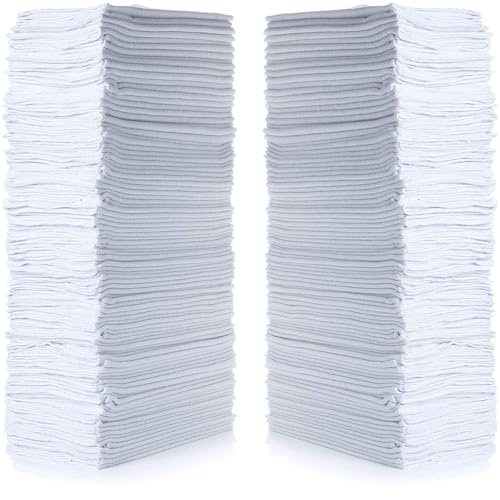
Simpli-Magic Cotton Shop Towels, 14 x 12 in, 145 Pack — Best for Big Floods
Some carpet water is just water. Some of it is grey, gritty, appliance-scented, or worse — and for that water you want towels whose loss you will not feel. The Simpli-Magic shop towels are that fleet: the verified title confirms a 145-pack of reusable cotton shop towels, 14 x 12 inches, sold for homes, garages, and industry. Individually they are small and unremarkable, and that is entirely the point. At 145 count, you can lay them in overlapping courses across a flooded room, walk them into the pile, bag the filthiest third without a second thought, and still have a hundred towels in the rotation.
Strengths
- 145-count pack (as listed) — flood-scale quantity no other pick approaches
- Cotton shop towels are made to be used hard, washed hot, and replaced without regret
- Small size layers neatly in overlapping courses and packs tightly into corners and closets
Trade-offs
- 14 x 12 inches is small — coverage comes from layering many towels, not from any single one
- Thin shop-towel construction absorbs less per towel than every other pick here
- You are buying a consumable mindset: some of each pack will end up discarded after dirty jobs
| Material (as listed) | Cotton |
|---|---|
| Size (as listed) | 14 x 12 inches |
| Pack (as listed) | 145 towels |
| Type | Reusable shop towels |
The technique for a shop-towel fleet is carpet-specific: lay towels in a shingled layer over the wet area, then walk the whole layer slowly, shifting your weight heel to toe. Your body weight drives water from the pile into the towels far more effectively than hand pressure, and the shingled layer means no patch of carpet escapes contact. Lift the layer, wring or replace the saturated towels, and repeat until a fresh layer comes up merely damp. It is unglamorous, systematic, and — for a genuinely flooded room — faster than any small set of premium towels.
A note on the listing itself: the listed title for this product is truncated in our cache at the pack description, so this guide quotes only the confirmed parts — cotton, size, and the 145 count — and claims nothing beyond them. That restraint is deliberate. What is confirmed is enough: for dirty water at scale, this is the pick, and after the job the survivors wash hot and go back in the bag for the next emergency.
Best for: Large floods, dirty or grey water, and households that want a sacrificial towel reserve / Not suited for: Small clean-water spills, where a few absorbent towels are faster and less wasteful
Check the current price on Amazon

White Classic Luxury Bath Sheets, 2 Pack, 35 x 70 in, 700 GSM Turkish Cotton — Best Large Coverage
Sometimes the right tool is simply the largest absorbent sheet you own, deployed on purpose. The White Classic bath sheets earn their slot on verified dimensions: 35 x 70 inches each — that is nearly a metre by 1.8 metres of towel — in 700 GSM 100% Turkish cotton, a weight the listing confirms and that sits firmly in the dense, thirsty class. One sheet covers a doorway spill, a rug-sized patch, or the whole zone in front of a leaking appliance in a single placement, and cotton at this weight holds a serious volume of water before it saturates.
Strengths
- 35 x 70 inch footprint (as listed) — the largest single placement in this guide
- 700 GSM Turkish cotton (as listed) is a genuinely heavy, absorbent construction
- Dual-purpose: after flood duty they return to being excellent bath sheets, unlike the utility picks
Trade-offs
- A saturated 700 GSM sheet is heavy — wringing one fully is a two-handed, over-a-bucket job
- Only two sheets; they lead the extraction but cannot be the whole fleet
- Using premium bath linens on dirty carpet water is a commitment — reserve them for clean-water jobs
| Size (as listed) | 35 x 70 inches |
|---|---|
| Weight (as listed) | 700 GSM |
| Material (as listed) | 100% Turkish cotton |
| Pack (as listed) | 2 bath sheets |
The bath sheet’s moment is the first ten minutes of a clean-water emergency: a supply line lets go, a tub overflows, a water heater weeps across the laundry room. One sheet thrown over the spreading edge of the spill dams it; the second, weighted across the soaked patch, starts the extraction while you fetch the fleet. Cotton’s slow, thorough uptake suits this dam-and-hold role — it keeps absorbing as long as it is in contact, and its weight keeps it in contact without your standing on it.
After the emergency, these go back to the bathroom, which creates the one management rule for this pick: know which water they touched. Clean supply water, fine — wash and return. Anything grey, anything from a drain or an appliance with detergent or worse, and the sheets should be demoted to the utility shelf permanently or washed hot and inspected before returning to skin duty. Label the decision in the moment; future-you will not remember which flood it was.
Best for: Clean-water emergencies needing instant large coverage, and dual-purpose households / Not suited for: Dirty-water floods, or buyers who need many towels rather than two very large ones
Check the current price on Amazon

JML Microfiber Bath Towel, 2 Pack, 30 x 60 in — Best Bath-Towel Format
The JML towels are the pick for people who want one product that lives in the bathroom but fights like a utility towel. The verified title confirms the essentials: microfiber construction, a generous 30 x 60 inch bath-towel format, a two-pack, and a hanging loop — a small detail that matters when towels need to dry between extraction rounds. Microfiber in a bath format gives you the fibre’s absorbency and wring-out performance at a size that drapes over a carpet section properly, and when the emergency ends they go back to being fast-drying travel and bath towels rather than permanent flood kit.
Strengths
- 30 x 60 inch bath format (as listed) drapes and weights a carpet section better than small cloths
- Microfiber absorbs heavily, wrings out well, and dries fast between rounds — helped by the hanging loop
- Genuinely dual-purpose: bath, gym, and travel duty when there is no flood
Trade-offs
- Two towels only — a lead pair, not a fleet
- Microfiber wash care applies: no fabric softener if you want the absorbency to last
- The listing title carries an absorbency multiplier claim we could not verify, so this guide makes no such claim — judge it on format and fibre
| Size (as listed) | 30 x 60 inches |
|---|---|
| Pack (as listed) | 2 towels |
| Material (as listed) | Microfiber |
| Feature (as listed) | Hanging loop |
In practice the JML pair works best as the second wave. Let the heaviest tools — the SMINDER or the CODOHI cloths — take the free water, then lay the JMLs over the damp field under a weighted board or a row of books while you work elsewhere. Long, weighted contact is where a big microfiber sheet quietly outperforms repeated quick presses: it keeps wicking from the pile the whole time it sits, and it comes up surprisingly heavy. The hanging loop then earns its keep — these dry hung in a doorway in hours, ready for the next round, while thick cotton is still damp on the line.
As bath towels they are legitimately good at the things microfiber does well: fast drying, light packing, no lint. That dual life is the honest reason to choose them over a dedicated utility pick — a renter in a small flat, say, who cannot justify a shelf of flood-only towels but absolutely can justify two excellent microfiber bath towels that happen to be the best carpet-extraction shape in the bathroom. Context decides; the construction supports both readings.
Best for: Small homes and renters who want dual-purpose towels that excel at extraction duty / Not suited for: Flood-scale jobs, or cotton loyalists who dislike microfiber’s hand feel and wash rules
Check the current price on Amazon
Comparison Table
| Pick | Badge | Key spec | Best for |
|---|---|---|---|
| CODOHI Extra Large Microfiber Cleaning Cloths, 20 x 30 in, 6 Pcs | Best Overall | 20 x 30 in microfiber floor cloths, pack of 6 | The main extraction tool for spills and soaked rooms in homes that want one right answer |
| SMINDER 1200 GSM Microfiber Drying Towels, 36 x 24 in, 2-Pack | Most Absorbent | 1200 GSM microfiber, 36 x 24 in, 2-pack | Deep spills and pooled water where maximum absorbency per press matters most |
| Utopia Towels Kitchen Bar Mops, Pack of 12, 16 x 19 in | Best Bulk Cotton | 100% cotton bar mops, 16 x 19 in, pack of 12 | Whole-room extraction, dirty-water jobs, and anyone building a washable flood kit |
| Simpli-Magic Cotton Shop Towels, 14 x 12 in, 145 Pack | Best for Big Floods | Cotton shop towels, 14 x 12 in, 145-pack | Large floods, dirty or grey water, and households that want a sacrificial towel reserve |
| White Classic Luxury Bath Sheets, 2 Pack, 35 x 70 in, 700 GSM Turkish Cotton | Best Large Coverage | 700 GSM Turkish cotton, 35 x 70 in, 2-pack | Clean-water emergencies needing instant large coverage, and dual-purpose households |
| JML Microfiber Bath Towel, 2 Pack, 30 x 60 in | Best Bath-Towel Format | Microfiber bath towel, 30 x 60 in, 2-pack | Small homes and renters who want dual-purpose towels that excel at extraction duty |
Choose by water volume and water cleanliness. A clean spill under a square metre: the SMINDER or CODOHI. A soaked room: the bar mop fleet or the shop towels, led by one heavy microfiber. Dirty water at any scale: cotton you can wash hot, in quantities you can afford to lose.
How to Choose Towels for Carpet Water Extraction
Absorbency is the headline trait, and the honest way to compare it across listings is construction: microfiber GSM, cotton GSM, and physical size. A 1200 GSM microfiber towel and a 700 GSM cotton sheet are both legitimately heavy-class tools; a thin promotional towel at a fraction of those weights will saturate in seconds and spend the job being wrung rather than absorbing. When a listing states GSM and dimensions — as the verified titles in this guide do — you can compare tools on evidence. When it offers only adjectives, discount accordingly.
Wring-out is the trait nobody advertises and everybody needs. Extraction is a cycle — absorb, wring, absorb — and the towel’s value is set by how dry it gets on the wring, not just how wet it gets on the press. Microfiber leads here; its fibres release water readily, which is why the top of this roundup is microfiber-heavy. Cotton holds water more stubbornly, which is why cotton picks in this guide compensate with numbers: twelve bar mops or 145 shop towels mean a freshly wrung towel is always available even if each individual wring is less complete.
Size strategy depends on the spill. Large formats — the 35 x 70 bath sheets, the 36 x 24 SMINDER, the 30 x 60 JML — win the first phase: damming spread and covering the soaked field. Small formats win the detail phase: folded bar mops take focused pressure into pile, edges, and stair treads. A complete kit has both, which is why this guide’s final recommendation pairs a large heavyweight with a bulk fleet rather than crowning one towel for every phase.
Finally, decide in advance which towels are sacrificial. Carpet water ranges from clean supply water to genuinely contaminated, and the decision about a towel’s future should be made by the water it touched, not by optimism at laundry time. Keep a tier of towels — the shop towels are built for this — that you are willing to discard, and never let your good bath linens anywhere near grey water.
Microfiber vs Cotton for Flood Work: The Honest Trade-Off
Microfiber’s case: higher absorbency per gram, superior wring-out, faster drying between rounds, and lighter weight when saturated — a real consideration when you are carrying bucket after bucket. Its costs: wash care (no softener, moderate heat), a tendency to grab at rough skin and carpet fibres, and poorer tolerance of the very hot, bleached washes that dirty-water towels deserve.
Cotton’s case: durability measured in years, total indifference to hot water and bleach, a familiar press-and-hold absorbency that keeps working while weighted, and bulk pricing that makes fleets affordable. Its costs: slower drying, heavier saturated weight, and absorbency that declines gracefully rather than dramatically — old cotton towels keep working long after microfiber has been retired by softener mistakes.
The professional answer, reflected in this roundup’s badges, is both, sequenced: microfiber first for maximum extraction speed while the water is deepest, cotton fleets for the long damp tail and for any water too dirty for fibres you intend to keep pristine. Households that pick one fibre on principle end up re-buying the other after their first real flood.
Building a Carpet Flood Kit Before You Need One
Every pick in this guide works better as part of a kit assembled in advance, because the first minutes of a soaking decide how much damage the padding takes. A complete household kit is smaller than people expect: one heavyweight microfiber pair for the deepest water, one working set of large microfiber cloths or bar mops for the rotation, a bucket with a wringer if you can store one, a cheap box fan, and a note — physical, taped inside the cupboard door — saying where the water shutoff valve is. The towels are the heart of it, but the shutoff note is what shortens the flood itself.
Store the kit where the water risk lives, not where storage is convenient. Washing machines, water heaters, and ageing supply lines cause most household carpet soakings, so the kit belongs in or near the laundry and utility spaces — a shelf, a lidded bin, the top of the water heater closet. A perfect kit in the far end of the attic loses to a decent kit within ten steps of the leak. Renters should scale down, not opt out: the JML pair plus a six-pack of CODOHI cloths fits in a shoebox-sized space and handles the spills a rental actually produces.
Maintain the kit like equipment, because it is equipment. Wash the towels after any use and return them to the kit, not to general circulation — flood towels that migrate into bathroom duty are never there on the night you need them. Replace sacrificial towels as they are consumed rather than letting the fleet quietly dwindle to two. And once a year, when you check smoke alarms and shutoff valves, check the kit too: towels present, fan working, bucket empty. Five minutes of maintenance is what makes the first hour of a real flood boring instead of catastrophic.
How to Dry a Soaked Carpet With Towels, Step by Step
Towels do the first and most important phase of carpet drying. This sequence assumes clean or lightly dirty water; if the water came from a drain, a toilet, or outside flooding, skip to professional help — that water can carry contaminants towels cannot make safe.
- Stop the source and make the area safe. Turn off the water supply or the appliance, and keep electrical cords and power strips out of the wet zone before you start.
- Remove what you can carry: furniture legs soak and stain, so move furniture off the wet carpet or set its feet on foil-covered blocks. Lift out rugs and anything stored on the floor.
- Start extraction at the wettest point with your heaviest towel — the SMINDER or a CODOHI cloth. Lay it flat, press with full body weight for a slow count of thirty, wring it hard into a bucket, and repeat on the adjacent section.
- Work outward in sections, switching to your fleet towels as the free water disappears. Your signal to switch: a full press yields only a modest wring. After that point, weighted contact — towels laid under boards or heavy books for fifteen minutes at a time — beats repeated pressing.
- Detail the edges: baseboards, wall lines, and the carpet edge hide water that migrates back. Folded bar mops under firm hand pressure handle these strips.
- When towels stop gaining weight, the towel phase is done — not the drying. Now airflow matters: fans aimed across the carpet surface, a dehumidifier if you have one, and ventilation. Lift a corner to check the padding; padding that stays saturated for more than a day or two is a mildew risk and may need lifting or professional drying.
- Launder the fleet properly: microfiber separately without softener, cotton hot. Discard, without guilt, any sacrificial towels that came out of dirty water still stained or scented after washing.
Done in this order, towels plus airflow dry most household carpet soakings within a day — and the first hour of towel work is what makes that timeline possible.
Common Buying Mistakes
Reaching for your best bath towels first
The towels you grab in a panic become flood towels forever. Keep a designated kit — this guide’s utility picks exist precisely so your good linens never meet carpet water — and store it where the water risk is: near the laundry, the water heater, or under the stairs.
Pressing once and declaring the carpet dry
Pile can feel merely damp while the padding underneath is saturated. Towels finish their phase when they stop gaining weight, but the carpet is only dry when the padding check — lift a corner, press the pad — comes back dry too. Skipping the check is how mildew gets its head start.
Using fabric softener on microfiber
Softener coats microfiber’s split fibres and quietly converts an extraction tool into a water-pusher. If your microfiber towels have lost their thirst, a strip wash may recover some of it — but prevention, a separate no-softener wash routine, is the real fix.
Vacuuming a soaked carpet with a household vacuum
Ordinary vacuums are not wet extraction machines; water and damp litter-like debris cake their air paths and can damage motors. Towels first, airflow second, and a vacuum only once the carpet is genuinely dry — unless the machine is explicitly rated for wet pickup.
Ignoring the clock
Mildew colonizes damp carpet padding fast — within roughly one to two days in warm conditions. The towel phase is urgent, not eventual. An hour of extraction on day one is worth more than a day of effort on day three.
Final Recommendation
If you stock one product from this guide, stock the CODOHI microfiber floor cloths: the right fibre, the right format, and a pack size that supports a real rotation. Add the SMINDER pair if your water risks are serious — a water heater, ageing supply lines, a washing machine on a carpeted floor — because nothing here extracts deep water faster per press. Build the fleet with Utopia bar mops for general duty or the Simpli-Magic shop towels if floods at scale are your scenario, and keep the White Classic sheets and JML pair in mind if you prefer tools that return to bathroom duty when the floor is dry.
Whatever you choose, assemble the kit before the emergency. Towels bought during a flood arrive after the mildew clock has started; towels already in the cupboard are the difference between a soaked carpet and a story about one.
Quick recap with links: CODOHI Extra Large Microfiber Cleaning Cloths, 20 x 30 in, 6 Pcs, SMINDER 1200 GSM Microfiber Drying Towels, 36 x 24 in, 2-Pack, Utopia Towels Kitchen Bar Mops, Pack of 12, 16 x 19 in, Simpli-Magic Cotton Shop Towels, 14 x 12 in, 145 Pack, White Classic Luxury Bath Sheets, 2 Pack, 35 x 70 in, 700 GSM Turkish Cotton, JML Microfiber Bath Towel, 2 Pack, 30 x 60 in.
Best Bath Towels That Absorb Water
Frequently Asked Questions
How many towels do I need for a soaked carpet?
For a single-room soaking, a working rotation of eight to twelve mid-size towels, or the equivalent in large formats, keeps extraction moving without idle wringing gaps. The packs in this guide are sized with that rotation in mind — six CODOHI cloths plus a heavyweight pair covers most single-room jobs.
Is microfiber or cotton better for soaking up carpet water?
Microfiber extracts faster per towel and wrings out more completely; cotton tolerates hot, bleached washing and costs far less in bulk. The strongest setup uses microfiber for the first heavy passes and cotton fleets for the long tail — which is how this guide’s picks are badged.
Can towels alone dry a soaked carpet?
Towels remove the free water from pile and surface, which is the urgent phase. Water in the padding needs airflow and time afterward, and large or contaminated floods need professional extraction. Think of towels as the first hour of a drying process, not the whole process.
How do I know when to stop towelling and start air-drying?
When a firm, full-weight press on a fresh towel yields only a light wring, the free water is gone. Switch to weighted towel contact for a couple of rounds, then to fans and ventilation, and check the padding by lifting a corner before you declare the job done.
Should I throw towels away after flood duty?
Towels used on clean supply water wash and return to service. Towels used on grey or contaminated water should be washed hot and inspected; anything still stained or scented afterward should be discarded. That is exactly why this guide includes a sacrificial bulk pick.
Why not just use a wet/dry shop vacuum?
A wet-rated shop vacuum is an excellent extraction tool and complements towels well — but it does not replace the weighted-contact phase, it is not a machine most households already own, and this guide’s brief is towels. If you own one, use it for the free water, then follow with towels and airflow as described.

