Disclosure: airfryerkitchensupply.com is reader-supported. When you buy through links on our site, we may earn an affiliate commission at no extra cost to you.
Where to buy
Every linked pick in this guide to the best rugged winter slippers was verified against Amazon’s catalog — the Sorel, Guide Gear, and LongBay models fresh on 2026-11-22, the wool specialists from this program’s verified API cache — so the model names and the construction details quoted below match the listings you will land on. Start with the Glerups Wool Boot Slippers for a rubber-soled wool boot that treats winter like a season to walk in, the Haflinger AT Nordkap for a hard-soled wool slipper built for workshops and woodpiles, or the Sorel Falcon Ridge II for a winter-boot maker’s take on the house slipper. Check the current price on Amazon from any pick’s link — and note carefully that several slipper listings are size-specific, so select your size in the listing before ordering.
The best rugged winter slippers are not ordinary house slippers with a warmer lining; they are a different category of footwear that happens to live indoors. A regular slipper assumes a heated house and dry floors. A rugged winter slipper assumes a drafty farmhouse, a cabin, a garage workshop, a woodpile by the back door, dogs that need letting out at dawn onto frosted grass, and floors that stay cold enough to feel through a foam sole. The defining features follow from that life: a real rubber or hard sole you can step outside in, an upper that closes around the ankle instead of slipping off at the heel, insulation that is usually wool rather than thin fleece, and construction that survives being worn like shoes — because in winter, in the houses these are made for, they are worn like shoes, all day, every day.
This guide applies the slippers rules honestly: every pick is a genuine house slipper or slipper boot — no sandals, no slides, no novelty footwear, nothing sold on medical claims. Where a listing’s title states construction details, we quote them; where a listing states only a model name — Sorel’s is the case here — we say so and describe the pick by its maker’s category rather than inventing specifications. Sizes matter unusually in this category, because several listings are single-size variants; each pick below flags that where it applies.
In this guide
Quick Picks
| Pick | Badge | Why it stands out |
|---|---|---|
| Glerups Natural Wool Boot Slippers, Rubber Sole | Best Overall | Natural wool boot with a rubber sole — ankle coverage plus outdoor-capable footing |
| Haflinger AT Nordkap Wool Hard Sole Slippers | Best Hard Sole | Pure wool upper on a hard sole — the workshop and woodpile specialist |
| Sorel Men’s Falcon Ridge II Slipper | Best Winter-Brand Slipper | A winter boot maker’s slipper line, in men’s sizes |
| Guide Gear Men’s 10″ Suede Slipper Boots | Best Tall Boot | 10-inch suede shaft — the most ankle and calf coverage in the guide |
| LongBay Men’s Bootie Slippers | Best for Wet Quick Trips | Tough nylon uppers, non-slip rubber outsole, memory foam — sized listing 13-14 |
| Acorn Women’s Recycled Ela Boot Slipper | Best Women’s Boot Slipper | Recycled Berber upper and lining in a women’s boot cut |
The through-line of the table is soles and shafts: every pick either wraps the ankle or stands on a sole built for more than carpet — most do both. That is what “rugged” means in this guide, and the reviews below hold each pick to it.
How These Picks Were Chosen
Every pick was cross-checked against Amazon listing data before earning a link. The Sorel Falcon Ridge II, Guide Gear slipper boots, and LongBay booties were verified fresh on 2026-11-22 through this site’s own API connection; the Glerups, Haflinger, and Acorn models come from the program’s verified API cache with their check dates recorded in the source file. Construction details in this article — wool uppers, rubber soles, hard soles, shaft height, suede — are quoted from those verified listing titles, and where a title does not state a detail, the article does not claim it.
The criteria were winter criteria. Sole first: a rubber or hard sole that tolerates cold, damp ground on short outdoor trips — the mailbox, the woodpile, the dog’s dawn patrol — without soaking through or cracking. Coverage second: boot and high-top cuts that seal the ankle gap where ordinary slippers admit drafts. Insulation third, with wool favored because it insulates when slightly damp, breathes enough to avoid the swamp feeling of synthetic fleece during all-day wear, and lasts. Fourth, honest sizing information, because half the disappointment in this category is a size-variant listing bought carelessly. Excluded by rule and by judgment: sandals and slides wearing winter marketing, ballet and dance styles, baby footwear, and any listing whose headline claim is medical rather than thermal.
The 6 Best Rugged Winter Slippers

Glerups Natural Wool Boot Slippers, Rubber Sole — Best Overall
The Glerups boot is what happens when a slipper maker designs for Scandinavian winter rather than for a carpeted suburb. The verified listing describes a natural wool boot slipper with a rubber sole, a foot-shaped fit, and closed-toe coverage, and every element of that earns its place: the wool boot shaft seals the ankle, the rubber sole makes the step from kitchen to frozen porch a non-event, and wool’s natural temperature regulation keeps feet warm without the clamminess that ends most fleece slippers’ all-day careers by noon. Glerups felts its wool into a dense, structured upper that holds its shape for years — this is the slipper in the guide most likely to still be in service five winters from now.
Strengths
- Rubber sole on a wool boot — the complete rugged formula: outdoor footing plus ankle-sealing warmth.
- Dense felted natural wool insulates, breathes, and resists odor across all-day, every-day wear.
- Foot-shaped, structured construction holds its form instead of collapsing into a sock with a sole.
Trade-offs
- Premium tier — quality felted wool costs what it costs, and this is the guide’s flagship price point in spirit.
- The structured fit runs deliberate; people who like a sloppy, loose slipper will find it purposeful at first.
- Wool felt wants air drying and respect around soaking wet conditions — the rubber sole handles damp ground, not puddle immersion.
Key specs (from the verified listing): natural wool boot slippers; unisex design; rubber sole; charcoal colorway in the verified listing; closed toe coverage; described as soft, comfortable, and itch-free with breathable temperature control.
The Glerups boot is the pick for the reader who typed “rugged” and meant it: cold house, outdoor chores, one pair of footwear from waking to woodpile. It is also the most gift-worthy object in this guide, for whatever that is worth in November.
Best for: cold houses, cabin life, all-day winter wear / Not suited for: anyone who wants a soft, unstructured lounge slipper
Check on Amazon — check the current price on Amazon, and select your size and sole option carefully in the listing.

Haflinger AT Nordkap Wool Hard Sole Slippers — Best Hard Sole
The Haflinger AT Nordkap is the utilitarian end of the wool world: a pure wool slipper on a hard sole, from a German maker whose entire reputation is wool footwear. The listing verified for this guide is the EU 43 size in Slate — Haflinger sells these by individual sizes, so treat the link as the model and choose your size in the listing. The hard sole is the story: it shrugs off concrete basement floors, garage slabs, and gravel-adjacent doorsteps that would chew through foam soles in a season, and it gives the slipper a shoe-like stability that soft-soled rivals cannot match. The wool upper keeps the arrangement honest as a winter house slipper rather than a shoe.
Strengths
- Hard sole tolerates workshops, basements, and doorsteps — the roughest indoor-outdoor duty in this guide.
- Pure wool upper insulates and breathes the way only wool does, with Haflinger’s decades of wool-specific craft behind it.
- Shoe-like stability underfoot suits people who dislike the vague feel of foam slippers.
Trade-offs
- The hard sole is audible on hard floors and unforgiving if you like a cushioned step — this is footwear, not a pillow for your feet.
- Size-specific listings demand care: the verified link is EU 43; confirm your EU/US conversion in the listing before ordering.
- Low-cut compared with the boot picks — ankle drafts are your socks’ problem here.
Key specs (from the verified listing): unisex wool hard sole slippers; Slate (Anthracite) colorway; EU 43 in the verified listing, with other sizes sold as separate variants.
Choose the Nordkap if your winter slippers live a working life — basement, garage, workshop, greenhouse — and you want the sole to be the last thing that wears out. It is the least decorative pick here and proud of it.
Best for: workshops, concrete floors, durability-first buyers / Not suited for: cushion lovers or anyone who tiptoes around sleeping kids at night
Check on Amazon — check the current price on Amazon, and select the correct size variant in the listing.

Sorel Men’s Falcon Ridge II Slipper — Best Winter-Brand Slipper
Sorel built its name on winter boots rated for serious cold, and the Falcon Ridge II is that maker’s slipper line — the model verified fresh for this guide on 2026-11-22. We will be precise about the evidence: the API search record for this product states the model name and brand, and does not enumerate construction details, so this article does not quote materials or sole specifications for it. What can be said honestly is why it belongs in a rugged roundup: it is the house-footwear line of a winter-boot specialist, sold for the same households that buy the boots, and buyers who trust Sorel’s winter judgment in footwear generally will find its slipper built to that house standard. Check the listing itself for the current construction details before ordering — and treat that check as this pick’s one extra step.
Strengths
- A winter specialist’s slipper: Sorel’s design brief starts from cold, not from loungewear.
- Men’s sizing from a boot maker tends to run true to boot fit — helpful if ordinary slippers feel flimsy on you.
- The Falcon Ridge line is an established, multi-season model rather than a one-winter novelty listing.
Trade-offs
- The verified record states the model name only; construction details must be confirmed in the listing — we flag that rather than fill the gap with assumptions.
- Multiple size-variant listings exist for this model family; landing on the wrong variant is the commonest ordering error.
- As a men’s line, women buyers are better served by the Glerups or Acorn picks in this guide.
Key specs (from the verified listing): Sorel Men’s Falcon Ridge II Slipper — model name and brand as returned by Amazon listing data on 2026-11-22; further specifications intentionally not claimed here.
The Falcon Ridge II is the pick for brand-trust buyers: if your winter boots say Sorel and you want the house version of that judgment, this is the line — with the honest caveat that you should read its listing details with your own eyes, as this guide did not receive them from the listing.
Best for: Sorel loyalists and boot-fit men / Not suited for: buyers who want fully specified construction before they click
Check on Amazon — check the current price on Amazon, and confirm size and construction details in the listing.

Guide Gear Men’s 10″ Suede Slipper Boots — Best Tall Boot
The Guide Gear slipper boots take coverage literally: a 10-inch suede shaft that rises well past the ankle, in the verified listing’s Chestnut colorway and 12D size. That height is a functional choice, not a style one. The ankle and lower calf are where winter houses leak heat — the gap between slipper and trouser leg that every low-cut design exposes to drafts — and a 10-inch boot closes it entirely, which is why tall slipper boots are the traditional footwear of unheated cabins and old farmhouses. Suede gives the shaft structure to stand open for easy entry while staying soft against the leg.
Strengths
- 10-inch shaft eliminates the ankle draft gap completely — the warmest coverage geometry in the guide.
- Suede upper has the structure to hold its shape and the durability for daily winter service.
- The boot format stays on the foot securely during chores, stairs, and outdoor trips in a way low slippers never do.
Trade-offs
- The verified listing is the 12D (Medium) size — sizing care applies, as with several picks here.
- A tall suede boot is a lot of slipper for a well-heated apartment; this is cold-house equipment.
- Suede wants basic care — a brush and distance from soaking wet — to stay presentable across winters.
Key specs (from the verified listing): men’s slipper boots; 10″ suede shaft; Chestnut; 12D (Medium) in the verified listing; described as fuzzy indoor comfort booties.
Choose the Guide Gear boots if your winter problem is drafts and cold floors in a house that never quite warms up. They are the closest thing in this guide to wearing your winter boots indoors, minus the street dirt.
Best for: drafty houses, cabins, maximum coverage / Not suited for: warm apartments or anyone who kicks slippers off and on constantly
Check on Amazon — check the current price on Amazon, and select your size in the listing.

LongBay Men’s Bootie Slippers — Best for Wet Quick Trips
The LongBay booties are the pragmatic modern entry: tough nylon uppers, a non-slip rubber outsole, and adaptive memory foam, in a bootie cut. The nylon upper is the differentiator — where wool and suede ask for a little respect around water, nylon shrugs off the wet grass, slushy porch, and damp garage floor that define the actual outdoor moments of slipper life. The verified listing is the size 13-14 in Grey, one of the few genuinely large sizes in this category, which earns it a second distinction: big-footed men are chronically underserved by slipper makers, and a rugged bootie that reaches 13-14 is worth naming.
Strengths
- Tough nylon uppers tolerate wet, dirty quick trips that wool and suede picks should avoid.
- Non-slip rubber outsole gives real footing on wet porches and icy-adjacent surfaces.
- Available in genuinely large sizes — the verified listing is men’s 13-14 — with memory foam comfort underfoot.
Trade-offs
- Synthetic construction lacks wool’s breathability and odor resistance across all-day wear; this is a trips-and-chores bootie more than an all-day house shoe.
- Memory foam soles compress over time faster than the felted wool or hard-sole picks.
- Size-variant listing: the link lands on 13-14 Grey — select your own size and color in the listing.
Key specs (from the verified listing): men’s bootie slippers; tough nylon uppers; non-slip rubber outsole; adaptive memory foam; size 13-14, Grey, in the verified listing; indoor/outdoor positioning.
The LongBay is the second-pair pick that many households actually need most: the bootie by the back door, dedicated to weather, while the wool pair stays clean indoors. If your size runs large, it may be your first pair instead.
Best for: back-door duty, wet conditions, large sizes / Not suited for: all-day breathability or multi-year durability expectations
Check on Amazon — check the current price on Amazon, and select your size in the listing.
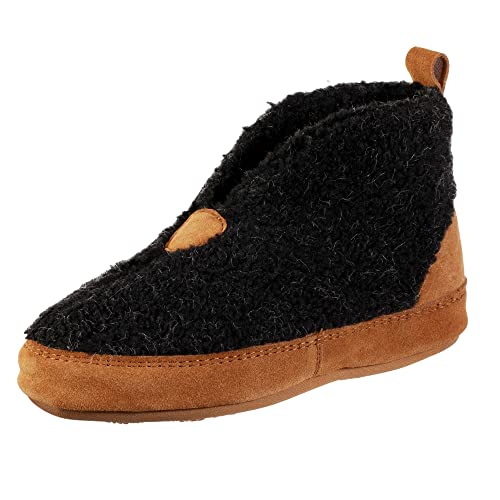
Acorn Women’s Recycled Ela Boot Slipper — Best Women’s Boot Slipper
The Acorn Ela boot closes the guide on the women’s side: a boot-cut slipper with a recycled Berber upper and lining, from a maker with a long history in exactly this category. The Berber texture does practical work beyond looks — its looped, lofty surface traps air for warmth and hides the dust and pet hair that light-colored slippers advertise. The recycled materials are stated in the listing itself, which this guide notes as a factual construction point rather than a halo: buyers who prioritize recycled content can verify it right in the product name. The boot cut gives the ankle coverage this category demands.
Strengths
- Boot cut with Berber upper and lining — ankle coverage plus a warm, forgiving, soil-hiding texture.
- Recycled materials stated in the listing, for buyers who shop on that criterion.
- Acorn is a slipper specialist; its women’s boot lasts are designed for the category, not adapted from shoes.
Trade-offs
- The verified cache record’s title does not enumerate sole construction, so this guide does not claim a sole specification — check the listing if outdoor sole duty is your deciding factor.
- Berber’s lofty warmth is a winter virtue and a shoulder-season excess; hot-natured wearers should take the Haflinger instead.
- Women’s sizing only in this line — unisex shoppers have the Glerups and Haflinger picks above.
Key specs (from the verified listing): women’s boot slipper; recycled Ela construction with Berber upper and lining; Black colorway in the verified listing.
The Ela is the women’s boot pick for cold houses and early mornings — the slipper that makes a January kitchen feel less like an expedition. Pair it with the same sizing care as every pick here.
Best for: women’s cold-house wear, recycled-content shoppers / Not suited for: buyers who need a verified hard outdoor sole specification
Check on Amazon — check the current price on Amazon before ordering.
Comparison Table
| Pick | Badge | Key spec | Best for |
|---|---|---|---|
| Glerups Wool Boot, Rubber Sole | Best Overall | Natural wool boot, rubber sole | All-day cold-house wear |
| Haflinger AT Nordkap | Best Hard Sole | Pure wool, hard sole, EU sizing | Workshops and concrete floors |
| Sorel Falcon Ridge II | Best Winter-Brand Slipper | Winter boot maker’s slipper line | Brand-trust men’s buyers |
| Guide Gear 10″ Slipper Boots | Best Tall Boot | 10″ suede shaft | Drafty houses, max coverage |
| LongBay Men’s Bootie | Best for Wet Quick Trips | Nylon upper, rubber outsole | Back-door duty, large sizes |
| Acorn Ela Boot Slipper | Best Women’s Boot | Recycled Berber upper and lining | Women’s cold-house wear |
The table divides cleanly into wool specialists (Glerups, Haflinger, Acorn), winter-brand and outdoor-heritage designs (Sorel, Guide Gear), and the synthetic utility pick (LongBay). The buying guide below helps you choose which family your winter actually belongs to.
How to Choose Rugged Winter Slippers
The sole decides what “rugged” means
Read any slipper listing sole-first. A rubber outsole — Glerups, LongBay — is the all-weather answer: grip on wet and frosty surfaces, a waterproof barrier between your sock and the ground, and durability measured in winters. A hard sole — the Haflinger’s — trades wet grip for armor: it is the choice for concrete, gravel edges, and workshop debris. Foam and fabric soles, whatever the upper above them, make a slipper an indoor-only object; several winter-marketed slippers hide exactly that under a boot-shaped upper. If the listing does not state the sole, that silence is your answer about its ambitions.
Wool vs suede vs synthetic uppers
Wool is the connoisseur’s winter upper: it insulates across a wide temperature range, manages moisture vapor so feet stay dry-feeling, resists odor naturally, and — in felted form — holds a structured shape for years. Its enemies are soaking water and moths in storage. Suede, the Guide Gear’s choice, is the traditional boot material: durable, structured, warm with a lining, and happiest kept dry-ish and brushed. Synthetics like the LongBay’s nylon invert the priorities: unbeatable around water and dirt, easy to clean, but less breathable across a full day and quicker to hold odor. Match the upper to your dominant condition — dry cold, working floors, or wet trips — rather than to a generic idea of warmth.
Coverage: the ankle is the border
Heat escapes where slippers end. Low mules are furniture for warm houses. For genuinely cold floors and drafts, the coverage ladder runs: high-top slipper, then bootie, then the tall boot. Each step seals more of the ankle and calf, and each step costs a little convenience in kicking them off. Be honest about your house: if you wear a sweater indoors from November to March, you are a boot household, and the Glerups, Guide Gear, and Acorn cuts exist for you.
Weight and structure: slippers you notice, in a good way
Rugged models weigh more than lounge slippers, and first-time buyers sometimes read that as a flaw. It is the substance you are paying for: rubber and hard soles, dense felted wool, and suede shafts are materials with mass, and their absence is precisely what makes cheap slippers feel like nothing — in every sense — by February. The right expectation is footwear-like: a pair you are aware of when you pick it up and unaware of when you wear it, because the structure distributes itself properly on the foot. If a “rugged” slipper weighs the same as a hotel slipper, one of the two descriptions is lying, and it is not the hotel’s.
Sizing: this category’s trap
Rugged slippers are sold in an unusual number of size-specific listings — three picks in this guide land on particular sizes (the Haflinger’s EU 43, the Guide Gear’s 12D, the LongBay’s 13-14) — and in European sizing that many buyers mis-convert. Wool also relaxes: felted uppers give slightly across the first weeks, so a snug-but-not-tight first fit is usually correct, while a loose first fit becomes a sloppy tenth fit — and a sloppy fit in a rugged slipper is not merely uncomfortable, it is the difference between a secure step on a frosty porch and a slipper that stays behind on the stair while your foot continues without it. When between sizes in wool, follow the maker’s guidance in the listing rather than habit, and never order a size-variant listing without confirming the size selector actually changed.
Why Feet Get Cold Indoors: The Short Physics of Warm Slippers
Understanding indoor cold explains every design choice in this guide. Feet lose heat indoors mainly by conduction: a cold floor is a heat sink, and every step presses your foot’s warmth into it through whatever sole you are standing on. This is why sole thickness and density matter more indoors than insulation loft in the upper — a thick rubber or hard sole is a thermal break, while a thin foam sole compresses to nothing under your heel and lets the floor drink heat all day. It is also why standing still on cold tile — cooking, workshop benches, sink duty — chills feet faster than walking: walking flexes muscles and pumps warm blood; standing gives conduction uninterrupted time.
The second mechanism is the draft layer: cold air pools at floor level in real houses, several degrees colder than the air at head height, and it flows. Low slippers live entirely inside that cold river; boot shafts climb out of it. The third mechanism is moisture: feet sweat modestly all day, damp socks conduct heat far faster than dry ones, and a slipper that traps that moisture — unbreathable synthetics worn for twelve hours — progressively refrigerates its owner. Wool’s entire reputation rests on interrupting this third mechanism while its felted density helps with the first. When a pick in this guide seems overbuilt, it is usually because it is answering one of these three mechanisms properly rather than decorating a bedroom shoe with winter colors.
The Second-Pair Strategy (and the Gift Question)
Experienced cold-house households rarely own one pair of winter slippers; they own a system. The classic arrangement pairs an indoor specialist — wool, clean, long-lived — with a door pair that absorbs weather, mud, and haste. The door pair is chosen for sole and cleanability rather than luxury, which is why the LongBay pattern recurs in this guide’s advice: nylon and rubber forgive what wool should never be asked to. The system costs less than it sounds, because each pair lives an easier life: the wool pair never gets soaked, the door pair never needs to be presentable, and both outlast a single pair asked to do everything.
As gifts, rugged slippers succeed for a specific reason: they are sized like shoes but forgiving like clothing, useful daily for months, and — in the wool boot class — genuinely handsome objects. The cautions are the ones this guide has repeated: confirm the recipient’s size from their shoes rather than guessing, prefer the rubber-soled unisex classics when unsure of taste, and include the household context — a Glerups boot given to a warm-apartment friend is a lovely slipper worn twice a year, while the same box in a farmhouse becomes the most-used gift of the winter. Rugged slippers are equipment; gift them to people whose winter needs equipment.
Rugged Slippers by Household: Four Winters, Four Answers
The cabin and the farmhouse
Unheated or stove-heated buildings with wood and stone floors are the native habitat of this entire category. The day runs from cold floors at dawn to outdoor chores in every hour, and footwear never really comes off. Wool boots with rubber soles — the Glerups pattern — or tall suede boots for the draftiest buildings are the correct equipment, and two-pair rotation is worth its cost here because the slippers genuinely work a full shift daily. This is also the household where the LongBay-by-the-door system shines: one pair lives clean indoors, one pair absorbs the weather.
The workshop and garage household
When winter life includes a basement shop, a garage bench, or a greenhouse, the sole question outranks everything: concrete, grit, and the occasional dropped tool end foam soles quickly and make soft slippers a minor hazard. The Haflinger’s hard sole is this household’s pick, with the understanding that it will be heard throughout the house — a fair trade for footwear that treats a workshop floor as home turf. Wool’s breathability matters here too, because workshop hours are active hours.
The drafty apartment and the old rental
City winter has its own version: radiators that roast one wall and ignore the floors, single-pane drafts, and a landlord’s thermostat. Coverage is the answer — the Acorn boot or the Glerups — but hard soles deserve a second thought in multi-unit buildings, where your footsteps are your neighbor’s ceiling. Rubber soles are the polite rugged choice here: full outdoor capability for the corner store run, silence for the downstairs neighbor.
The dog household
Dog ownership rewrites the slipper brief around one recurring event: the unscheduled outdoor trip, in weather, at speed, at 5 a.m. The winning setup is a slip-on bootie with a real sole living permanently by the door — the LongBay pattern — because the pair you must lace, tug, or think about is the pair you will skip, once, in socks, on ice. Wool pairs serve the rest of the day; the door pair serves the dog. Households with muddy-paw traffic should also weigh how each upper cleans: nylon forgives in seconds what suede remembers for a season.
Reading slipper listings critically
This category’s listings reward a skeptical eye, and three habits protect you. First, find the sole in the listing’s own words; if the sole material appears nowhere, the maker is not proud of it, and you have learned what you needed. Second, translate warmth adjectives into constructions: “cozy” and “plush” describe a feeling in a photograph, while “wool,” “suede,” “rubber sole,” and a stated shaft height describe a product — buy the nouns. Third, treat every size-variant listing as a form to be filled in, not a product to be clicked: the verified picks in this guide include an EU 43, a 12D, and a 13-14, and in each case the link is the doorway, not the destination. A minute of this skepticism at the listing saves the fortnight of a return.
How to Care for Rugged Winter Slippers
- Air them nightly. Wool especially repays a night on a rack or by (not on) a heat source: it dries the day’s moisture and resets the fibers. Two pairs in rotation, if you wear them all day, doubles both pairs’ lives.
- Keep outdoor duty honest. Rubber and hard soles tolerate trips outside; uppers still collect salt, grit, and damp. Brush soles at the door — the habit that keeps “indoor-outdoor” from becoming “outdoor dirt, indoors.”
- Clean by material. Felted wool: spot clean with cool water and minimal soap, air dry away from direct heat. Suede: dry brush, a suede eraser for marks, never soak. Nylon synthetics: the easy ones — wipe or gentle wash per the listing’s guidance.
- Deodorize with air and time, not heat. A day outdoors in shade fixes most wool odor; baking any slipper by a stove ruins glues, foams, and fibers alike.
- Store summer-clean and moth-aware. Wool goes into summer storage clean — soil is what moths eat — in a breathable bag, ideally with cedar. Check them in October, not during the first cold snap.
- Retire honestly. A compressed, paper-thin footbed or a sole worn smooth has finished its service; rugged slippers earn replacement the way work boots do, by wearing out in the open.
Common Buying Mistakes
Buying a boot shape with a bedroom sole. The commonest trap in the category: a handsome boot upper on foam that dissolves at the first wet porch. Sole first, always.
Ignoring size-variant listings. Clicking the first link and ordering whatever size it lands on accounts for a remarkable share of returns in this category. Confirm the size selector, every time.
Choosing fleece when your life is wool-shaped. Thin synthetic fleece feels warm in the store and clammy by lunch in all-day wear. If the slippers are for dawn-to-dark winter duty, wool’s moisture behavior is worth its premium.
Expecting slippers to be boots. Even the rugged picks here are for trips measured in minutes — woodpile, mailbox, dog, porch. Sustained outdoor work in snow wants actual winter boots; slippers that pretend otherwise soak, chill, and die young.
Forgetting the floor you actually have. Hard soles drum on hardwood and can mark delicate finishes; rubber soles grip tile that defeats felt. Match the sole to your floors as well as your weather.
Buying medical-claim footwear for a warmth problem. Listings that headline therapy language are selling something other than winter readiness. This guide’s picks sell warmth, coverage, and soles — the verifiable things.
Final Recommendation
For most rugged-winter briefs, the Glerups Wool Boot is the complete answer: felted wool, ankle coverage, rubber sole, and construction that outlasts trends. Working-floor households should take the Haflinger Nordkap and its hard sole; drafty-house traditionalists, the Guide Gear 10-inch boots; brand-loyal men, the Sorel Falcon Ridge II with a careful read of its listing; wet-duty and large-size buyers, the LongBay booties; and women in cold houses, the Acorn Ela Boot. Whichever pick you take, buy it before the first cold snap rather than during it: the good wool models in popular sizes are seasonal stock, and the household that orders in October chooses from the whole shelf while the household that orders in the first frost takes what is left. Related guides in this program: Best Mens Winter Slippers, Best Mens Winter Boot Slippers, Best Winter Slippers Women, Best Mens Wool Slippers, and Best German Slippers.
Frequently Asked Questions
Can I really wear rugged slippers outside?
For short trips, yes — that is the category’s point. Rubber and hard soles handle porches, paths, woodpiles, garages, and frozen grass for the minutes those jobs take. What they cannot do is sustained outdoor wear: no slipper here is waterproof like a boot, insulated for hours of standing in snow, or built for hiking. Think of the sole as a bridge between the house and its immediate surroundings, not a passport to winter.
Why does everyone recommend wool for winter slippers?
Because wool solves three winter problems at once: it insulates even when slightly damp, it moves moisture vapor away from the foot so all-day wear stays comfortable, and it resists odor naturally across a season of daily use. Felted wool adds a fourth virtue — structure that lasts for years. Synthetics beat wool on water tolerance and price, which is why the LongBay exists in this guide, but for dry-cold, all-day wear, wool remains the material to beat.
How should rugged winter slippers fit?
Snugger than lounge slippers. A working slipper that flops at the heel is a trip hazard on stairs and useless on a woodpile path. Wool felt gives slightly in the first weeks, so an initially firm fit usually settles into the right one; suede and nylon give less, so order those true to size. And because several listings in this category are size-specific variants, verify the size selector shows your size before you pay — not after the box arrives.
Are hard-soled slippers bad for hardwood floors?
They are louder, and any sole — hard or soft — scratches floors when it carries grit, so the door-brushing habit matters more than the sole material. A clean hard sole on clean hardwood is fine; a gritty rubber sole is not. If your floors are soft-finished and precious, lean toward the rubber-soled picks and keep every sole brushed.
What is the difference between slipper boots and regular boot slippers?
Mostly shaft height and intent. A boot slipper covers the ankle; a tall slipper boot like the Guide Gear’s 10-inch design covers the lower calf as well, sealing the draft gap that trousers leave. The taller the shaft, the warmer the arrangement and the less kick-off convenience. Choose by your house’s draft reality, not by looks.
Should I buy slippers a size up for thick socks?
Only if thick socks are genuinely your daily system. A slipper sized for a sock you wear twice a month will flop for the other twenty-eight days, and a floppy rugged slipper fails at its one job — secure footing during chores. Wool models in particular are designed to be worn with a normal sock or bare feet, the wool itself supplying the insulation a thick sock would add. If you do size for socks, choose a boot cut whose shaft holds the foot in place, and test the fit on stairs before committing.
Are expensive wool slippers worth it compared with budget fleece?
It depends on hours worn, which is the honest metric. Worn an hour each evening in a heated house, budget fleece is perfectly rational and the wool premium buys little. Worn twelve hours a day through a cold-house winter, the comparison inverts: wool’s moisture management, odor resistance, and multi-year structure make it the cheaper cost-per-winter choice, while budget fleece typically compresses and sours within a season of that duty. Buy for the life your slippers will actually live.
Can I wear rugged slippers on icy surfaces?
Carefully, briefly, and without illusions. A rubber outsole grips wet and frosty ground better than foam or felt, and for the porch, the path, and the woodpile that margin is the point of this category. But no slipper is an ice device: there are no lugs, no spikes, and no ankle support rated for a fall. On genuinely icy ground, shorten the trip, keep a hand free for the railing, and let real winter boots handle anything beyond the door’s immediate surroundings. Rugged describes construction, not invincibility.
What should I wear under rugged winter slippers — socks or bare feet?
Both work, and the materials lean different ways. Wool slippers are designed for bare feet or thin socks — the wool itself is the insulation and moisture manager, and a thick sock inside mostly duplicates it while loosening the fit. Suede and synthetic booties are more sock-agnostic. The one combination to avoid is a thick sock inside a slipper you sized barefoot: the crowding compresses insulation, restricts circulation, and can leave feet colder than the thinner arrangement. Fit the system you will actually wear daily.
How many winters should a good pair last?
Felted wool and hard-sole models, cared for as this guide describes, commonly serve for many winters — their construction is closer to footwear than to disposable comfort goods. Memory foam and light synthetic models trade that longevity for softness and price, and a season or two of heavy duty is a fair expectation. Cost per winter, not cost per pair, is the honest comparison.


