Disclosure: airfryerkitchensupply.com is reader-supported. When you buy through links on our site, we may earn an affiliate commission at no extra cost to you.
Where to buy
Every linked pick below is sold on Amazon, which is where most parents compare nursery textiles because the listing states the fibre content, dimensions and care instructions in full. Open the listing, confirm the size and the exact fibre breakdown rather than trusting the headline, and check price on Amazon at checkout time, because colours and sizes move independently. A quality baby blanket is a small purchase that gets washed hundreds of times, so the listing details matter more than the product photo.
- Burt’s Bees Baby Organic Cotton Reversible Blanket — check price on Amazon
- Bleu La La Organic Cotton Heritage Knit Baby Quilt Blanket (Sky Blue) — check price on Amazon
- HardNok Muslin Baby Blanket, Organic Cotton Blend (Cacao Stripe) — check price on Amazon
- Konssy 3-Pack Muslin Baby Swaddle Blankets, 47 x 47 Inches — check price on Amazon
- American Baby Company Heavenly Soft Chenille Sherpa Receiving Blanket (30 x 35 Inches) — check price on Amazon
- Wugugu Cotton Ribbed Knit Newborn Receiving Quilt, 30 x 40 Inches — check price on Amazon
If you are shopping for the best quality baby blankets, the first honest point is that quality in this category is not softness on day one. Almost every baby blanket feels lovely in the packet. Quality shows up at wash thirty: whether the edges still lie flat, whether the knit has bagged, whether the fleece still feels plush instead of thin and pilled, and whether the blanket still covers a growing baby rather than only a newborn in a bassinet.
The second point is that one blanket cannot do every job. A large muslin square swaddles, shades a stroller and works as a light summer layer. A quilted cotton blanket handles tummy time and supervised floor play. A knit blanket adds warmth and becomes the keepsake that gets photographed and kept. This guide therefore picks across those jobs, favouring blankets whose listings state real dimensions and real fibre content, because a blanket that will not say what it is made of is telling you something.
Safety framing matters too, and it is stated plainly here rather than buried: blankets belong in cribs only in line with current safe-sleep guidance, which means a bare sleep space for young infants and blankets used for supervised time, stroller walks and layering as babies grow.
In this guide
Quick Picks
Burt’s Bees Baby Organic Cotton Reversible Blanket — Best Overall: A quilted, reversible organic cotton blanket at 30 x 40 inches that works from tummy time to toddler naps and washes without losing its shape. — Check on Amazon
Bleu La La Organic Cotton Heritage Knit Baby Quilt Blanket (Sky Blue) — Best Knit Heirloom: A textured heritage knit in organic cotton that reads as a keepsake blanket, with the weight and finish to be kept after the nursery years. — Check on Amazon
HardNok Muslin Baby Blanket, Organic Cotton Blend (Cacao Stripe) — Best Large Muslin: A 43 x 43 inch, six-layer jacquard muslin in an organic cotton blend, woven with its stripe rather than printed, and boxed for gifting. — Check on Amazon
Konssy 3-Pack Muslin Baby Swaddle Blankets, 47 x 47 Inches — Best for Swaddling: Three large 47 x 47 inch cotton muslin swaddles, the size that actually stays tucked, in a multi-pack built for rotation through the wash. — Check on Amazon
American Baby Company Heavenly Soft Chenille Sherpa Receiving Blanket (30 x 35 Inches) — Best Warm Receiving Blanket: A chenille and sherpa receiving blanket at 30 x 35 inches, the warm, plush option for carriers, strollers and cold-weather outings. — Check on Amazon
Wugugu Cotton Ribbed Knit Newborn Receiving Quilt, 30 x 40 Inches — Best Ribbed Knit Value in Kind: A ribbed cotton knit receiving quilt at 30 x 40 inches with a crochet-style knit look, a lighter knit alternative to the heritage pick. — Check on Amazon
How These Picks Were Chosen
Picks were chosen by construction first and marketing last. Each candidate had to state its dimensions on the listing, state its fibre content without hiding behind words like ‘natural’ or ‘premium’, and be a complete blanket rather than a swaddle wrap with no other use, a lovey with a small attached square, or a bedding set padded out with sheets and bumpers. Variants of the same blanket in different colours were treated as one product and deduplicated, so the six picks are six genuinely different blankets.
Within that filter, the shortlist was balanced across the three constructions that actually last: quilted cotton, muslin and knit. Fleece was kept to a single pick because fleece quality varies the most and the weakest fleece blankets pill within a month. Where a listing disclosed something a buyer might not expect, such as a synthetic fill inside an organic cotton shell, that is said openly in the review rather than smoothed over, because that is exactly the kind of detail a quality-focused buyer is paying to know.
The 6 Best Quality Baby Blankets

Burt’s Bees Baby Organic Cotton Reversible Blanket — Best Overall
This is the blanket to buy when you want one well-made cotton blanket rather than a drawer of mediocre ones. The listing describes a breathable organic cotton quilted blanket, reversible, at 30 by 40 inches, positioned for tummy time, strollers and cribs. Quilting is the detail that earns it the top spot: stitched-through quilting keeps the fill distributed through hundreds of washes instead of letting it clump into corners, which is where cheaper padded blankets fail first.
Strengths
- Quilted construction keeps the fill evenly spread wash after wash
- Reversible face gives two looks and hides light marks on one side
- 30 x 40 inch size stays useful well past the newborn stage
Trade-offs
- The listing states a polyester fill inside the cotton shell, so it is not an all-cotton blanket
- Quilted weight is a layer for supervised time and strollers, not a summer swaddle
- One size only, so it will not double as a large swaddle wrap
| Size | 30 x 40 inches, as stated on the listing |
| Construction | Quilted and reversible, as stated on the listing |
| Shell fibre | Organic cotton, as stated on the listing |
| Fill | Polyester fill, as stated on the listing |
The honest disclosure in this listing is the fill: the shell is organic cotton while the fill is polyester. That is not a scandal, it is how most quilted blankets are built, but many brands hide it and this one states it, which is itself a quality signal.
In daily use the quilting also makes this the easiest of the six to lay flat on a floor for tummy time, because it does not curl at the corners the way single-layer blankets do, and it folds into a stroller without the bulk of a knit.
Best for: parents who want one durable everyday cotton blanket / Not suited for: buyers who need the entire blanket, fill included, to be cotton
Check on Amazon — check the current price on Amazon and confirm the exact variant, size and colour on the listing before you order.

Bleu La La Organic Cotton Heritage Knit Baby Quilt Blanket (Sky Blue) — Best Knit Heirloom
Knit is where quality differences are easiest to feel and hardest to fake. This Bleu La La listing describes a 100 percent organic cotton heritage knit textured baby quilt blanket, and the textured knit is the point: a patterned knit holds its structure, drapes over a stroller without sliding off, and looks deliberate in photographs in a way flat fleece never does. It is the pick for buyers who want the blanket that gets kept.
Strengths
- Textured heritage knit drapes well and resists the baggy look of plain knits
- Organic cotton throughout, as stated on the listing
- Heirloom finish suits gifting and keepsake use
Trade-offs
- Knit construction needs gentler washing than quilted cotton or muslin
- Open knit texture is not the warmest option per gram in deep winter
- Colour-specific listing, so check the exact colourway before ordering
| Construction | Heritage knit, textured, as stated on the listing |
| Fibre | 100% organic cotton, as stated on the listing |
| Colourway | Sky Blue on this listing |
A knit blanket lives or dies by its edges and its recovery after washing. Textured knits like this one tend to hold their shape better than loose stockinette knits because the pattern itself adds structure, and cotton knit softens rather than pills, which is why cotton knits age more gracefully than synthetic knits.
Treat it as the good blanket rather than the workhorse: it will handle regular use happily, but the muslin and quilted picks below are the ones to send to daycare or leave in the car.
Best for: gifting, photographs and a blanket worth keeping / Not suited for: buyers who want a blanket they can wash harshly every day
Check on Amazon — check the current price on Amazon and confirm the exact variant, size and colour on the listing before you order.

HardNok Muslin Baby Blanket, Organic Cotton Blend (Cacao Stripe) — Best Large Muslin
Most muslin blankets are two layers and feel it. This HardNok listing describes a 43 by 43 inch blanket built from a six-layer jacquard weave in an organic cotton blend, which puts it in a different class: enough body to work as a light crib quilt and floor layer, while keeping the breathability that makes muslin the fabric parents reach for in warm weather. The stripe is woven in as jacquard, not printed on, so it cannot fade off the surface.
Strengths
- Six-layer jacquard weave gives muslin real body and warmth range
- 43 x 43 inch size swaddles, covers a stroller and works as a floor layer
- Woven stripe cannot wash or rub off the way printed patterns can
Trade-offs
- It is an organic cotton blend, not 100 percent organic cotton
- Six layers dry more slowly than a two-layer muslin
- Too much blanket for a small bassinet in hot weather
| Size | 43 x 43 inches, as stated on the listing |
| Construction | 6-layer jacquard weave, as stated on the listing |
| Fibre | Organic cotton blend, as stated on the listing |
| Presentation | Curated gift box, as stated on the listing |
Muslin improves with washing in a way few fabrics do: the weave relaxes and the blanket gets softer and more absorbent, which is why a well-made muslin is often the most-used blanket in the house by month three. The six-layer build here trades a little of that gauzy lightness for versatility.
Note the labelling honesty point: this is an organic cotton blend. The listing says so plainly, and this guide repeats it plainly, because a buyer comparing it against a 100 percent organic option deserves the distinction rather than a headline that blurs it.
Best for: warm climates and parents who want one blanket for many jobs / Not suited for: buyers who require 100 percent organic fibre
Check on Amazon — check the current price on Amazon and confirm the exact variant, size and colour on the listing before you order.

Konssy 3-Pack Muslin Baby Swaddle Blankets, 47 x 47 Inches — Best for Swaddling
Swaddling fails for a mundane reason: the blanket is too small. At 47 by 47 inches, these Konssy muslins give you the extra fabric that keeps a swaddle tucked instead of popping open at the first strong kick, and the three-pack format matches how swaddles are really used, one on the baby, one in the wash and one clean in the drawer. The listing states 100 percent cotton muslin, soft and breathable, for use from newborn to toddler.
Strengths
- 47 x 47 inch size gives real swaddling margin for learning hands
- Three-pack rotation matches how often swaddles get washed
- Cotton muslin softens and gets more absorbent with washing
Trade-offs
- Large size is more fabric than a small newborn needs in a bassinet
- Muslin alone is a light layer, not a cold-weather blanket
- Multi-pack means committing to one style in three colours or prints
| Size | 47 x 47 inches, as stated on the listing |
| Pack | 3-pack, as stated on the listing |
| Fibre | 100% cotton muslin, as stated on the listing |
The practical test of a swaddle blanket is the third night, not the first: whether you can get a secure wrap half asleep, and whether the fabric grips itself enough to hold without being stretchy. Woven muslin grips; jersey stretches and loosens. That is why large woven muslins remain the default recommendation for parents learning to swaddle.
Once swaddling days end, these keep working as stroller shades, nursing covers, burp cloths in a pinch and light summer blankets, which is where the three-pack value really lands.
Best for: new parents learning to swaddle and heavy wash rotation / Not suited for: buyers shopping for a single premium keepsake blanket
Check on Amazon — check the current price on Amazon and confirm the exact variant, size and colour on the listing before you order.
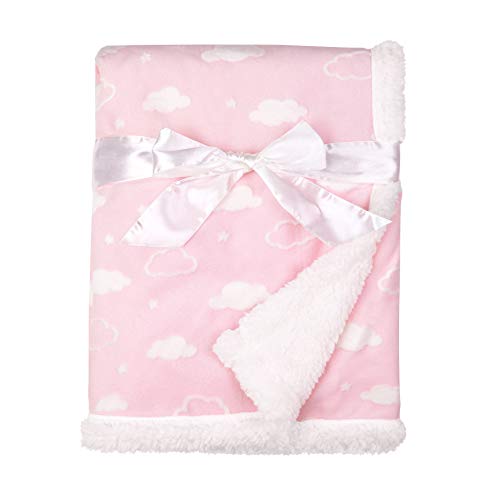
American Baby Company Heavenly Soft Chenille Sherpa Receiving Blanket (30 x 35 Inches) — Best Warm Receiving Blanket
Every set of quality blankets needs one genuinely warm one, and this is it. The American Baby Company listing describes a chenille sherpa receiving blanket at 30 by 35 inches, positioned for carriers, strollers and travel. Chenille on one face and sherpa on the other gives it the plush warmth that cotton constructions cannot match, in the smaller receiving size that tucks around a baby in a carrier without trailing fabric everywhere.
Strengths
- Chenille and sherpa faces give real warmth for outings
- 30 x 35 inch receiving size tucks neatly into carriers and strollers
- From an established baby textiles brand with consistent sizing
Trade-offs
- Synthetic plush fabrics need cooler washing to stay soft
- Smaller size is outgrown as a floor or crib layer sooner
- Too warm for summer use or heated rooms
| Size | 30 x 35 inches, as stated on the listing |
| Construction | Chenille with sherpa, as stated on the listing |
| Colourway | 3D Pink on this listing |
Warmth blankets are the ones most often bought badly, because plush fabric hides weak construction until the first washes flatten it. The check that matters is density: a sherpa that still feels lofty after washing, and edges that are finished rather than simply hemmed once. Buy this for the job it is sized for, outings and carriers, and it earns its place.
Keep it out of hot washes and high dryer heat, which are what kill plush fabrics, and it will stay soft far longer than the same blanket washed carelessly.
Best for: cold-weather outings, carriers and stroller walks / Not suited for: warm climates or buyers who want an all-cotton set
Check on Amazon — check the current price on Amazon and confirm the exact variant, size and colour on the listing before you order.

Wugugu Cotton Ribbed Knit Newborn Receiving Quilt, 30 x 40 Inches — Best Ribbed Knit Value in Kind
This listing describes a cotton ribbed knit newborn receiving quilt at 30 by 40 inches, styled as a crochet-look knit for strollers, swaddling and crib use. Ribbed knit is a sensible middle path: it has more give and drape than a woven blanket, a lighter hand than a heavy heritage knit, and a texture that looks handmade without asking handmade care. It is the knit for everyday use rather than the keepsake shelf.
Strengths
- Ribbed knit drapes and stretches gently for swaddling and stroller use
- 30 x 40 inch size covers the main everyday jobs
- Crochet-style texture looks crafted at a practical tier
Trade-offs
- Listing does not state an organic certification, so treat it as conventional cotton
- Ribbed knits can snag on rough fasteners and jewellery
- Less structured than the quilted pick for floor play
| Size | 30 x 40 inches, as stated on the listing |
| Construction | Ribbed knit, crochet style, as stated on the listing |
| Fibre | Cotton, as stated on the listing; organic status not stated |
The labelling note for this pick matters: the listing says cotton and does not claim organic, so this guide does not claim it either. In a roundup titled quality rather than organic, a well-made conventional cotton knit is a legitimate pick, and including it keeps the set honest about the price and fibre range real parents actually buy across.
Use it as the everyday knit, the one that lives on the stroller, and save the heritage knit above for the occasions where the blanket is part of the picture.
Best for: an everyday knit for stroller and nursery use / Not suited for: buyers who want certified organic fibre
Check on Amazon — check the current price on Amazon and confirm the exact variant, size and colour on the listing before you order.
Comparison Table
| Pick | Badge | Key spec | Best for |
|---|---|---|---|
| Burt’s Bees Baby Organic Cotton Reversible Blanket | Best Overall | 30 x 40 in quilted organic cotton, polyester fill | parents who want one durable everyday cotton blanket |
| Bleu La La Organic Cotton Heritage Knit Baby Quilt Blanket (Sky Blue) | Best Knit Heirloom | Organic cotton heritage knit, textured | gifting, photographs and a blanket worth keeping |
| HardNok Muslin Baby Blanket, Organic Cotton Blend (Cacao Stripe) | Best Large Muslin | 43 x 43 in, 6-layer jacquard muslin, organic blend | warm climates and parents who want one blanket for many jobs |
| Konssy 3-Pack Muslin Baby Swaddle Blankets, 47 x 47 Inches | Best for Swaddling | 47 x 47 in cotton muslin, 3-pack | new parents learning to swaddle and heavy wash rotation |
| American Baby Company Heavenly Soft Chenille Sherpa Receiving Blanket (30 x 35 Inches) | Best Warm Receiving Blanket | 30 x 35 in chenille sherpa receiving blanket | cold-weather outings, carriers and stroller walks |
| Wugugu Cotton Ribbed Knit Newborn Receiving Quilt, 30 x 40 Inches | Best Ribbed Knit Value in Kind | 30 x 40 in cotton ribbed knit | an everyday knit for stroller and nursery use |
How to Choose the Best Quality Baby Blankets
Start with the job, not the fabric
Decide which job you are buying for before you compare fabrics. Swaddling needs a large, grippy woven square. Floor and tummy time need a flat, quilted layer that does not bunch. Warmth on outings needs plush or knit weight. A keepsake needs finish and fibre worth keeping. Most disappointment in this category comes from asking one blanket to do all four jobs and judging it harshly at each.
A practical starter set is three blankets across three constructions: a large muslin, a quilted cotton and one warm or knit blanket. That set covers the first year in most climates, washes in rotation, and costs less than six blankets bought one at a time as each gap appears.
Read the fibre claim like a contract
Fibre wording is where quality is won or lost on paper. ‘Organic cotton’ should mean the cotton is organic; if a fill or backing is synthetic, a good listing says so, as the top pick here does. ‘Blend’ means part of the fibre is something else, which is fine when it is stated and misleading when it is buried. ‘Cotton feel’ and ‘natural fibres’ without a percentage are not fibre claims at all, and a blanket that will not state a percentage should be passed over.
Percentages also predict care. High cotton content breathes, softens with washing and tolerates warm water. Synthetic plush keeps warmth and colour but hates high heat. Knowing which you are holding tells you how to wash it before the label fades.
Match construction to climate
Muslin is the warm-climate and summer construction: breathable, light and more absorbent with every wash. Quilted cotton is the all-season middle, warm enough for air-conditioned rooms and structured enough for floors. Knit sits between, with drape and moderate warmth. Plush and sherpa are cold-weather tools and are genuinely too much in a heated room or a summer stroller.
Layering beats thickness. Two light blankets trap more adjustable warmth than one heavy blanket, and they let you respond when a room warms up mid-nap by removing a layer instead of unwrapping the baby entirely.
Sizing, explained in inches
Receiving blankets around 30 by 35 to 30 by 40 inches tuck into carriers and strollers and work as changing and floor layers in the early months. Swaddles need 44 to 47 inches square to hold a wrap securely. Anything described only as ‘large’ without dimensions is a gamble, and dimensions are one of the easiest quality checks on a listing because honest brands print them.
Think one stage ahead. A blanket sized only for a newborn in a bassinet has a short working life, while the 40-inch class keeps working as a toddler nap and travel blanket, which is where cost per use is really decided.
Washing without ruining the blanket
Wash before first use, and wash like colours together, because new cotton sheds lint and dyes can move in the first cycles. Muslin and quilted cotton tolerate regular warm washing and improve with it. Knits prefer gentler cycles and reshaping while damp. Plush and sherpa want cool water and low dryer heat; high heat is what turns sherpa rough and flat.
Skip heavy fabric softener on muslin and towels-adjacent cotton, because coating the fibres reduces the absorbency you bought the fabric for. A blanket that comes out of the wash flat, square and soft is a quality blanket; one that twists, bags or roughens is telling you its construction was thin from the start.
Budget tiers, honestly framed
Quality in this category does not scale linearly with price. The honest tiers are construction tiers: a single-layer fleece sits at the budget end and behaves like it, a well-made muslin or quilted cotton sits in the middle and covers most families completely, and a heritage knit in full organic cotton sits at the premium end, where you are paying for fibre, finish and keepsake value. Money spent moving from the first tier to the second buys visible durability; money spent moving to the third buys fibre and feeling, which are real but different goods.
The mistake is mixing the tiers’ expectations: judging a budget fleece by knit standards, or expecting a premium knit to survive daycare washing like a muslin. Choose the tier by the job, then buy the best construction inside it, using the fibre and dimension checks from the earlier sections.
Blankets for the car, the bag and the grandparents
Secondary locations eat blankets. The car seat, the changing bag and a grandparent’s house each need a blanket that lives there permanently, because the alternative is the good blanket being forgotten in whichever location you have just left. Assign the most washable, most replaceable pick, usually a muslin, to each satellite location and keep the nursery set intact.
This is also where a multi-pack quietly proves itself: one purchase that stations a blanket in three places ends the daily logistics of moving a single blanket around a baby’s whole world, and spares the keepsake knit from ever being left on a train.
When to replace a baby blanket
Replace, or retire to gentler duty, when the edges fray into loose threads, when quilting stitches break and fill starts to migrate, when a knit has bagged so far it no longer lies flat, or when fleece stays rough and thin after a proper wash. A blanket used for supervised time should be inspected the way you inspect any baby textile: seams first, then surface, then size against a growing child.
Retirement need not mean the bin. A worn blanket that is no longer a first-choice layer still works as a pram liner for messy outings, a car blanket for emergencies, or the comfort object a toddler drags around precisely because it is worn. Quality bought well gets demoted through jobs instead of discarded.
Photographs, keepsakes and the blanket’s second life
Some blankets are bought partly as future objects: the one in the newborn photographs, the one folded into a memory box, the one a teenager is handed, half embarrassed, at a family gathering. There is nothing sentimental or foolish about weighting that in a purchase, provided it is done knowingly. A keepsake blanket should be bought as a keepsake, in a fibre and finish that age gracefully, cotton knit rather than fleece, and then protected from the daily rotation so it survives to become the object it was bought to be.
The practical system is a division of labour: the keepsake appears for photographs, visits and gentle use, while the workhorses absorb the feeding, the floor and the washing machine’s weekly attention. Families who run that division end up with both things they wanted, a blanket with a history and a set of blankets that did the work, instead of one exhausted blanket that did everything and kept nothing.
Buying ahead: sales, sizes and the unborn baby
Baby blankets are heavily gifted and heavily discounted, which tempts buyers to stockpile before a baby arrives. Buy ahead by construction and size, not by cuteness: the large sizes and the washable constructions in this guide will be right whenever they are needed, while a pile of newborn-sized novelties has an expiry date measured in weeks. If a sale price is doing the persuading, let it persuade you toward the 40-inch class and the multi-packs, where the long-term value already lives.
For the unborn baby specifically, hold back one slot in the set. Babies arrive with preferences no registry predicts, a hatred of being swaddled, a love of one texture, and the family that left room to respond buys its last blanket with evidence instead of forecasts. That restraint is the most expert move in this entire category.
One more check before you buy
Consider the gift question separately from the everyday question. A blanket given at a shower is judged on presentation and longevity, which is why the boxed six-layer muslin and the heritage knit sit in this guide beside honest workhorses. If you are buying for someone else’s baby, choose the construction you would still be pleased to own at the toddler stage, in a colour that survives being photographed against any nursery.
Colour is a practical decision, not only an aesthetic one. Mid-tone and patterned blankets hide the everyday marks of feeding and floor time between washes, while white and pale blankets show every one and get washed harder and more often, which shortens their life. If you love the pale blanket, buy it as the good blanket and let a darker workhorse take the daily wear.
Think about where the blanket will live. A blanket that stays on the stroller faces sun, rain and pavement; one that stays in the nursery faces mostly the wash. Assigning homes to blankets, stroller, car, nursery and the good one, spreads wear across the set and means the right blanket is already where the moment happens.
Finally, judge cost per year rather than cost per purchase. A blanket that works from the first week to the third birthday, through hundreds of washes, is cheaper in every honest accounting than a bargain blanket replaced twice. That is the whole argument of this guide: buy the construction, the fibre and the size properly once, and the category stops needing your attention.
Registries deserve a word, because many of these blankets will be bought from one. If you are building a registry, ask for constructions, not quantities: one large muslin set, one quilted cotton, one warm or knit blanket, in that order. Ten blankets of one kind from ten guests is a common outcome and a useless one; three kinds across the list covers a year.
Twins and siblings change the arithmetic in one direction only: rotation matters more, not less. The multi-pack logic in this guide scales, and the constructions that wash fastest, muslin first, earn a larger share of the set when two babies are generating laundry at twice the rate.
A note on hand-me-downs: a quality blanket is one of the few baby products that genuinely passes between children, because its failure modes are visible, fraying, thinning, broken stitches, rather than hidden. Inspect a passed-down blanket by those visible signs, wash it thoroughly, and a good one can serve a second family as honestly as it served the first.
Storage between children is worth doing properly: wash, dry fully, and store loosely in a breathable bag rather than compressed in plastic. Cotton and knit both resent being stored damp or crushed for years, and the blanket you packed away well is the one that comes out feeling like a purchase you do not have to repeat.
Finally, trust the boring signals. In a category sold on softness and photographs, the quality markers are dimensions in inches, fibre percentages, construction words like quilted and jacquard, and fills disclosed even when they complicate the headline. A brand that prints those has already told you how it behaves when nobody is watching.
Temperature regulation is worth a calm word, because it drives many blanket purchases and much anxiety. Babies are dressed and layered for the room they are in, and a blanket is one layer among several, added and removed as conditions change. The constructions in this guide give you a ladder of warmth, muslin at the light end, quilted cotton and knit in the middle, sherpa at the top, and the skill is climbing the ladder in small steps rather than reaching for the heaviest rung whenever the evening feels cool.
A blanket’s edge is its handshake. Run your fingers along the binding or hem of any blanket you are considering keeping: it should be even, secure and free of loose threads, because edges are where washing stress concentrates and where small fingers and toes explore. Several picks in this guide earned their places partly on finishing, and it is the first physical check to make when any blanket, bought or gifted, arrives in the house.
How to Use These Blankets Safely, Stage by Stage
A quality blanket used at the wrong stage is still the wrong blanket. This is the practical sequence most parents end up following, from newborn weeks through the toddler year, using the constructions in this guide.
Newborn weeks: swaddle with the large muslin. Use the 47-inch class muslin for swaddling, with the baby’s hips able to move and the wrap snug at the chest rather than tight at the legs. Stop swaddling at the first sign of rolling, and keep the sleep space bare in line with current safe-sleep guidance.
Floor time: lay the quilted blanket flat. Put the quilted pick on the floor for tummy time and supervised play. Its stitched construction stays flat instead of bunching under elbows and knees, which makes early pushing-up easier and keeps the surface predictable.
Outings: match the blanket to the weather. Take the muslin for warm days as a shade and light layer, and the chenille sherpa or knit for cold walks. In a carrier or car seat, tuck the blanket over the secured harness rather than under the baby, and keep fabric away from the face.
Feeding and travel: give one blanket the messy jobs. Designate the most washable blanket, usually the muslin or quilted cotton, as the feeding, burp and travel blanket. Concentrating the mess on the workhorse keeps the knit and keepsake blankets in good condition for years.
Toddler stage: promote the big blankets. As swaddling ends, the large muslin becomes a summer nap layer and the quilted and knit blankets become nap and reading blankets. This second career is exactly why buying adequate sizes at the start pays off.
Rotate and inspect weekly. Rotate blankets through the wash so wear spreads evenly, and check edges, quilting stitches and knit snags as you fold. Catching a loose edge early is a two-minute repair; ignoring it is how a good blanket unravels in the drum.
Common Buying Mistakes
Buying six of the same blanket. A drawer of identical fleece blankets covers one job six times and the other jobs not at all. Spread the same budget across muslin, quilted and warm constructions and every situation in the first year is covered.
Trusting softness in the packet. Packet softness is often a surface finish that washes out. Construction, fibre percentages, dimensions and edge finishing predict month six far better than the first touch in a shop.
Ignoring the fill disclosure. An organic cotton shell can hide a synthetic fill, which may be perfectly acceptable, but you should know it before you buy rather than discover it on the care label. Listings that state the fill plainly are the ones to trust.
Buying newborn-only sizes. The smallest receiving sizes are outgrown as working blankets within months. Unless you specifically need a carrier-size blanket, the 40-inch class is the smallest size that keeps earning its place.
Washing everything on hot with high dryer heat. One careless routine can flatten sherpa, twist a knit and shrink a swaddle in a single afternoon. Sort by construction, not just by colour, and the whole set lasts longer.
Putting blankets into the sleep space against guidance. No blanket quality justifies ignoring safe-sleep guidance for young infants. Use these blankets for supervised time, outings and layering as babies grow, and keep early sleep spaces bare.
Final Recommendation
For most families, start with the Burt’s Bees Baby quilted reversible blanket as the everyday anchor and add the Konssy muslin three-pack for swaddling and rotation; those two purchases cover the majority of the first year. Add the HardNok six-layer muslin if your climate is warm or you want one blanket that shifts between swaddle, shade and light quilt.
Choose the Bleu La La heritage knit when the blanket is a gift or a keepsake, the American Baby Company chenille sherpa when cold-weather outings are the gap, and the Wugugu ribbed knit when you want an everyday knit without paying keepsake prices. However you combine them, buy across constructions, read the fibre line in full, and size for the toddler the baby is about to become.
Shop the verified picks: Burt’s Bees Baby Organic Cotton Reversible Blanket · Bleu La La Organic Cotton Heritage Knit Baby Quilt Blanket (Sky Blue) · HardNok Muslin Baby Blanket, Organic Cotton Blend (Cacao Stripe) · Konssy 3-Pack Muslin Baby Swaddle Blankets, 47 x 47 Inches · American Baby Company Heavenly Soft Chenille Sherpa Receiving Blanket (30 x 35 Inches) · Wugugu Cotton Ribbed Knit Newborn Receiving Quilt, 30 x 40 Inches
Related guides on this site: Best Baby Blankets Organic · Best Cotton Baby Blankets · Best Crochet Baby Blankets · Best Baby Receiving Blankets · Best Baby Stroller Blankets
Frequently Asked Questions
What actually makes a baby blanket good quality?
Construction that survives washing: quilting that keeps fill in place, knit edges that stay flat, muslin woven densely enough to soften rather than thin. Stated dimensions and full fibre percentages on the listing are the most reliable paper signals, because brands with nothing to hide print both.
How many baby blankets do I actually need?
Three to five working blankets cover most households: a large muslin set for swaddling and rotation, a quilted cotton for floor and everyday use, and one warm or knit blanket for outings. More than that is usually duplication of the same job rather than better coverage.
Are organic baby blankets worth it?
They can be, when the claim is complete and stated plainly. Check whether the fill and backing share the claim or are synthetic, as with the quilted pick in this guide, and decide with the full picture. A well-made conventional cotton blanket, honestly labelled, beats a vague organic claim every time.
Which blanket is safest for sleep?
For young infants, current safe-sleep guidance is a bare sleep space with no loose blankets. Use the blankets in this guide for supervised floor time, stroller walks, feeding and layering as your baby grows and guidance changes with age, and follow your pediatrician’s advice for your child’s stage.
Why does muslin get softer while plush gets rougher?
Muslin is a woven cotton that relaxes and opens with washing, becoming softer and more absorbent. Plush synthetics rely on a raised surface that heat and harsh washing flatten and roughen. The fabric is not failing mysteriously; the wash routine decides which direction it ages.
What size blanket is best for swaddling?
A square around 44 to 47 inches gives enough fabric to wrap securely and stay tucked as babies get stronger. Smaller receiving sizes are useful for carriers and changing, but they are the most common reason home swaddles come undone.
Can I put a baby blanket in a crib?
For young infants, follow current safe-sleep guidance: a bare sleep space, with blankets used for supervised time, outings and layering as babies grow. As children become toddlers, household practice changes with age and development; your pediatrician’s guidance for your child’s stage outranks any product guide, including this one.
What is the best blanket fabric for sensitive skin?
Smooth, stated-fibre fabrics washed before use are the practical answer: organic or conventional cotton muslin and quilted cotton are the usual choices, because their contents are declared and they tolerate the frequent gentle washing sensitive skin demands. Avoid any blanket whose fibre content is vague, whatever its marketing says about gentleness.


