Disclosure: airfryerkitchensupply.com is reader-supported. When you buy through links on our site, we may earn an affiliate commission at no extra cost to you.
Where to buy
Start with the two safest all-round choices: the JA COMFORTS Duck Feather Down Bed Pillows, 2-Pack for a classic hotel-style feather pillow at a mid tier, or the Pacific Coast Goose Feather and Down Firm Gusseted Pillows, King, Set of 2 if you sleep on your side and need a firmer, gusseted build. Back and combination sleepers should compare the Continental Bedding 50/50 Down Feather Pillow and the KUSNUG 3-Chamber Goose Feather Down Pillows, Queen, Set of 2, while softness seekers should look at the Three Geese White Goose Feather Down Pillows, Set of 2. Every pillow below was cross-checked against Amazon’s catalog data before receiving a link; sizes and pack counts vary by listing option, so check the current price on Amazon for the exact size and quantity you intend to order.
Introduction: Why Feather and Down Still Win the Pillow Argument
Shoppers hunting for the best feather and down pillows are usually chasing a specific feeling that synthetic pillows imitate but rarely match: a pillow that molds to your head and shoulders when you lie down, stays moldable when you change position at 3 a.m., breathes instead of trapping heat, and can be punched back into shape in the morning instead of slowly dying into a flat mat. Feather provides the structure — the springy, resilient support that keeps a pillow from bottoming out — while down provides the softness, the fine clusters that fill the gaps around your neck and make the surface feel forgiving. The blend between those two materials is the single most important decision in this category, and it is why two pillows that look identical in photographs can sleep completely differently.
This guide compares six verified feather and down pillows across the realistic range: a duck feather and down two-pack that anchors the mid tier, a firm gusseted goose feather design for side sleepers, a gusseted puredown hotel-style pillow, a soft-medium goose feather two-pack, a true 50/50 down-and-feather blend for balance seekers, and a three-chamber design that hides a supportive feather core inside soft outer layers. We explain fill blends in plain language, match firmness to sleeping position, and cover the care routine — fluffing, airing, protectors, and washing — that decides whether a natural-fill pillow delights you for years or disappoints you by spring. We are also honest about who should not buy feather and down at all, because for some sleepers the right answer is a different fill entirely.
In this guide
Quick Picks
- Best Overall — JA COMFORTS Duck Feather Down Bed Pillows, 2-Pack: standard/queen pillows with a high filling weight, a 600 thread count double-layer downproof shell, and a 10% duck down blend over a feather base. Check the current price on Amazon
- Best for Side Sleepers — Pacific Coast Goose Feather and Down Firm Gusseted Pillows, King, Set of 2: a firm, gusseted hotel-collection build made to fill the shoulder gap for side and back sleepers. Check the current price on Amazon
- Best Gusseted Hotel Style — puredown Goose Feathers and Down Pillow, King, Set of 2: a gusseted hotel-collection pillow in a 100% cotton cover for sleepers who like structured edges. Check the current price on Amazon
- Best Soft-Medium — Three Geese White Goose Feather Down Pillows, Set of 2: a soft, medium-firm goose feather down pillow in a 600 thread count cotton cover for back and combination sleepers. Check the current price on Amazon
- Best Balanced Blend — Continental Bedding 50/50 Down Feather Pillow: an even down-and-feather blend in a breathable 300 thread count cotton shell, positioned by its maker for side-sleeper support with a softer surface. Check the current price on Amazon
- Best Chamber Design — KUSNUG 3-Chamber Goose Feather Down Pillows, Queen, Set of 2: a three-chamber construction in an organic cotton cover, medium firm, and listed as machine washable. Check the current price on Amazon
How These Picks Were Chosen
We built this shortlist from the feather and down pillows whose identities we could verify through Amazon data available to this site: each pick’s name, size, and pack configuration were matched against the catalog title returned for its ASIN, and only confident matches received links. That verification step matters in this category more than most, because pillow listings are notorious for quiet specification drift — a “goose down pillow” that is mostly feather, a thread count that applies to a different size, a two-pack photo on a one-pack listing. Where a specification appears in this guide — a blend percentage, a thread count, a gusset — it comes from the verified catalog title or is described in general terms rather than invented.
Our judging criteria were the ones that decide real sleep. Fill blend first: the ratio of down to feather sets softness against support, and each review states the blend its catalog data supports. Shell quality second: feather quills migrate through loose weaves, so downproof construction — the JA COMFORTS’ double-layer design is the clearest example here — is a genuine quality marker, not a luxury detail. Construction third: gussets and chambers change how a pillow holds its shape against your shoulder, and the reviews explain which sleepers each construction serves. Finally, care: natural fill rewards owners who fluff and air it, and the KUSNUG’s confirmed machine washability is noted because it changes the ownership bargain.
One exclusion deserves stating. Pure down pillows with very high fill powers are a different, premium category with a different feel — cloud-soft, with feather’s structure absent — and a different price logic. This guide is about feather and down pillows as the market actually buys them: blended fills that balance softness, support, and value. If you want a pure-down cloud, shop that category deliberately rather than expecting a blend to imitate it.
The 6 Best Feather and Down Pillows Reviewed
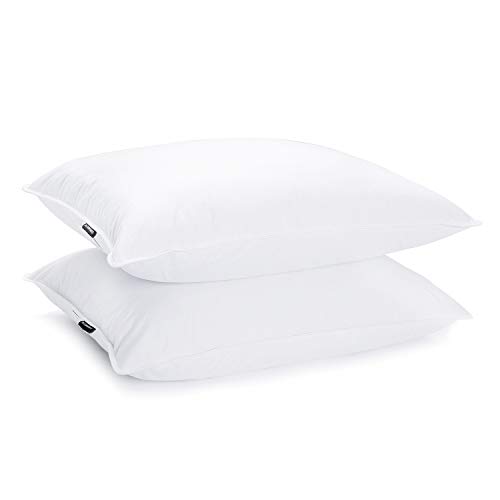
JA COMFORTS Duck Feather Down Bed Pillows, 2-Pack — Best Overall
The JA COMFORTS two-pack is the classic feather pillow formula executed with the details that separate good ones from lumpy ones: a high filling weight so the pillow has real substance, a blend its catalog title states as 10% duck down over the feather base, and — most importantly — a 600 thread count, double-layer downproof shell designed to keep quills inside the pillow instead of migrating into your pillowcase and your shoulder. That shell is why this pillow earns the top spot for most buyers: feather pillows fail by poking and thinning, and this design attacks both failure modes directly. The feel is the traditional one — moldable, supportive, with a soft down-kissed surface — in a standard/queen size that fits the cases most households already own.
Strengths
- Double-layer downproof shell in a high thread count directly addresses quill poke-through.
- High filling weight gives the moldable, substantial feel feather buyers are seeking.
- Standard/queen two-pack format fits existing cases and both sides of the bed.
Trade-offs
- A feather-forward blend is firmer and more structured than down-rich pillows; cloud-seekers should look at softer picks.
- Natural fill needs regular fluffing to keep its loft — it is a maintained pillow, not a fit-and-forget one.
- Duck fill can carry a faint natural scent when new that airing resolves; down purists may prefer goose.
Choose the JA COMFORTS if you want the archetypal feather pillow experience — supportive, moldable, hotel-classic — with the shell quality that makes it last. It suits back and combination sleepers best, and side sleepers with narrower shoulders; broad-shouldered side sleepers should step to the gusseted Pacific Coast below.
Best for: most back and combination sleepers wanting the classic feather pillow / Not suited for: sleepers wanting a very soft, down-cloud feel
Check the current price on Amazon
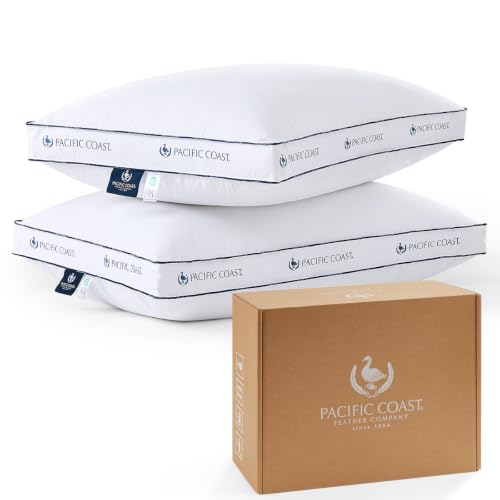
Pacific Coast Goose Feather and Down Firm Gusseted Pillows, King, Set of 2 — Best for Side Sleepers
Side sleeping is a geometry problem: your head sits a shoulder’s width above the mattress, and the pillow must fill that gap firmly enough to keep your neck level without feeling like a board. The Pacific Coast answers with the two features side sleepers should shop for — a firm fill and a gusset, the fabric sidewall that lets the pillow keep its full height at the edges instead of tapering to a wedge. Its catalog title describes a goose feather and down firm pillow in a gusseted hotel-collection build for side and back sleepers, in a king size set of two. The gusset is the detail to understand: it converts fill into usable loft exactly where a side sleeper’s shoulder demands it.
Strengths
- Firm fill plus gusseted construction holds loft at the edges for shoulder-gap support.
- Goose feather and down blend from an established bedding maker.
- King size suits wide beds and sleepers who travel across the pillow at night.
Trade-offs
- Firm is firm: stomach sleepers and softness seekers will find it too much pillow.
- King size needs king cases and can crowd a smaller bed.
- Like all natural fill, it expects fluffing to maintain the loft its design promises.
If you wake with a cricked neck from pillows that collapse by 2 a.m., this is the corrective pick in the guide — structured, high, and honest about its firmness. Pair it with a protector, fluff it each morning, and it will hold side sleepers level long after soft pillows have surrendered.
Best for: side sleepers, especially on king beds, who need firm loft / Not suited for: stomach sleepers and anyone wanting a soft pillow
Check the current price on Amazon
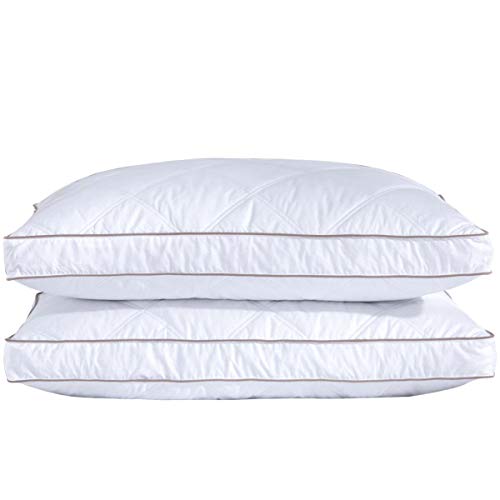
puredown Goose Feathers and Down Pillow, King, Set of 2 — Best Gusseted Hotel Style
The puredown takes the same gusseted logic as the Pacific Coast and presents it in the hotel-collection style the brand is known for: goose feathers and down in a 100% cotton cover, gusseted for shape retention, in a king set of two. Where the Pacific Coast leans explicitly firm, the puredown is the gusseted option for sleepers who want structure without committing to the firmest fill in the guide — the pillow for the guest room you actually want guests to praise, and for your own bed if you like a pillow that presents a tidy, squared profile and supports back and side positions in turn.
Strengths
- Gusseted construction keeps a squared, supportive shape through the night.
- 100% cotton cover in the breathable hotel style.
- King two-pack suits primary bedrooms and guest rooms alike.
Trade-offs
- Gusseted structure feels more formal and less scrunchable than a classic soft pillow.
- King dimensions are oversized for twin and full beds.
- Natural fill care — fluffing, airing, protectors — applies in full.
Choose the puredown when you want the made-bed look and the supported feel of a good hotel pillow at home, and when your sleeping positions vary enough that a structured all-rounder beats a specialist. It is the most presentable pillow in this guide and one of the most versatile.
Best for: back and combination sleepers wanting hotel-style structure / Not suited for: sleepers who hug and scrunch their pillow into shape
Check the current price on Amazon

Three Geese White Goose Feather Down Pillows, Set of 2 — Best Soft-Medium
The Three Geese two-pack occupies the gentle end of this guide: a soft goose feather down pillow described in its catalog title as medium firm with soft support, wrapped in a 600 thread count 100% cotton cover, in a queen/standard size. That high thread count matters here for the same reason as on the JA COMFORTS — a tight weave is a downproof weave — and the softer fill profile suits the sleepers the firmer picks fail: back sleepers who want their head cradled rather than propped, combination sleepers who roll to their stomach for part of the night, and anyone whose current pillow feels like furniture rather than bedding.
Strengths
- Soft-medium profile cradles back sleepers without pushing the head forward.
- 600 thread count cotton cover helps contain feather quills.
- Queen/standard sizing fits the most common cases and beds.
Trade-offs
- Too soft for broad-shouldered side sleepers, who will sink through to the mattress.
- Soft natural fill needs the most diligent fluffing in this guide to keep its loft.
- Not the choice for sleepers who like a high, structured pillow.
Pick the Three Geese if your complaint about feather pillows has always been that they feel like sleeping on a sandbag. This is the blend tuned toward the down side of the family’s character — forgiving, quiet, and easy to love — while the cotton shell keeps the feather side of the bargain honest.
Best for: back and combination sleepers wanting soft-medium support / Not suited for: side sleepers needing firm, high loft
Check the current price on Amazon

Continental Bedding 50/50 Down Feather Pillow — Best Balanced Blend
Most feather and down pillows are feather-dominant with a minority of down for surface softness. The Continental Bedding inverts the emphasis to an even split — a 50/50 down feather blend, stated plainly in its catalog title — inside a breathable 300 thread count cotton shell, positioned by its maker as fluffy, hotel quality, and supportive enough for side sleeping. The even blend is a genuinely different feel: more of down’s lightness and surface give, with feather’s resilience still present underneath. For buyers who have tried a standard feather pillow and found it a touch too dense, this is the calibrated step toward softness that keeps real support.
Strengths
- True 50/50 blend gives more down character than feather-dominant pillows.
- Breathable cotton shell suits warm sleepers within the natural-fill family.
- Fluffy profile with enough structure for back and moderate side sleeping.
Trade-offs
- Down-rich blends compress more under the head than feather-rich ones; heavy side sleepers may bottom out.
- A 300 thread count shell is breathable but less of a quill barrier than the 600-count picks.
- Single-pillow purchase format — outfitting a bed takes multiples.
Choose the 50/50 if you are deliberately shopping the middle of the category: softer than the classics, more supportive than a pure-down cloud, and breathable in a way foam never is. It is also the connoisseur’s pick here — the one for buyers who know blends exist on a spectrum and want to stand in its center.
Best for: balance seekers wanting equal down softness and feather support / Not suited for: heavy side sleepers needing maximum firm loft
Check the current price on Amazon

KUSNUG 3-Chamber Goose Feather Down Pillows, Queen, Set of 2 — Best Chamber Design
The KUSNUG solves the blend dilemma with architecture instead of ratios: a three-chamber construction that places a supportive feather core in the middle chamber and softer fill in the outer chambers your face actually touches. Its catalog title adds two practical distinctions — an organic cotton cover and machine washability — plus a medium-firm profile in a queen set of two aimed at side, back, and stomach sleepers. Chamber designs are how the category’s engineers cheat the trade-off: support in the middle, softness on the surface, and a pillow that holds its intended shape better than a single mixed fill.
Strengths
- Three-chamber design separates support (core) from softness (surface) instead of compromising between them.
- Machine washable per the catalog title — rare and valuable in natural fill.
- Organic cotton cover and a medium-firm profile that suits mixed sleeping positions.
Trade-offs
- Chambered pillows feel more structured and less scrunchable than classic single-fill pillows.
- Machine washing natural fill still demands a thorough dry; plan the laundry day.
- Medium firm is a compromise — dedicated firm or soft seekers have their own picks above.
Pick the KUSNUG if you share a bed with different sleep styles, if you change positions through the night, or if washability has been the thing keeping you out of natural fill altogether. It is the most engineered pillow in this guide and the easiest to live with week to week.
Best for: combination sleepers and anyone wanting washable natural fill / Not suited for: traditionalists who want a classic scrunchable feather pillow
Check the current price on Amazon
Comparison Table
| Pick | Badge | Key spec | Best for |
|---|---|---|---|
| JA COMFORTS Duck Feather Down, 2-Pack | Best Overall | 10% duck down blend, 600 TC double-layer downproof shell, standard/queen | Classic feather pillow feel |
| Pacific Coast Goose Feather and Down, King 2-Pack | Best for Side Sleepers | Firm, gusseted, hotel collection | Firm loft for side sleeping |
| puredown Goose Feathers and Down, King 2-Pack | Best Gusseted Hotel Style | Gusseted, 100% cotton cover, hotel collection | Structured all-round support |
| Three Geese White Goose Feather Down, 2-Pack | Best Soft-Medium | Soft medium-firm, 600 TC cotton cover, queen/standard | Cradling softness |
| Continental Bedding 50/50 Down Feather | Best Balanced Blend | 50/50 down-feather blend, 300 TC cotton shell | Equal softness and support |
| KUSNUG 3-Chamber, Queen 2-Pack | Best Chamber Design | 3-chamber build, organic cotton cover, machine washable | Combination sleepers |
How to Choose a Feather and Down Pillow
Start with your sleeping position, because it dictates the firmness and loft you need more than any other variable. Side sleepers need the pillow to fill the space between ear and shoulder while holding the neck level: firm fills and gusseted constructions — the Pacific Coast pattern — serve them, and broad shoulders need more of both. Back sleepers need medium support that cradles the head without pushing it forward into a chin-tuck: the classic and soft-medium picks live here. Stomach sleepers need the least pillow of all — low and soft — and within this guide should choose the softest option or honestly consider whether a thin pillow of any fill serves them better. Combination sleepers, the majority, should buy for their dominant position and favor moldable or chambered designs that adapt to the others.
Next, decode the blend. A feather-dominant pillow (a small down percentage, like the JA COMFORTS’ stated 10% down) sleeps supportive, structured, and durable, with down acting as a softening surface. As the down share rises toward the Continental’s even 50/50, the pillow grows lighter, softer, and more compressible — delightful for back sleepers, risky for heavy side sleepers who can sink through it. Pure down is a different category entirely. Neither end of the spectrum is better; the blend is a dial, and your position and build set where it should point. While you decode, read shells with the same care: thread count and downproof construction decide whether quills stay inside, and double-layer shells like the JA COMFORTS’ are the strongest signal a listing can send.
Then consider construction. A classic pillow is a single chamber of mixed fill — scrunchable, moldable, traditional. A gusset adds a sidewall that preserves edge loft, which is structure a side sleeper can feel. Chambers separate fills by function, trading scrunchability for engineered consistency. And size is not vanity: king pillows belong on king beds and wide shoulders; standard and queen sizes serve everyone else and fit the cases already in your linen closet. Finally, be honest about allergies and ethics in your own household: natural fill is not the right choice for every sleeper, quality makers offer certified and responsibly sourced fills, and a household member with a genuine feather sensitivity settles the question regardless of this guide’s enthusiasm.
How to Fluff, Air, and Care for Feather and Down Pillows
Natural fill lives or dies by a simple routine. Every morning, fluff the pillow properly: grab opposite ends and compress and release it like an accordion, then repeat from the other pair of ends, and finish by karate-chopping a crease along the middle if you like a sculpted look — thirty seconds that redistribute fill, restore loft, and break up the moisture your head deposited overnight. Every week or two, air the pillows for a few hours in a dry, breezy spot out of harsh direct sun; natural fill absorbs humidity as you sleep, and airing is how it lets that humidity go, which keeps both loft and freshness where they belong.
Use a pillow protector under the case from day one — it is the single highest-value habit in this category, intercepting the oils and moisture that age fill, and it washes in minutes while the pillow itself should wash rarely. When washing is needed, follow the individual pillow’s label: the KUSNUG is listed as machine washable, and for any washable natural-fill pillow the rules are a large-capacity machine, mild detergent, an extra rinse, and above all a complete dry — tumble low with clean dryer balls or tennis balls to break up fill clumps, and do not return the pillow to the bed until it is dry through the core, because damp down and feather mildew quickly and smell memorable. Pillows that are not labeled washable should be spot-cleaned and aired, and professionally cleaned when truly necessary.
Judge lifespan honestly. A quality feather and down pillow, fluffed daily and protected always, serves for years; its end comes when fluffing no longer restores loft or the fill stays flat by morning. Rotating two pillows per person — alternating nights — extends both lives and gives each a full day to air. Treat the pillows in this guide that way and the category’s old-fashioned reputation for longevity is one you will experience rather than merely read about.
Fill Power, Fill Weight, and the Numbers That Actually Matter
Pillow listings deploy numbers selectively, and knowing which ones carry meaning protects you from paying for the wrong ones. Fill power — the volume an ounce of down occupies — is the headline number in pure-down products, where higher means loftier, lighter warmth. In feather-dominant blends like most of this guide, fill power matters less because feathers do not loft the same way; what predicts your experience instead is fill weight, the sheer amount of material in the pillow, which the JA COMFORTS signals with its high filling weight positioning. A generously filled feather pillow feels substantial and supportive; a skimped one feels like a bag of good intentions.
Thread count is the second number, and here it genuinely matters, though not for softness snobbery: a tighter weave is a better quill barrier. The 600 thread count shells on two picks in this guide are functional specifications, and the Continental’s 300 count shell trades some of that barrier for breathability — a trade, not a flaw, provided you know you are making it. The third number to read carefully is the blend percentage itself, and to read it in the right direction: “10% down” means 90% feather, which is a support pillow with a softened surface, while “50/50” is the true midpoint. Listings that trumpet “down and feather” without percentages are asking you not to ask; the picks in this guide were chosen partly because their catalog data states or clearly implies the blend’s character.
Finally, treat size labels as numbers too. “Standard/queen” and “queen/standard” describe the same versatile middle size in this category’s listings; king is meaningfully longer and belongs on king beds. Buying king pillows for a queen bed is a common, harmless-looking error that crowds the bed and bunches cases — measure your cases before you fall for a two-pack’s apparent value.
Feather and Down vs Foam, Latex, and Down-Alternative
An honest guide admits its category’s rivals. Memory foam molds more precisely than feather and holds a fixed contour all night; sleepers who never move may prefer it, but it sleeps warmer, cannot be fluffed or reshaped, and its feel is love-it-or-hate-it in a way feather rarely is. Latex is springy, supportive, and durable, with a pushback character utterly unlike feather’s moldable give; it suits sleepers who want consistent height without maintenance. Down-alternative microfiber imitates down’s softness at low prices and serves allergy-sensitive households well, but it compresses into flatness faster than natural fill and lacks feather’s structural spring entirely.
Feather and down’s enduring advantages are the trio no rival combines: moldability you can reshape nightly, breathability that manages heat and moisture, and longevity measured in years when the simple care routine is kept. Its honest costs are maintenance (fluffing is not optional), a possible faint natural scent when new, quill management that depends on shell quality, and unsuitability for households with genuine feather sensitivities. Choose the category with eyes open on both lists and you will be satisfied; choose it as a default because it sounds traditional, or reject it because it sounds old-fashioned, and you are shopping by slogan instead of by sleep.
Common Buying Mistakes
The first mistake is buying by the word “down” on a feather pillow — read the blend, because a 10% down pillow and a 50/50 pillow are different products wearing similar names. The second is matching firmness to your hopes instead of your sleeping position, which is how side sleepers end up on soft pillows and wake up folded. The third is skipping the protector and then blaming the fill for aging that moisture caused. The fourth is washing a natural-fill pillow casually and returning it to the bed damp — the one error that can ruin a good pillow in a single weekend. The fifth is expecting any pillow, however good, to fix neck or shoulder pain that has medical dimensions; a pillow is sleep equipment, not treatment, and persistent pain deserves professional attention.
Troubleshooting: Lumps, Flatness, and Poking Quills
Three complaints account for nearly every unhappy feather pillow owner, and all three have honest fixes. Lumps usually mean moisture: the fill has absorbed humidity and clumped. Air the pillow for a full day, fluff it aggressively in both directions, and if it is labeled washable, a proper wash and complete tumble dry with dryer balls restores distribution. Flatness by morning usually means the pillow is under-filled for your position — a side sleeper on a soft-medium pillow will flatten it nightly — and the fix is a firmer or gusseted pick, not more fluffing; if a once-good pillow has gone flat after years, that is end-of-life, not a defect. Poking quills point to the shell: check for a worn spot or seam gap, add or replace the protector as a second barrier, and if poking is widespread on a new pillow, the shell was never adequate — return it and choose a downproof, higher-thread-count design like the ones heading this guide.
Pillows for Travel, Reading, and the Rest of the Day
A note for readers who love this category beyond the bedroom: a feather and down pillow you have retired from nightly duty — still sound, merely softer than you now prefer — makes an excellent reading pillow, travel pillow for car trips, and guest-overflow pillow, because moldable fill adapts to car seats, armchairs, and floor cushions in a way rigid foams cannot. Keeping one in the car for long drives and one folded in the linen closet for movie nights extends the value of a good purchase by years. The reverse does not work — a pillow bought as a casual cushion rarely has the fill weight or shell quality for nightly sleeping — so let pillows retire downward through the household’s jobs, and buy new for the bed, where the specification matters most.
Final Recommendation
Most shoppers should start with the JA COMFORTS two-pack: it is the classic feather pillow with the shell quality that makes the classic worth owning. Side sleepers should go straight to the firm, gusseted Pacific Coast, and structure lovers to the gusseted puredown. If your instinct is softness, the Three Geese will feel like a relief; if your instinct is balance, the Continental 50/50 is the connoisseur’s middle path; and if your household mixes sleep styles or demands washability, the KUSNUG’s chambers settle the argument. Choose by position and blend, protect and fluff what you buy, and the best feather and down pillows will give you the moldable, breathable, quietly luxurious sleep that has kept this category alive through every foam fashion of the last fifty years. For nearby alternatives, see Best Duck Feather And Down Pillows, Best Ethical Feather Down Pillows, and Best Faux Down Pillows.
One closing thought for the undecided: if you have slept happily on hotel feather pillows for years and unhappily on every foam pillow you have owned, believe that evidence. Your body has already run the experiment this guide describes, and the two-pack at the top of it is the closest verified match to the pillow you keep remembering. Trust that evidence, choose your blend by your sleeping position, and give the pillow its first full week — fluffed each morning, aired once, and slept on with an open mind — before you decide what it really is.
Pairing Pillows Across the Bed: Singles, Doubles, and Guest Rooms
Most beds need a small system, not a single pillow decision. The common pattern that works: two sleeping pillows chosen by each sleeper’s position and blend preference from this guide, kept in protectors and good cases, and — if you like the dressed look — purely decorative shams in front that nobody sleeps on and therefore nobody needs to choose by firmness. Couples with different sleep styles should not compromise on one pillow type; a side sleeper’s firm gusseted pillow and a back sleeper’s soft-medium pillow can share a bed happily, especially when matching cases give the bed a unified look. The KUSNUG’s mixed-position design exists precisely for households that would rather not think this hard, and it is a legitimate shortcut.
Guest rooms deserve their own logic. Guests arrive with unknown positions and preferences, so the guest bed rewards the versatile middle: a gusseted hotel-style pillow like the puredown, or the chambered KUSNUG, reads as thoughtful to almost everyone, and a second, softer pillow per guest lets them self-select. What guests notice most is not firmness at all but freshness — pillows that have been aired, protected, and fluffed — which is one more reason the care routine in this guide pays for itself across every bed in the house.
The First Week With a New Feather and Down Pillow
Set expectations for a short breaking-in period. Unpack the pillow and let it expand and air for several hours before the first night; shipping compression is temporary, and a thorough fluffing restores the loft the fill was designed to have. Any faint natural scent from duck or goose fill is normal on day one and fades with airing — judge the pillow on night three, not hour one. Through the first week, fluff it each morning and notice how the fill settles into your personal shape; feather and down pillows personalize with use in a way foam never does, and the pillow at day seven is the pillow you actually bought. If by the end of the week the loft or firmness is clearly wrong for your position, that is a fit mismatch to exchange, not a defect to endure — return windows exist for exactly this judgment.
Responsible Sourcing and Certifications, Without the Slogans
Because down and feather are animal-derived materials, many buyers reasonably ask how they were obtained, and the bedding industry has built certification systems to answer. You will encounter labels indicating that fill was collected as a by-product of the food industry and was not live-plucked, and third-party standards that audit supply chains for exactly those practices. This guide will not paste certification claims onto individual picks that their verified catalog data does not state — that discipline is the same one we applied to blends and thread counts — but it will tell you how to shop your values in this category: read the individual listing for its sourcing statements, favor makers who state their standards plainly and specifically over those who use vague nature imagery, and recognize that certified, traceable fill is one of the legitimate reasons one pillow costs more than another that looks identical.
If animal-derived fill is simply not for your household, say so without apology and shop the down-alternative category deliberately — our related guides below include a faux down option — rather than buying a token amount of feather and feeling conflicted nightly. Pillows are intimate purchases; the right one is the one you can sleep on in every sense.
Frequently Asked Questions
What is the difference between feather and down?
Feathers are the flat, quilled plumage that gives a pillow structure, spring, and support. Down is the soft cluster underneath that plumage, with no quill, that gives a pillow its soft, insulating, cloud-like surface feel. Most pillows in this category blend the two so you get support from the feather and softness from the down.
Which firmness is best for side sleepers?
Firm, with loft that survives the night — ideally in a gusseted construction that keeps the pillow’s height at its edges. The Pacific Coast pick in this guide is built to exactly that brief. Soft pillows let a side sleeper’s head sink until the neck angles downward, which is the geometry to avoid.
Do feather pillows poke through their cases?
Feather quills can migrate through loose-weave shells, which is why shell quality matters. High thread counts and double-layer downproof construction — featured on picks in this guide — are designed to keep quills inside. A protector adds a second barrier and is recommended regardless.
How often should I replace a feather and down pillow?
When daily fluffing stops restoring its loft and it stays flat or lumpy by morning. With protectors, airing, and rotation, a quality natural-fill pillow typically serves for years — considerably longer than most synthetic pillows — but treat performance, not a calendar, as the signal.
Can I wash a feather and down pillow?
Only if its label says so — the KUSNUG in this guide is listed as machine washable. If you wash one, use a large machine, mild detergent, an extra rinse, and dry it completely on low heat with dryer balls before use. Pillows without a washable label should be spot-cleaned, aired, and protected so washing stays rare.
Why does my new feather pillow smell slightly?
A faint natural scent is common with new duck and goose fill and normally fades within days as the pillow airs. Speed it along by removing the case, airing the pillow in a dry, breezy room, and fluffing it daily. A strong or persistent odor after a week of airing is not normal settling — contact the seller rather than masking it with sprays.
How many pillows should one person sleep with?
For most sleepers, one well-chosen pillow matched to their position beats a stack of mediocre ones: stacking raises the head past neutral for back sleepers and still collapses unevenly for side sleepers. A second pillow has legitimate supporting roles — between the knees for side sleepers, under the knees for back sleepers — but your head’s pillow should be a single, correctly specified one from a guide like this.
Are two-pack pillows the same quality as singles?
They can be — a two-pack is a packaging format, not a quality grade. Judge the pair by the same specifications you would apply to a single: blend, shell, construction, and size. The two-packs heading this guide were verified as specific products with stated specifications, which is exactly the homework to do on any multi-pack before assuming it is a bargain.
What pillowcase works best with feather and down pillows?
A smooth, natural-fiber case in the pillow’s correct size. Cotton percale runs cool and crisp, sateen feels softer and warmer, and both let the fill breathe as designed. Avoid oversized cases, which let the pillow sprawl and lose loft, and undersized ones, which compress it into false firmness. The case should be the pillow’s partner, not its corset or its tent.
Is a feather and down pillow a good choice for hot sleepers?
Natural fill breathes and regulates moisture better than most foam, and a breathable cotton shell — like the Continental’s — helps further. Hot sleepers who want this category should favor breathable shells and moderate blends, and should always use the pillow with a protector and case in natural fibers. Compared with the sealed, heat-holding feel of most foam pillows on a warm night, a breathable natural-fill pillow is often the difference between sleeping through and waking to flip the pillow hunting for a cool side that foam cannot offer for long.

