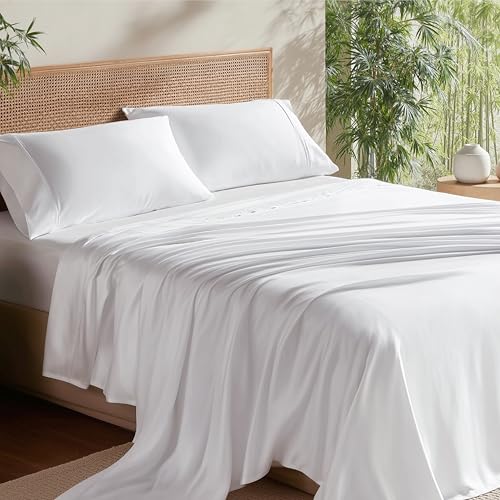
Flannel sheets are made from cotton or a blend that has been brushed to raise a soft, fuzzy surface. We have not used these products ourselves, so this guide does not rank anything. It shows the main differences between sets so you can choose one that suits your mattress, your washing routine and the feel you like.
Begin by measuring your mattress depth, because deep mattresses and toppers need deeper pockets. Then compare fabric weight, usually listed in grams per square metre, and read the maker’s description of the weave and finish. Heavier fabric feels thicker and plusher, while lighter fabric drapes more easily and washes faster.
As an Amazon Associate we earn from qualifying purchases. Links on this site are affiliate links, and they do not change the information we give.
In this guide
Quick Picks
| Pick | Product | Best For |
|---|---|---|
| 1 | Mellanni Cotton Flannel Sheet Set (Queen, White) | Soft everyday warmth |
| 2 | Eddie Bauer Flannel Sheet Set (Queen, Solid Ivory) | Classic patterns from a heritage brand |
| 3 | Tribeca Living Turkish Cotton Flannel Sheet Set (King, Aspen) | Heavyweight warmth and extra deep pockets |
| 4 | Elegant Comfort Turkish Cotton Flannel Sheet Set (Queen, Plaid Ivory) | Plaid patterns with a deep pocket fit |
| 5 | Great Bay Home Flannel Sheet Set (Twin, Winter Trees – Red) | Twin beds and lodge-style prints |
Our Picks
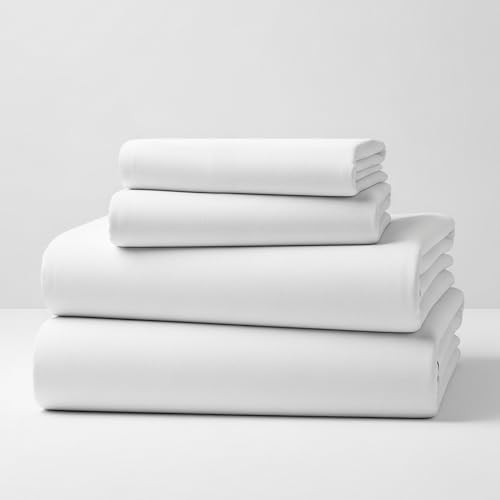
1. Mellanni Cotton Flannel Sheet Set (Queen, White) — Best for soft everyday warmth
Mellanni makes this set from 100% cotton flannel that is brushed on both sides, which gives the surface the raised, fuzzy feel described in the guide above. It is the lighter style of flannel, so it drapes rather than sitting stiffly on the bed, and it suits sleepers who want warmth without a heavy, blanket-like layer. The four-piece queen set includes a flat sheet measuring 90 by 102 inches, a fitted sheet measuring 60 by 80 inches with pockets made for mattresses up to 16 inches deep, and two pillowcases measuring 20 by 30 inches. That pocket depth covers most mattresses with a slim topper, but measure yours first, as the guide advises. The set is also sold in twin, full and king sizes, in solid colours and plaid prints, so you can match the size and look to your bed.


2. Eddie Bauer Flannel Sheet Set (Queen, Solid Ivory) — Best for classic patterns
Eddie Bauer’s flannel set is 100% cotton, brushed for softness, and finished with an all-around elastic fitted sheet that is made to stay smooth and secure instead of riding up at the corners. The queen set has four pieces: a flat sheet of 102 by 90 inches, an elasticised fitted sheet of 80 by 60 inches, and two standard pillowcases of 20 by 30 inches. The fabric carries STANDARD 100 by OEKO-TEX certification, which is worth noting if you check labels for tested materials. Solid Ivory is the plain option linked here, and the same set comes in a long list of outdoor-inspired prints and plaids, which is where this brand differs most from plain budget sets. Choose it if you like the cabin-style patterns and want a mid-weight cotton flannel from an established bedding label, and check your mattress depth before ordering, as with any fitted sheet.

3. Tribeca Living Turkish Cotton Flannel Sheet Set (King, Aspen) — Best for heavyweight warmth and extra deep pockets
This is the heavyweight option in the list. Tribeca Living weaves the set from 100% Turkish cotton flannel at 170 GSM, the weight figure the guide above tells you to compare, and the fabric is napped and brushed for a velvety feel. The maker also describes the finish as resistant to pilling, which matters for brushed fabric that gets washed often. The four-piece king set is cut with extra deep pockets, so it is the natural pick here for thick mattresses and toppers that shallow sets slip off. Aspen is a printed pattern; the range includes other prints and solids in sizes from twin to California king. Because heavier flannel holds more warmth, it fits cold rooms and winter use better than year-round bedding in a warm house. Wash it on a gentle cycle and dry on low, following the care tips in the guide, to protect the brushed surface.
View Tribeca Living Turkish Cotton Flannel Sheet Set on Amazon
4. Elegant Comfort Turkish Cotton Flannel Sheet Set (Queen, Plaid Ivory) — Best for plaid patterns
Elegant Comfort’s set is made from 100% Turkish cotton flannel and sold as a four-piece set with a deep pocket fitted sheet, a flat sheet and two pillowcases. Plaid Ivory is the version linked here; the line leans into patterns, with other plaids and seasonal prints alongside plainer colours, so it suits buyers choosing flannel partly for the winter look of the bed. The deep pocket fitted sheet addresses the most common flannel complaint in the guide above, sets slipping off deeper mattresses, though you should still compare the pocket depth with your own mattress measurement before ordering. Turkish cotton is the fibre detail to note: it is the same fibre family as the Tribeca Living and Great Bay Home sets, in a mid-weight fabric that works as an everyday winter set rather than the heaviest option. Follow the maker’s wash guidance and dry on low heat to limit shrinkage and keep the brushed finish soft.
View Elegant Comfort Turkish Cotton Flannel Sheet Set on Amazon

5. Great Bay Home Flannel Sheet Set (Twin, Winter Trees – Red) — Best for twin beds and lodge prints
Great Bay Home is a family-run New England label, and this set is its lodge-print flannel: 100% Turkish cotton, brushed on both sides for softness. The twin set has three pieces, a fitted sheet, a flat sheet and one pillowcase, and the fully elasticised fitted sheet is made with pockets that fit mattresses up to 14 inches deep, which is generous for a twin. Winter Trees – Red is the print linked here; the brand’s flannel range is built around cabin and holiday-style prints, so it is a good match for guest rooms, cabins and children’s rooms where the pattern is part of the point. Twin bedding is often an afterthought in flannel ranges, so a Turkish cotton option in this size is worth shortlisting. As the guide notes, wash new flannel once before use to clear loose fibres, and keep it separate from towels so lint does not cling to the brushed surface.

What to Look For
| Factor | Why it matters | What to check |
|---|---|---|
| Fabric weight | Heavier flannel feels thicker and fuller, while lighter flannel feels softer and drapes easily. | Compare the listed gsm figure between sets of the same size. |
| Fibre content | Cotton, cotton blends and other fibres change feel, wrinkling and shrinkage. | Read the content label and the maker’s care notes. |
| Brushing | Single side and double side brushing give a different surface feel. | Look for the maker’s description of which sides are brushed. |
| Pocket depth | Shallow pockets slip off thick mattresses and toppers. | Measure your mattress with any topper and compare to the listed depth. |
| Set contents | Sets differ in the number of pillowcases and whether a flat sheet is included. | Check the piece count and the size of each item. |
| Pilling resistance | Brushed fabric can form small fuzz balls with use and washing. | Read the maker’s notes on finishing and follow the wash guidance. |
Setup and Care Tips
- Wash new sheets once before the first use to remove loose fibres.
- Use a gentle cycle and a mild detergent, and skip fabric softener, which can coat the fibres.
- Dry on low heat and take the sheets out while slightly damp to limit shrinking.
- Wash flannel separately from towels, since lint can cling to the brushed surface.
- Rotate two sets through the season so each set wears evenly.
Mistakes to Avoid
- Ordering by size name alone without measuring the depth of the mattress.
- Choosing the heaviest fabric when your room is already warm.
- Ignoring the care label and drying on a very high setting.
- Buying a set with fewer pieces than you need, then adding mismatched items.
- Washing with bleach or harsh products that wear the brushed surface.
Flannel sheets vs regular cotton sheets: what is the difference?
Flannel sheets are brushed to raise a soft, fuzzy surface that holds warmth, while regular cotton sheets such as percale or sateen have a smoother, flatter finish. Flannel is mainly a cold-season choice.
Brushing, sometimes called napping, lifts tiny fibers from the weave. Those fibers trap a thin layer of air, which is why flannel feels warm to the touch when you first get into bed. Smooth cotton weaves feel crisper and cooler.
- Flannel suits cold bedrooms, winter nights and sleepers who dislike the chill of cold sheets. It can feel too warm in a heated room.
- Percale has a crisp, matte feel and suits warm sleepers.
- Sateen has a smoother, slightly glossy feel and drapes softly.
Flannel also behaves differently in the wash. Brushed fabric can shed lint, form small fuzz balls and shrink a little, so it asks for gentler care than a plain weave.
Many people keep flannel for the coldest months and switch to a lighter set when the weather warms up. If you only want one set for the whole year, a lighter weight flannel is a reasonable compromise, but check how you sleep first.
The picks in this guide are all cotton flannel, so the main differences between them are weight, pocket depth, set contents and pattern, not the basic fabric type.
Brushing can be done on one side or both. Double-sided brushing gives the fuzzy feel against your skin and on the outer face of the sheet, which many people prefer, so read how the maker describes it.
How heavy should flannel sheets be?
Choose a heavier flannel for cold rooms and a lighter flannel if you run warm or want a softer drape. The weight, usually listed in grams per square metre, is the clearest guide to how thick the fabric will feel.
- Lighter flannel drapes easily, washes and dries faster and suits people who want gentle warmth without a heavy layer. The Mellanni set is described as the lighter style.
- Mid-weight flannel works as an everyday winter set. The Eddie Bauer and Elegant Comfort sets fit here as described in the guide.
- Heavier flannel feels thick and plush and holds more warmth. The Tribeca Living set is the heavyweight in this list.
Compare weights only between sets of the same type, and read the listing for the figure, since makers do not always show it. Weight is not the same as quality, because weave, fiber and finish also matter.
Think about your room as well as yourself. A heavy flannel in a warm house can feel stuffy, while a light flannel in a cold room may not be enough. If you share a bed with someone who sleeps at a different temperature, a mid-weight set is usually the easier middle ground, and you can add or remove a blanket.
Fiber matters too. Cotton breathes better than many synthetic blends, which helps flannel feel warm without feeling clammy.
A simple test is to ask how the sheet feels in the first minute and again after an hour. Flannel that feels cozy at first can feel stifling later if the weight is wrong for your room, so think about the whole night and not only the moment you slide in.
How do you pick the right size and pocket depth for flannel sheets?
Measure your mattress depth including any topper, then choose a fitted sheet whose listed pocket depth is at least that deep. Size names like queen or king tell you width and length, but not whether the sheet will stay on.
Follow these steps:
- Measure from the top surface of the mattress to the bottom edge, including any pad or topper that will sit under the sheet.
- Compare that number with the pocket depth on the listing.
- Allow a little extra, because flannel can shrink a bit in the first washes.
- Check the set contents, since sets differ in pillowcase count and size.
Deep pockets matter more with flannel than with some other fabrics, because brushed cotton has a slight grip and can pull at the corners if the fit is tight. An all-around elastic fitted sheet helps hold the corners in place.
Also think about the bed you own, not just the size you want. A twin set suits a child’s bed or guest room, while a king or California king needs its own measurement check. The Tribeca Living set is aimed at thick mattresses and toppers, and the Great Bay Home twin set lists a generous pocket depth for a twin.
If your measurements fall between two sizes of fitted sheet, choose by the dimension that is harder to change, usually the depth.
Fitted sheets also need care in how you put them on. Pull each corner pocket fully under the mattress, smooth the surface, and avoid tugging one corner hard, which can strain the elastic and the seams over time.
If your mattress is unusually tall or has a thick topper, treat extra deep pockets as a requirement and not a bonus.
Which flannel sheet set should you buy?
Pick the set that matches your main priority: softness, pattern, warmth or bed size. Here is how the five sets in this guide line up.
- If you want soft, everyday warmth in a lighter style, go for the Mellanni Cotton Flannel Sheet Set (Queen, White). It drapes rather than sitting stiffly.
- If you like classic outdoor and cabin patterns from a heritage label, choose the Eddie Bauer Flannel Sheet Set (Queen, Solid Ivory) or one of its patterned versions.
- If your room is cold or your mattress is thick, choose the Tribeca Living Turkish Cotton Flannel Sheet Set (King, Aspen). It is the heaviest set and has extra deep pockets.
- If you want plaid and a winter look on the bed, choose the Elegant Comfort Turkish Cotton Flannel Sheet Set (Queen, Plaid Ivory).
- If you are buying for a twin bed, a guest room or a child’s room, choose the Great Bay Home Flannel Sheet Set (Twin, Winter Trees – Red).
The sizes and colors named are the versions linked in the guide. Several sets come in other sizes and prints, so use the listing to select the one that matches your bed before you order.
If you sleep warm, lean toward the lighter set. If you sleep cold, lean toward the heavier one. If you are unsure, a mid-weight set is the safest starting point, and you can adjust your blankets to suit.
What to check before you buy flannel sheets
Check mattress depth, size, piece count, fabric weight and care instructions before you buy. These five checks prevent most flannel disappointments.
- Mattress depth and topper. Compare your measurement with the listed pocket depth.
- Size and selected option. Confirm the size and color on the listing, since several options share one page.
- What is in the set. Count the pieces: fitted sheet, flat sheet and pillowcases, and check the pillowcase size.
- Fabric weight and fiber. See whether the listing gives a weight and states the fiber content.
- Care label. Read the wash and dry instructions, and decide if you will follow them.
- Certifications. If the listing mentions a textile certification, read exactly what it covers.
- Returns. Check the return terms, since bedding that has been washed may not be returnable.
It also helps to plan a second set. Rotating two sets keeps each one fresher through a long winter and gives you a spare when one is in the wash.
If any of these answers is missing from the listing, check the product page more closely or choose a set that states them clearly.
Are flannel sheets worth it, and who should skip them?
Flannel sheets are worth it if you sleep cold or want a cozy bed in winter, and they are a poor fit if you run warm. Here are the honest trade-offs.
- Heat. Flannel can feel too warm for hot sleepers or heated bedrooms.
- Lint and pilling. Brushed fabric can shed and form fuzz over time, especially with rough washing.
- Shrinkage. Cotton flannel can shrink a little, so wash and dry gently.
- Seasonal use. Most people use flannel in the colder months only.
Is it worth paying more? A heavier or Turkish cotton set may feel thicker and plusher and may come with deeper pockets, but a higher price does not guarantee fewer problems. Care matters as much as the label, so wash gently, skip fabric softener and dry on low.
You may want to skip flannel if you sleep hot, live somewhere warm, or want a single set for all four seasons without swapping. Linen, percale or bamboo-based sheets may suit you better.
If flannel still sounds right, compare the picks above, check the current listing for your mattress depth and what is included, then choose the set that fits your bed and your sleep style.
Deeper Buying Criteria: What Really Matters
Weight tells you more than thread count
Flannel is measured by weight — grams per square meter — more honestly than by the thread counts used for smooth cotton. Heavier flannel feels plusher and warmer and generally survives more winters; lighter flannel suits milder climates and people who overheat. When a listing gives a weight, use it to compare sets directly; when it does not, expect a mid-weight, all-purpose fabric.
Cotton, brushed finishes and the two-sided question
Flannel’s softness comes from brushing, which raises fibers on the surface. Brushing on both sides gives the full cocoon effect and slightly better insulation; single-sided brushing is lighter and cooler. Read listings carefully here, because photographs cannot show it, and the difference decides whether a set suits a cold bedroom or a merely chilly one.
Pilling is the quality test that arrives in month two
Short fibers pill; longer, better-spun fibers resist it. You cannot judge this from a photograph, but construction clues help: reputable weight figures, tight weaving descriptions and care instructions that do not forbid normal washing. The first three washes tell the truth — buy from sellers whose return window respects that reality.
Pocket depth and elastic are the fit story
Flannel’s loft eats mattress depth, so measure your mattress plus any topper and compare with the fitted sheet’s stated pocket depth, favoring a little extra. Full elastic around the edge holds better than corner-only elastic on restless sleepers. A sheet that fits in summer can strain in winter if a thicker topper joins the bed, so measure the bed as it will be, not as it was.
Weave and shrinkage expectations
Flannel relaxes and shrinks a little in its first washes, and honest makers cut generously for it. If a set fits the mattress drum-tight out of the packet, expect a struggle after washing. Pre-washing before the first night is both a softness and a fit test, best done while returns are still possible.
Real-Life Use Cases
Cold bedrooms and winter-dominant climates
Heavyweight, double-brushed flannel turns a cold bed into a warm one on contact — flannel’s great trick is feeling warm immediately, unlike smooth cotton’s cold first touch. In genuinely cold rooms, this is the set that changes how winter nights feel.
Guest rooms that sit unheated
A guest bed made with flannel feels welcoming even when the room is kept cool between visitors. Choose a mid-weight set that washes well and stores without fuss, and keep a spare set so a quick turnaround between guests is painless.
Children’s beds
Kids take to flannel’s softness readily, and the fabric forgives the frequent washing childhood requires. Lighter weights suit children’s rooms, which are often warmer than adults’, and patterns that hide the odd mark are a practical kindness.
Couples who sleep at different temperatures
Flannel raises the warmth of the whole bed, which can overshoot for the warmer partner. A compromise that works in many homes: flannel fitted sheet and pillowcases with a lighter top sheet, or flannel on one season’s bedding rotation rather than all winter.
Step by Step: Setup and First Use
Flannel rewards a gentle first wash and then years of ordinary care. The setup is mostly about fit and the first laundry cycle.
- Wash the set before first use in cool or warm water with a mild detergent, separately or with like colors, to remove loose fibers and soften the brush.
- Dry on a moderate setting and clean the lint filter partway through — new flannel sheds noticeable lint in its first cycles, which is normal and fades.
- Fit the fitted sheet starting at the deepest corner, checking the pocket covers the mattress and topper fully without straining the elastic.
- Make the bed and sleep a night before judging warmth; flannel’s comfort is about the 2 a.m. feel, not the first touch.
- Rotate with a second set if you wash weekly in winter, letting each set rest between uses — flannel ages more gracefully with rotation.
Care, Cleaning and Storage in More Detail
Wash flannel in warm or cool water and avoid very hot cycles, which roughen the brushed surface over time. Skip fabric softeners and dryer sheets if the maker advises it — coatings flatten the raised fibers that make flannel feel like flannel — and use a gentle detergent instead.
Expect lint in the first several washes and clean the dryer filter diligently; it diminishes as loose fibers clear. Washing flannel separately from towels and fleece keeps each fabric’s lint to itself.
Store off-season sets clean, dry and loosely folded in a breathable place. A set put away damp or in a sealed plastic box in a warm attic comes back smelling of its storage, not of cotton.
How the Picks Compare
Compare the picks above by fabric weight against your climate first, then by brushing and pocket depth against your mattress, then by colorfast practicality — warmth, fit and care, in that order, decide satisfaction.
Mellanni Cotton Flannel Sheet Set (Queen, White)
In this guide the Mellanni Cotton Flannel Sheet Set (Queen, White) is the pick for soft everyday warmth. Treat that as your starting hypothesis rather than a verdict: re-read its full section above, then check the listing for the details that decide fit in your case — the measurements, what is included in the box, and the care or setup the maker describes. If those details line up with your space and habits, this is likely your pick; if one of them clashes, the clash matters more than the recommendation, and another pick whose strengths sit elsewhere will serve you better.
Eddie Bauer Flannel Sheet Set (Queen, Solid Ivory)
The Eddie Bauer Flannel Sheet Set (Queen, Solid Ivory) earns its place here as the choice for classic patterns from a heritage brand. Its section above sets out where it shines and where it asks compromises of you, and both halves deserve equal weight. Before ordering, picture your own typical use — the room, the people, the routine around it — and test the pick against that picture rather than against a showroom ideal. Buyers who do this rarely return what they buy, because the decision was made against their real life rather than against a photograph.
Tribeca Living Turkish Cotton Flannel Sheet Set (King, Aspen)
Choose the Tribeca Living Turkish Cotton Flannel Sheet Set (King, Aspen) if heavyweight warmth and extra deep pockets describes your situation closely. That is the job it was picked to do in this line-up, and the comparison that matters is not against an imaginary perfect product but against the other four picks and the different strengths each of them leads with. Confirm the practicalities in its listing — size, included parts, and any setup or maintenance the maker specifies — and if they fit your circumstances, you can order with the calm of someone who has checked the things that actually go wrong.
Elegant Comfort Turkish Cotton Flannel Sheet Set (Queen, Plaid Ivory)
The Elegant Comfort Turkish Cotton Flannel Sheet Set (Queen, Plaid Ivory) is recommended above for plaid patterns with a deep pocket fit, and that framing is the honest way to judge it. No pick in a line-up of five wins at everything; each trades something. Read its section for the trade it makes, decide whether that trade touches anything you care about weekly, and let the answer — not the headline position in the table — make the decision. If the trade lands on something you will never miss, the pick’s strengths are effectively free.
Great Bay Home Flannel Sheet Set (Twin, Winter Trees – Red)
If your shortlist narrows to the Great Bay Home Flannel Sheet Set (Twin, Winter Trees – Red), the deciding questions are the ones its own section raises: does its size suit your space, does its way of working suit your routine, and does its upkeep suit your patience? It was picked for twin beds and lodge-style prints, so households matching that description should find its compromises the easiest to live with. Verify the current listing details before ordering, since makers revise inclusions and specifications over a product’s life.
Before You Buy: Final Checks
Measure your mattress depth with the topper you actually use in winter, and write the number down before shopping. More flannel returns trace back to pocket depth than to any question of softness or warmth.
Think in seasons: one heavier set for deep winter and one lighter set for the shoulder months gives most households year-round comfort from flannel without the too-hot nights that make people abandon it entirely.
Check the total cost of ownership, not just the ticket
Many purchases in this category carry quiet follow-on costs: consumables, replacement parts, accessories the listing photographs but does not include, delivery or installation, and the occasional professional service. Adding a realistic year of those costs to each candidate before comparing prices often reverses the ranking — the apparently dearer option with cheap, available spares and everything included can be the economical one by the second year. It also protects the household budget from the slow drip of small surprises that makes owners resent a purchase that is, itself, perfectly good.
Read the manual before the product arrives
Most makers publish the manual online, and twenty minutes with it before ordering is the most underused research in home shopping. The manual states the clearances, the maintenance rhythm, the parts that wear and the things the warranty excludes, in plain language the marketing page avoids. If the manual reveals a weekly task you know you will not do, or a clearance your room cannot give, you have learned it at the only moment the knowledge is free. Keep the manual after purchase too, ideally where the product lives.
Use the return window as a test, not a threat
A sensible way to buy anything that must fit a body, a room or a routine is to treat the first days as a structured trial: set it up properly, use it for its real job at least twice, and judge it against the two or three criteria you wrote down before ordering. Indecision kept past the return window helps nobody. If the product fails your own criteria, return it while the option exists; if it passes, you own it with a confidence no review can give you.
When the simpler model is the smarter buy
Feature lists grow because features are easy to print, not because households use them. For every extra function on a candidate, ask when you last needed it and when you realistically will. A simpler model often wins on reliability, on ease of cleaning and on the patience of the least technical person who will use it. The exception is a feature that removes a step you perform daily — that one earns its place even at a premium, because it pays you back every single day.
Questions worth asking the seller
Before ordering, a short message to the seller can settle what listings leave vague: what exactly is in the box, which replacement parts fit this version, what the product’s stated measurements include, and how warranty claims are handled in your country. Sellers who answer precisely are also, not coincidentally, the ones whose products tend to match their descriptions. Keep the answers with your receipt; they are part of the purchase record if anything is later disputed.
Secondhand and refurbished: a clear-eyed view
In many of these categories the used market is active, and a well-kept used example can be excellent value. The discipline is to check the wear parts first — they are where age lives — to confirm spares still exist for that version, and to price the used item against a new one with its warranty intact. Where safety, hygiene or precise fit is involved, the saving must be large to justify surrendering the warranty and the return window.
Ownership, Troubleshooting and Long-Term Value
Start troubleshooting with the boring causes
When something in this category disappoints, the cause is usually mundane: a fit that was never quite right, a wear part past its interval, a setting chosen once and never revisited, or dirt where dirt should not be. Work through those four before concluding the product itself has failed. Change one thing at a time and test properly, because changing three things at once teaches you nothing and often masks the real culprit. Keep a note of what you tried; if a professional or a warranty claim enters the picture later, that short history is the most useful document you own.
A seasonal check prevents most failures
Twice a year is a kind rhythm for almost everything in the home: clean it properly, inspect the parts that move, rub, seal or carry weight, tighten what has worked loose and replace what is visibly worn. Seasonal checks catch the cracked seal, the fraying edge and the slow leak while they are still small, cheap problems. Tie the habit to events you already observe — the start of heating season, the spring clean — so it happens without a reminder system, and photograph anything you are unsure about so you can compare it next season.
Repair or replace: an honest framework
Replace when safety is involved, when the core structure has failed, or when the repair costs a large share of a new item whose warranty would restart the clock. Repair when the fault sits in a wear part the maker still supplies, when the rest of the item is sound, and when you remain glad to own it. Sentiment is allowed in the calculation — a loved item repaired is not a financial error — but name it as sentiment rather than dressing it as economics, and never repair your way past a safety problem.
Making a warranty claim that succeeds
Warranty claims fail on paperwork more often than on merit. Keep the receipt, the model and serial details, and photographs of the problem as it appeared, and describe the fault plainly: what happens, since when, and what you have already tried. Contact the maker before arranging your own repair, since unauthorized repairs can void cover. Be polite, be specific and keep every reply. Most makers resolve clear, documented claims without drama; the vague and undocumented ones are the ones that drift.
Adapting the purchase as your life changes
Few household purchases serve one unchanging life. Rooms are rearranged, children grow, jobs change and hobbies deepen. The products that survive these changes are the ones with some adjustment in them — a size that tolerates a new space, a setting that suits a new user, a part that can be upgraded. When you feel a purchase no longer fits, check its adjustment range and accessories before replacing it; a small addition often restores the fit for a fraction of a replacement’s cost.
Teaching the household is part of setup
A product used by several people is only as well kept as its least-informed user. The five-minute household briefing — how it works, what never to do, where the manual lives, what to do when it misbehaves — prevents the majority of family-inflicted damage. Write the one rule that matters most on a label or card near the product if your household is busy. This sounds excessive until the first time a well-meaning relative solves a small problem with force.
Keep a simple ownership record
One note on your phone per purchase — date, seller, model details, warranty length and where the receipt lives — pays for itself the first time anything goes wrong, gets recalled or needs a spare part years later. Add the dates of services, part replacements and battery changes as they happen. When you sell or pass the item on, the record goes with it and quietly raises both its value and the next owner’s chances of keeping it working.
Storing it properly during its off-season
Many items in the home have a season, and storage is where their lifespan is quietly decided. Clean before storing, never after months of grime have set; dry everything fully; store in a place that avoids heat extremes and damp; and keep small parts, tools and instructions together in one labelled bag or box. A product retrieved clean, complete and ready earns its storage space. One retrieved dirty, damp and missing a part teaches the same lesson at a higher price.
Knowing when a professional should take over
Enthusiasm has a boundary, and it sits where safety systems, structural parts, gas, mains electricity or specialist calibration begin. Recognizing that boundary is competence, not defeat. A professional brings the right tools, the liability cover and, often, a warranty on the work itself. Choose one the way you chose the product: ask what they will check, what they will replace and what it will cost if they find nothing wrong. The answer’s clarity is the recommendation.
The second-year review
A year in, sit down with the purchase honestly for five minutes. Is it used as often as you predicted? Which feature turned out to matter, and which has never been touched? What has worn, and what surprised you pleasantly? This small review sharpens every future purchase, because it replaces the shopper you imagine yourself to be with the owner you actually are. It is also the right moment to buy the spare part, book the service or admit the mismatch and sell while the item still has value.
FAQ
Do flannel sheets shrink?
Cotton flannel can shrink a little in the first washes, especially with high heat. Many makers suggest washing in cool water and drying on low, so read the care label before you buy.
How do I reduce pilling?
Wash on a gentle cycle, avoid overloading the machine and keep flannel away from rough items such as zips. A fabric shaver can remove fuzz once it appears.
Are flannel sheets too hot to sleep in?
They can be for people who sleep warm or keep the bedroom heated. A lighter flannel is gentler, and you can adjust your blankets. Many people use flannel only in the coldest months.
What is the difference between flannel and fleece sheets?
Flannel is usually brushed cotton or a cotton blend with a woven structure, while fleece is a knit synthetic fabric. Flannel tends to breathe better. Check the fiber content on the listing.
How many GSM should good flannel sheets have?
There is no single right figure, because it depends on how warm you want the bed. Lower weights feel lighter and drape easily, while higher weights feel thicker and warmer. Compare sets of the same size on the listing.
Can you put flannel sheets in the dryer?
Yes for most cotton flannel, but use low heat and take the sheets out while slightly damp to limit shrinking. Always check the care label.
Why do flannel sheets leave lint?
Brushing lifts loose fibers, and some of these shed in the first washes. Wash new sheets once before use and keep them apart from towels.
Do flannel sheets get softer after washing?
Many people find they feel softer after a few gentle washes as loose fibers come away. Harsh detergents, fabric softener and high heat can work against that.
Can I use flannel sheets year-round?
Some people do, especially with a lighter weight, but most keep flannel for the cold months. If you run warm, plan a lighter set for summer.
How often should I wash flannel sheets?
Many people wash bedding about once a week, but your own routine and the maker's care notes should guide you. Washing too harshly wears the brushed surface faster.
Will flannel sheets make me too hot?
They might if you sleep warm or your room is heated strongly at night. Choose a lighter weight, or use flannel only for the fitted sheet and pillowcases with a lighter top sheet. In cold rooms, though, most sleepers find flannel’s instant warmth exactly right.
Why is my flannel shedding so much lint?
New flannel releases loose fibers raised by brushing; the first several washes and dries clear most of it. Washing separately, moderate heat and cleaning the lint filter mid-cycle keep it manageable. Shedding that stays heavy after many washes suggests short-fiber fabric.
How do I stop flannel from pilling?
You reduce rather than eliminate it: gentle cycles, moderate temperatures, washing inside out, and avoiding overload friction all help. Higher-weight, longer-fiber flannel pills less from the start, which is why weight is worth comparing at purchase.
Can I use flannel sheets in summer?
In cool or air-conditioned bedrooms, a light flannel can be comfortable year-round for people who like a soft, matte feel. In hot, humid summers most sleepers prefer smooth cotton or linen, and flannel earns a rest until autumn.
Do flannel sheets fit deep mattresses?
Only if the pocket depth covers your mattress plus topper with a little to spare. Measure and compare the stated depth rather than trusting ‘deep pocket’ language, and favor full-perimeter elastic for thick beds.
The Short Version
Measure your mattress, then choose a fabric weight and fibre that match how you like your bed to feel. Compare pocket depth, piece count and care needs using the table above. Write down your mattress depth and your preferred wash routine before you shop, and drop any set that does not fit both. That short list keeps the decision simple and avoids returns.