Disclosure: airfryerkitchensupply.com is reader-supported. When you buy through links on our site, we may earn an affiliate commission at no extra cost to you.
Where to buy
The fastest way to buy any pick in this guide to the best cotton towels to use on blackstone griddle is Amazon, where stock, size and colour options are shown on the product page itself. Use the links below to check the current price on Amazon for each model:
- Utopia Towels Kitchen Bar Mops (Pack of 12, 16×19) (Best Overall): Check on Amazon
- Softolle Kitchen Bar Mop Towels (Pack of 12, 16×19) (Best Absorbency): Check on Amazon
- Utopia Kitchen Flour Sack Towels (12 Pack, 28×28) (Best for Seasoning): Check on Amazon
- Simpli-Magic Cotton Shop Towels (145 Pack) (Best Bulk Value): Check on Amazon
- Groko Textiles Cotton Bar Mops, Blue Stripe (24 Pack) (Best Heavy-Duty Terry): Check on Amazon
- Nabob Wipers Shop Towels (25 Pack, 14×14) (Best Compact Shop Pack): Check on Amazon
The best cotton towels to use on blackstone griddle duty are a specific tool, and choosing them well matters more than griddle owners expect. A Blackstone’s flat top is seasoned steel: you spread oil across it with a towel when seasoning, wipe it down after cooking, and manage grease with something absorbent that will not leave lint in the seasoning or melt against hot steel. That last point eliminates most modern kitchen towels at a stroke — microfiber and polyester blends can melt and smear on a hot griddle surface. Cotton is specified for this job because it absorbs oil and water well, tolerates heat far better than synthetics, and can be bought cheaply in bulk, because griddle towels live a hard, stained life and are replaced without tears.
The six picks below are all 100% cotton and were verified on 2026-11-22: bar mop towels in the classic restaurant format, lint-light flour sack towels for seasoning work, and bulk cotton shop towels for the dirtiest wipe-downs. One safety note that outranks every pick: oil-soaked towels are a fire risk if bunched up hot — spread them flat to cool and dry, or soak them in water before disposal, and never leave a wadded oily towel on or near the griddle. Technique for seasoning and cleaning is covered in the how-to section; first, the towels.
In this guide
Quick Picks
Utopia Towels Kitchen Bar Mops (Pack of 12, 16×19) — Best Overall. The classic bar mop in 100% cotton at the right size and pack count — the default griddle towel for wiping, cleaning and general duty. Check on Amazon
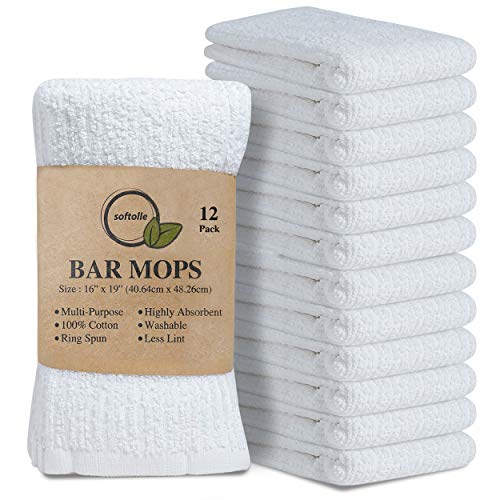
Softolle Kitchen Bar Mop Towels (Pack of 12, 16×19) — Best Absorbency. A super-absorbent cotton bar mop that drinks up grease and water fast — for cooks whose wipe-downs involve serious volume. Check on Amazon
Utopia Kitchen Flour Sack Towels (12 Pack, 28×28) — Best for Seasoning. Thin, smooth, low-lint cotton flour sacks — the towel that spreads the thinnest, cleanest oil film when seasoning the griddle top. Check on Amazon
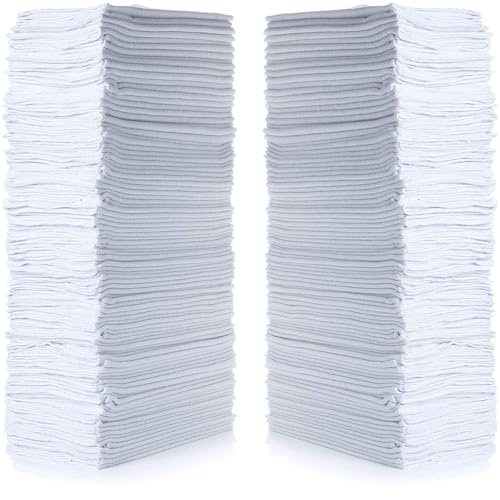
Simpli-Magic Cotton Shop Towels (145 Pack) — Best Bulk Value. A mountain of reusable 100% cotton shop towels — the economical answer for cooks who go through towels like a short-order kitchen. Check on Amazon
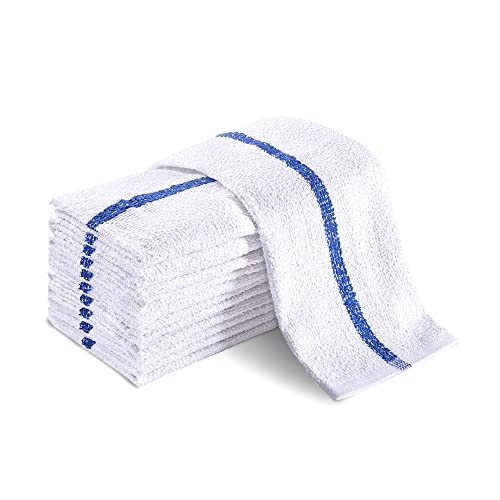
Groko Textiles Cotton Bar Mops, Blue Stripe (24 Pack) — Best Heavy-Duty Terry. Commercial-grade terry bar mops with the classic blue stripe, in a 24-pack — the colour-coded workhorse set for a serious griddle station. Check on Amazon
Nabob Wipers Shop Towels (25 Pack, 14×14) — Best Compact Shop Pack. A manageable 25-pack of commercial cotton shop towels — bulk discipline without bulk commitment, in a square 14×14 format. Check on Amazon
How These Picks Were Chosen
Every towel set was verified brand-and-model before inclusion, and the first filter was absolute: 100% cotton only. Any blend with polyester or microfiber was excluded, because synthetic fibres soften and melt at griddle temperatures and can transfer to the cooking surface and the seasoning layer. We then selected across the three towel formats griddle owners actually use. Bar mop towels — thick, ribbed or terry cotton in the 16×19 inch restaurant format — are the workhorses for wiping down and soaking up grease. Flour sack towels are thin, smooth and low-lint, which makes them the seasoning specialists: they spread a whisper-thin oil film without depositing fibres. Shop towels are the bulk economy option for the filthiest jobs. Within each format we weighed absorbency, size, pack count against realistic replacement rhythm, and how the towels survive repeated hot washing, since griddle towels are washed hard and often.
The 6 Best Cotton Towels to Use on a Blackstone Griddle

Utopia Towels Kitchen Bar Mops (Pack of 12, 16×19) — Best Overall
If a griddle owner buys one towel set, it should look like this. The bar mop is the restaurant industry’s universal cloth for a reason: thick enough to absorb a serious amount of grease and water, sized at 16×19 inches to fold into a pad that protects your hand and covers ground, and made of plain cotton that shrugs off the heat of a warm griddle and a hot wash afterwards. Utopia’s version is the widely bought benchmark of the format, in a pack of twelve that matches the real rhythm of griddle ownership — several in use, several in the wash, several ready.
On the Blackstone, bar mops handle the main jobs: the post-cook wipe-down while the surface is still warm, soaking up pooled grease at the edges, and the general cleaning work around the side shelves and grease cup. Folded into quarters and used with tongs, a bar mop also works for moving oil around during cooking. It is not the lowest-lint towel here, so for the final seasoning coat the flour sack pick below has the edge — but as the towel that does everything else, every session, this is the set to own first.
Utopia bar mop ownership is unremarkable in the best way: the towels enter the rotation, absorb everything the griddle produces, survive hot washes, and are replaced individually as they thin, so the set never really dies — it just gradually renews. Owners who cook outdoors weekly tend to standardise on this format entirely, keeping a folded stack in a weatherproof box at the station. It is the towel equivalent of a cast-iron pan: no novelty, total reliability.
Strengths
- Classic format sized and weighted for griddle work
- 100% cotton — no melt risk on hot steel
- Pack of 12 matches the use/wash rotation
Trade-offs
- Not the lowest-lint option for final seasoning passes
- White shows griddle stains immediately (they are working towels)
- Thick towels take longer to dry after washing
| Material | 100% cotton |
| Size | 16 x 19 inches |
| Pack | 12 towels |
| Style | Bar mop, ribbed |
Best for: Everyday griddle wipe-downs and cleaning / Not suited for: Final seasoning coats, where a lower-lint towel wins
Check on Amazon — check the current price on Amazon before you decide.
Softolle Kitchen Bar Mop Towels (Pack of 12, 16×19) — Best Absorbency
The Softolle bar mops compete on the one specification that decides a wipe-down: how much liquid a single towel takes up before it is saturated and smearing instead of cleaning. These are plush, thirsty cotton towels in the same 16×19 bar mop format, and for the greasiest Blackstone sessions — smash burgers for a crowd, bacon mornings, a full hibachi night — that absorbency translates directly into fewer towels used and a cleaner finish pass.
The trade-off of a thirstier towel is a longer dry after washing and a touch more lint than the flattest weaves, so keep the flour sacks for seasoning and let these do the heavy drinking. They also earn their keep beyond the griddle: this is the towel you grab for the stockpot boil-over and the cooler spill. In a two-towel system — Softolle for volume, flour sack for finesse — a griddle station is fully equipped.
Softolle’s absorbency shows its value at the end of a big cook, when the final wipe-down decides whether the top is left clean or smeared. A towel that is still drinking on the last pass leaves the steel visibly better, and owners of the biggest Blackstone models — where the surface area multiplies every job — notice the difference most. Keep two in rotation for crowd nights and the pair will handle sessions that defeat lesser towels by the third pass.
Strengths
- Highest absorbency focus in the guide
- Full bar mop size and cotton construction
- Equally useful across the whole outdoor kitchen
Trade-offs
- Thicker towels dry slower after washing
- More lint than flour sack towels
- White shows every stain of its working life
| Material | 100% cotton |
| Size | 16 x 19 inches |
| Pack | 12 towels |
| Claim | Super absorbent (maker) |
Best for: Grease-heavy cooks and big clean-ups / Not suited for: Delicate seasoning work needing the thinnest film
Check on Amazon — check the current price on Amazon before you decide.

Utopia Kitchen Flour Sack Towels (12 Pack, 28×28) — Best for Seasoning
Seasoning a Blackstone is an exercise in thinness: the oil layer must be wiped until it almost disappears, coat after coat, because thick oil is what turns gummy and patchy. That job demands a towel that spreads oil evenly and leaves nothing behind — no lint, no fibres baked into the finish. Flour sack cotton is that towel. Its smooth, flat weave glides over the steel, picks up excess oil instead of pushing it around, and its low-lint character keeps the seasoning coat clean. The big 28×28 size folds into a generous pad for working the whole top with tongs.
Flour sacks are poor sponges — they saturate quickly and are the wrong tool for a grease flood — and that is fine, because their role is precision, not volume. Dedicate a couple to seasoning only, wash them separately from the greasy bar mops, and they will serve season after season of re-seasoning and maintenance coats. Every experienced griddle owner ends up with a seasoning towel; this is the format to choose, and Utopia’s twelve-pack is the standard way to buy it.
Flour sack ownership involves one small discipline — keeping the seasoning towels separate — and one large reward: seasoning coats that go on thin, even and lint-free, building the glassy finish griddle owners chase. Owners who previously seasoned with paper towels describe the switch as the single cheapest upgrade in their griddle life. The towels themselves last surprisingly long in the role, precisely because oil film work is gentle compared with grease hauling.
Strengths
- Low-lint smooth weave is ideal for seasoning films
- Large size folds into a full-hand working pad
- Thin cotton dries fast after washing
Trade-offs
- Low absorbency — not for grease volume
- Thin fabric wears faster under rough use
- Must be kept apart from the greasy towel rotation to stay lint-clean
| Material | 100% cotton |
| Size | 28 x 28 inches |
| Pack | 12 towels |
| Weave | Smooth flour sack, low lint |
Best for: Seasoning coats and final oil wipe-downs / Not suited for: Soaking up large volumes of grease
Check on Amazon — check the current price on Amazon before you decide.
Simpli-Magic Cotton Shop Towels (145 Pack) — Best Bulk Value
Some griddle stations run like diners: weekend crowds, multiple cooks, a towel grabbed every few minutes and dropped in the laundry bin without ceremony. For that rhythm, the Simpli-Magic 145-pack changes the economics completely — cotton shop towels in bulk, each one washable and reusable, at a per-towel cost that makes you stop rationing. At 14×12 inches they are smaller than bar mops, which suits quick wipe-downs, grease-cup duty, hand wiping between tasks and the hundred small cleans around a griddle station.
Shop towels are honest working cloths: absorbency is good rather than luxurious, edges and finish are functional, and they are not the towel for a pristine seasoning coat. But as the disposable-minded layer of the system — the towels that take the worst of the grease and come back for more through dozens of washes — they are unmatched value. Many owners run exactly this two-tier setup: bulk shop towels for the mess, bar mops for the main wipe-down, flour sacks for seasoning.
Simpli-Magic’s bulk count changes behaviour, which is the highest praise a consumable can earn: towels get used freely, changed the moment they are loaded, and never rationed mid-cook. Outdoor kitchens that host groups feel the difference most, but even solo cooks find the station tidier when the cost of a fresh towel rounds to zero. The pack also colonises the rest of the house — garage, car, workshop — which owners count as a feature.
Strengths
- Bulk count transforms towel economics
- Reusable cotton — wash and return to service
- Handy size for the hundred small station jobs
Trade-offs
- Smaller than bar mops for big wipe-downs
- Working finish, not a premium towel
- Not the seasoning choice
| Material | 100% cotton |
| Size | 14 x 12 inches |
| Pack | 145 towels |
| Style | Shop towel / rag |
Best for: High-volume griddle users and outdoor kitchens / Not suited for: Seasoning, where a smoother towel performs better
Check on Amazon — check the current price on Amazon before you decide.
Groko Textiles Cotton Bar Mops, Blue Stripe (24 Pack) — Best Heavy-Duty Terry
The blue-stripe bar mop is the visual language of professional kitchens: one towel type, instantly recognisable, dedicated to its station. Groko’s version is a commercial-grade terry cotton in the full 16×19 format, sold in a 24-pack that lets you run a proper system — a stack at the griddle, a stack in reserve, a load in the wash — with the stripe making griddle towels unmistakable among household laundry. Terry weave gives these the scrubbing texture that smooth towels lack, useful when a wipe-down meets cooked-on residue at the edges of the top.
Terry’s texture is also its limit: it is the highest-lint family here when new, so wash the set before first use and keep seasoning work to the flour sacks. After that settling-in, these are the towels that survive years of hot washes and hard use, which is the entire point of commercial grade. For a permanent outdoor kitchen, this is the set that looks and lasts like it belongs there.
Groko’s blue stripe creates the station discipline professionals take for granted: anyone in the household can see at a glance which towels belong to the griddle, and laundry stops cross-contaminating the seasoning set with the garage set. The terry texture earns its keep on the first cooked-on edge it scrubs clean. For a permanent outdoor kitchen, it is the set that makes the setup feel finished.
Strengths
- Commercial-grade terry survives years of hot washing
- 24-pack enables a real station rotation
- Blue stripe keeps griddle towels colour-coded
Trade-offs
- Terry lint is highest here when new — pre-wash
- Bigger pack is more than casual users need
- Texture is for scrubbing, not for seasoning films
| Material | 100% cotton terry weave |
| Size | 16 x 19 inches |
| Pack | 24 towels |
| Marking | Blue stripe — colour-code your station |
Best for: Dedicated griddle stations wanting a colour-coded towel set / Not suited for: Anyone who wants one small pack to try the format
Check on Amazon — check the current price on Amazon before you decide.

Nabob Wipers Shop Towels (25 Pack, 14×14) — Best Compact Shop Pack
Not every griddle owner needs 145 towels, and Nabob’s 25-pack is the shop towel idea at household scale: commercial-grade 100% cotton in a square 14×14 format that folds neatly into a tong-held pad, in a quantity that fills a drawer instead of a shelf. The square shape is quietly practical on a flat top — no long ends trailing toward the grease trough — and the towels are built for the garage-and-kitchen crossover life: griddle duty on Saturday, everything else all week.
As with all shop towels, the finish is functional and the absorbency honest rather than plush; these are wipers, not bath towels. They wash hard, stain proudly and keep working, and when one finally thins out it retires to true rag status without regret. If the Simpli-Magic count sounds like a commitment and the bar mops sound too few, this is the middle way — and for many single-griddle households it is the pack that gets bought twice.
Nabob’s 25-pack is the connoisseur’s middle path: enough towels to run a proper rotation, few enough to store in one drawer, and commercial cotton that outlasts boutique kitchen towels costing more per piece. Owners commonly buy the second pack a year later — the clearest signal in the category that a product has become the household standard. For a single-griddle home, it is very possibly the only shop towel purchase that needs making.
Strengths
- Sensible 25-count for real households
- Square format folds into a tidy tong pad
- Commercial cotton survives hard washing
Trade-offs
- Working-grade finish and absorbency
- Too few for crowd-volume cooking weekends
- Not a seasoning towel
| Material | 100% cotton |
| Size | 14 x 14 inches |
| Pack | 25 towels |
| Grade | Commercial |
Best for: Moderate users wanting shop-towel value in a sane quantity / Not suited for: Very high-volume stations (see the 145-pack)
Check on Amazon — check the current price on Amazon before you decide.
Comparison Table
| Pick | Badge | Key spec | Best for |
|---|---|---|---|
| Utopia Towels Kitchen Bar Mops (Pack of 12, 16×19) | Best Overall | 100% cotton bar mop, 16×19 in, pack of 12 | Everyday griddle wipe-downs and cleaning |
| Softolle Kitchen Bar Mop Towels (Pack of 12, 16×19) | Best Absorbency | 100% cotton, super absorbent, 16×19 in, pack of 12 | Grease-heavy cooks and big clean-ups |
| Utopia Kitchen Flour Sack Towels (12 Pack, 28×28) | Best for Seasoning | 100% cotton flour sack, 28×28 in, low-lint smooth weave | Seasoning coats and final oil wipe-downs |
| Simpli-Magic Cotton Shop Towels (145 Pack) | Best Bulk Value | 100% cotton shop towels, 14×12 in, 145 pack | High-volume griddle users and outdoor kitchens |
| Groko Textiles Cotton Bar Mops, Blue Stripe (24 Pack) | Best Heavy-Duty Terry | 100% cotton terry, 16×19 in, 24 pack, commercial grade | Dedicated griddle stations wanting a colour-coded towel set |
| Nabob Wipers Shop Towels (25 Pack, 14×14) | Best Compact Shop Pack | 100% cotton, 14×14 in, 25 pack, commercial grade | Moderate users wanting shop-towel value in a sane quantity |
How to Choose Cotton Towels for a Blackstone Griddle
The first rule is fibre, and it is not negotiable: 100% cotton. A Blackstone top at cooking temperature will soften or melt polyester and microfiber on contact, smearing synthetic residue onto the steel and into your seasoning — and a melted towel edge is a miserable clean-up. Cotton chars rather than melts at extreme heat, absorbs oil and water eagerly, and survives the hot, detergent-heavy washing that griddle towels need. Check the listing’s material line, not the product name; ‘kitchen towel’ says nothing about fibre.
Then match format to job. Seasoning and final oil coats want thin, smooth, low-lint cotton — flour sack towels — because the oil film must be near-invisible and fibre-free. Main wipe-downs and cleaning want bar mops: thick, absorbent, sized to fold into a hand-protecting pad. Volume and mess want shop towels in bulk, where the per-towel cost stops you rationing the clean ones. Size follows the same logic: 16×19 bar mops for two-handed work, 28×28 flour sacks folded down for seasoning reach, 14-inch shop towels for quick grabs. Buy white or light colours for griddle duty — you can see the grease load, bleach them without fear, and never mistake a stained-but-clean towel for a dirty one.
Cotton vs Microfiber on Hot Steel: Why This Guide Is Cotton-Only
Microfiber is a superb cold-surface cleaner, which is exactly why it tempts griddle owners — and why it must be resisted here. Microfiber is split polyester and nylon; on a hot griddle top those fibres soften, fuse and deposit themselves into the seasoning layer, and the towel itself is ruined in the same motion. Paper towels are the other common substitute, and they fail differently: they shred on a seasoned surface, leave paper lint in the oil film, and turn a seasoning session into a confetti problem. Cotton’s virtues are unglamorous and total: heat tolerance, absorbency, low lint in the right weaves, hot-wash survival and bulk pricing. The griddle world standardised on cotton bar mops and flour sacks for the same reasons professional kitchens did — nothing else survives the combination of heat, grease and laundry.
How to Use Cotton Towels on a Blackstone: Seasoning and Clean-Up
For seasoning: heat the griddle top until it just begins to smoke, then fold a flour sack towel into a pad, grip it with long tongs — never bare hands near a hot top — dip a corner in high-heat cooking oil, and wipe the thinnest possible film over the entire surface, edges and sides included. The correct amount of oil is the amount that looks like almost none. Let it smoke off completely, then repeat for several coats, using a fresh section of towel as the first loads with darkened oil. Between coats the surface should look dry, not glossy; gloss means oil pooled, and pooled oil is tomorrow’s gummy patch.
For the post-cook clean-up: while the top is still warm, scrape residue to the grease trap, then wipe with a folded bar mop to lift the bulk of the grease. For cooked-on spots, pour a little water on the warm surface and let the steam loosen them, then wipe again — keep the towel moving and use tongs as the heat rises. Finish with the lightest oil wipe from your seasoning towel to protect the steel until the next cook. And the safety rule that closes every session: an oil-soaked towel must never be bunched up and left — spread it flat outdoors to cool and dry fully, or soak it in water before binning it. Spontaneous heating of wadded oily cloth is a real and preventable fire cause.
The Three-Towel System at a Griddle Station
Experienced griddle owners converge on the same station setup, and it is worth copying outright. Towel one is the seasoning towel — a flour sack, kept clean, used only for oil work, stored folded in a tin or drawer away from the grease zone. Towel two is the working bar mop — folded by the griddle, used with tongs for wipe-downs and water work, replaced the moment it is saturated rather than pushed past its limit. Towel three is the sacrificial shop towel — for the grease cup, the side shelves, the drip on the patio, the hands. The system works because each towel’s contamination level is predictable: you never season with a towel that wiped the grease trap, and you never waste a clean bar mop on a spill a shop towel was born for. Add a laundry rhythm — griddle towels washed hot, separately from household linens, without fabric softener, which coats cotton and kills absorbency — and the station runs itself.
Washing Griddle Towels Without Ruining Them (or the Machine)
Griddle towels come back from duty loaded with grease, and the wash needs to respect that. Shake and scrape off solids first. Wash hot with a strong detergent, in a load of their own kind — never with clothes you care about — and skip fabric softener entirely, because softener works by coating fibres, and coated cotton stops absorbing. A rinse booster or a pre-soak helps on bacon-week loads. Expect permanent staining; on a working towel, grey is a colour, not a failure, and it is why this guide steers you to white cotton you can bleach occasionally rather than colours you must protect. Dry fully before storing, and store the oily-load veterans flat and aired, never wadded in a warm cupboard straight from the griddle. Retire towels when they thin, fray or stop absorbing — with bulk cotton pricing, retirement is cheap, and a fresh towel seasons better than a relic.
Towels for Every Griddle Finish: Seasoned Steel, Griddle Tops and Inserts
Everything in this guide is written for the classic Blackstone rolled-steel top, but the cotton rule generalises. Cast-iron griddle inserts and stovetop griddles season the same way and want the same flour sack technique, with even more respect for lint, since cast iron’s texture grabs fibres that smooth steel releases. Stainless commercial-style tops are cleaned more than seasoned — bar mops and water work dominate, and the towel’s job shifts toward polishing, where a well-washed, softener-free cotton leaves fewer streaks than any synthetic. Ceramic-coated electric griddles are the exception that proves the rule: they run cooler and forbid metal scrapers, but cotton remains the right towel — gentle, absorbent and free of the melt risk that still applies to their heating elements’ hot spots. One fibre, every surface: that simplicity is why cotton owns this category.
Building the Rest of the Towel-Adjacent Kit
Towels do not work alone at a griddle station, and three companions complete the system. Long tongs are the towel’s handle — the folded-pad technique in this guide’s how-to depends on them, and they keep hands at a safe distance from a smoking top. A bench scraper does the heavy moving of food and debris so the towels are wiping, not bulldozing, which doubles their working life. And a lidded metal bin or a simple galvanised bucket by the station gives used towels — especially oily ones awaiting the wash — a safe, ventilated place to land instead of a heap on the side shelf. None of these is expensive; together they turn towel use from improvisation into procedure, and procedure is what consistent seasoning and safe clean-ups are made of.
From First Seasoning to Year Three: How Towel Needs Evolve
The first month
A new griddle owner’s towel life is dominated by seasoning: multiple coats, frequent re-oiling as the finish matures, and the discovery process of which towel does what. This is flour sack season — keep them clean, keep them separate, and resist using them for the first greasy cook’s clean-up, however handy they look. The bar mops earn their education simultaneously, and by the end of the month the three-towel system usually establishes itself without further thought.
The long middle
By the second season the station runs on rhythm: bar mops in a known stack, shop towels absorbing the mess economy, a wash cycle that happens without resentment because the pack sizes were bought honestly at the start. This is when owners notice the quiet dividends — seasoning that stays glassy because the maintenance oil coats go on with the right towel, clean-ups that take five minutes because absorbency was never rationed. Towels retire individually and are replaced from the reserve, and the system feels less like equipment and more like kitchen furniture.
Year three and the refresh
Around year three the first generation of towels thins out together, and the refresh is the moment to audit the system rather than merely repeat it: more shop towels if the station’s crowds grew, a second flour sack set if re-seasoning became a hobby, a colour-coded Groko set if the household’s laundry discipline slipped. The griddle itself will have opinions by now — a mature, dark, even seasoning is the receipt for three years of correct towel work — and the refresh simply keeps the receipt printing.
Towel Technique Drills: Folds, Pads and Tong Work
Technique turns a good towel into the right tool. The standard pad fold — towel folded in thirds lengthwise, then in half — gives a thick, even pad with no loose corners to trail in grease or flame, and it is the fold for every tong-held job on the top. For seasoning, the pad is held flat and drawn in long, overlapping strokes from the back edge toward the grease trough, so excess oil travels toward drainage instead of pooling at the front lip. For wipe-downs, work in quadrants and flip the pad to a clean face as each face loads; a saturated face smears, and smearing is how a two-minute clean becomes a ten-minute one. Practise the folds cold, once, and they become the kind of muscle memory that lets you watch the food instead of the towel — which is where a griddle cook’s attention belongs.
Grease Management: The Towel’s Role in the System
A Blackstone produces grease in quantities that surprise first-time owners, and towels are one part of a system that also includes the scraper, the grease cup and the cook’s habits. The scraper moves bulk grease to the trough; the towel’s job is the film that remains — the layer that, left alone, polymerises into tomorrow’s sticky patches. Wiping while the top is warm, in the direction of the trough, with a folded bar mop, keeps that film from ever establishing itself. The grease cup gets the shop towel treatment: lined, wiped and emptied before it becomes a spill looking for an audience. Owners who run this division of labour find their seasoning improves month over month, because a top that is never left filmed is a top whose finish compounds like interest.
Towels Beyond the Griddle: The Outdoor Kitchen Standard
Once a household standardises on cotton bar mops and shop towels at the griddle, the system tends to colonise the whole outdoor kitchen, and it should. The same towels handle the smoker’s door seal wipe, the pizza oven’s stone brush-off (dry towel, warm stone, no water shock), the cooler clean-out and the inevitable sauce spill on the patio — all jobs where absorbency, heat tolerance and washability are the spec, and where a stray microfiber would be the wrong tool in the same familiar ways. Keeping one colour or stripe for food-adjacent work and another for the garage extends the colour-coding logic of the Groko pick across the whole setup. Consistency is a safety feature: nobody should ever have to wonder which towel is the clean one.
Buying Rhythm: How Many, How Often, From Where
The economics of griddle towels reward a steady rhythm over heroic purchases. Start with the core sets in this guide — bar mops by the dozen, flour sacks by the dozen, shop towels at the pack size your cooking volume justifies — and then replace by attrition: a towel leaves the rotation when it thins, tears or stops absorbing, and a fresh one enters from the reserve. Buying reserves when the big packs are on general sale, rather than when the last clean towel is already in the wash, keeps the station stocked at the lowest cost per towel. What never pays is the boutique route: decorative kitchen towels at many times the per-piece price perform worse at every griddle task and stain exactly as permanently. In this category, the professional product is the cheap product, and that alignment of quality and price is worth enjoying.
Colour, Staining and the Psychology of White Towels
Professional kitchens standardised on white cotton for reasons that are partly psychological, and griddle owners inherit the benefits. White shows the grease load at a glance, so the decision to change towels is made by the towel itself rather than by a smear discovered too late. White tolerates bleach, so the reset button exists when a load comes back from a bacon weekend looking archaeological. And white carries no dye to transfer onto a hot, oiled surface in the middle of a seasoning coat — a small risk with cheap coloured towels that is simply absent here. The stains that remain after honest washing are not failures; they are the towel’s service record, worn in a colour that never pretended otherwise.
When a Towel Should Be Retired to the Rag Bag
Retirement criteria keep the rotation honest. A bar mop that has thinned until you can read through its centre no longer absorbs or protects a hand through a fold — demote it. A flour sack that has roughened and begun leaving fibres has lost the one property it was bought for — demote it before it writes itself into a seasoning coat. Shop towels live the hardest life and retire the most often, which their pricing anticipates. The rag bag itself has a hierarchy — garage, garden, disposal — and a towel that reaches true end-of-life as an oily rag should leave the household by the safe route this guide described: cooled, spread flat, and never wadded into a warm bin. Even retirement, at a griddle station, is a small exercise in doing things properly.
The Complete Station, Summarised on One Shelf
Step back and the whole guide fits on one shelf by the griddle: flour sacks folded in their tin for seasoning, bar mops in a working stack for wipe-downs, shop towels in bulk for the mess economy, tongs resting across the top, scraper beside them, and a ventilated spot for the day’s used towels to land safely. Nothing on that shelf is expensive, exotic or hard to replace, and together it produces the two outcomes every Blackstone owner actually wants — a seasoning finish that deepens evenly season after season, and a clean-up that takes minutes instead of dominating the cookout’s memory. Buy the shelf once, run it with the small disciplines this guide described, and the towels will quietly become the least of your griddle worries.
Common Buying Mistakes
Buying microfiber for the griddle. It melts on hot steel and fouls the seasoning — cotton only, always. Using paper towels to season. They shred and seed the oil film with lint; a flour sack costs less over a season. One towel for every job. Seasoning with the grease towel guarantees a dirty finish; run the three-towel system. Wadding up an oily towel. The one genuinely dangerous mistake in this guide — spread oily towels flat to cool or soak them before disposal. Washing with fabric softener. It coats the cotton and quietly destroys absorbency. Judging towels by softness in the shop. Griddle towels are judged by absorbency, heat tolerance and survival through hot washes.
Final Recommendation
Build the station in order: the Utopia bar mops as your main wipe-down towel, the Utopia flour sacks dedicated to seasoning, and a shop towel pack — Simpli-Magic’s 145 for volume or Nabob’s 25 for a household scale — for the dirty work. Choose the Softolle set if your cooks run greasy, and the Groko blue-stripe set if you want a permanent, colour-coded station. Keep them cotton, keep them in their roles, wash them hot without softener, and treat every oily towel with the respect its fire risk deserves — your seasoning will be smoother and your clean-ups faster for it.
Best Blackstone Griddle Accessories Best Griddle Cleaning Tools Best Cotton Kitchen Towels Best Shop Towels For Garages Best Towels For Cast Iron Seasoning
Related guides
Frequently Asked Questions
Why must griddle towels be 100% cotton?
Because a hot Blackstone top melts synthetic fibres. Polyester and microfiber soften and fuse onto the steel and into the seasoning. Cotton tolerates the heat, absorbs oil and water well, and survives the hot washing griddle towels need.
Which towel is best for seasoning a Blackstone?
A thin, smooth, low-lint cotton flour sack towel. Seasoning needs the thinnest possible oil film, wiped almost dry, and flour sack cotton spreads oil evenly without leaving fibres in the finish. Use tongs to hold the folded towel — never your bare hand.
Can I use paper towels on my griddle instead?
For a quick cold wipe, they work; for seasoning and hot work, they shred on the seasoned surface and leave lint in the oil film. A pack of cotton towels costs less over a season and performs better at every stage.
How do I wash grease-soaked griddle towels?
Wash them hot, separately from household laundry, with a strong detergent and no fabric softener — softener coats cotton and kills absorbency. Pre-soak heavy loads. Permanent grey staining is normal for working towels.
Are oily griddle towels really a fire risk?
Yes, if mishandled. A bunched-up, oil-soaked towel can self-heat as the oil oxidises. Spread used oily towels flat outdoors to cool and dry completely, or soak them in water before disposal, and never leave one wadded on or near the griddle.
How many towels does a griddle station need?
A working minimum is a small rotation: a couple of flour sacks for seasoning, four to six bar mops for wipe-downs, and a handful of shop towels for mess — which is why the pack sizes in this guide start at twelve. High-volume cooks should size up to the bulk packs.


