Disclosure: airfryerkitchensupply.com is reader-supported. When you buy through links on our site, we may earn an affiliate commission at no extra cost to you.
Where to buy
All six tubs below were verified against Amazon catalog data on 2026-11-22 by brand and model on this site. Dimensions and configurations quoted here come from those verified listings. Prices are not printed because they change — check the current price on Amazon through the links.
- Kohler Tea-for-Two 66″ x 36″ Drop-In Bath — Best Overall Deep Soak. Check the current price on Amazon.
- Kohler Greek 48″ x 32″ Drop-In Bath — Best Deep Soak for Small Bathrooms. Check the current price on Amazon.
- Kohler Archer 72″ x 36″ Alcove Bath — Best Alcove Deep Tub. Check the current price on Amazon.
- Kohler Underscore 66″ x 36″ Drop-In Bath — Best Clean-Lined Drop-In. Check the current price on Amazon.
- Kohler Stargaze 72″ x 36″ Freestanding Bath — Best Freestanding Statement. Check the current price on Amazon.
- Kohler Sunstruck 66″ x 36″ Oval Freestanding Bath — Best Oval Soak. Check the current price on Amazon.
Shoppers hunting for the best Kohler deep bathtubs usually discover the same frustrating fact within ten minutes: Kohler does not sell a product line literally called “deep.” Depth is hidden inside individual model families — in the soaking depth figure, the overflow height, and the slope of the backrest — and two tubs with identical outside dimensions can leave you sitting in water that differs by several inches at the shoulder. This guide cuts through that by comparing the Kohler models whose verified dimensions and basin designs genuinely deliver a deep soak, and by explaining how to read the numbers so you never pay premium money for a shallow tub wearing a long footprint.
One honest framing note before the picks. “Deep” in this category means soaking depth — the distance from the basin floor to the overflow — not the outside height of the tub shell. A tall freestanding shell can still hold a modest amount of water if the overflow sits low, while a compact drop-in like the Greek below is engineered specifically so a smaller bathroom still gets a genuinely immersive soak. Every pick here was chosen because its basin geometry, not its marketing, supports water up over the knees and toward the chest of an average adult sitting with legs extended or knees bent.
The six models split into three installation families. Alcove and drop-in tubs (Tea-for-Two, Greek, Archer, Underscore) disappear into a framed deck or a three-wall pocket and suit remodels where the plumbing already exists. Freestanding tubs (Stargaze, Sunstruck) stand alone, need floor-mounted or freestanding fillers, and dominate primary-bathroom renovations where the tub is the visual centrepiece. Material splits the list too: the Tea-for-Two is enamelled cast iron, Kohler’s heaviest and most heat-retentive option, while the rest are acrylic — lighter, easier to install, and quicker to warm to the touch. Neither material is automatically better; the reviews below are blunt about who should pay for iron and who should not.
In this guide
Quick Picks
- Best Overall Deep Soak: Kohler Tea-for-Two 66″ x 36″ — a cast-iron drop-in sized for two, with the heat retention and shoulder room that define a true soaking tub.
- Best Deep Soak for Small Bathrooms: Kohler Greek 48″ x 32″ — a four-foot footprint with an extra-deep basin, built for compact bathrooms that refuse to give up soaking.
- Best Alcove Deep Tub: Kohler Archer 72″ x 36″ — a six-foot alcove bath with a low step-over height and a sloped lumbar end.
- Best Clean-Lined Drop-In: Kohler Underscore 66″ x 36″ — crisp rectangular geometry, generous width, and a deck that accepts rim-mount faucets.
- Best Freestanding Statement: Kohler Stargaze 72″ x 36″ — a long freestanding bath with a fluted shroud that reads as furniture, not plumbing.
- Best Oval Soak: Kohler Sunstruck 66″ x 36″ — an oval freestanding tub whose curved interior cradles the back better than straight-wall designs.
How These Picks Were Chosen
Every candidate was verified by brand and model against Amazon listing data on 2026-11-22; only listings whose returned titles confirmed the exact Kohler model, size and installation type were eligible for a linked pick. From Kohler’s very large bath catalogue we then filtered on four criteria. First, basin depth: models had to offer a soaking experience meaningfully deeper than a standard builder-grade alcove tub, judged by basin design, overflow position and interior volume rather than shell height. Second, interior room: length and width at the basin, since a deep tub you cannot stretch in is a bucket, not a bath. Third, installation honesty: each pick had to fit a recognisable real-world scenario — alcove replacement, deck drop-in, or freestanding renovation — with standard drain configurations. Fourth, material clarity: buyers should know whether they are getting acrylic or cast iron before the tub arrives on a pallet, so both materials are represented and labelled.
We deliberately excluded whirlpool and air-bath variants from the linked picks. Jetted versions of several of these shells exist, but jets add pumps, cleaning obligations and failure points that have nothing to do with depth, and shoppers comparing deep soaking tubs are usually trying to escape exactly that complexity. Where a model family also sells a jetted sibling, the review says so, so you can navigate the range without confusing the two. Finally, we weighted real ownership patterns over showroom impressions: a tub is used in the dark, in winter, by tired people, so step-over height, cleaning effort, fill time and hot-water demand all counted alongside the headline depth figure. A model that wins on paper but annoys weekly would not survive this filter, and none of the six below should. Prices and ratings are not printed anywhere in this guide: prices move, and a fixed number would mislead you within weeks. Use the Amazon links to check the current price on the exact configuration — drain side and colour change the listing, so confirm both before ordering.
The 6 Best Kohler Deep Bathtubs

Kohler Tea-for-Two 66″ x 36″ Drop-In Bath — Best Overall Deep Soak
The Tea-for-Two earns the top spot because it is the rare tub that is honest about its name: at 66 inches long and 36 inches wide in enamelled cast iron, it genuinely fits two adults, and its deep, steep-sided basin keeps water high on the torso instead of spreading it thin across a wide, shallow floor. Cast iron changes the soaking experience in a way acrylic cannot imitate — the tub holds heat, so a forty-minute soak does not need topping up with hot water every ten minutes, and the enamel surface feels solid and cool rather than flexing underfoot. This is the pick for couples renovating a primary bathroom with a deck build planned, and for solo soakers who want width as much as depth.
Strengths
- Cast-iron body retains bath heat far longer than acrylic, extending comfortable soak time.
- 36-inch width and a two-person interior make it a true shared tub, not a marketing claim.
- Steep basin walls convert the footprint into water depth at the shoulders.
Trade-offs
- Cast iron is extremely heavy — floors may need structural checking and installation needs several people.
- Drop-in only: it requires a built deck, so it cannot replace an alcove tub directly.
- The enamel is durable but unforgiving if a heavy metal object is dropped into the basin.
Key specs (verified listing): 66″ x 36″ drop-in/undermount bath, enamelled cast iron, reversible drain configuration in the range, White.
Think carefully about the installation before falling in love. A filled cast-iron tub with two bathers concentrates a very large load on the joists beneath one rectangle of floor, and older homes frequently need reinforcement — a conversation to have with your contractor before the tub is on site, not after. The reversible-drain design gives layout flexibility in the deck, and the undermount option lets stone or tile decks run cleanly to the rim. Owners who soak several times a week consistently treat this class of tub as a decades-long fixture, which is exactly the right frame: amortised over its realistic service life, the premium tier positioning buys daily comfort rather than a spec sheet.
Best for: couples and dedicated soakers building a deck-mounted primary-bath tub. / Not suited for: alcove replacements, weak floors, or anyone who cannot plan a multi-person install.
Check the current price on Amazon

Kohler Greek 48″ x 32″ Drop-In Bath — Best Deep Soak for Small Bathrooms
The Greek is the answer to the most common deep-tub problem: the bathroom is small and every standard tub is a compromise. At just 48 inches long, it fits bathrooms where a five-foot tub will not, yet Kohler engineered the basin extra-deep — the verified listing states it plainly — so the soak is vertical rather than sprawling. You sit deeper rather than longer, knees bent, water high. For compact primary bathrooms, guest baths in older homes with short alcoves, and anyone of average height who soaks for warmth rather than to swim, it is a smarter trade than a shallow 60-inch tub that leaves your shoulders dry.
Strengths
- Extra-deep basin in a four-foot footprint — depth where floor space cannot buy length.
- Smaller water volume fills faster and uses less hot water per soak than a six-foot tub.
- Drop-in format works in a compact deck or a converted short alcove.
Trade-offs
- Tall bathers cannot stretch out; this is a sit-deep tub, not a recline-flat tub.
- Two-person soaking is not realistic at this length.
- The compact deck still needs proper waterproofing and support framing.
Key specs (verified listing): 48″ x 32″ drop-in bathtub, extra-deep basin, soaking tub, White.
The Greek rewards honest self-measurement. Sit in your current tub and note where the waterline reaches and how much legroom you actually use; many people discover they soak curled comfortably and that depth, not length, was the missing ingredient all along. Its shorter fill volume also matters in homes with modest water heaters, where a huge tub can drain the tank before it is full — a deep-but-small basin is the rare upgrade that improves the soak while reducing the utility load. Pair it with a deck-mount filler with a hand shower to make rinsing hair and cleaning the basin easy, since the compact interior benefits from a movable spray.
Best for: small bathrooms, shorter bathers, and homes with limited hot-water capacity. / Not suited for: tall soakers who want to stretch out, or couples bathing together.
Check the current price on Amazon

Kohler Archer 72″ x 36″ Alcove Bath — Best Alcove Deep Tub
Most alcove tubs are 60 inches and shallow; the Archer stretches the format to 72 inches and 36 inches wide, which transforms the standard three-wall installation into something that feels like a soaking tub. The design pairs that length with a comparatively low step-over threshold and a sloped lumbar end, so the bather reclines against a backrest shaped for reading rather than sliding down a vertical wall. If your remodel keeps the alcove layout — the cheapest and most common bathroom configuration — this is how you get depth and length without replumbing the room around a freestanding tub.
Strengths
- Six-foot length in a standard alcove format; tall bathers can finally extend their legs.
- Sloped lumbar support makes long soaks comfortable without a bath pillow.
- Lower step-over height is friendlier for everyday showering and for older bathers.
Trade-offs
- Requires a true 72-inch alcove; it will not squeeze into the standard five-foot pocket.
- Acrylic construction does not hold heat like the cast-iron Tea-for-Two.
- Drain side must be matched to your existing plumbing — order the wrong hand and the install stalls.
Key specs (verified listing): Archer 72″ x 36″ alcove bath, right drain (left-drain variant exists in the range), acrylic, White.
The Archer’s hidden virtue is dual duty. Most households buying a deep tub still shower in it daily, and a very deep, high-walled tub makes that daily routine awkward. The Archer’s step-over height and flat-ish basin floor keep the shower experience normal while the extra length delivers the soak on weekends. When ordering, confirm the drain configuration against your rough-in — the verified listing used for this pick is the right-drain version, and Kohler sells the mirror image as a separate listing. Also confirm the integral flange and apron details against your wall finish plans, since alcove tubs interface with tile or surround panels in ways drop-ins do not. If the alcove will be tiled, tell your tile setter the tub model early: the flange height and apron profile determine where the first course of tile lands, and coordinating that before the tub is set produces the clean, deliberate reveal line that separates a considered remodel from an improvised one.
Best for: remodels keeping a three-wall alcove, tall bathers, and tub-shower combinations. / Not suited for: standard 60-inch alcoves or freestanding layouts.
Check the current price on Amazon

Kohler Underscore 66″ x 36″ Drop-In Bath — Best Clean-Lined Drop-In
The Underscore is the minimalist of the list: a rectilinear 66-by-36-inch drop-in with crisp edges, a centred feel, and none of the moulded armrests and sculpted clutter that date a bathroom. That simplicity is functional for soaking — a clean rectangular basin gives you predictable water coverage and room to shift position, and the wide deck rim accepts rim-mounted faucets, keeping the deck surface uncluttered. It suits contemporary remodels where the tub should disappear into a tiled deck and let the room’s materials do the talking.
Strengths
- Generous 36-inch width in a clean rectangular basin with no intrusive moulding.
- Wide deck rim supports rim-mount faucet installations.
- Understated geometry pairs with modern and transitional bathroom design equally well.
Trade-offs
- Straight walls offer less back shaping than the oval Sunstruck; some bathers will want a pillow.
- Acrylic heat retention is average — long soaks need occasional hot top-ups.
- Drop-in format requires a framed, waterproofed deck; not a freestanding shortcut.
Key specs (verified listing): Underscore 66″ x 36″ drop-in bath, acrylic, White.
Underscore tubs are a platform as much as a product: the same shell family offers variants with heated surfaces and air systems in other listings, but the plain soaking version linked here is the one to buy if your priority is depth and simplicity with nothing to maintain. The rectangular interior also makes the Underscore the easiest pick on this list to fit with accessories — bath caddies span it predictably, and its flat floor is stable for sitting a child during family bath time. Specify the deck height carefully during the build: a deck set too high makes entry into a deep basin awkward, and the time to solve that is at framing, not at first bath.
Best for: contemporary deck builds and buyers who value width and simplicity. / Not suited for: anyone wanting a sculpted, body-hugging interior or a freestanding look.
Check the current price on Amazon
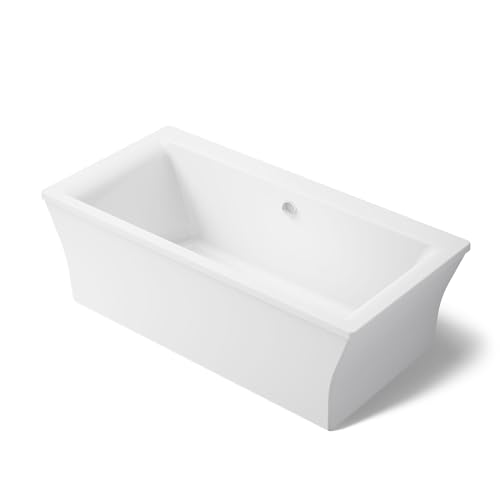
Kohler Stargaze 72″ x 36″ Freestanding Bath — Best Freestanding Statement
The Stargaze is the tub architects photograph: 72 inches of freestanding acrylic wrapped in a fluted shroud that hides the plumbing and gives the piece a furniture-like presence. Length is its soaking argument — at six feet, tall bathers get a full recline — and the freestanding format lets you place it under a window, angled in a corner, or centred on a feature wall, none of which an alcove allows. It is a premium-tier renovation decision, and the review treats it that way: the tub itself is only part of the budget, because a freestanding filler and floor drain work complete the project.
Strengths
- Full 72-inch length delivers a true stretch-out soak for tall bathers.
- Fluted shroud conceals connections and gives a finished look from every angle.
- Placement freedom transforms primary-bathroom layouts.
Trade-offs
- Needs a freestanding or floor-mount filler, which is a significant additional purchase.
- Cleaning around and behind a freestanding tub takes more effort than a deck tub.
- Acrylic shell: use non-abrasive cleaners only to protect the finish.
Key specs (verified listing): Stargaze 72″ x 36″ freestanding bath with fluted shroud, acrylic, White. A 60-inch Stargaze variant exists in the range for smaller rooms.
Plan the Stargaze around water delivery first. A deep freestanding tub filled through an undersized filler takes a long time to fill, and the romance of the piece dies while you wait; match the filler’s flow rate to the tub’s volume and confirm your water heater can supply a full hot fill. Leave access for the drain connection during installation — freestanding tubs connect through the floor, and a well-planned install includes an access strategy your future self will thank you for. If 72 inches overwhelms your room, the same family sells a 60-inch version, which keeps the shrouded look at a friendlier scale.
Best for: primary-bathroom renovations, tall soakers, and design-led layouts. / Not suited for: tight bathrooms, alcove replacements, or budgets that cannot stretch to a freestanding filler.
Check the current price on Amazon

Kohler Sunstruck 66″ x 36″ Oval Freestanding Bath — Best Oval Soak
The Sunstruck takes the freestanding idea and curves it. Its oval interior eliminates the corners that rectangular tubs waste, and the sloped ends cradle the back at a natural reclining angle, so the water depth you paid for lands on your shoulders instead of pooling at your feet. At 66 by 36 inches it is the freestanding option for rooms that cannot give the Stargaze its full six feet, and the straight-shroud version in the verified listing keeps the exterior profile clean and modern.
Strengths
- Oval interior supports the back evenly for a relaxed, high-water recline.
- Freestanding presence at a more room-friendly 66-inch length.
- Centre-drain layout lets either end be the “head” of the tub.
Trade-offs
- Oval basins offer less flat floor area for standing showers — this is a soaker, not a combo.
- Also needs a freestanding filler, with the same added budget as the Stargaze.
- Curved rim is less convenient for resting bottles and candles than a wide flat deck.
Key specs (verified listing): Sunstruck 66″ x 36″ oval freestanding bath with straight shroud, centre drain, acrylic, White.
Choose between the Sunstruck and Stargaze by how you soak. If you read, stretch and sprawl, length wins and the Stargaze is your tub. If you sink, recline and let the water hold you, the oval’s back angle wins at a shorter length. The Sunstruck family also includes versions with heated surface technology in other listings; the plain soaking model linked here keeps the purchase focused on geometry, which is what actually determines your nightly experience. As with all freestanding acrylic, lift rather than drag during installation, and set the tub on its levelled feet before final drain connection to avoid stressing the shell.
Best for: reclined soakers in mid-size primary bathrooms who want the freestanding look. / Not suited for: shower-tub combos or bathers who prefer a long flat stretch.
Check the current price on Amazon
Comparison Table
| Pick | Badge | Key spec | Best for |
|---|---|---|---|
| Kohler Tea-for-Two 66″ x 36″ | Best Overall Deep Soak | Cast iron drop-in, two-person width | Couples, long hot soaks |
| Kohler Greek 48″ x 32″ | Best for Small Bathrooms | Extra-deep basin, 4-ft footprint | Compact bathrooms |
| Kohler Archer 72″ x 36″ | Best Alcove | Alcove, sloped lumbar, low step-over | Tall bathers, tub-shower combos |
| Kohler Underscore 66″ x 36″ | Best Clean-Lined Drop-In | Rectangular basin, wide deck rim | Modern deck builds |
| Kohler Stargaze 72″ x 36″ | Best Freestanding | Freestanding, fluted shroud | Design-led renovations |
| Kohler Sunstruck 66″ x 36″ | Best Oval Soak | Oval freestanding, centre drain | Reclined soaking |
How to Choose a Deep Kohler Bathtub
Start with soaking depth, and learn to find it. Kohler publishes a water depth figure for each bath — the distance from the basin floor to the overflow drain. That single number predicts your soak better than the tub’s outside height, its length, or its gallon capacity, because it tells you where the waterline will sit relative to your body when you are in the tub and it is filled to the overflow. As a working rule, standard builder tubs leave water around the waist of a seated adult; genuinely deep models push coverage toward the chest. Cross-check the figure against the basin’s interior length: depth without length suits sitting soaks, while depth plus length suits full reclines, and the right combination depends on your height and how you actually bathe.
Match the installation type to the room you have
Alcove tubs like the Archer install between three walls with an integral apron, which makes them the natural choice for replacing an existing alcove tub and for tub-shower combinations. Drop-ins like the Tea-for-Two, Greek and Underscore sit in a framed deck you build and tile; they cost more in carpentry but give you a surrounding ledge and design freedom. Freestanding tubs like the Stargaze and Sunstruck need open floor, a floor-level drain connection and a separate filler. Choosing the wrong family for your room is the most expensive mistake in this category, because return shipping a bathtub is nobody’s idea of fun — measure the room, the doorway and the stairwell before you fall for a silhouette.
Acrylic versus cast iron, honestly
Cast iron, represented here by the Tea-for-Two, is the heat-retention and durability champion: it keeps water hot, feels rock-solid, and its enamel can serve for decades. Its costs are weight, price tier, and installation effort. Acrylic is lighter, warmer to the initial touch, more forgiving in shapes like ovals and fluted shrouds, and far easier to get up stairs and into position. Its costs are heat loss over long soaks and a surface that demands non-abrasive care. If you soak for twenty minutes, acrylic’s disadvantages barely register. If your ritual is an hour with a book, iron earns its premium — or compromise by filling acrylic tubs slightly hotter and topping up once.
Size the tub to the bather and the water heater
Two sizing checks save most regrets. First, the bather: anyone tall should prioritise interior length (the Stargaze and Archer at 72 inches), while anyone who soaks sitting up can trade length for depth (the Greek). Second, the water heater: a large deep tub can demand more hot water than a small tank supplies, leaving the last third of the fill lukewarm. Estimate the tub’s capacity to the overflow, assume roughly two-thirds of it should be hot, and compare that with your heater’s recovery. The Greek’s modest volume is a feature in homes with small tanks; the Tea-for-Two’s volume is a reason to consider a heater upgrade in homes that host long shared soaks.
Budget tiers, framed honestly
Without printing prices — they move too often to be useful in a guide — the Kohler deep-tub market falls into recognisable tiers. The entry tier is acrylic alcove and compact drop-in models like the Archer and Greek: the tub itself is the main cost, installation is conventional, and the total project stays close to a standard remodel. The mid tier is where the Underscore and Sunstruck sit: larger acrylic shells, deck carpentry or a freestanding filler, and trim kits that add up faster than first-time renovators expect. The premium tier is cast iron and the big freestanding Stargaze, where the fixture, the structural preparation and the filler together define the budget. The mistake is comparing tub prices across tiers as if installation were free; a “cheaper” freestanding tub paired with an unplanned filler and floor work routinely overtakes a “pricier” alcove tub installed in a day. Decide the tier by the room and the ritual, then compare models inside it.
Drain position and faucet plan
End drain, centre drain and reversible drain are not trivia — they determine where you recline, where the filler can mount, and whether the tub matches your rough-in. Centre-drain designs like the Sunstruck let two bathers sit at either end. Reversible designs like the Tea-for-Two forgive layout changes mid-renovation. Decide the faucet at the same time: deck-mount on a drop-in rim, wall-mount over an alcove, or a freestanding floor filler. Buying the tub first and the filler later is how projects stall with a beautiful shell sitting dry in the middle of the room.
How to Plan a Deep Tub Installation
You do not need to install the tub yourself — most buyers should hire a plumber for drain and supply work — but planning the sequence prevents the classic delays. First, verify the rough-in: drain location, drain size, and whether the existing trap aligns with the new tub’s drain position, especially when switching families. Second, confirm floor capacity for heavy options; cast iron plus water plus bathers is a serious load, and a contractor can assess joists from below before the tub arrives. Third, dry-fit everything: tub, filler, drain kit and overflow trim on site before walls close, because trim kits and drain assemblies are model-specific and the wrong finish or thread discovered at tile stage costs a week. Fourth, protect the basin during the rest of the renovation with its packaging or a fitted cover — construction debris and dropped tools are the leading cause of “new” tubs with chips. Finally, fill and drain the installed tub completely before the room is finished, checking every joint for leaks while access is still open. That single test, done early, is worth more than any warranty, and it takes less than an hour.
Soaking Depth, Explained: How to Read the Numbers Like a Designer
Because “deep” is the entire point of this guide, it is worth slowing down on the three numbers that govern your soak, since manufacturers display them inconsistently and shoppers routinely compare the wrong pair. The first is soaking depth, sometimes called water depth: basin floor to the centre of the overflow. Fill a tub beyond that point and the excess simply leaves through the overflow, so this figure is the ceiling on your waterline. The second is basin length at the floor, which is always shorter than the rim length quoted in product names — a “66-inch” tub may offer several inches less at the base because the ends slope. That slope is not wasted space; it is your backrest, and its angle determines whether you recline or sit bolt upright. The third is capacity to the overflow, which predicts both fill time and hot-water demand.
Put the three together and the personalities of the picks on this list snap into focus. The Greek wins on the first number relative to its size: its basin is engineered downward, so a seated bather gets chest-level water from a four-foot shell. The Tea-for-Two wins on the combination of depth and width — its steep walls mean the depth figure survives contact with two bathers, whose combined displacement would push a wide shallow tub’s waterline into the overflow. The Stargaze wins on the second number: interior length that lets a tall bather’s legs extend fully while the water stays high. The Sunstruck trades a little of everything for backrest angle, which is why its owners describe the soak as “held” rather than merely deep. When you compare any Kohler model not on this list, demand all three numbers; a listing that trumpets gallons while hiding soaking depth is telling you something.
One more subtlety: your own body is part of the specification. Displacement raises the waterline, so a bather who fills the tub to just below the overflow while standing outside it will meet a higher waterline once seated. Practically, this means you should fill a deep tub to a couple of inches below the overflow before getting in, then top up once settled if you want the maximum line. It also means couples should fill the Tea-for-Two conservatively the first time — two bathers displace a surprising amount, and an enthusiastic first fill ends with water exploring the bathroom floor through the overflow.
Care and Cleaning: Keeping Acrylic and Enamel Beautiful
A deep tub is a long-term fixture, and the two materials on this list age gracefully only with the right habits. For acrylic — the Archer, Underscore, Stargaze and Sunstruck — the rules are simple and strict: warm water, a soft cloth, and a mild non-abrasive cleaner. Never use scouring powders, abrasive pads or solvent-heavy sprays; acrylic scratches are not structural, but they dull the gloss and give soap film something to grip. Rinse after baths with bath salts or oils, which can leave a film that attracts dirt, and dry the basin occasionally if your water is hard, since mineral spotting shows first on a glossy white shell. Small acrylic scratches can usually be polished out with products made for the purpose, which is one quiet advantage of the material: it forgives.
Enamelled cast iron — the Tea-for-Two — tolerates more assertive cleaning but has its own vulnerability: impact. A dropped metal showerhead or a tool during renovation can chip enamel, and chips should be repaired promptly with an enamel touch-up kit before moisture reaches the iron beneath. Day to day, the enamel cleans like a porcelain sink and shrugs off the bath products that would stain lesser surfaces. Both materials share one enemy: standing water left for days in a guest bathroom, which deposits a tide line of minerals and soap. If a deep tub will sit unused between visitors, a quick rinse-and-wipe routine keeps it guest-ready. Treat the tub like the furniture-grade fixture it is, and either material will outlast the rest of the bathroom around it — which is precisely why choosing the right depth and shape now matters more than chasing the lowest tier price.
Common Buying Mistakes
- Judging depth by outside height. A tall shell with a low overflow is a shallow tub. Compare soaking depth figures instead.
- Ordering the wrong drain hand. Alcove tubs come in left- and right-drain versions; confirm against your plumbing before ordering.
- Ignoring the water heater. A deep 72-inch tub filled from a small tank ends lukewarm. Do the capacity maths first.
- Forgetting the filler. Freestanding tubs need freestanding fillers; the tub price is not the project price.
- Skipping the delivery path. Measure doors, halls and stairs. A 72-inch tub that cannot reach the bathroom is a lawn ornament.
- Buying jetted when you wanted soaking. Whirlpool variants of these shells exist; they add maintenance without adding depth. Buy the plain soaker if depth is the goal.
Matching the Tub to the Bather: Four Profiles
The nightly ritualist. You soak four or more evenings a week, you read in the tub, and a twenty-minute bath feels like an interruption. Your priorities are heat retention and a backrest that supports an hour without fidgeting. The Tea-for-Two is built for you if a deck is planned; if your layout is freestanding, the Sunstruck’s reclined oval is the closest experience in acrylic, filled a touch hotter to offset heat loss. Skip jetted variants — you will use the soak daily and the jets never, while inheriting their cleaning routine.
The tall bather in a standard house. You have folded yourself into 60-inch tubs for years and your knees have opinions. Length is your specification, and the honest options are the 72-inch Archer if your bathroom keeps its alcove, or the 72-inch Stargaze if the renovation frees the layout. Between them, choose by shower habits: daily showerers belong in the Archer, dedicated bathers in the Stargaze. Do not let anyone sell you a 66-inch tub as “basically as long” — at the margin of full extension, those inches are the entire product.
The small-bathroom realist. Your bathroom is honest about its size and so are you. The Greek exists for this profile: depth instead of length, faster fills, smaller hot-water demand, and a footprint that leaves room for the vanity you also need. Measure your seated soaking posture in your current tub before dismissing a four-foot bath; most people soak with knees bent regardless of the tub they own, which means depth — the Greek’s whole argument — is the upgrade you will actually feel.
The renovating couple. Two bathers, one tub, and a disagreement about temperature that has lasted years. The Tea-for-Two’s width and centre-friendly geometry make shared soaking comfortable rather than choreographed, and cast iron’s heat retention keeps the water pleasant for both of you. Budget honestly for the structural check and the multi-person install, and treat the tub as the thirty-year fixture it is. If the floor cannot take iron, the Underscore’s wide rectangular basin is the acrylic fallback that still seats two without a tangle.
Final Recommendation
For most buyers building the primary-bathroom soak they actually dream about, the Kohler Tea-for-Two is the deep tub to beat — cast iron heat, real two-person width, and a basin that puts water where it matters. If your bathroom is small, do not surrender: the Kohler Greek delivers the deepest soak per square foot on this list. Remodelling an alcove? The Archer 72-inch is the upgrade that keeps your layout and changes your evenings. And if the renovation is design-led, choose the Stargaze for length or the Sunstruck for its reclined oval — then budget the filler with clear eyes. Related guides in this programme: Best Soaking Tubs · Best Freestanding Bathtubs · Best Bathtub Faucets · Best Bath Pillows
Frequently Asked Questions
What makes a bathtub “deep” in practice?
Soaking depth — the basin floor to overflow distance — determines how much of your body sits underwater. Deep models raise the waterline from waist toward chest height for a seated adult. Outside shell height and total gallon capacity are secondary; always compare the soaking depth figure and interior length together.
Is cast iron worth it over acrylic for a soaking tub?
For long, frequent soaks, yes: cast iron retains heat noticeably longer and feels more substantial, and its enamel is extremely durable. For shorter soaks, tight budgets, upstairs bathrooms with weight concerns, or complex shapes like ovals, acrylic is the pragmatic choice and still delivers an excellent bath.
Can a deep tub work in a small bathroom?
Yes — that is exactly what compact extra-deep models like the 48-inch Greek are for. They trade length for depth, so you sit deeper with knees bent. The smaller fill volume also suits modest water heaters. Tall bathers, however, should test-sit the dimensions on paper against their leg length before committing.
Do freestanding tubs need special plumbing?
They need a floor-level drain connection and a separate filler — either floor-mounted or wall-mounted with enough spout reach. Neither is exotic, but both must be planned before flooring is finished, and the filler should have a flow rate matched to the tub’s volume so filling does not take excessively long.
Will a deep tub increase my water bill noticeably?
A deep tub uses more water per fill than a shallow one of the same length, and large models can strain small water heaters. Compact deep tubs blunt both effects. If you soak several times a week, the honest comparison is against the cost of the spa visits or the larger bathroom renovation the right tub replaces — for most owners the per-soak cost remains modest.
How long does a deep tub take to fill, and does it matter?
Fill time depends on the tub’s capacity and the filler’s flow rate, and for large deep tubs it is a real quality-of-life factor: a slow fill through an undersized faucet can stretch past the point where the first water in has started cooling. Match filler flow to tub volume, prefer wide-spout or high-flow fillers for the 66- and 72-inch models, and start the fill a few minutes before you intend to get in rather than treating the bath as an on-demand appliance.
Can I shower in a deep soaking tub?
In an alcove model like the Archer, comfortably — its step-over height and floor are designed for dual duty. In deep drop-in and freestanding soakers, showering is awkward and splash-prone; plan those as dedicated baths and keep a separate shower for daily use if the room allows.


