Disclosure: airfryerkitchensupply.com is reader-supported. When you buy through links on our site, we may earn an affiliate commission at no extra cost to you.
Where to buy
Every tub in this guide to the best standard bathtubs is sold through Amazon and was cross-checked against the live Amazon catalogue before it earned a place here. Start with the Kohler Underscore 60″ x 30″ Alcove Bath if you want the safest all-round standard tub, or the Bootz Industries Steel Bathtub if the renovation budget is doing the deciding. We never print product prices — they change too often to stay honest — so use the check-price links throughout.
The Best Standard Bathtubs: The Honest Workhorse of the Bathroom
The best standard bathtubs are not the sculptural freestanding centrepieces of magazine bathrooms, and this guide will not pretend otherwise. A standard bathtub — in practice, the 60-inch alcove tub that fits between three walls in the overwhelming majority of homes — is infrastructure: the tub children are bathed in, showers are taken over, dogs are washed in, and houses are sold with. Its virtues are unglamorous and total. It fits the existing plumbing. It accepts a shower above it. It can be replaced in a weekend without redesigning the room. And because manufacturers have made them by the million for decades, the good ones are very good and the value ones are astonishingly capable for the money.
Every pick here is a standard 60-inch-class alcove tub with an integral apron and tiling flange — the format that drops into a framed alcove, takes tile or a surround on three walls, and presents a finished front to the room. They divide by material, which is the decision that actually matters in this category: acrylic (the Kohler Underscore and Entity, the MAAX Rubix, the Kingston Brass Aqua Eden), Americast — American Standard’s enamelled engineered material in the Cambridge — and porcelain-enamelled steel in the Bootz. Each material has a genuine personality in weight, feel, durability and price tier, and the reviews below argue them honestly rather than crowning one for all bathrooms. Every ASIN was verified against its live listing, and dimensions quoted are the manufacturers’ figures from those verified listings.
Two orientation notes before the picks. First, drain side: alcove tubs are handed — left-hand or right-hand drain, judged facing the tub’s apron — and ordering the wrong hand is the category’s classic unforced error, so each pick notes its configuration and the buying guide explains how to check yours. Second, “standard” describes the footprint, not the bathing: within the same 60-inch frame, soaking depth varies by several inches between models, and those inches are the difference between a bath and a paddle. Depth is a headline spec in every review below for exactly that reason.
Alcove Tub Materials, Honestly Compared
Acrylic is the modern default and four of the six picks use it. It is light — one or two people can carry an acrylic tub up stairs that would defeat a cast-iron crew — warm to the touch, quiet under a shower, and moulded into the most comfortable shapes, with lumbar slopes and armrests that rigid materials cannot economically form. Its surface can scratch, though acrylic’s saving grace is that scratches buff out and the colour runs through the sheet rather than sitting on it as a coating. Reinforced acrylic — fibreglass-backed, as quality makers build it — flexes little and lasts decades. Americast, American Standard’s proprietary material, is best understood as enamel’s feel with a fraction of cast iron’s weight: a porcelain-enamel surface bonded to a formed composite body, giving a hard, glossy, quiet tub that resists chipping better than enamelled steel while staying liftable. Porcelain-enamelled steel — the Bootz — is the budget classic: a steel shell with a fired enamel coat, light, rigid, inexpensive, and honest about its compromises, which are a colder, louder surface and an enamel layer that can chip if struck hard, exposing steel that must be touched up promptly.
What is not here, deliberately: cast iron, the historical king, whose weight, cost and installation demands have moved it out of the “standard” conversation for most renovations; and thin fibreglass/gelcoat units, whose surfaces age fastest in this category. The standard tub’s modern story is acrylic’s rise, and the two non-acrylic picks survive in this guide because each does something acrylic does not — Americast’s enamel hardness at manageable weight, steel’s unbeatable price.
In this guide
Quick Picks
- Best Overall: Kohler Underscore 60″ x 30″ Alcove Bath — quality acrylic, integral apron and flange, left-hand drain; the reference standard tub.
- Best Enamel Feel: American Standard Cambridge Americast Soaking Bathtub — porcelain-enamel surface, 60 x 32, generous capacity, left-hand drain.
- Best Budget: Bootz Industries Steel Bathtub — enamelled steel, 60 x 30, right-hand drain; the renovation staple at the sharp end of the tier.
- Best Deep Soak: MAAX Rubix Acrylic Bathtub — 59.75 x 32 x 18.375 inches of acrylic soaking depth.
- Best Wide: Kingston Brass Aqua Eden VTAP603622L Alcove Tub — a 60 x 36 acrylic alcove for bathers who want room to stretch sideways.
- Best Modern Value: Kohler Entity 60″ x 32″ Alcove Bath — clean-lined Kohler acrylic at the accessible end of the brand.
How These Picks Were Chosen
We searched the Amazon catalogue by the manufacturers and formats that define the standard category — Kohler, American Standard, Bootz, MAAX, Kingston Brass and Delta alcove lines — and screened for the standard format strictly: roughly 60 inches long, alcove installation with integral apron and tiling flange, soaking (non-jetted) designs, in acrylic, Americast or enamelled steel. Freestanding, clawfoot, corner and walk-in tubs surfaced in results and were excluded as off-brief, however handsome. Each surviving pick was checked for a stated drain configuration, dimensions in the listing, and a manufacturer’s bathing geometry worth recommending — depth, width or slope earning its place. Every ASIN below comes from an API response matched to its listing title and is recorded in this article’s source file with its verification date. Prices are never printed, and no fixed ratings appear anywhere in the guide.
The 6 Best Standard Bathtubs
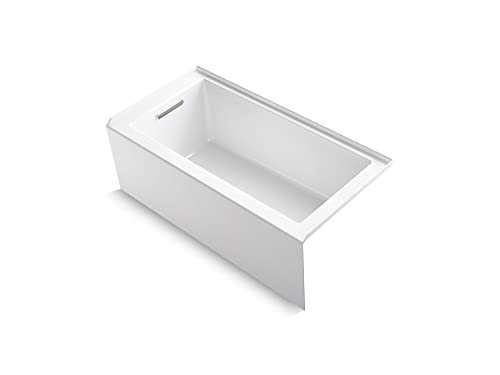
1. Kohler Underscore 60″ x 30″ Alcove Bath — Best Overall
The Underscore is what the standard tub looks like when a first-rank manufacturer treats it as a serious product rather than a commodity. Acrylic construction with an integral apron and integral flange, a left-hand drain in this configuration, and — the detail owners notice daily — a sloped backrest with a clean, modern profile that makes a 60×30 tub bathe bigger than its footprint. Kohler’s acrylic is reinforced, glossy and quiet, and the Underscore’s lines suit both a tile surround and a modern bath-shower combination without looking like a compromise in either.
Strengths
- Reinforced acrylic build with Kohler’s fit and finish — the benchmark for the standard format.
- Sloped lumbar support makes the standard footprint genuinely comfortable for soaking.
- Integral apron and flange simplify a watertight alcove installation with tile or surround.
Trade-offs
- Premium tier within the standard category — the Bootz does the same job for far less money.
- At 30 inches wide it is the standard width, not a spacious one; wide-tub bathers should look at the 32- and 36-inch picks.
- Drain and overflow hardware are separate purchases on Kohler tubs — budget for them.
Choose the Underscore when the renovation is meant to be done once and admired daily: a family bathroom remodel, a primary bath-shower, a resale-minded upgrade where the Kohler name quietly signals quality. It is the tub this guide would install in its own house with its own money, which is the definition of Best Overall here. Two ownership notes complete the picture. The acrylic’s gloss responds beautifully to ordinary non-abrasive cleaning and stays white in a way gelcoat never manages, so the tub photographs as well in year ten as in week one. And Kohler’s ecosystem — matching drains, fixtures and surrounds in consistent finishes — removes the finish-matching guesswork that consumes renovation weekends. A standard tub is a thirty-year decision; the Underscore is the version of that decision with the fewest possible regrets attached.
Best for: quality-first remodels and bath-shower combinations / Not suited for: tight budgets or bathers wanting extra width.
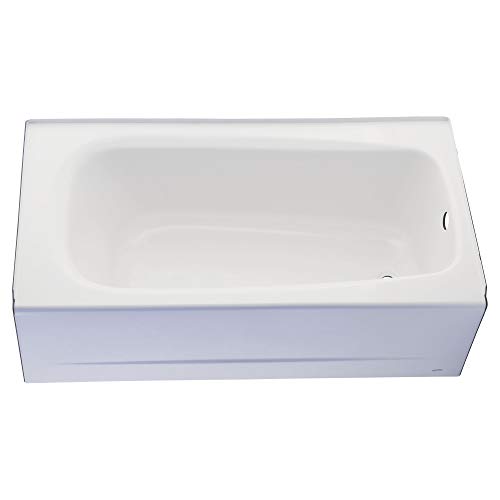
2. American Standard Cambridge Americast Soaking Bathtub — Best Enamel Feel
The Cambridge is the pick for people who love the feel of an old enamel tub and refuse its weight. American Standard’s Americast construction bonds a porcelain-enamel surface to an engineered body, producing a 60 x 32-inch apron-front soaking tub with a left-hand drain and a stated capacity in the 50–60 gallon range. It feels hard, glossy and substantial in the way acrylic does not, it shrugs off the abrasive cleaners enamel tolerates, and it installs at a weight a renovation crew can actually manage.
Strengths
- Porcelain-enamel surface with cast-iron character at a workable weight.
- 32-inch width and generous capacity make it a real soaker in a standard footprint.
- Americast’s insulated body keeps bath water warm and the tub quiet underfoot.
Trade-offs
- Heavier than acrylic picks — a two-person carry and a solid, level base are non-negotiable.
- Enamel can chip under a dropped heavy object; chips need prompt touch-up to protect the substrate.
- Its traditional styling suits classic bathrooms better than ultra-modern ones.
The Cambridge is the traditionalist’s standard tub, and its decades-long production run is its own testimonial. In a bathroom with classic fixtures it looks inevitable; in performance it splits the difference between iron and acrylic so evenly that many owners stop thinking about material altogether, which is the highest state a bathtub can achieve. Its apron-front presentation also deserves mention: among standard tubs it is the one that most convincingly pretends to be a piece of bathroom furniture rather than a fixture, which is why designers keep specifying it into period renovations where an overtly modern shell would break the spell.
Best for: classic bathrooms, enamel lovers, serious soakers / Not suited for: solo DIY carries or ultra-modern schemes.
Check the current price on Amazon

3. Bootz Industries Steel Bathtub — Best Budget
The Bootz is the standard tub’s proletarian hero: a porcelain-enamelled steel tub, 60 x 30 x 14.25 inches, right-hand drain in this configuration, at the price tier that has furnished more rental renovations, first homes and budget remodels than every other pick here combined. Steel’s virtues are real — light, rigid, dimensionally consistent, and cheap enough that a damaged one is a line item rather than a tragedy — and Bootz has refined the form across generations of builders who keep coming back.
Strengths
- The budget benchmark: a genuine standard tub at the sharpest tier in the category.
- Light and rigid — the easiest install here, and forgiving of solo renovation timelines.
- Enamel surface cleans easily and presents a clean, classic white finish.
Trade-offs
- Shallowest bathing well in the guide at 14.25 inches tall — a shower-first tub that can bathe, rather than a soaker.
- Steel is colder to the touch and louder under a shower than acrylic or Americast.
- Enamel chips are the known failure mode; treat dropped tools and bottles with respect.
Judge the Bootz by its job and it is flawless: a clean, standard, replaceable tub for bathrooms where the shower does the daily work. Landlords, flippers, first-home renovators and anyone diverting budget to tile and fixtures should buy it without a flicker of doubt — the money it saves is visible elsewhere in the room, and the tub itself will simply, competently, be a tub for decades. Its lightness deserves a final word, because it changes who can renovate: a steel tub can be carried, positioned and set by a small crew or a determined pair without machinery, in stairwell houses where a cast-iron removal is a production. Whole categories of housing — walk-up flats, narrow cottages, rental stock — are Bootz territory for that reason alone, and the tub’s ubiquity in them is not a failure of taste but a triumph of logistics.
Best for: budget remodels, rentals, shower-first bathrooms / Not suited for: deep-soak bathers or anyone wanting a quiet, warm surface.
Check the current price on Amazon
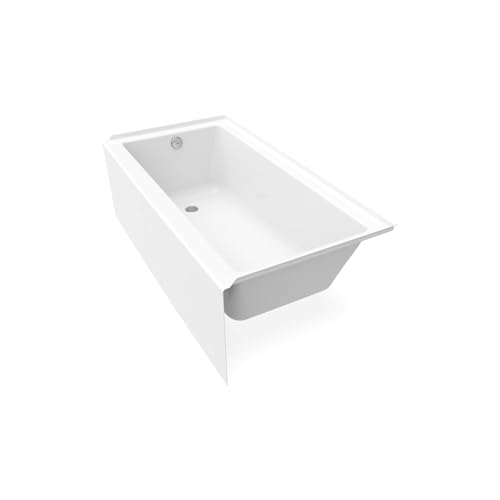
4. MAAX Rubix Acrylic Bathtub — Best Deep Soak
MAAX is the Canadian specialist that thinks about bathing geometry the way chair makers think about sitting, and the Rubix shows it: an acrylic alcove tub at 59.75 inches long, 32 wide and a notable 18.375 inches tall — depth being the entire point. In a category where the standard shell can be a shallow tray, the Rubix’s extra height translates into water that reaches a bather’s shoulders instead of their ribs. For the nightly soaker working within a standard alcove, this is the most important specification in the guide.
Strengths
- 18.375-inch height delivers the deepest standard-format soak here.
- 32-inch width pairs the depth with room across the shoulders.
- Acrylic warmth and quiet, with MAAX’s bathing-geometry design focus.
Trade-offs
- The taller apron is a higher step-over — small children, older bathers and anyone with mobility concerns should test the motion mentally before committing.
- Deep tubs use more water per bath; the soak is the point, but the meter notices.
- Left-hand configuration in this listing — confirm your drain side before ordering any tub, this one included.
The Rubix reframes what “standard” can mean: the same three-wall alcove, the same weekend installation, but a bath that behaves like a soaking tub. If your household’s tub is a destination rather than a utility — the evening soak as ritual — this is the pick, and its depth advantage is not a marginal spec-sheet win but a different experience of the same room. One planning note follows from the depth: a taller tub pairs best with a filler that can actually fill it at a reasonable pace, and with the water-heater conversation from this guide’s running-cost section held before, not after, the first long soak discovers the tank’s limits.
Best for: dedicated soakers in standard alcoves / Not suited for: households where step-over height is a concern.
Check the current price on Amazon

5. Kingston Brass Aqua Eden VTAP603622L Alcove Tub — Best Wide
Width is the forgotten dimension of standard tubs, and the Aqua Eden’s 60 x 36-inch acrylic format exists for the bathers the 30-inch world fails: broad shoulders, long soaks with a book and a ledge’s worth of candles, parents bathing two small children without a seating negotiation. Its acrylic construction keeps the big shell manageable in weight, the left-hand drain suits the most common alcove layout, and Kingston Brass’s traditional-fixture heritage gives it a classic face that suits period bathrooms.
Strengths
- 36-inch width — the roomiest bathing well in this guide by a clear margin.
- Acrylic keeps a big tub liftable and warm to the touch.
- Classic styling from a traditional bathroom brand suits period and family bathrooms.
Trade-offs
- Verify your alcove accepts 36 inches of depth from the wall — many standard alcoves are framed for 30 or 32, and this tub’s width is its demand as well as its gift.
- More water per bath, and a larger surface to clean.
- Less universally stocked than the Kohler lines; plan the purchase ahead of the renovation weekend.
Choose the Aqua Eden when the bather is the specification: tall, broad, or plural. It converts the standard alcove into the family tub and the long soak into a genuinely spacious event, at a tier well below the freestanding tubs that usually monopolise the word “roomy”. Parents of small children will find a second virtue in the width: bath time with two children and a fleet of plastic boats stops being a seating dispute, and the adult supervising from inside the tub — as every parent of a nervous first bather eventually does — fits without origami.
Best for: broad bathers, family bathing, spacious soaks / Not suited for: alcoves framed strictly for 30-inch tubs.


6. Kohler Entity 60″ x 32″ Alcove Bath — Best Modern Value
The Entity is Kohler’s clean-lined answer for buyers who want the brand’s acrylic quality and contemporary styling at the accessible end of its range: 60 x 32 inches, integral apron and flange, left-hand drain in this configuration, with the crisp, minimal profile that suits modern tile and fixtures. The extra two inches of width over the standard 30 are worth more than they sound — shoulders notice width before they notice almost anything else — and the Entity delivers them in the guide’s most current-looking shell.
Strengths
- Modern, minimal styling in quality Kohler acrylic at an accessible tier.
- 32-inch width improves real bathing comfort over the 30-inch standard.
- Integral apron and flange keep installation orthodox and watertight.
Trade-offs
- Drain hardware is separate, as with the Underscore — complete the basket before the plumber arrives.
- Its contemporary lines can look spare in a strongly traditional bathroom, where the Cambridge belongs.
- Soaking depth is good rather than Rubix-class; depth-first bathers know their pick.
The Entity is the renovator’s sweet spot for a modern family bathroom: brand, material, width and looks in balance, at the end of the Kohler range where value lives. If the Underscore is the connoisseur’s standard tub, the Entity is the pragmatist’s — and in most real renovations, pragmatism with good taste is exactly the brief. It is also the easiest pick here to build a coherent modern room around: its flat apron and squared geometry accept frameless glass, large-format tile and matte fixtures without a single visual argument, which is why it keeps appearing in the renovation photographs that send people to this category in the first place.
Best for: modern remodels wanting brand quality at a value tier / Not suited for: traditional schemes or depth-first soakers.
Check the current price on Amazon
Comparison Table
| Pick | Badge | Key spec | Best for |
|---|---|---|---|
| Kohler Underscore 60×30 | Best Overall | Acrylic, integral apron/flange, left drain | Quality-first remodels |
| American Standard Cambridge | Best Enamel Feel | Americast enamel, 60×32, 50–60 gal | Classic bathrooms, soakers |
| Bootz Steel | Best Budget | Enamelled steel, 60x30x14.25, right drain | Budgets, rentals, showers |
| MAAX Rubix | Best Deep Soak | Acrylic, 59.75x32x18.375 | Dedicated soakers |
| Kingston Brass Aqua Eden | Best Wide | Acrylic, 60×36, left drain | Broad and family bathing |
| Kohler Entity 60×32 | Best Modern Value | Acrylic, integral apron/flange, left drain | Modern value remodels |
How to Choose a Standard Bathtub
Measure first, and measure the right things. The alcove’s length between studs decides the tub length — 60 inches is standard, but verify rather than assume, because a tub even slightly long for its alcove is a renovation-stopping problem. The width you can accept is set by the alcove’s depth from the back wall and by the room’s door: a 36-inch tub like the Aqua Eden must physically travel through the house to reach its home, and stairwells and doorways vote on tub purchases more often than catalogues admit. Then check the drain: stand facing your existing tub’s apron — or the planned apron line — and note whether the drain sits to your left or right. Order that hand. This thirty-second check prevents the category’s most common and most entirely avoidable return.
Choose material by household, not by hierarchy. Families with children and dropped toys everywhere live well with forgiving, buffable acrylic. Traditionalists who maintain things properly get decades from enamel and Americast and enjoy their hard, glossy feel daily. Budget projects and rentals should take steel’s bargain without a second thought. Then choose geometry by bather: depth for soakers (Rubix), width for the broad and the familial (Aqua Eden, Cambridge, Entity), the standard well for shower-first households (Bootz, Underscore). Finally, complete the basket in one thought — drain and overflow kit in the finish of your fixtures, and confirm whether your pick includes it, because the Kohler picks in this guide do not, and discovering that on installation morning is a rite of passage nobody needs.
How a Standard Alcove Tub Is Installed: The Shape of the Job
This is an overview for planning and for understanding a contractor’s quote — plumbing and structural work belong to people qualified and, where required, licensed to do them. The job’s shape is consistent. The old tub comes out, which is usually the worst hour of the project: fixtures off, surround opened, the tub freed from its flange screws and drain, and manoeuvred out through the very doorway the new tub must enter. The alcove is then prepared — studs checked for level and plumb, the floor verified level, because a tub installed out of level pools water, stresses its shell and telegraphs the error forever. The new tub is dry-fitted, its drain assembly connected, and it is set into the alcove — quality installations bed acrylic and steel tubs in mortar or a manufacturer-approved support for a solid, flex-free feel underfoot — then levelled, fastened through its flange to the studs, and sealed. The surround or tile follows over the flange, the fixtures go on, and a full fill-and-drain test checks every joint before anyone calls it done.
For the competent DIY renovator, the honest division of labour is: demolition, alcove preparation, tiling and finishing are very achievable; drain and supply plumbing are where professional help earns its fee in a single visit. However the job is divided, two rules protect the result — never force a tub into an alcove that has not been measured twice, and never let the surround close until the tub has been filled, drained and inspected dry underneath. A standard tub installed with that care is a thirty-year fixture; installed carelessly, it is a leak with a warranty dispute attached.
Caring for Acrylic, Enamel and Americast
Each material in this guide has one care rule that matters and a paragraph of routine. Acrylic: clean with non-abrasive cleaners and a soft cloth — the surface’s enemy is scouring powder and gritty pads — and buff out the scratches that life eventually delivers, which acrylic uniquely forgives. Enamel and Americast: tolerate more cleaning chemistry but fear impact; a chipped spot should be touched up with an enamel repair kit promptly, because the chip, not the cleaning, is where deterioration starts. Enamelled steel: the same chip discipline, plus prompt drying of any rust-prone damage. For all three: keep bath mats with suction cups from living permanently on the floor of the tub (they trap moisture and can mark surfaces), rinse the tub after baths to slow soap film, and treat the caulk line at the apron as a consumable — renew it when it darkens or lifts, because that humble bead is the bathroom’s real waterproofing.
The Tub-and-Shower Combination: Designing the Standard Tub’s Second Job
Most standard tubs spend more of their lives as shower bases than as baths, and the good installations honour both jobs. Three details decide the combination’s quality. The floor of the tub is the shower’s floor: choose a tub with a textured, slip-resistant bathing floor where the maker offers it, keep it clean of soap film, which is the real slip hazard, and be honest that a deep soaker like the Rubix asks more of shower users at the step-over than a 14-inch Bootz does. The walls are the shower’s enclosure: tile over the flange with properly waterproofed backing, or a quality surround, sealed at every seam — the alcove format exists precisely to make this waterproofing orthodox and durable. The fixtures should be planned as a set: a showerhead on a slide bar serves bathers and showerers and cleaners alike, and a handheld makes washing children, dogs and the tub itself civilised. Households renovating once should also think a decade ahead — a grab bar’s blocking costs almost nothing while the walls are open and a great deal once they are tiled, and the standard alcove accepts one gracefully in a way sculptural tubs never will. The combination is not a compromise version of either fixture; done properly, it is the most versatile washing station a home can have.
Standard vs Freestanding: When the Standard Tub Wins
Freestanding tubs own the magazines, so this guide owes the standard format its honest defence. The standard alcove wins on space: it uses the room’s edges, needs no clearance moat around it, and fits the bathrooms that actually exist in most houses and flats. It wins on water discipline: splashes land on an apron and a floor designed for them, not on all sides of a sculptural island. It wins on showers, which freestanding tubs accept only awkwardly, with curtains on circular rails and the dignity of a Victorian experiment. It wins on storage: the alcove’s edges and a tub ledge hold the shampoo army that a freestanding rim refuses. And it wins on cost and replacement: the whole standard ecosystem — tubs, surrounds, doors, fixtures — is priced by competition at massive scale. Freestanding tubs win on sculpture and on the soak-as-event in a large, dedicated bathroom. Most households, most of the time, live in the standard format’s world, and the six picks here are its aristocracy and its value line alike. Choosing standard is not settling; it is usually the correct engineering answer wearing a plain face.
Water, Heat and the Running Costs of a Bath
A standard tub’s appetite deserves one clear paragraph, because depth and width choices follow you to the utility bill. The Cambridge’s listing states a 50–60 gallon capacity, typical of the format; deeper and wider picks hold more, shallower ones less, and a bather displaces a surprising share of whatever the tub holds. Two practical consequences follow. First, water heater recovery matters for bathing households: a deep-soak household that drains the tank will learn to schedule baths or size the heater, and the renovation is the moment to think it through. Second, material is a running-cost feature — acrylic and Americast’s insulated bodies keep water warm measurably longer than a bare steel shell, which quietly decides whether a soaker tops up the hot tap twice a bath or not at all. None of this should scare anyone off the deep picks; it should simply be priced in, in gallons and minutes, before the tile closes over the decision.
What the Price Tiers Buy in a Standard Tub
Since this guide prints no prices, the tiers deserve a plain account. The budget tier, where the Bootz stands alone here, buys the standard format complete — correct dimensions, a clean enamel finish, decades of service — in steel, with steel’s cold touch and chip discipline as the accepted costs. It is the tier of rentals, first homes and shower-first rooms, and within those briefs it is not a compromise at all. The middle tier — the Entity, the Rubix, the Aqua Eden — buys acrylic’s comfort and the geometry upgrades: width, depth, modern lines. This is where most family renovations should land, because the improvements are the ones bathers feel every single day. The premium end of standard — the Underscore and the Cambridge — buys finish, brand engineering and material character: Kohler’s reinforced acrylic and sculpted comfort, American Standard’s enamelled Americast. What no tier buys is a different installation: all six picks enter the same alcove by the same method, which is the standard format’s final kindness — the upgrade path never demands a different bathroom, only a better tub in it.
Bathing Children, Elders and Everyone Between: The Standard Tub Across a Lifetime
No fixture in the house serves a wider age range than the standard tub, and choosing with the whole lifespan in mind is the renovator’s quiet skill. For babies and children, the standard format’s virtues are depth discipline and company: a 30- or 32-inch tub holds a baby bath, then a toddler, then two siblings, with a parent kneeling at an apron of civilised height — and the shallower picks, Bootz included, are honestly easier for the small-child years, because less water is needed to reach a safe, warm depth. For school-age independence, the tub-shower combination takes over, and the textured floor and handheld shower chosen at installation become the safety system. For older bathers and ageing in place, the calculus inverts toward step-over height and support: the standard-height aprons are the manageable ones, grab bars planned into the alcove’s framing earn their keep, and a deep soaker — however lovely at forty — should be bought with sixty in mind. The standard tub’s final virtue is that it accommodates every one of these stages without redesign: the same alcove that bathed the baby showers the teenager and, with two bars and a seat, serves the grandparent. Few purchases in a home can honestly claim a sixty-year service relationship with a family; this one can, and it is the deepest reason the format endures.
Common Buying Mistakes
Ordering the wrong drain hand. Left and right are judged facing the apron. Check your alcove, then check the listing, then check both again in the cart. This mistake is pure loss — freight, delay, restocking — and entirely preventable.
Measuring the room instead of the route. The tub must travel: door, hallway, stairs, bathroom door. A 36-inch-wide tub that cannot make the turn is a sculpture for the garage.
Forgetting the drain kit. Several picks here exclude drain and overflow hardware. Order it with the tub, in the right finish, or installation day becomes shopping day.
Judging by length alone. All six picks are “60-inch tubs” whose bathing experiences differ enormously by depth and width. Soakers must shop the third dimension.
Skipping the bedding. An acrylic or steel tub set without proper support flexes, creaks and ages early. The mortar bed or approved support is not an upgrade; it is the installation.
Buying depth for a shower-first house, or shallows for a soaker. The tub’s geometry should follow the household’s actual bathing statistics, which most people know precisely and then ignore in the showroom. If baths are a monthly event, the Bootz’s honest shallows will serve better than a deep tub that makes every daily shower a climb; if the evening soak is the household’s religion, a standard-depth tub will disappoint nightly for twenty years. Count your baths before you count your inches.
Treating the surround as an afterthought. More standard tubs are ruined by failed waterproofing around them than by any defect in the tub itself. The flange, the backing, the seals and the caulk are one system with the shell — budget and schedule them together, or the best tub in this guide will preside over a rotting wall.
Final Recommendation
The default answer is the Kohler Underscore: the standard tub at its best-balanced. Modern value hunters should take the Kohler Entity, traditionalists and enamel lovers the American Standard Cambridge, soakers the MAAX Rubix, broad and family bathers the Kingston Brass Aqua Eden, and budget renovations the Bootz without hesitation. Measure the alcove, confirm the drain hand, complete the hardware basket — then any of these six will serve a household for decades. That durability is the standard tub’s closing argument. It is the least fashionable fixture in the bathroom and the one most likely to be used, without a thought, by three generations of the same family — bought well once, installed properly once, and then simply there, holding water and people, while everything around it is redecorated into and out of fashion. Buy it like the infrastructure it is, and it will repay you in the only currency bathrooms really trade in: mornings and evenings that simply work, every day, for everyone in the house, at every age of life.
Related guides in this programme: Best Bathtubs · Best Alcove Bathtubs · Best Soaking Bathtubs · Best Bathtubs For Small Bathrooms · Best Acrylic Bathtubs
Frequently Asked Questions
Is a wider or deeper tub worth it in a standard alcove?
For bathers, almost always — width and depth are the dimensions a body actually experiences, and the step from 30 to 32 or 36 inches wide, or from a 14-inch shell to the Rubix’s 18.375, transforms the same footprint’s comfort. The costs are more water per bath and, for the widest tubs, confirming the alcove and the route into the room accept the size. Shower-first households gain least and may prefer to spend the difference on fixtures.
What is the standard size for a bathtub?
The standard alcove bathtub is 60 inches long by 30 inches wide, which is why most picks here cluster around that footprint, with 32- and 36-inch widths as comfort upgrades. Always measure your actual alcove between studs and confirm the tub’s route through the house before ordering — “standard” describes most bathrooms, not all.
How do I know if I need a left-hand or right-hand drain tub?
Stand facing the tub’s apron — the finished front panel — as you would to get in. If the drain is on your left, you need a left-hand tub; on your right, a right-hand tub. Match the new tub to your existing plumbing unless the renovation is moving the drain, which is a plumber’s conversation.
Which is better, an acrylic or a steel bathtub?
Acrylic is warmer, quieter, more comfortable in shape and forgiving of scratches, at a higher tier. Enamelled steel is lighter, rigid and much cheaper, but colder, louder and prone to chips if struck. For a primary family bathroom most buyers land on acrylic; for budget and rental work, steel’s value is decisive. Americast sits between them with an enamel feel at manageable weight.
What is an alcove bathtub, and is it the same as a standard bathtub?
An alcove tub is designed to fit into a three-walled recess, with a finished apron front and a tiling flange on the wall sides — and in most homes it is exactly what “standard bathtub” means. All six picks in this guide are alcove tubs. The format suits the standard bathroom because it integrates with tile or a surround, accepts a shower above, and replaces like-for-like in future renovations.
How deep should a standard bathtub be for soaking?
Judge by the tub’s height and, more precisely, its overflow level: a standard shell around 14 inches tall offers a modest soak, while deeper designs like the 18.375-inch MAAX Rubix let water reach a seated bather’s shoulders. If soaking is the tub’s main job, depth is the first specification to shop.
Can I install a standard alcove tub myself?
Parts of the job suit a competent DIY renovator — demolition, alcove preparation, tiling and finishing. The drain and supply connections are where a licensed plumber earns their fee, and local rules may require one. However you divide the work, dry-fit first, bed the tub properly, and water-test every joint before closing the surround.
How long does a standard bathtub last?
Decades, with ordinary care. Acrylic and Americast tubs routinely serve twenty years and more; enamelled steel lasts similarly if chips are touched up before they rust. The parts that age first are not the tub but its entourage — caulk, fixtures and surrounds — which is another virtue of the standard format: everything around it is replaceable without touching the shell.
Can a standard alcove tub be replaced without redoing the whole bathroom?
Usually, yes — that is the format’s great renovation virtue. A same-size alcove tub swaps into the existing footprint and plumbing position, and the surround immediately around it is the only surface that must be disturbed. Careful demolition can sometimes preserve even the tile, though most renovators take the opportunity to renew the surround while access is open.
Do these tubs include the drain and faucet?
Generally no — standard tubs are sold as the shell, and drain/overflow kits and faucets are separate purchases, as noted for the Kohler picks in this guide. Confirm what your chosen listing includes and order the hardware in the same finish as your other fixtures at the same time.


