Disclosure: airfryerkitchensupply.com is reader-supported. When you buy through links on our site, we may earn an affiliate commission at no extra cost to you.
Where to buy
All six window grilles below were confirmed as current Amazon listings before this guide was written. Measure your window opening — width, height and the mounting surface available inside or outside the frame — before ordering, and read the safety section of this guide first: on any window that serves as a bedroom escape route, only a quick-release or hinged grille belongs, whatever it costs.
Quick links to the verified picks in this guide: Grisham PP SPAG Window Security Bars with Quick-Release Egress, 5-Bar White · Grisham AWG Fixed Window Security Bars, 3-Bar Black · Grisham Spear Point Heavy-Duty Window Bars, 24×36 White · Prime-Line Segal S 4752 Fixed 3-Bar Window Security Grille · Prime-Line S 4778 Segal Hinged 4-Bar Window Security Grille, Bronze · Gecheer Adjustable Window Security Grille with 2 Crossbars. Every product link in this article points to a listing we confirmed before writing; anything we could not confirm is discussed in plain text only, with no link.
The best window grills — the steel security grilles and bars fitted over a window — solve two problems that pull in opposite directions, and the tension between them defines this entire category. On one side is security and safety: a ground-floor or basement window is the softest entry point in most houses, and an openable window is also a fall risk for small children. On the other side is escape: a window in a bedroom is a fire exit, and a grille that keeps a burglar out must never keep your family in. Every responsible pick in this guide is chosen with both duties in mind. Fixed grilles belong on windows nobody would ever exit through — basement wells, garage windows, high transoms. Quick-release and hinged grilles, which open from inside without a key or tool, belong on bedrooms and any room where people sleep. This guide ranks six verified grilles across both families — adjustable telescoping models that fit most openings without custom fabrication, a heavy-duty spear-point design for maximum deterrence, and hinged and fixed classics from the window-hardware trade — and explains the measuring, mounting and code considerations that matter far more than the steel itself. Read the egress guidance in this guide as seriously as the product rankings — in this one category, choosing the wrong type for the wrong window is not a shopping mistake but a safety hazard.
In this guide
Quick Picks
Grisham PP SPAG Window Security Bars with Quick-Release Egress, 5-Bar White — Best Overall: Quick-release egress, five bars, adjustable 22–42 inch width — the grille that does the bedroom job correctly: security outside, instant escape inside. — Check the current price on Amazon
Grisham AWG Fixed Window Security Bars, 3-Bar Black — Best Budget Fixed Grille: A simple, honest fixed grille for basement and utility windows — adjustable width, three bars, black finish, no pretense about what it is. — Check the current price on Amazon
Grisham Spear Point Heavy-Duty Window Bars, 24×36 White — Best Heavy-Duty Deterrent: Spear-point finials and heavy-duty construction in a fixed 24×36 size — the strongest visual and physical deterrent in this guide. — Check the current price on Amazon
Prime-Line Segal S 4752 Fixed 3-Bar Window Security Grille — Best Hardware-Trade Classic: The Segal grille is the window-hardware trade’s standard fixed guard — telescoping 23½–38 inch fit, sold through hardware channels for decades. — Check the current price on Amazon
Prime-Line S 4778 Segal Hinged 4-Bar Window Security Grille, Bronze — Best Hinged Egress Option: A hinged four-bar grille that swings open from inside — egress compliance with a bronze finish that suits older and traditional homes. — Check the current price on Amazon
Gecheer Adjustable Window Security Grille with 2 Crossbars — Best Wide-Span Adjustable: Galvanized steel with two crossbars spanning 27.6–41.3 inches — corrosion-proof construction for exterior mounting in harsh weather. — Check the current price on Amazon
How These Picks Were Chosen
Safety law and common sense set the first filter. We separated every candidate into fixed versus releasable, and we only recommend fixed grilles for non-egress windows; for sleeping rooms, only quick-release or hinged models appear here, and the reviews say so in plain language. A grille guide that ignores egress would be negligent, and this one does not.
Every product was verified on this site’s Amazon integration: searched by brand and model, the returned listing title matched to the exact grille — bar count, size range and finish — that we intended to recommend, and the ASIN recorded only on a confident match. Grisham and Prime-Line dominate the verified results honestly: they are the two established American makers of residential window guards, and the market’s depth beyond them is mostly unbranded variations on the same telescoping idea.
We ranked on the ownership factors: adjustment range and how honestly it is stated, steel construction and finish durability, mounting hardware and whether the design accepts one-way (non-removable) screws, the release mechanism’s smoothness on releasable models, and bar spacing — which matters both for security and for child safety.
A note on expectations: a window grille is a deterrent and a delay, not a vault. It raises the effort, noise and time of a break-in past what most opportunistic intruders will accept, and it keeps children and pets from falls. It works as part of a system — locks, lighting, an alarm — and the guide treats it that way rather than overselling any single product.
We also considered the unglamorous question of what happens in year five: finishes that survive weather, mechanisms that survive paint and neglect, and makers who will still exist to sell a replacement part. Safety hardware is a decades-long installation, and every pick here was chosen as if it would still be on the window — and still be expected to work — long after the receipt is forgotten.
The 6 Best Window Grills and Security Bars

Grisham PP SPAG Window Security Bars with Quick-Release Egress, 5-Bar White — Best Overall
The PP SPAG line is Grisham’s answer to the category’s central tension, and it is the right answer: solid security bars on the outside face of the problem, and a quick-release mechanism on the inside that opens the grille fast, without a key, a code or a tool, when seconds matter. The 5-bar version at 22 inches high covers the classic bedroom window proportions, the width telescopes from 22 to 42 inches to fit the opening, and the white finish disappears against most trim.
It suits bedrooms first — this is the grille type your fire code and your conscience both want on a sleeping room — and any occupied room whose window is a realistic escape route. It also serves child safety duty, keeping small children from openable windows. It is less suited to buyers wanting a fixed grille’s absolute rigidity at the lowest cost, and its release mechanism, like any moving part, wants a test operation a few times a year so it is never stiff on the day it matters.
Ownership notes: practice the release with every household member who sleeps in the room, the way you would a fire drill — a mechanism nobody has operated is a mechanism that might as well not exist. Mount with the included hardware into solid framing, and consider the non-removable screw options discussed in the guide below for the exterior-facing fasteners.
Strengths
- Quick-release egress opens from inside without key or tool
- Adjustable 22–42 in width fits most bedroom windows
- Five-bar coverage with a clean, trim-friendly white finish
Trade-offs
- Release mechanism needs periodic test operation
- Costs more than a fixed grille of the same size
- Telescoping fit must be measured carefully for full bar overlap
| Height / bars | 22 in, 5 bars (per Amazon title) |
| Width | Adjustable 22–42 in (per Amazon title) |
| Release | Quick-release egress (per Amazon title) |
| Finish | White |
This is the grille we would put on our own kids’ windows, and that is the review in one sentence. The security is real — Grisham’s steel and spacing are the residential standard — and the release is genuine, not a theoretical hinge seized with paint. In a category where the cheapest option can be a lethal mistake on the wrong window, the PP SPAG’s premium over fixed bars is the best-spent money in this guide.
Best for: bedrooms and any sleeping room needing security plus escape / Not suited for: non-egress windows where a fixed grille suffices
Check the current price on Amazon

Grisham AWG Fixed Window Security Bars, 3-Bar Black — Best Budget Fixed Grille
The AWG fixed bars are the workhorse end of the Grisham line: telescoping width adjustment, a three-bar span sized for short windows — basement windows, garage windows, utility and laundry openings — and a black finish that reads as intentional hardware rather than an afterthought. There is no release mechanism because there must not be one on the windows this fits: nobody exits through a 15-inch basement window, and its job is purely to close an entry point and prevent falls into window wells.
It suits the classic fixed-grille applications perfectly, and its smaller height range is a feature — it is sized for the short, wide windows that the taller bedroom models do not fit. It is categorically not suited to bedrooms or any sleeping room, and this guide will not pretend otherwise for the sake of a sale: fixed means fixed, and egress windows need the releasable picks above and below.
Ownership notes: for basement duty, mount into the masonry or framing as the instructions direct and think about corrosion — a basement window lives in damp air, and a wipe of the finish during spring cleaning keeps the black looking like hardware rather than neglect. Check your window-well cover compatibility too; grille plus well cover is the complete basement system.
Strengths
- Correctly sized for short basement and utility windows
- Adjustable width simplifies fitting without fabrication
- Simple fixed design — nothing to maintain or seize
Trade-offs
- Fixed: never for bedrooms or egress windows
- Three-bar span suits short windows only
- Basic deterrent tier versus heavy-duty designs
| Height / bars | 14¾–15¾ in, 3 bars (per Amazon title) |
| Width | Adjustable 22¾–38½ in (per Amazon title) |
| Finish | Black |
Most houses have exactly two or three windows this grille was born for, and on those windows it is the right purchase at the right tier: real steel, real fit, no wasted money on a release mechanism the window’s size makes meaningless. Buy it for the basement and garage, buy the releasable models for the bedrooms, and the house is covered correctly — which is the entire goal.
Best for: basement, garage and utility windows / Not suited for: any window used for sleeping-room escape
Check the current price on Amazon

Grisham Spear Point Heavy-Duty Window Bars, 24×36 White — Best Heavy-Duty Deterrent
Some windows need a grille that argues. The Spear Point’s finial-topped vertical bars and heavy-duty build are designed to be read from the street: this window is work, noise and time, and the house next door looks easier. Deterrence is a legitimate security layer — most residential break-ins are opportunistic, and a window that visibly refuses to be a quick entry redirects that opportunism elsewhere. The fixed 24 by 36 inch size suits standard basement, side and utility windows.
It suits ground-floor side windows, alley-facing openings and any non-egress window in a higher-risk setting, as well as homes where the grille is part of the exterior’s traditional barred-window aesthetic. It is a fixed grille — the egress rule applies with full force: never on a bedroom. Its fixed sizing also means your window must actually be its size; measure twice, because there is no telescoping forgiveness here.
Ownership notes: the spear-point style pairs naturally with matching Grisham door and window guards for a coherent exterior. Mounting this heavier unit wants solid anchoring into framing or masonry with appropriate fasteners — a heavy grille on weak screws is a decoration, not a barrier. Keep the white finish washed; a clean, maintained grille signals an attended house, which is half its job.
Strengths
- Spear-point design maximizes deterrence on sight
- Heavy-duty construction for higher-risk openings
- Fixed sizing gives a rigid, rattle-free installation
Trade-offs
- Fixed size only — your window must match 24×36
- Fixed grille: never for egress windows
- Heavier unit demands solid anchoring
| Size | 24 x 36 in fixed (per Amazon title) |
| Style | Spear point, heavy-duty (per Amazon title) |
| Finish | White |
Buy the Spear Point when the window’s risk profile justifies a statement: the side window facing the alley, the ground-floor opening behind the hedge. Its value is measured in the intruder who never tries, which you will never be able to count — the quiet arithmetic of all good deterrence. Installed on the right window with the right anchors, it is the strongest single product in this guide.
Best for: high-visibility ground-floor and alley-facing non-egress windows / Not suited for: bedrooms, or windows that do not match its fixed size
Check the current price on Amazon
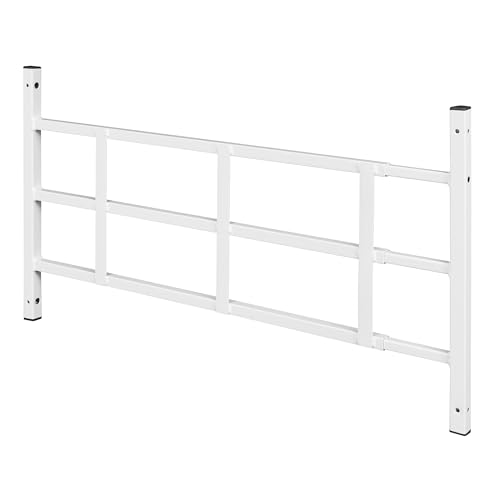
Prime-Line Segal S 4752 Fixed 3-Bar Window Security Grille — Best Hardware-Trade Classic
Prime-Line’s Segal line is what hardware stores have stocked for generations when a customer asks for window bars: a fixed three-bar grille in white, telescoping from 23½ to 38 inches wide, built to the unglamorous standards of the window-repair trade. If your house already has window guards, odds are good they are Segals or their ancestors, and matching them is a legitimate reason to choose this model on its own.
It suits non-egress windows throughout the house — basements, bathrooms, garages, stairwell windows — and renovation work where matching existing hardware matters. The fixed designation governs everything: not for bedrooms, not for any sleeper’s escape route. Within its correct applications it is a fit-and-forget product with the deep parts and documentation trail of a trade standard.
Ownership notes: Prime-Line’s distribution through hardware stores means you can usually put hands on this grille before buying, and replacement hardware is a local trip rather than a shipment. The white finish matches the painted-trim look of most existing installations. As with all fixed guards, install with an eye to the future: the next owner of your house deserves clear documentation of which windows are barred fixed and which release.
Strengths
- Trade-standard design with decades of installed history
- Telescoping fit across the common 23½–38 in range
- Hardware-store availability and parts support
Trade-offs
- Fixed: non-egress windows only
- Three-bar, standard-duty deterrent tier
- Utilitarian appearance
| Width | Adjustable 23½–38 in (per Amazon title) |
| Bars | 3, fixed (per Amazon title) |
| Finish | White |
The Segal is the rational renovator’s grille: proven, available, matchable, and priced by the hardware trade rather than the gadget market. It will not win a design award or stop a determined professional, and it does not claim to — it closes the opportunistic entry point and the fall risk on the windows that need exactly that. Sometimes the standard product is standard because it is correct.
Best for: renovations, matching existing guards, non-egress windows / Not suited for: bedrooms or maximum-deterrence applications
Check the current price on Amazon

Prime-Line S 4778 Segal Hinged 4-Bar Window Security Grille, Bronze — Best Hinged Egress Option
The hinged Segal solves the egress problem the older way: the whole grille is mounted on hinges and secured with an interior release, so in an emergency the guard swings open and the window becomes an exit again. The four-bar span and 22 to 38 inch width cover the standard bedroom range, and the bronze finish is a genuine aesthetic option in a category dominated by black and white — it sits naturally on brick, stone and traditional trim where a white grille would shout.
It suits bedrooms in older homes, historic-look renovations, and any sleeping room where the quick-release telescoping models do not fit the window or the house’s character. The hinge system wants the same discipline as any egress hardware: operate it in drills, keep the moving parts clean and free, and never let paint seal it shut across a repaint — a classic and genuinely dangerous maintenance failure.
Ownership notes: the hinged design also opens for window cleaning and for passing large items, small daily mercies owners appreciate for decades. Install the hinges into solid framing — a hinged grille’s strength is its mounting’s strength — and check local code language on release mechanisms, since hinged-with-interior-latch designs are the long-accepted standard in most jurisdictions.
Strengths
- Hinged opening restores full window egress from inside
- Bronze finish suits traditional and historic exteriors
- Four-bar coverage across the standard bedroom width range
Trade-offs
- Hinges and latch need periodic operation and care
- Heavier installation than telescoping fixed guards
- Never paint the mechanism shut — a real maintenance rule
| Width | 22–38 in (per Amazon title) |
| Bars | 4, hinged (per Amazon title) |
| Finish | Bronze |
Choose the hinged Segal when the house’s character or the window’s geometry points away from the telescoping quick-release models. It is the traditional, code-familiar answer to the bedroom problem, with a finish that respects older architecture. Its long service in the trade means inspectors, insurers and future buyers all recognize what it is — an underrated virtue in safety hardware.
Best for: bedrooms in traditional and older homes / Not suited for: owners who will not maintain a moving mechanism
Check the current price on Amazon

Gecheer Adjustable Window Security Grille with 2 Crossbars — Best Wide-Span Adjustable
The Gecheer grille takes a different construction approach: heavy-duty galvanized steel — zinc-coated against rust rather than painted over it — with two horizontal crossbars tying the verticals, adjusting across a 27.6 to 41.3 inch span. Galvanizing is the right metallurgy for a grille that will live outdoors in rain and sun for a decade; paint eventually chips and rusts at the chips, while a galvanized surface protects itself at small damage points.
It suits exterior-mounted applications in wet climates, coastal air, and windows where a painted finish has failed before — sheds, garages, basements with exterior wells, and utility buildings as well as houses. It is a fixed grille, so the egress rule stands untouched: non-egress windows only. Its industrial look is honest rather than decorative; on a house’s street face, the Grisham and Segal finishes are more at home, while on the working sides of a property the Gecheer’s toughness is the point.
Ownership notes: galvanized steel can be painted if you need it to match trim — use a primer meant for galvanized surfaces or the paint will peel. The crossbar design also makes this grille a good base for adding a fine mesh behind it where insects or debris through a basement window are part of the problem. Anchor into sound material; galvanized toughness deserves mounting to match.
Strengths
- Galvanized steel shrugs off weather and coastal air
- Two crossbars stiffen the span against flexing
- Generous 27.6–41.3 in adjustment range
Trade-offs
- Fixed grille: non-egress windows only
- Industrial appearance versus residential finishes
- Painting galvanized steel needs the correct primer
| Width | Fits 27.6–41.3 in (per Amazon title) |
| Material | Galvanized steel, heavy-duty (per Amazon title) |
| Design | 2 crossbars |
The Gecheer is the engineer’s pick: the right material for the environment, a braced design, and no cosmetic promises it cannot keep. For exterior duty in real weather — the basement window under the drip line, the coastal garage, the outbuilding — it will simply outlast painted rivals. Put the pretty grilles on the street face and this one where the weather works, and both will be doing the job they were built for in ten years.
Best for: exterior mounting in wet or coastal climates, outbuildings / Not suited for: bedrooms or formal street-facing windows
Check the current price on Amazon
Comparison Table
| Pick | Badge | Key spec | Best for |
|---|---|---|---|
| Grisham PP SPAG Window Security Bars with Quick-Release Egress, 5-Bar White | Best Overall | Quick-release, 5-bar, 22–42 in | bedrooms and any sleeping room needing security plus escape |
| Grisham AWG Fixed Window Security Bars, 3-Bar Black | Best Budget Fixed Grille | Fixed 3-bar, short-window sizing | basement, garage and utility windows |
| Grisham Spear Point Heavy-Duty Window Bars, 24×36 White | Best Heavy-Duty Deterrent | Heavy-duty spear point, 24×36 | high-visibility ground-floor and alley-facing non-egress windows |
| Prime-Line Segal S 4752 Fixed 3-Bar Window Security Grille | Best Hardware-Trade Classic | Fixed 3-bar, 23½–38 in | renovations, matching existing guards, non-egress windows |
| Prime-Line S 4778 Segal Hinged 4-Bar Window Security Grille, Bronze | Best Hinged Egress Option | Hinged 4-bar, bronze, egress | bedrooms in traditional and older homes |
| Gecheer Adjustable Window Security Grille with 2 Crossbars | Best Wide-Span Adjustable | Galvanized, 2 crossbars, 27.6–41.3 in | exterior mounting in wet or coastal climates, outbuildings |
How to Choose Window Grills: Egress First, Then Everything Else
The first question is not about the grille at all — it is about the window. Is this window a designated or realistic escape route from a sleeping room? Building codes in most jurisdictions require bedroom windows to function as emergency exits, and any grille over them must open from the inside without keys, tools or special knowledge. If the answer is yes, your shortlist is only the quick-release and hinged models, full stop. If the window is a basement, garage, bathroom or high window nobody could exit through, fixed grilles enter the list and cost less.
Second, measure the opening honestly: width, height, and the depth and material of the mounting surface — wood frame, masonry, vinyl — because the grille’s adjustment range and its fasteners must match all three. Telescoping grilles forgive an inch of optimism; fixed-size grilles forgive nothing. Third, match bar count and height to the opening: a grille should cover the openable portion of the window fully, with spacing that neither a child’s head nor an intruder’s tools can exploit.
- Sleeping room window = quick-release or hinged grille only
- Measure width, height AND mounting material before ordering
- Cover the full openable area; check bar spacing for child safety
- Decide interior vs exterior mounting before choosing finish and hardware
Installation: Anchors, One-Way Screws and Doing It Once
A grille is exactly as strong as what it is screwed into. The hierarchy is unforgiving: long screws into wall framing or proper masonry anchors are a barrier; short screws into trim or vinyl are a suggestion. Locate the framing, use the fastener lengths the manufacturer specifies for your wall type, and if the mounting surface is doubtful, that — not the grille — is the project to fix first.
For exterior-mounted grilles, use non-removable (one-way) screws or tamper-resistant fasteners on the accessible side, so the grille cannot simply be unscrewed by the person it exists to stop. Interior-mounted grilles get their security from the room side being the safe side. On releasable models, install, then test the release from inside at once, and re-test it every few months forever — egress hardware that is never exercised is a hope, not a mechanism. Finally, check your local rules: some jurisdictions and insurers have specific requirements for bedroom window guards, and a permit or inspection conversation is cheap compared with a violation discovered after an incident.
Child Safety: The Other Job These Grills Do
Falls from windows injure thousands of children, and a properly fitted window guard is one of the proven countermeasures — distinct from an insect screen, which will not hold a leaning child’s weight and must never be treated as a barrier. For child duty, bar spacing and the guard’s resistance to being pushed out by a determined toddler matter as much as burglary resistance, and releasable guards have a second virtue: adults can open them instantly while children cannot operate the release.
Fit guards on any window a child can reach by climbing — which, in a child’s physics, is every window above the ground floor and most on it. Pair them with the behavioral layer: furniture that invites climbing stays away from windows, and windows in children’s rooms stay closed or guarded-open, never screen-only. The grilles in this guide serve both masters — security and safety — when they are chosen and fitted with both in mind.
Interior vs Exterior Mounting: Which Side of the Glass?
Exterior mounting puts the grille in the weather and in public view: maximum deterrence, maximum exposure. It suits painted or galvanized models built for it, demands tamper-resistant fasteners, and in some neighborhoods and historic districts may face aesthetic rules. Interior mounting hides the grille from the street, protects it from weather and tampering alike, and keeps the release mechanism on the room side where it belongs — at the cost of the window opening inward past it on some window types, and of deterrence nobody can see.
Many owners split the difference by risk: exterior, visible grilles on the vulnerable ground-floor openings where deterrence pays, interior guards on upper and bedroom windows where egress and child safety dominate. There is no universal right answer — there is a right answer per window, which is why this guide insists on deciding window by window rather than buying a houseful of one model.
Aesthetics: Keeping Security From Looking Like a Siege
The most common objection to window grilles is not cost or installation — it is the fear that the house will look defended rather than lived in. The modern residential lines answer that fear directly: slim profiles in white that disappear against painted trim, bronze that belongs on brick and stone, and spear-point finials that read as traditional ironwork rather than hardware. A grille color-matched to the window trim is nearly invisible from the street; the same grille in a contrasting finish is a billboard.
Landscaping completes the disguise and the security at once: thorny shrubs beneath a ground-floor window are a centuries-old barrier that happens to flower. Lighting does similar double duty — a grille in a lit, visible window is a deterrent; the same grille in darkness behind a hedge is an invitation to work unobserved. Think of the grille as one visible sentence in the house’s whole statement about itself, and write the rest of the statement to match.
Insurance, Codes and the Paper Trail
Safety hardware lives partly on paper. Many insurers look favorably on window guards on vulnerable openings, and some require releasable guards where bedrooms have bars — a non-compliant fixed grille can complicate a claim after a fire in ways no premium saving justifies. Keep purchase records, installation photos and the manufacturer’s release instructions together; if you sell the house, that folder converts a buyer’s question mark into a documented feature.
Local variation is real: historic districts may govern exterior-visible grilles, some cities register window-guard requirements for homes with young children, and rental properties often face stricter guard rules than owner-occupied homes. A short call to your building department before installation is the cheapest step in the whole project — it takes ten minutes and it makes every later step defensible.
Maintaining Grilles So They Work on the One Day That Matters
A window grille asks for almost nothing, which is exactly why its few needs get forgotten. Once a year: check every fastener for tightness and corrosion, wire-brush and touch up any rust spot on painted models before it spreads, wash the bars so the installation keeps signaling an attended house, and operate every release and hinge through its full travel. On galvanized models the inspection is mostly about the fasteners, which are usually the least corrosion-proof part of the system.
After any repaint of the window or wall, inspect the grille again before the paint cures — drips and overspray on a release mechanism are the classic way a compliant installation quietly becomes a fixed one. And when household members change — a child grows tall enough to reach a release, an elderly parent moves in — re-run the drill and re-ask the egress question for that room. The grille’s job description changes as the household does, and a five-minute review keeps the hardware matched to the people it protects.
How to Measure and Install a Window Grille Correctly
The universal pattern below fits the telescoping and fixed models in this guide; your product’s instructions govern its specifics, and on egress windows the release test at the end is not optional.
- Classify the window first: sleeping-room escape route (releasable grille only) or non-egress (fixed allowed). Write the classification on your plan — it decides the product, not the other way round.
- Measure the opening width and height in three places each (top, middle, bottom) and use the smallest figures; old frames are rarely square, and grilles must fit the window that exists.
- Choose the mounting surface and find its structure: studs or solid framing for wood walls, sound masonry for brick or block. Mark anchor points that land in structure, not trim.
- Dry-fit the grille, extend telescoping sections to a snug fit with full overlap, and confirm bar coverage across the whole openable area with no exploitable gap at the edges.
- Fasten with the specified screws or anchors — tamper-resistant or one-way fasteners for exterior-accessible screws — driving into structure at every point, and check the grille for flex: it should feel like part of the wall.
- For releasable models: operate the release from inside three times, teach every sleeper in the room how it works, and schedule a re-test habit (daylight-saving clock changes are a good trigger).
- Finish with documentation: photograph the installation, keep the instructions, and note which windows are fixed and which release — for insurers, future owners and your own memory.
Recheck fasteners after the first season; new installations settle, wood shrinks, and a grille that was tight in spring can develop play by winter. A five-minute annual pass with a screwdriver keeps the whole system honest.
If your home has children, add the guards to your household safety routine alongside smoke-detector tests: same weekend, same checklist, same seriousness. The two systems protect against the same fire from opposite directions — one gets you warned, the other gets you out.
Common Buying Mistakes
Mistake 1: Putting a fixed grille on a bedroom window. The single dangerous error in this category. A fixed grille over a sleeping room’s only escape window can trap occupants in a fire. Bedrooms get quick-release or hinged grilles, always, whatever the price difference.
Mistake 2: Screwing into trim instead of structure. A grille anchored to decorative trim pulls out with hand force. The barrier is the anchoring: long fasteners into framing or proper masonry anchors, at every mounting point.
Mistake 3: Trusting an insect screen as a child guard. Screens keep bugs out and nothing else in — they give way under a child’s leaning weight. Fall protection means a rated guard or grille with proper spacing, fitted to hold real force.
Mistake 4: Never testing the release mechanism. Paint, corrosion and simple unfamiliarity defeat untested releases. Operate it on a schedule, teach the room’s sleepers, and never paint over moving parts during a repaint.
Mistake 5: Measuring once, optimistically. Old windows are out of square and listings state ranges precisely. Measure three points per dimension, use the smallest, and respect the stated range — a grille stretched past its overlap is a grille with a weak middle.
Mistake 6: Barring every window identically. Different windows have different jobs — egress, deterrence, child safety, weather exposure. A houseful of one model means several windows got the wrong tool. Decide per window; it costs one extra hour of thought.
Mistake 7: Forgetting the grille when you sell or rent the house. Undocumented bars confuse buyers, tenants and inspectors. Hand over the folder — what is installed, which windows release, how the mechanisms work — and a safety feature stays a feature instead of becoming a negotiation.
Final Recommendation
Start where safety starts: for bedrooms, choose the Grisham PP SPAG quick-release for modern windows or the hinged Prime-Line Segal where tradition or geometry prefers it — and test the release like a fire drill. For the basement, garage and utility windows, the Grisham AWG fixed bars and the Segal S 4752 are the correct, economical tools; step up to the Spear Point where a visible deterrent earns its keep, and to the galvanized Gecheer where weather eats painted steel.
Measure honestly, anchor into structure, and document what you installed. A window grille system done that way protects the house in both directions — keeping the wrong people out and letting the right people out — which is the whole definition of the product.
Related guides on this site:
Best Window Treatments For Windows With Grills Best Window Exhaust Fan For Smokers Best Window A C 120 Volt 10000 Btu
Frequently Asked Questions
Are window security grilles legal on bedroom windows?
Generally yes, with a condition that matters: in most jurisdictions a grille over a bedroom or sleeping-room window must be releasable from inside without a key or tool, because the window is a fire escape route. Fixed grilles on bedrooms are where violations — and tragedies — live. Check your local code’s exact language before installing, and choose quick-release or hinged models for any room where people sleep.
How much security does a window grille actually add?
A well-anchored grille converts a thirty-second silent entry into minutes of noisy work with tools — which defeats the opportunistic break-ins that make up most residential burglaries. It is a deterrent and delay layer, not an absolute barrier; it earns its place alongside locks, lighting and alarms rather than instead of them.
Can window grilles protect children from falls?
Yes — that is one of their original purposes, and the releasable models in this guide are sold as safety guards as well as security bars. The keys are correct bar spacing, rigid anchoring, and a release adults can operate instantly that children cannot. An insect screen, by contrast, provides no fall protection at all.
Interior or exterior mounting — which is better?
Exterior mounting maximizes visible deterrence but exposes the grille to weather and requires tamper-resistant fasteners. Interior mounting protects the grille and keeps releases on the safe side, but deters only once seen. Many homes use exterior grilles on vulnerable ground-floor windows and interior guards upstairs; decide per window.
Will a window grille hurt my home’s resale value?
Properly chosen, code-compliant guards — especially releasable bedroom models and neat installations — are neutral to positive for most buyers, and in some markets they are expected equipment. Cheap, rusty or non-compliant fixed bars on bedrooms are the liability. Documentation of what was installed and that releases work is a selling point, not a chore.
How do I clean windows behind a fixed grille?
From inside, mostly: most double-hung windows tilt in for cleaning, which is one reason to confirm tilt clearance before fixing a grille’s position. Hinged and quick-release models open for full access — another practical argument for releasable designs even where fixed ones are legal.
Can I install a window grille myself or do I need a professional?
A handy owner with a drill, a level and a stud finder can install the telescoping models in this guide in under an hour per window — the skill is in measuring and anchoring, not in exotic technique. Hire a professional when the wall is masonry you are unsure of, when the window is large or high, or when local code requires permitted, inspected work. The release test afterward is yours either way.
Do window grilles work on sliding and casement windows too?
The guard principle is the same, but the fit is less forgiving: sliding and casement windows need guards sized to the opening and mounted so the window’s own operation and the guard’s release do not fight each other. The telescoping models in this guide fit many such openings by dimension, but confirm the stated mounting style against your window type on the listing before ordering — and on a bedroom casement, the release question matters even more, because the whole sash is the exit.


