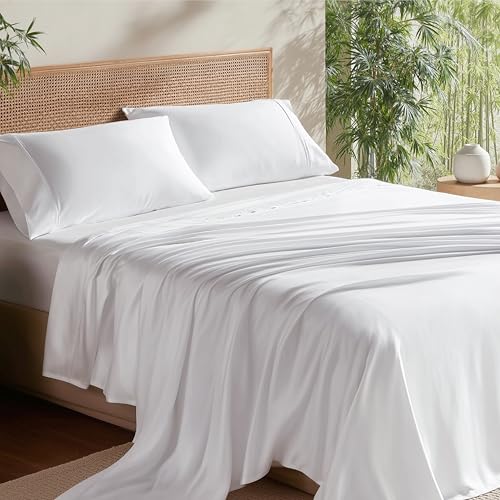
A down comforter looks simple from the outside, yet two products that seem alike on a product page can differ a lot in loft, weight and how well they hold their shape. We have not used these products ourselves, so this guide does not claim any first-person results. Instead it walks through the construction details that separate one comforter from another, so you can read a listing with confidence.
Begin with your room and your bed. A cool bedroom, a heated apartment and a guest room used twice a year all call for different choices. Work through the factors below, note the numbers a maker prints on the label, and compare them against your own situation. Those numbers are the maker’s own statements, so treat them as a first filter and read the full description before you decide.
As an Amazon Associate we earn from qualifying purchases. Links on this site are affiliate links, and they do not change the information we give.
In this guide
Quick Picks
| Pick | Product | Best For |
|---|---|---|
| 1 | puredown Goose Down Comforter (Full/Queen) | Cold rooms and winter warmth |
| 2 | APSMILE Luxurious Down Feather Fibers Comforter (Queen) | Year-round everyday use |
| 3 | APSMILE Lightweight Feather Down Comforter (Queen) | Hot sleepers and warm weather |
| 4 | DOWNFORT Goose Down Comforter (King) | High-loft warmth on a king bed |
| 5 | KUSNUG Goose Feather Down Comforter (King) | Hotel-style medium warmth |
Our Picks

1. puredown Goose Down Comforter (Full/Queen, 800 Fill Power) — Best for cold rooms
This is the pick for a cold bedroom. puredown fills it with 93% white goose down at a stated 800 fill power, so the clusters trap a lot of air for their weight and the comforter lofts up thickly without relying on sheer fill weight alone. The shell is a 700 thread count 100% cotton fabric that the maker describes as down-proof, breathable and noiseless, which covers the shell checks in the guide above. A pinch pleat finish gives the surface a tailored look if you use it without a duvet cover. This is the heavyweight winter option in the maker’s range (model PD-GC15025-F), sized for a full or queen bed, so match it to a cool room rather than a warm, heated apartment. If you sleep cold or keep the thermostat low through winter, shortlist this one first. Warm sleepers will be better served by the lightweight APSMILE further down the list.

2. APSMILE Luxurious Down Feather Fibers Comforter (Queen) — Best all-season pick
If you want one comforter that stays on the bed all year, this APSMILE is the straightforward choice. The queen size measures 90 x 90 inches and is filled with goose down feather fibers, with the maker listing a year-round fill weight of 33 ounces for the full/queen size, between its lighter summer and heavier winter versions. The shell is a soft poly-cotton, and the fill is held in place with sewn-through construction so it does not drift into one corner. Eight ties around the edge anchor it inside a duvet cover, which answers the corner loop check in the guide and keeps the insert from sliding around at night. It is a sensible middle path: warm enough for most heated homes in winter, light enough not to overwhelm in spring, and easy to protect with a cover so it needs washing only occasionally.
View APSMILE Luxurious Down Feather Fibers Comforter on Amazon
3. APSMILE Lightweight Feather Down Comforter (Queen) — Best for hot sleepers
Hot sleepers and warm-climate bedrooms call for the opposite of the puredown above, and this lightweight APSMILE is built for exactly that. It uses a feather and down fill in a deliberately thin profile, so it adds a layer of softness and a little insulation without trapping much heat on summer nights. The cover is 100% organic cotton, which the maker describes as breathable and gentle against the skin, and the quilting keeps the slim fill spread evenly instead of bunching at the edges. The queen size is 90 x 90 inches, giving the usual drop over the sides of a queen mattress. If your bedroom stays warm, you run hot at night, or you simply want a down layer for air-conditioned rooms, this is the one to pick. Cold sleepers in unheated rooms should step up to one of the fuller options instead.
View APSMILE Lightweight Feather Down Comforter on Amazon
4. DOWNFORT Goose Down Comforter (King) — Best high-loft king
For a king bed, this DOWNFORT comforter leads with its fill numbers: a minimum of 75% goose down at a stated 800+ fill power, which is the combination the guide above points to when you want strong loft without a heavy blanket feel. The king size measures 106 x 90 inches, so it drapes over a standard king mattress with room to spare. The cover is a premium cotton, and eight corner and center loops let you tie it securely inside a duvet cover so the fill stays put across the wide span of a king bed. The maker positions it as an all-season hotel-style insert, fluffy and noiseless, which suits a main bedroom that stays at a fairly steady temperature. If you have a king bed and want the down content and fill power stated plainly on the listing, this is the clearest-specified option in our five.
View DOWNFORT Goose Down Comforter on Amazon

5. KUSNUG Goose Feather Down Comforter (King) — Best hotel-style medium warmth
KUSNUG takes the hotel route: a goose down and feather fill with a stated fill weight of 65 ounces in the king size, under a 100% Egyptian cotton cover. The maker quotes a 750 fill power and states the fill is certified to OEKO-TEX, RDS and DOWNPASS standards, which is worth noting if sourcing paperwork matters to you. At 106 x 90 inches it covers a king bed properly, and the balance of down and feather gives it a fuller, more substantial drape than a pure high-loft down fill, closer to the comforters used in hotel rooms. The maker rates it as medium warmth for year-round use, suiting average sleepers in rooms that are neither very cold nor very warm. Pick it if you like the slightly weightier feel of a feather-blend fill and want the fill weight printed clearly before you buy.

What to Look For
| Factor | Why it matters | What to check |
|---|---|---|
| Fill power | Describes how much space an ounce of down fills, which relates to loft and weight. | Look for a stated number and whether it refers to down or a blend. |
| Fill weight | Sets how heavy and thick the comforter feels on the bed. | Compare the stated ounces with the bed size you own. |
| Shell fabric | Keeps the down inside and shapes the feel against your hand. | Check the fabric type and whether the weave is described as down-proof. |
| Baffle box stitching | Small walled squares stop the fill from drifting to one corner. | Look for baffle box or similar wording rather than plain through stitching. |
| Corner loops | Let a duvet cover be tied in place so it does not slide. | Count the loops and check that they sit at all four corners. |
| Size and drop | Decides how far the comforter hangs over the sides of the mattress. | Measure your mattress depth and compare with the listed dimensions. |
Setup and Care Tips
- Shake the comforter well when it arrives and let it rest flat so the fill can loosen and lift.
- Use a duvet cover and tie it to the corner loops, which reduces how often you need to wash the inner piece.
- Follow the care label for washing, and use a large drum so the fill has room to move.
- Dry on a low setting with clean dryer balls, and make sure no damp pockets remain before storage.
- Store it in a breathable cotton bag rather than sealed plastic so the fill is not compressed for months.
Mistakes to Avoid
- Choosing by fill power alone and ignoring fill weight, which changes how the comforter feels as much.
- Buying a size that matches the mattress exactly, leaving no drop over the sides.
- Skipping the shell fabric details, then finding the surface rough or noisy.
- Ignoring the care label and picking something that needs a service you will not use.
- Assuming a blend and pure down are the same, when the listing wording often separates them.
Which down comforter should you buy?
The best down comforter for you depends on how warm your room is, how hot you sleep and what size your bed is. Use the guide below to match your situation to the five comforters already covered in this post.
- If your bedroom is cold or you sleep cold, go for the puredown Goose Down Comforter, the heavyweight winter option in the picks above.
- If you want one comforter for the whole year, choose the APSMILE Luxurious Down Feather Fibers Comforter, which the post describes as the middle path between summer and winter weights.
- If you run hot or live somewhere warm, pick the APSMILE Lightweight Feather Down Comforter, built with a deliberately thin profile.
- If you have a king bed and want the fill details stated plainly, choose the DOWNFORT Goose Down Comforter, which lists its down content and fill power on the listing.
- If you like a fuller, hotel-style drape on a king bed, go for the KUSNUG Goose Feather Down Comforter, with its goose down and feather blend.
Two questions settle most choices. First, how warm is your bedroom through the coldest months? Second, do you share the bed with someone who sleeps at a different temperature? A couple with different needs may prefer a medium weight that works for both.
If you are torn between two, choose the lighter one. You can add a blanket on a cold night, but you cannot take warmth away from a comforter that is too heavy.
Down comforter vs down alternative: which is the better choice?
A down comforter is usually chosen for light weight and strong warmth, while a down alternative is chosen for easier care and for people who want to avoid animal products. Neither is better for everyone.
Down is made of soft clusters from the underside of geese or ducks. These clusters trap air, which is why a good down fill feels airy rather than heavy. A feather blend adds weight and a firmer drape, as the post explains in the KUSNUG pick.
Down alternative uses synthetic fibre. It is often easier to wash at home and may suit people who are sensitive to down or who prefer a vegan option. It can feel heavier for the same warmth, though this varies by product.
- Choose down if you want a lightweight, lofty feel and are happy to follow careful care steps.
- Choose down alternative if easy washing or avoiding animal products matters most.
- Check the listing wording on fill type, because blends and pure down are described differently.
If you are unsure whether down suits you, think about past experience. If you have reacted to pillows or bedding, check the maker’s care and allergy notes before buying.
How do you choose the right down comforter size?
Choose a size that is a little larger than your mattress top, so the comforter hangs over the sides. Check the dimensions on the listing instead of relying on the size name alone.
Start by measuring your mattress width, length and depth. A deep mattress needs more overhang to look and feel right, and a thick topper adds to the depth. The post lists queen and king dimensions for its picks, and these are the makers’ own figures.
If you plan to use a duvet cover, size the comforter and the cover together. A cover that is slightly bigger than the insert can leave the corners empty, while a cover that is too small makes the fill bunch up. Corner loops help hold the insert in place.
- Full and queen comforters often share one size listing, so confirm the exact measurements.
- Couples may prefer a larger size, so one person does not pull all the cover away.
- Consider the weight too, because larger comforters feel heavier on the bed.
If you sit between two sizes, compare the listed dimensions against your bed instead of guessing. A comforter that fits properly looks better and stays in place.
Fill weight also changes with size. A king comforter holds more fill in total than a queen, so two products from the same maker can feel different even when the warmth rating matches. Read the stated fill weight for the exact size you plan to buy, not for a different size in the same range.
Finally, think about how the bed is used. A guest room that is slept in a few times a year can take a simpler, lighter comforter, while a main bedroom used every night benefits from a well-made shell and sturdy stitching that holds up to daily handling.
What to check before you buy a down comforter
Before you order, confirm the fill, size, shell fabric and care instructions, and read the seller terms. The following checklist covers the points that matter most.
- Fill type. See whether the listing says down, down and feather blend or feather fibres, as these feel different.
- Fill power and fill weight. Read both, and remember that the numbers are the maker’s statements.
- Shell fabric. Look for a tightly woven cover described as down-proof.
- Stitching. Baffle box or sewn-through stitching keeps the fill from drifting.
- Corner loops. Confirm there are loops at all corners if you use a duvet cover.
- Size. Compare the listed dimensions against your mattress depth.
- Care instructions. Check whether you can machine wash it or need a professional service.
- Certifications. If sourcing matters to you, check what the listing states and read the details yourself.
- Return and warranty terms. Bedding may have special return rules, so read them on the listing.
Also look at how many people rated the product and read the written feedback in general terms for patterns, such as notes on shedding or smell. Do not rely on a single comment.
When it arrives, open it promptly, let it air and check it for damage so any return window is still open.
Why does a new down comforter smell or shed, and what can you do?
A new down comforter may have a mild odour or release a few small feathers at first, and both usually ease with airing and gentle handling. If the problem is severe or lasts, contact the seller.
The smell often comes from natural fill and packaging. Take the comforter out of its bag, shake it, and let it rest in a clean, ventilated room. Follow the care label before trying any other treatment.
A few loose feathers can work through the shell, especially with a feather blend. A tightly woven, down-proof cover reduces this, which is why the post tells you to check the shell. Using a duvet cover also catches stray bits.
- Do not pull protruding feathers out against the grain, as this can enlarge the hole. Gently push them back in.
- Check the seams after the first few weeks for any loose stitching.
- If you have allergies, check what the maker says about the fill treatment and washing.
Anyone with a known allergy should talk to a health professional about suitable bedding. Product pages cannot guarantee a result for sensitive sleepers.
Regular airing, a good cover and careful washing keep a comforter fresh for longer.
It also helps to rotate the comforter now and then, turning it end to end so the fill settles evenly and no single area takes all the wear. On a dry, bright day, a short airing outdoors in the shade, if the care label allows it, can freshen the fill between washes. Keep it away from damp areas, because moisture trapped in the fill is a common cause of lingering odours and can spoil the loft over time.
Is a down comforter worth paying more for, and who should skip it?
A down comforter is worth paying more for if you value warmth without weight and will care for it properly. It is less suitable if you want a bed cover that survives rough treatment with no effort.
Here are the honest trade-offs:
- Higher fill power usually means larger clusters, but fill weight, shell and stitching still affect how it feels.
- Pure down tends to feel lighter than blends, while blends can feel fuller.
- Premium cover fabrics may feel nicer but still need a duvet cover for protection.
- Certification claims are the maker’s statements, so read them rather than treating them as a guarantee.
Who should skip it? People who prefer a washing routine that suits any fabric may find synthetic fill easier. Hot sleepers in warm bedrooms should not pick a heavyweight winter option. Anyone who cannot store it properly may prefer something simpler.
Also be careful if you share a bed with a pet that sleeps on top. Claws and heavy wear can damage a delicate shell, and a cover helps only partly.
We have not used these products ourselves, so treat the details as the makers’ own claims. Your next step is simple: compare the picks above, check the current listing for the size, fill and care terms, then choose the comforter that matches your room and your sleeping style.
A Deeper Look at Choosing Down Comforters
The shortlists above give you a strong starting point, but the right choice among down comforters depends far less on any single feature than on how well a product fits your space, your routine and your expectations. This extra section slows the decision down and works through the questions experienced buyers ask before they commit. None of it replaces the details in the individual reviews above; instead, it gives you a framework for reading those reviews with your own situation in mind, so the strengths and compromises of each pick become easier to weigh.
Start by writing down the job you actually need done, in plain language, before you look at any product names again. Many disappointing purchases happen because the buyer solved a slightly different problem from the one they had: they bought for the largest, loudest or most occasional scenario instead of the ordinary Tuesday that repeats all year. If your honest description mentions one main use, one secondary use and one frustration you want to avoid, you already have a better buying brief than most shoppers ever make, and you can test every option among the down comforters against those three lines.
Size, Fit and the Space You Really Have
Measure before you fall in love with a particular model. Record the width, depth and height of the space, then add the clearance needed to open, move, clean or comfortably use the product once it is in place. Doorways, stairs, cupboard doors and tight corners all count, because a product that technically fits its final spot can still be miserable to get there. With down comforters, the difference between a good fit and a daily annoyance is often a small margin that only a tape measure will reveal, so take the measurements twice and keep them in your phone while you shop.
Fit also means fitting the people involved. Consider heights, reach, strength and mobility in your household, and whether children, older relatives, guests or pets will interact with the product as well. Controls, handles, openings and adjustments should be comfortable for the person who will use them most, not just acceptable in a showroom moment. If two people will share the down comforters, agree in advance whose priorities win on the points where you disagree, because shared products that suit nobody in particular tend to be replaced fastest.
Materials, Build Quality and Honest Durability
You can learn a lot about likely durability without any technical knowledge. Look for even finishes, tidy joins or seams, parts that move without grating or wobbling, and fixings that feel firmly seated rather than decorative. Where the maker describes materials, think about what those materials are good at and what they ask of you in return: some shrug off moisture but mark easily, others feel premium yet need regular care. The right answer among down comforters is the material whose maintenance rhythm matches the time you will genuinely give it.
Pay particular attention to the parts that will be touched, loaded or exposed every day, because those are the places wear appears first. Hinges, handles, edges, feet, fastenings and contact surfaces tell you more about long-term satisfaction than a rarely used extra feature. If a listing is vague about the parts that matter, treat that vagueness as information in itself and favour the option whose construction is described clearly and modestly. Honest descriptions that mention limits usually come from makers who expect their down comforters to be used hard and judged fairly.
Ease of Use in Ordinary Daily Life
Imagine the full routine, not just the main event. How does the product arrive, where does it live between uses, how long does setup take, and what has to be cleaned, charged, emptied, folded or put away afterwards? A design that saves a minute during use but costs five minutes of fiddly preparation will quietly fall out of favour. The most satisfying down comforters tend to disappear into the routine: they are ready when needed, forgiving when you are tired, and simple to hand over to someone else without a long explanation.
In the home, the best purchases are the ones that suit the room as it is really lived in, not as it looks in a photograph. Think about who uses the space, how light and temperature change through the day, and what already sits nearby. Down Comforters that work with the colours, textures and routines of the room tend to be kept, used and enjoyed, while awkward additions end up folded away or replaced.
Getting the Most From Your Down Comforters
Setup and the First Few Days
Unpack carefully and keep everything together until you are sure the product is staying. Photograph the unboxing if parts are numerous, lay pieces out in the order the instructions use them, and resist the urge to force anything that resists: a pause to reread one step is cheaper than a damaged fitting. Once your down comforters are assembled or installed, run through the basic functions gently, check that everything operates as described, and only then move packaging out of the way. Register the warranty if the maker offers one, and save the receipt and manual somewhere you can actually find them again.
Treat the first week as a trial you are conducting, not a verdict you have already reached. Use the product in the situations you bought it for, notice where you hesitate or improvise, and adjust placement, settings or accessories before deciding anything is wrong. Small changes in position, order or routine often transform the experience. If a genuine fault or mismatch appears, early notes with dates and photographs make any conversation with the seller far easier, and they help you distinguish a real defect from a setup detail among your down comforters that simply needs correcting.
Cleaning, Care and Storage Habits
Regular light care beats occasional heroic cleaning almost every time. Wipe, empty, shake out or inspect on the rhythm the maker recommends, using the mildest cleaning approach that does the job, and dry parts fully before storing or closing them away. Damp left in seams, folds or enclosed spaces is a quiet cause of odours and deterioration, whatever the product. Build the care step into the routine it belongs to, such as after the last use of the day or the end of the week, so maintaining your down comforters never becomes a separate project you keep postponing.
Storage matters as much as cleaning. Keep the product in the conditions the maker describes, away from extremes of heat, cold or damp where possible, with any cables, accessories or small parts stored together rather than scattered through drawers. If space is tight, store the items you use together in one place so setup stays quick. Before a longer period without use, clean everything, check for wear while you can still act on it, and make a note of anything that needs attention when the down comforters come back into service, rather than discovering it at the busiest moment.
Comfort is personal and changes with the seasons, so give yourself a way to adjust. Layering, swapping or repositioning parts of your setup as the weather turns is normal and sensible, and it helps you judge whether a product is genuinely wrong for you or simply set up for the wrong time of year. Keep the packaging and paperwork until you have lived with the down comforters through a few ordinary days and nights.
How the Picks in This Guide Compare
Read the individual reviews above as a set rather than as a ranking to obey blindly. Each pick earned its place for a particular kind of buyer, and the short labels are the quickest guide to those differences. The notes below simply restate the positioning already given in the guide, in a form that makes side-by-side thinking easier when two options both look appealing.
The puredown Goose Down Comforter (Full/Queen, 800 Fill Power), presented above as the choice for best for cold rooms, is best understood through that role. If the situation described in its review sounds like your household, its compromises are probably the ones you will mind least; if that situation belongs to somebody else, a different pick will likely serve you better even if this one first caught your eye. Return to its section above for the specific strengths, limitations and who-should-skip guidance before deciding, and compare it honestly against the alternative you are considering rather than against an imaginary perfect product.
The APSMILE Luxurious Down Feather Fibers Comforter (Queen), presented above as the choice for best all-season pick, is best understood through that role. If the situation described in its review sounds like your household, its compromises are probably the ones you will mind least; if that situation belongs to somebody else, a different pick will likely serve you better even if this one first caught your eye. Return to its section above for the specific strengths, limitations and who-should-skip guidance before deciding, and compare it honestly against the alternative you are considering rather than against an imaginary perfect product.
The APSMILE Lightweight Feather Down Comforter (Queen), presented above as the choice for best for hot sleepers, is best understood through that role. If the situation described in its review sounds like your household, its compromises are probably the ones you will mind least; if that situation belongs to somebody else, a different pick will likely serve you better even if this one first caught your eye. Return to its section above for the specific strengths, limitations and who-should-skip guidance before deciding, and compare it honestly against the alternative you are considering rather than against an imaginary perfect product.
The DOWNFORT Goose Down Comforter (King), presented above as the choice for best high-loft king, is best understood through that role. If the situation described in its review sounds like your household, its compromises are probably the ones you will mind least; if that situation belongs to somebody else, a different pick will likely serve you better even if this one first caught your eye. Return to its section above for the specific strengths, limitations and who-should-skip guidance before deciding, and compare it honestly against the alternative you are considering rather than against an imaginary perfect product.
The KUSNUG Goose Feather Down Comforter (King), presented above as the choice for best hotel-style medium warmth, is best understood through that role. If the situation described in its review sounds like your household, its compromises are probably the ones you will mind least; if that situation belongs to somebody else, a different pick will likely serve you better even if this one first caught your eye. Return to its section above for the specific strengths, limitations and who-should-skip guidance before deciding, and compare it honestly against the alternative you are considering rather than against an imaginary perfect product.
Choosing Between Two Close Options
When two options among the down comforters remain after you have eliminated the rest, stop looking for new features and start looking at friction. Which one will be easier to live with on a tired evening, quicker to clean, simpler to store, or less annoying for the other people who share your space? Which one has the limitation you are more willing to accept for years? Buyers rarely regret choosing the product with the kinder daily routine, whereas a small advantage on paper that demands constant workarounds wears thin remarkably quickly.
It can also help to imagine owning each finalist after the novelty has gone. Picture the product a little dusty, the household a little busier, and your enthusiasm replaced by habit. The option that still seems sensible in that picture is usually the right purchase. If you remain torn, revisit the measurements and the original three-line brief you wrote at the start of this section; one of the finalists almost always answers that brief more directly, and that answer matters more than any extra flourish either down comforters can offer.
A Final Practical Check Before You Decide
Decision-making gets easier when you separate needs from preferences. Needs are the points where the wrong choice stops the product working for you at all, such as a size that does not fit, a function you rely on daily, or a care requirement you cannot meet. Preferences are everything else: finishes, styling details and nice-to-have extras. Among down comforters, spend your attention and your budget on the needs first, let preferences break ties between otherwise equal options, and be suspicious of any product that asks you to trade a genuine need for an attractive extra.
Talk to the people who will share the product before you order, not after it arrives. A five-minute conversation about where the down comforters will live, who will clean or move them, and what would genuinely annoy each person prevents the quiet resentment that builds around a purchase nobody else chose. Households that agree the practical basics in advance almost always end up happier with the result, and the discussion often surfaces a requirement, such as storage space or noise, that the main buyer had not considered at all.
Think about accessories and consumables as part of the purchase, even if you buy them later. Some down comforters need covers, refills, replacement parts, batteries, cleaning products or a particular storage solution to work at their best, and discovering that afterwards can turn a bargain into a false economy. You do not need to buy everything at once, but knowing what ownership involves helps you compare options fairly and plan the order in which extras are genuinely worth adding.
Keep a simple ownership note once you have bought. The date of purchase, where the receipt lives, any warranty registration, and a line about settings or arrangements that worked well will save you surprising amounts of time later. When something eventually needs adjusting, repairing or replacing, that note turns a vague memory into clear information, and it helps anyone else in the household understand the down comforters without having to repeat your whole learning process from the beginning.
Finally, give yourself permission to choose the sensible option. Marketing rewards the newest, largest and most feature-filled version of everything, yet most households are best served by the product that matches their space, does the main job reliably and asks little of them in return. If one of the down comforters above keeps meeting your brief while the others need excuses, that consistency is the answer. A calm, well-matched purchase used happily for years beats an exciting one that never quite fits your life.
FAQ
Does a higher fill power always mean a better comforter?
Not always. Higher fill power usually means larger down clusters that trap more air per ounce, which can give a lighter feel for the same loft. Fill weight, shell fabric and construction still matter, and the right level depends on how warm your room is.
How often should I wash a down comforter?
Many makers suggest washing only when needed and relying on a duvet cover for day to day protection. Check your own care label, since instructions differ between products.
What fill power is best for a down comforter?
There is no single best number, because it depends on the warmth you want. Higher fill power usually means larger clusters that trap more air per ounce. Compare it with the fill weight and your room temperature.
Do I need a duvet cover for a down comforter?
A duvet cover is strongly recommended. It protects the shell from dirt and wear and means you wash the inner piece less often. Corner loops help hold the comforter inside the cover.
Can you machine wash a down comforter?
Many can be machine washed in a large drum, but it depends on the product. Check the care label before washing. Dry it fully on a low setting so no damp pockets remain.
Is a down comforter good for hot sleepers?
It can be if you choose a lightweight version. A thin profile adds softness without trapping much heat, as with the lightweight APSMILE in this guide. A heavyweight winter fill may feel too warm.
How long does a down comforter last?
Lifespan varies with quality, use and care, so no single figure applies. A comforter kept in a cover, aired regularly and stored correctly tends to last longer. Check the warranty terms on the listing.
What is the difference between a comforter and a duvet insert?
A comforter is usually a finished bedding layer, while a duvet insert is designed to go inside a cover. Many down comforters double as inserts if they have corner loops. Check the listing to see how the maker describes it.
How should I store a down comforter?
Store it in a breathable cotton bag in a cool, dry place. Avoid sealed plastic and heavy items on top, which can compress the fill. Make sure it is fully dry before storing.
Why is my down comforter clumping?
Clumping usually happens after washing if the fill is not fully dried or redistributed. Dry it on low with clean dryer balls and fluff it by hand. Baffle box stitching helps reduce shifting.
How do I know which size or style of down comforters is right for me?
Start from the space and the people, not from the product page. Measure where the item will live and be used, think about who will use it most often, and match those facts against the guidance in the reviews above. If you fall between two sizes or styles, the safer choice is usually the one that leaves you comfortable clearance and room to adjust, rather than the one that only just fits on paper and leaves no margin for ordinary life.
What should I check as soon as my down comforters arrive?
Check the contents against the packing list, look over seams, surfaces, moving parts and fastenings for transit damage, and test the basic functions before you throw any packaging away. Photograph anything that looks wrong straight away. A calm ten-minute inspection on delivery day is far easier than discovering a problem weeks later, and keeping the packaging until you are satisfied protects your options if an exchange turns out to be necessary.
How often should I clean and maintain down comforters?
Follow the maker’s guidance first, and otherwise adopt a little-and-often approach: a brief wipe, empty or inspection after regular use, and a more thorough clean at sensible intervals such as the change of season or before storage. Maintenance done early is almost always quicker, because dirt, moisture and loose fittings are easier to deal with before they combine into a bigger problem that affects how the product works.
What is the most common mistake people make with down comforters?
Buying for an imagined routine instead of the real one. People overestimate how much time they will spend on setup and care, underestimate the space a product needs in use, and choose features for rare occasions while tolerating daily inconveniences. The reviews above flag the honest limitations of each pick; take those limitations seriously, because living with a limitation every day feels very different from reading about it once.
Can I return or exchange down comforters if they do not suit my home?
That depends on the seller and on the condition of the product, so read the returns terms before you order and keep receipts, packaging and accessories together during the first days. Use the product fairly but carefully while you decide, note any problem promptly, and contact the seller sooner rather than later if something is wrong. Clear, polite messages with dates and photographs usually resolve issues faster than waiting and hoping the problem will settle by itself.
How long should good down comforters be expected to last?
There is no single honest answer, because lifespan depends on materials, frequency of use, conditions and care far more than on the calendar. Well-made products that are used as intended, cleaned on a sensible rhythm and stored properly will generally serve for years, while heavy use in harsh conditions shortens the life of almost anything. Judge value over the whole period of ownership, including how easy the product is to maintain, rather than by the purchase moment alone.
The Short Version
Match fill weight to your room, look for baffle box stitching and a tightly woven shell, and measure your mattress before you pick a size. A duvet cover with corner loops keeps the comforter clean and in place, and a careful read of the care label saves frustration later.