Disclosure: airfryerkitchensupply.com is reader-supported. When you buy through links on our site, we may earn an affiliate commission at no extra cost to you.
Where to Buy
A browning setting is easy to promise and hard to verify, so this shortlist of the best slow cookers with browning setting models was built from listings checked where the sear, saute or brown function is stated in the confirmed product details. Two famous models on this page are deliberately unlinked: we could not confirm a matching listing for them, so they are described honestly without a purchase link rather than linked to a substitute model that is not the product named.
- GreenPan Elite 14-in-1 Programmable 6QT Electric Slow Cooker — Check the current price on Amazon
- Hamilton Beach 9-in-1 Programmable Slow Cooker, 6 Quart, Black — Check the current price on Amazon
- Cuisinart 3-In-1 Cook Central MSC-600, 6-Quart — Check the current price on Amazon
- Ninja Everyday PossibleCooker Pro MC1101, 6.5-qt — Check the current price on Amazon
- Cuisinart Cook Central MSC-800, 8-Quart — Premium tier pick; read the review below for how to shop it, because we could not confirm a matching listing to link responsibly.
- Crock-Pot Express Crock Multi-Cooker Family — Mid-range tier pick; read the review below for how to shop it, because we could not confirm a matching listing to link responsibly.
The best slow cookers with a browning setting exist to kill the extra pan. Browning meat and aromatics before a long, slow cook is where stews get their depth — the caramelized crust, the fond scraped into the sauce, the onions that start sweet instead of raw — and doing it in the same pot that slow cooks means every bit of that flavor stays in the dish instead of the sink. A true browning function heats the cooking pot hot enough to sear, then hands over to low-and-slow without a transfer, and that single-vessel workflow is what this category is actually selling.
Buyers should know the category has three honest species. Dedicated multi-cookers like the GreenPan and Cuisinart below brown in the pot as a headline function. Sear-capable slow cookers brown either in-pot or with a stovetop-safe crock moved to a burner. Pressure-capable multi-cookers brown on a saute setting before slow cooking. All three deliver the flavor; they differ in capacity, control and how much else the appliance does. The reviews name which species each pick is, so you can buy the workflow you actually want.
A note on honesty that shapes this page: two of the most-requested browning models, the Cuisinart MSC-800 and the Crock-Pot Express line, appear here as a pick without a link. Our listing checks could not confirm a matching offer for those exact models, so they carry no purchase link and no substitute is silently linked in their place. They are still discussed, because shoppers searching this category deserve to know what those models are — and how to shop them carefully elsewhere.
In this guide
Quick Picks
GreenPan Elite 14-in-1 Programmable 6QT Electric Slow Cooker — Best Overall Browning. Sear, saute and brown as named functions in a ceramic nonstick crock: the category’s promise kept most completely. Check price on Amazon.
Hamilton Beach 9-in-1 Programmable Slow Cooker, 6 Quart, Black — Best Programmable Browning. Sear and brown functions wrapped in delay-start, keep-warm programmability: browning for the working week. Check price on Amazon.
Cuisinart 3-In-1 Cook Central MSC-600, 6-Quart — Best Classic Brown/Saute. The classic three-function Cook Central: brown/saute and slow cook in one pot, without menu clutter. Check price on Amazon.
Ninja Everyday PossibleCooker Pro MC1101, 6.5-qt — Best Compact Sear and Slow Cook. Sear/Saute and Braise beside slow cooking in a 6.5-quart everyday format: the modern one-pot workflow. Check price on Amazon.
Cuisinart Cook Central MSC-800, 8-Quart — Unlinked: Largest Cook Central. The 8-quart Cook Central flagship, discussed honestly without a link because its exact listing could not be confirmed.
Crock-Pot Express Crock Multi-Cooker Family — Unlinked: Express Variants. A famous saute-and-slow-cook family, presented without links because its exact variants could not be confirmed.
How These Picks Were Chosen
Verification for this category was stricter than usual, because browning claims are where listings get slippery. Each linked pick was matched to a live Amazon listing, and the browning, sear or saute function had to appear in the confirmed listing details — as it does for the GreenPan Elite’s sear, saute and brown functions, the Hamilton Beach 9-in-1’s sear and brown modes, the Cuisinart MSC-600’s Brown/Saute setting and the Ninja MC1101’s Sear/Saute function. Models failing that test became unlinked entries with the reason stated, not linked guesses.
Judging criteria started with the quality of the browning step itself: a pot surface that sears rather than steams, enough capacity to brown meat in uncrowded batches, and controls that move from browning heat to slow-cook settings without fuss. We then weighed the slow-cooking half — programmable timing, keep-warm behavior, lid and crock practicality — because a browning function on a mediocre slow cooker is a feature in search of a meal. Insert material mattered throughout: nonstick aluminum and ceramic-coated pots brown differently from stoneware, and the reviews say which you are getting.
We also kept the category truthful about alternatives. A stovetop-safe crock used on a burner browns as well as any in-pot function, and the companion guide on inserts that go on the stove covers that route; this page is for buyers who want the browning inside the appliance. Prices and fixed ratings are not printed, per program policy — use the links to check the current price on Amazon, and treat the unlinked entries as research notes for shopping those models wherever you find them offered by name.
The 6 Best Slow Cookers with Browning Setting
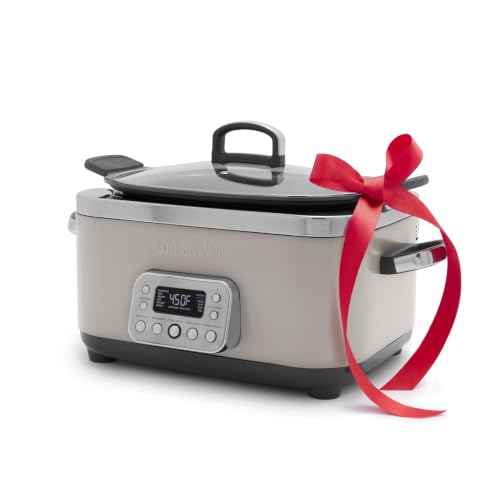
GreenPan Elite 14-in-1 Programmable 6QT Electric Slow Cooker — Best Overall Browning
The GreenPan Elite is the most complete answer to this category’s question: a 6-quart electric slow cooker whose confirmed function list literally includes sear, saute and brown, in a removable PFAS-free ceramic nonstick crock. Meat sears in the pot, onions follow into the same surface, a splash of stock lifts the fond, and the machine then slow cooks the braise it just helped build — the entire flavor argument for this category executed in one vessel, with no burner and no second pan at any point.
Strengths
- Sear, saute and brown are named functions, not marketing hints
- PFAS-free ceramic nonstick crock releases fond for deglazing beautifully
- Fourteen functions make it a genuine multi-cooker around the slow-cook core
Trade-offs
- Ceramic nonstick asks for non-metal utensils and reasonable heat discipline
- Six quarts suits most families but not the largest batch cooking
- Function-rich controls take a session to learn
| Capacity | 6 quart |
| Functions | 14-in-1 including Sear, Saute and Brown |
| Crock | Removable, PFAS-free ceramic nonstick |
| Extras | Steam basket; dishwasher-safe lid and crock |
The ceramic nonstick surface shapes its browning style: it releases beautifully and deglazes cleanly, rewarding cooks who preheat, pat meat dry and work in uncrowded batches, while asking for silicone or wood tools and a little respect for the coating. Around the browning core, the fourteen functions, steam basket and dishwasher-safe parts make it the household’s general multi-cooker rather than a single-recipe appliance. For buyers who want the browning setting to be the headline rather than a footnote, this is the pick the rest of the page is compared against.
Best for: Braises, stews and chilis where in-pot browning is the point / Not suited for: Huge-batch cooks needing more than 6 quarts
Check the current price on Amazon

Hamilton Beach 9-in-1 Programmable Slow Cooker, 6 Quart, Black — Best Programmable Browning
Hamilton Beach built this 9-in-1 around the working cook’s actual day: sear and brown in the PFAS-free nonstick crock, set the slow cook, engage delay start so dinner aligns with the commute, and let keep warm hold the result without punishing it. The confirmed function list reads like this category’s wishlist — sear, brown, saute, roast, rice and steam around a 6-quart programmable core — and the brand’s slow-cooker heritage shows in controls that prioritize timing over novelty.
Strengths
- Sear and brown functions plus a full programmable slow-cook brain
- Delay start and keep warm suit working-day schedules
- PFAS-free nonstick crock goes in the dishwasher after
Trade-offs
- Nine functions share one interface; expect a learning curve
- Nonstick crock browns best in batches rather than one crowded layer
- Black finish shows every splash of a working kitchen
| Capacity | 6 quart |
| Functions | 9-in-1: Sear, Brown, Saute, Roast, Rice, Steam and more |
| Timing | Delay start and keep warm |
| Crock | Nonstick, PFAS-free, dishwasher safe |
Browning quality is batch-dependent, as with all nonstick in-pot systems: dry meat, a hot crock and two uncrowded rounds produce a proper crust, while a dumped pile of cold stew beef steams grey in any pot ever made. What this machine adds is schedule intelligence the dedicated browning specialists lack, making it the pick for households whose browning happens at 7 a.m. for a 6 p.m. dinner. If your slow cooking is planned around a workday rather than a leisurely Sunday, this is the most considerate machine on the page.
Best for: Working households wanting browning plus delay-start scheduling / Not suited for: Purists who want a single-purpose browning specialist
Check the current price on Amazon

Cuisinart 3-In-1 Cook Central MSC-600, 6-Quart — Best Classic Brown/Saute
The MSC-600 is the model that taught many cooks this category exists: a 6-quart Cook Central whose three jobs are slow cooking, browning/sauteing and steaming, done in one removable pot. Its Brown/Saute function runs hot enough to give stew meat a real crust and onions a proper start before the lid goes on for the long cook, and the machine’s restraint is its charm — three functions, clearly controlled, no menu archaeology between you and dinner.
Strengths
- Brown/Saute is a core, named function of the Cook Central design
- Three focused functions instead of a crowded menu
- A long-serving model with a deep base of owner knowledge
Trade-offs
- No pressure cooking; it is a focused three-function machine
- Check the exact MSC-600 listing details when ordering, as sibling models differ
- Its classic control style lacks the newest scheduling tricks
| Capacity | 6 quart |
| Functions | 3-in-1: Slow Cook, Brown/Saute, Steamer |
| Model | MSC-600 Cook Central |
| Format | Countertop multi-cooker with removable cooking pot |
A word of shopping care that applies to this whole brand family: the Cook Central line includes several sizes and siblings, including the larger MSC-800 discussed below as a pick without a link because we could not confirm its listing. The link here is the confirmed MSC-600. Owners stepping up from a basic crock will find the workflow revelation is not any single feature but the absence of the skillet from the counter — browning, deglazing and slow cooking in sequence, in the pot the food never leaves.
Best for: Cooks wanting classic, focused brown-then-slow-cook workflow / Not suited for: Buyers needing pressure cooking or app-era scheduling
Check the current price on Amazon

Ninja Everyday PossibleCooker Pro MC1101, 6.5-qt — Best Compact Sear and Slow Cook
The MC1101 brings Ninja’s PossibleCooker formula down to an everyday 6.5-quart size, and its function list is a browning cook’s short story: slow cook, sear/saute and braise in one appliance. Sear the short ribs, saute the aromatics in the drippings, then let the braise function or a slow cook carry the dish home — the sequence this entire category exists to enable, executed in a pot with cool-touch handles that acknowledge a full, hot vessel gets moved in real kitchens.
Strengths
- Sear/Saute and Braise functions sit alongside slow cooking
- 6.5-quart size hits the family sweet spot
- Cool-touch handles make a hot, full pot safer to move
Trade-offs
- Multi-cooker breadth means slow cooking shares the stage
- Midnight Blue finish is a style commitment
- Serious batch cooks may still want a larger vessel
| Capacity | 6.5 quart |
| Functions | Slow Cook, Sear/Saute, Braise, Rice, Oats and Pasta among 8 functions |
| Handles | Cool-touch handles |
| Format | Everyday PossibleCooker Pro multi-cooker |
Its breadth is the trade to weigh: rice, oats and pasta functions make it a generalist, and generalists always share their stage. Slow-cook purists get a very capable function rather than a shrine, while households replacing several appliances get their money’s worth daily. The sear performance is genuine multi-cooker grade — hot, even and in-pot — and the size suits the four-to-six-person braises most families actually cook. For a single appliance that browns, braises and slow cooks on a normal counter, it is the most current-feeling pick here.
Best for: Households wanting sear, braise and slow cook in one everyday appliance / Not suited for: Single-purpose slow-cooker traditionalists
Check the current price on Amazon
Cuisinart Cook Central MSC-800, 8-Quart — Unlinked: Largest Cook Central
The MSC-800 is the 8-quart flagship of the same Cook Central family as the confirmed MSC-600 above: a multi-cooker built around slow cooking with a Brown/Saute function, scaled for the cooks who braise for crowds, double chili recipes and meal-prep in quantities the 6-quart models split into two runs. On paper and by family reputation, it is exactly the machine a large household searching this category wants.
Strengths
- Eight-quart capacity is the largest in the Cook Central family
- Brown/Saute function anchors the same one-pot workflow as the MSC-600
- The natural step up for cooks who outgrow 6-quart braises
Trade-offs
- We could not confirm a matching listing, so no purchase link is provided
- Larger footprint and a pot that is heavy when full
- Availability by exact model name has been inconsistent in our checks
It appears here without a link for a specific, stated reason: Amazon check could not confirm a matching listing for the MSC-800 by name, and this program does not attach a different model’s link to a famous name. If you shop it elsewhere, buy it by the exact model number from a seller whose listing names the MSC-800 itself, confirm the capacity and function list on that listing, and be wary of pages that borrow the name for a sibling model. The MSC-600 above is the confirmed, linked route into the same workflow today.
Best for: Large households committed to the Cook Central format / Not suited for: Anyone who needs a confirmed, clickable purchase today
Unlinked pick: Unlinked because no matching Amazon listing for the MSC-800 could be confirmed; no substitute model has been linked in its place. Shop the exact model number wherever you buy.
Crock-Pot Express Crock Multi-Cooker Family — Unlinked: Express Variants
The Crock-Pot Express family is the name many shoppers type first: multi-cookers from the slow-cooker brand itself, built around pressure cooking with saute browning and a slow-cook function in the same pot. The concept belongs in this category — browning on saute before a slow cook is a legitimate route to the same flavor — and the family’s best variants execute it in a familiar, approachable package.
Strengths
- The Express concept pairs pressure speed with slow cooking and saute browning
- A familiar brand name that many shoppers search for first
- Saute-then-slow-cook workflow fits this category when the right variant is chosen
Trade-offs
- Express variants differ significantly and listings could not be confirmed by exact model
- Pressure-first designs compromise on slow-cook capacity and lid style
- Name confusion across variants makes careless ordering easy
They are not linked here for the same disciplined reason as the MSC-800: our checks could not confirm matching listings for the Express variants by exact model, and the variants differ enough in size and function that linking a near namesake would mislead. Shoppers set on this family should buy by exact model designation, verify that the specific variant’s function list includes both saute and slow cook, and prefer sellers whose listing title carries the full model name. Everyone who wants a confirmed link today is served by the four linked picks above.
Best for: Brand-loyal shoppers willing to verify the exact variant carefully / Not suited for: Buyers who want a confirmed listing and a simple decision
Unlinked pick: Unlinked because Crock-Pot Express variants could not be confirmed by exact model in Amazon check; no substitute model has been linked in their place.
Comparison Table
| Pick | Badge | Key Spec | Best For |
|---|---|---|---|
| GreenPan Elite 14-in-1 Programmable 6QT Electric Slow Cooker | Best Overall Browning | 6 quart | Braises, stews and chilis where in-pot browning is the point |
| Hamilton Beach 9-in-1 Programmable Slow Cooker, 6 Quart, Black | Best Programmable Browning | 6 quart | Working households wanting browning plus delay-start scheduling |
| Cuisinart 3-In-1 Cook Central MSC-600, 6-Quart | Best Classic Brown/Saute | 6 quart | Cooks wanting classic, focused brown-then-slow-cook workflow |
| Ninja Everyday PossibleCooker Pro MC1101, 6.5-qt | Best Compact Sear and Slow Cook | 6.5 quart | Households wanting sear, braise and slow cook in one everyday appliance |
| Cuisinart Cook Central MSC-800, 8-Quart | Unlinked: Largest Cook Central | Premium tier | Large households committed to the Cook Central format |
| Crock-Pot Express Crock Multi-Cooker Family | Unlinked: Express Variants | Mid-range tier | Brand-loyal shoppers willing to verify the exact variant carefully |
How to Choose a Slow Cooker with a Browning Setting
A browning setting is only as good as the crust it actually builds. This guide explains what separates searing from steaming in a slow-cooker pot, how insert materials change the result, how much browning a recipe really needs, and how to sequence a brown-then-slow-cook dish so the flavor you build at the start survives to the table.
Searing versus steaming: the physics of the crust
Browning is a dry-heat event. Meat hitting a properly hot, uncrowded surface gives up its surface moisture, then crusts; meat piled into a warming pot releases juice faster than the pot can evaporate it and steams in its own liquid, emerging grey regardless of the setting’s name. Every machine here can sear — provided you preheat the pot, pat the meat dry, salt at the right moment and brown in batches that leave space between pieces. The setting supplies the heat; the technique decides whether that heat becomes a crust or a puddle.
Insert materials and what they do to fond
The browned bits stuck to the pot — the fond — are concentrated flavor, and the insert material decides how you harvest them. Nonstick and ceramic-coated pots, like the GreenPan and Hamilton Beach crocks here, form a lighter fond that releases almost completely when deglazed, and they forgive a moment’s inattention. Bare metal and enamel surfaces build a darker, more stubborn fond with deeper flavor and a greater risk of scorching. Neither is superior; they are different instruments. What matters is deglazing while the pot is hot, with stock, wine or water, scraping every bit into the sauce before the slow cook begins.
How much browning does a dish actually need?
Not every slow-cook recipe repays browning equally, and honest cooks allocate effort where it returns flavor. Beef and lamb braises, pork shoulders and chicken thighs gain enormously; ground-meat chilis gain from a thorough crumble-and-brown; delicate chicken breast dishes, vegetable stews and anything in a creamy sauce gain little and can lose freshness. A practical rule: brown when the meat is the headline and the sauce is dark; skip or shorten it when the dish is bright, creamy or vegetable-led. The setting’s value is that the choice costs you one pot setting, not a second pan.
Sequencing the one-pot dish
Work in the order the flavors build: sear meat in batches and set it aside, saute aromatics in the rendered fat, bloom tomato paste and spices in that fat for a minute, deglaze and scrape, then return everything with the cooking liquid and switch to slow cook. Each step takes minutes and each multiplies the last. Reversing or skipping steps — aromatics before meat, liquid before deglazing — leaves flavor stranded in the pot or the pan. The machines here all support this sequence in one vessel; following it is the difference between owning a browning setting and using one.
Browning capacity is the spec nobody lists
A 6-quart cooker does not brown six quarts of meat at once; it browns what fits in one uncrowded layer of its pot, roughly a pound to a pound and a half per batch. Large recipes therefore mean two or three searing rounds, and that is normal, professional practice rather than a machine flaw. When comparing models, pot diameter matters more than total volume for browning speed — a wide pot sears a batch faster than a deep one. Plan the batches into your prep time and the browning step stops feeling like a delay and starts feeling like cooking.
Browning on weeknights: the fifteen-minute dividend
The strongest argument for a browning setting is not a Sunday braise; it is Tuesday. A weeknight chili that begins with ground meat browned and onions softened in the same pot it slow cooks in tastes like a planned meal, while the same ingredients loaded raw taste like an apology — and the difference costs one setting change and no extra washing. The workflow scales down gracefully: brown half the meat well rather than all of it poorly, deglaze with the recipe’s own liquid, and let the slow cook carry the dish while the evening happens elsewhere. Households that adopt the browning step only where it is fast — ground meats, sausages, aromatics — get most of the category’s flavor dividend at a fraction of its ceremony, which is why the programmable picks here, with their delay starts and keep-warm judgment, matter as much as the searing specialists.
Browning for the freezer: batch logic
Browning slow cookers are natural batch-cooking machines, because the expensive step — the searing, the fond, the base — can be done once at scale and frozen in the dishes it creates. The efficient pattern is to brown in successive batches on a prep afternoon, building two or three different braises through the same pot in sequence, then slow cook and freeze in portions. The pot’s fond even cooperates with the plan: a beef batch’s residue enriches the pork batch that follows it, a layering no fresh-pan workflow reproduces. Label portions with the dish and date, freeze flat for fast thawing, and the browning setting has quietly become a month of dinners. This is also where capacity honesty matters — a 6-quart cooker browns a family batch per round, and cooks feeding a freezer should count rounds, not quarts, when choosing between the picks here.
Vegetarian browning: the setting is not only for meat
Everything this category says about crust and fond applies to vegetables, mushrooms and aromatics, and vegetarian slow cooking may gain the most from the setting because it cannot borrow depth from meat. Mushrooms browned until they squeak, onions taken past soft to genuinely golden, tomato paste darkened in oil, spices bloomed in fat, cauliflower and squash given seared edges before the long cook — each is a layer a raw-loaded vegetarian stew never develops. The technique adjusts slightly: vegetables need a drier pot and more patience than meat, mushrooms must not be crowded or they steam in their own water, and delicate spices still go last before the liquid. Cooks who explore this side of the setting discover that the browning slow cooker is a vegetarian instrument of the first rank, hiding inside a category marketed on beef stew.
Browning and food safety: the practical notes
A browning setting changes a slow cooker’s food handling in ways worth stating plainly. Meat that has been browned has spent time at high surface heat, which is good cooking and no substitute for the slow cook that follows reaching and holding safe temperatures — the dish still needs its full, properly timed cook, on a setting that keeps it hot rather than warm during the hours it spends in the pot. Partially browned batches should go straight into the assembled dish rather than sitting at room temperature while later batches sear, and a cooker used with a delay start should be loaded with cold ingredients and timed conservatively, as its manual directs. None of this is cause for anxiety; it is the ordinary discipline of a hot appliance, and the machines here are built and certified for exactly this workflow. The reward for the small attention is the safest version of the tastiest slow cooking there is.
Cast iron envy: what in-pot browning is not
Owners sometimes measure an in-pot browning function against a heavy cast-iron skillet on a powerful burner and find it wanting in crust depth, and the comparison deserves a fair hearing. A thick skillet holds more heat, recovers faster between batches and can produce a marginally darker sear on thick cuts; for a steakhouse exercise, it remains the champion. But a braise is not a steakhouse exercise. The crust a stew needs is the one the in-pot functions here deliver with dry meat and uncrowded batches, and what the skillet wins in darkness it returns in transfer loss, extra washing and a second hot pan to manage. The honest verdict is that in-pot browning covers the overwhelming majority of slow-cooking browning completely, and the skillet keeps a small, honorable territory at the extremes — which is why this program also maintains a guide to stovetop-safe inserts for the cooks who want both worlds in one pot.
What to cook first in a browning slow cooker
The best first dish for a new browning slow cooker is one that teaches the machine in a single meal: a beef chili or a pork shoulder braise, where the sear is forgiving, the batches are manageable and the deglaze shows its value in the first spoonful. Avoid beginning with a delicate recipe whose success depends on subtleties the setting does not control, and avoid a maximum-capacity batch, because browning technique — dry meat, patience, uncrowded rounds — is learned at comfortable scale. Take notes the way cooks have always learned equipment: how long the pot took to preheat, how the batches behaved, what the fond looked like before the liquid went in. By the third dish, the setting’s timing will live in your hands rather than in the manual, and the machine will have become what this category promises — not an appliance with a feature, but the pot your braises are built in.
A note on leftovers from a browned braise
Dishes built on a browning foundation keep and reheat better than their raw-loaded equivalents, because the flavors were cooked into the sauce rather than merely stored in it. Cool leftovers promptly in shallow containers, refrigerate them in the sauce they cooked in, and expect the second day’s serving to taste more integrated than the first — the fond’s work continues quietly overnight. Reheat gently to a full simmer rather than a warm-up, and refresh the dish at the end with the bright notes it lost in storage: a squeeze of citrus, fresh herbs, a spoon of something acidic. Frozen portions follow the same rule as the batch guidance earlier in this guide: label, freeze flat, and thaw in the refrigerator rather than on the counter, so the meal you built carefully is handled carefully to the last serving.
How to Brown Meat in a Slow Cooker Before Slow Cooking
This sequence works on every in-pot browning machine in this guide and produces the crust and fond that justify the feature. It assumes a beef or pork braise, but the steps transfer directly to chicken thighs, lamb and ground meats with timing adjusted by eye.
Step 1: Dry, season and stage the meat
Pat every piece thoroughly dry with paper towels — surface moisture is the enemy that turns searing into steaming — then salt generously and let the meat stand while the pot preheats. Cut pieces to a uniform size so batches cook evenly, and stage everything before the first piece lands: tongs, a plate for finished batches, aromatics chopped, deglazing liquid measured. Browning moves fast once it starts, and a cook who is still chopping onions while beef sears is a cook choosing which step to burn.
Step 2: Preheat the pot on the browning setting
Set the machine to its brown, sear or saute function and let the empty pot come fully to temperature before adding a thin film of high-heat oil. The oil should shimmer and move like water; if it smokes aggressively, let the pot settle for thirty seconds. A properly preheated pot is the entire difference between meat that releases cleanly with a crust and meat that welds itself to the surface and tears — patience here is the technique.
Step 3: Sear in uncrowded batches
Lay pieces in with space between them and then do not touch them until the first side has built a deep brown crust, usually several minutes; meat releases itself when the crust is ready. Turn once, brown the second side more briefly, and move the batch to the plate. Repeat with the remaining meat, adding a little oil between batches if the pot runs dry. Crowding to save five minutes costs the dish its crust and fills the pot with juice that must then be boiled away.
Step 4: Build the base in the drippings
Pour off all but a spoonful of fat, then add onions and other aromatics directly to the hot pot, stirring them through the drippings. When they soften and pick up color, add garlic, tomato paste and spices for a final fragrant minute. This step is where a stew’s base is actually made: the aromatics absorb the meat’s fat and the pot’s fond begins to loosen into them, so do not rush it to get the lid on.
Step 5: Deglaze, return and slow cook
Pour in your stock, wine or water and scrape the pot’s bottom thoroughly with a wooden or silicone tool, dissolving every browned bit into the liquid — that liquid is now a sauce, not a solvent. Return the meat and its resting juices, add the remaining ingredients, set the slow-cook program and put the lid on. From here the machine’s patience takes over, carrying flavors you built in fifteen active minutes through hours of gentle cooking.
Common Buying Mistakes
Browning wet meat straight from the package
Surface moisture must evaporate before any crust can form, so wet meat spends its first minutes in the pot steaming itself. The result is grey meat, a watery pot and a cook who concludes the browning setting does not work. Two minutes with paper towels is the cheapest upgrade in all of slow cooking, and no machine on this page — or any page — can substitute for it.
Crowding the pot to finish faster
A single heaped layer of stew beef produces its own weather system of steam and juice, and every piece emerges boiled. Batch browning feels slower and is faster in total, because each batch crusts properly and the pot stays hot and dry. Professionals batch without thinking about it; the home cook who adopts the habit closes most of the gap between their braises and a restaurant’s in one evening.
Skipping the deglaze
Leaving the fond in the pot while the slow cook proceeds wastes the entire point of browning in the cooking vessel: those caramelized bits are the sauce’s depth, dissolved by liquid and scraping. Worse, an unscraped fond can scorch subtly during a long cook and turn bitter at the edges. Thirty seconds with a splash of stock and a flat-edged spoon is the highest-value half-minute in the recipe — never skip it.
Browning everything out of habit
Delicate dishes — creamy chicken, bright vegetable stews, seafood anything — gain little from browning and can lose their character to it. The setting is a tool, not a toll every recipe must pay. Cooks who brown selectively, where dark flavors belong, produce better light dishes and appreciate the crust more where it counts. Judgment, not the machine, is the senior partner in this category.
Buying a famous model name without checking the exact listing
This category’s most-requested names include models whose listings could not be confirmed in our checks, and sibling models with different sizes and functions sit one click away from the one you want. Buy by exact model number, read the function list on the actual listing, and treat any page that cannot name its model precisely as a warning. The unlinked entries in this guide exist to model exactly that discipline.
Final Recommendation
For most buyers, the GreenPan Elite is the recommendation: browning as a named, confirmed function in a ceramic nonstick crock, wrapped in a genuinely capable 6-quart multi-cooker. Working households should choose the Hamilton Beach 9-in-1 for its delay-start scheduling around the same sear-and-brown core, classicists the confirmed Cuisinart MSC-600 for its focused three-function workflow, and generalists the Ninja MC1101 for sear, braise and slow cook in one modern appliance.
The MSC-800 and Crock-Pot Express entries remain worth your research if capacity or brand loyalty points that way — shop them by exact model number from listings that name them precisely, since we could not confirm offers to link here. Whichever machine you choose, the flavor is made by the method: dry meat, a hot pot, uncrowded batches and a thorough deglaze, and any pick on this page will honor that work with a better braise than a no-browning cooker can produce.
Keep researching the cluster: Best Slow Cookers With Saute Best Slow Cookers With Inserts That Go On Stove Best Slow Cookers Best Multi Cookers Best Programmable Slow Cookers Best 6 Quart Slow Cookers
Frequently Asked Questions
Does browning meat really change a slow-cooked dish?
Yes, measurably. Browning creates caramelized, savory compounds on the meat’s surface and a fond in the pot that dissolves into the sauce, giving braises and stews a depth that raw-loaded slow cooking cannot reproduce with any amount of seasoning added later. The effect is largest in beef, lamb and pork dishes with dark sauces, and smallest in creamy or vegetable-led recipes. If you cook braises regularly, a browning setting is the single most valuable feature a slow cooker can add.
Is an in-pot browning setting as good as a skillet on the stove?
A good in-pot function on the machines here sears comparably for typical stew batches, provided the meat is dry and uncrowded, and it wins decisively on flavor capture because the fond stays in the cooking pot. A heavy skillet on a powerful burner can out-sear any multi-cooker for very large, crust-critical jobs, which is why the stovetop-insert route covered in our companion guide also exists. For the braises most households cook, in-pot browning is not a compromise; it is the tidier method.
Why are the Cuisinart MSC-800 and Crock-Pot Express listed without links?
Because Amazon check could not confirm a matching listing for those exact models, and this program never attaches a different product’s link to a model’s name. They are included as a pick without a link so you know what they are and how to shop them — by exact model number, from a listing that names that model — rather than being silently replaced with a sibling. The four linked picks above were all confirmed and can be bought with confidence today.
How much meat can I brown at once in a 6-quart cooker?
Plan on roughly a pound to a pound and a half per uncrowded batch, depending on piece size and pot diameter. A three-pound braise therefore takes two or three searing rounds, which is normal practice and not a defect. Each batch needs only a few minutes per side, and the pot stays hotter and drier across batches than it would under one crowded load, so total time and final crust both favor batching.
Can I brown ground meat in these cookers?
Yes, and it is one of the setting’s best uses: crumble and brown ground beef, turkey or sausage in the pot, breaking it fine as it cooks, then drain excess fat if the recipe wants it, add the remaining chili or sauce ingredients and slow cook in the same vessel. The one-pot chili workflow — brown, build, slow cook, serve — is the weekday argument for this entire category, and every linked pick here handles it well.
Do I need to brown chicken before slow cooking?
For skin-on thighs in a dark sauce, browning adds real flavor and renders fat you can then manage; for boneless breast in a creamy or bright sauce, it adds little and risks drying the meat across the long cook. A useful rule is to brown chicken when the dish is a braise and skip it when the dish is a poach. The setting gives you the choice in the same pot, which is the point of owning it.


