Disclosure: airfryerkitchensupply.com is reader-supported. When you buy through links on our site, we may earn an affiliate commission at no extra cost to you.
Where to buy
Start your search for the best toilets not to clog with the routes below. Anti-clog performance lives in the flush valve, the trapway and the rim wash, and all three are stated on a good listing — which makes Amazon a practical place to buy the complete toilets below, provided you confirm the exact model number and rough-in on the page. For pressure-assist models especially, buying the complete fixture from one listing avoids mismatched tank-and-bowl pairings.
- American Standard Champion 4 One-Piece — Check the current price on Amazon
- TOTO Drake Two-Piece Elongated (CST786CEFG) — Check the current price on Amazon
- American Standard Heritage VorMax — Check the current price on Amazon
- Kohler Wellworth Pressure Lite (K-3531) — Check the current price on Amazon
- Gerber Viper Elongated Two-Piece — Check the current price on Amazon
- WOODBRIDGE One-Piece (B0940-F-C) — Check the current price on Amazon
Shoppers searching for the best toilets not to clog are really asking for the best toilets that won’t clog in daily family use — and the honest answer is that clog resistance is engineered, not magical. It comes from a large flush valve that dumps water fast, a fully glazed trapway wide enough to pass bulk waste, and a rim design that scrubs the bowl so nothing is left behind to start the next blockage. The six toilets below are built around exactly those features, from an oversized-valve mainstream model to a pressure-assist option, and each review explains which anti-clog mechanism you are actually paying for.
In this guide
Quick Picks
- Best Overall — American Standard Champion 4 One-Piece: Built around an oversized 4-inch flush valve — the largest in its class — with a slow-close seat included and chair-height elongated bowl. — check price on Amazon
- Best Rim Wash — TOTO Drake Two-Piece Elongated (CST786CEFG): TOTO’s Tornado Flush rim system plus CEFIONTECT glaze at an efficient 1.28 GPF — the bowl stays cleaner, so less is left to clog. — check price on Amazon
- Best Bowl-Cleaning Flush — American Standard Heritage VorMax: VorMax jetted flush designed to scrub the bowl with the flush itself; chair height, seat and wax ring included in the box. — check price on Amazon
- Best Pressure Assist — Kohler Wellworth Pressure Lite (K-3531): A pressure-assist Wellworth that flushes with compressed-air force at just 1.1 GPF — the commercial-style answer to stubborn clogs, sold less seat. — check price on Amazon
- Best Plumber’s Pick — Gerber Viper Elongated Two-Piece: A trade-favourite elongated toilet with a strong flush, quick-release soft-close seat and a tool-free install kit in the box. — check price on Amazon
- Best One-Piece Anti-Clog — WOODBRIDGE One-Piece (B0940-F-C): Chair-height one-piece with dual flush; the listing itself states a 1000 gram MaP flushing score — the manufacturer’s published figure for this model. — check price on Amazon
How These Picks Were Chosen
Every pick had to attack clogs mechanically. That meant a flush valve of three inches or more, a pressure-assist vessel, a tornado-style rim system or a manufacturer-stated bulk-waste score on the listing — no toilet made the list on brand reputation alone.
Trapway design was the second screen. Fully glazed, wide trapways resist the build-up that turns an occasional slow flush into a chronic clog, so models with proven trapway designs from the major makers anchor the list.
Where a listing itself states a MaP bulk-waste score, it is reported in this guide as the manufacturer’s published figure for that model. MaP is a standard test protocol, but a number printed on a marketplace listing is a claim to weigh alongside the hardware, not a substitute for it.
The 6 Best Toilets Not to Clog

American Standard Champion 4 One-Piece — Best Overall
The Champion 4’s anti-clog claim rests on one oversized piece of hardware: a 4-inch flush valve, wider than the 2- and 3-inch valves in most toilets, which lets the tank empty in a rush and pushes a stronger surge through the trapway. This one-piece version adds a chair-height elongated bowl and includes the slow-close seat.
Strengths
- 4-inch flush valve moves more water, faster, than standard designs
- One-piece body with an EverClean-style easy-clean surface story from the brand’s line
- Chair height and seat included — a complete package
Trade-offs
- Full 1.6 GPF flush uses more water than 1.28 models
- One-piece weight makes installation a two-person job
- The surge flush is audible — light sleepers near the bathroom will hear it
| Flush valve | 4 in (per listing) |
| Flush volume | 1.6 GPF |
| Bowl | Elongated, chair height, seat included |
Valve diameter is the least glamorous and most honest anti-clog specification there is. A wider valve does not just pass more water; it changes the shape of the flush, front-loading the surge so waste starts moving before the bowl water level peaks. Combined with a wide, glazed trapway, that is the combination that clears bulk loads in one flush instead of the swirl-and-pray pattern of older 2-inch designs. The one-piece casting removes the tank seam, and the included seat means the installed height is the height you planned. If your household’s clog history involves a plunger kept permanently beside the toilet, this is the mainstream fix with the strongest mechanical case behind it.
A word about the 1.6-gallon appetite, because it is the objection this pick always meets: in a home with a genuine clog history, water spent preventing one plumber visit or one overflow cleanup is water spent well, and the Champion’s efficiency story should be judged against the plunger’s, not against a theoretical minimum. Households in drought-restricted districts have the 1.28-gallon picks elsewhere in this guide. The one-piece format also removes the tank-to-bowl bolts that weep on ageing two-piece toilets, so the Champion tends to reduce bathroom maintenance overall while it is busy abolishing the plunger. That combination — fewer clogs, fewer leaks — is why it leads this guide.
Best for: households with chronic clog problems on a main bathroom / Not suited for: water-restricted homes that must stay at 1.28 GPF or below
Check on Amazon — check price on Amazon before you decide, because stock and configuration change often.

TOTO Drake Two-Piece Elongated (CST786CEFG) — Best Rim Wash
The Drake attacks clogs from the other direction: instead of only pushing harder, its Tornado Flush sends rim jets around the bowl in a swirling wash that scrubs the whole surface, and the CEFIONTECT glaze gives residue less to cling to. A cleaner bowl between flushes means fewer partial blockages building up over time.
Strengths
- Tornado rim wash scrubs the full bowl circumference
- CEFIONTECT glaze resists residue build-up
- Efficient 1.28 GPF with universal height comfort
Trade-offs
- Two-piece design with a tank seam to clean
- Seat configuration varies — confirm what the listing includes
- Premium tier pricing within the mainstream brands
| Flush system | TORNADO FLUSH |
| Flush volume | 1.28 GPF |
| Glaze | CEFIONTECT |
Most clogs in an otherwise healthy drain start small: residue that a weak rim wash leaves behind, flush after flush, until the trapway entrance is effectively narrower than it was cast. The Drake’s centrifugal rim wash is designed to break that cycle, and owners of the Drake line consistently report bowls that stay visibly cleaner between deep cleans. The 1.28-gallon flush is a conventional siphon design underneath the rim technology, so any plumber can service it and parts are standard TOTO fare. Choose the Drake if your clogs are the slow-building kind in a busy family bathroom, rather than single-event overloads — it is the prevention pick as much as the power pick.
The Drake’s two-piece format carries a quiet ownership advantage: the tank and bowl are separately replaceable, and TOTO’s parts distribution means a worn flush valve or a cracked tank lid years from now is an orderable part, not a new toilet. Universal height also makes this the anti-clog pick that does not force a household compromise — it sits at the chair-height band most adults prefer, so the clog fix does not come with an ergonomic argument. If your current toilet clogs and also happens to be the wrong height, the Drake solves both complaints in one purchase, which is a large part of why the line sells so persistently.
Best for: busy family bathrooms where residue build-up causes repeat clogs / Not suited for: buyers who want the raw surge of a pressure-assist flush
Check on Amazon — check price on Amazon before you decide, because stock and configuration change often.
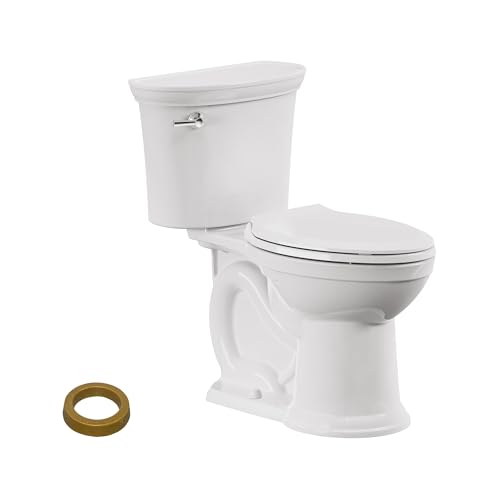
American Standard Heritage VorMax — Best Bowl-Cleaning Flush
The Heritage VorMax routes its flush water through a jetted rim system intended to power-wash the bowl on every flush, including under the rim where conventional toilets leave a tide line. It arrives as a complete kit — chair-height elongated bowl, slow-close seat and even the wax ring — at 1.28 gallons per flush.
Strengths
- Jetted flush actively scrubs the bowl, reducing residue-led clogs
- Complete kit: seat and wax ring included
- Chair height suits most adults
Trade-offs
- Jetted rim channels need the tank water level set correctly to perform
- Two-piece styling is traditional
- Brand-specific parts for the flush tower
| Flush system | VorMax jetted flush |
| Flush volume | 1.28 GPF |
| Included | Slow-close seat and wax ring (per listing) |
VorMax’s trick is distribution: rather than dribbling water from rim holes, it releases the flush as a jet that scrubs the bowl’s perimeter, which is why the design is marketed on cleaning as much as clearing. For anti-clog purposes the distinction matters, because a bowl that self-cleans every flush keeps its trapway entrance at full diameter. The Heritage trim wraps that engine in a conventional two-piece, chair-height package that will not look out of place in a traditional bathroom, and the included wax ring is a small but real convenience. Keep the tank level at the marked line during setup — jetted systems are less forgiving of a low tank than basic siphon toilets — and the performance matches the promise.
The VorMax jet system has one maintenance implication worth knowing: because the flush energy travels through rim jets, keeping the tank’s water chemistry boring matters — skip the in-tank bleach tablets, which degrade seals and can foul jet performance over time, and clean the bowl with ordinary bowl cleaner instead. Owners who follow that single rule report the scrubbing flush staying strong for years. The Heritage styling also deserves its note: this is the anti-clog engine for a bathroom that wants to look traditional, with a proper lever and classic lines, proving that clog resistance does not require a space-age silhouette or a top-button flush.
Best for: buyers whose clogs start as bowl residue and staining / Not suited for: homes with very low water pressure feeding the fill valve
Check on Amazon — check price on Amazon before you decide, because stock and configuration change often.

Kohler Wellworth Pressure Lite (K-3531) — Best Pressure Assist
Pressure assist is the heavy artillery of clog prevention: a sealed vessel inside the tank stores water under pressure, and each flush releases it as a jet that scours the bowl and drives waste through the trapway. Kohler’s Wellworth Pressure Lite brings that commercial mechanism to a residential elongated toilet at an efficient 1.1 gallons per flush. It is sold less seat.
Strengths
- Pressure-assist jet gives the most forceful flush in this guide
- Very low 1.1 GPF despite the power
- Elongated bowl on a proven Wellworth platform
Trade-offs
- Noticeably louder flush — the pressure-assist whoosh is real
- Sold less seat; vessel parts are specialised when service is eventually needed
- Not ideal for a powder room beside a bedroom
| Flush system | Pressure assist |
| Flush volume | 1.1 GPF |
| Seat | Not included (less seat) |
Gravity toilets persuade waste through the trapway; pressure-assist toilets compel it. The compressed charge also blasts the bowl walls, which keeps the whole system cleaner between uses, and the low flush volume means the power does not come with a water penalty. The honest costs are noise and specialisation: the flush is a short, sharp whoosh rather than a swirl, and when the pressure vessel eventually needs service, it takes vessel-specific parts rather than a universal flapper. For a basement bathroom with a long drain run, a rental property with unknown user habits, or any toilet with a genuinely stubborn clog history, those are trades worth making. Add a sturdy elongated seat to the order and the package is complete.
Pressure-assist ownership has a rhythm of its own: the vessel inside the tank is a sealed, long-life component, and when it eventually needs attention, the work is a defined cartridge-style service rather than a mystery. Kohler’s decision to put that system in the Wellworth — one of the most ordinary, serviceable toilet families in North America — means the exotic part is wrapped in the least exotic toilet possible, which is the right way to buy advanced flushing. Place it on the bathroom farthest from bedrooms, warn overnight guests once about the whoosh, and enjoy the near-certainty that whatever goes down stays down.
Best for: stubborn drain runs, rentals and basements where clogs keep returning / Not suited for: quiet ensuite bathrooms and buyers who want universal parts only
Check on Amazon — check price on Amazon before you decide, because stock and configuration change often.

Gerber Viper Elongated Two-Piece — Best Plumber’s Pick
Gerber is the brand plumbers install when the customer asks for something that simply works, and the Viper is its elongated two-piece built around a forceful flush. The listing highlights the strong flush, a seat that lifts off in seconds for cleaning around the posts, and a tool-free install kit — practical details that matter in real bathrooms.
Strengths
- Strong, simple flush platform favoured by the trade
- Quick-release seat makes deep cleaning fast
- Tool-free install kit included
Trade-offs
- Less widely stocked in big-box stores than Kohler or American Standard
- Styling is functional rather than decorative
- Two-piece tank seam, as with most value picks
| Configuration | Two-piece, elongated |
| Seat | Soft-close, quick-release (per listing) |
| Install | Tool-free kit included |
There is a category of product that professionals choose because callbacks are expensive, and the Viper sits squarely in it. Its flush design prioritises a decisive bowl clearance over water theatrics, and the rest of the package — standard internals, a seat that pops off for the kind of cleaning that prevents odour and residue build-up — supports the same philosophy. The quick-release seat deserves more credit than it gets in anti-clog conversations: the area around the seat posts is where grime accumulates fastest, and a seat that removes in seconds actually gets cleaned. If your priority is a toilet your plumber will approve of and your household will forget about, the Viper is the quiet achiever of this list.
Gerber’s distribution runs through plumbing channels more than big-box shelves, which cuts both ways: you may order rather than browse, but the channel that sells it also services it, and the Viper’s internals follow trade conventions rather than proprietary whims. The quick-release seat is also a landlord-grade feature — between tenants, the seat comes off for a genuine deep clean in seconds, and a fresh seat is an inexpensive reset. For a rental or a family bathroom where the toilet must simply never be the problem, the Viper’s professional pedigree is worth more than showroom polish. It is the pick your plumber would shortlist, which is the strongest endorsement this category offers.
Best for: practical households and landlords who want trade-grade reliability / Not suited for: design-first remodels where the toilet is a visual feature
Check on Amazon — check price on Amazon before you decide, because stock and configuration change often.

WOODBRIDGE One-Piece (B0940-F-C) — Best One-Piece Anti-Clog
This Woodbridge one-piece pairs a chair-height elongated body with a dual-flush valve, and its listing states a 1000 gram MaP flushing score. As with every MaP number printed on a marketplace listing, read that as the manufacturer’s published test figure for the model — a useful signal alongside the hardware, which here is a modern siphon one-piece with a fully skirted, easy-clean exterior.
Strengths
- Listing-stated 1000g MaP score (manufacturer figure) signals bulk-waste intent
- One-piece body with no tank seam and easy-clean sides
- Chair height with soft-closing seat included
Trade-offs
- Dual flush’s light mode is for liquids — use full flush for solids
- One-piece weight complicates solo installation
- Top-button flush takes a day to get used to
| Listing-stated MaP | 1000g (manufacturer figure stated on the listing) |
| Flush | Dual flush, 1.28 GPF class |
| Bowl | Chair height, elongated, seat included |
The MaP protocol exists precisely for this category: it measures how much simulated waste a toilet clears in a single flush, and a four-figure score is the top band of that scale. Because the figure here comes from the manufacturer’s listing, the sensible way to use it is as one input — and the supporting hardware backs it up: a modern trapway, a decisive siphon and a bowl shape designed around the flush rather than around styling. The one-piece body also helps hygiene, since there is no tank joint to harbour grime. Use the full flush for solids without guilt; the water saved by the light flush on liquids is where the dual-flush economy actually lives. For a remodel that wants modern looks and a documented bulk-clearing claim, this is the pick.
Treat the stated MaP score as the beginning of the ownership story rather than the end: the score tells you the design intent, and the fully glazed trapway and modern siphon geometry are what deliver it daily. The chair height places this Woodbridge in the same ergonomic band as the guide’s other mainstream picks, so it can serve as the household’s main toilet rather than a styling experiment. One-piece delivery inspection matters here as with any single casting — check the base for hairline damage before signing — after which the skirted body makes this the easiest toilet in the guide to keep looking clean between deep cleans.
Best for: modern remodels wanting a stated bulk-waste score and one-piece styling / Not suited for: buyers who prefer lever flushes and universal gravity parts
Check on Amazon — check price on Amazon before you decide, because stock and configuration change often.
Comparison Table
| Pick | Badge | Key spec | Best for |
|---|---|---|---|
| American Standard Champion 4 One-Piece | Best Overall | 4 in (per listing) | households with chronic clog problems on a main bathroom |
| TOTO Drake Two-Piece Elongated (CST786CEFG) | Best Rim Wash | TORNADO FLUSH | busy family bathrooms where residue build-up causes repeat clogs |
| American Standard Heritage VorMax | Best Bowl-Cleaning Flush | VorMax jetted flush | buyers whose clogs start as bowl residue and staining |
| Kohler Wellworth Pressure Lite (K-3531) | Best Pressure Assist | Pressure assist | stubborn drain runs, rentals and basements where clogs keep returning |
| Gerber Viper Elongated Two-Piece | Best Plumber’s Pick | Two-piece, elongated | practical households and landlords who want trade-grade reliability |
| WOODBRIDGE One-Piece (B0940-F-C) | Best One-Piece Anti-Clog | 1000g (manufacturer figure stated on the listing) | modern remodels wanting a stated bulk-waste score and one-piece styling |
How to Choose a Toilet That Won’t Clog
Start with the flush valve. Diameter is destiny: a 3-inch valve is the modern minimum for a strong gravity flush, and the 4-inch valve in the Champion 4 shows where the mainstream maximum sits. A bigger valve empties the tank faster, and flush speed — not just volume — is what starts waste moving.
Next, look at the trapway. Ask three questions: is it at least two inches across, is it fully glazed, and does the design avoid tight bends? Glazing matters because an unglazed trapway roughens over time, and roughness is where build-up begins. Every pick in this guide uses a proven trapway design from its maker.
Then decide your mechanism. Gravity siphon designs are quiet, cheap to service and — in the best modern versions — genuinely strong. Pressure assist is louder and more specialised but delivers the most forceful flush available in a home toilet. Rim technology is the third lever: tornado and jetted systems keep the bowl cleaner, which prevents the slow residue build-up behind many repeat clogs.
Finally, be honest about your drain. A toilet cannot out-flush a damaged, bellied or root-invaded drain line. If several fixtures in the home drain slowly, the problem is downstream and no toilet in this guide will fix it; if only the toilet struggles while sinks and tubs run free, the fixture is the right place to spend.
What MaP Scores Actually Mean — and What They Don’t
MaP — Maximum Performance testing — is a standardised protocol that flushes increasing amounts of a soybean-paste test media to find the largest load a toilet clears completely. Scores run from 250 grams up to 1000 grams, the top of the scale. It is a genuinely useful comparison tool because every tested model faces the same media.
Two cautions keep the number honest. First, a score printed on a marketplace listing is the manufacturer’s published figure for that model, as with the Woodbridge pick in this guide whose listing states 1000 grams — it has not been independently re-tested for this article. Second, MaP measures bulk clearing under test conditions; it does not measure your drain slope, your venting or the wipes someone flushed last month.
Used correctly, MaP is a tiebreaker between mechanically similar toilets. Used as a magic number, it misleads. This guide therefore pairs every stated score with the hardware story — valve, trapway and rim design — that has to deliver it in your bathroom.
Habits That Clog Even a Great Toilet
No toilet in this guide is rated for ‘flushable’ wipes, cotton products, paper towels or dental floss, whatever the packaging claims. These materials do not break down like toilet paper, and they snag exactly where trapways narrow. The single most effective anti-clog purchase is a small bin beside the toilet.
Double-flushing mid-use, sometimes called a courtesy flush, genuinely helps in high-use households: two moderate loads clear more reliably than one maximum load, even through a strong trapway. It costs a little water and saves a lot of plunging.
Finally, keep the tank internals honest. A worn flapper that leaks and refills, or a fill valve set below the marked water line, quietly weakens every flush. Anti-clog performance is a system: fixture, water level and habits together.
Reading Your Own Clog History Before You Buy
Clogs keep diaries, if you know how to read them. A toilet that clogs on ordinary use from the day it was installed was probably born weak — small valve, rough trapway — and replacement is the cure. A toilet that worked for years and recently started struggling is telling a different story: worn flapper, low tank level, scale in the rim jets, or a drain line slowly narrowing. Fix the cheap causes first, and replace only when they are ruled out.
Location matters too. If the lowest toilet in the house clogs while upper floors behave, suspect the main line or the vent stack rather than the fixture. If one bathroom’s toilet clogs while its own sink and shower race away, the fixture and its immediate trapway are the honest suspects, and that is the case every pick in this guide is built for.
Keep a month of notes if the pattern is unclear — what clogged, when, and whether other fixtures gurgled. A plumber given that diary solves in one visit what guesswork solves in three, and you will know whether your money belongs in a toilet from this guide or in a drain cleaning first.
Anti-Clog Features, Ranked by What Actually Matters
If you remember one ranking from this guide, make it this: trapway first, valve second, rim third, volume last. The trapway is the road everything travels; a wide, glazed, gently curved road clears traffic at almost any speed. The flush valve is the engine’s throttle — bigger valves release the surge that starts loads moving. Rim design keeps the bowl clean so the road’s entrance never narrows with residue. Flush volume, the number marketing shouts about, matters least, which is why strong 1.28-gallon designs out-clear lazy 1.6-gallon ones.
Pressure assist rearranges the ranking by brute force — it gives a modest trapway a motorway’s clearing power — which is why it remains the reserve option for houses whose drains are old, long or flat. Gravity designs with all three top features right, like the Champion and Drake in this guide, cover the great majority of homes without the noise.
Use the ranking when comparing any toilet not in this guide: ask for the trapway diameter and glazing, the valve size, and the rim system, in that order, and let the gallons-per-flush number come last in the conversation, where it belongs.
The Plunger Test: Knowing When Replacement Is Really the Answer
Before spending on any toilet in this guide, give your current one a fair trial, because a surprising share of ‘clog-prone’ toilets are one adjustment away from competence. Set the tank water to its marked line, replace a flapper that has gone soft or warped — a part that costs very little and fails silently for years — and clear the rim jets with a small mirror and a piece of wire if the bowl wash looks lazy on one side. Then live with it for two weeks. If ordinary use still clogs, the fixture’s trapway or valve is the limit, and replacement stops being a guess and becomes a diagnosis.
There is also a middle path worth knowing: a toilet that clogs only on the month’s heaviest use may be a fine toilet in a house that needs one strong bathroom rather than three strong ones. Replacing the main family toilet with a Champion-class pick and leaving the others is a legitimate strategy that concentrates the budget where the traffic is. What does not work is replacing a toilet to fix a drain problem — the gurgle test in this guide’s earlier section, slow companion fixtures and a history of main-line backups all point downstream, where a drain professional, not a catalogue, holds the answer. Diagnose first, and the toilet you buy will be the last one the problem needs.
How the Picks in This Guide Differ in Daily Life
On paper the six picks cluster around the same promise, but they live differently. The Champion 4 is the set-and-forget surge: a decisive, slightly businesslike flush that clears and refills fast, in a one-piece body that asks nothing of its owner beyond the occasional internal part years from now. The Drake is the quiet professional — a swirling, thorough wash that keeps its own bowl presentable, so the toilet looks clean on the days between cleanings, which households notice more than they expect. The VorMax splits the difference with its jetted scrub, trading a little mechanical theatre for visibly cleaner porcelain.
The Pressure Lite is the character actor: unforgettable, effective and not for every room, its whoosh announcing each flush to the household — in a basement or a rental that announcement is the sound of a problem permanently solved, while beside a nursery it is a design error. The Gerber Viper is the invisible servant, chosen by people who measure a toilet by the years it goes unmentioned. And the Woodbridge is the modernist, bringing a documented bulk score and a seamless silhouette to bathrooms where the toilet is part of the design. Choose by the daily life you recognise, and the anti-clog hardware in each will do the rest.
Water Quality, Scale and the Slow Death of a Strong Flush
Hard water wages a slow war on flush performance that no valve size can win unaided. Scale narrows rim jets and feed passages a fraction at a time, so the bowl wash that once scrubbed evenly develops lazy streaks, residue begins its accumulation, and a toilet with a clean bill of mechanical health starts clogging like a weak one. The symptoms arrive gradually enough to be blamed on the fixture, which is why this guide insists on the diagnosis order: water level, flapper, rim jets, then — only then — the toilet itself. In hard-water districts, an annual rim-jet clearing and a check of the tank’s internals belong on the same calendar as the furnace filter.
Tank additives deserve a clear verdict in this context: the drop-in bleach and blue tablets that promise a self-cleaning bowl degrade flappers and seals, and their damage presents, months later, as exactly the weak, leaky flush that causes clogs. Bowl cleaners applied by hand do the cleaning without living in the tank. Households that keep the tank’s chemistry to plain water find their flush mechanisms lasting years longer, which is another way of saying that anti-clog performance is partly a cleaning-product decision. The strongest toilet in this guide is still a system — water, seals, jets and habits — and systems reward owners who maintain all four.
Teaching the Household: Habits That Keep a Strong Toilet Strong
Every anti-clog toilet eventually meets the household member who treats it as a waste-disposal unit, and the machine usually loses. The education that prevents this is brief and specific: only the three Ps — pee, poo and paper — go in, in the words plumbers use with children and adults alike. Wipes go in the bin even when their packaging says otherwise, because the packaging is describing a laboratory drain, not your trapway, your sewer lateral and your municipality’s pumps, all of which register their disagreement expensively.
Quantity habits matter second. Paper used by the handful rather than the wad, and the courtesy flush during long visits, keep individual loads inside what any trapway in this guide clears without drama. Guests are the wildcard, and the graceful solution is environmental rather than instructional: a small lidded bin beside the toilet and a plunger that lives discreetly in the room remove both the temptation and the embarrassment that cause the worst flushing decisions. A strong toilet plus a considerate room equals a bathroom that simply never has the problem — which was the goal when you typed the search that brought you here.
Case Studies: Four Bathrooms, Four Different Answers
Consider first the busy family bathroom in a fifteen-year-old house, where the original builder-grade toilet began clogging weekly once the children reached school age. The companion fixtures drained perfectly, the tank level was correct, and a new flapper changed nothing — a textbook fixture problem. The household chose the Champion 4 for its oversized valve, and the case is instructive because nothing else was changed: same drain, same habits, same paper. The clogs stopped being a weekly event and became a memory, which is the cleanest evidence this category ever produces — one variable changed, one problem ended. It also shows why the guide leads with valve diameter: in a healthy drain, the surge is the cure.
The second bathroom sat at the end of a long, nearly flat basement run in an older home, where even a strong gravity toilet struggled twice a year and a plumber had twice confirmed the line was clear but lazy. That is the pressure-assist case, and the Wellworth Pressure Lite solved it the way the guide predicts — not by finesse but by force, driving waste through a run that gravity alone persuaded too slowly. The household accepted the whoosh because the bathroom sits far from the bedrooms, a placement decision made deliberately at purchase. Anti-clog buying is full of such trades, and making them consciously is the difference between a solved problem and an exchanged one.
The third case is the quiet one: a couple whose toilet never dramatically clogged but slowly worsened over five years — a lazy flush here, a second flush there — until a guest’s embarrassment forced the issue. Their rim jets were half-scaled and the bowl’s glaze had roughened with age and hard water. They chose the Drake for its rim wash and glaze, but the honest moral is that their next toilet will be maintained differently: rim jets checked yearly, no tank tablets, water level verified. The fixture was the cure; the habits are the prevention, and this guide has tried to sell both in the right order.
The fourth bathroom belongs to a landlord with three rental units and a simple requirement: never hear about the toilets. The Viper went into all three, chosen for trade internals and the quick-release seat that makes changeovers genuinely cleanable. Two years of silence followed — the landlord’s metric, and a legitimate one. Not every anti-clog success is measured in flush performance; some are measured in phone calls that never happen. Read your own bathroom into whichever of these four stories it resembles, and the right pick in this guide is the one that story ends with.
How to Set Up a New Toilet for Maximum Clog Resistance
During installation, set the tank water level exactly to the manufacturer’s marked line. An inch low can cost a surprising share of flush energy, and it is the most common reason a strong toilet underperforms in its first month.
Check the rim performance on the first flushes: the bowl should wash evenly around its full circumference with no dry streaks. If one side runs weak, confirm the tank is level on the bowl — a tilted tank starves one side of the rim feed.
Run a realistic test before the packaging goes out: several balls of toilet paper in a normal quantity, flushed together, should clear in one flush with a strong finish and no lazy swirling. Paper is not a perfect waste simulant, but a toilet that struggles with paper will struggle with everything.
After a week of use, re-check the water level and the flush handle or button action, and note the model number and valve type in your phone. When a part eventually wears, ordering the exact replacement in one trip is the difference between a ten-minute fix and a week of weak flushes.
Common Buying Mistakes
- Chasing gallons per flush alone. A well-designed 1.28 GPF toilet out-flushes a lazy 1.6 design. Valve size and trapway matter more than volume.
- Believing any toilet is truly ‘clog-proof’. The honest category name is clog-resistant. Wipes and foreign objects defeat any fixture.
- Ignoring the drain line. Slow sinks and tubs alongside the toilet mean the blockage is downstream — call a plumber, not a catalogue.
- Setting the tank water level low to save water. It saves pennies and costs flush power on every single flush.
- Treating a listing’s MaP score as an independent test. It is the manufacturer’s published figure for the model — useful, but weigh it with the hardware.
- Skipping the seat and parts check. Confirm seat inclusion and rough-in on the listing before the toilet ships.
Final Recommendation
If you buy one toilet from this guide, make it the American Standard Champion 4 — its oversized valve is the most direct mechanical answer to clogging. The TOTO Drake is the prevention pick for residue-driven problems, the Kohler Pressure Lite is the force pick for stubborn drains, and the Gerber Viper and Woodbridge one-piece cover the trade-grade and modern-remodel angles. For related research, see Best 1.28 Gallon Toilets For No Clogging, Best 1.6 Gallon Flush Toilets, Best Toilets High Seat and Best 0.8 Gpf Toilets.
Frequently Asked Questions
What makes a toilet clog-resistant?
Three things working together: a large flush valve that releases water fast, a wide and fully glazed trapway, and a rim wash that keeps the bowl clean so build-up never starts. No single feature does it alone.
Is pressure assist worth it for a home toilet?
If clogs keep returning despite a healthy drain, yes — it is the most forceful residential flush. The costs are a louder flush and specialised vessel parts when service is eventually needed.
What is a MaP score?
It is a standard bulk-waste test: the grams of test media a toilet clears in one flush, up to 1000g. A score on a product listing is the manufacturer’s published figure for that model.
Can a 1.28 GPF toilet really avoid clogs?
Yes. Modern 1.28 designs like the Drake in this guide clear reliably because valve size, trapway glazing and rim design matter more than raw volume.
My new toilet still clogs. What should I check first?
The tank water level against its marked line, then whether other fixtures drain slowly — which points to the drain line rather than the toilet.
Are ‘flushable’ wipes safe for these toilets?
No. They do not break down like toilet paper and are a leading cause of blockages even in strong toilets. Bin them instead.


