Disclosure: airfryerkitchensupply.com is reader-supported. When you buy through links on our site, we may earn an affiliate commission at no extra cost to you.
Where to buy
Below is the verified shortlist for the best mini multi cookers category in this guide.
Mini multi cookers are electric countertop appliances — small pressure-and-more machines — and every pick below was verified against Amazon’s catalog data before it received a link. The guide separates true multi-function minis (pressure, slow cook, rice, steam, sauté) from small rice cookers that merely multitask a little, because that distinction decides what lands on your counter. Match capacity to your household, then check price on Amazon.
- Instant Pot Duo 7-in-1 Mini Electric Pressure Cooker, 3 Quart (Best Overall) — check price on Amazon
- Instant Pot Rio Mini 4 Qt 7-in-1 Electric Pressure Cooker, Black (Best for Small Families) — check price on Amazon
- OLIXIS 10-In-1 Electric Pressure Cooker, 3 Quart Multi Cooker (Best Budget Pressure Mini) — check price on Amazon
- Instant Pot Rio Mini 4 Qt, Rosewater Pink (Best Design Pick) — check price on Amazon
- AROMA Professional Digital Rice Cooker ARC-994SG, 4-Cup Uncooked (Best Rice-Led Multicooker) — check price on Amazon
- AROMA Digital Rice Cooker ARC-914SBD, 4-Cup Uncooked (Best Value Multicooker) — check price on Amazon
The best mini multi cookers answer a specific modern problem: the full-size multi cooker is a wonderful appliance that a one or two person household uses at a third of its capacity, heating a large pot to cook a small dinner and storing the rest as leftovers nobody finishes. Shrink the format to three or four quarts and everything improves — the pot comes to pressure faster, small batches cook more evenly, storage stops being a negotiation, and the appliance earns a permanent counter spot in kitchens where the big version lived in a closet. If you cook for one, two or occasionally three, the mini is not the compromise size. It is the correct size.
This guide’s picks divide into two honest families. True pressure multi cookers — the Instant Pot Duo Mini, the Rio Mini line and the OLIXIS — pressure cook, slow cook, steam, sauté and make rice in one small pot. Rice-led multicookers from Aroma add digital programs and steaming to a grain-first design, trading pressure for simplicity and price tier. Both families are represented because both are legitimately ‘multi’ — but they multi differently, and the reviews are explicit about which kind each pick is, so nobody buys a rice cooker expecting pressure.
Capacity translation matters before anything else. A 3-quart multi cooker pressure-cooks about two-thirds full, which means roughly two quarts of food — a soup for two with leftovers, a small batch of rice, four chicken thighs in sauce. A 4-quart stretches that to a small family. Buy for the meals you cook weekly, not the chili you make twice a year, and the mini format will feel generous rather than limiting within a month of real use.
Key Takeaways
- Decide the pressure question first — it splits the category, and every other choice is secondary to it.
- Size by working volume: pressure minis cook at two-thirds fill, so 3 quarts means about 2 quarts of food.
- Small pots come to pressure faster, which makes the mini genuinely quicker door-to-door for two-person meals.
- The inner pot is the ownership experience — its material and washability matter more than program counts.
- A mini must live on the counter to earn its keep; measure footprint and lid clearance before buying.
In this guide
Quick Picks
Instant Pot Duo 7-in-1 Mini Electric Pressure Cooker, 3 Quart — Best Overall. The 3-quart Duo Mini: pressure cook, slow cook, rice, steam, sauté, yogurt and warm in the category’s most established mini, with a stainless steel pot and a recipe app per its listing. Check the current price on Amazon.
Instant Pot Rio Mini 4 Qt 7-in-1 Electric Pressure Cooker, Black — Best for Small Families. The newer Rio Mini stretches the format to 4 quarts with the same 7-in-1 spread — slow cook, rice, steam, sauté, yogurt, warm per its listing. The mini for households of three or four. Check the current price on Amazon.
OLIXIS 10-In-1 Electric Pressure Cooker, 3 Quart Multi Cooker — Best Budget Pressure Mini. A 3-quart, 10-in-1 pressure multi cooker with a ceramic inner pot and slow cook function per its listing, at the budget end of the pressure field. The value route into pressure minis. Check the current price on Amazon.
Instant Pot Rio Mini 4 Qt, Rosewater Pink — Best Design Pick. The Rio Mini in Rosewater Pink — the same 4-quart, 7-in-1 machine as the black pick, in the colorway for kitchens where appliances are part of the décor. Function identical, presence entirely different. Check the current price on Amazon.
AROMA Professional Digital Rice Cooker ARC-994SG, 4-Cup Uncooked — Best Rice-Led Multicooker. Aroma’s digital multicooker: rice at its core, with steamer, slow cooker and grain programs per its listing, at 4 cups uncooked / 8 cups cooked. The multi for grain-first kitchens that do not need pressure. Check the current price on Amazon.
AROMA Digital Rice Cooker ARC-914SBD, 4-Cup Uncooked — Best Value Multicooker. The long-running Aroma digital: 4 cups uncooked / 8 cups cooked, with steamer and multicooker functions per its listing, at a value tier. The proven, inexpensive way to cover grains plus steaming. Check the current price on Amazon.
How These Picks Were Chosen
Every pick was verified on the airfry site’s Amazon connection: searched by brand and model, the returned listing title matched against the intended appliance, and only then assigned an ASIN and link. Multi cookers attract model-year confusion and marketplace relabeling, so confirming the exact model behind each listing — Duo Mini versus Rio Mini, one Aroma model versus its near-twin — was the core of the work.
Selection ran on function honesty first: does the listing’s own description support the ‘multi’ claim, and which functions exactly? Pressure models were judged on their function list, capacity and footprint. Rice-led models were judged on program range, steaming hardware and whether their multi claims stayed truthful. Across all picks: inner pot material as stated in the listing, footprint against a small-kitchen counter, and whether the size makes sense for one to three people — the mini brief. Family-size 6-quart machines were excluded by definition, however good they are. Prices are not printed in this guide; check price on Amazon at the listing.
The 6 Best Mini Multi Cookers

Instant Pot Duo 7-in-1 Mini Electric Pressure Cooker, 3 Quart — Best Overall
This is the mini multi cooker against which the category is judged, and for most one to three person households it remains the buy. The listing’s seven functions cover the complete small-kitchen repertoire, the 3-quart stainless pot is sized for real two-person dinners with a leftover portion rather than a family feast, and the model has years of recipes, accessories and community knowledge behind it — every pressure recipe site on the internet has a mini-tested version by now. It suits couples, singles who cook properly, and small kitchens replacing several appliances with one.
Strengths
- Full 7-in-1 function set per listing, including pressure and yogurt
- Stainless steel pot per listing — durable and dishwasher friendly
- Deepest recipe and accessory ecosystem of any mini
Trade-offs
- 3 quarts means two-thirds fill — about 2 quarts of food
- No air fryer function; that lives in larger, pricier lines
- Interface is functional rather than sleek next to the Rio
| Capacity from listing | 3 quart |
| Functions from listing | 7-in-1: pressure cooker, slow rice cooker, steamer, sauté, yogurt maker, warmer and sterilizer |
| Extras from listing | Includes free app with over 1900 recipes; stainless steel |
The Duo Mini’s moat is accumulated knowledge. Because it has been the default mini for years, its quirks are documented, its timings are published for everything from steel-cut oats to small-batch chili, and its accessories — spare pots, lids, seals — are trivially available. That ecosystem converts ownership from guesswork into routine faster than any feature could. As a machine it is exactly what the listing promises: a complete multi cooker that happens to be small, with pressure performance that makes two-person stews and beans-adjacent dishes genuinely weeknight-fast.
Accessory strategy separates the Duo Mini from the field over time: a second inner pot turns the machine into a two-course system — rice in one pot, curry in the other, swapped in seconds — and spare seals are cheap insurance that keeps a curry-flavored ring out of your yogurt. None of that ecosystem exists at the same depth for rival minis, and for owners who keep appliances five years or more, it compounds into the strongest argument in this entire guide.
Pressure is the dividing line of this category, and it changes what ‘multi’ means. A pressure mini sears, then pressure-cooks a stew in a fraction of slow-cook time, then keeps it warm — a genuine range. A rice-led multicooker’s range is grains, steaming, oatmeal, soups and slow-style cooking without pressure speed. Neither is better in the abstract: pressure rewards cooks who use it, and complicates life for cooks who do not. Be honest about which cook you are before the badges below try to help you.
Best for: Couples and singles wanting the complete, proven mini / Not suited for: Households regularly cooking for four or more
Check on Amazon to check price on Amazon and confirm the current listing details before you buy.

Instant Pot Rio Mini 4 Qt 7-in-1 Electric Pressure Cooker, Black — Best for Small Families
Choose the Rio Mini when the Duo Mini’s math comes up one serving short. Four quarts at working fill feeds three comfortably and four modestly, which makes this the mini for young families and couples who entertain one extra person regularly. The listing’s function list mirrors the Duo’s spread — pressure at the center, with rice, steaming, sauté, yogurt and keep-warm around it — in Instant Pot’s newer Rio styling. It suits buyers who want the current design language and a little more headroom without jumping to a full 6-quart machine that dwarfs their counter and their dinners.
Strengths
- 4-quart capacity bridges mini and family sizes
- Full 7-in-1 function spread per listing
- Newer Rio design and interface generation
Trade-offs
- Bigger footprint gives back some of the mini storage advantage
- Newer line means a thinner accessory and recipe trail than the Duo
- Still not a four-plus-person batch machine at pressure fill
| Capacity from listing | 4 qt |
| Functions from listing | 7-in-1 electric pressure cooker: slow cooks, makes rice, steams, sautés, makes yogurt and keeps food warm |
| Color from listing | Black |
The Rio Mini exists because ‘mini’ households kept discovering that 3 quarts is perfect until the night a third person stays for dinner. That extra quart, used within pressure fill rules, is the difference between a stew that stretches and one that does not, and the Rio delivers it while keeping the format’s essential virtues: fast pressure come-up on small loads, a pot one person can wash in a small sink, a footprint a modest counter can host permanently. If your household is genuinely three, or two plus frequent guests, this is the correctly sized machine.
The Rio Mini’s extra quart also changes its slow-cook personality: a 4-quart slow batch suits a small pot roast or a soup meant to become two days of lunches, jobs the 3-quart Duo handles only in miniature. Households whose multi cooking leans slow-and-low as much as pressure-fast will feel that quart weekly. It is the rare case where the newer model is not merely a restyle — the capacity itself is the upgrade, aimed at a household size the original mini underserved.
Small pots come to pressure faster, and that is a real feature rather than a footnote. Much of a pressure recipe’s clock is the come-up and release, not the timed cook, so a 3-quart pot can finish a weeknight stew meaningfully sooner than its 6-quart sibling making the same two servings. The mini format’s speed advantage compounds with its storage advantage — it is the rare appliance category where smaller is functionally better for its intended household.
Best for: Households of three, or two plus guests / Not suited for: True one-person cooking, where 3 quarts is already generous
Check on Amazon to check price on Amazon and confirm the current listing details before you buy.

OLIXIS 10-In-1 Electric Pressure Cooker, 3 Quart Multi Cooker — Best Budget Pressure Mini
Buy this one when the Instant Pot tier is more than the budget allows but pressure is non-negotiable. The listing promises ten functions around a 3-quart pot, names rice, stew and steam as its home dishes, and specifies a ceramic inner pot — a material many buyers prefer for its release properties with grains and sauces. It suits first-time pressure cooks testing whether the format fits their life, students equipping a first kitchen, and anyone whose multi cooker will work hard rather than pose. The trade for the tier is ecosystem: fewer published recipes tuned to it, and a brand without Instant Pot’s accessory depth.
Strengths
- 10-in-1 function list per listing at a budget tier
- Ceramic inner pot per listing — easy release for grains
- Programmable operation with slow cook included
Trade-offs
- Thinner recipe and accessory ecosystem than Instant Pot
- Budget-tier finish and documentation
- 3-quart working volume, like all minis, is about 2 quarts of food
| Capacity from listing | 3 quart |
| Functions from listing | 10-in-1 multi cooker for rice, stew and steam; slow cook function |
| Pot from listing | Ceramic inner pot; stainless steel exterior per listing |
The OLIXIS makes the correct budget argument: the pressure multi format itself is the value, and a competent execution of it at a lower tier beats a famous badge you cannot afford. Its ceramic pot is a genuine point of difference — rice and saucy stews release cleanly, and the pot doubles as a serving vessel without the industrial look of steel. Calibrate expectations on support rather than cooking: you will adapt Instant Pot mini recipes by time rather than by dedicated OLIXIS charts, which experienced cooks do without thinking and beginners learn within a few meals.
Budget buyers should plan one habit with the OLIXIS: keep a small notebook of adapted timings for your five staple dishes, because you will be translating recipes written for Instant Pot minis. The translation is almost always direct — same times, same liquid logic — and after those five dishes are recorded, the ecosystem gap effectively closes for your kitchen. What remains is pure saving, plus a ceramic pot many owners end up preferring for grains.
Fill discipline scales down, not away. Pressure cooking still means two-thirds full at most, and foamy foods less, so a 3-quart mini yields about two quarts of finished food. Plan menus in those terms: soups and stews for two plus a leftover lunch, rice for two to four, a small pot roast rather than a large one. Cooks who internalize the working volume in week one never feel limited; cooks who shop by the brim number feel cheated by arithmetic that was always printed on the box.
Best for: Budget-conscious first-time pressure cooks / Not suited for: Buyers who want a deep branded recipe ecosystem
Check on Amazon to check price on Amazon and confirm the current listing details before you buy.
Instant Pot Rio Mini 4 Qt, Rosewater Pink — Best Design Pick
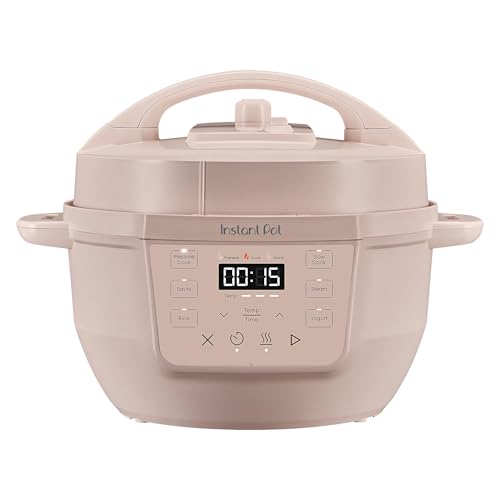
Appliances that live on the counter are furniture, and this pick takes that seriously. The Rosewater Pink Rio Mini carries the identical specification to the black model — 4 quarts, the 7-in-1 spread of pressure, rice, steam, sauté, yogurt and warm per its listing — in a finish that suits bright, styled kitchens and makes the machine a deliberate object rather than a tolerated one. It suits design-conscious small households, gift buyers equipping a first apartment with taste, and anyone whose counter is visible from the living space. Buy it for the same reasons as the black Rio, plus the one reason that is purely about joy.
Strengths
- Identical 4-quart 7-in-1 specification to the black Rio Mini
- Distinctive Rosewater Pink finish per listing
- All the Rio generation’s design updates
Trade-offs
- Colorway availability can vary by listing stock
- The premium is for the finish, not added function
- Pink commits your counter palette for the appliance’s life
| Capacity from listing | 4 qt |
| Functions from listing | 7-in-1: slow cooks, makes rice, steams, sautés, makes yogurt and keeps food warm |
| Color from listing | Rosewater Pink |
It would be easy to treat a color pick as frivolous; in small homes it is practical. A multi cooker earns its keep by living on the counter, and objects people enjoy looking at stay on counters while ugly ones get exiled to cupboards and disuse. The Rosewater Pink Rio is therefore not the black Rio with a surcharge — for the right kitchen it is the version that will actually be used daily. Judge it exactly as its twin on cooking, because the cooking is identical, and then let your kitchen’s palette cast the deciding vote.
The pink Rio Mini has a gifting logic worth stating plainly: it is the version most likely to be used by a recipient who did not choose it. A first-apartment gift that matches the recipient’s kitchen and taste gets counter space and daily use; a purely utilitarian one gets closet space. Since the cooking specification is identical to the black model, the colorway is not a compromise purchase — it is the same machine with a higher probability of a working life.
The inner pot is the ownership experience. It is the thing you sauté in, serve from, wash daily and eventually judge the whole appliance by. Listing-stated materials in this guide include stainless steel on the Instant Pot models and a ceramic inner pot on the OLIXIS, and the Aroma models’ own pot descriptions are noted in their reviews. Weight, dishwasher behavior and how the pot handles a metal spoon matter more over two years than any program count.
Best for: Design-conscious small households and gift buyers / Not suited for: Buyers indifferent to appliance appearance
Check on Amazon to check price on Amazon and confirm the current listing details before you buy.

AROMA Professional Digital Rice Cooker ARC-994SG, 4-Cup Uncooked — Best Rice-Led Multicooker
Not every ‘multi’ kitchen needs pressure, and this Aroma is the pick for the ones that do not. Its listing describes a digital rice cooker that also steams, slow cooks and handles grains as a multicooker — a range built around the way grain-first households actually eat: rice most nights, steamed vegetables or fish above it, oatmeal in the morning, a slow-cooked soup on the weekend. The stainless exterior and digital programs give it a finished, appliance feel beyond basic rice cookers. It suits rice-daily households of two to four who want one calm, simple machine rather than a pressure system to learn.
Strengths
- Digital programs across rice, grains, steam and slow cook per listing
- Steamer function cooks vegetables and proteins with the rice
- 8 cups cooked capacity fits two to four person households
Trade-offs
- No pressure cooking — stews take slow-cook time
- Rice-led design means grains outshine other jobs
- Larger than the true minis in footprint per serving
| Capacity from listing | 4-cup uncooked / 8-cup cooked; 2 qt |
| Functions from listing | Rice cooker, multicooker, steamer, slow cooker, grain cooker |
| Model | ARC-994SG; stainless steel exterior |
The ARC-994SG argues that ‘multi’ should describe your menu, not a pressure rating. For a household whose rotation is rice, steamed things, grains and the occasional slow soup, its program set covers the week with less to learn and less to clean than a pressure machine, and its rice — the dish that matters most to that household — is the best in this guide because rice is its first language. The honest boundary is speed on dense foods: without pressure, a stew is a slow-cook project. Grain-first kitchens rarely care, and for them this is the most satisfying machine here.
Steaming is the ARC-994SG’s stealth strength: vegetables or fish steaming above rice, finishing at the same moment, in one appliance with one washing-up. That coordination is the daily reality of grain-first cooking, and digital programs make it a set-and-forget event rather than a timing exercise. Households upgrading from a basic one-switch rice cooker will feel this model as a leap in exactly the dimension they use, which is a better definition of an upgrade than feature count.
Footprint is a feature in this category in a way it is not for full-size machines. A mini that lives on the counter gets used four times a week; a mini exiled to a high shelf gets used monthly, and at that point its owner should have bought the bigger machine or none. Measure your counter’s honest available depth, including the lid’s opening arc, and weight the compact picks accordingly — several households in this guide’s audience are choosing between the appliance and their only prep surface.
Best for: Rice-daily households of two to four skipping pressure / Not suited for: Cooks who pressure-cook several times a week
Check on Amazon to check price on Amazon and confirm the current listing details before you buy.

AROMA Digital Rice Cooker ARC-914SBD, 4-Cup Uncooked — Best Value Multicooker
This is the appliance equivalent of a reliable old sedan: a digital rice cooker and steamer whose listing also claims multicooker duty, sold for years at a value tier, with a 2-quart working size that suits two to four people. It handles the daily grain, steams vegetables and proteins in its basket, and covers oatmeal and soups without complaint. It suits budget-first small households, students moving beyond a basic rice cooker, and anyone who wants digital programs without paying for pressure they will not use. Its long sales history in a fickle category is its own review.
Strengths
- Value tier with digital programs and a steamer basket
- 8 cups cooked capacity for two to four people
- Long-running model with a proven track record
Trade-offs
- No pressure function
- Design and interface are dated next to newer models
- Multicooker range is grain-centered, not universal
| Capacity from listing | 4-cup uncooked / 8-cup cooked; 2 qt |
| Functions from listing | Rice cooker, steamer, grain cooker, multicooker |
| Model | ARC-914SBD; stainless steel exterior |
Longevity is information. The ARC-914SBD has outlasted several generations of trendier appliances because its formula — competent rice, a useful steamer, simple digital controls, a price that needs no deliberation — matches what small households actually do all week. As a multicooker it is honest about its center of gravity: grains first, steaming second, everything else a bonus. Buyers who accept that framing get years of uneventful, useful service; buyers who wanted pressure in disguise were always shopping in the wrong half of this guide, and the badges exist to steer them right.
The ARC-914SBD’s controls deserve a word of praise that newer models rarely earn: they are legible, few and obvious, operable by a guest, a teenager or a parent visiting your first apartment. Appliances in real households get used by people who did not read the manual, and a multicooker whose logic a newcomer can guess correctly is a genuinely better household tool than a cleverer machine that requires its owner as interpreter.
Programs are the least important spec here. Every pick covers the core jobs; the differences that survive a year of ownership are capacity fit, pot material, footprint and how the controls behave with wet hands on a Tuesday. Buy the machine whose physical facts match your kitchen and your two-person menu, and let the program list be the tiebreaker it deserves to be rather than the headline it is marketed as.
Best for: Budget-first households wanting programs plus steaming / Not suited for: Pressure cooks or design-first buyers
Check on Amazon to check price on Amazon and confirm the current listing details before you buy.
Comparison Table
| Pick | Badge | Key spec | Best for |
|---|---|---|---|
| Instant Pot Duo 7-in-1 Mini Electric Pressure Cooker, 3 Quart | Best Overall | 3 qt; 7-in-1 pressure multi; stainless pot | Couples and singles wanting the complete, proven mini |
| Instant Pot Rio Mini 4 Qt 7-in-1 Electric Pressure Cooker, Black | Best for Small Families | 4 qt; 7-in-1 pressure multi; Rio generation | Households of three, or two plus guests |
| OLIXIS 10-In-1 Electric Pressure Cooker, 3 Quart Multi Cooker | Best Budget Pressure Mini | 3 qt; 10-in-1; ceramic pot; budget tier | Budget-conscious first-time pressure cooks |
| Instant Pot Rio Mini 4 Qt, Rosewater Pink | Best Design Pick | 4 qt Rio Mini; 7-in-1; Rosewater Pink | Design-conscious small households and gift buyers |
| AROMA Professional Digital Rice Cooker ARC-994SG, 4-Cup Uncooked | Best Rice-Led Multicooker | 8 cups cooked; digital rice-led multicooker; steamer | Rice-daily households of two to four skipping pressure |
| AROMA Digital Rice Cooker ARC-914SBD, 4-Cup Uncooked | Best Value Multicooker | 8 cups cooked; value digital multicooker; steamer | Budget-first households wanting programs plus steaming |
The pressure divide organizes the table. Need pressure: Duo Mini for the proven 3-quart, Rio Mini for 4-quart headroom in black or pink, OLIXIS for the budget route with a ceramic pot. Do not need pressure: the two Aromas cover grain-led multi cooking at professional and value tiers. Capacity then decides within each family — and remember that pressure models cook at two-thirds of their stated size.
How to Choose a Mini Multi Cooker That Fits a Small Household
Start with the pressure question, because it splits the category in two and no other decision matters as much. If your week includes stews, beans, tough grains or broth-based cooking on a clock, a pressure mini changes what weeknight cooking is. If your week is rice, steaming, oatmeal and soups, a rice-led multicooker covers it with less cost and less learning curve. Both answers are respectable; the only wrong one is buying pressure you never use or missing it every Thursday.
Size by working volume, not headline quarts. Pressure models cook at two-thirds fill, so a 3-quart yields about two quarts of food and a 4-quart about two and two-thirds. Translate that into your servings: two people with a leftover lunch is the 3-quart’s home ground; three people or two with real appetites points to the Rio’s 4 quarts. Rice-led models quote cups cooked, where 8 cups cooked serves two to four as a main side. Match the machine to the Tuesday dinner, and the holiday edge cases can borrow a stovetop pot.
Finally, measure the counter, not the catalog. A mini multi cooker needs its footprint plus lid clearance plus a hand’s width of working room, permanently, because a stored multi cooker is a failed purchase. The true minis here fit most small counters; the Aromas ask a little more space per serving but repay it in grain capacity. Budget tiers, last: the budget end buys the format competently (OLIXIS, ARC-914SBD), and stepping up buys ecosystem, materials and finish — worthwhile, but only after size and pressure are right.
Living With a Mini: The Two-Person Cooking Rhythm
A mini multi cooker reorganizes a small household’s cooking around batches that finish. Instead of a large pot of stew eaten with declining enthusiasm across four days, the mini produces tonight’s dinner plus one lunch — the amount two people actually enjoy — and does it again fresh on Thursday with a different recipe. That rhythm, more than any specification, is why mini owners become evangelists: the appliance matches the household’s real appetite curve instead of fighting it.
The supporting habits are small. Keep the pot’s measuring logic consistent — multi cooker cups are not standard cups, and the listing’s own measures exist for a reason. Learn your machine’s natural release time for your staple dishes and plan around it. Keep a spare sealing ring if you cook both curries and yogurts, because silicone remembers strong flavors. None of this is burdensome; all of it is the difference between a gadget phase and a permanent routine.
Know the format’s honest edges. A mini will not host a dinner party’s main course, brown like a skillet once the pot is crowded, or replace a family’s 6-quart machine at the holidays. It is a two-to-three-person daily driver of remarkable competence. Households that buy it as exactly that report the highest satisfaction in the whole multi cooker category — and households that buy it as a cheap substitute for a family machine report the opposite, about a product that never claimed to be one.
Mini Multi Cookers vs Full-Size: When Small Is Actually Better
The case for the mini is thermodynamic before it is spatial. A pressure cooker’s clock is mostly come-up and release, and both scale with the volume of the pot and its contents. Two servings in a 6-quart machine ride in a vessel built for eight, heating metal and air that serve no one; the same servings in a 3-quart pot reach pressure quickly and release quickly, and dinner lands sooner. For households of one to three, the mini is not a smaller compromise — it is the correctly engineered size, and the full-size machine is the oversized one.
Energy and leftovers follow the same logic. A mini heats less mass, washes in less water, and produces batches sized to appetites, so less food is cooked into reluctant leftovers and less is thrown away. Across a year of daily use, those small efficiencies compound into the mini’s real economy — one that never appears on a price tag. The honest exception is the batch cook: households that deliberately cook Sunday’s chili for the whole week should buy the big machine and ignore this entire guide with our blessing.
The dividing line is therefore lifestyle, not budget. Daily fresh cooking for one to three people: mini, decisively. Weekly batch cooking, dinner parties, holiday overflow: full-size, equally decisively. Households genuinely split between the two lives are the only ones who should consider owning both — and even they usually discover the mini handles ninety percent of their year, with the big machine earning its storage one month in twelve.
How to Use a Mini Multi Cooker: Pressure Basics for Small Batches
These steps cover the pressure models in this guide; rice-led models follow the same load, liquid and patience logic through their own programs. Small batches reward precision, because there is less margin for a careless liquid measure.
- Sauté in the pot first when the recipe benefits — aromatics, spices, the fond on meat — using the sauté function, then deglaze with your cooking liquid so nothing scorches under pressure.
- Respect the liquid minimum and the fill maximum: enough liquid to build steam, never more than two-thirds full, and less for rice, beans and foamy foods.
- Lock the lid, confirm the vent is set to sealing as your model requires, and choose the program. Note that small pots come to pressure quickly — total time is shorter than the same recipe in a big machine.
- Let pressure release naturally for the minutes your dish wants — grains and meats especially — rather than venting immediately, which can toughen textures and spray starchy steam.
- Open away from your face, stir, and taste before serving. Pressure concentrates flavors; salt and acid usually want adjusting at the end, not the beginning.
- Remove the pot for serving or storage, rinse the lid and ring, and leave the ring to air. A clean seal is next week’s reliable pressure.
Two or three staple dishes — a stew, a grain, a soup — are the calibration set for a mini. Once their times and liquid levels are yours, the machine stops being a recipe-follower and becomes a reflex: load, lock, walk away, eat. That reflex is the entire promise of the format, and the mini size delivers it fastest.
Common Buying Mistakes
Buying by brim capacity. A 3-quart pressure cooker serves about 2 quarts of food. Households that plan menus by the headline number feel cheated by arithmetic printed on the box; plan by working volume and the mini feels generous.
Skipping the liquid minimum. Pressure needs steam, and steam needs liquid. Too little liquid is the classic cause of scorch warnings and failed cooks in small pots, where margins are thinner than in big machines.
Quick-releasing everything. Instant venting toughens meat, foams starchy liquids through the valve and under-finishes grains. Natural release for a few minutes is a cooking step, not dead time.
Expecting a mini to host holidays. A dinner party main for eight is a 6-quart job or a stovetop job. The mini’s genius is daily two-person cooking; asking it to be a feast machine manufactures disappointment with a good appliance.
Storing the machine away between uses. A multi cooker in a high cupboard gets used monthly at best. The mini format exists to live on the counter — if yours cannot, reconsider the purchase rather than the kitchen.
Final Recommendation
For most small households the Instant Pot Duo Mini is the answer: the complete pressure function set, a stainless pot and the deepest recipe ecosystem in the category. Step up to the Rio Mini — black for most kitchens, Rosewater Pink for styled ones — when three servings is your normal. The OLIXIS brings pressure to a budget tier with a ceramic pot, and the two Aromas serve grain-first households that would rather skip pressure entirely, at professional and value tiers respectively. Sized and chosen honestly, a mini multi cooker is the hardest-working appliance a small kitchen can own.
The mini story continues at its smallest and most specialized: dorm-scale rice cooking gets its own guide at Best Mini Rice Cookers For College, and the microwave side of small cooking lives in the cluster below.
Ready to shop the shortlist? Start with Instant Pot Duo 7-in-1 Mini Electric Pressure Cooker, 3 Quart (Best Overall), Instant Pot Rio Mini 4 Qt 7-in-1 Electric Pressure Cooker, Black (Best for Small Families), OLIXIS 10-In-1 Electric Pressure Cooker, 3 Quart Multi Cooker (Best Budget Pressure Mini) — or check price on Amazon for any pick above to compare the current listings side by side.
Best Mini Rice Cookers For College Best Microwave Cookers Best Microwave Rice Cookers Best Microwave Pressure Cookers Best Microwave Egg Cookers
Frequently Asked Questions
Is a 3-quart multi cooker big enough for two people?
Yes — it is the size designed for exactly that. At pressure fill it yields about two quarts of food: a stew or soup for two with a leftover portion, or rice for up to four as a side. Households of three should look at the 4-quart Rio Mini in this guide.
What is the difference between the Duo Mini and the Rio Mini?
Generation and size. The Duo Mini is the established 3-quart model with the deepest accessory and recipe ecosystem. The Rio Mini is the newer design at 4 quarts, with the same core function spread per its listing. Choose the Duo for proven ecosystem at two-person scale, the Rio for extra headroom and current styling.
Can a mini multi cooker replace a rice cooker?
For most small households, yes. The pressure minis cook rice well as one of their core functions, and the Aroma picks in this guide are rice cookers that multicook. Dedicated rice appliances still win on one point: they free the multi cooker for the main dish while the rice cooks itself.
Do mini multi cookers really cook faster than full-size ones?
For small batches, the total cycle is shorter because a small pot comes to pressure and releases faster, and those phases dominate short recipes. The timed pressure phase itself is identical. For a two-person stew, the mini’s door-to-door advantage is real and noticeable.
Are rice-led multicookers like the Aromas worth it without pressure?
If your menu is grains, steaming, oatmeal and soups, absolutely — they cover that menu with digital convenience, cost less and ask less learning than pressure machines. They only disappoint buyers who secretly wanted pressure speed for stews and beans.
What should I cook first in a new mini multi cooker?
Something forgiving with documented mini timings: steel-cut oats, a simple soup, or a small batch of rice. Early wins calibrate your sense of the machine’s liquid and timing logic, and they teach the release rhythm before you attempt the dishes where timing is unforgiving.


