Disclosure: airfryerkitchensupply.com is reader-supported. When you buy through links on our site, we may earn an affiliate commission at no extra cost to you.
Where to buy
Shopping for the best least expensive toilets means comparing complete, installable fixtures — so every pick below is a complete two-piece toilet sold on Amazon, so the fastest route is to open the listing, confirm the bowl shape and rough-in against your bathroom measurements, and check price on Amazon before ordering. Freight delivery and curbside terms vary by seller, so read the delivery note on the listing as carefully as the flush specification.
- American Standard Cadet PRO Two-Piece Round Front 1.28 GPF — check price on Amazon
- TOTO Entrada Two-Piece Round 1.28 GPF Universal Height — check price on Amazon
- TOTO Entrada Two-Piece Elongated 1.28 GPF Universal Height — check price on Amazon
- Kohler Highline Two-Piece Round-Front 1.28 GPF Comfort Height — check price on Amazon
- American Standard Champion PRO Two-Piece Round Front Chair Height 1.28 GPF — check price on Amazon
- Gerber Maxwell Crest Elongated Two-Piece with Soft-Close Seat — check price on Amazon
The search for the best least expensive toilets usually starts with a fear: that spending less means a weak flush, a cracked tank in the box, or a toilet that needs a plunger kept beside it. That fear is mostly outdated. The least expensive tier of the toilet market is now dominated by simple two-piece gravity-flush models from major manufacturers, and the engineering inside them — large flush valves, glazed trapways, and water-saving 1.28-gallon flush volumes — is shared with models that cost considerably more. What you give up at this tier is styling, skirted sides, bundled extras, and sometimes the seat itself, not flushing competence.
Here is the honest shape of this market. A complete toilet needs a bowl, a tank, a flush mechanism, a seat, a wax ring, and mounting hardware. At the least expensive end, some listings include the seat and some quietly do not, and that single detail can erase the apparent saving between two listings. Every pick in this guide was checked for what its verified listing title actually confirms — flush volume, bowl shape, height class, and what is bundled — and the reviews below flag seat inclusion wherever the title states it and warn you to verify it wherever it does not.
This guide is built for landlords, house flippers, first-time renovators, and anyone replacing a failed toilet on a budget. The picks are all standard 12-inch rough-in, floor-mount, gravity-flush designs that any plumber — or confident DIYer with a free afternoon — can install with parts available at any hardware store. Nothing here needs electricity, a pressure-assist vessel, or proprietary repair parts, and that serviceability is exactly what makes the least expensive toilets the rational buy for most bathrooms.
In this guide
Quick Picks
Six two-piece toilets, ordered from the strongest all-round value to the most specialized budget fit. Badges are used identically in the detailed reviews.
- Best Overall: American Standard Cadet PRO Two-Piece Round Front 1.28 GPF — the Cadet PRO pairs a proven 1.28-gallon flush with a compact round front and standard height — the safest budget buy for a small bathroom.
- Best Flush Confidence: TOTO Entrada Two-Piece Round 1.28 GPF Universal Height — TOTO’s entry model brings the brand’s flush engineering and Universal Height to the budget tier in a compact round bowl.
- Best Elongated Value: TOTO Entrada Two-Piece Elongated 1.28 GPF Universal Height — the elongated Entrada adds seating room and a right-hand trip lever to the same budget TOTO platform.
- Best for Tall Users on a Budget: Kohler Highline Two-Piece Round-Front 1.28 GPF Comfort Height — Kohler’s Highline brings Comfort Height and Class Five flushing to a round-front budget model.
- Best Anti-Clog Budget Pick: American Standard Champion PRO Two-Piece Round Front Chair Height 1.28 GPF — the Champion PRO’s oversized flush valve and trapway make it the budget pick for clog-prone households.
- Best Complete Kit Value: Gerber Maxwell Crest Elongated Two-Piece with Soft-Close Seat — Gerber’s Maxwell Crest bundles the soft-close seat and a tool-free install kit with wax ring — the budget pick with the fewest extra purchases.
How These Picks Were Chosen
Selection started with a hard filter: only complete toilets with a verified Amazon listing title confirming the core specification — flush volume in gallons per flush, bowl shape, and height class — were eligible. Models whose titles could not confirm those basics were excluded, because a budget buy leaves no room for guessing about the one specification that decides whether the toilet fits your bathroom at all.
Within that filter, picks were ranked on flushing architecture. A larger flush valve and a fully glazed trapway matter more to real-world clearing power than brand prestige, so models with proven valve designs from American Standard, TOTO, Kohler, and Gerber anchor the list. Flush volume was capped at 1.28 gallons per flush for most picks, since water savings compound every single day and many local codes and rebate programs now assume that figure.
Finally, each pick had to earn its place on total cost of ownership, not sticker appeal. That means widely available flappers, fill valves, and trip levers; standard seats that can be replaced anywhere; and no proprietary parts that turn a minor repair into a special order. Where a listing title does not state that a seat is included, the review says so plainly — budget for a seat separately rather than discovering the omission on installation day.
The 6 Best Least Expensive Toilets
Each review states who the toilet suits, where it compromises, and the verified specification from its listing title. Check the current price on Amazon for each pick, and confirm seat inclusion on the listing before checkout.

American Standard Cadet PRO Two-Piece Round Front 1.28 GPF — Best Overall
The Cadet PRO line is American Standard’s workhorse range for builders and property managers, and that commercial heritage is exactly what a budget buyer wants: a toilet designed to be installed by the hundreds, serviced with generic parts, and forgotten. The round-front bowl shortens the footprint, which matters in the small hall bathrooms and older homes where inexpensive replacements most often happen, and the standard-height rim suits shorter users and families with children better than the taller comfort-height trend.
The 1.28-gallon flush is the modern water-saving standard, and the Cadet flushing system behind it has a long track record of clearing the bowl in a single flush when the water level in the tank is set correctly. Because this is the PRO variant, internal components are built to a sturdier grade than the retail-box versions, yet replacements remain ordinary hardware-store parts. If you want one recommendation to give a landlord or a first-time buyer, this is it.
Strengths
- Proven Cadet flush platform at 1.28 gallons per flush
- Round front saves space in small bathrooms
- Standard parts available at any hardware store
Trade-offs
- Standard height is less comfortable for tall adults
- Round bowl offers less seating room than elongated
- Seat inclusion varies by listing — verify before ordering
| Specification | Detail |
|---|---|
| Configuration | Two-piece, round front |
| Flush volume | 1.28 gpf |
| Height class | Standard height |
| Color | White |
Best for: small bathrooms, rentals, and first replacements on a tight budget / Not suited for: tall users who specifically want a taller comfort-height bowl
Check the current price on Amazon.

TOTO Entrada Two-Piece Round 1.28 GPF Universal Height — Best Flush Confidence
The Entrada is TOTO’s answer to buyers who want the company’s flushing reputation without paying for the Drake. It uses a siphon-jet gravity design tuned around the 1.28-gallon limit, and in practice TOTO’s bowl wash and trapway geometry are why its entry models punch above their price class. The Universal Height rim sits taller than a standard toilet, easing sit-down and stand-up for adults while keeping the round-front footprint compact.
What you concede versus TOTO’s pricier lines is refinement: no special glaze is claimed in the verified title, the styling is plain, and the seat is a separate consideration on most listings. None of that affects the flush itself. For a guest bathroom, a rental upgrade, or a homeowner who has been burned by a cheap no-name toilet that never cleared properly, the Entrada is the budget pick that removes the gamble.
Strengths
- TOTO flush engineering at the entry tier
- Universal Height suits most adults
- Compact round front fits tight rooms
Trade-offs
- Plain styling with no premium glaze claimed
- Round bowl is tighter for larger users
- Seat typically budgeted separately
| Specification | Detail |
|---|---|
| Configuration | Two-piece, round front |
| Flush volume | 1.28 GPF |
| Height class | Universal Height |
| Color | Cotton White |
Best for: buyers who want proven flush performance at the lowest TOTO tier / Not suited for: buyers wanting an elongated bowl for maximum seating room
Check the current price on Amazon.
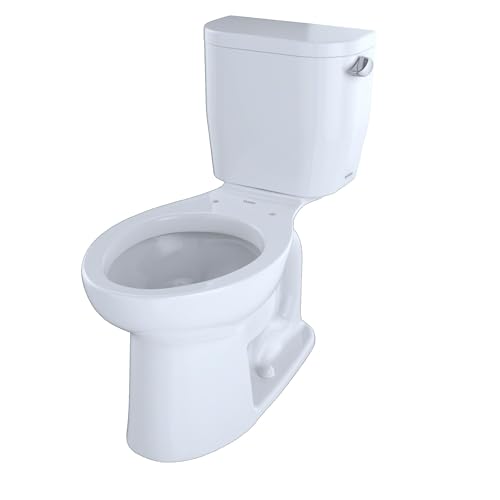
TOTO Entrada Two-Piece Elongated 1.28 GPF Universal Height — Best Elongated Value
If your bathroom has the extra two inches of front clearance, the elongated Entrada is the version to buy. The longer bowl is noticeably more comfortable for most adults, and everything else — the 1.28-gallon siphon-jet flush, Universal Height rim, and two-piece serviceability — carries over from the round model. The verified title specifies a right-hand trip lever, a small detail that matters when the tank sits close to a side wall or vanity on the left.
This is the pick for a primary bathroom being renovated on a budget, where the toilet will be used many times a day for a decade or more. Spending the small premium over the round version buys daily comfort, while the platform keeps repair costs at the generic-parts level. Measure your rough-in and your door swing before ordering; elongated bowls project further into the room.
Strengths
- Elongated comfort on a budget platform
- Right-hand trip lever suits tight side clearances
- 1.28-gallon flush keeps water use low
Trade-offs
- Needs more front clearance than round bowls
- No premium glaze claimed in the title
- Seat inclusion should be confirmed on the listing
| Specification | Detail |
|---|---|
| Configuration | Two-piece, elongated |
| Flush volume | 1.28 GPF |
| Height class | Universal Height |
| Trip lever | Right-hand |
Best for: primary bathrooms renovated on a budget / Not suited for: very small bathrooms where every inch of projection matters
Check the current price on Amazon.

Kohler Highline Two-Piece Round-Front 1.28 GPF Comfort Height — Best for Tall Users on a Budget
The Highline is Kohler’s volume two-piece line, and this variant combines the two features budget buyers ask for most: a taller Comfort Height bowl that sits like a standard chair, and Kohler’s Class Five flush technology, which uses a large valve and direct-fed jet to push a strong, fast flush through the bowl. The verified title confirms the right-hand trip lever and the 1.28-gallon volume.
The round front keeps the footprint short, which makes this a clever answer to a common problem — an older, smaller bathroom used by taller adults or anyone with knees that dislike low seats. Kohler’s parts network is as wide as anyone’s, so flappers and fill valves are never an expedition. As with most toilets at this tier, confirm exactly what the listing bundles before you schedule the install.
Strengths
- Comfort Height eases sitting for tall users
- Class Five flush technology with 1.28 gpf
- Kohler parts are available everywhere
Trade-offs
- Taller bowl can be awkward for small children
- Round front limits seating room
- Plain two-piece styling shows the tank seam
| Specification | Detail |
|---|---|
| Configuration | Two-piece, round front |
| Flush volume | 1.28 gpf |
| Height class | Comfort Height |
| Flush technology | Class Five, right-hand lever |
Best for: tall users and anyone with mobility concerns in a small bathroom / Not suited for: households where small children are the main users
Check the current price on Amazon.
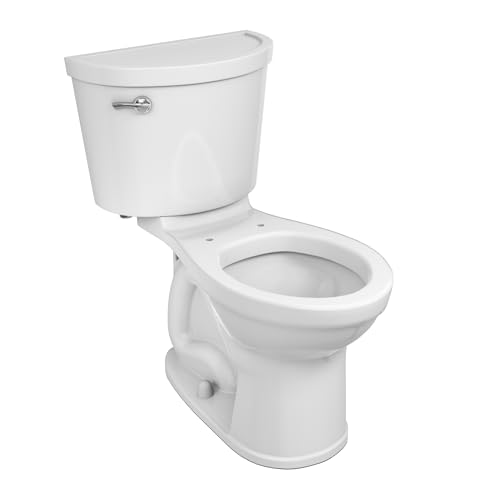
American Standard Champion PRO Two-Piece Round Front Chair Height 1.28 GPF — Best Anti-Clog Budget Pick
The Champion platform was built around one idea: move more water, faster, through a bigger passage. Its flush valve and trapway are oversized compared with ordinary budget toilets, which is why the Champion name keeps surfacing in conversations about homes with older plumbing, low water pressure habits, or family members who are hard on toilets. This PRO two-piece version delivers that architecture at 1.28 gallons per flush in a round-front, chair-height package.
Chair height helps adults, and the round front keeps the install friendly in smaller rooms. The trade is size and weight in the internals — the Champion’s large flapper is a specific part rather than the smallest generic one, though it is widely stocked because the platform is so common. If your current toilet clogs weekly and the budget is firm, start here.
Strengths
- Oversized valve and trapway resist clogging
- Chair height suits adult users
- PRO-grade internals in a budget model
Trade-offs
- Large flapper is a platform-specific part
- Round bowl is compact for larger users
- Heavier flush feel is less refined than premium models
| Specification | Detail |
|---|---|
| Configuration | Two-piece, round front |
| Flush volume | 1.28 gpf |
| Height class | Chair height |
| Platform | Champion PRO clog-resistant design |
Best for: clog-prone households and older plumbing / Not suited for: buyers who want the absolute smallest replacement-part ecosystem
Check the current price on Amazon.

Gerber Maxwell Crest Elongated Two-Piece with Soft-Close Seat — Best Complete Kit Value
Gerber is a plumber-channel brand that rarely advertises to consumers, which is precisely why its toilets are interesting on value: the money goes into the fixture. The verified title for the Maxwell Crest confirms the two things budget buyers most often forget to budget for — a soft-close seat is included, and the tool-free install kit with wax ring is in the box. That completeness can make this the genuinely cheapest install on the page even when a rival’s bare toilet lists for slightly less.
The elongated bowl and glazed trapway are the right fundamentals, and Gerber’s flush is tuned for efficient clearing. The honest cautions are brand-related rather than performance-related: Gerber’s retail presence is thinner, so read the listing’s flush-volume and rough-in details carefully at checkout, and keep the model number for future parts. For a DIYer doing a Saturday swap, the bundled kit removes two extra store trips.
Strengths
- Soft-close seat included in the box
- Tool-free install kit with wax ring included
- Glazed trapway and elongated bowl
Trade-offs
- Thinner retail presence than the biggest brands
- Verify flush volume and rough-in on the listing
- Fewer finish and style options
| Specification | Detail |
|---|---|
| Configuration | Two-piece, elongated |
| Seat | Soft-close seat included |
| Install kit | Tool-free kit with wax ring included |
| Trapway | Glazed |
Best for: DIY installers who want everything in one box / Not suited for: buyers who want a big-brand showroom support network
Check the current price on Amazon.
Comparison Table
| Pick | Badge | Key spec | Best for |
|---|---|---|---|
| American Standard Cadet PRO Two-Piece Round Front 1.28 GPF | Best Overall | Two-piece round front, 1.28 gpf, standard height | small bathrooms, rentals, and first replacements on a tight budget |
| TOTO Entrada Two-Piece Round 1.28 GPF Universal Height | Best Flush Confidence | Two-piece round, 1.28 GPF, Universal Height | buyers who want proven flush performance at the lowest TOTO tier |
| TOTO Entrada Two-Piece Elongated 1.28 GPF Universal Height | Best Elongated Value | Two-piece elongated, 1.28 GPF, right-hand lever | primary bathrooms renovated on a budget |
| Kohler Highline Two-Piece Round-Front 1.28 GPF Comfort Height | Best for Tall Users on a Budget | Comfort Height round front, Class Five flush, 1.28 gpf | tall users and anyone with mobility concerns in a small bathroom |
| American Standard Champion PRO Two-Piece Round Front Chair Height 1.28 GPF | Best Anti-Clog Budget Pick | Champion PRO, chair height, 1.28 gpf, oversized trapway | clog-prone households and older plumbing |
| Gerber Maxwell Crest Elongated Two-Piece with Soft-Close Seat | Best Complete Kit Value | Elongated two-piece, seat and install kit included | DIY installers who want everything in one box |
How to Choose the Best Least Expensive Toilets
Start with fit, because a toilet that does not fit is not inexpensive at any price. Measure the rough-in — the distance from the finished wall to the center of the floor flange bolts — before you shop. Most homes take a 12-inch rough-in; older and smaller bathrooms may be 10 or 14 inches, and ordering the wrong one turns a budget project into a return-freight problem. Then measure the space the bowl can project into the room and the door swing, and only then choose between round and elongated bowls.
Next, choose the height class deliberately. Standard height suits children and shorter adults and matches older homes. Comfort, chair, and universal height bowls sit taller and are easier on adult knees and hips, which is why they dominate new sales. In a household with both small children and tall adults, the taller bowl plus an inexpensive step stool for kids is usually the better long-term answer, because children grow and knees do not get younger.
Flush volume is the third decision. The 1.28-gallon standard used by every pick in this guide is the sweet spot for budget buying: it satisfies modern codes, qualifies for many utility rebates, and — in a well-designed bowl — clears as reliably as older high-volume designs. Avoid no-name toilets with unusually low flush claims and no recognizable valve platform; a toilet that needs two flushes is the most expensive toilet you can own, whatever it cost.
What Actually Makes a Cheap Toilet Flush Well?
Flushing power comes from geometry, not price tags. The flush valve diameter decides how fast tank water enters the bowl; the trapway diameter and glazing decide how easily waste leaves; and the rim jets and siphon jet decide how completely the bowl washes. The picks in this guide come from platforms — Cadet, Entrada, Highline, Champion, Maxwell — where that geometry was engineered once and then manufactured at huge scale, which is why they can be inexpensive without being weak.
What the budget tier genuinely gives up is elsewhere: quieter, slower-closing hardware is bundled less often; glazes are functional rather than stain-fighting specialties; one-piece sculpted bodies give way to two-piece designs with a visible tank joint; and finishes stay white. None of those concessions touches the flush. That is the central fact of this category, and it is why experienced landlords buy platforms like these instead of gambling on unknown brands at similar money.
Total Cost: The Budget Math Nobody Shows You
Add the whole project before comparing listings. A complete job can include the toilet, a seat if not bundled, a wax ring or silicone ring, closet bolts, a supply line, and sometimes a new shut-off valve. The Gerber pick in this guide bundles the seat and install kit; on other picks, confirm the seat on the listing and budget for one if it is absent. A toilet that lists slightly higher but includes the seat frequently wins the real comparison.
Then count the running costs. A 1.28-gallon toilet replacing an older 3.5-gallon or 1.6-gallon model saves water on every flush, every day, for the life of the fixture — and toilets live for decades. Add the avoided plumber visits that come from standard, stocked-everywhere parts, and the least expensive toilets from major platforms routinely beat both bargain no-name fixtures and mid-priced style-led models on ten-year cost.
Two-Piece vs One-Piece at the Budget Tier
Every pick here is two-piece, and that is deliberate. Two-piece toilets cost less to manufacture and ship, the tank can be replaced or resealed independently, and one person can carry the bowl and tank separately up stairs. One-piece designs look sleeker and clean faster around the base, but at genuinely low prices they are usually from lesser-known brands with thinner parts support — a bad trade when the whole point of the purchase is low lifetime cost.
The visible tank-to-bowl joint on a two-piece toilet is a cosmetic concession, not a functional one, provided the tank bolts and gasket are installed correctly and checked once after the first week of use. Budget buyers should spend their attention on the flange, the ring seal, and level shimming instead — those decide whether the installation stays dry and silent for years.
Reading a Budget Toilet Listing Like a Plumber
Plumbers read toilet listings backwards: rough-in first, then flush volume, then what is in the box, and only then the brand styling. Copy that order. The rough-in figure decides whether the toilet can be installed at all; the flush volume decides code compliance and water cost; the box contents decide the true price; and everything after that is preference. A listing that makes you hunt for the rough-in is telling you something about the seller, and a listing that bundles the seat and ring — like the Gerber pick in this guide — is telling you something better.
Also note the model number and keep it. Budget toilets live for decades, and the model number is how you will order the correct flapper, fill valve, or trip lever in year nine without removing anything. Photograph the inside of the tank lid, where many manufacturers stamp the essentials, and store the photo with your house documents. That thirty-second habit converts every future repair from a research project into a single store visit.
When the Cheapest Toilet Is Not This List
There are bathrooms where none of these picks is the right answer, and naming them protects the rest of the advice. A wall-hung or in-wall carrier system is a different architecture entirely. A basement below the sewer line needs a macerating or sewage-ejector solution, not a gravity toilet at any price. And a bathroom being built for accessibility certification may need documented grab-bar clearances and heights that go beyond choosing a chair-height bowl. In each case the least expensive correct product beats the cheapest incorrect one by the full cost of doing the job twice.
Similarly, if your drain line is known to be compromised — root intrusions, a sagging run, chronic slow drainage — fix or scope the line before blaming or upgrading the toilet. The strongest budget flush in this guide cannot push waste through a broken pipe, and a new toilet installed over a bad line will inherit the old toilet’s reputation unfairly.
Rentals, Flips, and First Homes: Where Budget Toilets Earn Most
Landlords standardise on platforms like the Cadet and Champion for a reason that has nothing to do with purchase day: standardisation itself is savings. When every unit in a portfolio uses the same flapper, fill valve, and seat size, a property manager carries one small parts box and fixes any toilet in one visit. The picks in this guide were chosen partly for that property — mainstream platforms with interchangeable, stocked-everywhere components — and a landlord reading this guide should pick one platform and repeat it across units rather than optimising each bathroom separately.
House flippers face a different version of the same logic: a recognised brand toilet reads as competence to buyers and inspectors, while an unknown fixture invites questions the seller does not want. First-home buyers, meanwhile, should spend the savings where they are visible daily — a good seat, a quiet fill valve — and let the porcelain be the proven budget platform it is. In all three cases, the least expensive toilet is not a compromise position; it is the professional one.
Noise, Fill Valves, and Living With a Budget Toilet
The day-to-day difference between budget and premium toilets is mostly sound. Premium models invest in slower, quieter fill valves and softer tank acoustics; budget platforms fill briskly and audibly. For a hall bathroom that difference is trivial, and for an en-suite at 3 a.m. it is worth knowing that the fill valve is a standard, replaceable part — a quieter aftermarket valve is one of the cheapest quality-of-life upgrades in plumbing and fits the platforms in this guide without drama.
The other lived difference is the seat, which is why this guide keeps returning to it. A thin, hard seat makes a good toilet feel cheap every single day, while a solid soft-close seat makes a budget toilet feel finished. If you optimise one line item beyond the fixture itself, make it the seat — it is the only part of the toilet your body actually negotiates with.
Water Bills and Rebates: The Quiet Second Saving
Every pick here flushes at 1.28 gallons or carries that class’s efficient design, and the arithmetic compounds quietly: a household replacing a pre-1990s toilet can save thousands of gallons a year, which at combined water and sewer rates is real money across a fixture that may serve for thirty years. Many utilities still rebate high-efficiency replacements, and budget platforms from major brands are the models most likely to appear on approved lists — one more case where the recognised name pays for itself.
Check your local programme before you buy, keep the receipt and the model number, and photograph the installed toilet if the rebate asks for evidence. The rebate process rewards exactly the documentation habits this guide recommends for repairs, so the same folder serves both. Over a decade, water savings plus one rebate can exceed the entire purchase — the final sense in which the least expensive toilets are genuinely least expensive.
Toilet Troubleshooting on a Budget Platform
Most budget-toilet complaints trace to three five-minute causes. A toilet that runs intermittently almost always has a worn flapper letting tank water seep into the bowl until the fill valve tops it up; replace the flapper first, because it is the cheapest part in the tank and the correct one for these platforms is stocked everywhere. A weak flush with a healthy flapper usually means the tank water level sits below its marked line — adjust the fill valve before suspecting the porcelain. A slow bowl refill or a whistling fill points to the fill valve itself, again a standard part.
The discipline is to change one cheap part at a time, in order of price, and to keep the old part until the fix is proven. Budget platforms reward this approach because nothing inside them is exotic: the entire repair economy of the toilet is designed around generic components, which is precisely the long-term argument this guide made for choosing them. A premium proprietary toilet with the same symptom can idle for a week waiting on a special-order cartridge; the Cadet-class toilet is flushing again before lunch.
What to Do With the Old Toilet
Removal day leaves you with fifty-plus pounds of porcelain, and the options are better than the kerb. Many municipalities accept toilets in bulky-waste collection or at transfer stations, and porcelain is increasingly recycled into aggregate and road base where programmes exist. Habitat for Humanity ReStores and similar outlets accept undamaged, complete toilets for resale — a budget toilet’s second life in another budget bathroom, which suits the spirit of this guide. Call ahead; policies on fixtures vary by store.
If the old toilet was replaced for performance rather than damage, a garage, workshop, or basement project may have a use for it — but be honest about why it came out. A chronic clogger in the main bath will be a chronic clogger in the basement. Recycle or donate the good ones, break down the bad ones according to local rules, and never leave a removed toilet where children can tip it — porcelain is heavy, brittle, and unforgiving.
Seating Heights and Households That Change
A toilet bought today will serve a household that changes around it: children grow, knees age, guests arrive with mobility aids. Chair and comfort heights have become the default recommendation for a reason — they suit the widest span of adult life — but the standard-height Cadet PRO in this guide exists because households with small children, and adults of shorter stature, genuinely do better lower. The mature approach is to choose for the household’s next ten years rather than its current snapshot, and to remember that a sturdy step stool is a cheap, removable adapter for the young, while nothing cheaply lowers a tall bowl for someone who struggles with it.
If two bathrooms allow two answers, take them: the taller bowl where adults dress and age, the standard bowl where children learn. Budget platforms make that split affordable in a way premium fixtures do not, which is one more quiet argument for this tier.
Reading Flush Claims Without a Laboratory
Shoppers meet flush claims in several dialects: gallons per flush, trademarked technology names, and bulk-waste test scores quoted in grams where a title states them. Gallons per flush is the regulated, comparable figure — every pick here states it. Technology names like Class Five or the Champion platform describe real engineering families, useful as platform identity rather than as numbers. Gram scores, where a verified title quotes them, come from standardised media tests and are the closest thing to a comparable strength figure the industry publishes.
What you cannot verify, discount. A no-name listing that promises miraculous clearing with no platform, no valve description, and no stated flush volume is asking for faith, and faith is not a plumbing strategy. The picks in this guide were chosen so that every load-bearing claim — volume, height, bowl shape, bundled seat — sits in a verified title you can re-read at checkout.
A Final Word on Value in the Bathroom
The bathroom is the room where value hides best, because its fixtures are judged in decades and used in minutes. A toilet is not a purchase you enjoy shopping for twice, which is exactly why the boring virtues dominate this guide: a proven platform, standard parts, a stated flush volume, and a box that contains what the job needs. The six picks here were chosen so that the cheapest correct decision and the best decision are the same decision, which is rarer in home improvement than it should be, and worth taking when a category offers it.
Buy once, install carefully, keep the model number, and let the fixture disappear into the background of the house for twenty years. That disappearance is the product. Every dollar not spent on styling over proven porcelain is a dollar available for the parts of a renovation people actually see and touch — and every year of silent service is the review that matters, written by the house itself.
How to Install a Budget Two-Piece Toilet Without Leaks
A toilet swap is one of the most achievable plumbing jobs in a house, and doing it yourself is where the least expensive toilets save the most money. Work slowly, keep the old towels ready, and never force porcelain — it cracks under point pressure, not under water.
- Turn off the shut-off valve behind the toilet, flush to empty the tank, and sponge out the remaining water from tank and bowl.
- Disconnect the supply line, unbolt the tank from the bowl if removing in two pieces, then remove the closet nuts at the base and rock the old toilet gently off the flange.
- Scrape the old wax from the flange, inspect the flange for cracks or a rim below floor level, and dry-fit the new bowl to check the rough-in and level.
- Fit the new wax ring (or the ring from an included install kit) onto the flange or bowl horn as the instructions direct, then lower the bowl straight down onto the bolts without sliding it.
- Snug the closet nuts alternately, a little at a time, until the bowl is firm with no rocking; shim if needed and do not overtighten.
- Assemble the tank onto the bowl with its gasket, connect the supply line, open the valve, and let the tank fill to the marked waterline.
- Flush several times, checking the base, the tank joint, and the supply connection with a dry hand or tissue after each flush.
- Fit the seat, apply a bead of sanitary caulk around the front and sides of the base only — leave the back uncaulked so a future leak can reveal itself.
Recheck the base and tank bolts after a day of use; porcelain and gaskets settle slightly, and a quarter-turn on a tank bolt at this stage prevents the slow weep that homeowners discover months later as a stained ceiling below. Keep the model number and a spare flapper on hand — with the platforms in this guide, that flapper is a standard part you can buy anywhere, which is the final reason these toilets stay inexpensive to own.
Common Buying Mistakes
Comparing sticker prices instead of complete cost. A toilet without a seat, ring, or bolts is not cheaper than one with them bundled. Total the whole project first.
Skipping the rough-in measurement. A 10-inch or 14-inch rough-in bathroom will not accept a standard 12-inch toilet. Measure from the wall to the flange bolts before ordering.
Overtightening bolts. Porcelain cracks from point pressure. Snug, alternating, and patient beats strong every time on tank and closet bolts.
Reusing the old wax ring and supply line. These are the two cheapest parts of the job and the two most likely to leak. Replace both, every time.
Caulking all the way around the base. A full caulk ring hides a flange leak until the subfloor rots. Leave the back open as a tell-tale.
Assuming a weak flush means a bad toilet. Low tank water level, a tired flapper, or a partially closed valve cause most weak flushes on budget platforms — all five-minute fixes.
Final Recommendation
For most buyers, the American Standard Cadet PRO round front is the safest answer to the best least expensive toilets question: a proven platform, the right flush volume, and parts you can buy anywhere. If flush confidence matters most, step to the TOTO Entrada round or its elongated sibling, and if clogs are your household’s recurring problem, the Champion PRO earns its place. Doing the job in one box with seat and kit included points to the Gerber Maxwell Crest.
Round out your research with the sibling guides in this series: Best Inexpensive Toilets, Best Home Toilets, Best Kohler Toilets, Best Toilets For No Clogging, and Best Chair Height Toilets. Each takes the same verify-first approach to its own slice of the market.
Frequently Asked Questions
Are the least expensive toilets powerful enough to flush reliably?
Yes, when they come from proven platforms. Flush performance is set by valve size, trapway design, and bowl geometry, and the Cadet, Entrada, Highline, and Champion platforms in this guide were engineered by major manufacturers and produced at scale. What the budget tier removes is styling and bundled extras, not flushing competence.
Is a seat included with a budget toilet?
Sometimes. The Gerber Maxwell Crest in this guide explicitly bundles a soft-close seat, while on several other listings the seat is sold separately. Always confirm on the listing before ordering, and include a seat in your price comparison — it can reverse which toilet is genuinely cheapest.
Round or elongated: which should a budget buyer choose?
Choose by space and users. Elongated bowls are more comfortable for most adults and need roughly two extra inches of front clearance. Round bowls fit small bathrooms and are easier for children. If the room allows it and adults are the main users, elongated is worth the small premium.
What rough-in size do I need?
Most homes use a 12-inch rough-in, measured from the finished wall to the center of the flange bolts. Some older bathrooms are 10 or 14 inches. Measure before you order; every pick in this guide is a mainstream floor-mount design, but the rough-in on the individual listing still has to match your flange.
How long does a DIY toilet replacement take?
A first-timer should allow two to three unhurried hours, including removing the old toilet and cleaning the flange. Experienced DIYers often finish in about an hour. The job needs no soldering and no special tools beyond a wrench, a scraper, and towels.
Will a 1.28-gallon toilet work in an older home?
Generally yes. Modern 1.28-gallon platforms are designed to clear the bowl in one flush and to move waste through standard drain lines. Homes with very long, nearly flat drain runs benefit most from the strong-flush platforms such as the Champion PRO pick in this guide.


