Disclosure: airfryerkitchensupply.com is reader-supported. When you buy through links on our site, we may earn an affiliate commission at no extra cost to you.
Choosing the best kind of toilets for septic tank homes starts with a principle septic professionals repeat constantly: a septic system is a living treatment plant, and the toilet’s job is to send it modest volumes of water and nothing it cannot digest. The right kind of toilet for a septic home is therefore a low-volume, reliably clearing gravity toilet — stated flush volumes at or below 1.28 GPF in the picks below — with no harsh chemical habits attached. Get the kind right and the specific model is easy.
What this guide will not do is invent septic-specific engineering that does not exist. There is no special ‘septic toilet mechanism’ in mainstream plumbing: the same TORNADO FLUSH, siphon-jet and dual-flush toilets sold to sewer homes serve septic homes, and the septic-friendliness lives in the flush volume stated in each listing, in single-flush reliability (a toilet that clears first time uses less water than a frugal toilet flushed twice), and in the cleaning chemistry you use afterwards. GPF and flush figures below are quoted only where the manufacturer’s listing states them.
Every pick was matched to its Amazon listing. The list runs from an ultra-low 0.8 GPF bowl — flagged honestly as a bowl listing that pairs with its matching tank — through dual-flush models that let a household choose its volume per visit, to dependable 1.28 GPF workhorses from TOTO, KOHLER and American Standard whose parts are stocked everywhere septic homes actually are: rural America.
Key Takeaways
- The septic-friendly kind is ordinary: a low-volume gravity toilet that clears first time — no special septic mechanism exists in mainstream plumbing.
- Flush volumes are quoted only where listings state them: 1.28 GPF workhorses, dual-flush choice, and a stated 0.8 GPF ultra-low option.
- First-flush reliability is a water feature: a toilet flushed twice saves nothing, whatever its rating says.
- Chemistry is half the choice — septic-safe cleaners, no tank bleach tablets, and nothing flushed but waste and tissue.
Where to buy
The confirmed picks in this guide are sold through Amazon, where you can check price on Amazon for each model, confirm the exact rough-in, bowl shape, seat inclusion and flush specification on the listing itself, and arrange delivery of a heavy ceramic fixture to your door. Start with these confirmed options:
- TOTO Drake Two-Piece 1.28 GPF (CST786CEG) — Best Overall for Septic Homes: Check the current price on Amazon
- American Standard H2Option Dual Flush Two-Piece — Best Dual Flush for Septic Homes: Check the current price on Amazon
- KOHLER Wellworth Round-Front 1.28 GPF (K-3997-U) — Best Compact Septic Pick: Check the current price on Amazon
- TOTO Entrada Two-Piece 1.28 GPF — Best Value Septic Pick: Check the current price on Amazon
- Mansfield Summit ADA 1.28 Toilet — Best ADA Septic Pick: Check the current price on Amazon
- Niagara Stealth 0.8 GPF Elongated Bowl — Best Ultra-Low Volume Option: Check the current price on Amazon
Before ordering any toilet, measure your rough-in (the distance from the finished wall to the centre of the floor flange bolts), confirm your water supply stop position, and check whether the listing includes the seat, wax ring and mounting hardware or sells them separately. Those three checks prevent almost every avoidable return in this category.
In this guide
Quick Picks
Six picks, six different briefs. Each badge below is used consistently through the guide — in this list, in the detailed reviews and in the comparison table — so you can track one pick from shortlist to verdict without losing it. Linked picks were verified against their manufacturers’ Amazon listings; any unlinked pick is labelled as such, with the reason given in its review.
- Best Overall for Septic Homes: TOTO Drake Two-Piece 1.28 GPF (CST786CEG) — The benchmark efficient toilet: TORNADO FLUSH and CEFIONTECT at a stated 1.28 GPF, with first-flush reliability that protects septic load. — Check on Amazon
- Best Dual Flush for Septic Homes: American Standard H2Option Dual Flush Two-Piece — A dual-flush two-piece that lets septic households choose a light flush for liquids — the highest-frequency saving available. — Check on Amazon
- Best Compact Septic Pick: KOHLER Wellworth Round-Front 1.28 GPF (K-3997-U) — KOHLER’s compact round-front Wellworth at a stated 1.28 GPF with Insuliner tank protection — a small-bathroom septic staple. — Check on Amazon
- Best Value Septic Pick: TOTO Entrada Two-Piece 1.28 GPF — TOTO’s accessible two-piece at a stated 1.28 GPF with universal height — Japanese reliability at the gentlest tier here. — Check on Amazon
- Best ADA Septic Pick: Mansfield Summit ADA 1.28 Toilet — Mansfield’s ADA-height Summit at a stated 1.28 — trade-grade efficiency for septic homes with accessibility needs. — Check on Amazon
- Best Ultra-Low Volume Option: Niagara Stealth 0.8 GPF Elongated Bowl — The ultra-low end of septic shopping: a stated 0.8 GPF elongated bowl from Niagara’s Stealth line — sold as a bowl, paired with its matching tank. — Check on Amazon
How These Picks Were Chosen
The kind matters more than the model, so picks were chosen to demonstrate the kinds that suit septic homes: ultra-low-volume single flush, dual flush with a genuinely light option, and efficient 1.28 GPF gravity designs with strong first-flush clearing. All are conventional gravity toilets — no macerators, no pressure vessels, nothing that adds failure modes a rural homeowner cannot service.
Volumes are quoted strictly from listings: 0.8, 1.28 and dual-flush pairings as each manufacturer states them. We weighted first-flush reliability heavily, because in septic terms a 1.28 GPF toilet that always clears beats a nominally thriftier toilet that double-flushes daily. Brand support in rural areas also counted — a septic home is rarely near a showroom, so national parts availability is a genuine specification.
Every linked product in this guide was cross-checked against Amazon’s own catalogue data: the brand and model were searched, the returned listing title was matched to the product described, and only then was the ASIN used for a link. Where no listing could be matched with confidence, the pick is written unlinked rather than given an invented link. Flush figures, MaP scores and dimensions are only stated where the manufacturer’s own listing states them, and they are described as manufacturer figures, not as results from our own bench testing.
The 6 Best Options for Best Kind of Toilets for Septic Tank Homes

TOTO Drake Two-Piece 1.28 GPF (CST786CEG) — Best Overall for Septic Homes
The Drake is the default answer to ‘what toilet should a septic home buy’ for a simple reason: its stated 1.28 GPF is delivered by TORNADO FLUSH, a jet-driven wash that clears decisively the first time — and first-time clearing is what keeps real water use at the rated figure. CEFIONTECT glaze, named in the listing, keeps the bowl cleaner with gentler chemistry, which matters doubly when the chemistry drains into a living tank. This is the septic pick with no asterisks.
Strengths
- Stated 1.28 GPF with jet-driven first-flush reliability
- CEFIONTECT glaze reduces reliance on harsh bowl chemicals
- TOTO parts and plumber familiarity reach rural areas
Trade-offs
- Premium tier over basic 1.28 GPF two-pieces
- 1.28 GPF still asks healthy drain lines between house and tank
- Seat and configuration vary by Drake variant — confirm the listing
| Flush volume | 1.28 GPF (per listing) |
| Flush system | TORNADO FLUSH (per listing) |
| Glaze | CEFIONTECT (per listing) |
| Format | Two-piece elongated |
Septic suitability is a system property, and the Drake contributes on every axis: modest stated volume, engineered clearing that prevents double-flush creep, a glaze that lowers chemical demand, and a brand whose flappers, seals and valves are stocked nationally. Installed in a septic home and cleaned with septic-safe products, it simply disappears into the household’s routine — which, for infrastructure, is the highest compliment available.
Hydraulic load is the septic variable a toilet controls. Every gallon flushed is a gallon the tank must settle and the drain field must absorb; across a family and a year, the difference between a 1.6 GPF habit and a 1.28 GPF habit is thousands of gallons the field never has to process. That is the entire mechanical case for low-volume toilets in septic homes, and it is why the stated GPF in each listing below is treated as the headline specification.
Ownership in a septic home adds one habit sewer homes never learn: noticing the flush. A toilet that begins clearing lazily, or a household member quietly double-flushing, is septic load creeping upward — and the fix is at the toilet (water level, jets, a worn seal) long before it is at the tank. A thirty-second tissue test each season keeps the fixture honest and the field rested.
Best for: most septic households wanting one safe, efficient default / Not suited for: homes chasing the absolute lowest flush volume
Check on Amazon to confirm the current configuration, seat inclusion and delivery options for the Drake 1.28.

American Standard H2Option Dual Flush Two-Piece — Best Dual Flush for Septic Homes
The H2Option is the dual-flush kind of septic toilet: a two-piece elongated American Standard, standard height, sold less seat per its listing, whose dual-flush system lets the household match volume to visit. Since liquid visits dominate septic hydraulic load, a genuinely usable light flush is the single biggest toilet-side saving a septic home can make — bigger than any difference between competing full-flush ratings.
Strengths
- Dual flush targets the liquid visits that dominate septic load
- American Standard parts availability is effectively universal
- Standard height suits shorter users and children better than chair height
Trade-offs
- Sold less seat per the listing — budget the matching seat
- Savings are behavioural: the light flush must actually be used
- Standard height may be low for tall or mobility-limited users
| Flush | Dual flush (per listing) |
| Format | Two-piece elongated, standard height |
| Seat | Less seat — sold separately (per listing) |
| Brand | American Standard |
Dual flush in a septic home is a household-policy decision disguised as a product: the hardware merely offers the choice, and the family makes the saving daily. The H2Option’s virtue is making that choice with mainstream hardware — no exotic actuator, no orphan parts — from the brand with arguably the deepest rural distribution in American plumbing. Fit the matching seat, brief the household once, and the septic system feels the difference within a month.
First-flush reliability is the hidden half of water saving. A toilet that clears completely at 1.28 GPF uses 1.28 gallons per visit; a weaker toilet at the same rating that needs a second flush half the time averages over 1.9. Septic buyers should therefore read flush engineering — tornado wash, siphon jets, glazed trapways — as water-saving features, and distrust ultra-cheap low-volume toilets whose savings exist only on the box.
Guests are the septic system’s uncontrolled variable: holiday households flush more, flush wipes despite signage, and run every tap at once. The kind response is preparation, not policing — a small bin visibly placed, a note where the right person will see it, and a toilet whose single flush is decisive enough that no guest feels the need to improvise a second one.
Best for: septic households willing to use a light flush consistently / Not suited for: households that will ignore the dual-flush choice
Check on Amazon to confirm the current configuration, seat inclusion and delivery options for the H2Option.

KOHLER Wellworth Round-Front 1.28 GPF (K-3997-U) — Best Compact Septic Pick
The Wellworth is America’s longest-running toilet nameplate, and this round-front configuration brings it to septic homes at a stated 1.28 GPF with KOHLER’s Insuliner tank liner, per its listing — a detail rural and unheated-bathroom owners appreciate, since the liner resists tank condensation and its drips. The round-front bowl suits the small bathrooms common in older rural homes, and every wear part on a Wellworth is a hardware-store item.
Strengths
- Stated 1.28 GPF in a compact round-front footprint
- Insuliner tank liner per the listing — less condensation sweating
- Wellworth parts are stocked virtually everywhere
Trade-offs
- Round-front bowl offers less sitting room than elongated
- Class Five-era design is proven rather than cutting-edge
- Confirm seat inclusion for this configuration before ordering
| Flush volume | 1.28 GPF (per listing) |
| Format | Two-piece round-front |
| Tank | Insuliner liner (per listing) |
| Brand | KOHLER Wellworth |
For septic homes, boring reliability is a feature, and the Wellworth is the most boringly reliable toilet in this guide — in the best sense. Its flush is a known quantity, its parts are universal, and its stated volume respects the tank and field. The Insuliner detail shows KOHLER designing for real houses: an unheated farmhouse bathroom in January is exactly where tank sweat damages floors, and exactly where septic systems concentrate.
Dual flush is the kind most naturally matched to septic life, because septic load is dominated by liquid visits. A light flush for liquids, stated in these listings at volumes well under the full flush, cuts the daily hydraulic load where it is largest. The behavioural caveat from every dual-flush guide applies doubly here: the saving exists only if the household uses the light button, so clear, top-mounted actuators are a septic feature, not a styling detail.
Cold climates add a septic nuance to toilet choice: infrequently used bathrooms in seasonal homes risk trap and line issues that have nothing to do with the toilet’s rating. For cabins and lake houses, the simpler the toilet — standard parts, no electronics, nothing to freeze in a tank gadget — the better it survives the winterising cycle. The value picks in this guide are the seasonal-home picks for exactly that reason.
Best for: small bathrooms in rural and older septic homes / Not suited for: buyers wanting elongated comfort or the newest flush tech
Check on Amazon to confirm the current configuration, seat inclusion and delivery options for the Wellworth 1.28.

TOTO Entrada Two-Piece 1.28 GPF — Best Value Septic Pick
The Entrada brings TOTO’s manufacturing discipline to the value end of septic shopping: a two-piece round-front toilet at a stated 1.28 GPF with universal height, per its listing. It lacks the Drake’s glaze branding and tornado naming, but keeps the essential septic virtues — modest stated volume, a properly engineered bowl, and a brand whose service parts reach small towns. For a guest house, a rental cottage or a second bathroom on the same tank, it is the proportionate choice.
Strengths
- Stated 1.28 GPF with TOTO build quality
- Universal height in a compact round-front body
- Value tier suits secondary bathrooms on septic systems
Trade-offs
- No CEFIONTECT or TORNADO FLUSH claims in this listing
- Round-front comfort is below elongated models
- Fewer bundled extras — confirm seat and hardware
| Flush volume | 1.28 GPF (per listing) |
| Format | Two-piece round, universal height |
| Colour | Cotton White |
| Brand | TOTO Entrada |
Secondary bathrooms are where septic load quietly accumulates — guest visits, children’s bathrooms, in-law suites — and equipping them with an efficient, reliable toilet matters more than equipping them beautifully. The Entrada is sized exactly to that job. Its TOTO badge also future-proofs the maintenance story: when a seal or valve eventually needs replacing, the part exists, is documented, and is stocked.
Chemistry is the other half of septic toilet choice, and it is about habits, not hardware. Bleach-heavy bowl cleaners, drop-in tank tablets and ‘flushable’ wipes all work against the bacterial digestion the tank depends on — wipes mechanically, chemicals biologically. Any toilet in this guide is septic-compatible; a household that pours solvents down it is not. The how-to section covers the cleaning routine that keeps both bowl and bacteria healthy.
When the household grows — an in-law move-in, a rental conversion, a new baby becoming a teenager — the septic maths changes under the same toilet. The fixture decision that matters then is the one already made: a household that chose first-flush reliability and dual-flush discipline has headroom; one that chose a weak cheap toilet discovers the tank’s limits socially, at the worst moments. Buy the headroom early.
Best for: secondary bathrooms and value-led septic upgrades / Not suited for: primary bathrooms wanting flagship features
Check on Amazon to confirm the current configuration, seat inclusion and delivery options for the Entrada.

Mansfield Summit ADA 1.28 Toilet — Best ADA Septic Pick
Mansfield Plumbing is a workhorse American brand, and the Summit ADA pairs its trade-grade reliability with a stated 1.28 flush volume and ADA height, per its listing. Septic homes are frequently multi-generational rural homes, where an accessible bowl height and a water-thrifty flush are needed in the same bathroom; the Summit is the pick that treats both requirements as ordinary engineering rather than premium options.
Strengths
- ADA height with a stated 1.28 volume — accessibility without waste
- Mansfield’s trade distribution suits rural service realities
- Simple gravity design any local plumber can maintain
Trade-offs
- Utilitarian specification and styling
- Listing detail is spare — confirm bowl shape and seat inclusion
- Brand visibility is lower than TOTO or KOHLER for resale research
| Flush volume | 1.28 (per listing) |
| Format | ADA height toilet (per listing) |
| Colour | White |
| Brand | Mansfield Plumbing |
The Summit’s case is proportionality: it delivers the two specifications a septic, accessibility-conscious household actually needs and charges nothing for theatre. Mansfield’s long presence in American plumbing supply means its valves and seals are unglamorous and available — the two adjectives that matter when the nearest showroom is an hour away. For the farmhouse bathroom remodelled for ageing parents, this is the quietly correct answer.
Tank size and household size set the context the toilet cannot change. An undersized tank serving a growing household will struggle regardless of fixture choice, and no toilet purchase substitutes for pumping on schedule. What the right toilet does is stop adding avoidable load to a correctly sized, maintained system — which is why this guide frames toilet choice as one part of septic stewardship, not a cure for system problems.
Well water and septic often share a house, and they interact at the toilet: iron and hardness scale jets and valves faster, quietly raising real flush volumes as levels drift and seals weep. A septic home on well water should treat the toilet’s annual check — level, seal, jet pattern — as part of the same maintenance round as the water softener’s salt and the septic filter’s cleaning.
Best for: multi-generational septic homes needing ADA height / Not suited for: design-led remodels
Check on Amazon to confirm the current configuration, seat inclusion and delivery options for the Summit.
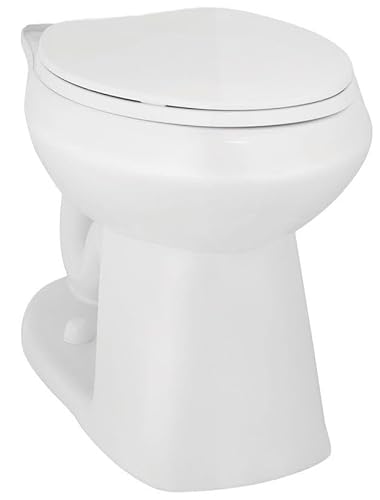
Niagara Stealth 0.8 GPF Elongated Bowl — Best Ultra-Low Volume Option
Niagara’s Stealth line built its reputation on the lowest stated flush volume in mainstream plumbing, and this listing is its elongated bowl at a stated 0.8 GPF. Honesty about format matters here: this is a bowl listing, which pairs with the matching Stealth tank to form the complete toilet — confirm the tank pairing before ordering, because a bowl alone installs nothing. For septic homes where every gallon counts — small tanks, marginal fields, water-hauling households — the completed Stealth pairing is the volume champion of this guide.
Strengths
- Stated 0.8 GPF — the lowest volume in this guide when paired with its tank
- Elongated bowl comfort despite the ultra-low volume
- Purpose-built for water-critical installations like septic homes
Trade-offs
- This listing is the bowl only — the matching tank is required to complete the toilet
- Ultra-low volume demands healthy, well-sloped drain runs
- Niagara’s parts network is narrower than the legacy giants
| Flush volume | 0.8 GPF (per listing) |
| Component | Elongated bowl — requires matching Stealth tank |
| Colour | Stealth White (per listing) |
| Brand | Niagara Conservation |
The Stealth concept — a vacuum-assisted, ultra-quiet, ultra-low flush — was engineered for exactly the septic use case, and its stated 0.8 GPF is roughly half the legacy 1.6 standard. The discipline it demands is installation quality: at this volume, drain slope and line condition stop being background details and become the specification. Homes with sound plumbing and a genuine water budget should shortlist it; homes with tired drain lines should take the Drake’s margin instead.
Finally, consider service geography. Septic homes are disproportionately rural, and a toilet whose fill valve, seal and seat are stocked at any hardware store in America is worth more there than a marginally thriftier exotic. That is why this list leans on TOTO, KOHLER, American Standard and Mansfield: their parts ecosystems reach the places septic tanks actually live, and a Sunday-afternoon repair should not require a freight shipment.
Finally, keep the paperwork together: toilet model, install date, tank size, pumping record and field notes in one home file. Septic ownership is a decades-long relationship with an invisible system, and the households that thrive at it are the ones whose records survive memory. The toilet is the system’s most-used interface; its documentation belongs with the system’s, not in a junk drawer.
Best for: water-critical septic homes with healthy drain lines / Not suited for: homes with flat, ageing or problem drain runs
Check on Amazon to confirm the current configuration, seat inclusion and delivery options for the Niagara Stealth bowl.
Comparison Table
The table compresses the reviews into the four facts that decide most purchases: the pick, its badge, the key specification as stated in its listing, and the household it suits best. Specifications are the manufacturers’ own listing statements — flush volumes, valve sizes, systems and inclusions — so the table can be read as a fair, like-for-like summary of what each maker claims, before the guide sections explain how to weigh those claims.
| Pick | Badge | Key spec | Best for |
|---|---|---|---|
| TOTO Drake Two-Piece 1.28 GPF (CST786CEG) | Best Overall for Septic Homes | 1.28 GPF, TORNADO FLUSH, CEFIONTECT | most septic households wanting one safe, efficient default |
| American Standard H2Option Dual Flush Two-Piece | Best Dual Flush for Septic Homes | Dual flush, two-piece, standard height | septic households willing to use a light flush consistently |
| KOHLER Wellworth Round-Front 1.28 GPF (K-3997-U) | Best Compact Septic Pick | 1.28 GPF, round-front, Insuliner | small bathrooms in rural and older septic homes |
| TOTO Entrada Two-Piece 1.28 GPF | Best Value Septic Pick | 1.28 GPF, universal height, two-piece | secondary bathrooms and value-led septic upgrades |
| Mansfield Summit ADA 1.28 Toilet | Best ADA Septic Pick | ADA height, stated 1.28 volume | multi-generational septic homes needing ADA height |
| Niagara Stealth 0.8 GPF Elongated Bowl | Best Ultra-Low Volume Option | 0.8 GPF bowl (pair with Stealth tank) | water-critical septic homes with healthy drain lines |
How to Choose the Right Kind of Toilet for a Septic Tank Home
The kind, in one sentence: a low-volume gravity toilet that clears first time, serviced with septic-safe chemistry. Concretely, that means a stated flush volume at or below 1.28 GPF (or a dual flush with a genuinely light option), engineered bowl wash — tornado, siphon jet or an equivalent named system — and standard service parts. Everything else is preference.
Avoid the kinds that add risk without benefit. Macerating and pump toilets solve installation problems septic homes rarely have, and add motors to a system prized for passivity. Pressure-assist adds vessel maintenance. Composting and incinerating toilets are legitimate off-grid answers but are a lifestyle change, not a toilet upgrade, and sit outside this guide’s mainstream scope. The septic-friendly toilet is deliberately ordinary — its exotic feature is restraint.
Match the volume to the drain, not the brochure. The run from house to tank is usually short and well-sloped in septic installations, which is why 1.28 GPF and even the stated 0.8 GPF Stealth pairing work well here; but a long or flat house-to-tank run deserves the same caution as any problem drain. If your current 1.6 GPF toilet clears sluggishly, have the line checked before assuming a lower-volume toilet will behave better.
Finally, buy for your service geography. A septic home’s plumber is local and its hardware store is the parts department. TOTO, KOHLER, American Standard and Mansfield dominate this guide because their valves, seals and seats are stocked where septic homes are. Record your model number, keep a spare fill valve if you are remote, and the toilet will never be the reason for an emergency call.
Septic-Safe Habits: The Chemistry Half of the Choice
The best toilet choice can be undone by the cleaning cupboard. Use septic-safe bowl cleaners in moderation, never drop bleach tablets into the tank, and treat ‘flushable’ wipes as the drain-field hazard every septic professional says they are — they do not disintegrate like tissue, whatever the packet claims. The toilet itself should receive only human waste and toilet tissue; the kitchen’s grease and the laundry’s solvents are separate battles fought at other drains.
Pumping discipline completes the picture: a tank pumped on its recommended cycle, baffles inspected, and the field protected from vehicles and deep-rooted planting. A low-volume toilet extends the comfortable margin of a maintained system; it does not rescue a neglected one. If you have just moved to a septic home, budget for a system inspection before the bathroom remodel — knowing your tank size and field condition is the context every fixture choice depends on.
Sizing the Flush to Your Household
Household maths decides how much the toilet choice matters. A family of five flushes perhaps twenty-five times a day; at 1.6 GPF that is 40 gallons daily to the tank, at 1.28 it is 32, with dual-flush discipline it can fall toward the low twenties, and the Stealth pairing lower still. Across a year those are differences of several thousand gallons — the equivalent of giving your drain field a part-time rest, every year, forever.
Guests and gatherings are the stress test: a holiday weekend can double daily load precisely when the household least wants a backup. This is the practical argument for first-flush reliability over headline thrift — a toilet that never needs a second flush protects the system on the worst days, not just the average ones. Choose the kind that is boring under pressure.
What the Key Terms in the Listings Mean
GPF. Gallons per flush — the toilet’s stated water volume. Every GPF figure in this guide is quoted from the manufacturer’s own listing; it describes the flush as designed, at the correct tank water level.
Hydraulic load. The total water volume a septic system must process. Toilets are a major contributor, which is why flush volume and double-flushing dominate the septic side of toilet choice.
Drain field (leach field). The soil absorption area where clarified effluent from the tank disperses. It is the septic component most stressed by excess water — and the most expensive to repair — which is why toilet thrift matters.
Dual flush. Two flush volumes selectable per visit — a light flush for liquids and a full flush for solids. In septic homes it targets the visit type that dominates total load.
Septic-safe cleaner. A cleaning product formulated to avoid killing the bacteria a septic tank depends on. The practical rules: no drop-in bleach tablets, moderate use, and nothing solvent-based down any drain.
The House-to-Tank Run: The Forgotten Variable
Most septic toilet advice stops at the bathroom wall, but the pipe run from house to tank is part of the flush system: its slope, length and condition decide how far each flush’s water must carry its load. Septic runs are usually shorter and better sloped than street-sewer runs, which is one reason efficient toilets behave so well in septic homes — and a long or flat run is the one situation where this guide’s caution about ultra-low volumes genuinely applies.
If you are building or extending, the run is a design decision worth a conversation with your septic installer: slope it generously, keep it straight, and place cleanouts where a future plumber will bless your name. The best kind of toilet for a septic home is partly chosen at the plumbing rough-in, years before the fixture catalogue is opened.
Seasonal Homes, Cabins and Part-Time Septic Systems
Part-time occupancy changes septic behaviour in ways full-time advice misses. A system used hard for two summer months and idled for ten is biologically different from a family system: its bacteria colony rises and falls with use, and the kindest toilet for it is the simplest one — a standard gravity model with no electronics to freeze, no special parts to source from a distant town, and a flush volume modest enough not to shock an idling tank with a holiday weekend’s load.
Winterising is the seasonal ritual that decides fixture survival: water out of the tank and bowl trap, antifreeze rated for plumbing in the trap, and the supply stop exercised so it still works in spring. The value picks in this guide — Entrada, Wellworth, Summit — survive this cycle gracefully precisely because there is nothing in them to surprise you in May. Choose the seasonal home’s toilet for the winter, and the summer will take care of itself.
The Long View: Toilets Outlive Septic Decisions
A septic tank is pumped, inspected and eventually replaced on a cycle measured in decades; a good toilet simply rides along through all of it, asking only for a seal, a valve and honest chemistry. That longevity is why this guide weights boring virtues — stated volumes, first-flush reliability, national parts — over any feature with a shorter clock. Choose the toilet that will still be serviceable when the tank is next opened, and the two halves of the system will age together gracefully, which is all that septic ownership ever really asks.
When the Toilet Is Not the Problem: A Septic Triage
Some symptoms that arrive dressed as toilet problems belong to the system, and replacing the fixture wastes money and goodwill. Gurgling at multiple fixtures points to venting or a line issue. Sewage odour outdoors points to the field or a failed baffle. A yard that is lush and soggy over the field in a dry month is the field asking for professional attention, not a thriftier toilet. Backups that coincide with laundry day are hydraulic overload at system level — the answer is load spreading and possibly capacity, not a new bowl.
The toilet’s own genuine symptoms are local: weak clearing at one fixture, phantom refills, a running fill valve, stains that return within days. Those are fixture diagnoses, and this guide’s picks solve them. Learning to sort one list from the other is the core septic skill — it protects the system from unnecessary work and the household from unnecessary purchases, in roughly equal measure.
How to Install a Toilet in a Septic Home (and Set It Up Right)
Installation in a septic home follows the standard sequence, with two septic-specific attentions: verify the new toilet’s water level and flush volume are set exactly as designed (overfilled tanks silently raise every flush), and inspect the house-to-tank line’s cleanout while the bathroom is apart.
- Before removal, note the old toilet’s behaviour — slow clearing or gurgling can signal a line or vent issue worth fixing while access is easy.
- Shut off the stop, drain and remove the old toilet; clean the flange and check it sits level and sound.
- Set the new toilet on a fresh wax or silicone ring with even bolt pressure; for two-piece models, fit the tank with new gasket and hardware.
- Connect the supply and set the tank water level precisely to the manufacturer’s line — in a septic home, an overfilled tank is a permanent, invisible volume increase on every flush.
- Flush-test repeatedly, checking the base and joints for leaks, and confirm a single flush clears a realistic tissue load every time.
- If you chose a dual-flush model, set the light/full actuators per the manual and label them for the household if the buttons are not self-evident.
- Dispose of the old toilet and all packaging responsibly — and never pour old tank-cleaner chemicals or renovation solvents into the new toilet to ‘get rid of them’.
- Record the model, the install date and your septic pumping schedule together in the home file; the two maintenance stories belong on one page.
Brief the household once, kindly and clearly: what may be flushed (waste and tissue only), which button is the light flush, and which cleaners live under the sink now. Septic systems fail from accumulated habits far more often than from single accidents, and the toilet installation is the natural moment to set the habits.
Common Buying Mistakes
Buying a special ‘septic toilet’ at a premium. Mainstream low-volume gravity toilets are the septic answer; the word ‘septic’ on a niche product usually adds price, not engineering. Judge by stated GPF, clearing design and parts support.
Chasing the lowest GPF onto a bad drain line. Ultra-low volume needs healthy, sloped lines. On a flat or ageing run, a reliable 1.28 GPF toilet protects the system better than a 0.8 that double-flushes.
Using tank bleach tablets and harsh cleaners. They attack toilet seals and the bacterial digestion your tank depends on — a double harm no spotless bowl justifies. Septic-safe cleaners, used moderately, are the rule.
Flushing wipes because the packet says flushable. Wipes do not break down like tissue; they accumulate in tanks and lines and are a leading cause of septic callouts. The bin is the correct destination, without exception.
Forgetting the system around the toilet. An undersized or unpumped tank fails with any toilet attached. Fixture choice multiplies good maintenance; it never replaces it.
Final Recommendation
Buy the Drake if you want one answer: stated 1.28 GPF, first-flush reliability and gentle-chemistry glaze, from a brand any rural plumber knows. Buy the H2Option if your household will genuinely use a light flush — that habit is the largest saving on this page. The Wellworth and Entrada cover compact and value briefs with the same septic virtues, and the Mansfield Summit adds ADA height without a volume penalty.
Reserve the Niagara Stealth pairing for water-critical homes with healthy drain lines, remembering that its listing here is the bowl and needs its matching tank. Whichever you choose, pair it with septic-safe chemistry and a pumped, inspected system — the kind of toilet matters, and so does everything downstream of it.
Start your shortlist here: TOTO Drake Two-Piece 1.28 GPF (CST786CEG), American Standard H2Option Dual Flush Two-Piece, KOHLER Wellworth Round-Front 1.28 GPF (K-3997-U) — check price on Amazon for each, confirm the configuration on the listing, and measure your rough-in before you order.
Keep comparing within the same cluster before you decide: Best Intelligent Toilets Best Jet Flush Toilets Best Large Flush Toilets Best Kohler Toilets Best Japanese Toilets
Frequently Asked Questions
What kind of toilet is best for a septic tank?
A low-volume gravity toilet that clears first time: stated flush volume at or below 1.28 GPF, or a dual-flush model with a light option, with engineered bowl wash and standard parts. There is no special septic mechanism — suitability comes from modest volume, reliable clearing and septic-safe cleaning habits.
Is 1.28 GPF safe for a septic system?
Yes — it is the mainstream efficient standard and reduces the hydraulic load your tank and drain field must process compared with older 1.6 GPF and pre-regulation toilets. All GPF figures in this guide are quoted from the manufacturers’ own listings. Healthy drain lines matter more than the difference between modern ratings.
Are dual-flush toilets good for septic homes?
They are arguably the best kind, because liquid visits dominate septic load and a light flush cuts exactly that volume — provided the household uses it. Choose a model whose light and full flushes are effortless to select, and treat the habit as part of the purchase.
Can I use bleach cleaners with a septic-safe toilet?
Sparingly and never as tank tablets. Heavy bleach use works against the bacteria that make a septic tank function. Use septic-safe bowl cleaners in moderation, keep solvents and grease out of every drain, and never flush wipes — including those labelled flushable.
Should I avoid pressure-assist or macerating toilets on septic?
Generally, yes, unless one solves a specific installation problem. Pressure assist adds vessel maintenance; macerators add motors and electricity to a system valued for passive reliability. A conventional gravity toilet at a modest stated volume is the septic professional’s default recommendation.
Does a bidet help a septic system?
Indirectly, yes: bidet cleansing reduces toilet tissue volume, and tissue is a real component of tank solids. A bidet seat adds no flush volume of its own. Households adding bidets should still keep cleaning chemistry septic-safe and confirm any bidet cleaner products are suitable for septic use.


