Disclosure: airfryerkitchensupply.com is reader-supported. When you buy through links on our site, we may earn an affiliate commission at no extra cost to you.
Where to buy
Every pick below is a Japanese brand product or a Japanese-designed brewer whose listing was verified connection — Zojirushi, Hario, Kalita and Snow Peak. No fixed prices are printed; check price on Amazon through the links. Where a famous Japanese name could not be matched to a confident current listing for a coffee maker, it is discussed in prose rather than linked, and the guide explains the difference between a Japanese brand and a Japanese brewing style, because shoppers conflate the two constantly.
- Zojirushi EC-YTC100XB 10-Cup Coffee Maker (Best Japanese Automatic) — check price on Amazon
- Hario Technica Coffee Syphon, 600ml (Best Japanese Siphon) — check price on Amazon
- Hario V60 Ceramic Pour Over Coffee Set, Size 02 (Best Japanese Pour-Over) — check price on Amazon
- Kalita Wave Pour Over Coffee Dripper, Size 185, Glass (Most Forgiving Japanese Dripper) — check price on Amazon
- Kalita Coffee Dripper Mino Ware Ceramic MI185, Sand Brown (Best Japanese Craft Pick) — check price on Amazon
- Snow Peak Portable Pour Over Coffee Set, Stainless Steel (Best Japanese Outdoor Brewer) — check price on Amazon
Looking for the best coffee makers japanese can mean two different searches wearing one keyword. The first is literal: coffee makers from Japanese brands — Zojirushi, Hario, Kalita, Tiger and their peers — built with the precision and restraint Japanese kitchen manufacturing is known for. The second is stylistic: the Japanese approach to brewing itself, the pour-over and siphon culture that Japan refined over a century of kissaten coffee houses, with its gooseneck kettles, spiral pours and patience. This guide serves both searches honestly and labels which is which, because inventing a Japanese origin for a brewer that does not have one would fail you twice.
The verified reality shapes the list. The strongest Japanese-brand automatic listing we could confirm is Zojirushi’s 10-cup coffee maker, and it leads the guide. Around it, the Japanese brewing world is overwhelmingly manual: Hario’s V60 drippers and Technica syphon, Kalita’s Wave drippers including Mino-ware ceramic made in Japan, and Snow Peak’s Japanese-designed pour-over set. That is not a gap in the guide — it is an accurate map of how Japan actually makes coffee at home. Japan’s great contribution to coffee is the disciplined manual brewer, not the programmable drip machine.
So the six picks below divide into one automatic anchor and five manual instruments, each verified, each genuinely Japanese in brand and design. If you wanted a Japanese automatic with a timer and a carafe, the Zojirushi is your pick and the guide says plainly that the field beyond it thins quickly. If you wanted the Japanese method, the Hario and Kalita picks are the authentic instruments, and the how-to section teaches the technique they assume.
In this guide
Quick Picks
One verified Japanese automatic brewer plus the authentic Hario, Kalita and Snow Peak manual instruments of Japanese coffee culture.
- Best Japanese Automatic: Zojirushi EC-YTC100XB 10-Cup Coffee Maker — the verified Japanese-brand automatic brewer — a 10-cup machine from Japan’s thermal-engineering specialist. — check price on Amazon
- Best Japanese Siphon: Hario Technica Coffee Syphon, 600ml — the classic Japanese vacuum-pot syphon from Tokyo glassmaker Hario — theatrical brewing, exceptionally clean cup. — check price on Amazon
- Best Japanese Pour-Over: Hario V60 Ceramic Pour Over Coffee Set, Size 02 — Hario’s iconic spiral-ribbed V60 dripper in ceramic, as a set — the defining instrument of Japanese pour-over. — check price on Amazon
- Most Forgiving Japanese Dripper: Kalita Wave Pour Over Coffee Dripper, Size 185, Glass — Kalita’s flat-bottom Wave dripper in glass — the even-extraction, beginner-friendlier school of Japanese pour-over. — check price on Amazon
- Best Japanese Craft Pick: Kalita Coffee Dripper Mino Ware Ceramic MI185, Sand Brown — a Wave-series dripper in Mino-ware ceramic made in Japan — high heat retention and traditional pottery craft in one brewer. — check price on Amazon
- Best Japanese Outdoor Brewer: Snow Peak Portable Pour Over Coffee Set, Stainless Steel — a Japanese-designed stainless pour-over set from Niigata’s outdoor specialist — pour-over that travels. — check price on Amazon
How These Picks Were Chosen
Our rule for this search was strict: a pick must be a Japanese brand’s product or an explicitly Japanese-designed brewer, confirmed in its verified listing. Style alone did not qualify a product — a generic dripper ‘inspired by’ Japanese pour-over was excluded — and origin claims are stated only where the listing supports them, such as Kalita’s Mino-ware drippers listed as made in Japan.
We then organised the qualifying products the way Japanese coffee culture itself is organised. Zojirushi represents the appliance tradition: a company famous for thermal engineering applying it to an automatic brewer. Hario represents glass science — the V60 dripper and the Technica syphon from a Tokyo glassmaker founded in 1921. Kalita represents the flat-bed Wave school and Japanese ceramic craft. Snow Peak represents the Japanese outdoor-design tradition applied to pour-over.
Brands we could not verify for a coffee maker listing are handled in prose in the guide section below, including Tiger — a genuine Japanese thermal brand whose verified listings in this programme are rice cookers and air pots rather than coffee makers. We would rather explain an absence than fill it with a guessed link.
The 6 Best Japanese Coffee Makers and Brewers

1. Zojirushi EC-YTC100XB 10-Cup Coffee Maker — Best Japanese Automatic
Zojirushi — the elephant mark — built its name on vacuum insulation and rice cookers engineered to a standard other brands chase. Its 10-cup coffee maker applies the same philosophy to drip: a tidy stainless and black machine for households that want Japanese appliance quality in an automatic format. It suits buyers who want the Japanese brand promise without a manual ritual. It is the only fully automatic Japanese-brand pick we could verify, which is itself useful information.
Strengths
- Genuine Japanese brand with a deep reputation for thermal and small-appliance engineering
- Full 10-cup automatic format — the convenience end of this guide
- Stainless steel and black design with the restraint typical of Japanese appliances
Trade-offs
- The automatic Japanese field is thin — there is no deep bench of verified alternatives to compare against
- Drip format cannot reproduce the clarity of the manual Japanese brewers below
- Premium brand positioning within the drip category
| Spec | Detail |
|---|---|
| Capacity | 10-cup |
| Type | Automatic drip coffee maker |
| Finish | Stainless steel/black (per verified listing) |
Buy this machine for the company behind it as much as the spec sheet. Zojirushi’s engineering culture — tight tolerances, sensible controls, products designed to be repaired into long service rather than replaced — is exactly what a daily appliance needs and exactly what anonymous drip machines lack. In the cup it is a well-mannered automatic pot: clean, consistent, and free of the quirks that make budget machines a daily negotiation.
Place it honestly in the guide, though. It represents the appliance path, and the appliance path is the smaller half of Japanese coffee. If your attraction to this search is the method — the pour, the bloom, the siphon theatre — the manual picks below are the authentic article and this machine is not a substitute. If your attraction is Japanese quality with weekday automation, this verified Zojirushi is the pick, full stop.
Best for: buyers wanting a genuine Japanese-brand automatic brewer / Not suited for: shoppers seeking the manual Japanese brewing method
Check the current price on Amazon.
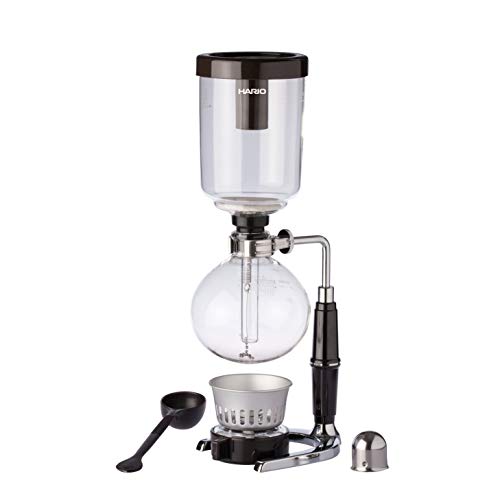
2. Hario Technica Coffee Syphon, 600ml — Best Japanese Siphon
The syphon is the centrepiece of the old Japanese coffee house, and Hario’s Technica is its standard-bearer: two glass chambers, a burner, and a brewing cycle that rises, bubbles and falls like a science demonstration that ends in coffee. It suits the drinker who wants the ritual and the remarkably clean, aromatic cup vacuum brewing produces. It does not suit a weekday morning measured in minutes, and it demands respect around an open heat source and glass.
Strengths
- Vacuum brewing produces an exceptionally clean, aromatic, full-immersion cup
- Hario is the authentic Japanese glass specialist — this is their home ground
- The brewing process itself is a table-side event guests remember
Trade-offs
- Slow, attended brewing with a separate heat source — the opposite of a timer machine
- Glass chambers are fragile and replacements are a considered purchase
- Cleanup is more involved than any other pick in this guide
| Spec | Detail |
|---|---|
| Capacity | 600 ml |
| Type | Glass vacuum syphon |
A syphon cup tastes like a cross between pour-over clarity and French-press depth, with an aroma that announces itself across the room — the result of full immersion at a rolling, vapour-driven temperature followed by a clean filtered drawdown. Japanese coffee houses kept this method alive through decades when the rest of the world forgot it, and Hario’s glasswork is why home syphons remain practical at all: heat-resistant, precisely fitted, and made by a company that has produced laboratory glass for a century.
Go in clear-eyed. You will manage a burner, stir at the right moment, and wash chambers and a cloth or paper filter with care. Budget twenty unhurried minutes. For the drinker this search most romantically imagines — the one who saw a syphon bar in Kyoto or Tokyo and came home wanting that — the Technica is not a compromise pick. It is the thing itself.
Best for: ritual brewers wanting the authentic Japanese siphon experience / Not suited for: hurried weekday mornings or households wary of glass and burners
Check the current price on Amazon.

3. Hario V60 Ceramic Pour Over Coffee Set, Size 02 — Best Japanese Pour-Over
If one object represents Japanese coffee worldwide, it is the V60: a single large hole, spiral ribs, and a cone that gives the pourer total control over extraction. This ceramic size 02 set suits the drinker ready to learn that control for one or two cups at a time. It does not suit anyone who wants the machine to decide — the V60’s honesty is that your technique is the recipe.
Strengths
- The definitive Japanese pour-over design, with unmatched recipe knowledge available worldwide
- Ceramic body holds heat well through the brew and feels substantial in hand
- Single-hole design lets grind size and pour rate steer the cup precisely
Trade-offs
- The least forgiving brewer here — poor pouring is immediately visible in the cup
- Needs a gooseneck kettle to pour as intended
- Size 02 is a one-to-two-cup format, not a family pot
| Spec | Detail |
|---|---|
| Size | 02 (1–2 cups) |
| Material | Ceramic dripper, white |
The V60 rewards learning like an instrument does. Your first cups will be uneven; your tenth, with a steady spiral pour and a proper bloom, will show you why this dripper anchors Japanese café culture — sweetness and clarity that automatic machines flatten. Ceramic is the connoisseur’s material choice among V60s because it retains heat through the drawdown, keeping extraction even from first pour to last drip.
Practical counsel: pair it with a gooseneck kettle from the start rather than fighting a standard kettle’s flood, grind medium-fine, and keep notes for the first week. Among this guide’s manual picks, the V60 has the steepest first week and the highest ceiling. For the shopper whose Japanese coffee dream is a careful morning pour for one, this set is the most authentic purchase on the page.
Best for: drinkers learning Japanese pour-over for one or two cups / Not suited for: beginners wanting forgiving, automatic results
Check the current price on Amazon.

4. Kalita Wave Pour Over Coffee Dripper, Size 185, Glass — Most Forgiving Japanese Dripper
Kalita’s Wave answers the V60’s challenge with engineering: a flat bottom with three small holes and a wavy filter that holds a shallow, even bed of coffee, so extraction depends less on a perfect pour. In glass, size 185, it suits the drinker who wants Japanese pour-over flavour with a gentler learning curve and a two-to-three-cup yield. It still needs a kettle and a few minutes — it is manual brewing, kindly designed.
Strengths
- Flat-bed design extracts evenly and forgives imperfect pouring
- Glass body lets you watch the bed and drawdown as you learn
- 185 size brews a genuine 16–26 oz — a small pot, not just a mug
Trade-offs
- Uses Kalita’s specific Wave filters, which you must keep stocked
- Glass is the fragile option among Wave materials
- Still manual — no timer, no automation
| Spec | Detail |
|---|---|
| Size | 185 (16–26 oz per verified listing) |
| Material | Heat-resistant glass |
| Design | Flat-bottom Wave, three-hole |
The V60-versus-Wave question is Japanese coffee’s friendliest argument. The V60 gives the skilled pourer more control; the Wave gives everyone else more consistency, because the flat bed and restricted holes regulate flow for you. In blind morning reality — half awake, kettle in hand — the Wave’s cup is the one that tastes like yesterday’s good cup. That repeatability is why so many Japanese home brewers start here.
The glass version adds the teaching aid of visibility: you can see channeling, bed level and drawdown speed, and correct them next brew. Use the matching Wave filters — substitutes collapse the ridges that make the design work — and pour in gentle pulses. If you want the Japanese method without the V60’s examination, this is your dripper.
Best for: pour-over learners who want Japanese flavour with forgiveness / Not suited for: drinkers wanting total manual control or full automation
Check the current price on Amazon.

5. Kalita Coffee Dripper Mino Ware Ceramic MI185, Sand Brown — Best Japanese Craft Pick
This dripper is where Japanese coffee meets Japanese pottery: Kalita’s Wave design executed in Mino ware, one of Japan’s historic ceramic traditions, listed as made in Japan with high heat retention. It suits the drinker who values the object as much as the cup — and the heat retention is a brewing advantage, not just an aesthetic one. It is a considered purchase rather than a starter bargain, and ceramic demands careful handling.
Strengths
- Mino-ware ceramic made in Japan — authentic craft provenance, verified in the listing
- High heat retention keeps the coffee bed at an even temperature through the brew
- Wave flat-bed design keeps extraction forgiving while the material elevates it
Trade-offs
- Ceramic is breakable and heavier than glass or plastic drippers
- A craft-tier purchase — buy it because you value the object, not as a first experiment
- Requires the same Wave filters and manual routine as the glass Wave
| Spec | Detail |
|---|---|
| Material | Mino-ware ceramic, sand brown |
| Series | Wave MI185, for 2–4 people |
| Origin | Made in Japan (per verified listing) |
Heat is the quiet variable in pour-over, and ceramic addresses it: a pre-warmed Mino-ware dripper holds its temperature through a three-minute brew instead of shedding it, so the last water through the bed extracts like the first. The result is a touch more evenness than the glass Wave, wrapped in an object with genuine regional craft behind it — Mino kilns have fired pottery for centuries, and that lineage is the opposite of disposable kitchen gear.
Choose this dripper when the ritual matters to you: the weight in the hand, the glaze, the knowledge that the tool itself was made where the method comes from. It brews for two to four, pairs with the same Wave technique taught below, and will outlast trends in your kitchen if you treat it as pottery. Among this guide’s picks it is the connoisseur’s object — and it earns that label on provenance the listing itself confirms.
Best for: enthusiasts who value Japanese craft and heat-stable brewing / Not suited for: first-time brewers or clumsy, crowded kitchens
Check the current price on Amazon.

6. Snow Peak Portable Pour Over Coffee Set, Stainless Steel — Best Japanese Outdoor Brewer
Snow Peak, founded in Niigata’s metalworking country, applies Japanese design discipline to the outdoors, and this stainless pour-over set brings the pour-over method to campsites, cabins and travel bags where glass fears to go. It suits the camper and traveller who refuse instant coffee on principle. It is not a home-counter centrepiece — its virtues are durability and packability.
Strengths
- Japanese-designed by a specialist outdoor maker with a metalworking heritage
- Stainless steel construction survives travel and camp use that would end a glass dripper
- Real pour-over method outdoors — no compromise to instant or pods
Trade-offs
- Steel conducts heat away faster than ceramic — pre-warm it at camp
- Compact travel format limits batch size to trail-scale servings
- Outdoor focus means fewer home comforts than the countertop picks
| Spec | Detail |
|---|---|
| Material | Stainless steel |
| Design | Japanese designed pour-over set (per verified listing) |
| Use | Camping, backpacking, travel |
There is a particular pleasure this set exists for: a careful pour-over at a trailhead or a lakeside table, brewed with the same technique as at home. Stainless steel is the honest material for it — it dents rather than shatters, nests with camp kit, and Snow Peak’s manufacturing finish keeps it pleasant to handle rather than tinny. Japanese outdoor design treats camping as a refined activity, and the coffee ritual is part of the refinement.
At home it doubles as the indestructible backup dripper — the one lent to friends, taken to rentals and used when the ceramic is in the dishwasher. If your Japanese coffee interest runs through travel and the outdoors, this verified set is the pick that matches the life. If your mornings are entirely at one counter, the Hario and Kalita picks above serve you better.
Best for: campers and travellers who want real pour-over anywhere / Not suited for: home-only brewers wanting a countertop centrepiece
Check the current price on Amazon.
Comparison Table
| Pick | Badge | Key spec | Best for |
|---|---|---|---|
| Zojirushi EC-YTC100XB 10-Cup Coffee Maker | Best Japanese Automatic | 10-cup automatic drip; stainless steel/black | buyers wanting a genuine Japanese-brand automatic brewer |
| Hario Technica Coffee Syphon, 600ml | Best Japanese Siphon | 600 ml glass syphon; vacuum brewing | ritual brewers wanting the authentic Japanese siphon experience |
| Hario V60 Ceramic Pour Over Coffee Set, Size 02 | Best Japanese Pour-Over | Ceramic V60 dripper, size 02; pour-over set | drinkers learning Japanese pour-over for one or two cups |
| Kalita Wave Pour Over Coffee Dripper, Size 185, Glass | Most Forgiving Japanese Dripper | Wave 185 flat-bottom dripper; heat-resistant glass; 16–26 oz | pour-over learners who want Japanese flavour with forgiveness |
| Kalita Coffee Dripper Mino Ware Ceramic MI185, Sand Brown | Best Japanese Craft Pick | Mino-ware ceramic Wave dripper; made in Japan; 2–4 people | enthusiasts who value Japanese craft and heat-stable brewing |
| Snow Peak Portable Pour Over Coffee Set, Stainless Steel | Best Japanese Outdoor Brewer | Stainless steel pour-over set; Japanese designed; portable | campers and travellers who want real pour-over anywhere |
Only the Zojirushi brews automatically; the other five are manual instruments, and that split is the honest shape of Japanese coffee. Among the manuals, the Hario V60 offers the most control and the least forgiveness, the Kalita Wave designs trade a little control for consistency, the Hario syphon trades convenience for theatre and aroma, the Mino-ware Kalita adds craft and heat retention, and the Snow Peak trades everything for durability on the move. Choose by the morning you actually live.
Japanese Brand vs Japanese Style: What This search Really Means
A Japanese brand coffee maker is manufactured or designed by a Japanese company — Zojirushi, Hario, Kalita and Tiger are the names in coffee and thermal goods. A Japanese-style brewer follows the methods Japan refined — pour-over with a gooseneck kettle, siphon brewing, careful water-to-coffee ratios — regardless of who made it. The two overlap often, because Hario and Kalita sell the instruments of the style, but they are not synonyms, and honest shopping keeps them separate.
This distinction protects you in both directions. It stops a generic dripper with a Japanese-sounding name from borrowing credibility it has not earned, and it stops you dismissing a superb Japanese-style brewer from a non-Japanese maker when the method is what you actually want. In this guide every linked pick clears the higher bar — Japanese brand or explicitly Japanese design, verified — while the method itself is taught in the how-to section for any brewer you pair it with.
A note on Tiger, since many shoppers arrive expecting it: Tiger is a genuine Japanese thermal specialist, and in this programme’s verified listings it appears for rice cookers and air pots rather than a coffee maker we could confidently match. Rather than force a link, we note it here in prose: if a Tiger coffee product with a clear current listing matters to you, verify the exact model on the day, as we did for every pick above.
How to Choose Among Japanese Brewers
Begin with your morning, not with the romance. If weekdays need automation, the field narrows honestly to the Zojirushi automatic — Japanese appliance quality in a set-and-forget format — and the manuals become weekend instruments. If your mornings have ten unhurried minutes, the manuals are not a compromise; they are the main event of Japanese coffee, and the choice among them is about temperament.
Choose the Hario V60 if you enjoy skill-building and drink one or two cups. Choose a Kalita Wave — glass for visibility, Mino ceramic for heat and craft — if you want consistency with less practice and a slightly larger yield. Choose the Hario syphon if the ceremony itself is the pleasure and your household will gather for it. Choose the Snow Peak if your brewing happens under a sky as often as under a ceiling. Each of these is a defensible ‘best’ for a different person, which is why this guide refuses to crown a single manual winner.
Budget for the supporting cast whichever you choose: a gooseneck kettle is close to mandatory for the drippers, the correct proprietary filters are mandatory for V60, Wave and Chemex-style brewing, and a simple scale transforms repeatability. Japanese method is a small system, not a single purchase.
Water, Ratio and the Japanese Attention to Detail
Japanese brewing culture is famous for precision, but its home version is simpler than the café theatre suggests: weigh the coffee and water, bloom the grounds, pour slowly, and be consistent. A ratio around one part coffee to fifteen or sixteen parts water is the standard starting point; a basic kitchen scale makes it repeatable in a way scoops never are. Water just off the boil, a thirty-to-forty-five-second bloom with a small pour, then steady pulses — that sequence, done the same way daily, is the entire secret.
The point of the precision is not fussiness. It is that a repeatable method lets you change one thing — a finer grind, a different bean — and actually learn from the result. That learning loop, more than any single brewer, is what Japanese coffee culture exports. Any pick in this guide becomes markedly better in the cup after a week of weighed, noted brews.
The Kissaten Tradition: Where Japanese Coffee Culture Comes From
To understand why the Japanese picks in this guide look the way they do, it helps to know the room they were designed for. Japan’s coffee culture grew in the kissaten — the quiet, dim, meticulous coffee houses that spread from the early twentieth century, where coffee was brewed to order by siphon or by cloth-filtered pour-over, served in porcelain, and treated with the seriousness other cultures reserve for tea ceremony. When home brewing developed in postwar Japan, it inherited the kissaten’s instruments and standards rather than the percolator-and-can habits forming elsewhere. Hario, founded in Tokyo in 1921 as a maker of laboratory glass, began producing coffee equipment for exactly this world; Kalita, founded in 1958, built the drippers that standardised it.
That lineage explains the shape of this guide’s list. The syphon is not a novelty in Japan; it is a heritage instrument. The pour-over dripper is not a hipster revival; it is an unbroken domestic tradition that the rest of the world rediscovered in the 2000s and called ‘third wave’. Even the Zojirushi automatic at the head of the guide comes from a manufacturing culture — precision thermal goods, engineered for decades of service — that treats a home appliance as a long commitment rather than a seasonal purchase.
For the shopper, the tradition offers a practical gift: maturity. Recipes, techniques and troubleshooting knowledge for the V60 and the Wave exist in enormous, refined depth because generations of home brewers have refined them. Buying into Japanese coffee is buying into the most thoroughly documented brewing methods on earth — and the how-to in this guide is deliberately written as an entry point into that documentation, not a substitute for it.
Japanese Brewers as Gifts and as a Starter Setup: A Practical Plan
Japanese brewers are gifted constantly and started badly almost as often, so a plan helps. The mistake is the lone beautiful object: a V60 dripper given without a kettle produces a frustrated recipient pouring from a saucepan spout and concluding the method is overrated. The gift that works is a small system — dripper, its correct filters, and either a gooseneck kettle or a note that one is coming — because the method is the gift, and the method needs its tools. For a beginner recipient, choose the Kalita Wave in glass from this guide: its forgiveness produces early success, and early success is what turns a gift into a habit. For a recipient who already brews, the Mino-ware Kalita or the Hario syphon are the connoisseur’s objects — upgrades in craft and ceremony for someone equipped to appreciate them.
As a starter setup for yourself, sequence the purchases by impact. First the dripper and its filters, with whatever kettle you own, accepting imperfect pours for a week. Then the gooseneck kettle, which transforms control more than any other single item. Then a small scale, which transforms repeatability. Beans from a local roaster, bought in small bags, outrank every equipment step after the kettle — a truth Japanese home brewers, buying modest quantities frequently, have always organised their habits around.
Budget the whole system before choosing the dripper tier and the arithmetic often reverses the obvious decision: a Wave, filters, a kettle and a scale together cost less than a syphon alone, and brew better coffee sooner. The syphon’s turn comes later, when the ritual itself is the purchase. That ordering — method first, objects in their proper sequence — is the most Japanese advice in this entire guide.
Building a Japanese Coffee Corner: Layout, Tools and Ritual at Home
Households that fall for Japanese brewing often end up dedicating a small territory to it — a tray, a shelf end, a corner of counter — and the design of that corner determines whether the ritual survives contact with busy life. The principle is proximity: dripper, filters, kettle, scale and beans within one step of each other, so that brewing is a single gathered motion rather than a kitchen-wide scavenger hunt. Japanese home brewers have organised this way for generations, often on a single wooden tray that holds the entire system and can be carried to a table. The corner does not need to be large; it needs to be complete, because a ritual missing one tool is a ritual postponed, and postponed rituals become cupboard ornaments.
Choose the corner’s anchor from this guide by the household’s centre of gravity. A Wave dripper anchors the everyday corner — forgiving, quick to clean, kind to half-awake technique. A V60 anchors the practitioner’s corner, where the kettle gets its own honoured place and the scale lives permanently rather than visiting from the baking drawer. The syphon anchors nothing daily; it is festival equipment, stored safely and brought out the way other households bring out a fondue set — which is a compliment, because festivals are remembered. The Zojirushi, by contrast, anchors the family kitchen’s working counter, where ceremony yields to throughput on school mornings.
Whatever the anchor, two habits keep the corner alive. First, beans bought little and often, stored in the corner itself, so the ritual never waits on a shopping trip. Second, a two-minute reset after every brew — dripper rinsed, kettle emptied, tray wiped — so the next morning begins from beauty rather than from yesterday’s grounds. Japanese coffee culture’s deepest export is not a dripper shape; it is this understanding that a small daily ceremony, kept easy and kept tidy, outlasts every expensive enthusiasm. Build the corner, keep the reset, and the brewers in this guide will earn their place in it for years.
Caring for Japanese Brewers: Glass, Ceramic and Cloth
Japanese brewers reward the care culture they come from, and the routines are simple enough to become part of the ritual rather than chores after it. Hario’s glass — in the syphon above all — wants washing while warm rather than hot, never a cold-water shock into a heated chamber, and storage where chambers cannot knock against each other; a cloth between nested glass parts is the traditional, effective answer. Ceramic drippers, including the Mino-ware Kalita, want the potter’s respect: no sudden temperature swings, no metal scouring, and a periodic soak in a coffee-equipment cleaner when oils darken the glaze’s pores, which they will, honestly and gradually, across a year of daily brewing.
The syphon’s filter — cloth in the classic setup — is the one component with a genuine care discipline: rinsed after use, stored damp in water in the refrigerator as traditional practice dictates, and replaced when it begins to flavour the cup. Owners who find that discipline charming keep syphons for decades; owners who find it tedious should choose the paper-filtered drippers and lose nothing but a nuance. Even the Snow Peak’s stainless set benefits from the same philosophy — dried before it is packed away, never stored sealed and damp — because Japanese outdoor gear assumes its owner maintains it as a craftsman maintains tools.
None of this is fragility. It is the maintenance contract of instruments built to be kept, in a programme full of appliances built to be replaced — and for many owners, performing that small care is not the price of the ritual. It is the ritual, completing itself.
How to Brew Pour-Over the Japanese Way
Step 1 — Weigh. Use about 1 part coffee to 15–16 parts water by weight — for example, 20 g of coffee to 320 g of water for a generous mug. Medium-fine grind for a V60, a touch coarser for a Wave.
Step 2 — Rinse and warm. Set the filter in the dripper and rinse it with hot water. This removes paper taste and warms the vessel; discard the rinse water.
Step 3 — Bloom. Add the grounds, level the bed, and pour about twice the coffee’s weight in water in a slow spiral. Wait 30–45 seconds while the bed swells and bubbles — this is the bloom, and skipping it costs sweetness.
Step 4 — Pour in pulses. Add the remaining water in two or three slow spiral pours, keeping the water level steady and the stream gentle, ideally from a gooseneck kettle. Total brew time should land around two and a half to three and a half minutes.
Step 5 — Let it draw down, then judge. When the bed settles flat, the brew is done. Taste before adjusting anything; then change only the grind — finer if sour, coarser if bitter — for the next brew.
Step 6 — For the syphon, respect the sequence. Water in the lower chamber, grounds in the upper once vapour drives the water up, a gentle stir, about a minute of brewing, then remove the heat and let the coffee draw down through the filter. Never rush the drawdown, and handle both glass chambers as the laboratory glassware they resemble.
Common Buying Mistakes
Buying ‘Japanese style’ when you wanted a Japanese brand. Check the maker, not the marketing. Every pick here is verified Japanese brand or design; apply the same test elsewhere.
Skipping the gooseneck kettle. A standard kettle floods a V60 and ruins the control the dripper exists to provide. The kettle is part of the brewer.
Using the wrong filters. Wave drippers need Wave filters; a folded substitute collapses the ridges and the design. Stock the correct filters with the dripper.
Pouring all the water at once. Flooding under-extracts and channels. Pulses and patience are the method, not a garnish on it.
Expecting café results on day one. Manual Japanese brewing is a skill with a one-week learning curve. Weigh, note, adjust — the tenth cup is the honest first judgement.
Treating the syphon as a weekday appliance. It is a ceremony brewer. Forcing it into a rushed routine ends with it dusty in a cupboard; pair it with an automatic for weekdays instead.
Final Recommendation
If you want Japanese quality with weekday automation, buy the Zojirushi — it is the verified automatic anchor of this guide and a fine one. If you want the Japanese method itself, start with the Kalita Wave in glass for the gentlest learning curve, graduate to the Hario V60 when you crave control, consider the Mino-ware Kalita when the object itself becomes part of the pleasure, and save the Hario syphon for the mornings — or evenings — when brewing is the entertainment. The Snow Peak carries the whole tradition outdoors. What unites them is the discipline underneath: weighed coffee, patient water, honest technique. Buy the brewer that matches your mornings, then practise the method; that combination, not any single logo, is the best Japanese coffee maker.
Explore the neighbouring guides in this programme here:
- Zojirushi EC-YTC100XB 10-Cup Coffee Maker (Best Japanese Automatic) — check price on Amazon
- Hario Technica Coffee Syphon, 600ml (Best Japanese Siphon) — check price on Amazon
- Hario V60 Ceramic Pour Over Coffee Set, Size 02 (Best Japanese Pour-Over) — check price on Amazon
- Kalita Wave Pour Over Coffee Dripper, Size 185, Glass (Most Forgiving Japanese Dripper) — check price on Amazon
- Kalita Coffee Dripper Mino Ware Ceramic MI185, Sand Brown (Best Japanese Craft Pick) — check price on Amazon
- Snow Peak Portable Pour Over Coffee Set, Stainless Steel (Best Japanese Outdoor Brewer) — check price on Amazon
Best Coffee Makers Glass Best Coffee Makers Inexpensive Best Coffee Makers Grinds Beans Best Coffee Makers Moka Pot Best Coffee Makers Multi Cup
Frequently Asked Questions
Are Japanese coffee makers actually made in Japan?
Some are and some are Japanese brands manufacturing internationally — the two are different claims. In this guide, origin is stated only where the verified listing states it, as with the Mino-ware Kalita dripper listed as made in Japan. Brand heritage and manufacturing location should never be blurred.
What is the difference between Hario V60 and Kalita Wave?
The V60 is a single-hole cone that gives the pourer maximum control and demands the most technique. The Wave is a flat-bottom dripper whose design regulates flow for you, giving more consistent results with less practice. Both are authentically Japanese; they suit different temperaments.
Is siphon coffee better than pour-over?
Different, not simply better. Siphon brewing gives a clean, aromatic, full-immersion cup and a memorable ritual, at the cost of time, fragility and cleanup. Pour-over is faster, simpler and nearly as clean. Most households that own a syphon also own a dripper for weekdays.
Does Zojirushi make good coffee makers?
Zojirushi’s reputation rests on thermal engineering and small appliances built to high standards, and its 10-cup coffee maker — the verified automatic pick here — applies that culture to drip brewing. The automatic field from Japanese brands is simply much smaller than the manual field.
What else do I need to start Japanese pour-over?
A gooseneck kettle, the correct filters for your dripper, fresh beans and ideally a small scale. The kettle and filters are effectively mandatory; the scale is the cheapest large improvement in consistency you can buy.
Why is there no Tiger coffee maker in the picks?
Tiger is a genuine Japanese brand, but in this programme’s verified listings it appears for rice cookers and air pots rather than a coffee maker we could match confidently. Rather than guess a link, we note it in prose — the guide’s rule is verification first, for every brand equally.
What is cloth-filter brewing, and why do Japanese cafés use it?
Cloth — often flannel — filtering is the older Japanese pour-over tradition, producing a cup with more body and sweetness than paper and a famously silky texture. It demands careful filter care, which is why paper drippers like the V60 and Wave dominate home use; the method is mentioned here so shoppers who encounter it in Japanese cafés understand it is a tradition, not a gimmick.
Are Japanese drippers compatible with standard paper filters?
No — each system uses its own filter geometry: V60 cones for the V60, ridged Wave filters for Kalita Wave drippers, and the syphon uses its own cloth or paper discs. Using the correct filter is part of the design, so stock the matching filters with the brewer.


