Disclosure: airfryerkitchensupply.com is reader-supported. When you buy through links on our site, we may earn an affiliate commission at no extra cost to you.
Where to buy
Every linked pick below was verified against Amazon before this guide was written, so the product you land on is the product described. Prices move constantly, which is why this guide never prints a fixed price: use the links to check price on Amazon on the day you buy. If a glass carafe model you were considering does not appear here, it usually means its current listing could not be matched confidently, not that it is a bad machine.
- Breville Precision Brewer Glass Carafe (BDC400) (Best Overall) — check price on Amazon
- Bonavita Enthusiast 8 Cup Coffee Brewer — Glass Carafe (Best for Pour-Over Flavour) — check price on Amazon
- Ninja CE251 Programmable Brewer, 12-Cup Glass Carafe (Best Everyday Family Brewer) — check price on Amazon
- Cuisinart DCC-3200 PerfecTemp 14-Cup Coffee Maker (Best Large Glass Carafe) — check price on Amazon
- Chemex Pour-Over Glass Coffeemaker — Classic Series, 8-Cup (Best All-Glass Manual Brewer) — check price on Amazon
- Melitta 52 oz Pour-Over Coffee Brewer with Glass Carafe (Best Simple Glass Pour-Over Set) — check price on Amazon
Searching for the best coffee makers glass usually means one of two things: you want a drip machine that brews into a glass carafe you can see, lift and pour easily, or you want a manual glass brewer — a pour-over or siphon — where the glass itself is the brew vessel. This guide covers both honestly, because they solve different problems. A glass carafe on a warming plate keeps coffee visibly ready and pours cleanly at the table, while an all-glass manual brewer gives you total control over extraction and nothing between the coffee and the cup except glass.
Glass has real trade-offs and this guide will not hide them. Glass carafes do not insulate like thermal carafes, so coffee held on a hot plate slowly cooks; glass is also breakable in a way stainless steel is not. What glass gives back is visibility, neutral taste, easy rinsing, cheap and widely available replacement carafes, and — in the manual brewers — a brewing ritual many people genuinely enjoy. The six picks below were chosen to cover the main ways people actually buy glass coffee makers: a precision automatic brewer, a certified pour-over-style machine, an everyday programmable family brewer, a large-capacity glass carafe machine, a classic all-glass pour-over, and a simple glass-carafe pour-over brewer for small households.
Every automatic machine here brews into a glass carafe that was confirmed in its verified listing title or description. The manual picks are glass by construction. Where a specification matters — capacity, carafe type, certification — it is stated only when the verified listing supports it; otherwise the pick is described in plain functional terms.
In this guide
Quick Picks
Short on time? These are the six glass coffee makers we would shortlist first, from precision automatic brewing to hands-on glass pour-over.
- Best Overall: Breville Precision Brewer Glass Carafe (BDC400) — a glass-carafe automatic brewer with multiple brew modes including a Gold setting, fast, strong, iced and cold brew options. — check price on Amazon
- Best for Pour-Over Flavour: Bonavita Enthusiast 8 Cup Coffee Brewer — Glass Carafe — an SCA Certified 8-cup brewer with a glass carafe, pour-over style brewing and a removable water reservoir. — check price on Amazon
- Best Everyday Family Brewer: Ninja CE251 Programmable Brewer, 12-Cup Glass Carafe — a programmable 12-cup glass carafe brewer with Classic and Rich strengths, small-batch function and a removable reservoir. — check price on Amazon
- Best Large Glass Carafe: Cuisinart DCC-3200 PerfecTemp 14-Cup Coffee Maker — a 14-cup programmable glass carafe machine with hotter brewing and an adjustable warming plate for bigger households and gatherings. — check price on Amazon
- Best All-Glass Manual Brewer: Chemex Pour-Over Glass Coffeemaker — Classic Series, 8-Cup — the iconic one-piece glass pour-over brewer for a clean, tea-like cup and a carafe that goes straight to the table. — check price on Amazon
- Best Simple Glass Pour-Over Set: Melitta 52 oz Pour-Over Coffee Brewer with Glass Carafe — a straightforward pour-over cone over a 52 oz glass carafe — manual brewing without specialty-gear complexity. — check price on Amazon
How These Picks Were Chosen
We started from the verified listings available connection and filtered hard for one thing: glass has to be central to how the machine serves coffee, not a marketing afterthought. That meant drip brewers whose verified listings name a glass carafe, plus manual brewers built from glass. Models whose current listings could not be matched confidently were left out rather than guessed at.
Within that pool we balanced four criteria. First, brew quality: machines with recognised certification or precise temperature control ranked ahead of basic on/off brewers, because glass carafes are often paired with cheap heating elements that under-extract. Second, carafe practicality: spout design, handle comfort, lid behaviour and whether replacement carafes are easy to find. Third, capacity spread, so the list serves a single careful drinker and a full household. Fourth, honesty about holding: a glass carafe on a warming plate is a convenience with a flavour cost, and the reviews below say which machines manage that cost best.
Finally, we deliberately mixed automatic and manual. Many shoppers typing this search own a thermal machine already and want a glass pour-over for weekends; others want the opposite. Treating both intents in one guide, with a clear comparison table, is more useful than pretending one category answers everyone.
The 6 Best Coffee Makers with Glass Carafes and Glass Brewers
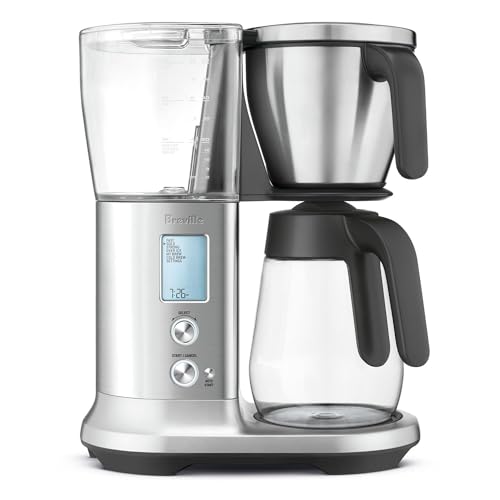
1. Breville Precision Brewer Glass Carafe (BDC400) — Best Overall
The Precision Brewer in its glass carafe configuration is the pick for the drinker who wants one machine to behave like several. It suits households that swing between a fast weekday pot, a slower weekend brew dialled toward specialty standards, and iced or cold brew in summer — all served from a glass carafe you can watch fill and carry to the table. It is less suited to anyone who wants a single button and no decisions.
Strengths
- Multiple distinct brew modes in one glass-carafe machine, including a Gold setting aimed at specialty brewing standards
- Glass carafe makes brew level obvious at a glance and pours cleanly for table service
- Iced and cold brew modes extend the machine well beyond basic hot drip
Trade-offs
- More settings mean a learning curve before the coffee tastes the way you want
- Glass carafe on a warming plate still stews coffee if you hold it for hours
- Larger footprint than a basic drip machine, so tight counters feel it
| Spec | Detail |
|---|---|
| Carafe | Glass carafe (verified listing configuration) |
| Brew modes | Gold, Fast, Strong, Iced, Cold Brew |
| Body | Brushed stainless steel |
What separates this machine from ordinary glass-carafe brewers is control. Most inexpensive drip machines heat water to whatever temperature the element manages and shower it over the grounds on a fixed schedule. The Precision Brewer’s mode-based approach lets you pick a faster, stronger or standards-focused extraction, and that difference is easy to taste with fresh medium-roast beans: the Gold-style brew tastes fuller and sweeter, while the Fast mode is the honest weekday compromise. The glass carafe suits this flexibility because you can see exactly how much you brewed — useful when you alternate between a full pot and a half batch.
In daily use, plan around the glass. Brew what you will drink within the hour, or decant the rest into a pre-warmed insulated server if the morning stretches. The carafe itself pours well and rinses clean, and because it is glass there is no lingering flavour from yesterday’s dark roast in today’s light one. If your household argues about strength, the Strong mode settles it without doubling the coffee dose. For shoppers who want the best glass coffee maker in the automatic category and are willing to learn its modes, this is the strongest verified option in this guide.
Best for: households that want one glass-carafe machine for hot, strong, iced and cold brew / Not suited for: anyone who wants a single-button brewer with nothing to adjust
Check the current price on Amazon.

2. Bonavita Enthusiast 8 Cup Coffee Brewer — Glass Carafe — Best for Pour-Over Flavour
Bonavita built its reputation on brewers that mimic careful manual pour-over, and the Enthusiast in glass carafe form is the version for people who like to see and serve their coffee. It suits the drinker who buys fresh beans, cares about extraction temperature, and brews a moderate pot rather than a banquet urn. It is not the pick for a crowd or for anyone who needs coffee to sit hot for three hours.
Strengths
- SCA Certified brewing, which signals tested temperature and extraction performance
- Glass carafe version keeps the certified brew quality while adding easy visibility and pouring
- Removable reservoir is simpler to fill and clean than a fixed tank
Trade-offs
- 8-cup capacity is modest for large households or offices
- Glass carafe does not hold heat like the thermal version of the same brewer
- Focused feature set — no iced or cold brew modes
| Spec | Detail |
|---|---|
| Capacity | 8 cups |
| Carafe | Glass carafe |
| Certification | SCA Certified (per verified listing) |
| Reservoir | Removable |
The Enthusiast’s appeal is discipline. Certified brewers are tested to hold brew water in the proper temperature band and to wet the grounds evenly, and in the cup that shows up as sweetness rather than the flat, papery taste of under-heated drip. The glass carafe version makes sense for drinkers who serve promptly: coffee tastes best in the first stretch after brewing anyway, and glass lets you judge strength by colour before you pour. The stainless panel and removable tank also make the machine easier to live with on a real counter — you carry the reservoir to the tap instead of pouring water into the machine with a jug and spilling half of it.
Choose the glass version over the thermal version of this brewer if your routine is brew-and-serve: a weekend pot shared immediately, or a work-from-home pot finished within the hour. Choose thermal instead if your pot genuinely sits. Within this guide, the Enthusiast is the glass pick we would hand to a pour-over drinker who wants weekday automation without giving up the flavour standards they are used to.
Best for: pour-over drinkers who want certified automatic brewing into glass / Not suited for: large households or anyone holding coffee for hours
Check the current price on Amazon.

3. Ninja CE251 Programmable Brewer, 12-Cup Glass Carafe — Best Everyday Family Brewer
The CE251 is the straightforward family answer in this guide: a 12-cup glass carafe, programmable start, two strength choices and a small-batch function for the days when a full pot would be wasted. It suits busy households that want coffee ready on a timer and the option of a richer cup without changing machines. It is not a precision instrument for single-origin experimentation, and it does not pretend to be.
Strengths
- Programmable 24-hour delay brew plus small-batch function cover both full and partial pots
- Classic and Rich settings give a real, noticeable strength choice
- Removable reservoir and adjustable warming plate make daily use and cleanup easier
Trade-offs
- Glass carafe plus warming plate means long holding still dulls flavour
- No specialty certification or temperature display for precision-focused drinkers
- 12-cup footprint is more than a one-person kitchen needs
| Spec | Detail |
|---|---|
| Capacity | 12-cup glass carafe |
| Reservoir | 70 oz removable water reservoir (per verified listing) |
| Functions | Small batch, 24-hour delay brew, adjustable warming plate |
Most family coffee is a logistics problem before it is a flavour problem: coffee needs to be ready when people are, in the amount they will actually drink, without a counter full of gear. The CE251 solves that problem well. Set the delay brew the night before, use Rich when the beans are mild, use the small-batch function on a quiet Sunday, and pour from a glass carafe that shows you at a glance whether there is a second cup left. The adjustable warming plate matters more than it sounds — the lowest setting that keeps coffee pleasant is kinder to flavour than a plate that simply runs hot.
Flavour-wise this is honest mainstream drip: clean and consistent with decent beans, a step behind the certified brewers above on delicacy, ahead of basic switch-only machines on flexibility. Replacement glass carafes for popular 12-cup formats like this are also comparatively easy to source, which matters in a busy kitchen where a carafe eventually meets a sink edge. For most households type this query, this is the low-drama default.
Best for: families wanting programmable, flexible everyday brewing into glass / Not suited for: precision drinkers chasing certified extraction
Check the current price on Amazon.

4. Cuisinart DCC-3200 PerfecTemp 14-Cup Coffee Maker — Best Large Glass Carafe
Fourteen cups is the largest glass carafe format in mainstream home brewing, and the DCC-3200 is built for the households that actually need it: big families, frequent hosts, and anyone whose weekend brunch pot empties before the eggs are done. It suits volume drinkers who still want programmability and brew-strength control. Solo drinkers should look elsewhere — a 14-cup carafe used for two cups is the wrong tool.
Strengths
- 14-cup glass carafe is among the largest home capacities, ideal for gatherings
- PerfecTemp positioning targets hotter brewing than basic drip machines
- Adjustable warming plate helps manage holding temperature for a big pot
Trade-offs
- Oversized for one or two drinkers; small batches in a big machine rarely taste their best
- A full 14-cup glass carafe is heavy when full — consider grip strength and pouring confidence
- Glass at this size is a bigger replacement cost if it breaks
| Spec | Detail |
|---|---|
| Capacity | 14-cup glass carafe |
| Brewing | PerfecTemp hotter brewing (per verified listing) |
| Plate | Adjustable warming plate |
The honest case for a 14-cup glass machine is throughput with visibility. When you are serving six people, you want to see the level dropping and know when to start a second pot, and glass does that better than any thermal carafe. The DCC-3200’s hotter-brewing design addresses the classic big-machine flaw — a large, weak, lukewarm pot — and its programmability means the first pot can be ready before guests sit down. Used at or near its intended volume, it is a genuinely practical entertainer’s machine.
Used below half capacity every day, it is a mismatch: extraction and holding both suffer, and you will blame the machine for a sizing decision. If your household truly drinks at this scale, though, the combination of capacity, glass visibility and adjustable holding is hard to beat among verified listings. Pair it with a simple habit — brew full, serve promptly, and switch the plate off once the table is done — and a big glass carafe earns its counter space.
Best for: large households and frequent hosts who brew full pots / Not suited for: solo drinkers or small-batch brewing
Check the current price on Amazon.

5. Chemex Pour-Over Glass Coffeemaker — Classic Series, 8-Cup — Best All-Glass Manual Brewer
The Chemex is the purest answer to this search: brewer and carafe are a single piece of glass, and the coffee it makes — filtered through thick proprietary filters — is famously clean, sweet and delicate. It suits the unhurried drinker who enjoys the pour-over ritual and serves coffee at the table from the same vessel it brewed in. It does not suit anyone who wants coffee made for them, or who is careless around glass.
Strengths
- One-piece glass design means nothing but glass touches the brewed coffee
- Thick filters produce an exceptionally clean, sediment-free cup
- Brews and serves in the same vessel — beautiful and simple at the table
Trade-offs
- Fully manual: you heat the water, pour in stages and time the brew yourself
- Requires Chemex filters for the intended result, an ongoing specific purchase
- Glass is fragile and the coffee cools quickly without a warmer or cosy
| Spec | Detail |
|---|---|
| Capacity | 8-cup Classic Series |
| Construction | One-piece glass pour-over coffeemaker |
A Chemex cup tastes different from drip-machine coffee in a way drinkers notice immediately: lighter body, clearer sweetness, almost no bitterness when the pour is controlled. That clarity is the product of the heavy filter and the slow, even drawdown the cone shape encourages. The learning curve is real but short — a gooseneck kettle, a steady spiral pour and a roughly four-minute total brew time get you most of the way there — and the ritual is the point for the people who love this brewer.
Practical notes matter. Brew only what you will serve within half an hour, because the open glass vessel sheds heat. Rinse the glass with hot water before brewing in winter so the vessel does not steal the first heat from the coffee. And handle the pour with two hands when full. For the shopper whose mental image of a glass coffee maker is this object, nothing else in the guide substitutes — it is the manual benchmark the automatic glass machines are quietly compared against.
Best for: pour-over lovers who want the cleanest cup and table-ready glass / Not suited for: anyone wanting automated, keep-hot convenience
Check the current price on Amazon.
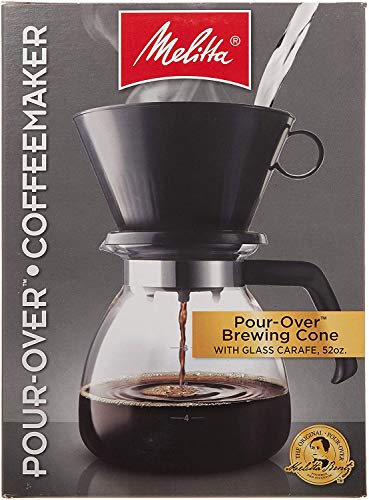
6. Melitta 52 oz Pour-Over Coffee Brewer with Glass Carafe — Best Simple Glass Pour-Over Set
Melitta invented the paper-filter drip cone, and this set is that idea in its simplest modern form: a brew cone sitting over a generous glass carafe. It suits households that want manual control and a big serving vessel without buying into a specialty ecosystem of proprietary filters and precision kettles. It is not for anyone seeking automation, timers or temperature displays.
Strengths
- Generous 52 oz glass carafe serves a table from a single manual brew
- Uses the widely available Melitta-style cone filter format
- No electronics to fail — the simplest possible glass coffee maker to own
Trade-offs
- Completely manual, including heating water separately
- Extraction quality depends entirely on your pouring technique
- Glass carafe offers no insulation for holding
| Spec | Detail |
|---|---|
| Capacity | 52 oz glass carafe |
| Format | Pour-over brewer with glass carafe |
There is a durable logic to this set. A cone and a glass carafe cannot break down, need no descaling programme, take almost no counter depth, and travel easily between kitchen, table and even a holiday rental. The 52 oz carafe is the differentiator against most manual brewers: you can make a genuine family-size pot by hand, which is exactly what campers-at-home and slow-Sunday households want. Technique is forgiving if you pour in pulses and let the cone drain between additions rather than flooding it once.
Compared with the Chemex above, the Melitta set trades some cup clarity and design drama for capacity, filter availability and price-tier practicality — filters for this cone style sit in most supermarkets. Compared with the automatic machines, it trades convenience for control and near-zero ownership cost. If your definition of a glass coffee maker is a glass vessel and your own two hands, this is the sensible, honest version of that idea.
Best for: manual brewers who want a large glass carafe and simple ownership / Not suited for: anyone who wants coffee brewed automatically on a timer
Check the current price on Amazon.
Comparison Table
| Pick | Badge | Key spec | Best for |
|---|---|---|---|
| Breville Precision Brewer Glass Carafe (BDC400) | Best Overall | Glass carafe; Gold, Fast, Strong, Iced and Cold Brew modes | households that want one glass-carafe machine for hot, strong, iced and cold brew |
| Bonavita Enthusiast 8 Cup Coffee Brewer — Glass Carafe | Best for Pour-Over Flavour | 8-cup glass carafe; SCA Certified; removable reservoir | pour-over drinkers who want certified automatic brewing into glass |
| Ninja CE251 Programmable Brewer, 12-Cup Glass Carafe | Best Everyday Family Brewer | 12-cup glass carafe; Classic & Rich brew; 24-hour delay brew | families wanting programmable, flexible everyday brewing into glass |
| Cuisinart DCC-3200 PerfecTemp 14-Cup Coffee Maker | Best Large Glass Carafe | 14-cup glass carafe; PerfecTemp hotter brewing; adjustable warming plate | large households and frequent hosts who brew full pots |
| Chemex Pour-Over Glass Coffeemaker — Classic Series, 8-Cup | Best All-Glass Manual Brewer | One-piece glass brewer and carafe; 8-cup Classic Series | pour-over lovers who want the cleanest cup and table-ready glass |
| Melitta 52 oz Pour-Over Coffee Brewer with Glass Carafe | Best Simple Glass Pour-Over Set | 52 oz glass carafe with pour-over brew cone | manual brewers who want a large glass carafe and simple ownership |
Read the table by vessel first and automation second. The Breville, Bonavita, Ninja and Cuisinart brew for you into glass; the Chemex and Melitta ask you to brew into glass yourself. Capacity rises from the Bonavita’s focused 8 cups to the Cuisinart’s 14, while cup clarity runs the other way — the manual glass brewers, especially the Chemex, produce the cleanest cup in the guide. Every glass vessel here shares one rule: serve promptly, because glass shows coffee beautifully and insulates it poorly.
How to Choose a Glass Coffee Maker
Start by deciding which of the two families you are actually shopping for. An automatic glass-carafe drip machine is a convenience appliance: it heats, brews and holds. A manual glass brewer is a tool: it gives you control and clarity, and asks for your time and a kettle. Shoppers who mix the two up end up disappointed in both directions — annoyed that a beautiful pour-over set has no timer, or that a programmable machine cannot match a careful hand pour.
Next, match carafe size to your real serving pattern, not your biggest party. A carafe performs best between half and full; a 14-cup machine brewing four cups daily is a permanent compromise. Count drinkers, count mugs per drinker, and buy the size that your ordinary Tuesday fills. Then look at how the coffee will be held. If your household drinks within the hour, glass on a gentle warming plate is fine. If coffee routinely sits for two or three hours, be honest with yourself: a thermal carafe machine will taste better by the second hour, and glass is the wrong material for that job no matter which brand you choose.
Finally, weigh ownership. Glass carafes are replaceable, and for mainstream 12-cup formats replacements are easy to find — a genuine advantage over a dented or flavour-tainted thermal carafe. Manual glass brewers have almost no ownership cost at all beyond filters. Automatic machines add descaling and eventual element wear. None of this should scare you off glass; it should simply match the machine to the life it will actually live.
Glass vs Thermal Carafes: An Honest Comparison
Glass shows you the coffee: level, colour and clarity at a glance, and it pours without the glug and guesswork of a thermal carafe. It rinses completely clean, never holds yesterday’s flavour, and replacement carafes are comparatively inexpensive. At the table, a glass carafe is simply more pleasant to serve from, which is why restaurants still use them.
Thermal wins on one decisive point: time. A vacuum-insulated carafe holds drinking temperature for hours without a warming plate, and a warming plate — however adjustable — slowly concentrates and dulls coffee. If your pattern is brew at seven and drink until ten, thermal is the truthful recommendation even in a guide about glass. If your pattern is brew and serve, glass gives up nothing in the cup and gains visibility, pouring and cleaning. Many households solve the tension by decanting: brew into glass, serve the first cups, and pour the remainder into a pre-warmed insulated server. That habit gets you glass where it shines and insulation where it matters.
Brew Temperature and Why Certification Matters for Glass Machines
Glass carafes are often attached to the cheapest brewers in the store, and cheap brewers share a flaw: water that never quite reaches proper brewing temperature, delivered unevenly over the grounds. The result is sour, thin coffee that drinkers blame on their beans. This is why the certified and precision picks lead this guide. A brewer tested to hold water in the proper hot band and distribute it evenly extracts sweetness instead of acidity, and the difference is larger than the difference between most bean upgrades.
You do not need a laboratory to apply this. Prefer machines with recognised certification or explicit temperature-focused design, use fresh water, and keep the spray head and carafe clean — old coffee oils on glass turn rancid and flavour every new pot. If you go manual, temperature control moves to your kettle: water just off the boil, poured steadily, is the whole secret. Glass itself is flavour-neutral; everything around it decides the cup.
Caring for Glass: Washing, Descaling and Replacing a Carafe
Glass rewards simple, consistent care. The daily rule is a real wash, not a rinse: coffee oil bonds to glass invisibly and turns rancid within days, flavouring every subsequent pot with a stale, cardboard note that no bean upgrade can mask. Hot water, a drop of washing-up liquid and a soft brush or cloth are sufficient; most glass carafes also tolerate the dishwasher, though hand washing is kinder to printed measurement markings, which fade over years of machine cycles. Dry the carafe rather than leaving it to drip on the counter — hard-water spots on glass are cosmetic, but the habit of drying is also the moment you notice a chip or crack beginning, which is when a carafe should be retired.
The brewer behind the glass needs its own schedule. Mineral scale builds on the heating element and in the spray head, slowing the brew and dropping its temperature, and the fix is descaling with the maker’s recommended solution or a citric-acid cycle every one to three months depending on your water. Wipe the warming plate while it is cool; sugars from a dripped carafe bake onto it and smell of every pot thereafter. On manual glass brewers — the Chemex and Melitta in this guide — care is simpler still: wash, rinse thoroughly so no detergent film meets the next brew, and store where the glass will not be knocked by heavier neighbours in the cupboard.
Replacement is glass’s quiet superpower, so plan for it rather than fearing it. Before any glass carafe has an accident, know its replacement route: mainstream 12-cup formats are stocked widely and inexpensively, while speciality vessels like the Chemex are ordered by model and size. Keeping a note of the exact model and carafe code in a phone photo takes ten seconds and turns a future breakage from a research project into a single order. Owners who treat glass this way — wash it properly, descale the machine behind it, and know the replacement before they need it — find that a glass coffee maker is not fragile ownership at all. It is simply honest ownership, with every part of the system visible, including its condition.
Glass Coffee Makers for Different Households: Matching the Pick to the People
A single careful drinker and a family of five can both type this search and need opposite machines, so it is worth mapping the picks to households explicitly. The solo drinker who brews one considered pot each morning is best served by the manual end of this guide: the Chemex for clarity and ceremony, or the Melitta set when the pot doubles as the serving vessel for a partner or a guest. The automatic alternative for one is honestly the small-batch discipline of brewing less in a mid-size machine — but glass manuals were invented for exactly this drinker, and they show it.
The couple lands in the middle of the automatic range. The Bonavita Enthusiast’s 8-cup glass format is sized almost perfectly for two people drinking two mugs each across a morning, and its certified brewing flatters the better beans couples tend to buy. The household of four or more, or the home that hosts, belongs with the Ninja CE251 for programmable family logistics or the Cuisinart DCC-3200 when the pot must reach fourteen cups for a table. In both cases the glass carafe earns its place socially: everyone at the table can see whether a second round exists, and the person nearest the pot becomes its pourer without a negotiation.
The Breville Precision Brewer sits across these categories as the enthusiast’s household machine — the one bought when a household contains mixed habits: a cold-brew drinker, a strong-coffee drinker and a traditionalist sharing one counter. Its modes let one glass carafe serve three preferences, which is a rarer talent than any single specification. Whichever household is yours, the through-line of this guide holds: glass is for coffee that is brewed to be seen, served and finished — and every pick above was chosen because it honours that purpose for a different kind of home.
A Week with a Glass Coffee Maker: What Daily Life Teaches
Specifications describe a machine; a week of mornings describes ownership, and glass machines teach their lessons quickly. Day one is delight at the theatre — watching the carafe fill, judging the colour, pouring at the table. Day two usually brings the first negotiation with the warming plate, when a pot left ninety minutes tastes like a lesser version of itself and the household learns the guide’s central rule by experience: brew the amount the morning will actually drink. By day four, most owners have settled the small choreography that makes glass effortless — the hot rinse of the carafe while the machine warms, the pour that happens when brewing ends rather than when someone remembers, the decant into a small insulated server on the mornings that stretch.
The manual brewers teach a different week. The first Chemex or Melitta brews are clumsy — water poured too fast, a bloom forgotten — and the cups are merely good. By the weekend, the pour has steadied, the timing has become muscle memory, and the same beans taste noticeably sweeter, which is the moment manual brewing converts its sceptics: the improvement came from the drinker’s own hands, and it stays. Owners also learn the social physics of glass — that a beautiful carafe on the table slows a breakfast down in the best way, that guests pour themselves a second cup they would not have asked for, and that a vessel you can see into is a vessel you keep clean without being reminded.
By the end of the week, the households that thrive with glass share one trait: their coffee rhythm was always brew-and-serve, and the machine simply made that rhythm visible and pleasant. The households that struggle are the ones fighting the material — holding coffee for hours, brewing banquet volumes for two people — and for them this guide’s honesty stands: a thermal machine would serve their rhythm better. Glass does not ask much. It asks that you drink the coffee you brew, reasonably promptly, in company where possible. A week is all it takes to learn whether that is your household’s natural shape — and for most households that choose glass deliberately, it turns out it was all along.
How to Brew and Care for a Glass Carafe Coffee Maker
Step 1 — Start with clean glass. Wash the carafe with hot soapy water or run it through the dishwasher if the maker allows it, and rinse away any detergent film. Old coffee oil on glass is the most common cause of a stale-tasting pot, and it is entirely preventable.
Step 2 — Use fresh water and the right dose. Fill the reservoir or kettle with fresh cold water. A reliable starting ratio is roughly one to two tablespoons of ground coffee per six ounces of water; adjust a little at a time rather than reinventing your dose daily.
Step 3 — Pre-warm the glass. Especially with manual brewers, rinse the carafe with hot water first. Cold glass steals heat from the first coffee that touches it and can stress the glass with sudden temperature change.
Step 4 — Brew at the right size. Brew the amount you will serve. For manual pour-over, pour a small bloom pour first, wait about half a minute, then add water in slow pulses. For automatic machines, use the small-batch function rather than brewing a tiny amount in full-pot mode.
Step 5 — Serve promptly, hold gently. Pour the first cups as soon as brewing finishes. If coffee must wait, use the lowest warming setting that keeps it pleasant, and treat one hour as the quality limit. For longer holding, decant into a pre-warmed insulated server.
Step 6 — Handle and store glass safely. Never set a hot glass carafe on a cold or wet surface, never use a cracked carafe, and check the rim and handle regularly. A chipped carafe is a replacement, not a repair.
Common Buying Mistakes
Leaving coffee on the warming plate for hours. The plate keeps coffee hot and makes it taste progressively worse. Brew less, brew again, or decant — do not stew.
Buying the biggest carafe for daily small batches. Oversized machines under-extract small amounts and waste coffee. Size for Tuesday, not for Thanksgiving.
Blaming beans for a dirty carafe. Rancid oil film on glass flavours every pot. Wash the carafe properly before you change a single other variable.
Thermal shock. Hot coffee into an ice-cold carafe, or a hot carafe onto a cold wet counter, is how glass breaks. Pre-warm, and set hot glass on a dry mat or trivet.
Assuming all glass machines brew alike. The cheapest glass-carafe brewers under-heat the water. Certification and temperature-focused design are worth prioritising over cosmetic features.
Ignoring replacement-carafe reality. Before buying an unusual format, check that a replacement glass carafe exists and is easy to order. Mainstream formats win this test easily.
Final Recommendation
For most shoppers, the Breville Precision Brewer in glass is the most capable automatic answer here — one machine that covers careful hot brewing and summer cold modes while serving from glass. The Bonavita Enthusiast glass version is the flavour purist’s automatic pick, and the Ninja CE251 is the family default we would buy without overthinking. At the manual end, the Chemex remains the glass benchmark for clarity, while the Melitta set is the practical large-carafe manual choice. Whichever you choose, respect the one rule glass imposes: brew it, serve it, enjoy it promptly.
Still comparing formats? These related guides in the same programme cover the neighbouring decisions:
- Breville Precision Brewer Glass Carafe (BDC400) (Best Overall) — check price on Amazon
- Bonavita Enthusiast 8 Cup Coffee Brewer — Glass Carafe (Best for Pour-Over Flavour) — check price on Amazon
- Ninja CE251 Programmable Brewer, 12-Cup Glass Carafe (Best Everyday Family Brewer) — check price on Amazon
- Cuisinart DCC-3200 PerfecTemp 14-Cup Coffee Maker (Best Large Glass Carafe) — check price on Amazon
- Chemex Pour-Over Glass Coffeemaker — Classic Series, 8-Cup (Best All-Glass Manual Brewer) — check price on Amazon
- Melitta 52 oz Pour-Over Coffee Brewer with Glass Carafe (Best Simple Glass Pour-Over Set) — check price on Amazon
Best Coffee Makers Inexpensive Best Coffee Makers Multi Cup Best Coffee Makers Grinds Beans Best Coffee Makers Japanese Best Coffee Makers Moka Pot
Frequently Asked Questions
Is coffee from a glass carafe worse than from a thermal carafe?
Not when it is served promptly. Freshly brewed, the two taste the same; glass only falls behind over time, because a warming plate slowly dulls coffee while a thermal carafe simply holds temperature. Brew-and-serve households lose nothing with glass.
Can a glass carafe go on the stove to reheat coffee?
Do not assume so. Only carafes explicitly rated by their maker for stovetop use should ever see direct heat, and most automatic-machine carafes are not. Reheat a cup in the microwave instead, or brew a fresh small batch.
How do I stop a glass carafe from breaking?
Avoid thermal shock: pre-warm with hot water, never set hot glass on a cold wet surface, and retire any carafe with a chip or crack. Handle a full large carafe with two hands and keep the handle screws and rim checked.
What size glass coffee maker should a household of two buy?
An 8 to 10 cup carafe is the sweet spot for two regular drinkers — full enough for weekend second cups, small enough that a weekday half pot still brews properly. A 14-cup machine is gathering equipment, not a daily two-person brewer.
Are replacement glass carafes easy to find?
For mainstream 12-cup formats and popular brands, yes — replacements are widely sold. For unusual or manual formats, confirm availability before you buy. This replaceability is one of glass’s genuine ownership advantages.
Does a Chemex count as a coffee maker?
Yes — it is a manual coffee maker in which the brewer and the glass carafe are one piece. It needs a kettle and a few minutes of attention, and in return produces an exceptionally clean cup that automatic machines do not match.
Can I put a glass carafe in the dishwasher?
Most glass carafes tolerate the dishwasher, but hand washing preserves printed measurement markings and reduces the risk of knocks and chips. Whichever you choose, wash it properly and often — rancid coffee oil on glass is the most common cause of a stale-tasting pot.
Do glass pour-over brewers need special kettles?
A gooseneck kettle is strongly recommended for the Chemex and similar drippers because controlled, gentle pouring is the technique. The Melitta set is more forgiving, but even there a slow, steady pour from any kettle beats a single flood.


