Disclosure: airfryerkitchensupply.com is reader-supported. When you buy through links on our site, we may earn an affiliate commission at no extra cost to you.
Where to buy
Choosing the best blenders for making daiquiris starts with the ice, because the ice is the drink. A frozen daiquiri lives or dies on ice texture: the drink should pour like wet snow — uniformly fine, no chips, no watery separation — and it should do so for a whole pitcher, then do it again for the next one. The machines below were verified through Amazon listing and fall into two honest families: dedicated frozen-concoction makers that shave ice and automate the drink, and true blenders (including a bar-grade model) that crush ice the conventional way. Both families can make an excellent daiquiri; they differ in texture style, batch rhythm, and how much bartending they ask of you. This guide is for adults making cocktails at home. Check price on Amazon and confirm the jar size on the listing before ordering.
- Margaritaville Bali Frozen Concoction Maker, 60 oz, Self-Dispensing (Best for Parties) — check price on Amazon
- Margaritaville Key West Frozen Concoction Maker with XL Ice Reservoir (Best Frozen-Concoction Specialist) — check price on Amazon
- Ninja Professional Plus Blender BN701, 1400 Peak Watts, 72 oz (Best True Blender for Daiquiris) — check price on Amazon
- Waring Blade Blender BB300, 1.5 HP, 48 oz Copolyester Jar (Best Bar-Grade) — check price on Amazon
- Oster Extreme Mix Blender, 1500W, 64 oz Tritan Jar (Best High-Speed Value) — check price on Amazon
- Margaritaville Bahamas Frozen Concoction Maker DM0500, 36 oz (Best Compact Drink Maker) — check price on Amazon
The best blenders for making daiquiris are ice machines first and blenders second. A classic daiquiri — rum, lime, sugar — is shaken and served up, but the frozen daiquiri that most home drinkers mean is a blended drink whose entire character is its ice: two-plus cups of ice per pitcher reduced to a uniform, pourable slush that holds its texture in the glass. Blenders fail this drink in recognizable ways — ice chips that survive as gravel, a vortex that stalls on a full load of cubes, or a slush that separates into watery rum below and foam above within minutes.
There are two technologies for getting it right, and this guide refuses to pretend they are the same. Dedicated frozen-concoction makers shave ice from a reservoir and blend the shavings with the liquid — the result is exceptionally fine and consistent, close to a snow cone’s texture refined into a drink, and the process is automated to the point of pressing one button. True blenders crush ice with blade force: the texture is a fraction coarser, the machine remains a general-purpose blender the other six days of the week, and a bar-grade model brings commercial durability to the job. Which family is right depends on whether the daiquiri is your household’s signature or one drink among many.
The six picks cover both families at several tiers: three Margaritaville concoction makers (party, specialist, and compact), a high-power Ninja blender, a commercial Waring bar blender, and a high-speed Oster value pick. The buying guide explains shaved versus crushed texture, ice math for batches, and what separates in the glass and why. The how-to gives a reliable frozen daiquiri method — ratios, order, and timing — that works on any machine here. Adults only, obviously; the virgin version, incidentally, works identically with the rum swapped for extra lime and a splash of soda after blending.
In this guide
Quick Picks
Two families, one standard: a pitcher of frozen daiquiri that pours like wet snow and holds its texture to the last glass.
- Best for Parties: Margaritaville Bali Frozen Concoction Maker, 60 oz, Self-Dispensing — a 60 oz self-dispensing machine that shaves ice and blends daiquiris, margaritas, and coladas — then serves them from a lever, like a bar. Check the current price on Amazon.
- Best Frozen-Concoction Specialist: Margaritaville Key West Frozen Concoction Maker with XL Ice Reservoir — an XL ice reservoir and four programmed drink settings with an easy-pour jar — the specialist’s version of the shaved-ice daiquiri, batch after batch. Check the current price on Amazon.
- Best True Blender for Daiquiris: Ninja Professional Plus Blender BN701, 1400 Peak Watts, 72 oz — 1400 peak watts, a 72 oz pitcher, and Auto-iQ programs for frozen drinks — the general-purpose blender that crushes ice like it means it, then makes soup on Sunday. Check the current price on Amazon.
- Best Bar-Grade: Waring Blade Blender BB300, 1.5 HP, 48 oz Copolyester Jar — a commercial 1.5 HP bar blender with a 48 oz jar, two-speed toggle and pulse, and NSF certification — the machine class that makes daiquiris in actual bars. Check the current price on Amazon.
- Best High-Speed Value: Oster Extreme Mix Blender, 1500W, 64 oz Tritan Jar — 1500W with a 10-point blade, anti-jam technology, and iBlend auto programs in a 64 oz Tritan jar — near-flagship ice performance at a value tier. Check the current price on Amazon.
- Best Compact Drink Maker: Margaritaville Bahamas Frozen Concoction Maker DM0500, 36 oz — the compact original concoction maker — a 36 oz jar and the same shave-and-blend idea, sized for couples and small kitchens instead of parties. Check the current price on Amazon.
How These Picks Were Chosen
Daiquiris filtered for ice, because ice is the drink. Every candidate was verified through Amazon listing, then classified by its ice technology — shaving or crushing — and judged on the texture and consistency of a full pitcher under repeated batches, not a single demonstration blend. Machines with strong general reputations but weak frozen-drink design were excluded; a great soup blender that chips ice has no place on this page.
The final six split evenly between the two families so the reader can choose a philosophy before a model: three concoction makers in party, specialist, and compact sizes, and three true blenders spanning all-purpose programs, commercial bar duty, and high-power value. Each review states its texture dialect plainly — shaved-fine or crushed-classic — and its duty limits across an evening, because the fourth pitcher is where daiquiri machines are truly separated from daiquiri-capable ones.
The 6 Best Blenders for Making Daiquiris
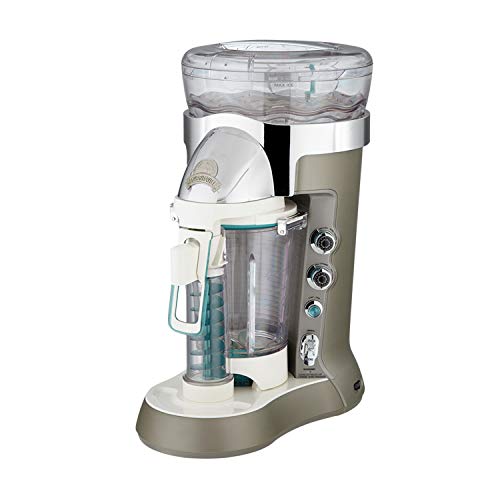
Margaritaville Bali Frozen Concoction Maker, 60 oz, Self-Dispensing — Best for Parties
The Margaritaville Bali is the party machine: a 60-ounce frozen concoction maker with a self-dispensing lever, so the host makes a batch and guests serve themselves a daiquiri that pours like it came from a bar’s frozen drink machine. Its ice-shaving approach produces the finest, most consistent texture in this guide, and the dispensing format solves the frozen drink’s party problem — the pitcher that must be re-blended and re-poured for every round.
Strengths
- Self-dispensing lever makes party service effortless and keeps the host out of the kitchen
- Shaved-ice texture is the finest and most uniform available at home
- 60 oz capacity is a true party batch; automated cycles keep rounds consistent
Trade-offs
- A single-purpose appliance — it makes frozen drinks, not smoothies or soups
- Large footprint and more parts to wash than a blender jar
- Premium positioning within the concoction-maker family
| Capacity | 60 oz jar (per Amazon listing) |
| Serving | Self-dispensing lever (per Amazon listing) |
| Drinks (per Amazon listing) | Smoothies, margaritas, daiquiris, coladas |
| Ice method | Shaved ice reservoir system |
Judge the Bali by a party’s second hour. A blender pitcher of daiquiris, however good, melts toward separation and needs re-blending; the Bali’s batch sits in its jar at texture, and the lever pours a consistent drink on demand, which changes the host’s evening from bartender to guest. The texture itself deserves the praise it gets in this category: shaving ice before blending yields a slush with no surviving chips, the flaw that betrays blender-made frozen drinks, and the automated cycle repeats it identically batch after batch. The costs are real — counter space, washing, and an appliance that does one thing — but for households whose summers run on frozen drinks for a crowd, that one thing is the main event, and this is its best home machine.
Ice is an ingredient, and its form decides the drink. Fresh, hard, dry ice from the freezer — not the half-melted, fused mass from a door bin — blends finest and dilutes least. If your cubes have fused, break them apart before loading; a fused iceberg bridges across the jar and stalls the vortex on any machine. Bagged party ice, being smaller and more uniform, is the frozen drink maker’s quiet upgrade for big batches.
Best for: hosts making frozen daiquiris and margaritas for groups, regularly / Not suited for: occasional drinkers or anyone needing a general-purpose blender
Check on Amazon — check the current price on Amazon before you decide, since listings and included accessories change over time.
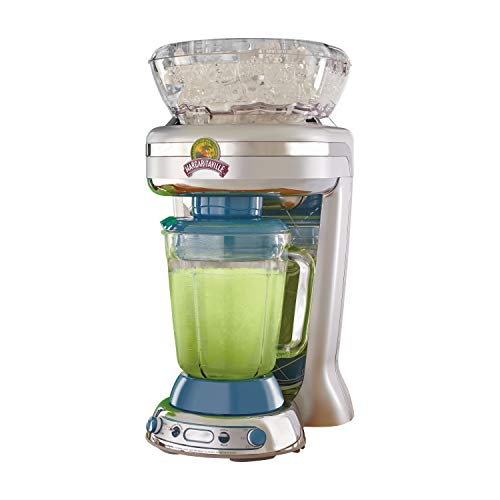
Margaritaville Key West Frozen Concoction Maker with XL Ice Reservoir — Best Frozen-Concoction Specialist
The Key West is the enthusiast’s concoction maker: an extra-large ice reservoir that reduces refills across a long session, four programmed drink settings that automate shave-and-blend ratios, and an easy-pour jar. Where the Bali adds the dispensing lever for parties, the Key West doubles down on the making — more ice on board, more programmed consistency — for the home bartender who produces frozen daiquiris in sequence and wants each one identical.
Strengths
- XL ice reservoir means fewer interruptions across multiple batches
- Four programmed settings automate consistent drink ratios
- Shaved-ice texture: fine, uniform, chip-free daiquiris
Trade-offs
- Single-purpose, like all concoction makers
- Tall unit with reservoir — check your cabinet clearance
- Programmed ratios favor the machine’s recipes; custom ratios take manual mode
| Ice | XL ice reservoir (per Amazon listing) |
| Programs | 4 programmed drink settings (per Amazon listing) |
| Jar | Easy Pour Jar (per Amazon listing) |
| Use (per Amazon listing) | Entertaining and parties |
The Key West’s argument is rhythm. Frozen drinks at home usually fail socially before they fail technically: the second batch takes long enough, and varies enough, that the round dissolves. A big reservoir and programmed settings turn batch two and three into the same ninety-second, same-texture operation as batch one. The shaved texture flatters a daiquiri specifically — the drink is simple (rum, lime, sweetener, ice), so there is nowhere for a chip or a watery pocket to hide, and uniformity is the quality you taste. If your frozen drink life is a couple of daiquiris on a Friday, this is more machine than the moment needs; if it is a standing summer ritual with an audience, the Key West is the specialist tool that ritual deserves.
Ratios make the daiquiri; the machine only executes them. A reliable frozen daiquiri frame per pitcher batch: a generous measure of white rum, fresh lime juice at roughly a third of the rum measure, sweetener (simple syrup blends in more evenly than granulated sugar, which can stay gritty in a cold drink) at roughly a quarter, and ice to fill the working volume — then blend to texture. Taste before serving: frozen drinks mute both acidity and sweetness, so a daiquiri that tastes balanced in the jar at room temperature will taste flat when frozen; season it a touch brighter than you think.
Best for: frozen-drink enthusiasts making repeated batches for gatherings / Not suited for: solo or occasional daiquiri drinkers
Check on Amazon — check the current price on Amazon before you decide, since listings and included accessories change over time.

Ninja Professional Plus Blender BN701, 1400 Peak Watts, 72 oz — Best True Blender for Daiquiris
The Ninja BN701 is the answer for households that want frozen daiquiris from a machine that also does everything else. Its 1400 peak-watt motor and Total Crushing blades are built for ice, the 72-ounce pitcher is a full party batch, and its Auto-iQ presets include frozen drinks — the program category a daiquiri belongs to. It crushes rather than shaves, so the texture is a blender’s texture: excellent, a half-step behind the shavers’ fineness, in a machine with a whole second life.
Strengths
- Highest ice-crushing force among the true blenders here
- Auto-iQ frozen-drink programs automate the pulse pattern ice needs
- 72 oz pitcher plus full general-purpose blending the rest of the week
Trade-offs
- Crushed texture is a fraction coarser than the shaved-ice machines
- A full ice load is loud — frozen drinks are not a quiet genre
- Large pitcher to wash for a two-daiquiri evening
| Motor | 1400 peak watts |
| Pitcher | 72 oz |
| Programs | 3 Auto-iQ presets including frozen drinks (per Amazon listing) |
| Technology | Total Crushing blades (per Amazon listing) |
The BN701’s daiquiri method is force with timing: liquid and flavorings first, ice to the pitcher’s working level, then the frozen-drink program’s pulses collapse the ice mass progressively so the blades always have purchase, finishing in a continuous run that evens the texture. The result pours thick, holds together in the glass respectably, and — unlike the concoction makers — the same machine made your morning smoothie and will make winter soup. The honest comparison is texture versus versatility: put a BN701 daiquiri beside a Bali one and the shaved drink is finer; put their owners’ kitchens side by side and the Ninja owner owns one appliance where the other owns two. Most households should choose versatility, and among versatile machines, this one crushes ice best.
Order and timing protect texture. Liquid and flavorings first, ice on top, then pulses to collapse the ice mass before a continuous finish of twenty to forty seconds. Over-blending is the silent killer of frozen drinks: every extra ten seconds of blade friction melts ice into water, and a daiquiri blended a minute too long pours thin and separates in the glass. Blend to uniform, stop, pour. The second batch can always be adjusted; the first cannot be un-melted.
Best for: households wanting one powerful blender that owns frozen drinks among its many jobs / Not suited for: texture absolutists who make frozen drinks often enough to justify a specialist
Check on Amazon — check the current price on Amazon before you decide, since listings and included accessories change over time.

Waring Blade Blender BB300, 1.5 HP, 48 oz Copolyester Jar — Best Bar-Grade
The Waring BB300 is the professional’s entry: a 1.5-horsepower commercial bar blender with a 48-ounce copolyester jar, dead-simple two-speed toggle controls with pulse, and NSF certification. Bars make frozen daiquiris on machines like this because they are built for the duty cycle — batch after batch, night after night — and because a toggle you can flip without looking beats a touch panel when your hands are wet.
Strengths
- Commercial 1.5 HP motor built for repeated frozen-drink duty
- Toggle-and-pulse controls are fast, tactile, and bar-practical
- NSF certified; 48 oz jar is the classic bar batch size
Trade-offs
- Two speeds is the whole control set — finesse comes from the operator
- Commercial styling and sound; it is a tool, not a countertop ornament
- No programs, no personal cups — a specialist of a different kind
| Motor | 1.5 horsepower |
| Jar | 48 oz copolyester jar |
| Controls | 2-speed toggle with pulse (per Amazon listing) |
| Certification | NSF certified (per Amazon listing) |
There is a pleasure in equipment that does not negotiate. The BB300 on high, with a properly loaded jar — liquid, then ice to level — reduces cubes to daiquiri slush with the indifference of a machine that has done it ten thousand times, and the pulse lets you knock down the last riders without over-running the drink into soup. Its texture is a working bar’s texture: fine, cold, consistent, achieved by power and a jar shape refined over decades of exactly this drink. Home users should know what they are buying: no programs to learn because there is nothing to learn, no quiet operation because bars are not quiet, and durability that will outlast trends. For the home bartender building a serious bar corner, it is the most legitimate machine on this page.
Separation in the glass is physics, not failure — mostly. A frozen daiquiri is a suspension of ice crystals in liquid, and it will slowly settle; the defenses are a fine, uniform crystal size (finer suspensions settle slower, which is the shavers’ real advantage), serving immediately, and a quick stir before pouring each glass. A drink that separates in two minutes was blended too coarse or too long; one that holds for fifteen was made correctly.
Best for: home bartenders wanting commercial durability and bar-authentic daiquiris / Not suited for: anyone wanting programs, quiet, or a multi-format kitchen system
Check on Amazon — check the current price on Amazon before you decide, since listings and included accessories change over time.

Oster Extreme Mix Blender, 1500W, 64 oz Tritan Jar — Best High-Speed Value
The Oster Extreme Mix is the value route to serious frozen drinks: a 1500W motor — the highest wattage among the true blenders here — driving a 10-point blade in a 64-ounce Tritan jar, with anti-jam technology and iBlend auto programs. Ice jams are the frozen drink’s mid-blend failure, where cubes lock together and the blades spin beneath them; a machine designed against jamming, with the power to back it up, is designed for daiquiris whether it says so or not.
Strengths
- 1500W and a 10-point blade give real ice-crushing authority
- Anti-jam technology addresses the frozen load’s classic stall
- Auto programs plus a 64 oz jar cover party batches without flagship money
Trade-offs
- Texture finish a step behind the Ninja’s programs and the shavers’ fineness
- Big jar and big power mean a big wash and a loud minute
- Brand ecosystem and refinement trail the premium names
| Motor | 1500W |
| Jar | 64 oz Tritan jar |
| Blade | 10-point blade (per Amazon listing) |
| Technology | Anti-jam technology; iBlend auto programs (per Amazon listing) |
The Extreme Mix makes its daiquiri case on the two numbers that matter — watts and blade — and on one behavior: it does not stall. Load the jar with liquid and a full measure of ice, run an auto program or a manual pulse-then-run sequence, and the 10-point blade keeps finding new ice to cut as the anti-jam design keeps the load shifting. The resulting slush is honest blender work: uniform, pourable, a shade coarser than the BN701’s best and perfectly at home in a strawberry or mango daiquiri where fruit pulp is part of the texture anyway. For a household whose frozen drinks are fruity and frequent and whose budget is not, this is the pick that respects both facts.
Fruit daiquiris follow the same frame with one adjustment: frozen fruit replaces part of the ice, not adds to it. A strawberry daiquiri built on a full ice load plus frozen berries comes out over-diluted as everything melts; swap a third to half the ice for frozen fruit and the drink holds both texture and flavor. Fresh fruit, conversely, adds water — compensate with a little more ice. The frame is forgiving once the ice-versus-fruit balance is understood.
Best for: value buyers making fruity frozen daiquiris in full pitchers / Not suited for: classic-daiquiri texture purists, who should look at the shavers or the Waring
Check on Amazon — check the current price on Amazon before you decide, since listings and included accessories change over time.
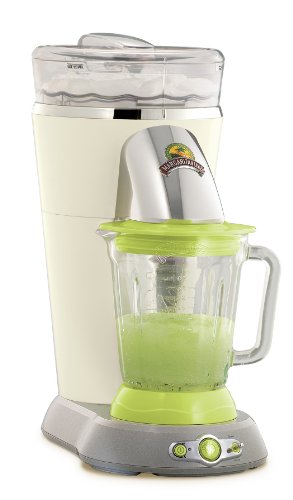
Margaritaville Bahamas Frozen Concoction Maker DM0500, 36 oz — Best Compact Drink Maker
The Margaritaville Bahamas is the compact door into shaved-ice drinks: a 36-ounce frozen concoction maker that brings the shave-and-blend method down to a couple-sized batch and a smaller footprint. Not every daiquiri drinker hosts; many just want two excellent frozen daiquiris on a Friday without a party appliance colonizing the counter, and the Bahamas is sized precisely for that life.
Strengths
- Shaved-ice texture — the family fineness — in a compact format
- 36 oz is the right batch for two to four daiquiris
- Simpler and smaller than its party-sized siblings
Trade-offs
- Still single-purpose: frozen drinks are the whole repertoire
- Small reservoir means refills if the evening grows
- Couples who also blend smoothies will still need a blender — this is an addition, not a replacement
| Capacity | 36 oz |
| Model | DM0500 Bahamas (per Amazon listing) |
| Ice method | Shaved ice concoction system |
| Format | Compact frozen concoction maker |
The Bahamas makes the specialist’s bargain at its smallest scale: give up general-purpose blending, gain the finest frozen texture, in a machine that fits a normal kitchen and a two-person batch. Its daiquiris have the family signature — uniformly fine, no chips, consistent from the first pour to the last of the jar — and its simplicity suits an appliance used on weekends rather than daily. The honest framing is that it is a second appliance for households that already own a blender, bought when frozen drinks graduate from occasional to ritual. Judged as that, at its tier, it is a delight; judged as a kitchen’s only blender, it is the wrong purchase, and this page would rather say so than sell it twice.
Glassware and garnish are the last five percent. A frozen daiquiri served in a room-temperature glass starts melting at the pour; chill the glasses while you blend and the drink holds noticeably longer. Salt rims belong to margaritas — a daiquiri takes a lime wheel or nothing. And serve with a straw wide enough for slush, because a drinker fighting a thin straw through a perfect frozen daiquiri is a small, preventable tragedy.
Best for: couples wanting shaved-ice daiquiris without a party-size machine / Not suited for: anyone shopping for their only blender
Check on Amazon — check the current price on Amazon before you decide, since listings and included accessories change over time.
Comparison Table
| Pick | Badge | Key spec | Best for |
|---|---|---|---|
| Margaritaville Bali Frozen Concoction Maker, 60 oz, Self-Dispensing | Best for Parties | 60 oz; self-dispensing; shaved ice | Party frozen drinks on tap |
| Margaritaville Key West Frozen Concoction Maker with XL Ice Reservoir | Best Frozen-Concoction Specialist | XL reservoir; 4 drink settings; easy-pour jar | Repeated consistent frozen batches |
| Ninja Professional Plus Blender BN701, 1400 Peak Watts, 72 oz | Best True Blender for Daiquiris | 1400 peak W; 72 oz; Auto-iQ frozen drinks | All-purpose power, daiquiris included |
| Waring Blade Blender BB300, 1.5 HP, 48 oz Copolyester Jar | Best Bar-Grade | 1.5 HP; 48 oz; toggle + pulse; NSF | Bar-grade frozen daiquiris |
| Oster Extreme Mix Blender, 1500W, 64 oz Tritan Jar | Best High-Speed Value | 1500W; 64 oz Tritan; 10-point blade | Value high-power frozen drinks |
| Margaritaville Bahamas Frozen Concoction Maker DM0500, 36 oz | Best Compact Drink Maker | 36 oz; shaved ice; compact | Small-batch shaved-ice daiquiris |
The families divide the table cleanly. The three Margaritaville machines shave — finest texture, zero versatility, in party, specialist, and compact sizes. The three true blenders crush — a shade coarser, infinitely more versatile, in all-purpose (Ninja), bar-grade (Waring), and value-power (Oster) forms. Neither family is the ‘real’ daiquiri machine; bars themselves split between them. Your calendar decides: frozen drinks weekly or more argues specialist; monthly argues blender.
How to Choose the Best Blenders for Making Daiquiris
The first decision is family, not model: shaver or crusher. Choose a frozen-concoction maker if frozen drinks are a standing ritual — weekly or more in season, usually for guests — and the finest, most consistent texture is the point. Choose a true blender if daiquiris share the machine with smoothies, soups, and sauces, which is most households; among blenders, prioritize ice-crushing design (blade geometry and programs for frozen drinks) over general wattage claims, and size the pitcher to your typical round: 48 ounces for a classic batch, 64–72 for a party pitcher.
The second decision is duty cycle. A daiquiri night is not one blend; it is three or four pitchers across an evening, each a full ice load. Machines differ less on the first pitcher than on the fourth — motors heat, ice bins empty, hosts tire. Commercial-style duty (the Waring), big reservoirs (the Key West), and self-dispensing (the Bali) all exist to serve the fourth pitcher. If your evenings are one pitcher for two people, every machine here is comfortably within its duty, and the compact Bahamas or any blender will do beautifully.
Shaved vs Crushed: What the Texture Difference Really Is
Shaving planes ice into fine flakes before blending, so the finished drink’s crystals are small and uniform — the texture reads as smooth, almost creamy, and the suspension settles slowly. Crushing fractures cubes with blade force; the crystals are slightly larger and less uniform, the texture reads as a classic slush, and the drink wants drinking a touch sooner. In a plain rum-lime daiquiri the difference is noticeable to anyone paying attention; in a fruit daiquiri, where pulp joins the texture, it largely disappears. Neither is more authentic — Key West bars shave, Havana-style bars crush — they are two dialects of the same drink.
Dilution is the hidden variable in both. Ice is not just texture; as it melts it becomes part of the drink’s water, and a frozen daiquiri is balanced assuming that melt. Shaved ice, with more surface area, melts a little faster in the glass; crushed holds a little longer. Practically: make shaved drinks a touch more concentrated, serve crushed drinks a touch sooner, and never ‘fix’ a thin frozen daiquiri by adding neat rum at the end — blend a fresh half-batch and combine, or accept and learn for next time.
Batch Math and Party Logistics
A standard pitcher batch of frozen daiquiris serves four to six drinks depending on glass size, and consumes roughly a tray and a half of home ice cubes. A party of eight drinking frozen for an evening is therefore a five-to-six-tray, three-to-four-batch commitment — plan the ice before the rum, because running out of ice mid-evening is the only unforgivable daiquiri error. The concoction makers’ reservoirs exist for exactly this arithmetic; blender owners should simply buy bagged ice and keep it in a cooler by the machine.
Budget tiers here buy texture and stamina, not access — every pick makes a good daiquiri. Value money (the Oster) buys crushing power with a shade less refinement. Mid money buys either the compact shaver’s fineness (the Bahamas) or the Ninja’s program-polished versatility. Premium money buys party infrastructure: reservoirs, dispensing, commercial duty. The wrong purchases are the mismatches — a party household on a compact machine, a monthly couple on a commercial one — so let your calendar, honestly read, spend the money.
The virgin and low-alcohol versions deserve more than a footnote, because most gatherings include someone not drinking. A frozen daiquiri frame built on lime, syrup, and ice works beautifully with the rum replaced by a double measure of citrus and a splash of soda stirred in after blending, and fruit versions — strawberry, mango — lose almost nothing in translation. Make the alcohol-free batch first, in the clean jar, and serve it with the same chilled glasses and the same care; the guest drinking it will notice both the quality and the order of service, and both are compliments to the host.
How to Make a Frozen Daiquiri, Step by Step
One method for every machine on this page, with the shaver variation noted. The recipe frame is per pitcher batch; scale proportionally for the compact makers.
- Chill the glasses in the freezer while you work. A frozen daiquiri in a warm glass is a race you lose.
- Add the liquid base to the jar first: white rum, fresh lime juice at about a third of the rum measure, and simple syrup at about a quarter. Fresh lime is not negotiable — bottled juice makes a different, duller drink.
- Taste the base now and adjust a touch brighter and sweeter than you want the finished drink: freezing mutes both acid and sweetness.
- Add ice to the jar’s working level — hard, dry, separate cubes, broken apart if fused. For a fruit daiquiri, replace a third to half the ice with frozen fruit.
- On a blender: pulse three to five times to collapse the ice mass, then blend continuously 20–40 seconds until the slush pours in one uniform mass with no chips visible. On a concoction maker: load the reservoir, select the setting, and let the machine shave and blend its programmed cycle.
- Stop as soon as the texture is uniform. Every extra ten seconds melts the drink thinner.
- Pour immediately into the chilled glasses, give each a lime wheel if you like, and serve with a wide straw.
- For the next batch, rinse the jar quickly, check the ice supply first, and repeat the ratios exactly — consistency across rounds is what separates a daiquiri night from a daiquiri accident.
Troubleshoot by texture. Chips in the drink: the ice load bridged — pulse longer before the continuous run, and break fused cubes apart. Too thin: too little ice or too long a blend — add a handful of ice and give it five seconds, no more. Too thick to pour: a splash of water or lime, two seconds, pour. Separating fast: the crystals were too coarse — blend a few seconds longer next batch, within the melting limit, or accept the shaver’s argument. Every frozen daiquiri problem is one of these four, and all four are fixed in the next batch, which is the forgiving nature of the drink.
Record-keeping sounds joyless until the evening you cannot reproduce the daiquiri everyone loved. Keep a small card with the machine: the ratios that worked, the blend time on your machine, the ice note (bagged versus tray), and the one adjustment per batch. Three lines per party. By the third party the card is a recipe; by the sixth it is a house style. Bars call this a spec sheet and guard it seriously — the home version is friendlier, but the principle is identical, and it is the cheapest quality upgrade in this entire guide.
The Home Daiquiri Station: Setup That Makes the Drink Easy
Frozen drinks reward a small amount of mise en place. A home daiquiri station — machine, a cooler or freezer drawer of hard ice, limes in a bowl, rum and syrup within reach, glasses chilling — turns a pitcher from a production into a gesture, and it is the difference between a host who offers a second round and one who quietly hopes nobody asks. The station needs no dedicated furniture: a tray that corrals the bottles and tools, set up before guests arrive and struck after, gives any kitchen the bar’s essential advantage, which is that everything is already where the drink is made.
Syrup is the station’s one piece of real prep. Simple syrup — equal parts sugar and water, heated until dissolved and cooled — blends into a frozen drink evenly where granulated sugar can stay gritty, and it keeps for weeks refrigerated. Make it richer (two parts sugar to one of water) for a silkier drink that needs less volume, and consider a lime-forward batch habit: juice limes in the afternoon, not at midnight. None of this is elaborate; it is the accumulation of five-minute kindnesses to your future self, which is most of what good hosting ever is.
Common Buying Mistakes
Mistake one: bottled lime juice. A daiquiri has three ingredients; there is nowhere for a dull one to hide. Fresh limes take two minutes and are the difference between a drink people request and one they politely finish.
Mistake two: over-blending. Friction melts ice, and a daiquiri run a minute past uniform is a watery drink that separates. Blend to texture and stop — the discipline is the recipe.
Mistake three: running out of ice. Parties die of ice shortages, not rum shortages. Count the trays, buy the bag, and keep it cold by the machine before the first guest arrives.
Mistake four: buying the wrong family for your calendar. A party household on a compact maker refills all night; a monthly couple with a commercial rig bought a monument. Match the machine to the evenings you actually have.
Mistake five: neglecting the machine between seasons. A blender or concoction maker put away with residue in its gaskets returns in June with flavors no daiquiri deserves. Before storage, run a full cleaning cycle, wash and dry every part completely, and store the jar unsealed so air circulates. Concoction makers deserve a descaling if your water is hard. Five minutes in October buys a clean first pitcher in June — and the first pitcher sets the tone for the whole season.
Final Recommendation
For party households, the Margaritaville Bali’s self-dispensing format is the experience pick, and the Key West is the maker’s specialist with its big reservoir and programmed consistency. For everyone else — the majority — a true blender is the right daiquiri machine: the Ninja BN701 for all-purpose power with frozen-drink programs, the Waring BB300 for bar-grade authenticity and durability, and the Oster Extreme Mix for high-power value. The little Bahamas remains the couples’ shaved-ice treat.
Whichever family you choose, the drink is made by the method: fresh lime, bright seasoning, hard dry ice, blend to uniform and stop. Every pick was verified against Amazon listing — check price on Amazon, confirm the jar and reservoir configuration, and let your calendar pick the machine. Adults, enjoy responsibly; the daiquiri has survived a century because it is simple, and simple things reward doing them properly.
A final encouragement for the home drinker: your second batch will be better than your first, and your tenth will be the one friends ask about. Frozen daiquiris reward repetition because every variable — ice hardness, blend time, the brightness adjustment — becomes a reflex with practice. Keep the ratios written down until they are reflexes, taste before you pour, and let the machine you chose do the one job it was bought for, completely and without apology.
Storage and care between parties closes the practical side of this guide: rinse the jar the same night, without exception — dried lime and sugar in a blade assembly is a flavor no future daiquiri survives — and run a full soapy blend cycle before the machine goes back to its shelf. Concoction makers should have their reservoirs emptied and dried with the lid open. Five minutes at midnight is cheaper than a new machine’s worth of regret in June, and the first daiquiri of the next party will taste like it.
For parties, the Margaritaville Bali puts daiquiris on tap with its self-dispensing lever.
For the best all-purpose route, the Ninja Professional Plus BN701 crushes ice superbly and blends everything else all week.
For bar authenticity, the Waring BB300 is the commercial machine class real bars use.
Keep exploring the shortlist: Best Blenders For Frozen Margaritas Best Blenders For Frozen Drinks And Smoothies Best Blenders For Crushing Ice Best Blenders For Individual Smoothies Best Blenders For Ice Drinks.
Frequently Asked Questions
What is the difference between a frozen daiquiri from a concoction maker and from a blender?
Texture and process. A concoction maker shaves ice first, giving a finer, more uniform slush and an automated, repeatable cycle. A blender crushes ice with blade force — a classic slush texture, a fraction coarser, in a machine that also does every other blending job. In plain daiquiris the difference is perceptible; in fruit daiquiris it mostly vanishes. Both are legitimate; bars use both.
How much ice does a pitcher of frozen daiquiris need?
Roughly a tray and a half of standard home cubes per 48–64 oz batch — the ice should reach the jar’s working level with the liquid base in. The governing idea is that ice is a structural ingredient, not a garnish: too little and the drink is a cold rum soup, too much and it will not circulate. When in doubt, start at the working level and adjust the next batch; daiquiri making is a two-batch learning curve for any new machine.
Why does my frozen daiquiri separate in the glass?
A frozen drink is a suspension of ice crystals in liquid, and coarse or uneven crystals settle fast. Causes: under-blending (chips and large crystals), over-blending (melted, thin liquid that cannot hold the crystals), or standing too long. The fixes are a uniform blend stopped at the right moment, chilled glasses, and prompt serving. Finely shaved ice separates slowest, which is the concoction makers’ genuine technical edge.
Can I make a frozen daiquiri without alcohol?
Yes — the method is identical. Replace the rum with a combination of extra lime, a splash of soda or ginger ale added after blending (carbonation does not survive the blades), and a touch more sweetener, or use a zero-proof rum alternative. Frozen fruit versions work particularly well alcohol-free because the fruit carries the flavor. The texture rules — hard ice, blend to uniform, stop — are unchanged.
What rum is best for a frozen daiquiri?
A clean white (silver) rum is the classic choice: it keeps the drink bright and lets the lime lead. Aged rums make a richer, rounder frozen daiquiri that many drinkers prefer in the plain version. This is a taste question rather than an equipment one — but avoid heavily flavored or spiced rums in a classic daiquiri, since the drink’s simplicity has nowhere to balance them. Whatever you choose, fresh lime matters more than the rum tier.
How do I keep a blender from stalling on a full load of ice?
Load in order — liquid first, ice on top — and pulse before running continuously, so the ice mass collapses progressively into the blades instead of locking into a single bridged block. Break apart fused cubes before loading. If the vortex stalls, stop, knock the jar gently or stir the top layer down, and pulse again. Machines with frozen-drink programs automate exactly this pulse pattern, which is why they feature heavily in this guide.


