Disclosure: airfryerkitchensupply.com is reader-supported. When you buy through links on our site, we may earn an affiliate commission at no extra cost to you.
Where to buy
If you are shopping for the best electric outside grills, start with the verified shortlist below — every linked model was confirmed against a live Amazon listing before it earned its place in this guide.
- Weber Q 1400 Portable Electric Grill (Best Overall) — Check the current price on Amazon
- Weber Lumin Compact Portable Electric Grill (Best for Small Outdoor Spaces) — Check the current price on Amazon
- Char-Broil Patio Bistro TRU-Infrared Electric Grill (Best Freestanding) — Check the current price on Amazon
- Cuisinart CEG-115 2-in-1 Portable Outdoor Electric Grill (Best for Searing Outside) — Check the current price on Amazon
- George Foreman Indoor/Outdoor Electric Grill with Stand, 15-Serving (Best for Outdoor Groups) — Check the current price on Amazon
- Techwood 15-Serving Indoor/Outdoor Electric Grill (Best Value for Groups) — Check the current price on Amazon
This page never prints a fixed price for any product, because prices and stock move constantly. Use the links above to check price on Amazon at the moment you are ready to buy, and treat any budget language in this article as a guide to where each pick sits in the best electric outside grills market — budget, mid-range, or premium tier — rather than a promise about a specific listing on a specific day.
Finding the best electric outside grills is harder than the marketing suggests, because this corner of the grill market mixes genuinely different designs under one search phrase. This guide cuts through that mix with a verified shortlist, an honest account of what each design does well, and the trade-offs sellers prefer to skip.
Outside is where electric grills earn their existence: apartment balconies, condo patios, and HOA rules across the country ban open flame while saying nothing about a plug. An outside electric grill has a harder job than an indoor one — it fights wind, cool evenings, and distance from the kitchen — so this roundup weights heat retention, lids, and grate material more heavily than indoor guides do. Every pick was verified against a live Amazon listing, and every one is genuinely built for outdoor use rather than being an indoor plate carried outside.
In this guide
Quick Picks
Weber Q 1400 Portable Electric Grill — Best Overall. For outside cooking, the Q 1400 is the benchmark electric: cast-iron grates that hold heat against a breeze, a proper lid, and precise control. — Check price on Amazon
Weber Lumin Compact Portable Electric Grill — Best for Small Outdoor Spaces. The Lumin Compact takes the outside brief and shrinks it for balconies and small patios. — Check price on Amazon
Char-Broil Patio Bistro TRU-Infrared Electric Grill — Best Freestanding. The Patio Bistro owns its patio corner permanently, with infrared cooking that shrugs off the hot-spot problems of basic elements. — Check price on Amazon
Cuisinart CEG-115 2-in-1 Portable Outdoor Electric Grill — Best for Searing Outside. Outside grills fight wind and cool air, so the CEG-115’s listing-verified 550°F ceiling matters more outdoors than in. — Check price on Amazon
George Foreman Indoor/Outdoor Electric Grill with Stand, 15-Serving — Best for Outdoor Groups. Fifteen servings on one plate is a party argument, and the GF15 makes it on a stand that keeps the grill at working height outdoors. — Check price on Amazon
Techwood 15-Serving Indoor/Outdoor Electric Grill — Best Value for Groups. Techwood matches the group-size brief with a double-layer design that adds a staging level outdoors, where counter space is usually a folding table. — Check price on Amazon
How These Picks Were Chosen
Picks were verified against their Amazon listings, then filtered for true outdoor design: weather-appropriate construction, a lid or infrared system to fight heat loss, and grates or plates that hold heat outdoors. We weighed stand and tabletop formats for different patio layouts, surface size against realistic group sizes, and how each grill stores between sessions. Indoor-only presses and plates were excluded from this guide even when their marketing showed a patio photo.
Two standing rules shaped this guide. First, no static prices and no fixed star scores anywhere: you will only ever be told to check price on Amazon, because that is the only honest number. Second, a pick that could not be verified against a live listing could only appear as a entry without a link, never with an invented link or specification. Specifications quoted in the mini spec boxes come from the verified Amazon listings themselves.
The 6 Best Electric Outside Grills — Full Reviews

Weber Q 1400 Portable Electric Grill — Best Overall
For outside cooking, the Q 1400 is the benchmark electric: cast-iron grates that hold heat against a breeze, a proper lid, and precise control. It behaves most like the gas grill it replaces, which is exactly what outside cooks want from an electric. If your building bans gas and charcoal, this is the grill that makes the ban painless.
In daily use, the Weber Q 1400 Portable Electric Grill earns its badge through the details in its verified listing — power: 1560-watt / 120-volt element (per Amazon listing) — and through how little friction it adds to cooking for the best electric outside grills brief. Owners should expect the strengths listed below to show up in ordinary weeknight cooking rather than only in ideal conditions, and should weigh the trade-offs with equal honesty, because at this level of the market every design spends its budget somewhere. Read the two lists together: they are the same engineering decisions viewed from opposite sides.
Strengths
- Cast-iron grates hold heat and mark food like a gas grill
- Precise heat control dial instead of vague low-medium-high steps
- Proven Q-series shape sheds grease into a removable tray
Trade-offs
- Tabletop format, so you supply the table or buy a cart separately
- Cast iron needs a light oil wipe after cleaning to stay rust-free
- Heavier than thin-steel portables because of the grates
Key specs (from the verified listing)
- Power: 1560-watt / 120-volt element (per Amazon listing)
- Grates: Porcelain-enameled cast iron
- Format: Portable tabletop outdoor electric grill
Best for: buyers who want overall performance in the best electric outside grills category / Not suited for: buyers whose needs fall outside that brief.
Check on Amazon — check the current price on Amazon and confirm the exact configuration matches this review before ordering.

Weber Lumin Compact Portable Electric Grill — Best for Small Outdoor Spaces
The Lumin Compact takes the outside brief and shrinks it for balconies and small patios. It is light enough to carry out and put away each session, which matters where outdoor space doubles as living space. Frequent grillers in small spaces will feel the Weber build quality every time the lid closes.
In daily use, the Weber Lumin Compact Portable Electric Grill earns its badge through the details in its verified listing — fuel: electric, plug-in — and through how little friction it adds to cooking for the best electric outside grills brief. Owners should expect the strengths listed below to show up in ordinary weeknight cooking rather than only in ideal conditions, and should weigh the trade-offs with equal honesty, because at this level of the market every design spends its budget somewhere. Read the two lists together: they are the same engineering decisions viewed from opposite sides.
Strengths
- Genuinely compact footprint suits balcony rails and tiny patios
- Light enough to move between storage and cooking spot one-handed
- Weber build quality and parts support behind it
Trade-offs
- Compact grate means two to four portions at a time, not a crowd
- No stand included in the base configuration
- Premium positioning within the electric category
Key specs (from the verified listing)
- Fuel: Electric, plug-in
- Format: Compact portable, lightweight body (per Amazon listing)
- Positioning: Built for small spaces (per Amazon listing)
Best for: buyers who want for small outdoor spaces performance in the best electric outside grills category / Not suited for: buyers whose needs fall outside that brief.
Check on Amazon — check the current price on Amazon and confirm the exact configuration matches this review before ordering.
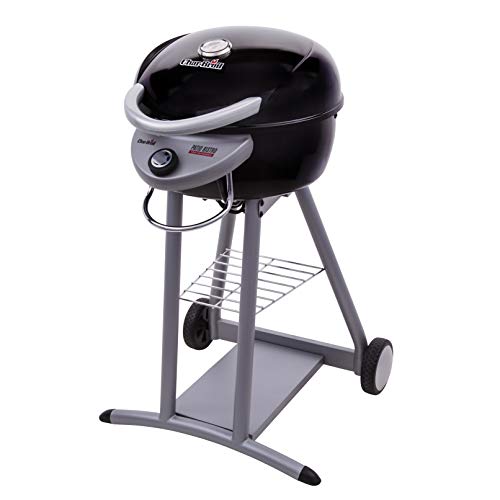
Char-Broil Patio Bistro TRU-Infrared Electric Grill — Best Freestanding
The Patio Bistro owns its patio corner permanently, with infrared cooking that shrugs off the hot-spot problems of basic elements. As a freestanding outside grill it asks nothing of your table and nothing of your storage. It suits the cook who grills outside weekly and wants the station always ready.
In daily use, the Char-Broil Patio Bistro TRU-Infrared Electric Grill earns its badge through the details in its verified listing — fuel: electric, tru-infrared cooking system — and through how little friction it adds to cooking for the best electric outside grills brief. Owners should expect the strengths listed below to show up in ordinary weeknight cooking rather than only in ideal conditions, and should weigh the trade-offs with equal honesty, because at this level of the market every design spends its budget somewhere. Read the two lists together: they are the same engineering decisions viewed from opposite sides.
Strengths
- Infrared plate evens out hot spots that plague cheap electric elements
- Freestanding format frees up table and counter space entirely
- Purpose-built for balconies and small patios where gas and charcoal are banned
Trade-offs
- Needs a weather-protected outdoor outlet within cord reach
- Smaller grate than a full-size gas grill, so big parties cook in batches
- Infrared plate needs regular brushing to keep the ports clear
Key specs (from the verified listing)
- Fuel: Electric, TRU-Infrared cooking system
- Model: 20602107 (per Amazon listing)
- Format: Freestanding patio grill on a cart-style base
Best for: buyers who want freestanding performance in the best electric outside grills category / Not suited for: buyers whose needs fall outside that brief.
Check on Amazon — check the current price on Amazon and confirm the exact configuration matches this review before ordering.

Cuisinart CEG-115 2-in-1 Portable Outdoor Electric Grill — Best for Searing Outside
Outside grills fight wind and cool air, so the CEG-115’s listing-verified 550°F ceiling matters more outdoors than in. That heat headroom is what produces a crust before the inside overcooks. Its stand-or-tabletop flexibility also suits yards where the grilling spot moves with the shade.
In daily use, the Cuisinart CEG-115 2-in-1 Portable Outdoor Electric Grill earns its badge through the details in its verified listing — max heat: reaches 550°f from a wall outlet (per Amazon listing) — and through how little friction it adds to cooking for the best electric outside grills brief. Owners should expect the strengths listed below to show up in ordinary weeknight cooking rather than only in ideal conditions, and should weigh the trade-offs with equal honesty, because at this level of the market every design spends its budget somewhere. Read the two lists together: they are the same engineering decisions viewed from opposite sides.
Strengths
- Stand-or-tabletop flexibility in one box, rare at this tier
- 550°F ceiling is hot for an electric grill, so searing is realistic
- Folds down for storage in a garage corner or closet
Trade-offs
- Stand is lighter-duty than a welded cart, so set it on level ground
- Cord length decides where on the patio it can live
- Assembly required before the first cook
Key specs (from the verified listing)
- Max heat: Reaches 550°F from a wall outlet (per Amazon listing)
- Format: 2-in-1 — folding stand or tabletop use
- Model: CEG-115
Best for: buyers who want for searing outside performance in the best electric outside grills category / Not suited for: buyers whose needs fall outside that brief.
Check on Amazon — check the current price on Amazon and confirm the exact configuration matches this review before ordering.
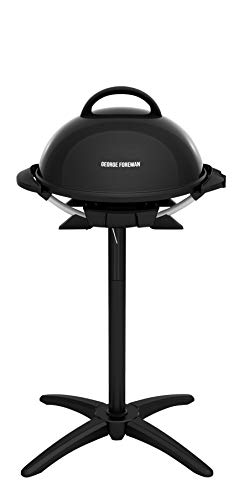
George Foreman Indoor/Outdoor Electric Grill with Stand, 15-Serving — Best for Outdoor Groups
Fifteen servings on one plate is a party argument, and the GF15 makes it on a stand that keeps the grill at working height outdoors. The sloped plate drains the fat that group burgers produce in quantity. For hosts feeding a patio full of people from one outlet, this is the capacity pick.
In daily use, the George Foreman Indoor/Outdoor Electric Grill with Stand, 15-Serving earns its badge through the details in its verified listing — capacity: 15-serving cooking surface (per Amazon listing) — and through how little friction it adds to cooking for the best electric outside grills brief. Owners should expect the strengths listed below to show up in ordinary weeknight cooking rather than only in ideal conditions, and should weigh the trade-offs with equal honesty, because at this level of the market every design spends its budget somewhere. Read the two lists together: they are the same engineering decisions viewed from opposite sides.
Strengths
- Big round surface feeds a group without a second appliance
- Stand removes in seconds for tabletop or indoor use
- Sloped plate drains fat into a tray instead of pooling around food
Trade-offs
- Round shape wastes corner space on counters and tables
- Nonstick plate is not a searing surface like cast iron
- Stand height is fixed, so check it suits your cooking stance
Key specs (from the verified listing)
- Capacity: 15-serving cooking surface (per Amazon listing)
- Format: Removable stand — indoor tabletop or outdoor freestanding
- Surface: Sloped nonstick grilling plate
Best for: buyers who want for outdoor groups performance in the best electric outside grills category / Not suited for: buyers whose needs fall outside that brief.
Check on Amazon — check the current price on Amazon and confirm the exact configuration matches this review before ordering.
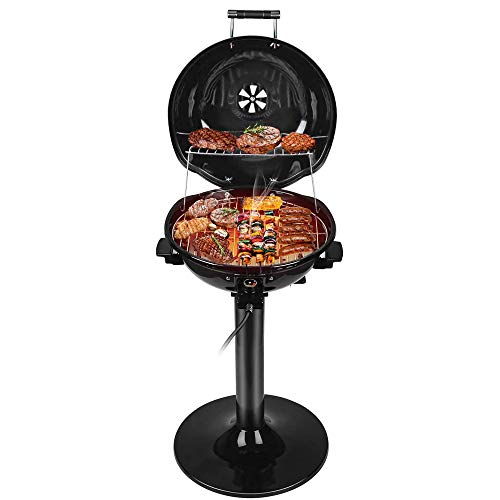
Techwood 15-Serving Indoor/Outdoor Electric Grill — Best Value for Groups
Techwood matches the group-size brief with a double-layer design that adds a staging level outdoors, where counter space is usually a folding table. It is the value-tier route to feeding a crowd electrically. Expect simpler fit and finish than the Weber and Char-Broil entries, and honest performance for the role.
In daily use, the Techwood 15-Serving Indoor/Outdoor Electric Grill earns its badge through the details in its verified listing — capacity: 15-serving surface (per Amazon listing) — and through how little friction it adds to cooking for the best electric outside grills brief. Owners should expect the strengths listed below to show up in ordinary weeknight cooking rather than only in ideal conditions, and should weigh the trade-offs with equal honesty, because at this level of the market every design spends its budget somewhere. Read the two lists together: they are the same engineering decisions viewed from opposite sides.
Strengths
- Group-size surface at a value-tier position in the category
- Double-layer design adds a warming or staging level
- One grill covers patio season and winter indoor cooking
Trade-offs
- Value-tier fit and finish compared with Weber or Char-Broil
- Double layer adds parts to wash after greasy cooks
- Brand support network is thinner than the big grill names
Key specs (from the verified listing)
- Capacity: 15-serving surface (per Amazon listing)
- Design: Double-layer design (per Amazon listing)
- Use: Rated for indoor and outdoor use
Best for: buyers who want value for groups performance in the best electric outside grills category / Not suited for: buyers whose needs fall outside that brief.
Check on Amazon — check the current price on Amazon and confirm the exact configuration matches this review before ordering.
Comparison Table
| Pick | Badge | Key spec | Best for |
|---|---|---|---|
| Weber Q 1400 Portable Electric Grill | Best Overall | Power: 1560-watt / 120-volt element (per Amazon listing) | Best Overall |
| Weber Lumin Compact Portable Electric Grill | Best for Small Outdoor Spaces | Fuel: Electric, plug-in | Best for Small Outdoor Spaces |
| Char-Broil Patio Bistro TRU-Infrared Electric Grill | Best Freestanding | Fuel: Electric, TRU-Infrared cooking system | Best Freestanding |
| Cuisinart CEG-115 2-in-1 Portable Outdoor Electric Grill | Best for Searing Outside | Max heat: Reaches 550°F from a wall outlet (per Amazon listing) | Best for Searing Outside |
| George Foreman Indoor/Outdoor Electric Grill with Stand, 15-Serving | Best for Outdoor Groups | Capacity: 15-serving cooking surface (per Amazon listing) | Best for Outdoor Groups |
| Techwood 15-Serving Indoor/Outdoor Electric Grill | Best Value for Groups | Capacity: 15-serving surface (per Amazon listing) | Best Value for Groups |
Why Electric Wins Where Flame Is Banned
Many leases, condo rules, and local codes prohibit gas and charcoal on balconies while permitting electric grills, because there is no open flame, no fuel storage, and no ember risk. That single fact makes electric the only grilling option for millions of households — and modern electrics are far better than the sad hot-plate grills of memory. Cast-iron grates, infrared plates, and 550°F ceilings produce real crusts now. Before buying, confirm your own building’s wording: some rules say ‘electric only,’ others cap wattage or require a specific clearance, and the listing specifications in this guide help you match the rule to the grill.
Heat Outdoors: Grates, Lids, and Wind
Outdoors, heat management is the whole game. Cast-iron grates store heat and return it to the food when a breeze steals the air temperature; thin nonstick plates cannot. A lid is not optional outside — it turns the grill into an oven for thick cuts and keeps cooking times sane on cool evenings. Infrared systems even out the hot spots that wind creates over an exposed element. Position any outside grill out of the direct wind line, preheat longer than you would indoors, and keep the lid down between flips. These habits matter more than any single specification.
Outdoor Power, Weather, and Storage
An outside grill needs a weather-protected, GFCI-equipped outlet and a cord route that stays off wet ground and out of foot traffic. Never run a high-draw grill on a light indoor extension cord. Between cooks, a cover is the difference between a grill that lasts years and one that corrodes in two seasons — elements, dials, and plate coatings all age faster outdoors. If the grill must live outside permanently, favor freestanding designs built for it; if it can live in a closet, the lighter portables become the smarter buy.
How to Grill Outdoors with an Electric Grill
Electric grilling outdoors rewards a slightly different routine than gas. Follow this sequence and the results will surprise anyone who still thinks electric means compromise.
- Set the grill on a level, stable surface out of the wind line, with the cord routed safely to a weather-protected outlet.
- Preheat with the lid down for a full ten to fifteen minutes — longer than indoors — so the grates themselves store heat.
- Oil the food, not the grate, and season generously; electric grills reward bold seasoning because there is no charcoal smoke adding flavor.
- Cook with the lid down between flips, opening it only to turn food, so the stored heat does its work instead of escaping.
- Use an instant-read thermometer for thick cuts, since outdoor conditions make timing charts unreliable.
- Let the grill cool, brush the grates while warm, empty the drip tray, and cover or store the grill once fully cool and dry.
Grilling for a Crowd on Electric: Batch Strategy Outdoors
Outside electric grills top out at sizes that make crowd strategy a skill rather than an afterthought. The working method is waves and holding: grill in complete, uncrowded batches, hold finished food in a low oven indoors, and sequence the menu so the grill is never idle and never overloaded. Start with the items that hold best — sausages, chicken thighs, and vegetables — and finish with the items that punish waiting, like steaks and burgers, timed to land as guests sit down. The 15-serving stand models in this guide exist precisely for hosts who would rather run one big surface than three waves on a compact.
Heat discipline matters more with each batch. Give the grates a minute to recover between waves, brush them while hot so batch two does not inherit batch one’s carbon, and keep the lid down during recovery. An electric element returns to temperature predictably, which makes batch timing repeatable in a way charcoal never is — the second wave on an electric grill cooks on the same schedule as the first, and a host who learns that schedule can run a patio dinner like a timetable.
Electric vs. Gas vs. Charcoal Outdoors: An Honest Comparison
Charcoal wins on smoke and ritual and loses on convenience, legality in dense housing, and weeknight practicality. Gas wins on raw heat and size and loses wherever rules ban it, tanks need storing, and burners need maintenance. Electric wins on permission — it is the grill that is allowed — plus push-button consistency, no fuel runs, and the lowest running fuss. It loses on maximum searing violence and on smoke, because there is no combustion to make any. Modern cast-iron and infrared electrics have narrowed the searing gap to the point where most diners cannot tell a well-executed electric steak from a gas one at the table.
The honest conclusion is that the best outdoor grill is the one your housing permits and your routine supports. A charcoal kettle that violates your lease cooks nothing. An electric grill on the balcony cooks every week. Choose from the permitted category with the seriousness this guide applies — grate material, lid, heat ceiling, and format — and the electric compromise stops feeling like one within a month of dinners.
Budget Tiers for Outside Electric Grills
Budget outside electrics are simple plate grills with modest heat, and they serve balconies adequately for burgers and dogs while struggling with steaks and cold evenings. The mid-range is where outside cooking becomes convincing: lids, better plates, stand formats, and heat that survives a breeze. Most of this guide lives in that tier deliberately. Premium outside electrics — the Weber entries — buy cast iron, build quality, and parts support that keep a grill cooking for a decade of seasons. Outdoors, that durability argument is stronger than indoors, because weather taxes cheap construction relentlessly.
Spend first on the grate and the lid, then on size, then on features. A smaller grill with cast-iron grates will out-cook a larger thin-plate grill every evening of the year, and a cover — a trivial cost next to the grill — protects whichever tier you choose better than any upgrade does.
Weatherproofing Your Outdoor Electric Setup
An outside electric grill lives at the intersection of weather and electricity, and the setup should respect both. The outlet must be weather-protected and GFCI-equipped; the plug connection should sit off the ground, ideally under the grill’s own shelter or a cover designed for outdoor connections. Route the cord so rain cannot pool on it and feet cannot find it in the dark. After wet weather, a thirty-second inspection — plug dry, cord undamaged, plate dry before preheat — keeps the routine safe across hundreds of cooks.
Storage completes the weatherproofing. A fitted cover on a cool, dry grill is protection; the same cover on a hot or damp grill is a moisture trap. Portable models stored indoors between cooks age slowest of all, which is one more reason the compact end of this guide suits exposed balconies. Treat weather as a design input, not an afterthought, and an outside electric will serve for years.
Troubleshooting Outside Electric Grill Problems
Slow cooking outdoors is placement until proven otherwise: wind, a cold evening, and a lid opened every two minutes will defeat any element. Reposition, preheat longer, and keep the lid down. Weak sear marks with a hot grill usually mean wet food or a grate that was not fully heat-soaked — cast iron needs its full preheat to print marks. A grill that trips its GFCI repeatedly in damp weather has a moisture problem in a connection; dry everything, inspect the cord, and do not defeat the protection device that is doing its job.
Flavor complaints — ‘it tastes steamed’ — trace to crowding and fat management. Cook in waves, let the drip tray do its work, and give fatty items room. An outside electric grill rewards the same discipline as any grill; it is simply less able to hide indiscipline behind raw firepower.
Seasonal Care Calendar for Outside Grills
Spring: full wash of plates and trays, cord and plug inspection, GFCI test, fastener check on stands and carts, and a ten-minute empty burn-off before the first cook. Summer: the weekly rhythm — hot brush after cooking, tray emptied, cover on a cool dry grill. Autumn: the deep clean before storage season, with special attention to grease in seams where winter moisture would sit. Winter: stored portables rest indoors; permanent grills rest covered, with cords coiled off the ground and a mid-winter glance after storms.
This calendar sounds like effort and totals perhaps two hours a year. Against that, weigh the replacement cost of a grill killed by one winter of grease and moisture. Outside grills in this guide are durable tools, and the calendar is simply the price of collecting on that durability.
Durability and Long-Term Ownership
Outside grills age in weather, and their lifespans are set by grate material, housing construction, and the owner’s cover discipline. Cast-iron grates, maintained with a light oil habit, are effectively permanent and can be restored after neglect with a brush and seasoning. Coated plates are the wear item on lesser models — budget for their eventual replacement or for the grill’s retirement when the coating goes. Housings in powder-coated steel tolerate seasons well if water is not allowed to pool in seams; stainless at the premium end tolerates them better. Elements rarely die young; connections and dials, exposed to weather, are the realistic failure points, and they fail faster on grills stored uncovered.
The ownership math favors buying construction quality once. A premium outside electric that cooks for ten seasons costs less per year than a budget grill replaced three times, and it cooks better in every one of those seasons. This guide’s ranking — Weber first, infrared and stand models behind — is that math expressed as badges.
How This Guide’s Picks Map to Real Outdoor Spaces
A high-rise balcony under a flame ban belongs to the Lumin Compact or the Q 1400, depending on whether the cook values portability or searing more. A condo patio with a permanent corner belongs to the Patio Bistro. A rental house patio, where the grill must move out when you do, belongs to the Cuisinart’s folding flexibility. A family yard that hosts belongs to the 15-serving stand models, with the Techwood as the value route to the same capacity.
Underneath those matches sits one question that decides satisfaction: will the grill live outside or commute from storage? Permanent residents should be bought as furniture — freestanding, covered, durable. Commuters should be bought as appliances — light, compact, quick to set up. Confusing the two is the most expensive mistake in this category, and it is a mistake of self-knowledge, not of product research.
What Results to Expect Outdoors on Electric Power
Set the expectation correctly and an outside electric grill is a revelation: burgers with real crust, chicken with rendered skin, vegetables with charred edges, and steaks — on the cast-iron and high-heat picks — with marks and browning that satisfy people who did not watch them cook. The honest limits are two. Peak searing violence is a notch below a ripping gas grill or charcoal at full blast, visible only on very thick steaks cooked by perfectionists. And there is no smoke flavor, because there is no fire; the food tastes of itself and its seasoning, which bold rubs and marinades turn from a limitation into a style.
Consistency is the counterweight, and it is considerable. An electric grill cooks the tenth burger of the summer exactly like the first, in weather that would scatter a charcoal cook’s timing, with no fuel anxiety and no ash. For the weekly reality of most households — dinner, outside, on a Tuesday — that consistency is worth more than the last degree of sear. This guide ranked its picks for that reality, not for a competition.
A Note on Safety with Outside Electric Grills
Outside electric grilling sits at the meeting point of heat, weather, and household electricity, and its safety rules are specific. The outlet must be weather-protected and GFCI-equipped, the connection dry and off the ground, and the cord a direct run — never a chain of light extension cords losing voltage and gaining heat along the patio. The grill itself, though flameless, is a serious heat source: clearances from siding, railings, and overhangs follow the manual, and a hot grill is never left where children or pets can reach it unsupervised. Covers go on cool, dry grills only, because a cover over a hot or wet grill creates the two problems — trapped heat and trapped moisture — it exists to prevent.
End-of-cook discipline completes the picture: dial off, drip tray emptied once cool, grates brushed while warm, and the grill covered or carried in. An outside electric grill treated this way is among the safest cooking appliances a household can own — no fuel stored, no embers, no open flame — and the habits above are what keep it that way across years of seasons.
Reading an Outside Electric Grill Listing Like an Engineer
Listings for outside electrics reward a skeptical reader, and five checks separate the serious products from the patio photography. First, the grate: cast iron or a defined infrared system is a cooking claim; an unnamed ‘nonstick surface’ is a hope. Second, the lid: a hinged, fitted lid is outdoor equipment; a loose cover pan is an accessory. Third, the heat claim: a stated wattage or a stated maximum temperature lets you compare; adjectives do not. Fourth, the format: stand, cart, or tabletop should be stated in specifications, not inferred from a photograph with a table cropped out. Fifth, the weather story: a grill sold for outdoors should discuss its cover, its cord, and its storage without being asked.
Apply those five checks to any listing beyond this guide and the category sorts itself quickly. The picks here passed them in their verified listings, which is why their spec boxes can quote temperatures, wattages, and formats instead of adjectives. When a listing fails the checks, the correct response is not a lower opinion of electric grilling — it is a higher standard for the next listing you open. The technology is proven; only the marketing varies.
One more reading skill matters outdoors: servings claims. A ’15-serving’ surface assumes small portions across the whole plate at once, which is true for a cookout’s burgers and meaningless for four thick steaks. Translate servings into the food you actually cook — count your burgers, your chicken pieces, your skewers — and compare that count against the surface. The grill that fits your real menu is the grill that gets used, and used grills are the only kind worth buying.
One More Consideration: The First Month
Judge an outside electric grill after a month, not after a cook. The first month teaches the preheat rhythm your weather demands, the wave pattern your crowd requires, and the exact spot on the patio where wind, outlet, and comfort agree. Cooks who give a grill that month almost always settle into it; cooks who judge it on a windy first evening in March often replace a good grill for a placement problem. Set the station thoughtfully, run the seasonal checklist, and let the appliance prove itself across a dozen ordinary dinners — that is the sample size its design was built for.
A Last Practical Note
Before the first cook of the season, run the five-minute commissioning this guide recommends everywhere: inspect the cord and plug, test the outlet’s GFCI, wash or brush the cooking surface, empty the tray, and preheat empty for ten minutes while you confirm nothing near the grill minds the heat. That small ceremony converts a stored appliance back into a trusted one, and it catches — cheaply, in daylight, with no dinner at stake — the cracked cord, the tripped protection, and the tray full of last October that would otherwise announce themselves at the worst possible moment. Make it a habit and an outside electric grill becomes the most dependable appliance you own.
Closing Thought
An outside electric grill will not convert a charcoal devotee, and it does not need to. It needs to cook dinner, outside, on the days when dinner outside is the whole point — legally, reliably, and well. Chosen from the verified picks above and placed with the care this guide describes, it will do exactly that, season after season, without asking for anything but an outlet and a cover.
Common Buying Mistakes
- Grilling in an exposed windy spot and blaming the grill for slow cooking that placement caused.
- Running the grill on a long, thin extension cord that starves the element and overheats.
- Leaving the grill uncovered outdoors between sessions and losing the coating and element to weather.
- Opening the lid constantly to check food, dumping the stored heat an electric grill depends on.
- Assuming balcony rules permit any grill — always read the actual lease or HOA wording first.
Final Recommendation
The Weber Q 1400 is the outside electric to buy if you buy one: cast iron, a real lid, and control that respects the cook. Balcony households should take the Lumin Compact, permanent-patio cooks the Patio Bistro, and hosts the 15-serving stand models. Explore the rest of the electric family: Best Electric Patio Grills, Best Electric Grills With Stands, Best Electric Smoker Grills, Best Electric Grills Skillets Griddles, and Best Electric Mini Grills.
Ready to buy? Re-check the shortlist here:
- Weber Q 1400 Portable Electric Grill — Check price on Amazon
- Weber Lumin Compact Portable Electric Grill — Check price on Amazon
- Char-Broil Patio Bistro TRU-Infrared Electric Grill — Check price on Amazon
- Cuisinart CEG-115 2-in-1 Portable Outdoor Electric Grill — Check price on Amazon
- George Foreman Indoor/Outdoor Electric Grill with Stand, 15-Serving — Check price on Amazon
- Techwood 15-Serving Indoor/Outdoor Electric Grill — Check price on Amazon
Frequently Asked Questions
Are electric grills really allowed on apartment balconies?
In many buildings, yes — electric is commonly the only permitted type because there is no open flame or stored fuel. But rules are written building by building, and some ban all grills or cap appliance wattage. Read your lease or HOA document, and if it is ambiguous, ask management in writing before you buy.
Can an electric grill sear like a gas grill outdoors?
The best ones come close. Cast-iron grates, infrared plates, and high ceilings like the 550°F listed for the Cuisinart produce genuine crusts when the grill is fully preheated and the lid stays down. Thin-plate budget models steam more than sear, which is why this guide weights grate material so heavily.
How do I grill outside in winter on an electric?
Preheat longer, keep the lid down, and choose slightly thinner cuts that cook faster. Position the grill out of the wind, and expect cook times to stretch. The grill will still work — the element does not care about the season — but your routine has to respect the cold air stealing heat at every lid lift.
Is it safe to use an electric grill outside in light rain?
Follow the manufacturer’s guidance for your model and never compromise on the electrical side: weather-protected GFCI outlets, dry connections, and no standing-water setups. Most outdoor electrics tolerate normal patio conditions under a cover or overhang, but active rain on connections is a stop signal, not an inconvenience.
What size outside electric grill do I need?
Count your usual crowd, not your biggest party. A compact grill handles two to four people in one batch and stores easily; a 15-serving stand grill feeds a gathering but lives large. Most households are happiest with a mid-size grate and one batch discipline — cook in waves and hold finished food in a warm oven.
Do outside electric grills need special outlets?
A standard outdoor receptacle with GFCI protection is the requirement, on a circuit that is not already carrying other heavy loads. If your patio has no outlet, that fact — not the grill menu — decides whether electric works for you at all, since long extension runs are not the answer for high-draw appliances.


