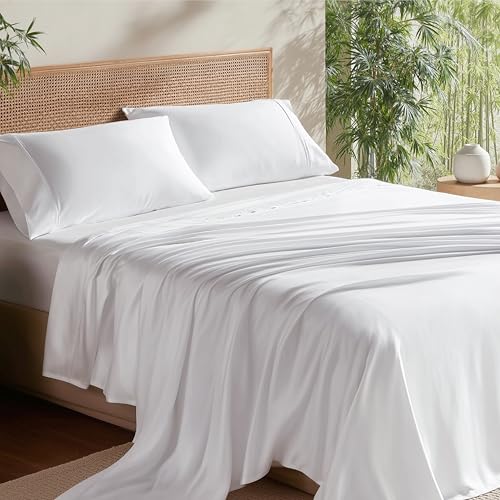
A comforter set pulls a bedroom together in one purchase, usually bundling the comforter with matching shams and sometimes a bed skirt or decorative pillows. Because fill, fabric and construction vary so much, two sets that look alike online can feel and wear very differently once they reach your bed.
We have not used these products ourselves, so this guide makes no claims about comfort or results. It shows how to choose: which features matter, what to check on a listing and the mistakes that lead to returns. Use it to narrow your options before you compare the sets below. Remember that bedding is personal, so weigh each feature against your own preferences and laundry habits.
As an Amazon Associate we earn from qualifying purchases. Links on this site are affiliate links, and they do not change the information we give.
In this guide
Quick Picks
| Pick | Product | Best For |
|---|---|---|
| 1 | Bedsure Bed in a Bag Queen 7-Piece Set | Best complete set |
| 2 | Bedsure GentleSoft Queen Comforter Set 3-Piece | Best simple all-season set |
| 3 | CozyLux Seersucker Queen Comforter Set 7-Piece | Best textured look |
| 4 | Madison Park Wynne Reversible Sherpa Comforter Set | Best for cold sleepers |
| 5 | Madison Park Dallas Corduroy Comforter Set 7-Piece | Best dressed-up set |
Our Picks

1. Bedsure Bed in a Bag Queen 7-Piece Set — Best Complete Bed-in-a-Bag
This seven-piece Bedsure set is the full refresh in one box: a down-alternative comforter with a pintuck finish, a sheet set, pillowcases and shams, so the whole bed changes in a single purchase — exactly the included-pieces check the guide tells you to make before comparing sets. The sage green colourway suits calm, neutral bedrooms, and the pintuck texture adds interest without a busy print, which also makes the comforter easy to pair with plainer bedding you already own. Down-alternative fill gives an even, all-season warmth profile that the guide rates as the practical default for most sleepers, and synthetic fill tolerates machine washing far better than natural down when the inevitable full-set wash day comes. Queen sizing gives standard drape on a queen mattress; check the guide’s sizing notes if your mattress is especially deep. For a guest room, a first flat or a quick bedroom reset, this is the most complete package in the group.


2. Bedsure GentleSoft Queen Comforter Set 3-Piece — Best Simple All-Season Set
The GentleSoft set strips things back to the essentials the guide says most people actually need: one 90 × 90 inch queen comforter and two pillowcases, nothing superfluous to store. The fabric is prewashed for softness from the first night, and the down-alternative fill is pitched at all-season use — warm enough for winter under a throw, light enough not to stifle in summer. A simpler set also washes more easily: fewer pieces, a lighter comforter, and less time in the machine and dryer, which the guide flags as the practical limit for many home washers. The plain styling works under a duvet cover if you later want a pattern change, or on its own in a minimal bedroom. Dark red is one of several colourways on the listing, so check the current options. Choose this set if you value straightforward care and year-round versatility over a big bundle of matching extras.

View Bedsure GentleSoft Queen Comforter Set 3-Piece on Amazon
3. CozyLux Seersucker Queen Comforter Set 7-Piece — Best Textured Look
CozyLux’s seersucker set brings texture to the bed: the puckered woven finish in burnt orange gives a relaxed, slightly rumpled look that hides everyday creases far better than flat microfiber, which the guide notes matters for beds that are seen all day. The seven pieces include the 88 × 88 inch queen comforter plus sheets, pillowcases and shams — a full bed-in-a-bag line-up. The comforter uses whole-piece microfiber fill rather than loose clusters, which helps it keep an even loft through washing and reduces the cold spots caused by fill shifting, tying into the guide’s stitching and fill-distribution checks. Seersucker’s texture also keeps the fabric slightly off the skin, a small comfort bonus for warm sleepers. The set is 100% microfiber, so it dries quickly and resists wrinkling after the wash. Pick it if you want colour and texture to do the decorating work in an otherwise plain room.
View CozyLux Seersucker Queen Comforter Set 7-Piece on Amazon
4. Madison Park Wynne Reversible Sherpa Comforter Set — Best for Cold Sleepers
The Wynne set is built for winter: a plush comforter that reverses to sherpa fleece, giving you two warmth levels in one piece — plush side up for milder nights, sherpa against the bed when temperatures drop. That reversibility is precisely the flexibility the guide recommends for changeable seasons, and it saves buying separate summer and winter sets. The Full/Queen three-piece set includes the comforter and matching shams, keeping the bundle focused on warmth rather than extras. Down-alternative filling under the fleece faces provides loft without the care demands and cost of real down, and the whole set is designed for home washing. Sherpa does add bulk, so check your machine’s capacity against the guide’s care notes before the first wash. Colourways on the listing include grey, a safe match for most rooms. If your household runs cold and the heating bills show it, this is the cosiest pick in the group.
View Madison Park Wynne Reversible Sherpa Comforter Set on Amazon
5. Madison Park Dallas Corduroy Comforter Set 7-Piece — Best Dressed-Up Traditional Set
The Dallas set is the most formally dressed option here: a corduroy comforter in casual block patterning, supplied as a seven-piece queen set with a matching bed skirt and decorative pillows as well as shams. Those extras matter — the guide points out that a bed skirt hides under-bed storage and finishes rooms where the frame shows, and included cushions complete the styled look without a separate shopping trip. The queen comforter measures 90 × 90 inches for a standard drape. Corduroy’s ribbed pile gives the bed visual weight and texture suited to traditional and transitional bedrooms, in a taupe brown palette that pairs widely. As a fuller, heavier bundle it is also the most washing to manage, so plan the laundry rotation the guide suggests. Choose the Dallas if the goal is a coordinated, made-bed look for a main or guest bedroom rather than minimalist layering — it is the decorator’s pick of the five.
View Madison Park Dallas Corduroy Comforter Set 7-Piece on Amazon
What to Look For
| Factor | Why it matters | What to check |
|---|---|---|
| Size | A set that is too small leaves the mattress edges bare. | Match the listed dimensions to your mattress depth, with overhang on both sides. |
| Fill type | Down alternative, polyester and natural fills feel and weigh differently. | Read the fill description and the stated fill weight. |
| Outer fabric | Affects feel, look and how it handles washing. | Compare cotton, microfiber and blends as described by the maker. |
| Stitching and baffles | Keeps the fill from shifting into clumps. | Look for box, channel or diamond stitching and reinforced edges. |
| Included pieces | Sets differ in what is bundled. | Count shams, skirts and pillows, and check their sizes. |
| Colour and pattern | Photos can differ from real light. | Check whether it is reversible and read the colour description. |
| Care instructions | Large items may not fit a home machine. | Check the label for machine washing, drying and any size limits. |
Setup and Care Tips
- Wash new bedding before first use if the label allows it.
- Shake out and fluff the comforter regularly to keep the fill even.
- Add a removable cover layer if you want easier laundering.
- Dry on a low setting with a few clean dryer balls when the label permits.
- Store out of season sets in a breathable bag, not sealed plastic.
Mistakes to Avoid
- Ordering by bed name without checking mattress depth.
- Judging warmth by a thick photo instead of the stated fill weight.
- Ignoring the care label and shrinking the fabric.
- Assuming every set includes a bed skirt.
- Choosing a pattern without checking how the colours read in daylight.
Warmth, Seasons and Sleep Temperature
Choosing a comforter set starts with how warm you want to be. People sleep at very different temperatures, and the same bed can feel cosy in winter and stuffy in summer. Listings often describe a set as lightweight, all-season or extra warm, but these words are not standardised, so treat them as rough guides. The stated fill weight, where given, tells you more than a label, and a thicker-looking comforter is not automatically warmer.
Start with your bedroom. A well-heated room with a partner who runs warm may suit a lighter comforter, while a cool room or a person who feels the cold may need more fill. If you share a bed and have different preferences, consider whether one comforter with extra blankets for one side will work better than a single heavy layer. Layering is flexible: a lighter comforter plus a throw or a blanket you can add or remove adapts easily to the seasons.
Think about the sheets and mattress. A mattress that retains heat, or synthetic sheets that trap warmth, will change how the comforter feels. Breathable fabrics such as cotton help moisture escape, while some synthetic materials can feel warmer. If you often wake overheated, lean towards a lighter set or breathable fabrics.
- Check the stated fill weight and description.
- Consider your room temperature and your own sleep habits.
- Remember that you can add layers, but cannot remove fill.
Look at what the maker says about seasonal suitability, and read it alongside your own needs.
Fill and Fabric Choices in Detail
Fill is what gives a comforter its loft and warmth. Down-alternative fill is made from synthetic fibres, usually polyester, designed to mimic the soft, fluffy feel of natural down without using animal products. It is common in comforter sets, often easier to wash and a good option for people who avoid feathers. Polyester batting is flatter and can be firm or light, depending on how it is made. Natural fills such as cotton, wool or down offer different feels and care needs, and each has its own advantages and trade-offs; check the listing for the fill type and any care notes.
The outer fabric affects the feel on the skin and how the comforter handles washing. Cotton is breathable and often feels soft, though it can wrinkle. Microfiber is usually smooth, resists wrinkles and is often easier to care for, but can feel warmer to some sleepers. Blends combine the properties of both. Look for a description of the weave and finish, and keep in mind that terms like “brushed” or “sateen” describe the feel, not quality.
Allergies can influence the choice. If someone in your home is sensitive to feathers or dust, consider fills described as hypoallergenic, but treat this as a maker’s description and check the care label for washing. Anyone with serious allergies should talk to a health professional about bedding choices.
Finally, consider the edge finish: a bound edge or piping adds durability, and a flat edge may fray sooner. Look for photos showing how the corners are finished.
Stitching Patterns and Keeping Fill in Place
How a comforter is stitched decides whether the fill stays spread or shifts into lumps. Box stitching uses a grid of lines to create small compartments, holding the fill in place and keeping the surface even. Channel stitching uses parallel lines, which can look neat but may allow fill to move along the channels if the stitching is loose. Diamond or quilted patterns offer a decorative look and hold the layers together. Some sets have a baffle-box construction with fabric walls inside to give the fill more room, and the listing may describe this as a feature.
When looking at photos, check how closely the stitching is spaced. Wide gaps can allow more movement, while very tight stitching can compress the fill, reducing loft. Inspect the quality of the thread: look for even, secure stitches and reinforced corners, which are subject to the most stress during washing and use.
Reversible comforters have a different pattern or colour on each side, which gives flexibility. Check whether both sides are described the same in terms of fabric and softness, since some are plain on one side.
When your comforter arrives, give it a day or so to relax out of its packaging and regain loft before judging it. Then shake it out and look for loose threads, uneven fill and any odour. If something is off, check the return policy straight away. Keeping a few photos of any issue helps if you need to contact the seller.
Sizing, Shams and the Rest of the Set
Bed sizes sound standard but can be confusing, so verify the measurements rather than relying on the size name. Measure your mattress width, length and depth. Deeper mattresses and those with toppers need more fabric to cover the sides. Compare your measurements with the comforter dimensions in the listing, remembering that you want enough drop on each side to cover the mattress edge to the degree you prefer. If you use a box spring and a bed skirt, think about how much of the base you want to show.
Pay attention to what the set includes. Many sets bundle a comforter with matching shams, and some add a bed skirt, decorative cushions or a throw. Count the items and check each one’s size. Shams come in different sizes to suit standard, queen or king pillows, so match them to the pillows you own. Decorative pillows add colour but also add care and storage needs, so decide whether you need them.
Think about how the set fits your existing bedding. If you already have sheets in a certain colour, check that the new set coordinates in different lights, and consider how the pattern works with other rooms nearby. If you have pets or children, consider darker or patterned fabrics that hide marks.
Finally, check whether the shams have a flange or are tailored, and how they close. Envelope closures and zippers are common, and a secure closure keeps pillows from slipping out.
Washing, Drying and Extending the Life of a Set
Following the care label is the most important rule. Check whether the comforter can be machine washed at home, whether it needs a large-capacity machine and whether the label suggests a particular cycle or temperature. A bulky comforter can overload a small machine, reducing cleaning effectiveness and putting strain on the drum. If it will not fit, a laundromat with a larger machine, or a professional cleaner, may be the right choice.
Use a mild detergent in the amount recommended, and avoid fabric softener unless the label allows it, since it can coat fibres and reduce loft. Rinse thoroughly, and dry on a low setting as the label permits, adding a few clean dryer balls or tennis balls to help fluff the fill. Check the comforter several times during drying and make sure it is completely dry, as damp fill can develop a musty smell. Air drying outdoors in shade is another option if the label allows it.
Protect the set between washes. A duvet cover or top sheet keeps body oils away, and airing the comforter in fresh air occasionally helps. Spot clean small marks with a damp cloth and mild soap rather than washing the whole item.
Signs that it is time to replace include flat or lumpy fill that does not recover, thinning fabric, seams that open, persistent odour and a colour that has faded heavily. When replacing, use your notes on size, warmth and care to choose a better match.
Choosing comforter sets With Confidence: A Deeper Buying Guide
The shortlists above give you the contenders. This section slows the decision down and looks at what actually separates a purchase you will be pleased with for years from one that quietly disappoints — written for homeowners refreshing a bedroom, guest-room hosts, and anyone choosing a complete bedding look without coordinating separate pieces. None of it depends on any single model: apply these tests to every pick in this guide and the right choice for your situation usually becomes obvious.
Start with where the comforter sets will live and work: a main bedroom, guest room, or child’s room where the set must look finished and wash without drama. Then be precise about your exact mattress size — including whether pillows and shams are standard or king — and how warm your room and your sleeping partner run through the year. Buyers who write those two things down before comparing models make measurably better decisions than buyers who start with features, because features only matter in the context of a real space and a real pattern of use.
What is actually in the set
Piece counts vary widely: some sets are a comforter and shams, others add sheets, decorative pillows, and bed skirts. Compare the picks in this guide by what you will genuinely use, not by the biggest number on the packaging. A seven-piece set whose skirt and extra cushions live in a cupboard is worse value than a three-piece set used completely every week, and the unused pieces still have to be stored somewhere.
Warmth matched to your room and season
Fill weight and fabric decide whether a set sleeps cool in summer or cosy in January. Households that keep one set all year should choose the middle path and adjust with a throw or an open window; those who swap seasonally can choose more decisively. Read each pick’s description of its intended warmth against your own room — a north-facing bedroom and a sunny loft are different climates under the same roof.
Fabric hand-feel and care
The surface fabric is what your skin actually meets, and its weave decides softness, breathability, and how it survives washing. Smooth, tightly woven fabrics tend to wash and wear evenly; textured and brushed finishes feel cosier but ask for gentler handling. Check the care instructions for each pick before buying: a set that needs special washing will quietly become the set you avoid using on busy weeks.
Construction that keeps fill in place
Baffle, channel, and stitched-through patterns each hold fill differently, and the difference shows after a year of washing: even fill sleeps evenly, migrated fill leaves cold patches. Look at how each pick in this guide describes its stitching, and favour the construction that suits your washing routine — frequent washers benefit most from patterns that lock fill into smaller sections.
Colour, pattern, and reversibility
A comforter set is the largest visual surface in the bedroom, so choose for the room you have: light levels, wall colour, and how much pattern the rest of the room already carries. Reversible designs earn their keep by giving the room two looks and by spreading wear across both faces. If a pick offers a calmer reverse side, that is genuinely useful for guest rooms that must suit everyone.
Comforter sets in Real Life: Common Ways They Are Used
Specifications describe a product on its first day; use cases describe its life. Here are the patterns of use that the picks in this guide are actually bought for, and what each pattern rewards. Find the one closest to your own plans and let it steer your choice — a pick that is perfect for one of these patterns can be merely adequate for another, and knowing your pattern is worth more than any single feature.
A full bedroom refresh in one purchase
When a room is being repainted or a new bed arrives, a complete set finishes the look in a single decision — no hunting for shams that match a separately bought comforter. Lay the set out before committing the rest of the room’s colours around it, and photograph it in daylight and lamplight; fabrics shift character between the two, and the evening look is the one you will live with most.
Guest-room readiness
Guest bedding must suit unknown sleepers: middle warmth, a feel that is soft without being delicate, and washing that returns it to fresh quickly between visits. Sets from this guide with straightforward care and a reversible face are ideal — flip the look between guests and the room feels newly made. Keep the spare pillows and any extra pieces stored with the set so changeover day needs no searching.
Students and first homes
For a first bed away from home, one box that delivers the whole bed — comforter, shams, and in some picks sheets too — removes a dozen small decisions and purchases. Prioritise easy washing and drying, because laundry facilities may be shared and time is limited. A hard-wearing pick that forgives an imperfect wash routine will look better in month six than a delicate set that needed care it never got.
Seasonal swapping
Households that keep two sets — light and warm — should choose each decisively rather than compromising twice. The summer set wants breathability and a bright, airy look; the winter set wants loft and depth of colour. Store the off-season set clean, fully dry, and loosely packed so its fill recovers its loft quickly when its season returns, and label the storage bag to end the annual guessing game.
Getting the Most From Your Comforter sets: Use, Care, and Keeping It Working
Most disappointment with products like these is not caused by the product at all, but by small gaps in setup and routine care that compound over months. The habits below apply across the picks in this guide; where a manufacturer’s own instructions differ for your specific model, follow theirs — they know their materials and mechanisms — but the rhythm of regular, light attention rather than occasional rescue applies everywhere.
Wash before first use, and wash smart
A first wash removes manufacturing finishes and loose fibres and lets the set settle into its true feel. Thereafter, wash on the maker’s recommended cycle with similar colours, avoid overloading the machine — a comforter needs room to move — and use a large-capacity machine for the biggest sizes rather than forcing your set into a drum where it cannot rinse clean.
Dry thoroughly, every time
Fill that stays damp in the middle clumps, smells, and loses loft. Dry until the centre feels completely dry, pausing to shake and redistribute the fill part-way if the maker allows tumble drying, or line-dry with regular turning in good airflow. Storing a set that is even slightly damp undoes all of this in a week, so the dryness check before folding is the most important minute of the whole routine.
Rotate, flip, and rest the set
Reversible sets should be flipped regularly to spread wear and fading; all sets benefit from a shake and airing on the bed between washes. If you own two sets, rotating them doubles the life of both. Between uses, store loosely in a breathable bag rather than vacuum-packed tight for months, which can leave fill slow to recover.
Treat stains promptly and gently
Deal with spills and marks as soon as you notice them, following the care label for your specific set — spot treatment first, full wash only if needed. The longer a stain sits through sleeps and warmth, the more permanent it becomes. Keep decorative elements — cushions and skirts where included — on the same schedule of freshening, or they will age visibly faster than the comforter they accompany.
How the Picks in This Guide Compare With Each Other
With the criteria above in mind, here is how the shortlist divides up. This comparison uses only what each product’s own review in this guide already says about it — its intended role and strengths — so you can match a pick to your pattern of use without re-reading the whole guide.
Bedsure Bed in a Bag Queen 7-Piece Set is positioned in this guide as best Complete Bed-in-a-Bag. Choose it if that role matches the pattern you identified in the use cases above, and value it for doing that job well rather than for being all things to all buyers. If your needs sit between two picks, the deciding question is which compromise you will notice weekly: the strength you use every day should win over the strength you might use twice a year. Readers who shortlist two finalists and re-read just those two reviews usually decide within minutes, because the difference that matters to them personally stands out once the field is narrowed.
Bedsure GentleSoft Queen Comforter Set 3-Piece is positioned in this guide as best Simple All-Season Set. Choose it if that role matches the pattern you identified in the use cases above, and value it for doing that job well rather than for being all things to all buyers. If your needs sit between two picks, the deciding question is which compromise you will notice weekly: the strength you use every day should win over the strength you might use twice a year. Readers who shortlist two finalists and re-read just those two reviews usually decide within minutes, because the difference that matters to them personally stands out once the field is narrowed.
CozyLux Seersucker Queen Comforter Set 7-Piece is positioned in this guide as best Textured Look. Choose it if that role matches the pattern you identified in the use cases above, and value it for doing that job well rather than for being all things to all buyers. If your needs sit between two picks, the deciding question is which compromise you will notice weekly: the strength you use every day should win over the strength you might use twice a year. Readers who shortlist two finalists and re-read just those two reviews usually decide within minutes, because the difference that matters to them personally stands out once the field is narrowed.
Madison Park Wynne Reversible Sherpa Comforter Set is positioned in this guide as best for Cold Sleepers. Choose it if that role matches the pattern you identified in the use cases above, and value it for doing that job well rather than for being all things to all buyers. If your needs sit between two picks, the deciding question is which compromise you will notice weekly: the strength you use every day should win over the strength you might use twice a year. Readers who shortlist two finalists and re-read just those two reviews usually decide within minutes, because the difference that matters to them personally stands out once the field is narrowed.
Madison Park Dallas Corduroy Comforter Set 7-Piece is positioned in this guide as best Dressed-Up Traditional Set. Choose it if that role matches the pattern you identified in the use cases above, and value it for doing that job well rather than for being all things to all buyers. If your needs sit between two picks, the deciding question is which compromise you will notice weekly: the strength you use every day should win over the strength you might use twice a year. Readers who shortlist two finalists and re-read just those two reviews usually decide within minutes, because the difference that matters to them personally stands out once the field is narrowed.
One final comparison habit is worth adopting: check the practicalities that surround each pick — dimensions, care requirements, and what is included — side by side, because those are the differences that survive after the excitement of delivery fades. The best comforter sets for you is the one whose daily reality fits your space, your routine, and your patience, and by that measure there is a right answer in the list above for almost every buyer.
More Mistakes to Avoid Before You Buy
Buying the wrong size for the look you want
A comforter that matches the mattress size exactly gives a neat, tailored drop; sizing up gives the draped, hotel look and coverage for restless sleepers. Neither is wrong, but ordering one while picturing the other is the most common bedding disappointment. Check each pick’s dimensions against your mattress depth and the drop you want on each side before choosing.
Judging warmth by loft alone
A lofty set is not automatically a warm set — fill type and fabric matter as much as thickness, and some high-loft sets sleep surprisingly cool. Read the warmth description of each pick rather than its photograph, and think about your own room and bedding layers. Couples who disagree on temperature often solve it with a middle-weight set plus an individual throw, not with the warmest set in the guide.
Ignoring the care label until wash day
Discovering that a set needs a commercial-size machine or special handling when it is already dirty is a miserable surprise. Read care requirements as part of choosing, and be honest about your laundry reality: your machines, your time, your tolerance. The best set in this guide is the best one you will happily wash — because bedding that is washed often is bedding that stays lovely.
Taken together, these mistakes share a theme: they are all decisions made in a hurry, before measuring, before reading the care requirements, or before thinking honestly about how the comforter sets will be used in an ordinary week. Slow down for the measurements and the manual, and the picks in this guide will reward you. Rush, and even an excellent product can end up feeling like the wrong one.
FAQ
What is the difference between a comforter and a duvet?
A comforter is a stitched, filled layer meant to be used as is, while a duvet is an insert that goes inside a removable cover. Many people choose a comforter for simplicity.
How often should I wash a comforter?
Follow the maker label. Many owners wash them a few times a year and use a top sheet or cover between washes to keep them fresh.
Do I need a duvet cover with a comforter?
Not necessarily, since a comforter is made to be used as it is. A cover can protect it and make laundering easier, so many people choose to use one.
How do I know which size to buy?
Measure your mattress width, length and depth, then compare with the dimensions in the listing. Allow for the drop you want on each side.
What does down alternative mean?
It describes synthetic fibre fill designed to feel like down. Check the listing for fill type and weight, and the care label for washing.
Can I wash a king-size comforter at home?
Only if the label allows machine washing and your machine is large enough. Otherwise use a larger commercial machine or a professional cleaner.
Why does my new comforter smell?
New bedding can carry a packaging odour. Airing it and washing it if the label allows usually helps.
Are matching shams worth it?
They coordinate the look and cover the pillows, but they need care and storage space. Check the sham sizes against your pillows.
How do I keep the fill from clumping?
Shake out and fluff the comforter regularly, and dry it on a low setting with a few clean dryer balls if the label permits.
How can I tell if a set is reversible?
The listing should say, usually with photos of both sides. Compare the fabric descriptions for each side.
How often should a comforter set be washed?
The comforter itself typically needs washing every few weeks to a couple of months depending on use, whether a top sheet or duvet cover takes the nightly contact, and household factors like pets on the bed. Shams and any sheets in the set follow your normal bedding rhythm, which is more frequent. When in doubt, wash sooner: sets are designed for regular washing when the care label is followed, and freshness is most of the pleasure of good bedding.
Why does my comforter look flat after washing?
Fill compresses when wet and needs thorough drying and a good shake to recover its loft. If it is fully dry and still flat, redistribute the fill by hand through the fabric, working it back into thin areas, and give the set an airing. Persistent flatness after careful drying usually means the fill has migrated — which is why the stitching pattern discussed in the criteria matters when choosing between picks.
Can I use a comforter set without a top sheet?
Many people do, and sets are designed to be slept under directly; it simply means the comforter takes nightly contact and should be washed more often. If your chosen set’s fabric feels good against skin and its care routine is easy, sleeping without a top sheet is perfectly practical. Households that wash less frequently often keep the top sheet as a sacrificial, easy-wash layer instead.
How do I stop the comforter bunching inside the bed?
Bunching is usually fill migration plus restless sleep. Smooth and shake the comforter when making the bed — ten seconds that resets the fill — and ensure the set is the right size so it is not being folded or forced into place. Sets whose construction locks fill into smaller sections, as described in the picks above, resist bunching best over years of use.
What is the best way to store a spare set?
Wash and dry it completely, fold it loosely, and store it in a breathable cotton bag or a ventilated box somewhere dry, away from direct heat. Avoid sealed plastic for long storage and avoid compressing it tightly for months. A note in the bag with the size and season saves confusion later — future you, changing beds in a hurry, will be grateful.
Do darker or patterned sets need different care?
They hide everyday marks better between washes, which is a genuine practical advantage, but they can show fading more if washed harshly, and light lint shows on deep colours. Wash inside out where the design allows, with similar colours, and follow the label rather than your habits. Patterned and reversible picks in this guide spread both wear and fading across two faces, which keeps them looking even for longer.
A last piece of advice for anyone choosing between the finalists in this guide: revisit the measurements and the pattern of use you identified at the start, and score each finalist against those two things alone. It is easy, late in a decision, to be swayed by a feature that sounds impressive but answers a problem you do not have. Your space and your routine are fixed facts; the right choice is the pick that fits them with the least friction, and that is true whether you buy today or after another week of thought.
It also helps to think about the second year, not just the first week. In the first week, everything about new comforter sets feels like an improvement. In the second year, what matters is whether the care routine has become an easy habit, whether the size still suits how your household has changed, and whether the product has settled into daily life so completely that you stop noticing it — which is, for equipment like this, the highest compliment there is. Choose the pick whose second year you can picture most comfortably.
Finally, keep the documentation that comes with your purchase, and note the date you put the product into service. A few lines in a notebook — when it was installed, what the first impressions were, when you performed each bit of maintenance — turn guesswork into knowledge the next time you shop in this category. Experienced buyers are not luckier than beginners; they simply remember, in writing, what their last purchase taught them, and they let those lessons steer the next one.
A Practical Planning Checklist Before You Order
Work through this checklist in order and you will catch nearly every problem that leads to returns in this category. First, confirm the space: measure it twice, note any obstructions, and compare the figures with the dimensions of your shortlisted picks rather than their photographs. Second, confirm the fit with your life: who will use the comforter sets daily, who will clean or maintain it, and where the accessories and consumables it needs will live. Third, confirm what is included in the box and what you must supply yourself, because a purchase that needs three extra items on day one is a different purchase from the one you budgeted for.
Fourth, think through delivery and placement before the order is placed. Will the packaged item pass through your doors, stairs, and gates? Where will it stand while you unpack and assemble or install it, and where will the packaging go? Fifth, read the care requirements one more time with your real routine in mind — not the routine you intend to start, but the one you actually keep in a busy month. A product whose care fits your real routine will still be performing well long after a fussier product has been quietly abandoned.
Sixth, decide in advance what would make you return or exchange the item: a dimension that does not fit, a level of noise or effort you did not expect, a finish that clashes with the room. Naming your deal-breakers before delivery makes the decision calm if it arises, instead of a debate conducted around a half-assembled product. Seventh and last, photograph the space and keep your measurements with the order confirmation, so that if you do need to contact the seller you have every fact to hand.
Questions Worth Asking Before You Commit
Whatever channel you buy through, a few questions separate confident purchases from hopeful ones. Ask what exactly is included and what is sold separately. Ask about the returns process for an item of this size, and who bears the cost of collecting it if it proves unsuitable — for larger products this single answer can matter more than small differences between models. Ask how spare parts and replacement components are obtained, and how long the range is expected to remain available, because a product you can maintain is a product you can keep.
Ask, too, about the manual: is it available to read before purchase? A clear, complete manual is one of the most reliable signs of a manufacturer that supports its products properly, and reading the setup and care sections in advance tells you more about daily ownership than any feature list. If the manual reveals a requirement your home cannot meet — a clearance, a supply, a maintenance product — discovering it before ordering is a success, not a disappointment. The picks in this guide were chosen partly on the strength of being well documented, so use that documentation.
The Short Version
Begin with the right size, then compare fill, stitching and care instructions. A set that fits your mattress and your laundry routine will be easy to live with. Check the care label before you commit, and keep the mattress depth in mind when you compare the models.