Disclosure: airfryerkitchensupply.com is reader-supported. When you buy through links on our site, we may earn an affiliate commission at no extra cost to you.
Where to buy
If you are comparing the best dry camping toilets worth your money, start with this verified shortlist. Every toilet below was confirmed against Amazon’s catalogue data before it earned a link, so the listing you open is the exact model reviewed. Dry-toilet pricing and bundle contents (bags, gel, media) change often, so each pick links to its live listing rather than a printed figure — and check what consumables are included before you compare.
- TRELINO Composting Toilet Evo S (White) — Check the current price on Amazon
- TROBOLO WandaGO Composting Toilet — Check the current price on Amazon
- Nature’s Head Self Contained Composting Toilet (Close Quarters Spider Handle) — Check the current price on Amazon
- Separett Tiny Self-Contained Urine-Separating Compost Toilet — Check the current price on Amazon
- Folding Camping Toilet with Carry Bag, Waste Bags & Poo Gel — Check the current price on Amazon
- OGO Origin Compact Composting Toilet — Check the current price on Amazon
One honest note on the category: a ‘dry’ camping toilet uses no flush water. That covers urine-diverting composting toilets, bag-and-gel systems, and dry flush sealing toilets. Cassette toilets that flush with water are a different category and are not padded into this list — every pick here works with zero water, which is the point when you are camping away from hookups.
The best dry camping toilets share one defining trait: no water, no plumbing, no dump-station queue. Instead they manage waste the dry way — separating urine from solids so odour never gets started, composting solids with a carbon medium, sealing each use into a bag with gel, or wrapping it away with a dry flush mechanism. For tent campers, van lifers, overlanders and boat campers, that means a toilet that works anywhere, freezes without cracking, and never asks you to carry a sloshing cassette to a chemical disposal point. This guide ranks six verified dry options from a proper composting all-rounder to a folding bag system that packs flat in a car boot.
Choosing well matters more than with most camping gear, because the failure mode is unforgettable. The questions that decide satisfaction are practical: how many days between emptying, where the urine goes, what it costs per trip in bags or media, how tall the seat sits, and whether the whole thing seals tightly enough to travel in a vehicle without announcing itself. The reviews and buying guide below answer those in order, with the consumable maths stated plainly so a cheap toilet with expensive habits does not catch you out.
A word about what this guide leaves out, because the exclusion is deliberate: the familiar blue-chemical cassette toilets and simple bucket lids are not here. Cassette toilets flush with water and chemicals, which is a fine system with its own roundup elsewhere, but it is not dry — and in freezing weather, on long carries, or anywhere disposal points are scarce, the dry systems in this guide are simply the better tool. Bucket-and-bag minimalism is represented honestly by the folding pick, in its proper role as the occasional-use option.
In this guide
Quick Picks
Six dry camping toilets, four technologies. The badges map to how you camp — start with your trip length and vehicle space, then pick your system.
- TRELINO Composting Toilet Evo S (White) — Best Overall: a urine-diverting composting toilet with 1.2 gal urine and 1.6 gal solids capacity in a compact, vehicle-friendly body — the balanced dry toilet for most campers. Check price on Amazon.
- TROBOLO WandaGO Composting Toilet — Best Height-Adjustable: a urine-diverting dry toilet with height adjustment — the one that adapts its seat height for children, shorter users or low vehicle floors. Check price on Amazon.
- Nature’s Head Self Contained Composting Toilet (Close Quarters Spider Handle) — Best for Long Trips: the expedition-grade composting toilet — a churned compost chamber with serious solids capacity for weeks of use between emptying, in the close-quarters handle version for tight installs. Check price on Amazon.
- Separett Tiny Self-Contained Urine-Separating Compost Toilet — Best for Vans: Separett’s van-sized separating toilet with a built-in urine container and an emptying sensor that tells you before it overflows — designed for vehicles from the ground up. Check price on Amazon.
- Folding Camping Toilet with Carry Bag, Waste Bags & Poo Gel — Best Budget Bag System: the pack-flat answer — a folding toilet that uses waste bags and absorbent gel, sold with 15 bags and 15 gel packs and its own carry bag for road trips and emergencies. Check price on Amazon.
- OGO Origin Compact Composting Toilet — Best Compact Composting: a compact composting toilet with a 15-inch footprint made for vans, RVs and boats — proper composting in the space of a small portable. Check price on Amazon.
How These Picks Were Chosen
Picks were chosen technology-first, because in this category the system matters more than the brand: urine-diverting composting toilets for multi-day and repeated use, a bag-and-gel folder for occasional and emergency use, and high-capacity composting for long trips. Every candidate then had to be confirmed against Amazon’s catalogue data — brand, model and listing matched — before it could carry a link; models we could not confirm were excluded rather than described from reputation.
We weighted odour control above everything, because it is the product: a dry toilet that smells has failed regardless of its other virtues. After that came emptying interval relative to trip length, seat height and stability on uneven ground, how completely the unit seals for transport, and the running cost in bags, gel or compost medium per week of camping. Weight and packed size decided the order within each technology class, since every camping toilet competes for vehicle space.
A note on honesty in this category: manufacturers’ ‘days of use’ figures assume ideal use by tidy adults. We have written the reviews around realistic mixed use — a couple, imperfect aim, warm weather — because that is the camping you will actually do.
Field practicality checks shaped the final order. We looked at whether containers can be removed without tilting the whole toilet (a full urine bottle punishes awkward extraction), whether caps and seals are glove-friendly on a cold morning, and whether the unit can be carried one-handed when the other hand holds a torch. Two diverting toilets with excellent paper specifications were ranked down for bottle extraction that requires two hands and a knee — the kind of flaw that only appears at 6 a.m. in the rain, which is exactly when a camping toilet must work.
The 6 Best Dry Camping Toilets
Each review states the system it uses in the first line, because with dry toilets the technology is the decision. Strengths, trade-offs, verified specification points and a verdict follow the same pattern throughout.

TRELINO Composting Toilet Evo S (White) — Best Overall
A urine-diverting dry toilet: liquids and solids are separated at the seat, which is the single most effective odour strategy there is, because the smell campers fear is mostly the two mixing. The Evo S pairs a 1.2-gallon urine container with a 1.6-gallon solids container in a compact body sized for vans, car boots and tent vestibules, and it is the dry toilet we would hand to most campers without a qualifying speech.
Strengths
- Urine separation keeps odour genuinely minimal without chemicals or power
- Compact body fits vans, cars and small tents while seating like a real toilet
- Containers lift out separately, so emptying is a small, dignified job
Trade-offs
- Solids capacity suits a couple for a long weekend, not a family for a week
- Uses compostable bags or litter medium in the solids side — a small running cost
- Sitting height is lower than a home toilet, which some users feel in the knees
| System | Urine-diverting dry (composting) toilet |
| Capacities | 1.2 gal urine / 1.6 gal solids (per Amazon listing title) |
| Power/water | None required |
| Verified via | Amazon listing title, 2026-11-21 |
The Evo S gets the fundamentals right: the diverter geometry actually works for both sexes sitting down, the urine bottle has a proper sealing cap for transport, and the solids side takes a bag and a scoop of litter or coconut coir that keeps everything dry and covered. In a van it can travel full without smell, which is the test most portable toilets fail by day two.
Capacity is the honest limit. Two people will fill the urine bottle in about two days — emptying it is a thirty-second pour onto a suitable spot away from water or into any toilet — and the solids side wants attention after a long weekend. Campers who accept that rhythm get the best dry-toilet experience per unit of space and money on this list.
One habit makes the Evo S ownership experience: keep a small, dedicated kit with it — spare bags, a scoop of medium in a sealed tub, gloves and a headtorch — stored in the same bag or box the toilet travels in. Dry toilets reward the organised out of all proportion to the effort, and the campers who love them are, without exception, the ones who built the kit.
Best for: couples and solo campers in vans, cars and tents wanting a proper dry toilet / Not suited for: large families or week-long static camps without emptying access
Check on Amazon to see the current listing, options and delivery details.

TROBOLO WandaGO Composting Toilet — Best Height-Adjustable
A urine-diverting dry toilet built around a detail rivals skip: height adjustment. The WandaGO lets you set the seat height to suit the user and the space, which matters in campervans with raised floors, for children who cannot perch safely on a tall unit, and for anyone whose knees object to the deep squat of very low camping toilets. TROBOLO’s wooden-bodied construction also makes it one of the sturdier-feeling portables here.
Strengths
- Height adjustment suits children, shorter users and raised van floors
- Urine diversion keeps the system odour-light without power or chemicals
- Solid, furniture-like build feels stable on the move
Trade-offs
- Heavier and bulkier than the lightest folders — it is a vehicle toilet, not a backpack one
- Wooden construction wants wiping dry and indoor storage between trips
- Premium-leaning tier among portable dry toilets
| System | Urine-diverting dry toilet |
| Signature feature | Height adjustment (per Amazon listing title) |
| Power/water | None required |
| Verified via | Amazon listing title, 2026-11-21 |
Seat height sounds trivial until you watch a child wobble on a too-tall portable or an older camper struggle up from a too-low one. The WandaGO’s adjustment range covers both, and the stable base means the toilet does not skate on a van floor under way when properly secured. The diverter and containers follow the proven urine-separating pattern, with solids managed in a bag with litter.
Buy it as the family-and-van option: less portable than the Trelino in absolute terms, more adaptable than anything else here. If your camping includes mixed heights of human, this is the dry toilet that fits them all.
The WandaGO also deserves credit for stability under real conditions: its base and build make it the pick least likely to rock on grass or gravel, and for older campers or anyone unsteady, that confidence matters as much as the height adjustment. A toilet you trust is a toilet you use properly — sitting, settled, unhurried — and proper use is what keeps any dry system odour-free.
Best for: families and van campers who need adjustable seat height and a sturdy build / Not suited for: weight-critical or minimalist car campers
Check on Amazon to see the current listing, options and delivery details.
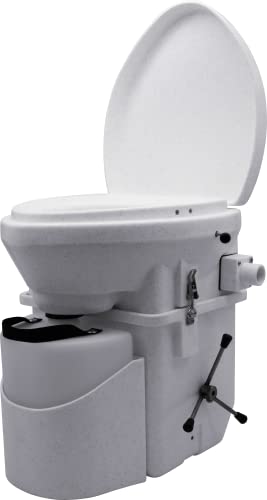
Nature’s Head Self Contained Composting Toilet (Close Quarters Spider Handle) — Best for Long Trips
A true composting toilet with an agitator: solids drop into a chamber with coconut coir or peat medium and a turn of the spider handle after each use starts real composting, while urine diverts to its own bottle. The result is the longest emptying interval of any pick here — weeks for a couple — which is why Nature’s Head is the default fit in expedition vehicles, boats and off-grid cabins as well as serious camping setups.
Strengths
- Agitated compost chamber gives the longest solids interval on this list
- Urine diversion plus a vent fan keeps odour near zero when installed well
- Close Quarters spider handle version suits tight vehicle and boat spaces
Trade-offs
- Needs a 12V connection for the vent fan to work as designed
- Largest and heaviest pick here — a semi-permanent install, not a pack-away
- Highest tier pricing, and the medium is a recurring purchase
| System | Composting with agitator handle; urine diverting |
| Handle | Close Quarters Spider Handle (per Amazon listing title) |
| Ventilation | 12V fan-assisted (standard for the model) |
| Verified via | Amazon listing title, 2026-11-21 |
The difference between this and the simpler diverting toilets is time. A bag-based solids container is a holding exercise; the Nature’s Head chamber is a process — the medium, moisture balance and churning steadily convert solids so the chamber keeps accepting use for weeks, and when you do empty it, the contents are substantially composted rather than fresh. For a month-long overland trip or a boat, that changes the entire logistics of the toilet.
The costs are installation and commitment: it wants bolting down, venting to outside air and a 12V feed, and it is priced like equipment rather than an accessory. Campers doing weekends should buy the Trelino and keep the change; campers measuring trips in weeks should buy this and stop thinking about toilets entirely.
For vehicle installs, one planning note: the vent route decides the mounting position more than the floor space does. Sketch the hose run to the outside vent before drilling anything, keep it short and rising gently, and the fan will do its quiet work for years. Owners who plan the vent first report the famous ‘we forget it’s a composting toilet’ experience; owners who improvise it sometimes chase smells that are really airflow problems.
Best for: long trips, expedition vehicles, boats and semi-permanent camp setups / Not suited for: weekend campers or anyone wanting a pack-flat, no-install toilet
Check on Amazon to see the current listing, options and delivery details.

Separett Tiny Self-Contained Urine-Separating Compost Toilet — Best for Vans
A urine-separating dry toilet engineered specifically for vans and small spaces: the Tiny is self-contained, its urine container is built in with a sensor that warns before it needs emptying, and the solids side uses a bag with no additives or mixing required. Separett is a long-established Swedish maker of separating toilets, and the Tiny is their answer to the campervan market’s very tight cupboards.
Strengths
- Built-in urine container with emptying sensor prevents the classic overflow
- Compact, self-contained design made for van conversions
- No additives or churning — bag out, bag in, done
Trade-offs
- Bag-based solids mean a per-trip consumable cost
- Premium tier for its size class
- Capacity suits one to two people; families will empty often
| System | Urine-separating, self-contained |
| Urine handling | Built-in container with emptying sensor (per Amazon listing title) |
| Additives | None needed |
| Verified via | Amazon listing title, 2026-11-21 |
The sensor is the detail that sells it to van lifers: the number one separating-toilet accident is an overfilled urine container discovered too late, and the Tiny simply tells you first. Everything else follows the proven Separett pattern — effective diversion, a fan-assisted vent on the standard install, and solids that leave in a sealed bag without ceremony.
It is priced like the specialist it is, and its capacities are van-sized rather than family-sized. For a couple converting a van or running a small camper, it is arguably the most thought-through dry toilet here; for tent campers with boot space to spare, the Trelino does the same job for less.
The Tiny’s sensor points at a broader truth about van life: the best systems are the ones that warn you before they need you. Between the urine alert, the simple bag change and the sealed transport, this is the dry toilet most aligned with how van life actually runs — long drives, small routines, no desire to think about the toilet at all between its brief, scheduled moments.
Best for: van conversions and small campers wanting a fitted, sensor-equipped dry toilet / Not suited for: families or budget-first buyers
Check on Amazon to see the current listing, options and delivery details.

Folding Camping Toilet with Carry Bag, Waste Bags & Poo Gel — Best Budget Bag System
A bag-and-gel dry toilet in folding form: the frame sets up in seconds, a waste bag lines it, gel powder absorbs liquids and controls odour, and afterwards the bag is sealed and binned responsibly. It arrives as a complete kit — carry bag, 15 waste bags and 15 gel packs per the listing — and folds flat enough to live in a car boot, under a bed or in an emergency cupboard.
Strengths
- Folds flat and travels anywhere — the most portable pick here
- Complete starter kit with bags and gel included
- Lowest-cost route into dry camping toilets
Trade-offs
- Every use consumes a bag and gel — the highest per-use cost here
- Frame seating is adequate, not luxurious, for larger adults over long trips
- Bags must be disposed of responsibly; not a leave-no-trace-in-place system
| System | Bag-and-gel dry toilet, folding |
| Included | Carry bag, 15 waste bags, 15 poo gel (per Amazon listing title) |
| Power/water | None |
| Verified via | Amazon listing title, 2026-11-21 |
Judge this format by its job: occasional nights, road-trip emergencies, festivals, keeping in the car for children on long drives, and power-cut or works-at-home backup. For those jobs the folding bag toilet is unbeatable — nothing to install, nothing to clean beyond wiping the frame, and a packed size nothing else here approaches.
Judge it just as clearly by what it is not: a daily toilet for a month of van life, where bag costs mount and a diverting toilet pays for itself. The per-use maths is in the buying guide below; for light and occasional use, this is the sensible spend.
Do the honest storage maths for this pick: the toilet folds flat, but its consumables do not — a week of family use is a brick of bags and gel sachets that also needs a home in the vehicle. For weekend and emergency use the maths is trivial; it only becomes a planning item on longer trips, which is precisely the boundary this guide draws around the format.
Best for: occasional campers, road trips, festivals and emergency backup / Not suited for: daily long-term use, where consumable costs dominate
Check on Amazon to see the current listing, options and delivery details.
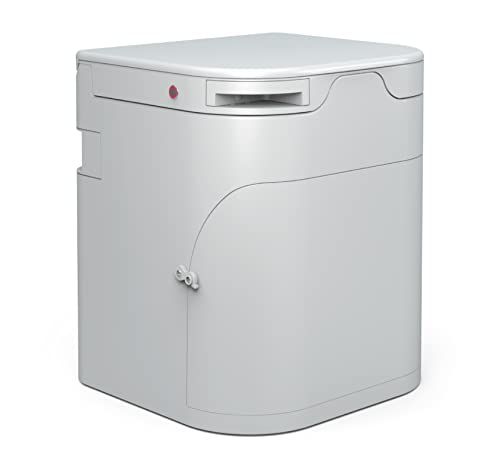
OGO Origin Compact Composting Toilet — Best Compact Composting
A compact composting toilet: the OGO Origin fits a genuine composting system — urine diversion plus an agitated solids chamber — into a 15-inch footprint the listing aims squarely at vans, RVs and boats. It is the pick for campers who want composting’s long intervals and low consumable cost but cannot give a Nature’s Head-sized unit the room.
Strengths
- Real composting in a 15-inch footprint
- Urine diversion keeps odour down and intervals long
- Purpose-built for van, RV and boat installs
Trade-offs
- Smaller chamber means shorter intervals than the full-size Nature’s Head
- Wants a vent and power for the fan, like other true composters
- Premium tier relative to simple diverting toilets
| System | Compact composting, urine diverting |
| Footprint | 15 in (per Amazon listing title) |
| Made for | Van, RV and boat (per Amazon listing title) |
| Verified via | Amazon listing title, 2026-11-21 |
The Origin’s trick is proportion: everything the big composters do, scaled to a footprint that fits a van’s wet-room cupboard or a boat’s heads compartment. The compost chamber is smaller, so a couple should expect to empty solids more often than the Nature’s Head schedule — think weekly-plus rather than monthly — but the consumable cost stays at the price of coir or medium, not a stream of proprietary bags.
If your vehicle has the 15 inches and a route for a vent hose, this is the most complete dry toilet that will fit in it. If it does not, the Separett Tiny and Trelino cover the same trips with simpler, bag-based solids.
The Origin rewards owners who treat it as installed equipment rather than a portable: bolted, vented and powered once, properly, it then behaves like a fixture for seasons at a time. That install-once character is the real difference between it and the portable separators in this list, and it is why vehicle builders, rather than tent campers, are its natural buyers.
Best for: van, RV and boat owners wanting true composting in minimal space / Not suited for: tent campers or anyone avoiding a vented install
Check on Amazon to see the current listing, options and delivery details.
Comparison Table
Systems first: diverting toilets (Trelino, TROBOLO, Separett) minimise odour with minimal fuss; true composters (Nature’s Head, OGO) maximise intervals; the folder minimises cost and packed size.
| Pick | Badge | Key spec | Best for |
|---|---|---|---|
| TRELINO Composting Toilet Evo S (White) | Best Overall | Urine-diverting, 1.2 + 1.6 gal containers | Most campers |
| TROBOLO WandaGO Composting Toilet | Best Height-Adjustable | Urine-diverting, height adjustable | Families, mixed heights |
| Nature’s Head Self Contained Composting Toilet (Close Quarters Spider Handle) | Best for Long Trips | Agitated compost chamber, urine diverting | Weeks-long trips |
| Separett Tiny Self-Contained Urine-Separating Compost Toilet | Best for Vans | Urine-separating, sensor, self-contained | Van life |
| Folding Camping Toilet with Carry Bag, Waste Bags & Poo Gel | Best Budget Bag System | Folding, bag + gel, kit included | Occasional use |
| OGO Origin Compact Composting Toilet | Best Compact Composting | Composting, 15-inch footprint | Tight installs |
How to Choose a Dry Camping Toilet: Pick the System Before the Brand
There are three dry systems, and choosing between them matters more than any model comparison. Urine-diverting toilets separate liquids at the seat; solids collect in a bag or container with litter or coir. They are simple, power-free, nearly odourless when used sitting down, and empty in two small jobs instead of one big one. Composting toilets add an agitated chamber and usually a small fan: more installation, but solids intervals stretch to weeks and consumables drop to bags of medium. Bag-and-gel toilets are a lined frame: zero installation, total portability, and a per-use cost that makes them perfect occasionally and expensive daily.
Match emptying interval to trip shape
Count people and days honestly. A couple generates roughly a litre-plus of urine a day between them, which is why 1.2-gallon-class bottles want emptying every two days or so, while compost chambers sized for weeks only make sense if your trips are measured in weeks. Static family camps invert the maths again — capacity beats portability when the toilet is not travelling. The reviews above state each pick’s realistic rhythm; choose the one whose rhythm matches your trips, not the one with the biggest numbers.
The consumable maths
Dry does not mean free. Bag systems cost a bag and gel per use; diverting toilets cost a compostable bag and a scoop of litter per few days; composters cost medium per chamber cycle and a trickle of 12V power; dry flush (covered in its own guide) costs a cartridge per set number of flushes. Work out your cost per camping week for each system before buying — the cheapest toilet to buy is often the dearest to run, and the dearest to buy (a composter) is usually the cheapest per week.
Seat Height, Stability and the Sitting-Down Rule: Comfort and Odour Realities
Every dry toilet in this guide works best — and smells least — when everyone sits, every time, because the diverter geometry depends on it. That single habit is worth more than any fan or chemical, and it is worth agreeing with your camping party before the first night rather than discovering dissent at 2 a.m. Seat height then decides comfort: standard toilets sit around the height of a dining chair, low portables several centimetres lower, and the difference is felt by older knees, taller users and children in opposite directions — hence the TROBOLO’s height adjustment earning its badge.
Stability is the other comfort factor. On grass, gravel or a van floor, a wide base and a low centre of gravity matter; lightweight folders should be placed on the flattest ground available and, in vehicles, every toilet should be secured before driving — a full urine bottle is not a passenger. Rubber feet, a non-slip mat and a bungee or bracket transform the travel experience of any model here.
Finally, ventilation: even the best diverting toilet benefits from airflow, and composters with fans should be vented outside the living space wherever the install allows. In a tent vestibule, a slightly open vent panel does the same job. Dry systems control odour at the source; airflow handles the remainder.
How to Use a Dry Camping Toilet: Setup, Daily Routine and Emptying Without Drama
Set up on level ground, ideally on a mat, with the toilet secured in a vehicle or staked-sheltered in a tent vestibule. Prepare the solids side before first use: a fitted compostable bag plus a generous scoop of litter, coir or the maker’s medium keeps everything dry and covered from the start. Brief every user on the two rules — sit down, and solids get a fresh sprinkle of medium afterwards — and put a small lidded bin beside the toilet for paper if your system prefers paper kept separate.
- Urine bottle: empty every one to two days for a couple — pour into a toilet, drain or onto ground well away from watercourses and campsites, diluted, where local rules allow.
- Solids bag (diverting toilets): tie off and bin with general waste where permitted, or carry out — never bury bagged waste.
- Compost chamber: turn the handle after each solids use, keep the medium damp-not-wet, and empty when the handle stiffens or the chamber reaches the maker’s line.
- Bag-and-gel: seal the bag after each use or each day, double-bag for transport, and dispose of with general waste — never in recycling or compost bins.
- Weekly: wipe the seat and diverter with a mild spray, check seals and caps, and restock bags, gel or medium before you run out mid-trip.
Carry the consumables the trip needs plus a margin, and a pair of disposable gloves in the toilet kit — the whole system stays pleasant when emptying is a planned two-minute job with the right bits in hand, and becomes a story you tell for the wrong reasons when it is improvised.
Leave No Trace With a Dry Toilet: Disposal Rules and Field Ethics
A dry toilet is only a low-impact system if its second half — disposal — is done properly, so this section is part of the buying guide, not an appendix. The principles are simple. Urine is the easy stream: into a plumbed toilet or vault toilet wherever one exists; onto ground only where local rules allow, well away from watercourses, wells and pitches, and diluted where possible. On popular routes and in fragile environments, carry it to a facility instead — the bottle makes that painless, which is the point of the design.
Solids demand more care. Bagged solids from diverting and bag systems go out with general waste where permitted and are carried out entirely from wild sites — never buried in their bags, never left in trailhead bins that are already overflowing, and never tipped into compost or recycling streams. Compost-chamber contents from a mature system may be buried away from water or disposed of as waste, following local guidance; when in doubt, treat everything as waste and carry it out. The rule that covers every situation is the oldest one in camping: if you packed it in, pack it out.
Site rules vary — some land managers require double-bagging, some require specific disposal stations, a few require carrying out urine as well — so check the regulations for where you actually camp before the first trip, not at the trailhead. Dry toilets make compliance easy; that ease is one of their strongest arguments, and using it well is part of owning one.
Winter, Altitude and Other Hard Conditions
Dry toilets earn their keep most decisively where water systems fail, and winter is the headline case: there is nothing to freeze, crack or drain down, so a diverting or composting toilet works at temperatures that would destroy a cassette system’s seals and valves. The adjustments are human, not mechanical — urine containers should be emptied before a hard frost if the vehicle will stand, because liquid expands; medium should be kept a touch drier in cold weather as biological processes slow; and a toilet stored in an unheated van wants its first use of a trip treated gently while everything is at ambient temperature.
Heat makes the opposite demands: intervals shorten, because warmth accelerates everything biological, and the urine bottle’s schedule matters more, not less, on a hot trip. Shade the toilet’s spot where you can, keep lids closed, and let the fan-equipped models do their work. Altitude changes little for dry systems — another advantage over anything with seals and water — beyond the general camping truth that digestion and hydration shift, and the urine bottle fills accordingly. In all three conditions, the dry toilet’s simplicity is the feature: no system to protect, nothing to winterise, just a routine that flexes slightly with the weather.
Toilet Tents, Privacy and Camp Layout
Where the toilet lives at camp shapes how well the whole system works, so give it thirty seconds of site planning. The classic arrangement is a small toilet tent or a screened corner a short walk from sleeping and cooking areas — close enough for a night visit with a torch, far enough that the living space stays the living space. On a pitch, place the toilet on the flattest ground available, out of the prevailing wind’s path to the kitchen, and never uphill of a water source or your own tent’s drainage line in rain.
In a vehicle, the toilet’s home should be a fixed, secured spot it returns to — ideally one it can be used in, or slid from, without unloading half the van at midnight. A non-slip mat under it, a strap or bracket for travel, and the consumables kit stored in the same compartment complete the setup. These are small arrangements, but they are the difference between a dry toilet that feels like a facility and one that feels like an errand — and on a wet night at the end of a long drive, that difference is the whole review.
Common Buying Mistakes
Buying a cassette flush toilet by mistake when you wanted dry — or vice versa. They look similar in listings; check for the words urine-diverting, composting, bag-and-gel or dry flush, and for the absence of a flush tank, before ordering.
Underestimating the urine bottle. New dry-toilet owners plan for solids and are ambushed by liquids, which fill fastest. Empty on a schedule, not on a surprise.
- Standing for the toilet: it defeats the diverter, mixes the streams and creates the smell the system exists to prevent.
- Skipping the medium sprinkle after solids — dryness is the odour control, and the scoop takes five seconds.
- Letting bags or bottles travel unsealed in a hot vehicle; every pick here seals properly if you use the caps and ties provided.
- Burying bagged waste or emptying near water: dry systems are low-impact only when the disposal half of the routine is done properly.
And the purchasing mistake behind many returns: choosing by the toilet’s price while ignoring the consumable it eats. Run the per-week maths in the buying guide before the box is ticked.
There is also a social mistake, and experienced campers will recognise it: failing to brief the group. A dry toilet’s first night with uninformed users — someone standing, someone skipping the medium, someone leaving the urine cap loose for the drive — can produce the one bad experience that poisons the system for everyone. Two minutes of cheerful briefing at setup, delivered as ‘here is how the toilet works’ rather than as rules, is the highest-value maintenance in this entire guide.
Final Recommendation
Most campers should start with the Trelino Evo S — effective separation, honest capacities, compact body, sensible money. Families and mixed-height groups get the TROBOLO WandaGO’s adjustment; long-trippers and boat campers get the Nature’s Head’s weeks-long composting; van converters get the Separett Tiny’s sensor-equipped fit or the OGO Origin’s true composting in 15 inches; and occasional campers get the folding bag system that lives in the boot until needed.
If your camping is based in a tiny house rather than a tent or van, the dry flush roundup below covers the sealed-cartridge alternative, and the dry indoor toilets guide covers models chosen for permanent indoor installs.
Choose the system whose routine your group will actually keep, size it for your longest trip rather than your average one, and build the little kit that travels with it. Do those three things and a dry camping toilet becomes what its owners promise: the piece of gear that quietly upgrades every trip, in every season, without water, chemicals or a single queue.
One final habit separates the campers who swear by dry toilets from those who swear at them: the thirty-second reset after every emptying job — cap checked, medium topped, bag supply counted, kit returned to its place. It is too small to feel like maintenance and too consistent to be luck. Build it into the rhythm of camp life and the toilet simply works, trip after trip, season after season, asking almost nothing and giving back the one thing every camper values — a camp that feels civilised, anywhere on the map.
Shortlist recap: TRELINO Composting Toilet Evo S (White) (best overall), TROBOLO WandaGO Composting Toilet (best height-adjustable), Nature’s Head Self Contained Composting Toilet (Close Quarters Spider Handle) (best for long trips) — the three to price-check first; the full reviews above explain exactly who each one suits.
Best Dry Toilets Best Dry Indoor Toilets Best Dry Flush Toilets Tiny Houses Best Camping Toilets Best Portable Toilets For Camping
Frequently Asked Questions
Do dry camping toilets smell?
A properly used urine-diverting or composting toilet smells remarkably little, because the odour campers associate with portable toilets comes mainly from urine and solids mixing. Sitting down, keeping solids covered with medium and emptying the urine bottle on schedule keeps odour near zero; bag-and-gel systems control smell with absorbent gel and sealing each bag.
How often do you empty a dry camping toilet?
Urine bottles typically every one to two days for a couple. Solids vary by system: bag-based diverting toilets after a long weekend, composting chambers after weeks of couple use. The folding bag system is emptied after each use or day, since each bag is the container.
Where do you empty a dry camping toilet?
Urine can go into any plumbed toilet, or onto ground well away from water and pitches where local rules allow, ideally diluted. Bagged solids go with general waste where permitted and should be carried out from wild sites. Compost from a mature chamber can be buried away from water or disposed of per local guidance — when in doubt, treat it as waste and bin it.
Can you use a dry toilet in a tent?
Yes — that is one of their strengths, since there is no flush water to spill and no chemical smell. Set it on level ground in the vestibule or a small toilet tent, keep the urine bottle emptied on schedule, and vent the space a little. Diverting models like the Trelino are the usual tent choice.
What consumables does a dry camping toilet need?
It depends on the system: compostable bags and litter or coir for diverting toilets, medium for composters, bags and gel for folding systems. None need chemicals or water. Budget the per-week cost of your system before buying — it varies more than the toilets’ prices do.
Are dry camping toilets allowed everywhere?
Rules vary by site and region: most campsites accept them readily since they are sealed and chemical-free, while some wild-camping codes require carrying out all waste including bagged solids. Check the rules for where you camp, and when in doubt, carry everything out — dry systems make that easy and odour-free.


