Disclosure: airfryerkitchensupply.com is reader-supported. When you buy through links on our site, we may earn an affiliate commission at no extra cost to you.
Where to buy
Shopping for the best blenders for everyday use comes down to verified models and honest trade-offs. Everyday machines live or die by the exact configuration — jar size, included cups and program sets vary between similar-looking listings. Every linked pick below was verified. Use the links in this section, Quick Picks and each review to check price on Amazon and confirm what is in the box.
- Ninja Professional Blender BL610, 1000W, 72 oz — check price on Amazon
- Hamilton Beach Power Elite 58148AG, 700W, 40 oz Glass Jar — check price on Amazon
- nutribullet Full-Size Blender Combo NBF50500, 1200W — check price on Amazon
- KitchenAid K400 Variable Speed Blender with Tamper, KSB4028 — check price on Amazon
- Vitamix Propel Series 510, 48 oz, Black — check price on Amazon
- Oster Pro 1200, Glass Jar, 7 Speeds, Dual Direction Blade — check price on Amazon
The best blenders for everyday use are not the most powerful or the most specialised. They are the machines that handle the ordinary week without friction: a smoothie on Monday, soup on Tuesday, a sauce on Wednesday, pancake batter at the weekend, and nothing about any of it — not the cleaning, not the noise, not the cupboard Tetris — annoying enough to make you stop. Everyday blending is a habit category, and habits are decided by the second week, when the novelty is gone and only convenience remains. This guide ranks for that second week.
The everyday repertoire is broader than most people admit when shopping. Shoppers say ‘smoothies’ and then use the machine for dressings, dips, batters, purees, frozen drinks, baby food and reheated soup across the month. A true everyday pick therefore needs range without complexity: enough power for frozen fruit, enough control for a sauce, a jar sized for real households, and a clean-up measured in seconds. Every machine below covers that repertoire; they differ in size, format and how much of the work their programs do for you.
This is also the guide where value is judged honestly over years, not minutes. A machine used four times a week for five years is cheap at almost any tier in this list; a machine abandoned by March is expensive at any price. Read the trade-offs with your own routine in mind — that routine, not the specification table, is what you are actually buying for.
In this guide
Quick Picks
Six verified all-rounders for the ordinary week, from the value champion to the premium buy-once option. Badges match the detailed reviews.
- Ninja Professional Blender BL610, 1000W, 72 oz — Best Overall: the proven everyday workhorse — big pitcher, honest power, dishwasher parts, no learning curve. — Check on Amazon
- Hamilton Beach Power Elite 58148AG, 700W, 40 oz Glass Jar — Best Budget: a glass jar, twelve honest functions and Wave Action — the everyday blender for smaller households and budgets. — Check on Amazon
- nutribullet Full-Size Blender Combo NBF50500, 1200W — Best Pitcher-Plus-Cups Combo: a family pitcher for the weekend and a personal cup for the weekday commute — two routines, one base. — Check on Amazon
- KitchenAid K400 Variable Speed Blender with Tamper, KSB4028 — Best for Cooks: the cook’s everyday blender — a dial, a tamper and steady power for the sauce-and-soup household. — Check on Amazon
- Vitamix Propel Series 510, 48 oz, Black — Best Premium Buy-Once: the buy-once everyday machine — programs, self-cleaning and the finest texture in this guide. — Check on Amazon
- Oster Pro 1200, Glass Jar, 7 Speeds, Dual Direction Blade — Best Glass-Jar All-Rounder: glass jar, reversing blade and a smoothie cup included — traditional materials, modern tricks. — Check on Amazon
How These Picks Were Chosen
Picks were chosen as all-rounders: frozen-fruit competence, sauce and batter control, household-appropriate jar sizes, programs or controls that remove daily friction, and cleaning that is a rinse or a cycle rather than a disassembly. Every model was verified; only confirmed models carry buy links.
We deliberately spanned the tiers and formats an everyday buyer actually considers — a budget glass-jar machine, two mid-range workhorses, a pitcher-plus-cups combo, a family Ninja, and one premium option — because ‘everyday’ means different budgets more than it means different recipes. Specialists (nut-grinding monsters, tiny travel cups) were excluded even when excellent.
Durability signals counted: proven platforms, simple mechanisms, parts that survive dishwashers. An everyday machine is opened, washed and stored hundreds of times a year, and its design should look like it knows that.
The 6 Best Blenders for Everyday Use
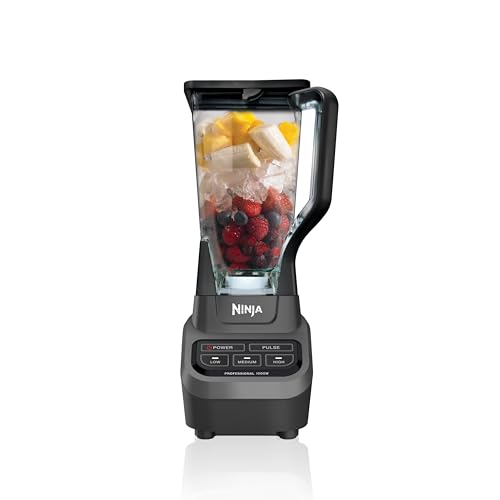
1. Ninja Professional Blender BL610, 1000W, 72 oz — Best Overall
The BL610 has been the default answer to ‘which blender should I just buy?’ for years, and everyday use is exactly why. The 72 oz pitcher covers family smoothies and batch soup, the 1000W Total Crushing system handles frozen fruit and ice without technique, and the parts go in the dishwasher — the single most everyday-friendly sentence in blender specifications.
Key specs
- Pitcher: 72 oz (Amazon title)
- Power: 1000W Total Crushing (Amazon title)
- Cleaning: Dishwasher-safe parts (Amazon title)
Strengths
- Handles the whole everyday repertoire without fuss
- Dishwasher-safe parts keep the habit alive
- Proven platform with an enormous base of satisfied long-term owners
Trade-offs
- 72 oz pitcher is big for a solo smoothie — make two or accept headspace
- Manual speeds only; no walk-away programs
- Not the finest texture for green purist or nut butter work
What the BL610 understands is that weekday blending must be thoughtless. Ingredients in, lid on, one of a few obvious speeds, done; the stacked-blade design means even a carelessly loaded pitcher comes out uniform, and frozen smoothies — the everyday machine’s core exam — pass every time. Sauces, batters and purees are all within its manners, and its limitations appear only at the specialist edges this article is not about: silken kale, fine nut flour, friction-heated soup. For the centre of the repertoire, where most kitchens live, it remains the easiest recommendation in this guide.
Best for: families and generalists wanting one dependable machine for everything ordinary / Not suited for: solo users or specialist green/nut enthusiasts
Check the current price on Amazon

2. Hamilton Beach Power Elite 58148AG, 700W, 40 oz Glass Jar — Best Budget
The Power Elite is the everyday pick for households of one to three and budgets that prefer sense to spectacle. Its 40 oz glass jar is the right everyday size — a soup for two, smoothies for the household, a batch of batter — and its Wave Action system keeps ingredients moving so results are even without any technique. Twelve labelled functions cover the repertoire by name, which makes the machine welcoming to every member of the household.
Key specs
- Jar: 40 oz glass jar (Amazon title)
- Functions: 12 functions (Amazon title)
- Power: 700W (Amazon title)
- System: Wave Action (Amazon title)
Strengths
- Right-sized glass jar for small households
- Named functions make it everyone’s machine, not one expert’s
- Budget tier with genuinely even results
Trade-offs
- 700W ceiling shows on large frozen loads — work in two batches
- Glass needs ordinary care
- No personal cup for single commuter smoothies
Everyday value is this machine’s whole argument, and it is a strong one: across smoothies, soups, sauces and batters it performs the repertoire credibly, cleans easily, and asks so little money that the cost-per-use arithmetic becomes almost comic within a year. Its limits are at the volume and frozen extremes, both of which smaller households rarely visit. If your kitchen is compact and your blending is daily but modest, this is the intelligent buy in the guide.
Best for: small households wanting a capable glass-jar all-rounder on a budget / Not suited for: large families or heavy frozen blending
Check the current price on Amazon

3. nutribullet Full-Size Blender Combo NBF50500, 1200W — Best Pitcher-Plus-Cups Combo
Everyday life has two blending scales — the solo weekday smoothie and the family weekend batch — and most households own a machine that suits one and resents the other. The nutribullet Combo is built for both: a 64 oz pitcher for soups and family drinks, a 24 oz cup for the single serving you blend and carry out of the door. One base, one shelf, both routines covered.
Key specs
- Pitcher: 64 oz (Amazon title)
- Cup: 24 oz tumbler cup (Amazon title)
- Power: 1200W (Amazon title)
Strengths
- Covers solo and family scales without a second machine
- 1200W handles frozen fruit credibly at both scales
- Cup format makes weekday clean-up a rinse
Trade-offs
- Neither format is the absolute best of its class — versatility is the point
- Cup capacity suits one; couples will blend twice
- Controls are simple rather than finely adjustable
The Combo’s everyday genius is rhythm: the cup gets used five times a week because it is effortless, and the pitcher gets used twice because it is there. Between them they cover the repertoire — smoothies, shakes, soups, sauces, batters — at a level that satisfies all but specialists. Households upgrading from a personal-only or pitcher-only machine consistently report that the missing scale was the friction they had stopped noticing. If your household blends at both scales, start here.
Best for: households blending solo on weekdays and family batches at weekends / Not suited for: purists wanting the finest pitcher or the strongest cup available
Check the current price on Amazon

4. KitchenAid K400 Variable Speed Blender with Tamper, KSB4028 — Best for Cooks
Some households’ everyday blending is cooking: soup twice a week, sauces, dips, batters, the occasional smoothie. For them the K400 is the everyday champion — a dial that reproduces yesterday’s setting exactly, motor control that holds speed through thick loads, and a tamper that makes hummus and stiff mixtures a no-stop job. It treats blending as part of cooking rather than a separate hobby.
Key specs
- Controls: 5-speed variable dial, Intelli-Speed (Amazon title)
- Programs: Ice Crush, Icy Drinks, Smoothie (Amazon title)
- Extras: Tamper included (Amazon title)
Strengths
- Dial control is fast, precise and repeatable
- Tamper extends the everyday repertoire to thick mixtures
- Steady speeds suit sauces and emulsions
Trade-offs
- No personal cup for grab-and-go mornings
- Premium-mid pricing over the value picks
- Drink presets are secondary to its manual strengths
The K400’s everyday case is the cook’s calendar: Monday’s soup pureed silkily, Wednesday’s dressing emulsified at a drizzle, Saturday’s batter mixed in seconds and Sunday’s smoothie handled by a preset. Nothing in that week needs a second appliance, and the dial — set, blend, done — is the fastest interface here for a confident user. Choose it if your blender lives by the stove.
Best for: cooking-led households blending soups, sauces and batters daily / Not suited for: commuters wanting a blend-and-go cup routine
Check the current price on Amazon

5. Vitamix Propel Series 510, 48 oz, Black — Best Premium Buy-Once
The Propel 510 is the everyday pick for the buyer who would rather pay once, properly, and stop thinking about blenders for a decade. Its 48 oz jar is the ideal everyday size, its programs make smoothies and soups one-touch, its texture ceiling is the highest here — greens, frozen fruit and purees all finish finer — and its self-cleaning program reduces the daily wash to a minute of warm water.
Key specs
- Container: 48 oz (Amazon title)
- Programs: 3 programs (Amazon title)
- Controls: Variable speed, pulse, self-cleaning (Amazon title)
Strengths
- Finest everyday texture, especially greens and purees
- Self-cleaning sustains the daily habit like nothing else
- Right-sized jar for one to four people
Trade-offs
- Premium price is the whole objection — and the whole point
- Power is more than the repertoire strictly needs
- Low-profile jar asks for sensible minimum batches
The arithmetic of the 510 is cost per year, not cost per purchase: a machine used daily for many years, cleaning itself, never being replaced because a cheaper one disappointed. Its everyday manners match its capability — quiet competence at breakfast smoothies, steaming soup from the soup program’s longer cycle, sauces at a dial’s turn. If your household blends daily and values the pleasant version of the routine, this is the recommendation without asterisks.
Best for: daily users who buy once and value texture and self-cleaning / Not suited for: occasional blenders, for whom the value picks suffice
Check the current price on Amazon
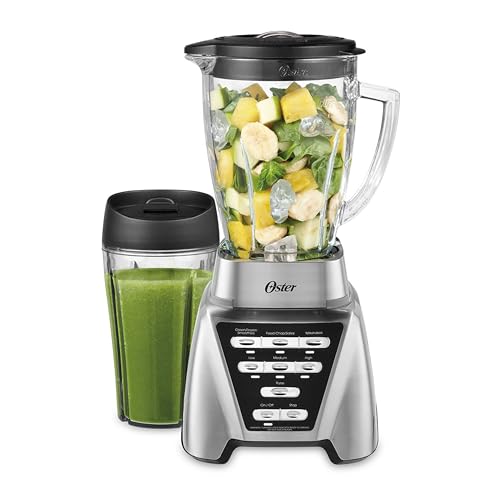
6. Oster Pro 1200, Glass Jar, 7 Speeds, Dual Direction Blade — Best Glass-Jar All-Rounder
The Oster Pro 1200 is the everyday pick for households that prefer glass and want a cup in the box too. Its dual-direction blade reverses to free ingredients that ride up the jar — the everyday annoyance of batters and thick smoothies — and its seven speeds with Smart Settings cover the repertoire from a gentle sauce to a frozen drink, with a 24 oz cup handling the solo morning.
Key specs
- Jar: Glass jar (Amazon title)
- Controls: 7 speeds, Smart Settings (Amazon title)
- Blade: Dual direction (Amazon title)
- Extras: 24 oz smoothie cup (Amazon title)
Strengths
- Glass jar suits hot soups and staining sauces
- Reversing blade rescues loads other machines leave stuck
- Pitcher and cup formats in one purchase
Trade-offs
- Glass jar is the heaviest here when full
- Mid-range power ceiling on the thickest work
- More parts to store than single-format picks
Everyday versatility with traditional materials is the Pro 1200’s identity: soup blended hot in glass, tomato sauce that rinses clean without staining, a smoothie cup for the commute, and a reversing trick that quietly solves the stuck-load problem several times a week. It is the pick for the household that distrusts all-plastic kitchens and still wants modern convenience — a combination rarer than it should be, and well served here.
Best for: glass-preferring households wanting pitcher and cup in one box / Not suited for: anyone who must carry a full jar far or often
Check the current price on Amazon
Comparison Table
| Pick | Badge | Key spec | Best for |
|---|---|---|---|
| Ninja Professional Blender BL610, 1000W, 72 oz | Best Overall | 72 oz, 1000W, dishwasher safe | families and generalists wanting one dependable machine for everything ordinary |
| Hamilton Beach Power Elite 58148AG, 700W, 40 oz Glass Jar | Best Budget | 40 oz glass, 700W, Wave Action | small households wanting a capable glass-jar all-rounder on a budget |
| nutribullet Full-Size Blender Combo NBF50500, 1200W | Best Pitcher-Plus-Cups Combo | 64 oz + 24 oz cup, 1200W | households blending solo on weekdays and family batches at weekends |
| KitchenAid K400 Variable Speed Blender with Tamper, KSB4028 | Best for Cooks | Variable dial, tamper, Intelli-Speed | cooking-led households blending soups, sauces and batters daily |
| Vitamix Propel Series 510, 48 oz, Black | Best Premium Buy-Once | 48 oz, 3 programs, self-cleaning | daily users who buy once and value texture and self-cleaning |
| Oster Pro 1200, Glass Jar, 7 Speeds, Dual Direction Blade | Best Glass-Jar All-Rounder | Glass jar, dual-direction blade, cup included | glass-preferring households wanting pitcher and cup in one box |
How to Choose a Blender for Everyday Use
Define your everyday before you shop
Write down last month’s actual blending: how many smoothies, soups, sauces, batters? Which sizes — solo cups or family pitchers? The list, not the aspiration, should choose the machine. Most households discover they blend at two scales and cook more than they drink, which is why combo formats and cook-friendly controls score so highly in this guide.
Cleaning is the feature you will use most
- Self-cleaning programs are the gold standard for daily use — a minute, no disassembly
- Dishwasher-safe parts are the silver standard; confirm which parts qualify in the listing
- Cup formats rinse in seconds and are the weekday champions
- Any design requiring you to unscrew a blade to wash it will be used less by October — believe this and choose accordingly
Size the jar to the household, not the party
A jar should be right for the weekly batch, not the annual one. One to two people: personal cups or 40–48 oz. Three to five: 56–72 oz or a combo. Oversized pitchers waste small loads and cupboard space; undersized ones turn soup into a three-batch chore. The combo picks exist because many households honestly need both scales.
Programs versus dials for daily speed
Programs win for drinks — press and dress for work while the smoothie finishes. Dials win for cooking — the same setting reproduces the same sauce. Households that mostly drink should weight programs; households that mostly cook should weight the dial; the honest middle is a machine with both, used each where it shines.
How to Build an Everyday Blending Routine That Lasts
The machine is half the habit. This routine is how everyday blenders stay everyday.
- Park the blender where it is used — a machine in a cupboard is a machine in retirement
- Keep a house smoothie formula you genuinely like, so weekday blending needs no decisions
- Prep freezer smoothie bags on Sunday: fruit, greens and extras portioned, leaving only liquid to add
- Rinse or self-clean immediately after every use; the 30-second habit that protects all the others
- Keep a short rotation of second jobs — Monday soup, Wednesday sauce, weekend batter — so the machine earns its counter space visibly
- Descale and deep-clean monthly: hot water, a drop of soap, a full cycle, and a wipe of the base and gasket
- Replace nothing on a schedule — but if smoothies start leaving chunks, check blade sharpness and load sizes before blaming the motor
Notice what this routine never includes: effort. Every step removes a decision or a delay, because everyday use is a behaviour before it is a specification.
The Everyday Repertoire, Honestly Mapped
Smoothies and shakes are the base load and every pick here passes. Soups divide the field: all six puree cooked soup well, and the Vitamix pick additionally heats by friction. Sauces and dressings favour dial control; batters favour gentle speeds and even mixing; frozen drinks favour the Ninja and Vitamix power; baby food favours the finest purees, again the premium end; dips and hummus favour the tamper-equipped K400. No pick wins every line of that map — the right choice is the one that wins your lines, the jobs your household actually repeats.
When to Repair, When to Replace, When to Upgrade
An everyday blender that leaves new chunks usually has a dull blade, an overloaded jar or a tired gasket before it has a dying motor — check in that order. Replace when the jar cracks, the base smells of hot electrics, or your household’s scale has genuinely changed: the couple who became a family of five has outgrown a personal cup honestly, and the family whose children left may find a combo or cup format returns the joy. Upgrade for a routine you have, never for one you are merely imagining in the shop.
The Hidden Costs and Savings of an Everyday Blender
The purchase price is the smallest number in an everyday blender’s life. The real ledger runs like this: a daily smoothie made at home instead of bought saves its cost in ingredients several times over across a year; a soup habit built on the machine turns cheap vegetables and lentils into the household’s most economical dinners; sauces and dressings made in the jar replace a shelf of bottled products at a fraction of their price. Against that, count the costs honestly: replacement gaskets and the occasional cup, electricity that amounts to very little, and the counter space, which in a small kitchen is the most expensive item of all — which is why this guide weights footprint and versatility so heavily.
The saving nobody prices is decision fatigue. A household with a house smoothie, a house soup method and a machine that cleans itself in a minute has removed a daily negotiation about breakfast and a weekly one about using up vegetables. Everyday appliances earn their keep in that currency as much as in money, and it is why the pleasant machine — quick, quiet enough, easy to wash — outperforms the merely powerful one across a year of Tuesdays. When you choose between the picks in this guide, you are not really choosing specifications. You are choosing which routine your household will still be enjoying next year, and that is a decision worth the price of the good machine.
Everyday Blending for Real Households: Kids, Guests and Chaos
Specifications assume a tidy kitchen; households contain children, guests and Tuesdays when everything happens at once. For children, the everyday blender’s virtues are speed and forgiveness: a smoothie that hides spinach, a soup with no lumps to negotiate, a milkshake that makes the machine a friend rather than a lesson. Keep a child-safe routine — the machine lives unplugged or switched off at the wall, blending is an adult job, and small helpers add ingredients to an unseated jar, never a seated one. For guests, the blender is the entertainer’s shortcut: frozen drinks at pitcher scale, a soup course blended to restaurant smoothness, a dessert sauce in ninety seconds. The picks with programs serve guests best, because the host is busy; the picks with dials serve keen cooks best, because the sauce is the point.
For chaos — the broken night’s sleep, the late meeting, the empty fridge — the everyday blender’s deepest value appears: frozen fruit, milk, oats and honey become dinner in ninety seconds, and a household that can always do that is a household with one less daily emergency. That is not a specification any manufacturer prints. It is, nonetheless, the reason these machines stay on counters for years while cleverer appliances gather dust, and it is the standard this guide has quietly applied to every pick: could this machine rescue a bad Tuesday? All six can.
Accessories Worth Owning — and the Drawer of Regret
Everyday blenders attract accessories the way coats attract scarves, so here is the honest sorting. Worth owning: a second personal cup for combo machines, because rotation is the weekday secret; a slim bottle brush that actually reaches the blade area; a set of freezer bags or tubs for smoothie prep; and, for tamper-less machines that struggle with thick loads, nothing — buy the tamper model instead. Occasionally worth it: a spare gasket, bought when the machine is new and the part is findable, against the day the original tires. The drawer of regret contains the rest: milling cups for machines never used to mill, recipe systems for apps never opened, third-party blade assemblies of uncertain fit, and every ‘complete system’ upsell whose extra jars exactly duplicate the size already owned. The everyday philosophy of this guide applies to accessories as to machines: own what the routine uses weekly, store nothing ‘just in case’, and let the money saved buy better fruit.
A Month of Everyday Blending: The Routine in Practice
Week one is novelty: smoothies daily, a soup, an experimental sauce, and the machine washed with enthusiasm. Week two is the truth: the smoothie becomes the house formula, made half-asleep; the soup becomes Monday’s way of clearing the vegetable drawer; the sauce is a dressing, made once, eaten all week. Week three adds the quiet jobs — breadcrumbs from the stale loaf, batter at the weekend, a dip for guests that took ninety seconds and received compliments out of all proportion. Week four is when the household stops noticing the machine, which is the highest state an everyday appliance can reach: it has become part of how the kitchen works, like the kettle. Every pick in this guide can sustain that month; the differences are in which week’s jobs each does best — cups in week two’s mornings, dials in week three’s cooking, programs throughout for the household that is always in a hurry. Read your own likely month honestly, and the right pick usually selects itself.
Blending and the Household Budget: Where the Money Actually Goes
An everyday blender changes a household’s spending in three places, only one of which is obvious. The obvious one is bought drinks: smoothies and frozen coffees made at home cost a fraction of café versions, and the machine’s price is recovered in weeks by a daily buyer. The second is waste: the blender is the great rescuer of the modern fridge — soft fruit becomes smoothies, wilting greens become soup and sauce, stale bread becomes crumbs, and leftovers become purees — and a household that blends regularly throws away measurably less food. The third is the subtle one: cooking confidence. A household that can always produce a sauce, a soup and a smoothie from basics orders less takeaway on the tired evenings, and tired evenings are where food budgets quietly leak. Against those savings stand the honest costs — ingredients, the occasional replacement cup, electricity measured in pennies. The arithmetic is not close, and it explains the pattern every retailer knows: the everyday blender is the appliance owners replace like-for-like when it finally dies, because by then the routine it carries is worth far more than the machine.
Blending Through the Seasons: The Everyday Machine’s Year
January asks for soups and citrus smoothies, and the everyday machine answers with purees and programs. Spring brings the first smooth herbs and early fruit, and dressings multiply. Summer is the machine’s high season — frozen drinks, gazpacho blended cold, smoothie bowls, ice crushed for every glass — and the picks with real frozen power justify themselves weekly. Autumn returns to soups, orchard fruit and batters, and the dial-led picks come into their own as cooking resumes in earnest. Winter is preserves and comfort: sauces, purees for pies, hot drinks’ components, the batter for the holiday’s mornings. A machine chosen as an all-rounder, per this guide’s logic, has no off-season, which is precisely what separates the everyday blender from the January gadget. When you assess the picks, assess them against your own year’s calendar — the household that entertains all summer weights frozen power, the household that cooks all winter weights the dial and the soup — and the machine that wins your year is the right one, whatever any ranking, including this one, says in general.
The Two-Machine Question: When One Blender Is Not the Answer
Some households honestly need two formats, and pretending otherwise sells them a compromise that satisfies neither routine. The classic case is this guide’s own combo logic, separated: a full-size pitcher for the family’s cooking and a personal machine for one member’s daily commute smoothie, where a combo’s shared base would be in the wrong place at the wrong hour for one of them. The second case is the keen cook’s: a premium pitcher for the repertoire and an inexpensive personal cup kept purely for protein shakes, so the good jar never smells of protein powder. Two machines are justified when the routines conflict in time, place or user — and wasteful when they merely duplicate. Most households should start with one pick from this guide, live the routine for a season, and let the friction, if any, name the second machine precisely. Buying the second machine first, on speculation, is how cupboards fill with appliances that each do half a job. Buy the routine, then the reinforcement — in that order, the everyday kitchen stays both capable and calm.
Buying Day Checklist for Everyday Blenders
The everyday checklist is the shortest in this series because the category rewards decisiveness. One: name your scale — solo, family, or both — and buy the format that matches, combo included. Two: name your lead job — drinks or cooking — and weight programs or dials accordingly, using the picks’ badges as the shorthand. Three: choose your cleaning mercy — self-cleaning, dishwasher parts or a rinseable cup — and refuse to compromise on it, because cleaning is the feature the next five years will judge. Four: size the jar to the weekly batch, not the annual party. Five: confirm the exact verified model in the listing, since included cups and program sets are exactly where similar listings differ.
When it arrives, do not christen it with a banquet. Make the house smoothie, note the setting, and put the machine where it will live — on the counter, plugged in, washed and ready. Week one’s only goal is repetition: the same drink three times, the same soup once, until the routine is muscle memory. Add one new job a week thereafter — a dressing, a batter, a dip — and by the end of the first month the machine will have the repertoire this guide describes, acquired without a single overwhelming weekend of experiments. Habits built gradually are the ones still standing in month six.
Keep the support system as simple as the routine: the brush that fits, the spare cup if your format uses one, the freezer stocked with the house smoothie’s ingredients. Resist accessories until a real friction names one. An everyday machine’s environment should be as uncluttered as its operation, because every object around it is either part of the routine or an obstacle to it, and routines survive on the absence of obstacles.
And judge the purchase at the right moment — not on day one, when everything is delightful, and not on the day a batch disappoints, but at the end of the second month, by one measure: how many times a week is it used, by how many people, without anyone thinking of it as an event? If the answer is several, by everyone, unthinkingly, you bought the right machine at whatever tier it sits. That unthinking daily use is the entire definition of the category, and every pick in this guide has earned its place by being capable of exactly that.
A Note on Noise, Neighbours and Early Mornings
The everyday blender’s least printed specification is its effect on the household’s peace, and for daily machines it deserves a paragraph of its own. All blenders are loud; everyday blenders are loud at breakfast, which is a different social fact. The mitigations are real but modest: a mat under the base, a door closed, frozen ingredients given a minute to take the edge off so the run is shorter, and programs that finish the drink while the maker is in another room rather than standing guard. Households with sleeping children, shift workers or thin walls should weight those habits — and the shorter, more efficient runs of the stronger picks — as genuine selection criteria, because a machine that wakes the house will be used at weekends only, and an everyday machine used at weekends is a contradiction that ends in a cupboard. Judge the picks in this guide by your mornings as honestly as by your recipes, and the machine you choose will still be in daily service when quieter resolutions have been forgotten.
A Small Note on Second-Hand and Handed-Down Machines
Everyday blenders circulate — inherited from relatives, bought used, passed between flats — and a sound used example of any proven pick in this guide is a legitimate way into the routine. Inspect the jar for cracks and clouding that suggests heat damage, run the motor and listen for strain or grinding, confirm the lid seals and every promised cup is present, and wash everything thoroughly before its first use. A used BL610 or Power Elite in honest condition will out-serve a new machine of a lesser class, and in a category defined by years of daily use, starting with a proven platform at a used price is not a compromise. It is the everyday philosophy applied to the purchase itself.
What ‘Everyday’ Finally Means
Strip the category to its essence and an everyday blender is not defined by its motor, its jar or its programs, but by a number: the count of mornings, soups and sauces it has quietly produced without being thought about. That number is built from small mercies — a rinse instead of a scrub, a program instead of a vigil, a size that fits the batch and the cupboard — multiplied by hundreds of repetitions. It is why this guide has ranked convenience beside capability throughout, and why its final advice is unglamorous: choose the pick whose mercies match your life’s specific frictions, set it up once, properly, where it will be used, and then stop thinking about blenders altogether. The thinking was the purchase’s job. The machine’s job, from tomorrow morning onward, is simply to be there — clean, ready and unremarkable — turning fruit, vegetables and good intentions into breakfast. Every pick in this guide can do that job for years. Pick yours, and let it get on with it.
Common Buying Mistakes
Everyday blender disappointment is rarely about blending. It is about fit, and it repeats in these six ways.
- Buying for the dinner party, not the Tuesday. The annual batch does not matter; the weekly one does. Size and format for your ordinary week.
- Choosing a machine you dread washing. Cleaning friction compounds daily. Self-cleaning, dishwasher parts or a rinseable cup — pick your mercy and buy it.
- Storing it in a cupboard ‘to keep counters clear’. Clear counters, unused blender. Everyday machines must live where they work.
- Overfilling as a lifestyle. Loads above the working line blend unevenly and leak. Two honest batches beat one heroic one.
- Buying specialist power for generalist needs. Nut-butter torque is wasted on a smoothie household, and its price buys years of ingredients. Match the machine to the repertoire.
- Ignoring the second scale. Solo weekday, family weekend — if both are real, a combo format is not indulgence, it is accuracy.
Fit the machine to the week you actually live, keep it clean and within reach, and everyday blending becomes what it should be: unremarkable, daily and quietly improving what you eat.
Final Recommendation
Start with the Ninja BL610 for the classic everyday answer: capable, capacious and dishwasher-friendly. Choose the Hamilton Beach Power Elite for budget glass-jar value, the nutribullet Combo if your household blends at two scales, the KitchenAid K400 if your blending is really cooking, the Oster Pro 1200 for glass with a cup included, and the Vitamix Propel 510 if you are buying once, for years, at the highest standard.
Then park it on the counter, learn its one house smoothie, and rinse it the second you finish. Everyday excellence is a routine, and every machine here can carry it.
Ready to buy? Start with our top three: Ninja Professional Blender BL610, 1000W, 72 oz, Hamilton Beach Power Elite 58148AG, 700W, 40 oz Glass Jar, nutribullet Full-Size Blender Combo NBF50500, 1200W — each link goes to the verified Amazon listing so you can check the current price and confirm the exact model.
Keep exploring the cluster: Best Blenders For Smoothies Best Blenders For Soups Best Blenders For Frozen Fruit Best Blenders For Elderly Best Blenders For Dorms
Frequently Asked Questions
What size blender is best for everyday use?
For one to two people, a personal cup or a 40–48 oz jar; for families, 64–72 oz; for households that blend solo on weekdays and family-size at weekends, a pitcher-plus-cup combo is the honest answer. Size to your weekly batch, not your largest imaginable one.
How much power does an everyday blender need?
Enough for your frozen habits: 700W-class machines handle soft smoothies and soups, while frozen fruit and ice drinks are happier at 1000W and above. Beyond that, extra power buys specialist ability — greens, nuts, friction soups — that everyday users may or may not want.
Is a blender with programs better for daily use?
For drinks, yes: one press and a finished smoothie is a genuine weekday mercy. For cooking jobs, a dial’s repeatability wins. Many households use programs all week and the dial all weekend, which is why several picks here offer both.
How long should an everyday blender last?
A well-chosen mid-range machine should give years of daily service; premium platforms are bought precisely for decade-scale life. Longevity is mostly behaviour: sensible loads, immediate cleaning, and no forcing of stalled mixtures.
Can one blender really replace a food processor for everyday tasks?
For purees, sauces, dressings, batters and crumbs, largely yes. For slicing, grating and dough, no — those remain processor or by-hand jobs. Most households find the blender covers the daily 90 percent and the processor comes out monthly.
Why does my everyday smoothie taste different each day?
Unmeasured ingredients and varying blend times. Keep a house formula with rough measures, use the same program or setting, and the drink stabilises. Consistency is a routine, and routines are what everyday machines are for.


