Disclosure: airfryerkitchensupply.com is reader-supported. When you buy through links on our site, we may earn an affiliate commission at no extra cost to you.
Where to buy
The fastest way to buy any pick in this guide is through Amazon, where stock, finishes and configurations change often, so check price on Amazon on the product page rather than trusting any number printed elsewhere. These are the six picks in this guide to the best digital pressure cookers:
- Instant Pot Duo Plus 6 Qt 9-in-1 Electric Pressure Cooker — Check on Amazon
- Instant Pot Pro 6 Qt 10-in-1 Electric Pressure Cooker — Check on Amazon
- COSORI 6QT Pressure Cooker, 9-in-1 — Check on Amazon
- CHEF iQ Smart Pressure Cooker 6 Quart — Check on Amazon
- Instant Pot Rio 6 Qt 7-in-1 Electric Pressure Cooker — Check on Amazon
- COMFEE’ 12-in-1 Electric Pressure Cooker, 6 Quarts — Check on Amazon
Digital pressure cookers are sold in dense model families where one word — Duo, Pro, Rio, Plus — changes the machine. Every pick below was verified against Amazon catalog data for this site, and the model name in each review heading is the exact model its link lands on.
The best digital pressure cookers have quietly become the default pressure cookers: electronic controls, programmed cycles, displays that show pressurizing and releasing, and safety systems layered well beyond the old stovetop jiggle-top. Shoppers choosing among them face a friendlier problem than they expect — the leading designs are all competent — and a harder one: the differences that matter are in release design, pot quality, program honesty and how the machine behaves on an ordinary Tuesday, not in headline function counts.
This guide compares six verified digital pressure cookers across the realistic range: the benchmark all-rounder, its premium sibling, a safety-led design, a smart guided cooker, a streamlined value model and a strong alternative brand. Capacities cluster at 6 quarts because that is the size most households should buy, and the buying guide explains the two-thirds rule that makes 6 quarts the right answer so often.
Every pick was verified through this site’s Amazon catalog connection before its link was attached, and every review states its trade-offs in the open — including the honest one that slow cook modes in pressure cookers are supporting features, and that no digital display makes an overfilled pot safe. Read the verdicts; in this category the right pick is usually obvious once your cooking tempo is honest.
In this guide
Quick Picks
Six verified digital pressure cookers led by the Duo Plus all-rounder, spanning premium, smart, safety-led and value routes at the family 6-quart size.
- Instant Pot Duo Plus 6 Qt 9-in-1 Electric Pressure Cooker — Best Overall Digital Pressure Cooker. The complete package: nine functions, a clear display, easy steam release and the deepest recipe support in the category. Check on Amazon
- Instant Pot Pro 6 Qt 10-in-1 Electric Pressure Cooker — Best Premium Digital Pressure Cooker. Ten functions with sous vide, a handled stovetop-friendly pot and the quietest, most refined operation in the line. Check on Amazon
- COSORI 6QT Pressure Cooker, 9-in-1 — Best for Safety-Conscious Cooks. Twelve safety features, a ceramic-coated pot and sous vide in the mix — the reassuring alternative-brand pick. Check on Amazon
- CHEF iQ Smart Pressure Cooker 6 Quart — Best Smart Digital Pressure Cooker. A built-in scale and guided recipes that set pressure and time by the actual weight of your food. Check on Amazon
- Instant Pot Rio 6 Qt 7-in-1 Electric Pressure Cooker — Best Value Digital Pressure Cooker. The streamlined Rio keeps the seven core functions and the 6-quart format, trimmed for shoppers who cook simply. Check on Amazon
- COMFEE’ 12-in-1 Electric Pressure Cooker, 6 Quarts — Best Alternative-Brand All-Rounder. Twelve menus, a 24-hour timer and a ceramic inner pot — the full-featured alternative for menu-driven cooks. Check on Amazon
First-time pressure buyer? The top two picks are your shortlist. Cooks replacing a worn cooker should read the premium and smart reviews closely — the upgrades target exactly your annoyances.
How These Picks Were Chosen
Picks had to be true digital pressure cookers: electric, electronically controlled, with programmed pressure cycles and modern locking-lid safety systems. Stovetop pressure cookers and pressure canners were excluded — different tools with different rules, covered elsewhere on the site.
Verification was individual and strict: brand and model searched through the site’s Amazon catalog connection, the returned listing title matched to the model intended, and only then a dp link attached. All six picks passed that check in this guide.
Ranking weighed pressure performance and consistency, release design and noise, program usefulness over brochure count, inner pot material, the quality of the display and controls, keep-warm and delay behavior, and how each machine treats the supporting acts — rice, slow cooking, sauté — that decide whether it earns daily counter space.
The 6 Best Digital Pressure Cookers Reviewed
Each review follows the same discipline: who it suits, three strengths, three trade-offs, verified specifications, and a bold verdict. All six are 6-quart class machines — the size argument is made once, in the buying guide, rather than six times here.

Instant Pot Duo Plus 6 Qt 9-in-1 Electric Pressure Cooker — Best Overall Digital Pressure Cooker
The Duo Plus earns Best Overall by removing the standard model’s small frictions. The display shows a proper progress indication instead of guesswork, the steam release is a single, calmer control, and the nine functions cover the realistic domestic repertoire — pressure, slow cook, rice, steam, sauté, yogurt, warm and sterilize among them — without wandering into brochure territory. It is the model we would hand a nervous first-timer and a busy parent with equal confidence.
Around the machine sits the category’s largest ecosystem of calibrated recipes and accessories, which compounds its value every week you own it. Whatever you decide to cook, a Duo Plus timing exists and has been tested by thousands of kitchens. In a category where confidence is the product, that support is a feature, not a footnote.
Strengths
- Clear progress display and calmer, simpler steam release
- Nine honest functions covering the real home repertoire
- Largest recipe and accessory ecosystem of any pick here
Trade-offs
- No sous vide at this level
- Slow cook mode is a supporting act, not a stoneware replacement
- 6-quart ceiling for very large batch cooks
| Spec | Detail |
|---|---|
| Capacity | 6 quarts |
| Functions | 9-in-1 including pressure, rice, yogurt, sterilize |
| Pot | Stainless steel |
Buy it first and ask questions never: for the widest range of households this is the digital pressure cooker that balances capability, calm and support best. The verified listing confirms the exact model reviewed.
Best for: most households buying their first or only pressure cooker / Not suited for: sous vide enthusiasts — see the Pro below
Check on Amazon — check the current price on Amazon before ordering, and confirm the size and finish on the listing match what this review describes.

Instant Pot Pro 6 Qt 10-in-1 Electric Pressure Cooker — Best Premium Digital Pressure Cooker
The Pro is the enthusiast’s refinement of the formula: a tenth function in sous vide, a dedicated grains program, an inner pot with stay-cool handles that can move to a stovetop for finishing, and the line’s most polished controls and gentlest steam handling. Each improvement targets something a daily user has actually complained about, which is the right way to build a premium tier.
Its case is tempo. Cook under pressure four or five times a week and these refinements repay their premium in small daily mercies; cook twice a month and they are invisible. The Pro also anchors the comparison for upgraders: if your current cooker annoys you in exactly these ways — pot handling, release drama, missing sous vide — this is your machine.
Strengths
- Sous vide joins a complete pressure repertoire
- Handled inner pot moves between cooker and stovetop
- Refined controls and gentle, quiet release
Trade-offs
- Premium tier needs premium usage to justify itself
- Same 6-quart capacity as cheaper siblings
- Feature depth exceeds casual needs
| Spec | Detail |
|---|---|
| Capacity | 6 quarts |
| Functions | 10-in-1 including sous vide and grains |
| Pot | Handled, stovetop-friendly inner pot |
Heavy users should buy the Pro outright and skip a generation of compromise. Everyone else loses nothing with the Duo Plus — which is precisely what makes the Pro an honest premium pick rather than a default.
Best for: daily pressure cooks and sous vide users / Not suited for: occasional users — the Duo Plus is the smarter spend
Check on Amazon — check the current price on Amazon before ordering, and confirm the size and finish on the listing match what this review describes.
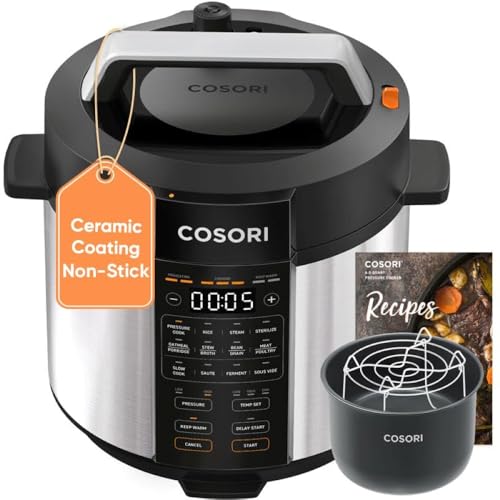
COSORI 6QT Pressure Cooker, 9-in-1 — Best for Safety-Conscious Cooks
COSORI’s pitch leads with reassurance: the verified listing counts twelve safety features, and the machine’s whole demeanor — clear controls, a ceramic-coated pot that releases food easily, a function set that includes sous vide alongside the pressure staples — is aimed at the shopper who wants pressure cooking’s results without its folklore. For households where one nervous cook has vetoed pressure cooking for years, this is the model most likely to lift the veto.
The ceramic-coated pot is the other dividing line: food releases and washes up with nonstick ease, at the cost of the coating-care rules stainless owners never think about. Cooks who sear hard and scrub harder should choose stainless above; cooks who value the two-minute cleanup will find this pot the deciding feature in the whole guide.
Strengths
- Safety-led design and communication suit nervous first-timers
- Ceramic-coated pot cleans with nonstick ease
- Sous vide included at a mid-line position
Trade-offs
- Coating needs gentle utensils and ages faster than stainless
- Smaller recipe ecosystem than the Instant Pot picks
- Silver finish shows every splash
| Spec | Detail |
|---|---|
| Capacity | 6 quarts |
| Functions | 9-in-1 including sous vide and slow cook |
| Safety | 12 safety features (per verified listing) |
| Pot | Ceramic coating |
Choose it when confidence and cleanup lead your list. It is the alternative-brand pick that earns its place on design intent rather than price, and the verified listing confirms its safety and function claims as reviewed.
Best for: cautious first-time pressure users and nonstick-pot preferrers / Not suited for: stainless-pot purists
Check on Amazon — check the current price on Amazon before ordering, and confirm the size and finish on the listing match what this review describes.

CHEF iQ Smart Pressure Cooker 6 Quart — Best Smart Digital Pressure Cooker
Every pressure cooker’s hidden curriculum is timing judgment: how long for this cut, this weight, this bean. The CHEF iQ attacks that curriculum directly with a scale built into the pot’s base and guided recipes that calculate from the food’s actual weight, then walk you through each step. For the analytical cook — or the anxious one — it converts the category’s steepest learning curve into a ramp.
The connected layer is equally deliberate: monitor and adjust from another room, receive the release reminder where you actually are. Underneath sits a full 10-in-1 machine, so the smarts enhance a cooker rather than substituting for one. The honest condition stands: its premium lives in features only app-willing cooks will touch.
Strengths
- Scale-driven guided cooking removes timing guesswork
- WiFi monitoring fits real, elsewhere-in-the-house life
- Complete 10-in-1 function set under the smart layer
Trade-offs
- Value collapses if the app goes unused
- Guided ecosystem is one brand’s walled garden
- Setup takes longer than a plain cooker
| Spec | Detail |
|---|---|
| Capacity | 6 quarts |
| Functions | 10-in-1 multi-cooker |
| Smart features | WiFi, built-in scale, 500+ guided recipes per listing |
Buy it if you follow recipes to the gram and want the cooker to meet you there. It is the most technologically ambitious pick in this guide and, for its intended cook, the most helpful.
Best for: recipe followers who want precision without the learning curve / Not suited for: cooks who cook by instinct and hate apps
Check on Amazon — check the current price on Amazon before ordering, and confirm the size and finish on the listing match what this review describes.
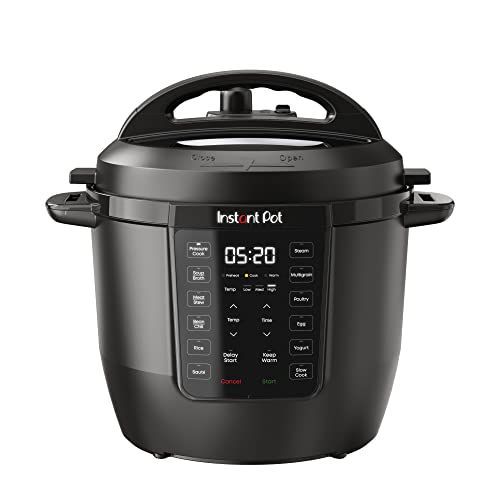
Instant Pot Rio 6 Qt 7-in-1 Electric Pressure Cooker — Best Value Digital Pressure Cooker
The Rio is Instant Pot’s answer to a fair question: how much of the flagship experience survives a trim? Almost all of the cooking. Seven functions cover the core repertoire — pressure, slow cook, rice, sauté, steam, yogurt, warm — in the same 6-quart family size, in a modernized, slimmer design. What you give up is the Plus and Pro layers: fancier displays, extra programs, premium pot hardware.
For households whose pressure cooking is a rotation of soups, grains, beans and braises, that trade is simply correct. The Rio also suits a second-cooker role — the cabin, the rental, the college graduate’s first kitchen — where the flagship would be over-bought. Verified here, it is the value pick with no asterisk about what it is.
Strengths
- Core pressure repertoire intact at a value position
- Modern, slimmer design stores and presents well
- Same 6-quart practical capacity as the flagships
Trade-offs
- Fewer programs and a simpler display than Duo Plus and Pro
- No sous vide or sterilize
- Pot and release hardware are the standard grade
| Spec | Detail |
|---|---|
| Capacity | 6 quarts |
| Functions | 7-in-1: pressure, slow cook, rice, sauté, steam, yogurt, warm |
| Design | Streamlined Rio format |
Choose it when your recipe rotation is honest and short. The Rio proves the category’s value point is a genuinely good cooker, not a compromise with a display attached.
Best for: budget-conscious households and simple-recipe cooks / Not suited for: feature collectors
Check on Amazon — check the current price on Amazon before ordering, and confirm the size and finish on the listing match what this review describes.

COMFEE’ 12-in-1 Electric Pressure Cooker, 6 Quarts — Best Alternative-Brand All-Rounder
COMFEE’ builds its case on programmed abundance: twelve menus covering the pressure repertoire and beyond, a 24-hour delay timer for genuinely planned cooking, and a ceramic inner pot for easy release and washing. For the cook who actually browses presets — who cooks soup on soup mode and cake on cake mode — this breadth is used, not decorative, and the machine’s safety features are built in as the listing states.
Its honest trade-off is ecosystem: fewer model-specific recipes circulate for COMFEE’ than for the category leader, so preset cooks thrive while free-form recipe followers do more translating. In daily pressure performance it stands with the group; the choice is about how you cook, not whether it can.
Strengths
- Widest menu set in this guide, with a true 24H timer
- Ceramic pot for easy cleanup
- Full pressure repertoire with built-in safety features
Trade-offs
- Thinner model-specific recipe ecosystem
- Preset abundance only pays if you cook by preset
- Brand support network is smaller than the leader’s
| Spec | Detail |
|---|---|
| Capacity | 6 quarts |
| Functions | 12-in-1 menus |
| Timer | 24-hour delay timer |
| Pot | Ceramic inner pot per listing |
Buy it if menus are how you cook and a day-ahead timer fits your planning style. It closes this guide as the credible alternative — verified, full-featured and honest about its ecosystem trade-off.
Best for: menu-and-preset cooks who want maximum programs per purchase / Not suited for: minimalists who use two settings forever
Check on Amazon — check the current price on Amazon before ordering, and confirm the size and finish on the listing match what this review describes.
Comparison Table
All six are 6-quart digital pressure cookers, so the table compares what actually differs: functions, pot, and the design idea each model is built around.
| Pick | Badge | Key spec | Best for |
|---|---|---|---|
| Instant Pot Duo Plus 6 Qt 9-in-1 Electric Pressure Cooker | Best Overall Digital Pressure Cooker | 6-quart 9-in-1; stainless pot; improved release and display | most households buying their first or only pressure cooker |
| Instant Pot Pro 6 Qt 10-in-1 Electric Pressure Cooker | Best Premium Digital Pressure Cooker | 6-quart 10-in-1; sous vide; premium pot and controls | daily pressure cooks and sous vide users |
| COSORI 6QT Pressure Cooker, 9-in-1 | Best for Safety-Conscious Cooks | 6-quart 9-in-1; ceramic-coated pot; 12 safety features per listing | cautious first-time pressure users and nonstick-pot preferrers |
| CHEF iQ Smart Pressure Cooker 6 Quart | Best Smart Digital Pressure Cooker | 6-quart 10-in-1 smart; WiFi; built-in scale | recipe followers who want precision without the learning curve |
| Instant Pot Rio 6 Qt 7-in-1 Electric Pressure Cooker | Best Value Digital Pressure Cooker | 6-quart 7-in-1; core function set | budget-conscious households and simple-recipe cooks |
| COMFEE’ 12-in-1 Electric Pressure Cooker, 6 Quarts | Best Alternative-Brand All-Rounder | 6-quart 12-in-1; 24H timer; ceramic inner pot | menu-and-preset cooks who want maximum programs per purchase |
How to Choose a Digital Pressure Cooker Without Overbuying
Begin with the two-thirds rule, because it settles size: pressure cookers need headspace, most foods cap at two-thirds full and foaming foods at half, so a 6-quart pot delivers about 4 usable quarts — right for family stews, a whole chicken and double rice batches. Only genuine batch cooks and crowd feeders need to shop larger, which is why this entire guide lives at 6 quarts.
Next, pot material. Stainless pots (Duo Plus, Pro) tolerate metal tools, hard searing and decades of use, and ask for a soak after starchy cooks. Ceramic-coated pots (COSORI, COMFEE’) wash in moments and demand gentle utensils and eventual replacement. Neither is superior; they are answers to whether you hate scrubbing or hate replacing.
Finally, audit the extras against your real cooking. Sous vide matters if you will use it monthly. A smart scale matters if you cook by recipe. A 24-hour timer matters if you plan a day ahead. Every unused extra is just a more expensive version of the cooker you actually needed — the Rio exists in this guide to prove the core is enough for many kitchens.
How Do Digital Pressure Cookers Release Steam, and Which Method Is Best?
Three release methods govern pressure cooking, and digital models differ mainly in how calmly they handle the third. Natural release lets pressure fall on its own — essential for meats, beans and foaming foods, and part of their cooking time. Quick release vents steam immediately for vegetables and delicate foods that would overcook while waiting. Pulse and controlled releases, refined on the premium picks, split the difference for starchy dishes.
What separates the models in this guide is ergonomics: the Duo Plus and Pro vent through a single, clear control positioned away from your hand, the COSORI emphasizes its safety systems, and every model here locks its lid against opening under pressure. Choose by the hand that will do the venting — a nervous cook deserves the calmest release design, and it is worth more than two extra presets.
Can a Digital Pressure Cooker Really Replace a Slow Cooker and Rice Cooker?
Mostly, with two honest footnotes. Its slow cook mode handles the great majority of slow recipes, though stoneware traditionalists note — correctly — that a dedicated slow cooker’s gentle, even surround-heat and buffet-holding manners remain slightly better for very long cooks and serving. Its rice program cooks good rice, while a fuzzy logic specialist cooks better rice and holds it more gracefully, as the digital cookers guide linked below details.
For most households the replacement is real and the counter space saved is worth the footnotes. Grain-daily and slow-cooking-ritual households are the exceptions, and they solve it the way this site’s cluster suggests: a pressure cooker for speed, plus the specialist they actually use, each bought deliberately rather than by default.
How to Read Digital Pressure Cooker Programs Without the Manual Anxiety
A new digital pressure cooker’s panel looks like a cockpit, and most of it is simpler than it appears. The programs are mostly the same engine — pressure level, time and release suggestion — wearing food names. Soup, beans, grains and meat programs differ in their defaults and sometimes their pressure curves, but a cook who learns manual pressure, time and release owns the whole machine; the presets are shortcuts, not separate appliances.
The learning order that works: water test first, then one forgiving dish on its named program (beans or soup), then the same dish on manual settings to feel the equivalence. By the third cook, the panel reads as a menu of remembered decisions rather than a test.
Displays earn their keep here. The progress indication on the Duo Plus-class machines — showing pressurizing, cooking and releasing as distinct stages — removes the beginner’s core uncertainty about what the sealed pot is doing. If you are buying for a nervous household, weigh that display as heavily as any program count in this guide.
Pressure Cooking Dry Beans, Grains and Tough Cuts: Where Digital Shines
Three ingredient families justify digital pressure ownership almost alone. Dry beans go from pantry to table in under an hour without an overnight soak, with texture a stovetop struggles to match — and the digital timer makes the difference between a plan and a hope. Whole grains and brown rice cook evenly under pressure, in the same pot that then keeps them warm for the meal.
Tough cuts are the third family and the most dramatic: brisket, shanks, shoulders and short ribs surrender their collagen to pressure in a fraction of braising time, emerging sliceable and rich, ready for a sauce reduced on sauté in the same pot. This is the cooking that converts skeptics at the table.
The disciplines are small and learnable: enough thin liquid, the right release for each family (natural for beans and meats), and notes on your first attempts. Digital repeatability then does the rest — the bean timing that worked in October works in March, which is the quiet luxury this whole category sells.
How Long Do Digital Pressure Cookers Last, and What Wears Out?
The honest answer separates the machine from its wear parts. The cooker body and electronics in this guide are built for years of service; what ages on a schedule is the sealing ring — expect to replace it when pressurizing slows or odors linger — and, on coated pots, the coating itself. Float valves and anti-block shields need cleaning rather than replacement, and a cooker whose steam path is kept clean behaves like a new one far longer.
Usage tempo sets the calendar. A daily cooker’s ring may want annual attention; a weekly cooker’s can serve for several years. The symptom list is short and consistent: longer to pressurize, wisps of steam at the rim, a ring that has stretched loose or stiffened. All three say the same thing, and the fix is the cheapest part in the box.
Buying into a popular model pays off here, because rings, pots and lids stay available. That ecosystem logic is part of why the verified leaders in this guide rank where they do — a cooker is a decade-long relationship, and parts availability is a feature.
Digital Pressure Cookers for Beginners: The First Two Weeks
The learning curve of pressure cooking is real but short, and it has a known shape. Week one belongs to the water test, a soup and a batch of beans — three forgiving cooks that teach sealing, pressurizing and releasing without stakes. Most new owners report the sounds and stages becoming ordinary by the third session, which is why the display quality on the Duo Plus-class picks matters: visible stages shorten the anxious phase.
Week two adds a braise with a natural release and a grain on its program, completing the core repertoire. From there the machine’s repeatability takes over: your notes from those first cooks become permanent settings, and the cookbook ecosystem around the verified models in this guide supplies the variations. Beginners who follow that sequence rarely join the ranks of cupboard-cooker owners.
How to Store and Organize a Digital Pressure Cooker Setup
Pressure cookers fail socially before they fail mechanically: a cooker stored awkwardly is a cooker unused. Store the lid ajar or inverted on the pot so the ring airs, keep the cord loosely coiled rather than kinked, and give the spare ring and trivet a fixed home in the same cupboard — a kit that assembles itself gets used on tired evenings.
Countertop households should claim the space deliberately: the cooker needs clearance above its steam valve and a spot where its display is readable at a glance. That small territorial claim, made once, is the difference between an appliance that anchors weeknight cooking and one that migrates to the garage by spring.
Pressure Cooker vs Slow Cooker vs Rice Cooker: The Three-Pot Question
Every household in this category eventually faces the shelf question, and this guide’s position is consistent: a digital pressure cooker is the best single answer, covering pressure speed, competent slow cooking and good rice in one footprint. The specialists beat it at their crafts — stoneware at the buffet hold, fuzzy logic at the daily grain — by margins that matter only to households who live in those crafts.
So the three-pot question resolves by frequency. Pressure weekly and rice monthly: one multi-cooker. Rice daily: add the rice specialist when budget allows and demote the multi-cooker’s rice program to backup. Slow rituals weekly: the same logic, mirrored. Buy in that order and no pot on the shelf is a mistake — each was chosen by evidence from your own kitchen.
How to Choose Between the Duo Plus, Pro and Rio: A Decision in Three Questions
The three Instant Pot picks in this guide confuse shoppers precisely because they overlap, so here is the decision reduced to three questions. Will you cook sous vide or use a grains program weekly? If yes, the Pro is your machine and the conversation ends. Do you want the clearest display and the calmest steam release for a nervous or busy household? If yes, the Duo Plus. Is your rotation a short list of soups, beans, grains and braises, cooked without ceremony? Then the Rio delivers it whole, and the savings are real money.
Notice what the questions never ask: how many functions you want in the abstract. Every wrong pressure cooker purchase in this category begins with that question, and every right one begins with the three above.
What to Cook in a Digital Pressure Cooker in Each Season
Pressure cooking has a calendar. Winter belongs to braises, bean pots and the stocks that fill freezers. Spring lightens to grains, steamed vegetables and the first yogurt batches. Summer is the pressure cooker’s secret season: it cooks beans, grains and tough cuts without heating the kitchen the way an oven does — a virtue anyone in a warm climate prices correctly — and it turns sweet corn and artichokes into minutes-long sides.
Autumn returns to roots, squashes and the big batch cooking that stocks the cold months. A digital pressure cooker earns year-round counter space precisely because every season hands it a different job, and the cooks who keep a small seasonal rotation in mind never join the ranks of those who ‘stopped using it’ by March.
How Digital Pressure Cookers Handle Altitude and Other Edge Cases
Pressure cooking is altitude’s friend, with one adjustment. At elevation, water boils cooler and stovetop cooking slows, but a sealed pressure cooker creates its own environment — the main correction is time, since the pressure achieved above sea level effectively drops as altitude rises. Digital models with altitude settings or adjustable programs handle this in software; on any model, the practical fix is adding a few minutes and noting it, once, in your recipe margins.
Other edge cases reward the same calm: frozen proteins cook safely from frozen with added time (a signature digital convenience), delicate custards want the gentle end of the pressure range and a water bath on the trivet, and canning is the one job these cookers must never be asked to do — pressure canning belongs to rated stovetop canners, full stop, as the canner guides elsewhere on this site detail.
The Accessories That Earn Their Drawer Space for Pressure Cookers
Pressure cooker accessories follow the same law as everywhere in this program: a short useful list and a long drawer-bound one. Useful: a spare sealing ring (the consumable that decides performance), a second inner pot for batch cooks, a steamer basket you will actually use weekly, and a glass lid that converts the pot for slow cooking and serving. Each of those maps to a weekly behavior, which is the test.
Drawer-bound: the racks, molds and specialty pans for dishes cooked once a year. Buy them when the dish becomes a habit, not when the listing bundles them hopefully. And match every accessory to your exact model’s diameter — the 6-quart family shares much, but ‘fits most’ is a claim to verify against your pot’s measured interior, not a promise.
A Note on Noise, Steam and Small Kitchens
Two practicalities deserve a final mention for apartment and small-kitchen buyers. First, steam: every quick release vents a plume, so place the cooker where that plume harms nothing — never under a cabinet you care about, and use the natural release for starchy dishes partly to keep the kitchen calm. The premium picks vent more gently, one of their under-sung virtues.
Second, sound and smell: pressure cooking is quiet while sealed and contains cooking odors far better than open pots, which small homes notice gratefully. A 6-quart digital cooker in a studio kitchen is not a compromise arrangement; used with release discipline, it is one of the most considerate ways to cook a serious dinner in a small space.
One Sentence of Buying Advice, If You Read Nothing Else
Collapsed to a sentence: buy the 6-quart whose pot material matches your cleaning temperament and whose release design matches your household’s confidence — the Duo Plus for most, the Pro for daily power users, the Rio for simple rotations — and let recipes, not presets, decide what it cooks. Pressure cookers reward that clarity for a decade; they punish its absence at the first scorched sauce and the first tough roast alike.
How to Use a Digital Pressure Cooker Safely and Well
Digital controls simplify pressure cooking; these habits make it reliable. They apply to every pick in this guide.
- Run the water test first on any new cooker: a few cups of water, a short pressure cycle, one release. Learn its sounds and seals before food is involved.
- Respect liquid minimums and fill maximums: enough thin liquid to build steam, never past two-thirds full, and only half for beans, grains and foaming foods.
- Seat the sealing ring evenly and set the valve to sealing before every cook. Most ‘it never pressurized’ stories end at one of these two checks.
- Match the release to the food: natural for meats and beans, quick for vegetables, and a short natural rest before venting starchy dishes to prevent sputtering.
- Use sauté to build the base — aromatics, browning, deglazing — then pressure cook in the same pot. The fond is where pressure dishes get their depth.
- Maintain the wear parts: wash the ring and lid after cooking, store the lid ajar, and replace the ring when cooks start taking longer to pressurize.
Keep a short notebook for your first month: dish, program, time, release, result. Digital pressure cookers are repeatable machines, and a page of notes converts that repeatability into a personal recipe library that never misses.
Common Buying Mistakes
Pressure cooker problems are remarkably consistent across brands. These six account for nearly all of them.
- Overfilling the pot. Headspace is a safety system, not a suggestion. Two-thirds maximum, half for foaming foods — on every model, every time.
- Quick-releasing meat and beans. Instant venting toughens meat and can spray starchy liquid. The natural release in the recipe is cooking time; budget for it.
- Cooking with too little liquid. Pressure comes from steam, and steam comes from thin liquid. Thick sauces alone will scorch before they pressurize; layer them over liquid instead.
- Ignoring a tired sealing ring. Slow pressurizing and wisps of steam at the lid edge mean the ring needs reseating or replacing. It is a wear part with a job to do.
- Forcing or rushing the lid. A digital pressure cooker unlocks when it is safe. If the lid resists, pressure remains — wait, vent as directed, and never force it.
- Buying presets instead of a pot. Function counts photograph well; pot material, release design and capacity feed you. Choose on those, as this guide ranks them.
Final Recommendation
Most households should buy the Instant Pot Duo Plus 6 Qt: it is the best digital pressure cooker here on balance of calm controls, honest functions, stainless pot and recipe support, and its listing is verified to match. Daily power users step up to the Pro for sous vide and its superior pot; analytical cooks get something genuinely new from the CHEF iQ’s guided scale system.
The value and alternative routes are equally deliberate: the Rio for simple rotations at a value position, the COSORI for safety-led design and an easy-clean ceramic pot, and the COMFEE’ for preset cooks who want the widest menu set and a 24-hour timer. Every link in this guide was verified — pick by how you cook, and the model will fit.
Shop the verified picks again:
- Instant Pot Duo Plus 6 Qt 9-in-1 Electric Pressure Cooker (Best Overall Digital Pressure Cooker) — Check on Amazon
- Instant Pot Pro 6 Qt 10-in-1 Electric Pressure Cooker (Best Premium Digital Pressure Cooker) — Check on Amazon
- COSORI 6QT Pressure Cooker, 9-in-1 (Best for Safety-Conscious Cooks) — Check on Amazon
- CHEF iQ Smart Pressure Cooker 6 Quart (Best Smart Digital Pressure Cooker) — Check on Amazon
- Instant Pot Rio 6 Qt 7-in-1 Electric Pressure Cooker (Best Value Digital Pressure Cooker) — Check on Amazon
- COMFEE’ 12-in-1 Electric Pressure Cooker, 6 Quarts (Best Alternative-Brand All-Rounder) — Check on Amazon
Keep exploring the cooker shelf: Best Digital Cookers Best Crockpot Pressure Cookers Best Digital Slow Cookers Best Crockpots And Slow Cookers Best Cuckoo Rice Cookers
Frequently Asked Questions
What size digital pressure cooker is best for most families?
Six quarts. With the two-thirds fill rule it delivers about four usable quarts — enough for family stews, whole chickens and batch grains — without the footprint of larger models that most households underuse.
Are digital pressure cookers safe?
Modern electric models combine locking lids that cannot open under pressure, regulated pressure, and redundant release and shutoff systems; the COSORI pick in this guide lists twelve safety features. Used as directed — correct fill, maintained ring, no forcing the lid — the format’s safety record is strong.
What is the difference between natural and quick pressure release?
Natural release lets pressure fall gradually and is part of the cooking for meats, beans and foamy foods. Quick release vents steam at once to stop cooking fast, suiting vegetables and delicate dishes. Many recipes use a short natural rest, then a quick finish.
Can a digital pressure cooker cook rice as well as a rice cooker?
It cooks good rice, and for most households that suffices. Dedicated fuzzy logic rice cookers still win on texture consistency and long holding, which is why grain-centered kitchens often own both — see the digital cookers guide linked in this article.
Why does my pressure cooker take so long to start the timer?
The timer starts at full pressure, and reaching pressure takes longer with full, cold or frozen loads. Check the ring is seated and the valve is set to sealing; if both are right, the load itself is the explanation.
Stainless or ceramic-coated inner pot — which is better?
Stainless tolerates hard searing, metal tools and decades of use but needs soaking after starches. Ceramic coatings wash effortlessly and need gentle utensils and eventual replacement. Choose by whether you hate scrubbing or hate replacing.
Do I need to soak beans before pressure cooking them?
No — digital pressure cookers handle dry beans directly, which is one of their signature conveniences. Soaked beans cook faster and a little more evenly, and some cooks prefer their texture, but the unsoaked route is safe, standard and thoroughly tested on every pick here.
Why did my pressure cooker scorch sauce on the bottom?
Thick sauces alone cannot generate steam before they burn. Build pressure dishes with thin liquid at the bottom, layer thick sauces on top without stirring them down, and deglaze after sautéing so nothing scorched is waiting on the base.


