Disclosure: airfryerkitchensupply.com is reader-supported. When you buy through links on our site, we may earn an affiliate commission at no extra cost to you.
Where to buy
Shopping for the best crushed ice smoothie makers? Every model in this guide is sold through Amazon, and the verified shortlist below is the fastest place to start. The blenders in this guide are sold through Amazon in multiple colours and bundle configurations, some with extra cups or cookbook bundles that change the value equation. Use the links below to land on the exact verified models, compare the jar and cup bundles on the listing, and check price on Amazon before deciding, because bundle contents in this category shift often.
- Ninja Professional Blender BL610 — check price on Amazon
- Ninja Professional Plus Blender BN701 — check price on Amazon
- Vitamix 5200 — check price on Amazon
- Blendtec Classic 575 — check price on Amazon
- Ninja Kitchen System Pro BL770 — check price on Amazon
- Hamilton Beach Wave Crusher Blender 54221 — check price on Amazon
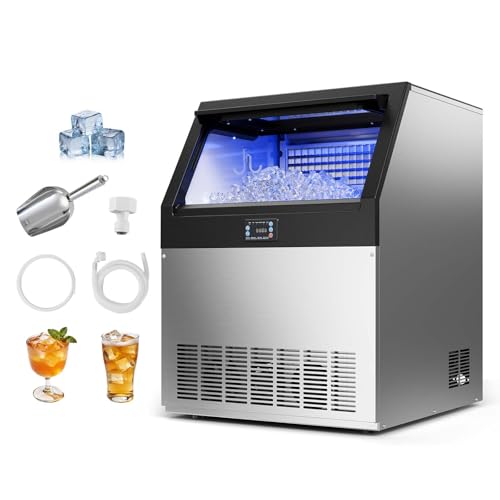
The best crushed ice smoothie makers are not really ice makers at all, and it is worth saying so plainly at the start: they are blenders powerful enough to turn hard freezer ice into snow and fold it seamlessly into a smoothie. If you landed here expecting a countertop ice machine, our crushed ice and pellet guides in this cluster cover those; this guide is for the other half of the job, the machine that takes ice, frozen fruit and liquid and produces a smoothie with no crunchy shards, no unblended corners and no burnt-motor smell. That job is harder than it sounds, and it is where cheap blenders go to die.
Crushing ice well demands three things at once: enough motor power to keep the blades moving under load, a blade and jar geometry that pulls the mixture down into the vortex instead of letting ice ride on top, and controls that let you pulse and ramp rather than simply blasting. The six blenders below were chosen against exactly those criteria, from the Ninja machines whose Total Crushing design is built around ice, through the Vitamix and Blendtec flagships, to a budget Hamilton Beach whose Ice Sabre blades punch above its tier.
Frozen fruit raises the stakes further. A smoothie maker that handles ice cubes but stalls on frozen mango or fibrous greens is only half a machine, so each review weighs frozen-ingredient performance alongside pure ice crushing. Jar size matters too: a 72-ounce pitcher serves a family’s breakfast round, while personal cups serve the solo commuter. Read the badges by your household pattern first and the power figures second; in this category, geometry and workflow beat raw wattage more often than marketing suggests.
In this guide
Quick Picks
Ninja’s BL610 is the ice-crushing value benchmark, the BN701 adds Auto-iQ convenience, the Vitamix 5200 is the long-life flagship, the Blendtec brings preprogrammed cycles, the Ninja Kitchen System adds food processing, and the Hamilton Beach Wave Crusher covers tight budgets.
Best Overall — Ninja Professional Blender BL610. 1000 watts of Total Crushing power in a 72-ounce pitcher: the benchmark for turning ice and frozen fruit into smoothies at a fair price. Check the current price on Amazon.
Best with Auto Programmes — Ninja Professional Plus Blender BN701. A 1400 peak-watt step up with three Auto-iQ presets for smoothies, frozen drinks and ice cream, on the same 72-ounce Total Crushing platform. Check the current price on Amazon.
Best Premium — Vitamix 5200. The professional-grade classic: variable speed control, a 64-ounce container, stainless blades and a self-cleaning cycle, built for a decade of daily use. Check the current price on Amazon.
Best Preprogrammed Cycles — Blendtec Classic 575. Professional-grade power with four preprogrammed cycles and five speeds, in the wide WildSide+ jar that handles big frozen batches. Check the current price on Amazon.
Best Blender-Processor Combo — Ninja Kitchen System Pro BL770. 1500 watts driving a 72-ounce crushing pitcher, an 8-cup food processor bowl and two 16-ounce travel cups in one system. Check the current price on Amazon.
Best Budget — Hamilton Beach Wave Crusher Blender 54221. A budget glass-jar blender with Ice Sabre blades, 700 watts and 14 functions, designed to keep ice moving into the blades. Check the current price on Amazon.
How These Picks Were Chosen
Every blender here was verified against Amazon’s catalogue data, and the power figures, jar sizes and programme details in the spec boxes come from those listings rather than from brand marketing pages. We shortlisted for ice competence first: a model only qualified if its design, blade system and programme set are explicitly built for crushing ice and frozen drinks, not merely rated for them in passing.
Balance came next. The list spans the value tier, the mid-range and the two professional-grade flagships, because smoothie households split between people replacing a cheap blender every two years and people buying a decade-long appliance once. We also weighed jar and cup ecosystems, cleaning effort, since a blender that is annoying to wash gets used less, and noise, since breakfast smoothies happen in sleeping households. Where a famous model was excluded, it was usually because a sibling in the same line covered ice duty more directly.
The 6 Best Crushed Ice Smoothie Makers, Reviewed
Ninja Professional Blender BL610 — Best Overall
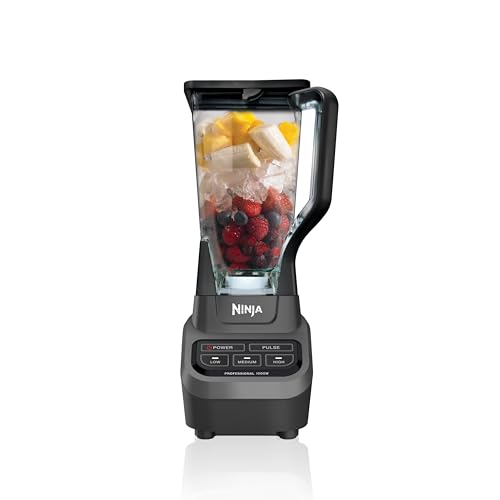
The BL610 is the blender most smoothie households should start with, because its Total Crushing blade stack was designed for exactly the task in this search: pulverising ice and frozen ingredients quickly and evenly. The 72-ounce pitcher handles family batches, the controls are simple enough for half-asleep mornings, and dishwasher-safe parts keep cleanup from becoming the reason the machine gathers dust. It has been the category’s reference value pick for years for good reason.
Strengths
- Total Crushing technology built specifically for ice and frozen fruit
- Large 72-oz pitcher suits family smoothie rounds
- Dishwasher-safe parts make daily use realistic
Trade-offs
- Blade stack is sharp and demands care when washing by hand
- Not the quietest machine at full power
- Fewer automated programmes than the Auto-iQ models
| Power | 1000W |
| Pitcher | 72 oz |
| Technology | Total Crushing |
| Care | Dishwasher-safe parts |
The stacked blade design is the whole story: blades at several heights engage the mixture throughout the jar, so ice gets pulled down and shattered rather than bouncing on the surface. In practice that means a frozen strawberry and spinach smoothie reaches drinkable smoothness without the stop-shake-restart ritual that defines lesser blenders. Frozen drinks like margaritas come out with the fine, even texture that separates a good machine from a loud one.
Ownership is uncomplicated and inexpensive by flagship standards. The trade-offs are refinement rather than capability: more noise, simpler controls, and plastics where Vitamix uses heavier materials. For the household whose question is simply which machine crushes ice into great smoothies without drama or a flagship bill, the BL610 remains the answer to beat.
Best for: families wanting proven ice-crushing smoothies at a fair tier / Not suited for: buyers wanting automated programmes and premium build
Check on Amazon to see the current configuration and delivery options.

Ninja Professional Plus Blender BN701 — Best with Auto Programmes
The BN701 is the BL610’s smarter sibling for households that value a button press over a learning curve. Its Auto-iQ presets run timed pulse-and-blend patterns tuned for smoothies, frozen drinks and even ice cream textures, so the machine manages the technique while you find the lids and straws. Peak power rises to 1400 watts, which shows up as faster breakdown of dense frozen loads. Choose it if multiple people with different skill levels will use the blender.
Strengths
- Auto-iQ presets automate smoothie and frozen drink technique
- 1400 peak watts handle dense frozen mixtures quickly
- Same family-size 72-oz pitcher and dishwasher-safe design
Trade-offs
- Costs more than the BL610 for convenience rather than a new capability class
- Presets reduce the manual control some users prefer
- Still a loud machine at full tilt
| Power | 1400 peak watts |
| Pitcher | 72 oz |
| Programmes | 3 Auto-iQ presets |
| Technology | Total Crushing |
Auto-iQ’s value is consistency. A preset that pulses to settle the mixture, ramps to crush, then finishes at speed produces the same smoothie on a distracted Tuesday as on a careful Saturday, and it teaches new users what a good cycle looks like. For frozen drinks the preset’s pulsing prevents the air-pocket stall that makes manual blending stop-start, and the extra peak power shortens the loud part of the process, which households with sleeping children will appreciate in relative terms.
If you enjoy driving a blender manually, the BL610 gives you the same crushing platform for less. If your household wants results without technique, the BN701 is the better buy and the one guests and teenagers will use successfully without instruction. Either way, the Total Crushing core means ice is never the weak point.
Best for: households wanting one-button smoothie consistency / Not suited for: manual-control enthusiasts on a tight budget
Check on Amazon to see the current configuration and delivery options.

Vitamix 5200 — Best Premium
The Vitamix 5200 is the buy-once answer. Its variable speed dial and high-speed switch give you manual authority over every texture from crushed ice snow to silky puree, the 64-ounce container handles family batches, and the build quality is the reason these machines are measured in decades. It suits the serious daily smoothie drinker who has already worn out a cheaper blender and is done with that cycle.
Strengths
- Professional-grade build with stainless blades
- Full variable speed control plus high-speed switch
- Self-cleaning cycle simplifies daily upkeep
Trade-offs
- Premium price well above the Ninja tier
- Manual control has a learning curve for beginners
- Tall container needs cabinet clearance for storage
| Container | 64 oz |
| Controls | Variable speed, high-speed switch |
| Blades | Stainless steel |
| Care | Self-cleaning cycle |
What the premium buys is friction-generated thoroughness: the 5200’s vortex and blade design process mixtures so completely that frozen fruit, ice, nuts and fibrous greens all reach genuine smoothness, and the same power lets the machine heat soups through blending alone. Ice crushing is almost a by-product of that capability; the machine turns cubes to snow without strain and without the metallic protest cheaper motors make. The tamper-driven workflow becomes second nature within a week.
Judge the price across years of daily use and the arithmetic changes: one flagship outlasts several budget machines and holds its performance throughout. The honest costs are the learning curve and the noise, which is substantial at full speed. For the committed smoothie household, this is the endgame machine, and its presence on the list is the standard the value picks are measured against.
Best for: daily smoothie drinkers wanting a decade-long appliance / Not suited for: occasional users or the strictly budget-bound
Check on Amazon to see the current configuration and delivery options.

Blendtec Classic 575 — Best Preprogrammed Cycles
The Classic 575 is the other flagship philosophy: instead of a tamper and a dial, Blendtec gives you a wide jar that pulls mixtures into the blade without intervention, four preprogrammed cycles including the frozen-drink work, and five manual speeds when you want them. It suits smoothie makers who want flagship results with a walk-away workflow, and its jar capacity serves big households and batch makers.
Strengths
- Four preprogrammed cycles cover smoothies and frozen drinks
- Wide WildSide+ jar blends without a tamper
- Professional-grade power with self-cleaning
Trade-offs
- Flagship pricing alongside Vitamix
- Wide jar is awkward for very small single servings
- Preprogrammed style suits some users less than a manual dial
| Jar | WildSide+ (90 oz total capacity class) |
| Programmes | 4 preprogrammed cycles |
| Speeds | 5 |
| Care | Self-cleaning |
The WildSide+ jar’s fifth side creates a vortex that drags ice and frozen fruit into the blade path, which is why Blendtec owners rarely discuss stalling. On the smoothie cycle the machine ramps through a pattern that first breaks the frozen load down, then refines it, producing the uniform texture that defines a flagship. Ice for frozen drinks comes out fine and even, with no surviving shards to ambush the last sip.
Choosing between this and the Vitamix is a workflow preference, not a quality verdict: programmed and hands-off versus manual and tactile. Small households should note the jar’s width makes tiny batches less efficient; everyone else gets a machine that treats crushed ice smoothies as its home turf. Self-cleaning keeps the daily routine to a rinse in practice.
Best for: hands-off flagship buyers and big-batch smoothie makers / Not suited for: solo drinkers making small single servings
Check on Amazon to see the current configuration and delivery options.

Ninja Kitchen System Pro BL770 — Best Blender-Processor Combo
The BL770 is for kitchens that want one motor to rule breakfast and dinner prep alike. The 72-ounce pitcher with Total Crushing handles the ice and smoothie brief at full family scale, the 8-cup processor bowl takes over for salsa, dough and chopping, and the two 16-ounce cups blend personal smoothies to take away. If counter space forces a choice between a blender and a processor, this system refuses it.
Strengths
- 1500W system covers blending and food processing
- 72-oz pitcher plus two personal 16-oz cups
- Replaces two appliances in small kitchens
Trade-offs
- More parts to store and wash than a blender alone
- Processor is very good, not a flagship standalone equal
- System footprint grows once all attachments are out
| Power | 1500W |
| Pitcher | 72 oz |
| Processor | 8-cup bowl |
| Cups | 2 x 16 oz |
For the purposes of this guide, the headline is that the smoothie side makes no compromises: the same crushing performance as Ninja’s dedicated blenders, at higher power, with personal cups that solve the solo-morning problem the big pitcher creates. The processor then earns its shelf space across the week, from smoothie-adjacent jobs like nut butters and frozen desserts to ordinary dinner prep.
The cost of versatility is logistics: attachments need storage, and washing up after a full session involves more pieces. Households that will use both halves weekly get excellent value; households that only blend should save the money and take the BL610. As a system purchase for a small, hard-working kitchen, the BL770 is the most capable pick on this list.
Best for: small kitchens wanting blending plus processing in one system / Not suited for: blend-only households short on storage
Check on Amazon to see the current configuration and delivery options.

Hamilton Beach Wave Crusher Blender 54221 — Best Budget
The Wave Crusher is the honest budget answer: a 40-ounce glass jar, 700 watts, and a blade and wave-action design intended to pull ice down continuously instead of letting it surf on top. It will not match the Ninjas for speed or the flagships for silkiness, but for a first smoothie blender, a dorm, or a second machine for a holiday home, it performs the core job at a fraction of the cost.
Strengths
- Lowest price tier on this list with a glass jar
- Ice Sabre blades designed for ice crushing
- 14 functions give useful speed variety
Trade-offs
- 700W means slower going on dense frozen loads
- 40-oz jar limits batch size
- Very hard frozen mixtures may need liquid added or pauses
| Power | 700W |
| Jar | 40 oz glass |
| Blades | Ice Sabre |
| Functions | 14 |
Budget ice crushing is about managing expectations and technique: add liquid first, use the pulse to settle the load, and let the wave action do its work in stages. Done that way, the Wave Crusher produces genuinely smooth everyday smoothies from ice and frozen fruit, which is all most beginners ask. The glass jar is a real plus at this tier, resisting stains and odours better than budget plastic.
Heavy daily users will outgrow it, and frozen blocks straight from a deep freeze will test its patience. But as an entry point that respects a tight budget without pretending to be a flagship, it earns its badge. Many owners keep it as the machine that proved the smoothie habit was real before they upgraded, which is a respectable career for any budget appliance.
Best for: beginners, dorms and tight budgets wanting real smoothies / Not suited for: heavy daily users with dense frozen recipes
Check on Amazon to see the current configuration and delivery options.
Comparison Table
| Pick | Badge | Key spec | Best for |
|---|---|---|---|
| Ninja Professional Blender BL610 | Best Overall | 1000W Total Crushing, 72 oz pitcher | families wanting proven ice-crushing smoothies at a fair tier |
| Ninja Professional Plus Blender BN701 | Best with Auto Programmes | 1400 peak W, Auto-iQ presets, 72 oz | households wanting one-button smoothie consistency |
| Vitamix 5200 | Best Premium | 64 oz, variable speed, professional grade | daily smoothie drinkers wanting a decade-long appliance |
| Blendtec Classic 575 | Best Preprogrammed Cycles | 4 cycles, 5 speeds, WildSide+ jar | hands-off flagship buyers and big-batch smoothie makers |
| Ninja Kitchen System Pro BL770 | Best Blender-Processor Combo | 1500W, 72 oz pitcher + 8-cup processor | small kitchens wanting blending plus processing in one system |
| Hamilton Beach Wave Crusher Blender 54221 | Best Budget | 700W, 40 oz glass jar, Ice Sabre blades | beginners, dorms and tight budgets wanting real smoothies |
Power figures mix continuous and peak ratings across brands, so treat them as rough tiers rather than laboratory rankings. The practical ladder is: Hamilton Beach for budget adequacy, the two Ninjas for the value sweet spot, the BL770 when processing joins the brief, and Vitamix or Blendtec when the purchase is meant to end the search for a decade. Jar size then splits the field by household: 72-ounce pitchers for families, personal cups and smaller jars for solo drinkers.
How to Choose a Crushed Ice Smoothie Maker
Judge ice crushing as a system, not a wattage number. The blade assembly, jar shape and control pattern decide whether ice is pulled into the vortex and shattered evenly or left bouncing on top of the mixture. Ninja’s stacked Total Crushing blades, Blendtec’s wide jar geometry and Vitamix’s vortex-and-tamper approach are three different engineering answers to the same problem, and all three work. A generic tall jar with a small blade at the bottom is the design that fails, whatever its motor claims. When a listing talks specifically about its ice system, as every pick here does, that is a good sign; when it only quotes watts, be sceptical.
Match capacity to your real batch. A 72-ounce pitcher is a family tool: brilliant for four smoothies at once, wasteful and less effective for one small drink, because small loads spread thin and blend unevenly in big jars. Solo drinkers should favour systems with personal cups, like the BL770, or accept a mid-size jar. Also consider what else goes into your smoothies: leafy greens and frozen mango are easy; frozen banana chunks, nut butters and protein-heavy mixtures are the loads that separate adequate machines from strong ones.
Finally, price the machine across its life. A budget blender replaced every eighteen months costs more than a mid-range Ninja that runs for years, and the flagships amortise across a decade of daily use. Noise and cleaning belong in the same calculation: the machine you will rinse without resentment and run without waking the house is the machine whose cost per smoothie actually falls. Every pick here is dishwasher-friendly or self-cleaning for exactly that reason.
Why Do Some Blenders Crush Ice Better Than Others?
Ice is a genuinely hard blending load: it is solid, it floats, and it fractures unpredictably. A successful ice blender solves three problems in sequence. First, it must start the load moving, which is why pulsing patterns and blade stacks matter at the beginning of a cycle. Second, it must keep ice circulating through the blade zone rather than letting it ride above the vortex, which is jar geometry’s job. Third, it must sustain blade speed as the mixture thickens into a slurry, which is where motor torque earns its keep. Fail at any stage and you get the familiar result: snow at the bottom, intact cubes on top, and a cook shaking the jar in frustration.
Technique can rescue a mediocre machine partway: liquid first, ice and frozen fruit on top, pulse to settle, then blend, adding liquid in splashes if the vortex stalls. The picks in this guide minimise how much technique you need. Auto-iQ and preprogrammed cycles automate the pulse-and-ramp pattern; the flagships substitute raw processing thoroughness; the budget Hamilton Beach asks the most of the user, which is the honest price of its tier.
One safety and longevity note applies across the board: ice load is hardest on a blender in the first seconds, so avoid running a dry jar of cubes on the highest speed from a standstill unless the manufacturer designs for it, and let very large frozen pieces thaw for a few minutes or break them down first. Treat the machine’s ice system as designed and it will last; abuse it as a general-purpose crusher and even good machines wear early.
Smoothie Technique: Getting Cafe Texture at Home
Layering decides texture more than most owners realise. Liquids go in first, then soft ingredients and greens, then frozen fruit, and ice last, so the vortex forms in the liquid and pulls the solids down in order. Fill liquid to roughly cover the blades before starting; too little liquid is the most common cause of stalling and chunky results, ahead of any machine limitation. Sweetness and acidity balance at the end: a squeeze of citrus or a pinch of salt lifts a flat smoothie more reliably than extra sugar.
For crushed ice specifically, smaller ice blends faster and more evenly. If your freezer produces large cubes, the nugget ice from a countertop machine in our companion guides is actually the ideal smoothie input: soft, small and quick to incorporate, which is one reason the ice maker and blender guides sit in the same cluster. Frozen fruit can partly or wholly replace ice when you want flavour without dilution; a frozen banana base gives milkshake body that ice alone cannot.
Serve immediately for the best texture, because smoothies separate and oxidise as they sit. If mornings are rushed, blend the night before without the ice, refrigerate, and give it a ten-second morning blend with a handful of ice to restore the frost and body. That two-stage trick, plus a machine with real crushing ability, is the whole secret behind cafe-textured smoothies at home.
Personal Cups, Family Pitchers and the Two-Blender Household
Smoothie households divide by rhythm. The solo commuter wants a personal cup blended in ninety seconds and taken out the door; the family wants a 72-ounce pitcher that serves four breakfasts in one cycle; and many homes contain both people, which is why systems like the Ninja BL770, with a full pitcher plus personal cups, sell so well. Choosing wrong has a daily cost: big pitchers blend small loads badly, spreading them thin across the base, while personal blenders make family breakfast a queue of individual cycles. Be honest about which rhythm dominates your mornings and let it pick the format.
There is a legitimate two-machine answer, and it is cheaper than it sounds: a strong pitcher blender for family and frozen-drink duty, plus inexpensive personal cups that fit the same base where the ecosystem allows, covers both rhythms without a second motor. What does not work is the reverse compromise, a mid-size jar that is mediocre at both jobs. The list above is deliberately built from machines that are excellent at at least one rhythm, with the BL770 as the designed bridge between them.
Storage belongs in this decision too. Pitchers, processor bowls and cup sets consume cabinet space in proportion to their versatility, and the household that buys a full system for a small kitchen should plan the shelf before the purchase. Measure the cabinet, count the parts in the listing’s bundle, and remember that the blender you can reach is the blender you will use; a flagship exiled to a high shelf loses to a mid-range machine that lives on the counter.
Frozen Ingredients Decoded: What Actually Stresses a Blender
Not all frozen loads are equal, and knowing the hierarchy helps you judge both machines and recipes. Ice cubes are hard but brittle; they fracture readily once the vortex moves them, which is why even the budget Wave Crusher handles them with decent technique. Frozen banana and mango are dense and fibrous, demanding sustained torque rather than impact. Frozen berries are small and numerous, blending easily but hiding unblended in jar corners when geometry is poor. Leafy greens are not frozen at all but resist breakdown, turning stringy in weak machines and silky in strong ones. A smoothie maker that handles the full hierarchy, as the Ninjas and flagships here do, earns its place; one that only manages ice and berries will disappoint by the second week of real recipes.
Recipe design can rescue any machine partway. Cut large frozen fruit smaller before freezing, freeze bananas in coins rather than halves, and keep a proportion of liquid and soft ingredients high enough to sustain the vortex. Add protein powders and nut butters after the frozen load has broken down, so they incorporate instead of coating the jar walls. These are the techniques cafe staff use instinctively, and they narrow the gap between a budget machine and a flagship more than any other factor.
Finally, respect the thermal limit. Long blends on maximum load heat entry-level motors, and the protection cut-out that follows is the machine saving itself, not failing. Blend in the cycles the programmes suggest, let a hard-working budget machine rest between back-to-back family batches, and it will serve for years. The flagships tolerate abuse better, which is part of what their price buys, but no blender of any tier enjoys being run dry, stalled and ignored.
Blender Care: Keeping Blades, Jars and Motors Alive
A smoothie blender’s enemies are residue, heat and shock, and care is mostly the management of those three. Residue first: smoothie mixtures dry into a cement of fruit sugars and protein that punishes late cleaning and flavours the next blend. The ten-second rinse immediately after pouring is the highest-value habit in blender ownership; the self-cleaning cycle on the Vitamix and Blendtec formalises it with warm water and a drop of soap, and the Ninjas’ dishwasher-safe parts make the lazy route a legitimate one. Gaskets and blade assemblies deserve a proper wash weekly if the machine is used daily, because that is where residue hides from rinses.
Heat second: motors warm under load, and dense frozen mixtures at full speed are the heaviest load a domestic blender knows. Work in the cycles the programmes define, avoid running a stalled jar, and let a budget machine rest between consecutive family batches. A burnt smell is the machine reporting abuse; heed it once and it rarely repeats. Ventilation matters in storage too: a blender pushed hard against a wall in a hot kitchen ages faster than the same machine with air around it.
Shock third: ice is impact, and jars and blades absorb it. Avoid dropping frozen blocks from a height into an empty jar, avoid metal utensils inside a running or stationary jar, and never use the tamper of one brand in the jar of another. Blade assemblies dull over years of ice work; on the flagship brands they are replaceable parts, which is another quiet reason those machines are measured in decades. Treat the blender as the hardest-working small appliance in the kitchen, because it is, and its lifespan will repay the respect.
Finally, store the machine assembled and reachable. Blenders stored in pieces in deep cabinets get used less, and a smoothie habit that lapses for friction reasons wastes the entire purchase. The counter is prime real estate, but for a daily smoothie household the blender has earned its place on it, ahead of appliances used weekly. Decide that consciously at purchase time and the machine’s cost per smoothie falls every single morning.
What to Make Beyond Smoothies: Getting Full Value From an Ice-Crushing Blender
A blender that crushes ice properly is a more versatile machine than its name suggests, and owners who explore that range get far more value from the purchase. Frozen drinks are the obvious extension: margaritas, daiquiris, granitas and coffee frappes all live or die on the same fine, even crush as a smoothie. Frozen desserts follow naturally, from banana-based soft serve to sorbets worked from frozen fruit, and the Auto-iQ and flagship programme lists on this page include ice-cream settings precisely because the manufacturers know where their machines end up on summer evenings.
Savoury work broadens the case further. Salsas and chilled soups reward the same vortex control; nut butters and hummus reward the torque; breadcrumbs, spice blends and crushed-ice beds for serving oysters or prawns all pass through the same jar. The BL770’s processor bowl extends that range into dough and chopping, which is why it suits small kitchens as a system rather than a single tool. Even baby food and protein shakes, the unglamorous daily loads, are handled better by a machine that never stalls on a frozen strawberry.
The practical advice is to buy for the smoothie brief, as this guide does, and let the rest be dividend. A machine chosen for ice-crushing competence arrives with the power, geometry and controls that everything else on this list of uses also needs. Owners who keep a short mental catalogue of five or six regular jobs for the blender, rather than one, consistently report the highest satisfaction with the purchase, because the machine’s cost is divided across a week of small services instead of a single morning ritual.
A Quick Word on Noise and Morning Households
Blenders are loud, and ice makes them louder; in a household where smoothies happen at six and other people sleep until seven, that is a real selection criterion rather than a joke. No machine on this list is quiet, but they differ in how long the noise lasts: powerful machines finish the loud phase in seconds, while weaker ones grind on, and a short blast at high power usually disturbs a household less than a long struggle at medium. Programmed cycles help by removing the temptation to run extra insurance blends. Practical mitigations are old and effective: a rubber mat under the base, blending with the jar lid firmly held, and, in extremis, prepping the frozen ingredients the night before so the morning blend is shorter. Choose the strongest machine your budget allows and the noise problem mostly solves itself through brevity.
How to Crush Ice in a Blender Without Wrecking It
Step 1: start with liquid. Add your milk, juice, yogurt or water first, enough to cover the blades. Liquid creates the vortex that pulls ice down; a dry start is how jars stall and motors strain.
Step 2: add ice in stages. Drop in a handful of cubes, pulse several times to break them down, then add the rest with your frozen fruit. Staging keeps the load moving and produces finer, more even crush than dumping everything in at once.
Step 3: pulse, then ramp. Use short pulses until the big pieces are gone, then run a steady medium-to-high blend for twenty to forty seconds until the sound evens out and the surface moves as one mass. On Auto-iQ and preprogrammed machines, simply choose the smoothie or frozen drink cycle and let it run to completion.
Step 4: check and adjust. If shards remain, the mixture is too dry or the load too large; add a splash of liquid and blend again rather than running the motor longer. If the result is thin, add more frozen fruit or ice and pulse briefly. Rinse the jar immediately after serving; a ten-second rinse now saves a scrub later, and the self-cleaning cycle on the flagship models is just warm water, a drop of soap and thirty seconds of blending.
Common Buying Mistakes
Buying on wattage alone. Blade and jar design decide ice performance as much as power. A well-designed 1000W Ninja out-crushes generic higher-watt machines because its system keeps ice in the blade zone.
Blending a dry jar of ice. Starting with cubes and no liquid stalls the vortex and strains the motor. Liquid first, ice in stages, every time.
Oversizing the jar for solo smoothies. Small loads in a 72-ounce pitcher blend unevenly. Solo drinkers should use personal cups or a right-sized jar.
Expecting budget machines to behave like flagships. The Wave Crusher makes good smoothies with a little technique and patience. Judging it by Vitamix speed guarantees disappointment it does not deserve.
Letting smoothie residue dry in the jar. Dried smoothie is genuinely hard to remove and harbours odours. Rinse immediately or use the self-cleaning cycle while the jar is still wet.
Final Recommendation
Most households should buy the Ninja BL610: proven Total Crushing performance, a family pitcher and a fair price. Step up to the BN701 if one-button Auto-iQ consistency will get the machine used more, or to the BL770 if food processing belongs in the same purchase. Buy the Vitamix 5200 or the Blendtec Classic 575 when the blender is a decade-long daily appliance and budget allows; choose between them by workflow, manual dial versus programmed cycles. On a tight budget, the Hamilton Beach Wave Crusher covers the brief honestly. Check price on Amazon, compare the current bundle contents on the listing, and pick the jar ecosystem that matches your household’s mornings.
Shortlist links: Ninja Professional Blender BL610 — check price on Amazon · Ninja Professional Plus Blender BN701 — check price on Amazon · Vitamix 5200 — check price on Amazon.
Keep exploring the cluster: Best Crushed Ice Makers List Best Countertop Pellet Ice Makers Best Coffee Pots With Hot And Cold Best Designer Kitchen Faucets Best Durable Kitchen Faucets
Frequently Asked Questions
What is the difference between a smoothie maker and an ice maker?
An ice maker produces ice; a crushed ice smoothie maker is a blender powerful enough to crush ice and frozen fruit into a finished smoothie. The two pair well together, and many households use nugget ice from a countertop machine as their blender’s ice supply.
How much power does a blender need to crush ice well?
Power helps, but design decides. The picks here range from 700 to 1500 watts, and the mid-range Ninjas crush ice better than many higher-watt generic blenders because their blade stacks and jars keep ice circulating through the blades. Judge the ice system, not the wattage alone.
Can a budget blender really make smooth smoothies?
Yes, with technique: liquid first, ice added in stages, pulsing before a steady blend. The Hamilton Beach Wave Crusher produces good everyday smoothies that way. What budget machines cannot match is flagship speed and silkiness on dense frozen loads.
Vitamix or Blendtec for crushed ice smoothies?
Both are excellent; choose by workflow. Vitamix gives manual variable-speed control and a tamper for thick mixtures. Blendtec gives preprogrammed cycles and a wide jar that blends hands-off. Ice performance is flagship-class either way.
Should I use ice cubes or nugget ice in smoothies?
Nugget ice blends faster and more evenly because it is small and soft, and it is the ideal input if you own a countertop ice maker. Standard cubes work fine in the machines on this list; just add them in stages over liquid.
How do I stop my smoothie tasting watery?
Use frozen fruit for part of the ice’s job, keep liquid modest at the start, and serve immediately. Wateriness usually comes from too much liquid plus fully melted ice, not from the blender itself.
Can these blenders crush ice without liquid?
Most can break down a small amount of ice dry, and the flagship and Ninja models handle it best, but it is hard on any machine and produces uneven snow. For drinks, always blend ice with liquid or frozen fruit; reserve dry crushing for small garnish quantities and use short pulses.
What is the best blender here for frozen cocktails?
The Ninja BN701 and BL610 are the frozen-drink specialists at sane prices, with Blendtec’s preprogrammed cycles the flagship alternative. All three produce the fine, even texture that separates a proper frozen margarita from a chunky one.
Can I make nut butter or hummus in these blenders?
The flagship models and the Ninja BL770 system handle nut butters and hummus well, using the tamper or processor bowl as appropriate. Budget models can manage hummus with enough liquid but will struggle with stiff nut butters; work in small batches and rest the motor between cycles if you try.