Disclosure: airfryerkitchensupply.com is reader-supported. When you buy through links on our site, we may earn an affiliate commission at no extra cost to you.
Where to buy
If you are shopping for the best blenders for college students, the winning move is to buy for your real routine — the shakes and smoothies you will actually make between classes — at a tier your semester budget survives. Every pick below was verified against this site’s Amazon catalog data, and each links to its live listing so you can check price on Amazon and confirm the cups, lids and accessories included before you spend.
- nutribullet Turbo Personal Blender (Best Overall Value) — Check the current price on Amazon
- Ninja Nutri Blender BQ301 (Best for Protein Shakes) — Check the current price on Amazon
- Ninja Blast Portable Blender BC151BK (Best Cordless) — Check the current price on Amazon
- Hamilton Beach Portable Blender 51102G (Best Budget) — Check the current price on Amazon
- nutribullet Personal Blender NB30150 (Best Simple Mid-Budget Pick) — Check the current price on Amazon
- Ninja Professional Blender BL610 (Best for Roommate Batches) — Check the current price on Amazon
The best blenders for college students are an exercise in value engineering. A student budget is not just smaller than a household budget; it is timed differently — money arrives in lumps at semester starts and evaporates by finals — and it competes with food, transport, course materials and a social life. The right blender is therefore the one that delivers the most daily use per unit of money over a whole degree: cheap enough to buy without pain, capable enough to replace a daily cafe habit, durable enough to survive four years of moves, and small enough to live in whatever room comes next.
This roundup is organized by student archetype rather than by raw performance, because that is how the money question actually resolves. There is a best-overall value pick that most students should simply buy. There is a three-cup pick for the protein-shake crowd whose blender is gym equipment. There are two genuine budget picks at different sizes for students whose blending is occasional or whose funds are spoken for. And there is one roommate-batch pick for the student who becomes their floor’s smoothie maker — a real college role, and a fun one.
One calculation runs under the whole guide and is worth doing with your own numbers: a cafe smoothie habit costs more per week than most of these machines cost outright. A blender that you use daily pays for itself in the first month or two of the semester; a blender you use twice pays for itself never. Honesty about your own consistency — not motor specs — is the highest-value research you can do before buying anything on this list.
In this guide
Quick Picks
Ranked by value for student life specifically: daily-use reliability per dollar, cups and lids that suit a backpack routine, and motors matched to archetypal student drinks from gym shakes to meal smoothies.
nutribullet Turbo Personal Blender — Best Overall Value. A 1000W personal blender with 32 oz and 24 oz cups and flip-top travel lids. The bigger cup makes a real meal smoothie, the motor handles frozen fruit without drama, and the tier stays student-sane. For most students, this is the one to buy. Check price on Amazon.
Ninja Nutri Blender BQ301 — Best for Protein Shakes. Three 20 oz cups, two spout lids and a storage lid, on a 900 peak-watt push-to-blend base. For the student whose blender is really gym equipment — shakes twice a day, every day — the three-cup rotation is the feature that matters most. Check price on Amazon.
Ninja Blast Portable Blender BC151BK — Best Cordless. The dorm-proof option: USB-C charging, an 18 oz vessel, no base and no cord. For students in strict residence halls, tiny rooms or all-day campus routines, the Blast removes every placement problem a corded blender creates. Check price on Amazon.
Hamilton Beach Portable Blender 51102G — Best Budget. Two 14 oz travel jars and a 300W peak motor at the lowest tier in this roundup. For shakes, milkshakes and soft smoothies, it does the essential job for the essential price — the right first blender when money is genuinely tight. Check price on Amazon.
nutribullet Personal Blender NB30150 — Best Simple Mid-Budget Pick. A 700W personal blender with a 21 oz tumbler and an 18 oz cup. It sits in the sensible middle: real frozen-fruit capability, two useful cup sizes, no features a student will not use, at a tier below the premium personals. Check price on Amazon.
Ninja Professional Blender BL610 — Best for Roommate Batches. A 1000W full-size blender with a 72 oz pitcher — the social pick. If you are the student who makes smoothie rounds for the suite, frozen drinks for movie night and salsa for the floor, this is the machine that makes you popular. Check price on Amazon.
How These Picks Were Chosen
All six picks were verified against this site’s Amazon catalog data first, confirming motors, cup and jar configurations and included lids match real listings. The student-specific ranking then weighted value over a degree, not performance on day one: cost tier against a semester budget, durability across moves and multiple users, serving sizes matched to student drinks, and the likelihood that the machine sustains a daily habit — because the habit, not the hardware, is where the money is saved.
Motor figures were interpreted against student drinks specifically. Protein shakes need almost no power; frozen-fruit meal smoothies need a genuine threshold of it; ice-heavy group drinks need pitcher-scale strength. Picks were matched to those real loads rather than ranked by wattage, which is why a 300W budget machine and a 1000W pitcher can both be correct answers in the same roundup for different students.
Running costs were considered honestly. Cups, lids and seals are the consumables of personal blending; picks with multiple cups included scored better because they postpone those purchases. No pick in this list requires proprietary pods, filters or subscriptions — a blender that keeps billing a student after purchase would fail this roundup’s entire premise.
The 6 Best blenders for college students — Reviewed in Detail
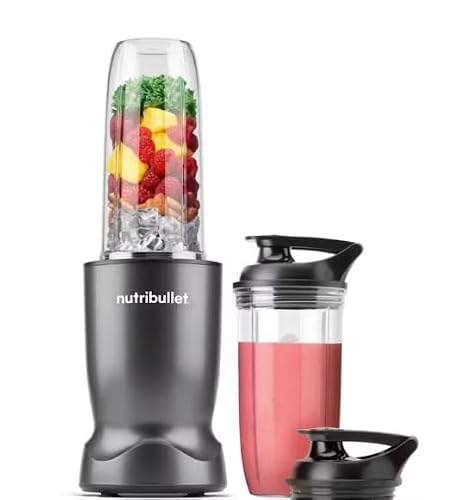
1. nutribullet Turbo Personal Blender — Best Overall Value
The nutribullet Turbo takes the top spot for students because it balances the three things student value is made of: capability, serving size and price tier. The 1000W motor is comfortably past the frozen-fruit threshold, the 32 oz cup holds a genuine breakfast rather than a snack, and the flip-top lids turn both cups into bottles that survive a lecture-hall backpack. It is the machine a student buys in September and is still using, without thinking about it, in May of senior year.
Strengths
- 1000W motor clears the frozen-smoothie bar with room to spare
- 32 oz and 24 oz cups cover meal smoothies and quick shakes
- Flip-top travel lids suit a carry-it-to-class routine
Trade-offs
- Personal format only; no group batches
- Costs more than the true budget picks below
- Two cups may still mean a midweek wash rotation for daily users
Key specs
- Motor: 1000 watts
- Cups: 32 oz cup and 24 oz cup
- Lids: (2) flip-top travel lids
The value case is consistency. Weaker budget machines make smoothies that are fine in week one and gritty by midterms as blades meet their thousandth frozen strawberry; the Turbo’s motor headroom means the texture in month eight resembles the texture in week one, and that sameness is what keeps a habit alive. Habits are the whole economics here: a daily homemade smoothie habit is where the savings live, and any machine that quietly kills the habit through mediocre results is expensive at any price.
Ownership is simple in the student-approved ways: blend in the cup, lid on, rinse when you are back, dishwasher when you have one. The cups are big enough to double as your water bottle between classes, which sounds trivial and is actually how an appliance earns permanent bag space in a life with very little spare room in it.
Best for: most students wanting one capable daily smoothie machine / Not suited for: group blending or the tightest budgets
Check the current price on Amazon for the nutribullet Turbo Personal Blender.

2. Ninja Nutri Blender BQ301 — Best for Protein Shakes
The Ninja BQ301 is built around a student’s most predictable blending job: the protein shake, twice a day, forever. The headline is not the 900 peak-watt motor, adequate as it is for shakes and soft smoothies; it is the three 20 oz cups. One in the gym bag, one in the dishwasher or sink, one clean and ready — that rotation is what a twice-daily habit actually requires, and most personal blenders make you buy it separately or live without it.
Strengths
- Three cups support a genuine twice-daily rotation
- Push-to-blend simplicity suits post-workout autopilot
- 900 peak watts handle shakes, soft fruit and ice chips easily
Trade-offs
- Cups are 20 oz; meal smoothies with heavy greens get tight
- Not the pick for hard frozen-fruit fortresses
- Spare lids beyond the included set are an extra purchase
Key specs
- Motor: 900 peak watts
- Cups: (3) 20 oz to-go cups
- Lids: 2 spout lids and 1 storage lid
- Operation: Push-to-blend
Shake quality is about powder incorporation, and the push-down pulse format is well matched to it: a few short presses, a shake of the cup, one more press, and protein powder disappears without the chalky clumps that ruin a post-workout drink. Add a banana or frozen berries and the motor still keeps pace. Students tracking macros will appreciate that the cup is the serving — what you blend is what you drink, with no pitcher residue quietly stealing a quarter of the shake.
It also moonlights respectably: morning smoothies, iced coffee blends and the occasional salsa all fit its envelope. What it is not is a meal-smoothie powerhouse or a group machine, and it does not pretend to be. For the gym-centered student, it is the most purpose-fit value in this roundup.
Best for: gym-going students blending protein shakes twice daily / Not suited for: meal-smoothie devotees or group cooking
Check the current price on Amazon for the Ninja Nutri Blender BQ301.

3. Ninja Blast Portable Blender BC151BK — Best Cordless
The Ninja Blast appears in this student roundup for the students the other picks cannot serve: those whose dorm bans or restricts corded appliances, whose room has no usable counter, or whose day is a campus-wide route from gym to library to job. A blender that charges like a phone, blends in its own leakproof vessel and lives in a backpack is not a compromise for those students — it is the only format that fits the life at all.
Strengths
- Cordless format sidesteps dorm appliance and space problems
- Leakproof vessel is the cup; nothing extra to carry or wash
- Credible ice and frozen-fruit performance for a portable
Trade-offs
- Battery power trails corded picks on thick blends
- Needs charging discipline to be ready when you are
- 18 oz servings only, one at a time
Key specs
- Vessel: 18 oz
- Power: Cordless, USB-C rechargeable
- Lid: Leakproof sip lid
- Care: Dishwasher-safe parts
The technique that makes cordless work is load management: liquid first, frozen fruit in modest pieces, a mid-blend shake for thick mixes. Students who adopt it get smooth, genuinely enjoyable results anywhere — a lounge, a gym lobby, a park between classes. Students who load it like a countertop machine learn about torque limits. Neither experience reflects a defect; portability has a physics price, and the Blast pays less of it than most portables.
Budget honesty applies here too: cordless convenience costs more per unit of blending power than any corded pick on this list. If your housing allows a corded personal blender and your routine is room-based, the value picks above serve you better. If placement is your binding constraint, this is the pick that turns an impossible purchase into a daily habit.
Best for: dorm-restricted, space-poor or constantly mobile students / Not suited for: thick-blend lovers or forgetful chargers
Check the current price on Amazon for the Ninja Blast Portable Blender BC151BK.

4. Hamilton Beach Portable Blender 51102G — Best Budget
The Hamilton Beach Portable Blender with two jars is the honest floor of this category: the least a student can spend and still own a blender that earns its shelf space. The two-jar inclusion is the thoughtful part — a spare jar transforms a budget blender from a wash-it-now chore into a rotation — and the 300W peak motor defines a clear, respectable envelope of shakes, milkshakes and soft-ingredient smoothies.
Strengths
- Lowest price tier here, with two jars included
- Blend-in-jar format means minimal washing
- Tiny footprint for the smallest rooms
Trade-offs
- 300W peak cannot handle hard ice or heavy frozen loads
- 14 oz jars are small servings
- No performance headroom as your blending ambitions grow
Key specs
- Motor: 300 watts peak power
- Jars: (2) 14 oz travel jars, BPA-free
- Blades: Stainless steel
- Format: Personal blender, blend in the travel jar
Judge this machine against its actual competition, which is not the other picks — it is the cafe. A student spending cafe money on shakes three times a week recovers this blender’s cost almost immediately, and its shakes are indistinguishable from what the cafe sells. Its smoothies are where the tier shows: fresh and soft frozen fruit yes, a cup of ice and frozen mango no. Buy it for the drinks inside its envelope and it is one of the best-value appliances a student can own.
Treat it as a first blender with a planned upgrade path and the purchase is wise twice: it proves whether you are actually a daily blender person — information worth having — and if you are, it becomes the backup or the hand-me-down when you step up to the Turbo or a Ninja in a later semester.
Best for: tight budgets, shake drinkers and first-blender buyers / Not suited for: frozen smoothie enthusiasts
Check the current price on Amazon for the Hamilton Beach Portable Blender 51102G.

5. nutribullet Personal Blender NB30150 — Best Simple Mid-Budget Pick
The nutribullet Personal Blender NB30150 is the quiet middle answer for students: not the cheapest, not the strongest, and for a large middle band of student life, exactly right. The 700W motor crosses the frozen-fruit threshold that budget 300W machines cannot, the 21 oz tumbler is a proper morning serving, and the 18 oz cup covers shakes and smaller blends. Nothing about it is exotic, which is precisely its appeal to a buyer who wants the decision to be over.
Strengths
- 700W handles frozen fruit credibly at personal scale
- Two practical cup sizes for smoothies and shakes
- Simple operation with no learning curve for roommates
Trade-offs
- Less headroom than the 1000W Turbo for dense, fibrous loads
- One travel lid included; heavy rotators may want spares
- Personal format limits, as with all solo picks
Key specs
- Motor: 700 watts
- Cups: 21 oz tumbler cup and 18 oz cup
- Lids: Travel lid included
- Care: Dishwasher-safe parts
The middle pick earns its place on texture reliability for the standard student repertoire: frozen berries and banana, spinach that disappears properly, protein shakes without grit, iced coffee blends that come out smooth. It asks the standard disciplines — liquid first, do not overfill, do not run it dry — and returns a daily smoothie that tastes like the cafe version closely enough that the savings feel free rather than sacrificial.
For students splitting the difference between the budget Hamilton Beach and the Turbo, this is where the extra money is most visibly spent: frozen loads stop being a negotiation. If your smoothie style is fresh-fruit-and-yogurt gentle, save the difference and buy the budget pick; if frozen and fibrous is your default, this tier is your floor.
Best for: students wanting real smoothie capability at a mid tier / Not suited for: the tightest budgets or the heaviest daily loads
Check the current price on Amazon for the nutribullet Personal Blender NB30150.
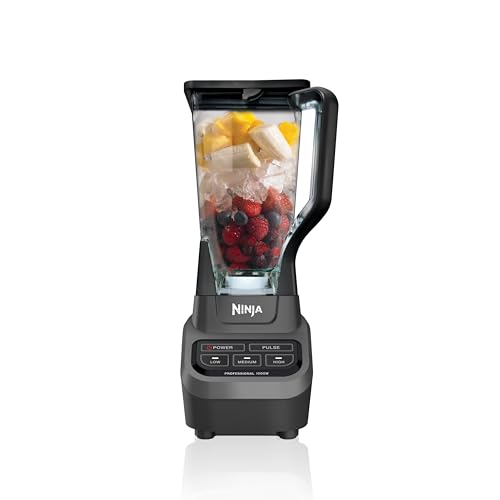
6. Ninja Professional Blender BL610 — Best for Roommate Batches
The Ninja Professional BL610 represents the other student archetype: the social blender. Some students become their residence’s smoothie maker, and for them a personal cup is a bottleneck, not a solution. The 72 oz pitcher and 1000W Total Crushing motor turn out rounds of smoothies and frozen drinks in one cycle, the stacked blades handle ice with enthusiasm, and the whole machine sits at a tier a group can split without pain.
Strengths
- 72 oz pitcher serves a whole suite in one blend
- 1000W stacked-blade system is strong on ice and frozen drinks
- Dishwasher-safe parts help after group sessions
Trade-offs
- Too big for a solo dorm routine; this is an apartment pick
- Loud at full pitcher loads — house noise etiquette applies
- Personal-cup convenience is absent; pouring and washing a pitcher is the deal
Key specs
- Motor: 1000 watts
- Pitcher: 72 oz
- Blade system: Total Crushing stacked blades
- Care: Dishwasher-safe parts
The social economics are real: a student with this machine and a bag of frozen fruit becomes a small institution, and the cost-per-smoothie across a group undercuts any cafe by an order of magnitude. It also covers the cooking side of student life that personal blenders cannot — soup batches, big salsas, pancake batter for a crowd — which makes it the most kitchen-complete pick in this student roundup despite its size.
Buy it as a shared apartment purchase with the usual house rules attached — clean the pitcher immediately, respect noise hours — and it will be the most-used appliance in the home. Buy it as a solo dorm student and it will be a very capable object taking up a quarter of your room. The archetype match is everything with this pick.
Best for: shared apartments and social smoothie makers / Not suited for: solo dorm students or quiet single servings
Check the current price on Amazon for the Ninja Professional Blender BL610.
Comparison Table
For students, read the key spec as the value spec: cup count, jar size or power source — the figure that decides whether the machine fits your routine and your budget’s shape, not just its size.
| Pick | Badge | Key spec | Best for |
|---|---|---|---|
| nutribullet Turbo Personal Blender | Best Overall Value | 1000 watts | most students wanting one capable daily smoothie machine |
| Ninja Nutri Blender BQ301 | Best for Protein Shakes | 900 peak watts | gym-going students blending protein shakes twice daily |
| Ninja Blast Portable Blender BC151BK | Best Cordless | 18 oz | dorm-restricted, space-poor or constantly mobile students |
| Hamilton Beach Portable Blender 51102G | Best Budget | 300 watts peak power | tight budgets, shake drinkers and first-blender buyers |
| nutribullet Personal Blender NB30150 | Best Simple Mid-Budget Pick | 700 watts | students wanting real smoothie capability at a mid tier |
| Ninja Professional Blender BL610 | Best for Roommate Batches | 1000 watts | shared apartments and social smoothie makers |
How to Choose the Best Blenders for College Students on a Real Budget
Do the cafe math first, with your own habits. Count your weekly bought smoothies and shakes and multiply honestly. For a daily buyer, even the premium pick here pays for itself within a couple of months and then prints savings for the remaining years. For a twice-a-month buyer, the budget pick is the rational ceiling and the premium machines are a waste of scarce semester money. The correct budget is a function of your consistency, and only you know that number — but be honest, because students reliably overestimate their future smoothie discipline in September.
Then match the format to your living situation this year, not your imagined one. Dorm room: personal or cordless, small, quiet-hours aware. Shared apartment: personal for yourself, pitcher if the house cooks together. Gym-centered life: cups, cups, cups — the rotation is the product. Each archetype has a pick in this roundup, and choosing by archetype beats choosing by spec sheet every time.
- Calculate payback from your real cafe habit before setting a budget
- Buy for this year’s room and routine, not an imagined future kitchen
- Cups and lids included are real money saved later
- No subscriptions or proprietary consumables — ever, on a student budget
- A mid-tier machine used daily beats a premium machine used weekly
How Long Should a Student Blender Last, and What Kills Them Early?
A decent personal blender should survive a degree: three to five years of daily use is a fair expectation for the mid-tier picks here, and the budget picks should manage a solid couple of years of lighter duty. What kills student blenders early is rarely motor failure. It is abuse patterns: dry-running with no liquid, chronic overfilling that strains seals and leaks into bases, ice boulders dropped into budget machines, and the slow grime death of blade assemblies that are rinsed but never actually washed.
Moves are the other mortality cause. Blenders die in cardboard boxes at semester ends more often than on counters. Keep the original box if you can, wrap the blade assembly separately, and never pack a blender with liquid still in a cup — a sentence that exists because it has happened. Buy at tiers where a moving-day loss is annoying rather than semester-ruining, and the durability question mostly answers itself.
What Can Students Actually Make in a Personal Blender?
More than smoothies, and the variety is what justifies the purchase across a degree. Breakfast: smoothies, overnight-oat blends, pancake and waffle batter in the cup. Gym life: protein shakes that actually dissolve, iced coffee blends, electrolyte slushies in summer. Cooking support: salsa, hummus in small batches, salad dressings, marinades, breadcrumbs, oat flour, and mug-cake batters. Dessert territory: milkshakes, banana-based soft-serve style blends, and frozen-yogurt mixes. A student who uses even half that repertoire is getting serious value from a small machine.
The honest boundary is hot and huge. Personal blenders do not make soup from scratch or serve a crowd, and hot liquids in sealed cups are a safety no — pressure builds and lids fail. Let soups cool before blending, blend batches in the pitcher pick if your house has one, and the little machine’s repertoire stays safely on the right side of its design.
What Does the First Month With a Student Blender Actually Look Like?
Week one is enthusiasm: smoothies daily, experiments nightly, the machine photographed more than used. Week two is where the truth arrives — the novelty fades, the 8 a.m. lecture is real, and the blender either slots into the morning routine or starts gathering dust at a measurable rate. The students whose blenders survive week two share boring traits: the machine lives on the counter, not in a box; the freezer holds frozen fruit at all times; and the recipe repertoire is two drinks deep, not twenty. Depth of habit beats breadth of ambition in every appliance study of one that has ever existed in a dorm room.
By week four, the economics become visible. The student who replaced a daily bought smoothie notices real money staying in their account; the student who blended twice notices a machine taking up shelf. Both outcomes are information, and this guide’s budget picks exist so that the second outcome costs a little rather than a lot. There is no moral failure in discovering you are not a blender person — there is only the avoidable expense of discovering it at a premium tier. That, in one sentence, is the philosophy of this entire roundup.
Month two is also when small frictions declare themselves: a lid that drips slightly, a cup count that is one short of the laundry rhythm, a motor that strains at the frozen mango you have decided is essential. Each friction has a cheap fix — a replacement seal, one spare cup, frozen fruit cut smaller — and fixing frictions early is what separates the four-year machine from the one donated in May. Treat the first month as a shakedown cruise, adjust the small things, and the blender settles into the background of student life, which is exactly where a successful appliance belongs.
How Do Students Share a Blender Without It Becoming a Problem?
Even personal blenders get shared in student life — a roommate’s shake here, a friend’s smoothie there — and the sharing works when the terms are casual but clear. The owner’s cup is the owner’s; guests blend in the spare cup or wash what they used on the spot. The machine stays in the owner’s space, because an appliance that migrates becomes an appliance that is lost. And lending for a weekend is different from lending for a semester: the first is friendship, the second is a transfer, and students are happier when they name which one is happening.
The suite-level question — should four students buy one shared machine instead? — has a real answer: only if the four are genuinely communal cooks. Suite smoothie rounds sound delightful in September and are a scheduling negotiation by October, whereas four personal routines run in parallel without a single meeting. The exception is the social suite with a genuine group-cooking culture, which should buy the pitcher pick in this roundup as a group, split it four ways in writing, and attach the clean-it-now rule before the first blend. Culture decides; the machine follows.
One more student-specific reality: things get borrowed at exactly the moment of maximum need, which is exam week. A personal blender with your name on the cup, stored in your room rather than the shared kitchen, survives exam week in your possession. That sounds territorial; it is actually how the machine remains available for the person whose money and habits it was bought to serve. Generosity with smoothies, clarity with property — that combination keeps both the friendships and the blending intact.
How Does a Blender Fit a Student’s Whole Kitchen, Not Just Breakfast?
A student kitchen is usually a negotiation between a mini-fridge, a microwave and whatever small appliances the rules allow, so a blender has to justify itself beyond smoothies to earn its permanent place. It does, once a student learns its second repertoire. Sauces and dressings turn dining-hall salads and plain rice into actual meals: a blended salsa, a yogurt-herb dressing, a peanut sauce from pantry staples each take under three minutes and keep for days in a small jar. Soups — cooked in a kettle or microwave, cooled, then blended smooth — convert the cheapest vegetables in the shop into dinners that taste like cooking rather than coping. Dips do social duty: hummus, bean dips and blended soft-cheese spreads make a student the person whose room people gather in, which is a currency no meal plan sells.
The study-fuel repertoire is its own category. Iced coffee blends during exam season replace a daily cafe expense at the exact moment a student’s budget is most stressed. Frozen-fruit soft-serve style blends handle dessert without a store run. Even the humble pancake gets an upgrade path: batter blended in the cup pours cleanly, mixes completely, and washes up in the same vessel, which matters in a room where the sink is also the bathroom’s neighbor. Each of these uses is small; together they mean the blender touches a student’s eating life three or four times a day, and an appliance touched that often at this life stage is not a gadget — it is infrastructure.
Knowing the boundary keeps the infrastructure safe. Hot liquids in sealed personal cups are the hard no, as this guide has flagged: pressure, lids and burns are a bad combination in a small room. Large-batch cooking belongs to a shared pitcher or a real kitchen. And raw-meat work, while possible in the stronger machines, asks a level of cleaning rigor that a dorm sink makes genuinely difficult; students in apartments with proper kitchens can adopt it using the methods in this program’s meat-chopping guide, while dorm students should let the dining hall keep that job. A blender used everywhere it belongs and nowhere it does not is a four-year companion — which is the entire ambition of this roundup in one sentence.
When Should a Student Upgrade, Replace or Add a Second Blender?
Upgrade when the habit outgrows the machine, and not before. The signals are specific: your budget blender strains audibly at the frozen smoothie you now make daily; your single cup has become the bottleneck of a twice-daily routine; or your living situation has changed from dorm to shared apartment and group cooking has entered your life. Each signal maps to a pick in this roundup — step up the power ladder, add cups or a three-cup system, or add the pitcher format — and each upgrade is justified by observed use rather than by September optimism. The machine you outgrow is not wasted money: it becomes the backup, the hand-me-down or the sale that funds a third of its replacement.
Replace when the machine, not the ambition, is the problem: a cracked cup that no longer seals, a blade assembly with play in it, a base that smells hot at loads it once handled easily. Small parts — seals, lids, cups — should be replaced as parts whenever they are available, because a blender is mostly a motor with accessories and the motor usually outlives two generations of cups. The whole machine is done when the base itself fails or when parts for its platform become hard to find, and at student tiers that moment is a purchase decision of the same shape as the first one: match the tier to the habit you now actually have.
Add a second machine only for a genuinely second job: the dorm student who starts training seriously may add a cordless for the gym bag; the apartment student who becomes the house cook may add the pitcher. What students should not do is accumulate near-duplicates — two personal blenders of similar power is one blender and one regret. The discipline is the same one this guide opened with: buy for the routine you can describe, in the week you can describe it, and let every purchase be an answer to a question your life is actually asking.
One Last Thing Before You Spend
Re-read your own archetype one final time — daily meal-smoothie drinker, twice-a-day shake maker, dorm-restricted mobile student, tight-budget beginner or social batch blender — and confirm the badge at the top of your chosen review matches it. Student budgets forgive many mistakes, but a blender bought for somebody else’s routine is the one purchase this guide exists to prevent, and thirty seconds of honesty at the checkout is the cheapest quality control in the entire process.
How to Make a Personal Blender Pay for Itself in One Semester
The economics of student blending only work as a habit system. This is the routine that turns a purchase into a payback.
- Stock the freezer once a week: Frozen fruit is the ingredient that makes homemade smoothies taste like cafe ones. One bag a week, bought with your normal groceries, keeps the habit supplied without daily shopping.
- Blend before you leave, every weekday: Attach the smoothie to an existing anchor — after your shower, before your first class — rather than to motivation. Anchored habits survive exam weeks; motivated ones do not.
- Rinse the cup the moment you are back: Twenty seconds now prevents the dried-on residue that makes students quietly stop using the machine. The rinse is the habit’s immune system.
- Track the skipped cafe runs for one month: A rough tally on your phone shows the payback happening, which reinforces the habit through the exact period when novelty fades.
- Rotate two or three recipes you love: Decision fatigue kills more smoothie habits than bad blenders do. Two or three reliable recipes, varied weekly, beat a folder of forty aspirational ones.
- Wash the blade assembly properly every week: Soap, a bottle brush, a check of the seal. Ten minutes a week is the maintenance that carries a student blender across a whole degree.
By semester’s end, the tally usually surprises people: the machine has paid for itself, the habit is load-bearing, and the cafe line has become an occasional treat instead of a daily tax. That is the actual product every pick in this guide is selling.
Common Buying Mistakes
Buying for September motivation instead of October reality. The first month of semester is peak self-improvement theater. Buy for the routine you will still have in week ten, at the tier that routine justifies, and the blender survives contact with your real life.
Spending premium money as an occasional user. If you blend twice a month, the budget pick is not a compromise; it is the correct engineering decision. Premium tiers only pay back through daily use.
Ignoring cup and lid replacement costs. A personal blender with one cup creates a washing bottleneck that quietly kills the habit. Picks with multiple cups included are worth more than their spec sheets suggest.
Letting the blade assembly get disgusting. Rinsing is not washing. Weekly soap-and-brush cleaning is the difference between a four-year machine and a freshman-year biohazard that gets thrown out at move-out.
Blending hot liquids in a sealed personal cup. Pressure builds fast and lids can fail dangerously. Cool soups and sauces before blending, and never seal a cup of hot liquid onto a personal base.
Final Recommendation
Most students should buy the nutribullet Turbo and stop researching: it is capable, right-sized and fairly tiered. Gym-centered students should take the three-cup Ninja BQ301, the genuinely broke should take the Hamilton Beach with two jars and zero shame, and shared apartments should split the BL610. Compare the neighboring angles in Best Blenders For College for dorm specifics and Best Blenders For College Living for shared-house setups.
Keep the research tight with Best Blenders For Camping if your blender summers outdoors, Best Blenders For Coffee Beans for the other student fuel, and Best Blenders For Commercial Use for the smoothie-bar job that might fund all of it. Buy for the routine you actually have, and the machine will take care of the rest.
If you want the short version, start with these three:
- nutribullet Turbo Personal Blender — check price on Amazon
- Ninja Nutri Blender BQ301 — check price on Amazon
- Ninja Blast Portable Blender BC151BK — check price on Amazon
Frequently Asked Questions
What is the best blender for a college student on a budget?
For most students, a mid-tier personal blender like the nutribullet Turbo or NB30150 offers the best value: real frozen-fruit capability at a survivable price. If money is genuinely tight, the two-jar Hamilton Beach covers shakes and soft smoothies well. The rule is to match the tier to how often you will honestly blend.
How much should a student spend on a blender?
Spend in proportion to use. Daily smoothie drinkers recover even a premium personal blender’s cost within a couple of months of skipped cafe runs. Occasional users should stay at budget tiers. As a guardrail, never spend money earmarked for essentials on blending power you will use twice a month.
Can a cheap blender make smoothies, or only shakes?
Cheap blenders make soft smoothies — banana, yogurt, fresh fruit, protein shakes — perfectly well. Their limit is hard frozen loads and ice, where small motors strain and textures stay chunky. If frozen-fruit smoothies are your daily drink, the mid-tier 700W-and-up class is your realistic floor.
Is a personal blender big enough for a student?
For solo student life, yes: 18 to 32 oz cups cover shakes through meal smoothies, which is the entire daily repertoire. Personal blenders only fall short for group cooking, which is a shared-apartment pitcher purchase, not a personal one.
How do I make my student blender last four years?
Liquid first, never overfill, never run it dry, wash the blade assembly with soap weekly, and pack it carefully at every move. Most student blenders die from abuse and moving boxes, not from motor wear, so those habits are the whole durability strategy.
Should I buy a blender or keep buying cafe smoothies?
Run your own numbers: multiply your weekly cafe drinks by a semester’s weeks. For most regular buyers, the blender wins within weeks and keeps winning for years. If you buy a smoothie twice a month, keep the cafe habit and skip the appliance entirely — honesty beats ownership here.


