Disclosure: airfryerkitchensupply.com is reader-supported. When you buy through links on our site, we may earn an affiliate commission at no extra cost to you.
Where to buy
If you are shopping for the best blenders for college living, think about the kitchen you actually share — its counter space, its sink, and the three other people who will use your blender whether you invite them or not. Every pick below was verified against this site’s Amazon catalog data, and each links to its live listing so you can check price on Amazon and confirm the full set of jars, cups and lids before it becomes a household purchase.
- Ninja Nutri-Blender Pro BN401 (Best Overall) — Check the current price on Amazon
- nutribullet Full-Size Blender Combo NBF50500 (Best Full-Size for Shared Kitchens) — Check the current price on Amazon
- Ninja Fit Compact Personal Blender QB3001SS (Best Budget Personal) — Check the current price on Amazon
- Ninja Blast Max Portable Blender BC251GY (Best Portable for Shared Spaces) — Check the current price on Amazon
- nutribullet Ultra Personal Blender (Best Quieter Personal Option) — Check the current price on Amazon
- Hamilton Beach Power Elite Blender 58148AG (Best Budget House Pitcher) — Check the current price on Amazon
The best blenders for college living solve a social problem as much as a blending problem. College living usually means a shared apartment or suite: four people, one small kitchen, a rotation of smoothie drinkers, soup makers and frozen-drink enthusiasts, and a sink where an unwashed pitcher becomes a diplomatic incident. The right blender for that life is big enough to serve more than one person, simple enough that every roommate can use it without a tutorial, tough enough to survive other people’s technique, and easy enough to clean that the clean-as-you-go rule actually happens.
That brief produces a different list from the dorm-focused one. Personal blenders still appear here — in shared housing they are the peace treaty that lets everyone blend at different times without queuing for one pitcher — but they are joined by a full-size combo system and a budget countertop model for the shared jobs: big smoothie rounds, salsa for taco night, soup batches and frozen drinks for a study group. The mix is deliberate: college living runs on both solo mornings and communal evenings, and the blender setup should cover both.
One practical note before the picks: decide whose blender it is before you buy. A machine bought by one student and used by four develops mysterious damage and very real resentment. The happiest shared kitchens either split the cost of a countertop model, or each person owns a personal cup system while the house shares one budget pitcher blender. The picks below are organized to support either arrangement.
In this guide
Quick Picks
A shared-kitchen shortlist: one full-size combo for group jobs, four personal systems at different strengths for solo routines, and one budget pitcher for the house. Match the arrangement to your household before you match the model to your smoothies.
Ninja Nutri-Blender Pro BN401 — Best Overall. The strongest personal blender here, with two 24 oz cups and Auto-iQ programs. In a shared apartment it ends the morning queue: your smoothie is yours, made in your cup, at your time, while the base stays small enough for a crowded counter. Check price on Amazon.
nutribullet Full-Size Blender Combo NBF50500 — Best Full-Size for Shared Kitchens. A 1200W combo with a 64 oz pitcher for the group and a 24 oz tumbler for solo runs. This is the one-machine answer for a shared house: pitcher for taco night and soup, cup for your 8 a.m. smoothie, all on one base. Check price on Amazon.
Ninja Fit Compact Personal Blender QB3001SS — Best Budget Personal. The value personal pick: 700W, two 16 oz cups, tiny footprint. For a student in a shared place who just needs their own smoothies and shakes handled without touching the house machine, this is the sensible spend. Check price on Amazon.
Ninja Blast Max Portable Blender BC251GY — Best Portable for Shared Spaces. A cordless 22 oz blender with Auto-iQ programs that lives in your room, your bag or the gym — not on the shared counter. For college living, that off-counter existence is the feature: zero footprint disputes, blending wherever you happen to be. Check price on Amazon.
nutribullet Ultra Personal Blender — Best Quieter Personal Option. A 1200W personal blender the listing positions as the brand’s quietest single-serve model, with titanium-coated blades and three cups. For early risers in shared housing, any noise reduction at 7 a.m. is a genuine household feature, not a luxury. Check price on Amazon.
Hamilton Beach Power Elite Blender 58148AG — Best Budget House Pitcher. A 700W, 40 oz glass-jar blender at a budget tier — the classic house pitcher. It covers group smoothies, salsa and shakes for the whole apartment, and the glass jar will not absorb the evidence of anyone’s experiments. Check price on Amazon.
How These Picks Were Chosen
Verification against this site’s Amazon catalog data came first, as always in this program, confirming that the cup counts, jar sizes and motor figures in each spec box describe real, orderable configurations. The college-living criteria then reshaped the ranking away from pure performance: shareability, cleanup systems that work in a communal kitchen, storage footprint on contested counters, durability under multiple users with different technique, and per-person cost when a purchase is split.
The list deliberately mixes formats because college living itself is mixed. Solo routines dominate weekday mornings, so strong personal systems take four of the six places. Communal cooking defines weekends and evenings, so a full-size combo and a budget house pitcher take the other two. A list of six personal blenders would ignore taco night; a list of six pitchers would ignore the 8 a.m. lecture. The balance here mirrors the life it is bought for.
Noise and mess were judged qualitatively and honestly — no invented decibel figures, no laboratory claims. What experience supports is that blend-in-cup formats create the least shared mess, that dishwasher-safe parts dissolve the most roommate friction, and that any blender is loud enough to require basic hour etiquette in a shared home. Picks that reduce friction scored accordingly.
The 6 Best blenders for college living — Reviewed in Detail
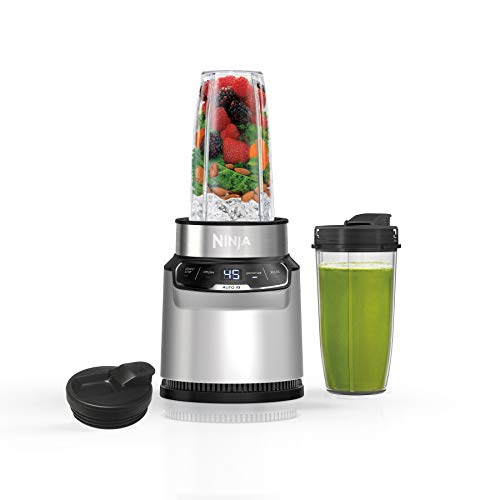
1. Ninja Nutri-Blender Pro BN401 — Best Overall
The Ninja Nutri-Blender Pro BN401 leads the college-living list because shared housing runs on parallel solo routines more than on communal blending. Four roommates with four different wake-up times need four quick, separate smoothies, not one giant batch — and a strong personal blender delivers exactly that. The 1100 peak-watt motor and generous 24 oz cups handle meal-sized smoothies with frozen fruit and greens, and the Auto-iQ programs keep results consistent even when a half-awake roommate is operating it.
Strengths
- 1100 peak watts make frozen, fibrous smoothies routine
- 24 oz cups are true meal-sized single servings
- Auto-iQ programs give consistent results for every roommate
Trade-offs
- Personal format only; group jobs need a second machine or batches
- Premium tier among personal blenders
- Two cups may mean buying extras for a full household
Key specs
- Motor: 1100 peak watts
- Cups: (2) 24 oz to-go cups
- Programs: 2 Auto-iQ programs
- Care: Dishwasher-safe parts
The household dynamic this machine creates is healthy: blending becomes a personal, two-minute, clean-your-own-cup activity instead of a shared-appliance negotiation. Cups and lids being dishwasher-safe matters more in shared housing than anywhere, because the dishwasher is the great roommate-conflict dissolver — load it, run it, nobody scrubbed anything. Buy extra cups so a drying rack traffic jam never becomes a morning argument, and the system scales to a whole apartment gracefully.
Its limits are the format’s limits: taco-night salsa for six happens in batches, and soup is a stovetop-and-transfer affair rather than a blend-in-jar one. Pair it with the budget pitcher pick below if your house cooks communally often, and you have the complete college-living setup for less than most single premium countertop machines.
Best for: shared apartments where everyone blends solo on different schedules / Not suited for: houses that mainly cook and blend communally
Check the current price on Amazon for the Ninja Nutri-Blender Pro BN401.

2. nutribullet Full-Size Blender Combo NBF50500 — Best Full-Size for Shared Kitchens
The nutribullet Full-Size Blender Combo is the communal pick: one base, two formats. The 64 oz pitcher covers the shared jobs that define college living — big smoothie rounds before a group run, frozen drinks for a movie night, salsa and soup in real quantities. The 24 oz tumbler covers the solo morning. For a house splitting one purchase, that dual coverage is exactly the right shape, and the 1200W motor is strong enough that neither format feels like the compromise one.
Strengths
- Pitcher plus personal cup covers group and solo blending on one base
- 1200W motor handles ice and frozen fruit in both formats
- Dishwasher-safe parts keep shared cleanup painless
Trade-offs
- More parts to store and keep track of in a shared kitchen
- Pitcher blending is loud; house noise rules still apply
- One base means one blender at a time during the morning rush
Key specs
- Motor: 1200 watts
- Pitcher: 64 oz pitcher
- Cup: 24 oz tumbler cup
- Care: Dishwasher-safe parts
The combo’s real virtue is economic: instead of one student buying a personal blender and the house separately needing a pitcher machine, one purchase covers both lives. Split four ways, the per-person cost drops to impulse-buy territory while the capability stays genuinely full-size. The pitcher format also future-proofs the purchase — the same machine moves happily into a first post-graduation apartment, which cannot be said of a drawer full of personal cups alone.
Manage the shared-kitchen realities and it thrives: agree that whoever blends washes or loads the pitcher immediately, keep the cups personally owned and the pitcher communal, and store the parts in one agreed spot. Appliances do not cause roommate conflict; unclear ownership and unwashed pitchers do. This machine, with clear house rules, avoids both.
Best for: shared houses splitting one versatile blender purchase / Not suited for: solo dorm rooms or anyone short on storage
Check the current price on Amazon for the nutribullet Full-Size Blender Combo NBF50500.

3. Ninja Fit Compact Personal Blender QB3001SS — Best Budget Personal
The Ninja Fit is the personal-budget anchor of this list. In college-living terms, it is the blender you buy for yourself inside a shared home: your smoothies, your shakes, your cup, your responsibility. The 700W motor is the key figure — it is the point in the personal category where frozen fruit and ice stop being a struggle — and the two-cup setup keeps a spare ready while one is in the dishwasher or your gym bag.
Strengths
- 700W handles frozen fruit and ice at personal scale
- Two cups keep a rotation going in a shared kitchen
- Small base claims almost no contested counter space
Trade-offs
- 16 oz servings only; no help for group cooking
- No programs; push-down manual operation
- One of several personal options here — heavy users should step up
Key specs
- Motor: 700 watts
- Cups: (2) 16 oz to-go cups with spout lids
- Format: Compact personal blender
- Care: Dishwasher-safe parts
What makes the Fit right for shared living is how little it asks of the household. It takes a sliver of counter, washes in a minute, and never becomes the unwashed-pitcher problem. Roommates barely notice it exists, which in a shared kitchen is high praise. Its smoothies are properly smooth for its class, its shakes are effortless, and its price tier means a lost or damaged cup is a minor errand rather than a financial event.
Choose it when your blending is a solo daily habit and the house already has — or does not need — a group machine. Choose the BN401 above when your smoothies are meals with frozen and fibrous loads, and choose the combo when you are buying for the whole house. The Fit’s job is narrower, and it does that job with the best value in this roundup.
Best for: students buying their own smoothie machine inside a shared home / Not suited for: group cooking or meal-sized smoothie drinkers
Check the current price on Amazon for the Ninja Fit Compact Personal Blender QB3001SS.
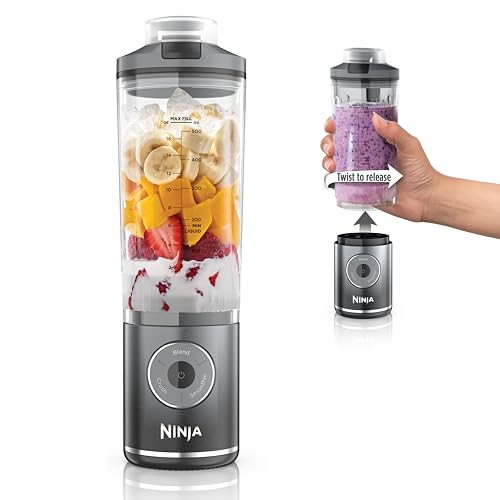
4. Ninja Blast Max Portable Blender BC251GY — Best Portable for Shared Spaces
The Ninja Blast Max earns its college-living place by not living in the kitchen at all. Shared counters are contested territory; a cordless blender that charges in your room and blends in its own 22 oz vessel never enters the negotiation. The Twist & Go vessel detaches as your cup, the Auto-iQ Crush and Smoothie programs are a step up from basic portables, and the capacity is the most generous in the cordless class.
Strengths
- Cordless design claims zero shared counter space
- 22 oz vessel is a full serving, not a compromise sip
- Auto-iQ programs beat basic one-button portables for consistency
Trade-offs
- Battery power still trails corded personal blenders on thick loads
- Charging discipline required; a flat battery blends nothing
- Premium pricing for a portable format
Key specs
- Vessel: 22 oz removable Twist & Go vessel
- Power: Cordless
- Programs: Auto-iQ Crush and Smoothie programs
- Lid: Leakproof
The Blast Max suits a particular college-living pattern: the student whose life happens across campus — morning class, gym, library, part-time job — and whose smoothie is fuel grabbed between commitments. Blend in the vessel, twist it off, drink on the move, rinse at whatever sink you pass. Back at the apartment, it charges on your desk while the kitchen stays exactly as contested as it was, minus you.
Thick blends need the portable technique: liquid first, frozen pieces small, a shake halfway. Owners who learn that get reliably good results; owners who load it like a countertop Ninja get a lesson in physics. As the personal, portable layer of a college-living setup, it is the most capable option here — as a house’s only blender, it is the wrong tool, and the combo pick above exists for that job.
Best for: mobile students who blend on the go and skip the shared counter / Not suited for: households needing one blender for everyone
Check the current price on Amazon for the Ninja Blast Max Portable Blender BC251GY.

5. nutribullet Ultra Personal Blender — Best Quieter Personal Option
The nutribullet Ultra addresses the shared-living variable nobody puts in spec tables: your roommate’s sleep. It is listed as the quietest single-serve blender in its line, and while this guide makes no decibel claims for any machine, a model designed and sold around quieter operation is a rational pick for the early-training, early-lecture student in a house of late sleepers. The 1200W motor and titanium-coated blades mean the quieter positioning does not come with a performance apology.
Strengths
- Designed for quieter single-serve blending, per the listing
- 1200W motor with titanium-coated blades for durable performance
- Three cups suit a rotation across a shared kitchen week
Trade-offs
- Quieter is relative; it is still a blender at breakfast time
- Premium tier personal pricing
- Personal format only, like the other solo picks
Key specs
- Motor: 1200 watts
- Blades: Titanium-coated blades
- Cups: 3 BPA-free cups with to-go lids
- Design focus: Built for quieter single-serve blending, per the listing
Noise in shared housing is a system, not a spec: machine, counter, hour and walls all contribute. The Ultra improves the machine term of that equation; the towel-under-base and reasonable-hours terms remain yours to manage. What you get in return is a genuinely strong personal blender — frozen smoothies, nut-butter shakes and green drinks all handled — that asks the least forgiveness of the machines in this roundup.
The three-cup rotation deserves a practical mention: in shared kitchens, a clean cup is not always available when you want one, because the dishwasher runs on the house’s schedule, not yours. Three cups break that dependency. Combined with the quieter design, the Ultra is the considerate-roommate pick, and considerate roommates get renewed leases and better references.
Best for: early risers in shared housing who blend before roommates wake / Not suited for: budget buyers or group blending
Check the current price on Amazon for the nutribullet Ultra Personal Blender.

6. Hamilton Beach Power Elite Blender 58148AG — Best Budget House Pitcher
Every shared college kitchen eventually needs a house pitcher blender, and the Hamilton Beach Power Elite is the budget-correct version of one. The 40 oz glass jar handles a round of smoothies or a batch of salsa, the 700W motor and Wave Action system keep everyday loads moving, and the price tier means the house can split it without a finance meeting. Glass matters in shared housing specifically: it does not stain with turmeric, hold garlic odors, or record every roommate’s smoothie history in scratches.
Strengths
- Glass jar resists stains and odors from varied shared use
- 40 oz capacity covers small-group jobs
- Budget tier is easy to split across a household
Trade-offs
- 700W is adequate, not powerful; hard frozen loads need patience
- Glass is breakable — a real consideration in busy shared kitchens
- Basic controls; no programs for the group frozen-drink night
Key specs
- Motor: 700 watts
- Jar: 40 oz glass jar
- Functions: 12 blending functions including puree and ice crush
- System: Wave Action pulls mixture into the blades
Set the house expectations correctly and this machine is a workhorse: soft-to-moderate loads, smoothies from fresh and lightly frozen fruit, shakes, sauces, pancake batter for a crowd. Frozen-fruit-heavy blending works in smaller batches with liquid enough to keep the Wave Action circulating. What it will not do is impersonate a premium high-performance blender, and roommates who load it like one will produce the classic half-blended pitcher and a sink full of regret.
As the communal layer under a set of personal blenders, or as a first apartment’s only blender bought with clear eyes, the Power Elite is the rational budget answer. Houses that blend frozen drinks nightly should save toward the combo pick instead; houses that blend occasionally and communally will find this entirely sufficient.
Best for: shared houses needing a cheap communal pitcher blender / Not suited for: heavy frozen blending or butter-fingered households wary of glass
Check the current price on Amazon for the Hamilton Beach Power Elite Blender 58148AG.
Comparison Table
Compare formats before motors here: the right college-living setup is usually one communal option plus one personal option, and this table is organized to help you choose one of each rather than a single winner.
| Pick | Badge | Key spec | Best for |
|---|---|---|---|
| Ninja Nutri-Blender Pro BN401 | Best Overall | 1100 peak watts | shared apartments where everyone blends solo on different schedules |
| nutribullet Full-Size Blender Combo NBF50500 | Best Full-Size for Shared Kitchens | 1200 watts | shared houses splitting one versatile blender purchase |
| Ninja Fit Compact Personal Blender QB3001SS | Best Budget Personal | 700 watts | students buying their own smoothie machine inside a shared home |
| Ninja Blast Max Portable Blender BC251GY | Best Portable for Shared Spaces | 22 oz removable Twist & Go vessel | mobile students who blend on the go and skip the shared counter |
| nutribullet Ultra Personal Blender | Best Quieter Personal Option | 1200 watts | early risers in shared housing who blend before roommates wake |
| Hamilton Beach Power Elite Blender 58148AG | Best Budget House Pitcher | 700 watts | shared houses needing a cheap communal pitcher blender |
How to Choose the Best Blenders for College Living as a Household
Hold the house meeting first — it takes five minutes and prevents the two classic failures: one person buying an expensive machine that everyone else mistreats, or nobody buying anything and the house spending a fortune at the smoothie shop. Decide whether you are a communal house (one shared countertop blender, split cost, shared rules) or a parallel house (each person with a personal blender, plus maybe one cheap shared pitcher). Most real houses are parallel with a communal pitcher for weekends, which is exactly the shape of this roundup.
Then apply the practical filters. Storage: measure the cupboard or counter corner the machine will actually get. Cleanup: if your house has a dishwasher, dishwasher-safe parts are worth real money in avoided arguments. Durability: shared machines meet every technique level, so simple controls and sturdy jars outlast fussy interfaces. Cost: split purchases should stay at tiers where a breakage is a shrug, not a tribunal.
- Decide communal vs parallel ownership before choosing a model
- Value dishwasher-safe parts highly in shared kitchens
- Prefer simple controls when users have mixed experience
- Keep split purchases at tiers where damage is affordable
- Assign cups personally and pitchers communally to end ownership disputes
Personal vs Countertop: What Does a Shared Apartment Actually Need?
Count blending events, not people. If your house blends six solo smoothies and one group salsa per week, the personal format is doing 85 percent of the work and deserves 85 percent of the budget. If your house cooks together nightly — soups, sauces, curries, frozen drinks for everyone — the countertop pitcher is the main tool and personal cups are the accessory. Most college houses honestly fall in the first camp and overbuy countertop capacity because it looks like a real kitchen purchase, then discover the pitcher is the least-washed object in the building.
There is a middle path this roundup is built around: one strong personal blender per keen blender-user, one budget pitcher for the house. That pairing covers every realistic college-living job, costs less in total than one premium countertop machine, and — the underrated part — means a broken or borrowed machine never takes the whole house’s blending down with it. Redundancy is a genuine feature in shared housing.
How Should Roommates Share a Blender Without Drama?
Three rules cover nearly every conflict. First, clean-as-you-go is absolute: whoever blends washes or loads the machine immediately, because a pitcher left with smoothie residue is the single most reliable generator of roommate resentment in the kitchen. Second, personal cups are personal property with names on them if necessary; communal jars are house property with house rules. Third, noise has hours: before an agreed morning time, blending happens in a closed kitchen or not at all.
Add a small damage convention and you are done: normal wear is the house’s problem, negligence is the culprit’s, and at budget tiers nobody litigates either. The machines in this roundup were chosen partly for how well they support this social system — simple, washable, affordable to replace — because in college living the social system is most of the product.
What Does a Shared Kitchen Actually Blend in a Week?
Grounding this guide in a realistic week helps a household choose honestly. Weekday mornings are solo and parallel: two to four individual smoothies or shakes, made at scattered times, in personal cups, by people in various states of consciousness. Weekday evenings add the occasional sauce, dressing or soup assist — usually one cook, one pitcher job, modest scale. The weekend is where communal blending lives: a big smoothie round before a group activity, salsa and dips for a gathering, frozen drinks for a movie night, pancake batter for a slow brunch. Tally that week and the shape of this roundup explains itself: personal formats carry the weekday volume, one pitcher-format machine carries the weekend peaks, and any setup missing either layer will annoy somebody by the second week.
Seasonal shifts matter in shared houses too. Exam weeks compress blending into pure fuel — shakes at desks, coffee blends at midnight, zero communal cooking — and the personal systems carry the entire load while the pitcher sleeps. Holiday and birthday weeks invert the pattern. A household choosing its setup in September should imagine both extremes, because a setup that only fits the average week will fail both the crunch and the celebration, which are precisely the weeks people remember.
There is also a growth pattern worth planning for: shared kitchens tend to accumulate blender-users over time. The roommate who never blended in September is making smoothies by February, converted by proximity. Setups with spare cups and a pitcher that can absorb one more user’s worth of traffic age gracefully; a single-cup setup bought for one declared user becomes a queue and then a conflict. Buying one size of headroom — an extra cup set, a pitcher in reserve — is the shared-kitchen version of buying for the life you are growing into.
How Should a Household Split Costs, Chores and Replacement Parts?
Money first, because it is easiest when it is explicit. Communal machines are split evenly or by usage, agreed before purchase, with the split recorded somewhere unglamorous like the house notes app. Personal machines are personal purchases, full stop — the fastest way to sour a shared kitchen is ambiguity about whether the nice blender is ‘kind of everyone’s.’ When a communal part breaks through normal wear, the house replaces it from a small shared fund or a rotating buyer; when it breaks through one person’s negligence — the spoon left in the jar is the classic — that person replaces it, by the convention this guide recommended earlier and every harmonious house eventually adopts.
Chores divide by the same logic. The clean-as-you-go rule covers daily life without a rota. The weekly deep clean — blade assemblies, seals, the base’s crumb archaeology — belongs on the house chore rotation alongside the bathroom and the bins, because shared appliances that belong to everyone’s chore list belong, in practice, to no one’s. Rotating it monthly per person is the fairest scheme most houses find: frequent enough that the job stays small, shared enough that nobody becomes the permanent blender servant.
Replacement parts deserve a line of their own because they are where shared systems quietly die. Seals flatten, lids crack, a cup disappears into a graduated roommate’s moving boxes. The fix is boring and total: a labeled parts drawer, a named owner who checks it monthly, and a house rule that consumable parts for communal machines come out of the shared fund without debate. The amounts are small; the debates, when the fund does not exist, are not. Households that pre-decide these tiny economics find that the blender — like the house itself — mostly runs itself.
What Should a Shared House Stock So the Blender Gets Used Daily?
Appliances do not create habits; stocked freezers do. A shared house whose blender gets used daily has, without exception, a small standing inventory that makes a smoothie a two-minute decision instead of a shopping trip: frozen fruit in at least two varieties, bananas in a permanent state of ripening-then-freezing, a milk or plant alternative that the house actually finishes before it turns, yogurt or an equivalent base, and one protein or nut-butter option for the gym contingent. The house that buys these on its normal grocery rotation — split like every other communal staple — finds the blender working every morning. The house that leaves ingredients to individual initiative finds four people each waiting for someone else to stock the freezer, and a blender that works on Sundays.
The economics of the shared stock deserve the same explicitness as the machine split. Frozen fruit bought in larger bags for a house costs meaningfully less per smoothie than individual purchases, and a simple house-fund or rotation system prevents the slow resentment of one person funding everyone’s breakfast. Portion honesty helps too: the smoothie drinkers draw on the stock, the non-drinkers do not pay for it, and the line is drawn by a thirty-second conversation rather than by forensic accounting of the freezer. Houses that can hold that conversation can hold any of the others in this guide, which is why the ingredient system, humble as it sounds, is the real test of a shared kitchen.
Add a tiny recipe commons and the system completes itself: three or four house recipes on the fridge — the green one, the berry one, the coffee one, the dessert one — with quantities that fit the house’s actual cups and pitcher. New roommates inherit the recipes instead of inventing technique at 7 a.m., guests get a good smoothie instead of an experiment, and the blender’s output stays at the standard that made everyone want one in the first place. It is the domestic version of the commercial recipe card, and it works for exactly the same reason: good results, written down, stop depending on who is standing at the counter.
How Does a Blender Survive the End of a Lease and the Next House?
College living is temporary by design, and a household blender setup faces a predictable crisis at every move-out: whose machine is it, where do the communal parts go, and who is storing the pitcher over summer? Houses that answered the ownership questions at purchase — personal machines personal, communal machines recorded as house property with a named next-home — sail through move-out with a five-minute conversation. Houses that did not discover that a blender, like a couch, becomes mysteriously unowned at exactly the moment it needs carrying down three flights of stairs. The lesson generalizes beyond blenders, but the blender is where most students learn it first.
The practical exit patterns are few and simple. A communal machine can rotate to one member’s next house with the others bought out at a friendly depreciated share, agreed while everyone still likes each other. It can be sold within the building to the incoming tenants, which student housing makes uniquely easy. Or it can be deliberately donated to the house’s successors with the recipe cards and house rules attached — a small tradition that costs nothing and starts the next household’s kitchen culture a month ahead. What does not work is storage ambiguity: a pitcher in one person’s garage, a base in another’s, and cups distributed like relics. Parts separated at move-out rarely reunite.
For personal machines, the exit is simpler and the advice is shorter: pack the base and cups together, photograph the packed box, and let the machine start its next life in the next kitchen without a gap in service. The students who bought the right format in September — compact, complete, theirs — find in May that the blender is the easiest object they own to move. That is not an accident. It is the compound interest of every good decision in this guide, paid out on the one day a year when students audit everything they own by carrying it downstairs.
One Last Thing Before the House Orders
Hold the five-minute house meeting even if you think you know the outcome, because the meeting is not really about the blender — it is about surfacing the one roommate whose smoothie schedule, noise sensitivity or cleaning standards would otherwise announce themselves over the first month of use. Five minutes of alignment in September is worth a semester of small frictions avoided, and it costs less than the spare cup set you are about to add to the order, which you should also do.
How to Set Up a Shared-Kitchen Blending Station That Stays Clean
A tiny bit of organization turns one blender in a shared kitchen from a conflict source into the most-used appliance in the house.
- Give the blender a permanent home: One agreed counter corner or cupboard spot, with cups, lids and the pitcher stored together. Machines that wander get lost, borrowed and blamed.
- Label personal cups: Names on cups and lids end the whose-is-this standoff and make the clean-your-own-cup rule enforceable without awkwardness.
- Post the three house rules: Clean immediately, respect noise hours, report damage the day it happens. Written on the fridge, they are house policy; unwritten, they are your personal nagging.
- Keep a bottle brush and soap at the sink: Cleanup tools within arm’s reach of the blender double the odds the clean-as-you-go rule survives contact with a busy week.
- Run a weekly deep clean: One rotating chore: blade assemblies washed properly, seals checked, the base wiped down. Ten minutes weekly prevents the grime that makes shared appliances disgusting.
- Stock the basics communally: Frozen fruit, milk and protein powder bought on the house rotation keep the blender earning its counter space instead of waiting for individual shopping trips.
Revisit the arrangement once a semester. Schedules change, one roommate becomes a smoothie devotee and another stops blending entirely, and the setup should follow the life rather than the memory of move-in day.
Common Buying Mistakes
One person buying a premium machine for everyone. Resentment is guaranteed when your expensive blender meets other people’s technique. Split communal purchases, keep premium machines personal, and match the tier to the sharing arrangement.
Leaving the pitcher to soak — forever. A soaking pitcher is a not-cleaned pitcher wearing a disguise. It blocks the sink, grows smells, and starts arguments. Wash it or load it immediately, every time.
No noise agreement. The 6:30 a.m. frozen smoothie that wakes three roommates will be remembered at lease-renewal time. Set blending hours like you set shower schedules: briefly, fairly, and once.
Buying six of the same personal blender for the house. Identical cups in a shared kitchen become anonymous cups, and anonymous cups become nobody’s job to wash. Variety or labels — ideally both — keep ownership visible.
Ignoring the dishwasher question. Hand-wash-only parts in a house with a dishwasher become a permanent sink feature. In shared kitchens, dishwasher-safe is not a convenience feature; it is the cleaning system.
Final Recommendation
If your house blends mostly solo, start with the BN401 for the keenest blender-user and Ninja Fits for everyone else; if you cook communally, make the nutribullet Combo the house purchase and add the Hamilton Beach pitcher only if a second communal machine is needed. The portable and quieter picks fill the specific gaps their badges describe. For the dorm-room end of the spectrum, compare Best Blenders For College and Best Blenders For College Students before you commit.
More shared-kitchen thinking lives in Best Blenders For Couples, Best Blenders For Commercial Use for the house that basically runs a small cafe, and Best Blenders For Coffee Beans for the other shared morning machine debate. Choose the arrangement first and the model second, and college living blending stays a pleasure instead of a chore chart.
If you want the short version, start with these three:
- Ninja Nutri-Blender Pro BN401 — check price on Amazon
- nutribullet Full-Size Blender Combo NBF50500 — check price on Amazon
- Ninja Fit Compact Personal Blender QB3001SS — check price on Amazon
Frequently Asked Questions
Should roommates split one blender or buy their own?
Both, usually. Split one communal pitcher or combo blender for group cooking, and let each regular smoothie drinker own a personal blender and cups. That pairing matches how college houses actually blend — solo on weekdays, communal on weekends — and keeps ownership and cleanup responsibilities clear.
What is the best blender setup for a four-person apartment?
One full-size option for group jobs plus personal blenders for daily smoothies. If the budget forces a single purchase, a combo system with both a pitcher and a personal cup covers the most life per dollar, provided the house agrees on cleaning rules from day one.
How do we stop the shared blender from getting disgusting?
Clean-as-you-go as an absolute house rule, dishwasher-safe parts, a bottle brush living at the sink, and a weekly rotating deep clean of blade assemblies and seals. Shared appliances get disgusting through deferred cleaning, not through use — remove the deferral and the problem mostly disappears.
Is a glass or plastic jar better for a shared kitchen?
Glass resists stains and odors from varied shared use and cleans up like new, but it can break. Plastic is lighter and tougher but records scratches and smells over time. Busy, careful houses do well with glass; high-traffic, drop-prone houses may prefer plastic and a stricter washing routine.
What if one roommate keeps breaking or misusing the blender?
That is an ownership problem, not a product problem. Move to personal machines for the careful users, keep the communal machine at a budget tier where damage is affordable, and let the house rules assign negligence costs. Premium shared appliances only work in houses with uniformly careful people.
Can a personal blender really serve a whole apartment?
It can serve each person individually, which is different. Personal blenders are perfect for parallel solo routines but cannot batch-cook for the group. Houses that cook together need at least one pitcher-format machine in the mix, even if it is the budget pick.


