Disclosure: airfryerkitchensupply.com is reader-supported. When you buy through links on our site, we may earn an affiliate commission at no extra cost to you.
Where to buy
If you are shopping for the best blenders for coffee beans, start with a listing you can return, because grinding beans in a blender is a compromise job and you should be able to test the compromise in your own kitchen. Every pick below was verified against this site’s Amazon catalog data, and each links to its live listing so you can check price on Amazon and confirm exactly what jar, cup and blade configuration is in the box.
- Vitamix 5200 Professional-Grade Blender (Best Overall) — Check the current price on Amazon
- nutribullet Pro+ Personal Blender (Best Personal Blender for Beans) — Check the current price on Amazon
- Ninja Professional Plus Blender BN701 (Best Full-Size Value) — Check the current price on Amazon
- KitchenAid K400 Variable Speed Blender with Tamper (Best for Controlled Bursts) — Check the current price on Amazon
- Oster Pro 1200 Blender (Best Dual-Direction Blade Option) — Check the current price on Amazon
- Hamilton Beach Wave Crusher Blender 54221 (Best Budget) — Check the current price on Amazon
The best blenders for coffee beans come with an honest warning attached, so here it is first: a blender is not a burr grinder. A burr grinder crushes beans between two abrasive surfaces at a controlled gap, producing even particles that extract evenly. A blender smashes beans with a spinning blade, producing a mix of fine powder and coarse chunks. That uneven grind brews acceptable French press, cold brew and cowboy coffee, passable drip in a pinch, and genuinely poor espresso. If espresso or precision pour-over is your goal, this guide will keep telling you to buy a burr grinder instead, because that is the truthful answer.
So why does this roundup exist? Because plenty of coffee drinkers have a blender, want fresh-ground flavor without another appliance, grind for forgiving brew methods, or need to process larger amounts of beans for cold brew batches, coffee rubs, baking and camping trips. For those jobs, some blenders are clearly better than others. The winners share specific traits: strong pulse control so you can shake-and-grind in bursts, a jar or cup shape that keeps beans in the blade path instead of flinging them to the walls, and enough motor to work through a load without cooking the beans with friction heat.
The six picks below were judged on that real workflow — pulse, shake, check, repeat — and on how their everyday blending quality justifies their counter space the rest of the time. Personal blenders turn out to be surprisingly strong here, because a small cup keeps a modest amount of beans circulating through the blades instead of hiding in a big pitcher’s corners. Full-size high-performance machines earn their places through sheer circulation and control. The budget pick works for occasional coarse grinding if your expectations are set correctly.
In this guide
Quick Picks
Two full-size control picks, two personal-cup specialists, one dual-direction wildcard and one budget option. Notice what is not promised anywhere below: espresso. Every badge here is about coarse-to-medium grinding for forgiving brew methods.
Vitamix 5200 Professional-Grade Blender — Best Overall. The variable-speed dial lets you start beans tumbling at low speed and finish with short high bursts, which produces the most even blender grind in this roundup. The 64 oz container is bigger than a bean load needs, but the circulation is strong enough to keep a reasonable batch moving through the blades. Check price on Amazon.
nutribullet Pro+ Personal Blender — Best Personal Blender for Beans. The small-cup format is a genuine advantage for beans: a 24 or 32 oz cup keeps the load in the blade path instead of letting beans hide in pitcher corners. The 1200W motor and pulse button make shake-and-grind cycles quick, and the same cups handle your morning smoothie. Check price on Amazon.
Ninja Professional Plus Blender BN701 — Best Full-Size Value. A strong 1400 peak-watt motor and a pitcher that moves its whole contents make this the value full-size option for beans. Use manual pulses rather than the Auto-iQ programs, shake the pitcher between bursts, and expect a solid coarse grind for press and cold brew. Check price on Amazon.
KitchenAid K400 Variable Speed Blender with Tamper — Best for Controlled Bursts. Speed that stays steady under load matters when beans suddenly engage the blades, and the K400’s Intelli-Speed control delivers unusually predictable pulses. The tamper helps push a settled bean load back into circulation without opening the jar mid-session. Check price on Amazon.
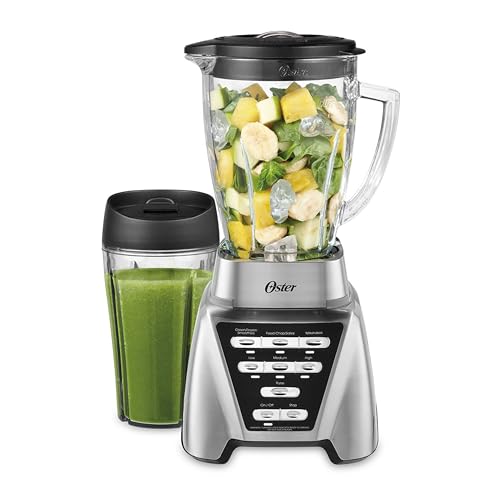
Oster Pro 1200 Blender — Best Dual-Direction Blade Option. The dual-direction blade reverses to pull ingredients back through the cutting path, which addresses the classic bean problem of grounds escaping to the jar walls. Seven speeds and a glass jar round out a mid-tier package, and the included smoothie cup covers single servings. Check price on Amazon.
Hamilton Beach Wave Crusher Blender 54221 — Best Budget. A 700W glass-jar blender that grinds beans acceptably for French press and cold brew if you work in small batches and shake between pulses. The Ice Sabre blades are built for hard, frozen loads, and beans are an easier ask than ice — technique, not power, is the limit here. Check price on Amazon.
How These Picks Were Chosen
Verification came first, as in every guide in this program: each pick was confirmed against this site’s Amazon catalog data, so the model names, cup and jar configurations and included accessories described here match real, current listings. Coffee-specific judging then took over. The criteria were pulse control, how completely the vessel keeps beans in the blade path, motor behavior under the stop-start grinding rhythm, friction heat over a session, and how easily bean oils clean out of the machine afterwards.
Grind quality was assessed honestly rather than generously. No blender produces an even grind, so picks were ranked on how narrow they can keep the particle spread for coarse-to-medium grinding, and on how repeatable that result is from session to session. Machines that only offer full-speed presets scored poorly no matter how powerful they were, because uncontrollable power is precisely what produces powder-plus-boulders.
Everyday blending quality acted as the tiebreaker, deliberately. A blender bought partly for coffee still spends most of its life making smoothies, soups and frozen drinks, and a pick that only made sense on bean days would be a poor recommendation. The result is a list where the coffee ability is real but the blender ability is the foundation — which is the correct order of priorities for this purchase.
The 6 Best blenders for coffee beans — Reviewed in Detail

1. Vitamix 5200 Professional-Grade Blender — Best Overall
The Vitamix 5200 leads this list for the same reason it leads many others: control. Grinding beans in a blender is a series of short, violent events, and the machine that lets you modulate those events wins. Starting at a low dial setting gets the whole bean load moving without immediately powdering the beans nearest the blades; short excursions to higher speed, with shakes in between, narrow the particle spread better than any single-speed blast can.
Strengths
- Variable speed lets you ramp and pulse instead of only blasting
- Strong vortex keeps a modest bean load circulating through the blade path
- Superb everyday blender, so the purchase never rests on coffee alone
Trade-offs
- Premium tier pricing for what remains a compromise grinding method
- Big jar is inefficient for tiny single-cup amounts of beans
- No dedicated dry-grinding container in this configuration
Key specs
- Container: 64 oz
- Speed control: Variable speed dial with separate high-speed switch
- Blades: Stainless steel
- Cleaning: Self-cleaning with warm water and a drop of soap
Technique with this machine: add beans to roughly cover the blade area and a bit more, start low until the load is tumbling, then use several short high-speed bursts, stopping to shake the container so trapped whole beans fall back down. The result, honestly assessed, is a coarse-to-medium grind with more fines than a burr grinder makes — well suited to French press and cold brew, where fines are a minor issue, and to drip if you accept a slightly muddier, stronger cup. Espresso drinkers should read this pick as an excellent blender and buy a grinder for their espresso.
Heat is the other quiet enemy of blender grinding, and the 5200’s efficiency helps here too: because circulation is good, you reach an acceptable grind in fewer total seconds of blade time, and fewer seconds means less friction heat dulling the aromatics. Work in modest batches, rest between rounds if you are grinding for a crowd, and grind as close to brewing as you can — pre-ground coffee stales fast however it was ground.
Best for: press, cold brew and drip drinkers who want the best blender grind available / Not suited for: espresso or precision pour-over brewing
Check the current price on Amazon for the Vitamix 5200 Professional-Grade Blender.

2. nutribullet Pro+ Personal Blender — Best Personal Blender for Beans
The nutribullet Pro+ is the personal-blender case for coffee beans, and it is a strong one. In a full-size pitcher, a handful of beans rattles around the bottom while the blades spin beneath them. In a personal cup, the beans have nowhere to hide: the whole load stays in the cutting zone, so each pulse processes nearly everything. Add a pulse button for controlled bursts and a motor with real pace, and you get the most consistent small-batch blender grind in this roundup.
Strengths
- Cup format keeps beans in the blade path for a more even result
- Pulse button suits the grind-shake-grind rhythm perfectly
- Two cup sizes cover single mugs through cold-brew batches
Trade-offs
- Batch size is capped by the cup; big cold-brew rounds take several cycles
- Blade assembly needs careful washing after oily beans
- Still a blade grind: expect fines alongside your coarse particles
Key specs
- Motor: 1200 watts
- Cups: 32 oz and 24 oz to-go cups with travel lids
- Control: Push-down blending with pulse button
- Care: Dishwasher-safe cups
The workflow is simple and repeatable: fill the cup no more than halfway with beans, pulse for a few seconds, invert and shake the cup hard so the contents redistribute, then pulse again. Three or four cycles usually lands at a coarse press grind; a couple more gets you to a medium that drip machines can live with. Because the cup is sealed during grinding, you also avoid the static-scattered mess that open pitchers can produce, and the ground coffee pours straight from the cup into your press or filter.
Dark, oily beans deserve a caution that applies to every pick here but shows up first in personal blenders: oils coat the cup and blade assembly, and yesterday’s bean oil will flavor today’s smoothie if you only rinse. Wash the cup and blade base with soap after bean sessions. It takes a minute and it is the difference between a versatile two-job machine and a smoothie that tastes faintly of old coffee.
Best for: single households grinding small batches for press and cold brew / Not suited for: grinding for a crowd or for espresso
Check the current price on Amazon for the nutribullet Pro+ Personal Blender.

3. Ninja Professional Plus Blender BN701 — Best Full-Size Value
The Ninja Professional Plus BN701 earns its place as the full-size value pick. Its stacked blades engage the pitcher contents at multiple heights, and while that design is marketed for ice and frozen drinks, it helps with beans too: the load gets thrown around the jar rather than sitting in a dead layer. Driven manually with short pulses and a shake between each, it produces a serviceable coarse grind at a mid-range tier.
Strengths
- Strong motor keeps a bean load moving without bogging
- Stacked blades engage beans at several heights in the pitcher
- Great frozen-drink and smoothie performance the rest of the week
Trade-offs
- Auto-iQ presets are wrong for beans; you must pulse manually
- Big pitcher needs a reasonably large bean batch to circulate well
- Full-force pulses create fines quickly if you overdo them
Key specs
- Motor: 1400 peak watts
- Pitcher: 72 oz
- Programs: 3 Auto-iQ presets
- Care: Dishwasher-safe parts
Batch sizing is the skill with this machine. Too few beans and they bounce above the blades; too many and the bottom powders while the top stays whole. A middle load, pulsed in short bursts with the pitcher lifted and shaken between each, narrows the spread acceptably for press, cold brew and percolator use. Check your progress by eye against a pinch of the grounds: you are aiming for mostly coarse, even-looking particles, and you should stop while a few larger pieces remain rather than chasing perfection into powder.
As with the other full-size picks, the honest framing is that this is an excellent everyday blender that also grinds beans credibly for forgiving methods. Households that drink press coffee on weekends and smoothies on weekdays are exactly its audience. Daily espresso households are not, and no badge in this article pretends otherwise.
Best for: families wanting one strong blender that handles weekend press coffee / Not suited for: small single-cup bean batches or espresso
Check the current price on Amazon for the Ninja Professional Plus Blender BN701.

4. KitchenAid K400 Variable Speed Blender with Tamper — Best for Controlled Bursts
The KitchenAid K400 is the control alternative in full-size form. Bean grinding punishes motors that surge: a pulse that starts gentle and suddenly screams produces powder at the bottom and whole beans at the top. The K400’s motor control works to hold your chosen speed as the load changes, so the low-to-mid settings you use for beans stay where you set them, and each burst behaves like the last one.
Strengths
- Steady speed under load makes pulses repeatable and predictable
- Tamper nudges settled beans back into the blade path
- Low settings are genuinely usable for starting a bean load moving
Trade-offs
- Jar is mid-sized, so bean batches are moderate rather than large
- Presets are for drinks, not grinding; manual control is required
- Costs more than the value Ninja while offering control rather than capacity
Key specs
- Programs: Ice Crush, Icy Drinks and Smoothie presets
- Speed control: 5-speed variable dial with Intelli-Speed motor control
- Accessory: Tamper included
Start beans on the lowest setting until the load is tumbling as a mass, then step up briefly and return to low, shaking the jar between bursts. The K400 rewards this patience with a grind spread that is noticeably tighter than single-speed machines produce, particularly at the coarse end where press and cold brew live. The tamper earns a mention here as well: beans that bridge above the blade zone can be coaxed down through the lid opening without stopping to open the jar and lose your rhythm.
Everyday blending manners are polished — icy drinks, smoothies and soups are its home turf — and the dial interface is the kind you can operate half-awake, which morning coffee drinkers will appreciate. As a bean tool it is the connoisseur’s compromise: still a blade grind, but the most manageable one in a full-size jar.
Best for: drinkers who value repeatable, controlled grinding bursts / Not suited for: anyone wanting push-one-button grinding or espresso fineness
Check the current price on Amazon for the KitchenAid K400 Variable Speed Blender with Tamper.
5. Oster Pro 1200 Blender — Best Dual-Direction Blade Option
The Oster Pro 1200 brings a genuinely relevant idea to bean grinding: a blade that runs in both directions. In forward motion the blade chops and throws; in reverse it draws the load back down and re-engages the pieces that escaped. For beans, which love to plaster themselves against jar walls as static-charged fragments, that re-engagement narrows the grind spread in a way single-direction jars struggle to match at this tier.
Strengths
- Dual-direction blade recaptures beans that escape to the walls
- Glass jar does not retain coffee oils and odors like plastic can
- Seven speeds give useful control for burst grinding
Trade-offs
- Reversing programs need supervision; this is not a set-and-forget grinder
- Glass jar is heavy and breakable
- Grind ceiling is the same as every blender here: no espresso
Key specs
- Jar: Glass jar
- Speeds: 7 speeds with Smart Settings
- Blade: Dual-direction blade technology
- Extras: 24 oz smoothie cup included
Use the speed range actively: short bursts at mid speed, a reverse cycle to re-gather the load, then another burst. The glass jar is a quiet advantage for coffee specifically — it rinses clean of oils without holding yesterday’s roast in scratched plastic, so alternating between beans and other blending jobs is less of a flavor crime. Grounds also release more cleanly from glass, which matters when you are tipping a modest batch into a press.
The included 24 oz smoothie cup keeps this from being a one-format machine, and everyday blending performance is solidly mid-tier. For a household that grinds beans a few times a week for press or drip and blends smoothies in between, the Pro 1200 is a sensible, honest middle path — provided nobody in the house is quietly hoping for espresso.
Best for: press and drip drinkers who want the wall-escape problem reduced / Not suited for: espresso drinkers or anyone needing large grinding batches
Check the current price on Amazon for the Oster Pro 1200 Blender.

6. Hamilton Beach Wave Crusher Blender 54221 — Best Budget
The Hamilton Beach Wave Crusher is the budget door into blender-ground coffee, and it opens onto exactly two rooms: French press and cold brew. Within those forgiving methods, its grind — coarse, uneven, a little dusty — brews a perfectly drinkable cup, especially from fresh beans, which matter more than grind perfection at this level. Outside those methods, particularly drip on a precision setting or anything espresso-adjacent, its limits show quickly.
Strengths
- Glass jar cleans free of coffee oils easily
- Blades designed for ice handle hard beans without complaint
- Wave Action helps small loads keep circulating
Trade-offs
- Uneven grind restricts you to forgiving brew methods
- Small batches only; the jar needs shaking help to circulate beans
- Fourteen functions are drink functions, not grinding programs
Key specs
- Motor: 700 watts
- Jar: 40 oz glass jar
- Functions: 14 blending functions
- Blades: Ice Sabre blades
The technique that makes this machine work is humility about batch size. Grind a press-pot’s worth of beans at a time, pulse in short bursts, and take the lid off to shake the jar properly between bursts rather than hoping the Wave Action does it all. Stop early: a slightly coarse, uneven grind over-extracts less bitterly than a fine, dusty one. If your press coffee tastes harsh, the fix is usually fewer pulses, not a different machine.
Bought at a budget tier as a smoothie and shake blender that also handles weekend press coffee, the Wave Crusher is a fair deal. Bought as a grinder replacement by a serious coffee drinker, it will frustrate within a month. The difference is entirely in the expectation you bring to it, and this review would rather set that expectation now than in a returns queue.
Best for: budget buyers grinding occasionally for press and cold brew / Not suited for: daily drip precision or any espresso use
Check the current price on Amazon for the Hamilton Beach Wave Crusher Blender 54221.
Comparison Table
The key spec column highlights the vessel each machine grinds in, because for beans the vessel matters as much as the motor: small cups keep beans in the blade path, while big pitchers need bigger batches to circulate.
| Pick | Badge | Key spec | Best for |
|---|---|---|---|
| Vitamix 5200 Professional-Grade Blender | Best Overall | 64 oz | press, cold brew and drip drinkers who want the best blender grind available |
| nutribullet Pro+ Personal Blender | Best Personal Blender for Beans | 1200 watts | single households grinding small batches for press and cold brew |
| Ninja Professional Plus Blender BN701 | Best Full-Size Value | 1400 peak watts | families wanting one strong blender that handles weekend press coffee |
| KitchenAid K400 Variable Speed Blender with Tamper | Best for Controlled Bursts | Ice Crush, Icy Drinks and Smoothie presets | drinkers who value repeatable, controlled grinding bursts |
| Oster Pro 1200 Blender | Best Dual-Direction Blade Option | Glass jar | press and drip drinkers who want the wall-escape problem reduced |
| Hamilton Beach Wave Crusher Blender 54221 | Best Budget | 700 watts | budget buyers grinding occasionally for press and cold brew |
How to Choose the Best Blenders for Coffee Beans Without Wasting Money
Begin by naming your brew method, because it decides whether this purchase makes sense at all. French press, cold brew, percolator and cowboy coffee forgive an uneven grind and reward fresh beans — a blender serves these drinkers well. Automatic drip is borderline: you will get drinkable coffee with a slightly heavier, muddier profile. Pour-over rewards evenness and punishes fines with bitterness. Espresso is simply out: no blender grind is fine or consistent enough, and chasing it destroys both the coffee and your patience. If your method is in the first group, keep reading; if it is in the last two, buy a burr grinder and a cheaper blender.
Within the blender option, prioritize vessel and control over power. A personal cup that keeps beans in the blade path will out-grind a mighty pitcher with a small load in it. A pulse button or a speed dial you can feather will out-grind any preset program. Raw wattage matters least, because beans are not a hard load; they are an evasive one.
- Best vessels for beans: personal cups first, strong-vortex pitchers second
- Best controls: pulse button or variable dial; avoid preset-only machines
- Grind fresh, grind coarse, grind small batches
- Budget honestly: if you drink coffee daily, a burr grinder plus a modest blender beats one premium blender
Blade Grinding vs Burr Grinding: What Actually Changes in the Cup?
Extraction is surface-area physics. Even particles extract at the same rate, so a burr-ground dose brews predictably: the water takes the same journey through every grain. A blade-ground dose is a crowd of different sizes. The fines over-extract and contribute bitterness and sludge; the boulders under-extract and contribute sour thinness; the cup lands somewhere muddled in between. Forgiving methods hide this because they either filter coarsely and steep long, like press and cold brew, or because the drinker adds milk and sugar and enjoys a bold, rustic cup anyway.
There is one more difference that rarely gets mentioned: heat and mess. Blade grinding is fast and violent, and long sessions warm the grounds and dull aromatics, which is why this guide insists on short bursts with rests. Burr grinders are slower, cooler and tidier, and their grounds pour without the static cling that makes blender-ground coffee jump out of the jar. None of this makes blender grinding useless — it makes it a defined tool for defined jobs, which is exactly how the picks above are framed.
How Much Coffee Can You Grind at Once in a Blender?
Less than you hope, and the vessel decides. In a personal cup, fill no more than halfway; the beans need room to move or the bottom layer powders while the top stays whole. In a full-size pitcher, you need enough beans to cover the blade area and engage the vortex — typically a generous handful-to-cup range — but not so much that the load stops tumbling. Cold brew drinkers grinding for a big batch should simply run several small cycles; the total time is similar and every cycle comes out more even.
Freshness discipline matters more than batch size anyway. Ground coffee loses aromatics within the hour and stales noticeably within the day, so grinding a week’s supply in one heroic blender session defeats the purpose of grinding at all. Grind what you will brew, brew it soon after, and store the remaining beans whole, sealed and away from heat and light. Your future cups will taste like the decision was worth it.
Which Brew Methods Forgive a Blender Grind? A Method-by-Method Verdict
French press is the blender grind’s home ground. Immersion brewing with a coarse filter tolerates a wide particle spread gracefully: the fines contribute body, the coarse pieces contribute clarity’s opposite but in a pleasant, heavy-cup way, and the long steep evens out much of the extraction difference. If your press coffee from blender-ground beans tastes harsh, the fix is almost always a coarser stop point and water a touch cooler, not a different grinder. Cold brew is equally forgiving and arguably more so: a twelve-to-twenty-four-hour steep at coarse settings extracts slowly and evenly enough that particle spread mostly disappears into the method’s natural smoothness, which is why cold brew drinkers are the happiest blender-grinders alive.
Percolators and cowboy coffee — the camping and stovetop methods — sit in the same forgiving camp: coarse grinds, robust extraction, drinkers who value strength and ritual over nuance. Automatic drip is the borderline case. A blender grind in a drip machine produces a cup with a heavier body and a slightly muddy finish, because fines migrate into the brew and over-extract on the way. Many drinkers honestly like that profile, especially with milk. The ones who chase a clean, bright drip cup will taste the compromise in every sip and should read that as information: their palate has outgrown blade grinding, and a burr grinder is a purchase they will not regret.
Pour-over and espresso are where the honest verdict hardens. Pour-over rewards even extraction with clarity and punishes fines with astringency and clogged drawdowns; a blender grind makes the method frustrating rather than delicious. Espresso, as this guide has said from the start, is simply unavailable: the grind is neither fine nor consistent enough to build pressure evenly, and shots channel, spray and taste harsh regardless of technique. Naming these limits is not a sales tactic for grinders — it is the respect a buying guide owes its readers, because the most expensive coffee purchase is the wrong one made confidently.
How Do You Store Beans and Grounds So the Grinding Is Worth Doing?
Grinding fresh is pointless if the beans themselves are stale, so storage is part of the grinding question. Whole beans keep best in an opaque, airtight container at room temperature, away from the stove’s heat and the window’s light, bought in quantities you will finish within a few weeks of the roast date. The freezer debate deserves a straight answer: freezing can preserve beans well for longer storage if they are sealed airtight in single portions and thawed unopened, but a bag that goes in and out of the freezer daily accumulates condensation and stales faster than a counter container. For most households, buy smaller amounts more often and skip the freezer entirely.
Ground coffee is a perishable in a way whole beans are not: the moment beans are ground, their surface area multiplies enormously and aromatics begin escaping within minutes. That is why every workflow in this guide grinds per session. If circumstances force you to hold grounds — a camping trip, a power cut, a borrowed machine — seal them in the smallest airtight container that fits, keep them cool and dark, and brew them within the day for anything resembling freshness. Beyond a day, blender-ground or burr-ground makes little difference; time is the dominant variable, and it always wins.
One more storage point specific to blender users: the vessel you grind in becomes a storage variable. Bean oils coat cups and jars, and a sealed cup of grounds left sitting in a warm kitchen stales faster and flavors the plastic for the next use. Tip grounds into your brewer or a small sealed container immediately, wash the vessel the same session, and your two-job machine stays honest at both jobs. Small disciplines like this are the entire difference between blender grinding as a satisfying ritual and blender grinding as a faintly disappointing chore.
Can You Grind Spices, Grains and Other Dry Goods in the Same Blender?
Readers who accept a blender as their bean grinder usually ask what else the same trick covers, and the honest answer is: quite a lot, with the same caveats wearing different clothes. Whole spices — peppercorns, cumin, coriander, dried chilies — grind in a blender by the same pulse-and-shake method, and for spice blends and rubs the unevenness matters even less than it does for coffee, because the grind is usually one ingredient among many in a cooked dish. Personal blenders excel here again: a small cup keeps a few tablespoons of spice in the blade path instead of losing it across a pitcher’s floor, and the sealed cup contains the aromatic dust that makes spice grinding in open vessels a sneezing, eye-watering event.
Grains and pseudo-grains sit one difficulty step up. Oats blend into a serviceable flour easily and are the friendly introduction. Rice and harder grains will grind, but they ask more of the motor and the blades, take longer, and produce a flour with a wider texture spread than a mill makes; for occasional small amounts — a coating, a porridge, a recipe that needs two tablespoons of rice flour — a strong blender is a rational tool, while a household milling weekly bread flour should buy the mill. Sugar can be powdered for icing in small batches, breadcrumbs from dry bread are effortless, and nuts cross quickly from chopped to butter, which is either the goal or the warning depending on the recipe you had in mind when you pressed the button.
The discipline that keeps a multi-use dry-goods blender happy is separation and cleaning. Coffee and spices are both aromatic bullies: grind spices in a machine still carrying coffee oil and your cumin tastes of last week’s roast; grind coffee after a chili session and the cup will inform you. Households that dry-grind often solve this with a dedicated cup for the personal format — one cup for coffee, one for spices — which is cheap, obvious and completely effective. Wash and dry vessels between strongly flavored jobs regardless, grind in the small batches the format rewards, and your blender quietly becomes three appliances: the smoothie maker, the coffee stand-in, and the spice mill you never had to buy.
How to Grind Coffee Beans in a Blender, Step by Step
This pulse-and-shake method is the one the reviews above assume. It works with every pick in this guide and improves results more than any accessory can.
- Measure for one brew session: Weigh or scoop only the beans you are about to brew. Fresh-ground coffee stales fast; small sessions are a quality rule, not an inconvenience.
- Load the vessel correctly: Fill a personal cup no more than halfway. In a pitcher, add enough beans to cover the blade area so the load can engage and tumble.
- Pulse in short bursts: Run three- to five-second pulses. Continuous running heats the grounds and powders the bottom layer while whole beans hide above it.
- Shake between every burst: Take the cup or jar off the base and shake it hard so whole beans and large fragments fall back into the blade path. This step does more for evenness than any other.
- Check against your method: For press and cold brew, stop at a coarse, mostly even texture with a few larger pieces remaining. For drip, add one or two more cycles and accept some dust.
- Brew promptly: Use the grounds soon after grinding. If you must wait, seal them in a small airtight container away from light and heat, and brew within the day.
- Clean the oils out: Wash the cup, jar and blade assembly with soap after bean sessions. Coffee oils go rancid and will flavor your next smoothie if you only rinse.
If your cup tastes bitter, grind coarser or pulse less; if it tastes sour and thin, add a cycle. Adjust one variable at a time and write down what worked — blender grinding rewards a small notebook more than it rewards expensive equipment.
Common Buying Mistakes
Grinding for espresso. The most expensive mistake in this category is expecting espresso from a blender. The grind is neither fine nor even enough, shots channel and taste harsh, and no technique fixes it. Espresso needs a burr grinder, full stop.
Running the blender continuously. Long runs cook the grounds with friction heat and create a powder-and-boulder mix. Short pulses with shakes between them produce a dramatically better result from the same machine.
Grinding a week’s supply at once. Ground coffee stales within hours. A big Sunday grinding session gives you seven days of dull coffee. Grind per session; it takes two minutes and it is the entire point of grinding at home.
Skipping the wash after oily beans. Dark-roast oils coat cups and blade assemblies and turn rancid. The next smoothie inherits the flavor. Soap and water after bean sessions keeps a two-job machine honest at both jobs.
Overfilling the cup or pitcher. An overfilled vessel cannot circulate, so the bottom powders and the top stays whole. Half a cup, or a pitcher load that still tumbles, is the working maximum.
Final Recommendation
For most readers the nutribullet Pro+ is the sweet spot: the cup format genuinely grinds better than big pitchers at small-batch scale, and it is a fine daily smoothie machine. If you want one full-size blender for everything and press coffee on weekends, the Vitamix 5200 is the premium answer, while the Hamilton Beach Wave Crusher covers the budget end honestly. Compare the dense-load behavior in Best Blenders For Chopping Meat and the cold-brew-friendly options in Best Blenders For Bulletproof Coffee before you decide.
Keep exploring the cluster with Best Blenders For Beans, Best Blenders For Butter Coffee and Best Blenders For Commercial Use if your grinding is really for a cafe counter. And keep the honest rule in view: the moment your coffee habit turns to espresso or precision pour-over, the right purchase stops being a blender at all.
If you want the short version, start with these three:
- Vitamix 5200 Professional-Grade Blender — check price on Amazon
- nutribullet Pro+ Personal Blender — check price on Amazon
- Ninja Professional Plus Blender BN701 — check price on Amazon
Frequently Asked Questions
Can you grind coffee beans in a blender instead of a grinder?
Yes, for forgiving brew methods. A blender produces an uneven coarse-to-medium grind that works well for French press, cold brew and percolator coffee, and acceptably for drip. It cannot match a burr grinder’s evenness, and it cannot grind for espresso. Think of it as a capable stand-in for specific jobs, not a true replacement.
Why does blender-ground coffee sometimes taste bitter?
Usually because of fines. The smallest particles over-extract and turn bitter, and long continuous blending creates lots of them. Pulse in short bursts, shake between bursts, stop earlier than you think, and use the grounds for press or cold brew, which forgive fines better than drip or pour-over do.
How fine can a blender grind coffee?
Realistically, a coarse-to-medium range with a wide spread of particle sizes. You can push toward medium-fine with many pulse-and-shake cycles, but the fines multiply faster than the coarse pieces shrink, so the result extracts unevenly. Espresso fineness is not achievable in any useful sense.
Will grinding beans damage my blender?
Beans are hard but they are an easier load than ice, which most of these machines are built for. The real risks are heat from long continuous runs and dull technique, not damage. Use short pulses, sensible batch sizes, and wash bean oils off the blades and vessel afterwards.
Is it better to grind beans in a personal blender or a full-size one?
For small batches, a personal blender usually wins: the cup keeps beans in the blade path instead of letting them hide in pitcher corners. Full-size high-performance blenders do better when the batch is larger and their vortex can engage. Match the vessel to the amount you actually grind per session.
How long do blender-ground beans stay fresh?
About as long as any ground coffee: best within the hour, noticeably duller by the next day. Grind only what you are about to brew, store whole beans sealed and cool, and treat grinding as part of the brewing ritual rather than a weekly chore to batch in advance.


