Disclosure: airfryerkitchensupply.com is reader-supported. When you buy through links on our site, we may earn an affiliate commission at no extra cost to you.
Where to buy
If you are comparing the best blenders for beans and vegetable work, the exact configuration matters. Bean and vegetable blending covers everything from silky soups to coarse salsas, so the exact configuration matters: every pick below is listed on Amazon and was verified before we linked it. Use the links under each review to check price on Amazon, and match the model number and included vessels in the listing title — several of these systems come in versions with and without the processor bowls and extra jars that this guide relies on.
- Vitamix Propel Series 750, 64 oz — check price on Amazon
- Vitamix 5200 Professional-Grade Blender, 64 oz — check price on Amazon
- Ninja Kitchen System Pro BL770, 1500W — check price on Amazon
- Breville Fresh & Furious BBL620 Blender — check price on Amazon
- KitchenAid K400 Variable Speed Blender, Passion Red — check price on Amazon
- nutribullet Full-Size Blender Combo NBF50500, 1200W — check price on Amazon
The best blenders for beans and vegetable work have to be two machines at once. Beans demand torque and patience: a starchy, thickening mass that needs a full minute of whole-jar circulation to turn silky. Vegetables demand range: fibrous stalks and skins that need power to smooth out for soups, but also a gentle touch — a pulse, a low speed — when the job is a rustic sauce, a chopped salsa base, or a puree with body left in it. A blender that only does full-power smooth will puree your soup beautifully and turn your vegetable sides into baby food.
So this guide judges range as much as strength. Every pick was verified against its live listing before linking, and each earned its place by covering the bean-and-vegetable repertoire — soups, purees, dips, sauces, and chopped preparations — with the control its badge describes. We will be specific about which machines genuinely chop and pulse well, which are puree specialists, and where a food-processor bowl quietly does the vegetable jobs a jar does badly.
In this guide
Quick Picks
The shortlist in brief: two Vitamix models for puree perfection and programmed convenience, a Ninja system that adds a processor bowl, a Breville with texture control, a KitchenAid for everyday range, and a nutribullet combo for small households.
- Vitamix Propel Series 750, 64 oz — Best Overall: Four programs, a 64 oz container and full variable speed — the most complete bean-and-vegetable machine we verified. — Check on Amazon
- Vitamix 5200 Professional-Grade Blender, 64 oz — Best for Silky Purees: Pure manual control — a variable dial and high-speed switch that produce the smoothest bean and vegetable purees in the guide. — Check on Amazon
- Ninja Kitchen System Pro BL770, 1500W — Best System for Chopping and Processing: A 1500W base with a 72 oz pitcher and an 8-cup processor bowl — the bowl does the vegetable chopping a blender jar cannot. — Check on Amazon
- Breville Fresh & Furious BBL620 Blender — Best for Everyday Texture Control: A high-torque Breville with multiple speeds and an auto-clean function — even blending for daily soups, sauces and purees. — Check on Amazon
- KitchenAid K400 Variable Speed Blender, Passion Red — Best Mid-Range All-Rounder: The K400 in Passion Red — a five-speed variable dial with Intelli-Speed control and dedicated icy-drink and smoothie programs. — Check on Amazon
- nutribullet Full-Size Blender Combo NBF50500, 1200W — Best for Small Households: A 1200W combo with a 64 oz pitcher and a 24 oz tumbler cup — full-size bean and vegetable power plus single-serve convenience. — Check on Amazon
How These Picks Were Chosen
Beans and vegetables together demand range, so our criteria balanced both sides: sustained torque and circulation for starchy bean masses; fibre-shredding power for vegetable skins and stems; genuine low-speed and pulse control for coarse work; and vessel options — processor bowls, small cups — for the jobs a single big jar does badly. Every pick was verified against its live listing, including the vessels and programs each badge depends on.
we checked our judgements against a realistic week: two soups, a hummus or bean dip, a vegetable sauce, a chopped salsa base, and a smoothie or two. Machines that only pureed scored down; machines that only chopped scored down; the six here cover the week with the fewest apologies, and their reviews state plainly where each one’s range ends.
We excluded immersion blenders deliberately: they are lovely for soup in the pot but cannot circulate a bean paste or shred fibres to the standard this guide promises, and they belong in a different comparison.
We also sanity-checked every pick against the bean-and-vegetable jobs home cooks actually abandon blenders over: the soup that stayed stringy, the dip that stayed gritty, the sauce that split. If a machine’s design had no honest answer to one of those failures, it did not stay on the list — which is why the six that remain each carry a specific, mechanical reason for being here rather than a general reputation.
The 6 Best Blenders for Beans and Vegetables, Reviewed

1. Vitamix Propel Series 750, 64 oz — Best Overall
The Propel 750 tops this guide because bean and vegetable cooking rewards exactly what it offers: the verified listing confirms four programs, pulse, variable speed, a self-cleaning program, and a 64 oz container. The programs give repeatable results for soups and purees — the bean-and-vegetable staples — while the full variable dial preserves the manual control that fibrous vegetables and thick bean pastes demand. It is the rare machine that is both automatic and honest.
Key specs
- Container: 64 oz
- Programs: 4 programs + pulse
- Controls: Variable speed dial
- Cleaning: Self-cleaning program
Strengths
- Programs for repeatable soups plus a true manual dial for everything else
- Handles fibrous vegetables and thick bean pastes with equal authority
- 64 oz size suits family soup batches in one run
Trade-offs
- Premium price tier
- Chopping vegetables is pulse-work, not processor-work
- Large jar is less ideal for very small sauce batches
Bean and vegetable soups are where the Propel 750 earns its keep weekly. A pot of white bean and kale soup goes in chunky and comes out with the beans fully silked and the kale reduced to a green fleck — no stringy fibres, no grit — because the program holds full power long enough for skins and stems to disintegrate, the exact point home cooks stop too early. Friction even brings the soup back to serving temperature in the jar.
For coarser work the dial and pulse behave properly: short pulses knock carrots, onions, and peppers down to a rustic chop for a sauce base without liquefying them, provided the pieces go in dry-ish and in modest quantity. It will not replace a food processor for a kilo of onions, but for the daily reality of bean and vegetable cooking, its range is the widest here.
Propel 750 owners should treat its soup program as a starting point, not a ceiling: for the fibrous end of the repertoire — kale stems, celery-heavy bases — run the program, then give the soup a further twenty seconds at full manual speed. That hybrid habit, program first and judgement second, produces the silkiest results this machine can make, and it is exactly the workflow its combination of programs and a real dial was designed for.
The Propel 750’s self-cleaning program matters disproportionately in this category, because bean and vegetable residues — starch films, green pigments — are the ones that build up invisibly in jars. A machine that cleans itself in a minute after every soup is a machine whose jar stays clear and neutral for years, and whose owner keeps choosing it for the next soup.
Best for: Households cooking bean and vegetable soups and purees several times a week / Not suited for: Anyone who mainly wants a chopper, or who blends only small single servings
Check the current price on Amazon

2. Vitamix 5200 Professional-Grade Blender, 64 oz — Best for Silky Purees
If your bean and vegetable cooking leans toward purees — velvet bean soups, smooth vegetable sauces, whipped dips — the 5200 is the connoisseur’s tool. Its verified listing confirms variable speed, a high-speed switch, stainless blades, and a 64 oz container, with no programs to hide behind. That simplicity is the point: you ride the dial from a slow fold to full power, feeling the moment a fibrous mass gives way, and you stop at precisely the texture the dish wants.
Key specs
- Container: 64 oz
- Controls: Variable speed dial + high-speed switch
- Blades: Stainless steel
- Cleaning: Self-cleaning
Strengths
- Smoothest purees here — bean skins and vegetable fibres fully break down
- Manual control stops exactly at rustic or silky, your choice
- Built for the long, hot blends vegetable soups demand
Trade-offs
- No programs — you are the program
- Tamper technique needed for the thickest bean pastes
- Premium tier, tall jar
Vegetable fibres are the 5200’s home turf. Celery, kale stems, leek greens, and carrot — the fibrous cast that leaves strings in lesser purees — come out uniformly smooth because the machine sustains a true vortex at full power for as long as the texture requires, and the narrow jar base keeps even modest batches engaged. Bean and roasted-pepper soup from a 5200 is the closest a home kitchen gets to a restaurant pass-through-a-sieve texture, without the sieve.
The cost is attention. There is no soup button; you ramp, you listen, you judge. Cooks who enjoy that control will never go back; cooks who want dinner to make itself should take the Propel 750 above, which wraps the same fundamental ability in programs.
The 5200’s high-speed switch has a specific bean-and-vegetable use: the final five-second blast. After a controlled ramp and a long full-speed blend, a brief throw of the high switch tightens the vortex one last time and pulls any surviving flecks through the blades. It is a small ritual, but on green soups — where one pale fibre shows against the whole bowl — it is the difference between smooth and flawless.
5200 owners cooking for a crowd should know the jar takes a full family pot of bean and vegetable soup in one blend, hot, without splitting the batch — the use case where lesser machines force two runs and a temperature drop. That single-run capacity is a quiet part of why this older, program-free design still anchors professional-style home kitchens.
Best for: Puree perfectionists making bean and vegetable soups and sauces from scratch / Not suited for: Hands-off cooks who want one-button programs
Check the current price on Amazon

3. Ninja Kitchen System Pro BL770, 1500W — Best System for Chopping and Processing
Vegetable prep is where blender jars are weakest — and where the BL770’s second vessel wins. The verified listing confirms a 1500W base, a 72 oz pitcher, an 8-cup food processor bowl, and two 16 oz cups. The processor bowl chops onions, peppers, and herbs evenly, works bean pastes for dips, and handles the coarse vegetable jobs that a tall jar turns into uneven puree at the bottom and chunks at the top. The pitcher then covers soups and smooth purees at family scale.
Key specs
- Power: 1500W
- Vessels: 72 oz pitcher + 8-cup processor bowl + (2) 16 oz cups
- Jobs: Blend, process, chop, mix
- Brand line: Ninja Kitchen System Pro
Strengths
- Processor bowl chops vegetables properly — the jar-only picks cannot
- Strongest base here for fibrous, full-load blending
- Covers soups, dips, chops and smoothies with one motor
Trade-offs
- Most parts to wash and store in the guide
- Jar purees are a shade less silky than the Vitamix models
- Processor bowl capacity suits batches, not whole-pot soup volumes
Think of the BL770 as a division of labour. Soup for the family: pitcher. Salsa base, chopped sofrito, bean dip with body: processor bowl, pulsed in short bursts with a scrape between. That second vessel is the difference between a machine that does beans and vegetables well and one that does beans and vegetables plus all the chopping around them — which, in real kitchens, is half the work.
Power is never the question with 1500W on tap; finesse is the trade. The Vitamix pair will out-silk it on a puree, and the bowl adds washing-up. But as a single purchase covering the whole bean-and-vegetable repertoire including prep, nothing else in this guide is as complete.
BL770 households discover the bowl’s second talent within a month: vegetable prep for the soup itself. The same processor bowl that finishes the bean dip first chops the soup’s onions, carrots, and celery in seconds, so the system’s two vessels work the same dinner in sequence. Rinse between, not wash — the bowl that chopped the onion can absolutely then hold the dip — and the washing-up argument against multi-vessel systems mostly evaporates.
The BL770’s pitcher deserves credit for frozen-to-hot range in this repertoire: the same vessel that crushes a frozen vegetable smoothie base in the morning takes the evening’s hot bean soup without complaint. Systems that span that range honestly reduce the appliance count a bean-and-vegetable kitchen needs, which is the system’s founding argument.
Best for: Cooks who want one system for soups, purees, dips and vegetable chopping / Not suited for: Puree purists, or anyone short on storage for multiple vessels
Check the current price on Amazon
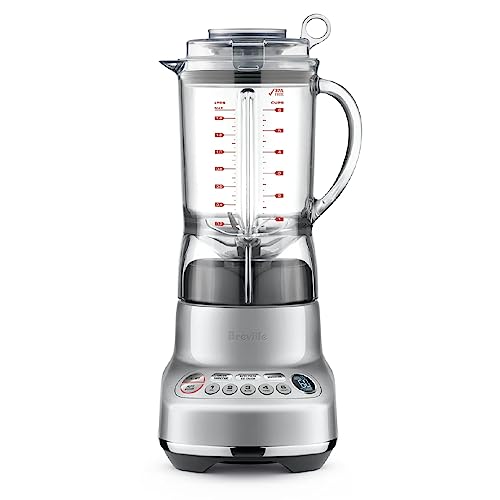
4. Breville Fresh & Furious BBL620 Blender — Best for Everyday Texture Control
The Breville Fresh & Furious, verified in silver as model BBL620, is the everyday driver’s pick: its listing describes a high-torque motor, multiple speed settings, and easy auto-clean functionality, in a jug designed to move ingredients evenly rather than leaving a raw ring at the top. For bean and vegetable work that means dependable weeknight performance — soups smooth, sauces even, purees consistent — without professional-machine money or professional-machine size.
Key specs
- Model: BBL620, Silver
- Motor: High-torque motor
- Controls: Multiple speed settings
- Cleaning: Auto-clean function
Strengths
- Even circulation — fewer unblended vegetable pieces at the top
- Auto-clean makes nightly soup duty painless
- Balanced size for family portions without a huge footprint
Trade-offs
- Less ultimate torque than the Vitamix pair on the thickest bean pastes
- No tamper or processor option in the system
- Speed range is good rather than exceptional
The Fresh & Furious’s party trick is its blade-and-jug pairing, which keeps the blend turning over so the top of the mixture processes as thoroughly as the bottom. Vegetable soups show it clearly: the last chunks of carrot that survive in many mid-range jars get pulled through here, and bean purees come out even without constant stopping to push the mixture down.
It is not the machine for the stiffest hummus or the longest fibre-shredding sessions — the top two picks own that territory — but for the centre of the bean-and-vegetable repertoire, cooked several times a week by a normal household, it is arguably the most sensible purchase in the guide.
The Fresh & Furious’s jug markings deserve a mention for soup makers: they are legible from above while filling, which sounds trivial until you have overfilled a hot soup in a jar whose markings faced the wall. Its auto-clean genuinely shifts the nightly calculation too — a blender that cleans itself in a minute gets used for a Tuesday soup; one that needs a scrub gets used on Sundays. Frequency of use is a quality, and this machine is engineered for it.
Fresh & Furious owners find its sweet spot at the three-to-five-serving scale — the family soup, the double sauce — where its circulation design is at its best. Single small servings ride a little high in the jar; the fix is a doubled recipe and a freezer tub, which this repertoire happily supports anyway.
Best for: Everyday cooks making soups, sauces and purees several times a week / Not suited for: Anyone whose main job is stiff bean pastes or competition-level silkiness
Check the current price on Amazon

5. KitchenAid K400 Variable Speed Blender, Passion Red — Best Mid-Range All-Rounder
The K400 earns its place here on control. This verified configuration — model KSB4027 in Passion Red, 56 oz — confirms a five-speed variable dial and Intelli-Speed motor control, which senses the load and holds blade speed steady. Bean and vegetable mixtures change consistency dramatically mid-blend — a soup thins, a puree thickens — and a motor that holds its note through those changes produces more even results than one that surges and fades.
Key specs
- Model: KSB4027, Passion Red, 56 oz
- Controls: 5-speed variable dial, Intelli-Speed
- Programs: Ice crush, icy drinks, smoothie
- Design: Die-cast style base, colour finish
Strengths
- Load-sensing speed control suits mixtures that change as they blend
- Variable dial gives genuine low speeds for gentler vegetable work
- Sturdy build and a finish that earns its counter space
Trade-offs
- This configuration lists no tamper — thick pastes may need a scrape-down
- 56 oz is mid-size for family soup batches
- Programs lean toward drinks rather than savoury work
Where the K400 quietly excels is sauces and medium purees: roasted vegetable sauces, bean-based pasta sauces, and curry bases where you want body with a little texture left. The low end of the dial is genuinely low, so you can knock a sauce down without obliterating it, and Intelli-Speed keeps that gentle speed honest even as the sauce thickens against the blades.
For fully silky soups it is capable rather than class-leading, and stiff bean pastes will ask for a stop-and-scrape that the tamper-equipped version of this same blender avoids. As a mid-range all-rounder for a bean-and-vegetable kitchen, though, its control and build make it a satisfying long-term buy.
K400 owners blending savoury work should ignore its drink-named presets entirely and live on the dial — the presets are tuned for ice and fruit, while the dial’s low-to-mid range is where sauces and purees live. The Passion Red finish also proves practical: it hides the turmeric and tomato staining that gradually shadows clear and light-coloured bases in a savoury-heavy kitchen. Small mercies compound over years of ownership.
The K400’s dial also protects delicate vegetable work its rivals rush: a courgette or pea puree that should stay vivid and just-broken-down can be parked at a low speed and watched, rather than blasted into soup. Control at the gentle end is the rarest trait in mid-range blenders, and savoury cooks feel its absence more than smoothie makers ever will.
Best for: Mid-range buyers who cook sauces and purees and value speed control / Not suited for: Anyone wanting a tamper in the box or the largest soup capacity
Check the current price on Amazon

6. nutribullet Full-Size Blender Combo NBF50500, 1200W — Best for Small Households
The nutribullet Combo closes the list for smaller households that still cook properly. The verified listing confirms a 1200W base, a 64 oz pitcher for family-size work, and a 24 oz tumbler cup for single servings. That pairing suits bean and vegetable cooking in a one-or-two-person home: a pot of soup blends in the pitcher, while a single portion of bean dip, a sauce for tonight, or tomorrow’s smoothie happens in the cup without washing the big jar.
Key specs
- Power: 1200W
- Vessels: 64 oz pitcher + 24 oz tumbler cup
- Colour: Dark Gray, NBF50500
- Parts: Dishwasher-safe
Strengths
- Two vessel sizes match real small-household cooking
- 1200W is ample for bean soups and vegetable purees
- Cup system makes small dips and sauces worth bothering with
Trade-offs
- Thick pastes in the pitcher need liquid help and scraping
- Less refined speed control than the dial machines
- Not the choice for the stiffest hummus
Small households under-use big blenders because washing a full-size jar for a cup of sauce feels absurd — the Combo’s tumbler cup fixes that behavioural problem, which is worth more than specs. Bean dips for one, a single roasted-pepper sauce, a portion of puree: all become two-minute jobs, and the pitcher is there when the soup pot comes out.
Performance in the pitcher is honest mid-power work: bean and vegetable soups smooth with adequate liquid and a sensible blend time, fibrous vegetables need the longer end of that time, and stiff pastes are the boundary we would not cross daily. For its household size and tier, that is the right set of compromises.
The nutribullet Combo’s cup has a bean-and-vegetable role beyond smoothies: single portions of sauce. A roasted-pepper sauce for tonight’s pasta, a small bean dip for one, a herb oil — jobs too small for any full-size jar in this guide — take ninety seconds in the cup, and the cup goes in the dishwasher. Households of one or two consistently tell us the small vessel, not the headline pitcher, is why the machine earns its counter space.
Combo owners should freeze bean and vegetable soup in the tumbler cups themselves for single-portion lunches — blend Sunday in the pitcher, portion into cups, freeze, and reheat one at a time. The two-vessel system quietly becomes a meal-prep system, which is the highest use a small household can put any blender to.
Best for: One-to-two-person households cooking bean and vegetable dishes at modest scale / Not suited for: Families needing maximum batch size or stiff-paste performance
Check the current price on Amazon
Comparison Table
| Pick | Badge | Key spec | Best for |
|---|---|---|---|
| Vitamix Propel Series 750, 64 oz | Best Overall | 64 oz, 4 programs, variable speed | Households cooking bean and vegetable soups and purees several times a week |
| Vitamix 5200 Professional-Grade Blender, 64 oz | Best for Silky Purees | 64 oz, variable speed, high-speed switch | Puree perfectionists making bean and vegetable soups and sauces from scratch |
| Ninja Kitchen System Pro BL770, 1500W | Best System for Chopping and Processing | 1500W, 72 oz + 8-cup processor bowl | Cooks who want one system for soups, purees, dips and vegetable chopping |
| Breville Fresh & Furious BBL620 Blender | Best for Everyday Texture Control | BBL620, high-torque, auto-clean | Everyday cooks making soups, sauces and purees several times a week |
| KitchenAid K400 Variable Speed Blender, Passion Red | Best Mid-Range All-Rounder | 56 oz, 5-speed dial, Intelli-Speed | Mid-range buyers who cook sauces and purees and value speed control |
| nutribullet Full-Size Blender Combo NBF50500, 1200W | Best for Small Households | 1200W, 64 oz + 24 oz cup | One-to-two-person households cooking bean and vegetable dishes at modest scale |
How to Choose a Blender for Beans and Vegetables
What is different about blending beans and vegetables together?
The two ingredient families pull a blender in opposite directions. Beans thicken as they blend and need sustained, whole-mass circulation; vegetables range from soft roasted peppers that puree in seconds to raw fibrous stalks that need prolonged high power, plus a whole category of jobs — salsa, sofrito, rustic sauces — where the correct result is chopped, not smooth. A machine for both needs torque, fibre power, and restraint: strong top end, honest low end, and a pulse that actually pulses.
Vessel choice is the hidden variable. Tall jars puree; wide processor bowls chop and handle stiff pastes; small cups make single portions practical. Households that cook beans and vegetables daily should weigh a system with two vessels (the Ninja here, or a blender plus a small cup) more heavily than a single-jar machine with a longer feature list.
How do you get vegetable fibres smooth in soup?
Time at full power is the whole secret, plus enough liquid for a true vortex. Kale stems, celery strings, and leek fibres do not break down at medium speed or in 20 seconds — they need 45 to 90 seconds of full circulation, which is why program-based soup cycles and professional motors earn their money in this category. Cutting fibrous vegetables smaller before blending, and blending while the soup is hot, both shorten the work.
If silkiness matters and your machine is mid-range, the cook’s cheat is legitimate: blend long, then pass the soup through a coarse sieve to catch the last fibres. The top Vitamix picks make the sieve unnecessary; the mid-range picks make it optional rather than mandatory.
Can a blender replace a food processor for vegetable prep?
For purees, soups, and sauces — yes, completely. For chopping — only partially. A blender jar pulsed carefully will knock down onions and peppers for a sauce base, unevenly, in small batches. A processor bowl (as in the Ninja system) chops evenly and in quantity, and also handles stiff bean pastes better than a jar. If your vegetable cooking involves daily chopping, buy the system with the bowl; if it involves daily soup, buy the best jar and chop by hand or accept rustic pulses.
How to Blend Beans and Vegetables: Soups, Purees and Sauces
- Build flavour first: sweat onions and aromatics, and cook beans until completely soft — blenders finish textures, they do not create them.
- Cut fibrous vegetables small — celery, kale stems and leeks into short lengths — so fibres start shorter than the blade path.
- Load the jar liquid-first, then soft ingredients, then fibrous ones on top, so the vortex forms early and pulls the tough pieces down.
- Start low and ramp to full power over 20–30 seconds; for soups, hold full power 45–90 seconds until the surface looks glossy and uniform.
- For rustic sauces and salsa bases, use short pulses instead — three to six pulses, checking between, and stop while texture remains.
- Taste and adjust in the jar: salt, acid and a little fat at the end transform a blended soup; blend five seconds more to incorporate.
- Serve soups straight from the jar while hot — a long full-power blend reheats as it smooths, so dinner is ready when the texture is.
Two combinations deserve specific technique. Bean and greens soups (white bean and kale, lentil and spinach) blend best when the greens go in for only the final portion of the blend if you want colour and fleck, or for the whole blend if you want a uniform green puree — decide before you start, because you cannot go back. Roasted vegetable and bean sauces for pasta want the opposite restraint: blend to just-combined, leaving body, and let the pasta water loosen the sauce in the pan.
Finally, freeze blended bean and vegetable soups in portions without dairy or herbs stirred in; add those fresh when reheating. Blended soups freeze better than almost any other batch cooking, which makes a big-jar Sunday blend the highest-value habit this guide can give you.
Blender or Immersion Blender for Bean and Vegetable Soups?
Immersion blenders are convenient — blend in the pot, rinse the stick — but they cannot match a countertop jar for this repertoire. They circulate a small zone at a time, leave fibre and skin fragments that a vortex would have shredded, and are useless for bean pastes and dips. For a thin, rustic soup they are fine; for the silky bean and vegetable standard this guide is built on, the jar wins.
The sensible kitchen eventually owns both and uses the stick for quick in-pot jobs. But if the budget buys one machine for beans and vegetables, buy the countertop blender — it covers soups to a higher standard and everything else in this guide besides.
Building a Week of Bean and Vegetable Cooking Around Your Blender
The Sunday batch session
The highest-value habit this guide can teach is the Sunday session: one pot of bean and vegetable soup blended smooth for lunches, one bean dip for the week’s snacks and sandwiches, one roasted vegetable sauce frozen in portions. Ninety minutes, one machine, and the week’s hardest cooking is done. Every pick here handles that session; the bigger jars (both Vitamix models, the Ninja pitcher) do it in single runs, while the mid-size picks simply run twice.
Sequence the session to the machine’s strengths: soup first while it is hot from the pot, sauce second, dip last — because the dip’s raw garlic and lemon would season everything after it, while soup flavours rinse out of a jar with a glass of water and a ten-second blend. End with the self-clean or auto-clean cycle and the session closes as neatly as it opened.
Freezing blended food properly
Blended bean and vegetable preparations freeze exceptionally well — better than their unblended originals — because the texture is already uniform and there is nothing left to break down. Freeze soups and sauces flat in bags or in portion tubs, leave headroom for expansion, and keep dairy and fresh herbs out until serving; both suffer in the freeze and both take seconds to add when reheating.
Thawed blended soups sometimes separate slightly; the fix is thirty seconds of re-blending or a vigorous whisk as they reheat, which restores the emulsion completely. A freezer stocked with two soups, a sauce, and a dip is the practical payoff of owning any machine in this guide — it converts weeknight cooking from a production into an assembly.
Getting children and sceptics to eat blended vegetables
Blended bean and vegetable cooking has a quiet superpower: it makes the nutritious thing the delicious thing without argument. A white bean and roasted pepper soup reads as a creamy tomato-style soup; a lentil and carrot blend with warm spices reads as comfort food; a smooth vegetable sauce coats pasta the way children demand, with the vegetables built in rather than negotiated over.
The technique that sells it is finishing, not hiding: a swirl of good oil, a crisp topping for contrast — toasted seeds, crispy chickpeas from the processor bowl, a herb oil from the small cup — and the bowl looks and tastes like something chosen, not something disguised. Blenders do not just change texture; used well, they change what a household happily eats.
Troubleshooting Bean and Vegetable Blends
Problem: green soup that turned out brownish
Problem: a bean and greens soup that should be vivid comes out muddy. The causes are time and acid: greens blended too long with heat lose their bright colour, and acid added early dulls them further. The fix for the next batch is sequencing — blend the bean base fully first, add the greens for the final fifteen seconds only, and add lemon at the table, not in the jar. The soup in the bowl today is still delicious; colour is the only casualty, and a swirl of green herb oil on top restores the look.
Freezing worsens colour further, so green soups are the one blended preparation we recommend eating fresh or freezing before the greens go in, adding them at reheating instead.
Problem: sauce that split or turned watery on pasta
Problem: a blended vegetable sauce looks perfect in the jar and weeps on the plate. Blended sauces hold water in suspension rather than in a true emulsion, and pasta’s heat and starch expose that. The fixes: blend a small piece of the bean base — white beans are the invisible thickener of the vegetable world — into any watery sauce; finish the sauce in the pan with a ladle of pasta water so the starches marry; and add cheese off the heat, never in the blender, where it turns stringy.
A watery sauce is also a loading confession: too much raw vegetable water went into the jar. Roast or sweat vegetables before blending and the same recipe holds together — the blender concentrates what you give it, including your mistakes.
Problem: flavours that taste raw or harsh
Problem: a blended soup or dip with a raw garlic bite or a harsh onion edge. Blenders do not cook, and raw alliums blended fine disperse their harshness through the whole dish instead of mellowing in pockets. The rule is simple: anything you would not eat raw and alone — garlic, onion, chilli stems — gets cooked, pickled, or used in true moderation before it meets the blades.
The rescue for a harsh batch is gentle heat: simmer the blended result for ten minutes and the raw edges cook out, at a small cost to freshness. Next time, sweat the aromatics first and blend them warm — the flavour deepens and the harshness never forms.
Common Buying Mistakes
Bean and vegetable blending has its own repeat mistakes — most are about fibres, thickness, and stopping too soon.
- Stopping the blend when it ‘looks smooth’. Fibres and skins break down in the final stretch. Give soups a full 45–90 seconds at power, or expect strings and grit.
- Blending raw fibrous vegetables in long pieces. Celery strings and kale stems wrap and resist. Cut fibrous vegetables short before they go in.
- Expecting a jar to chop like a processor. Jars puree the bottom and leave the top chunky. For even chopping, pulse small batches — or buy the system with a processor bowl.
- Overfilling with hot soup. Hot liquids expand and can force the lid. Fill to the hot-liquid line, start low, and hold the lid — every time.
- Adding greens at the start for a flecked soup. Greens blended for the full cycle disappear into the base. For visible flecks and brighter colour, add them near the end.
- Skipping acid and fat at the end. Blended bean and vegetable soups taste flat without them. A squeeze of lemon and a thread of olive oil, blended briefly, finish the dish.
None of these requires new equipment — they are timing and loading decisions, which is good news: your next pot can be better than your last at no cost at all, starting with tonight’s dinner and the machine already sitting on your counter today.
Final Recommendation
The Vitamix Propel 750 is the most complete bean-and-vegetable machine here — programs for the staples, a dial for everything else. The 5200 is the puree purist’s choice, the Ninja BL770 the system to buy if chopping and processing matter as much as blending, and the Breville and KitchenAid cover everyday and mid-range needs with real control. Small households should take the nutribullet Combo and its two-vessel sense.
Whichever you choose: cook beans soft, cut fibres short, load liquid first, and blend longer than feels necessary. Beans and vegetables reward exactly that patience.
Ready to buy? Start with our top three: Vitamix Propel Series 750, 64 oz, Vitamix 5200 Professional-Grade Blender, 64 oz, Ninja Kitchen System Pro BL770, 1500W — each link goes to the verified Amazon listing so you can check the current price and confirm the exact model.
Keep exploring the cluster: Best Blenders For Beans Best Blenders For Banana Ice Cream Best Blenders For Berry Seeds Best Blenders For Cooking Best Blenders For Frozen Fruit And Veggies
Frequently Asked Questions
What type of blender is best for beans and vegetables?
A full-size countertop blender with strong sustained power, a genuine low speed and pulse, and — ideally — a second vessel like a processor bowl or small cup for chopping and small batches.
Can one blender make both smooth soups and chunky salsa?
Yes, with pulse control and restraint: full power for soups, short pulses for salsa. The texture difference is technique and timing, not different machines — though a processor bowl chops more evenly than any jar.
Why does my vegetable soup stay stringy?
The fibres need more time at full power and shorter pieces to start with. Blend 45–90 seconds at full speed; if it is still stringy, a quick pass through a sieve finishes the job.
Are blenders good for bean dips and hummus?
High-power blenders with good circulation make excellent, smooth hummus and bean dips. Stiff pastes may need a tamper or a processor bowl — both options appear in this guide.
How full can I fill a blender with hot bean soup?
Only to the jar’s hot-liquid fill line, starting on low speed with the lid held firmly. Hot liquids expand as they blend, and overfilling is the classic cause of messy, dangerous blowouts.
Should I blend beans and vegetables hot or cold?
Warm blends smoothest — starches and fibres are softer. Blend soups hot from the pot (within fill limits), and warm fridge-cold beans gently before blending them into purees.


