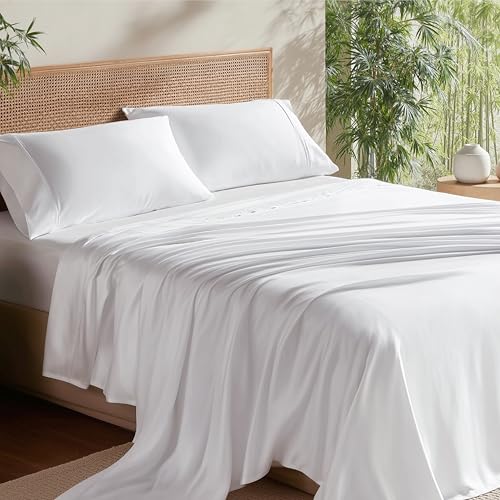
Bamboo sheets are made from fiber taken from bamboo and spun into a soft fabric. The process and finish differ from one maker to the next, which is why two sets labeled bamboo can feel quite different. We have not used these products ourselves, so this guide focuses on reading labels and descriptions.
Begin with your mattress and how you like bedding to feel. Then compare the fabric type, weave, pocket depth and what comes in the set. The table below lists the factors and what to check, and remember that fabric claims come from the maker, so read the care label closely. Because listings often repeat the maker’s own wording, treat every claim as a description rather than a result, and compare it against the measurements and materials shown. Writing down your top three needs before you browse makes it far easier to ignore features you will never use.
As an Amazon Associate we earn from qualifying purchases. Links on this site are affiliate links, and they do not change the information we give.
In this guide
Quick Picks
These five bamboo sheet sets line up with the guide’s checkpoints — fiber type, weave, pocket depth and what is in the box — from a premium 100% viscose set with extra-deep pockets to plain, affordable options. All five are queen size sets; every maker also sells other sizes on the same listing.
| Pick | Product | Best For |
|---|---|---|
| 1 | Cozy Earth Luxury Bamboo Sheet Set (Queen) | Deepest pockets and a premium feel |
| 2 | Bedsure Cooling Bamboo Sheet Set (Queen) | Hot sleepers who want a twill weave |
| 3 | Hotel Sheets Direct Bamboo Sheet Set (Queen) | A long-running, no-blend staple |
| 4 | Cosy House Collection 100% Bamboo Sheet Set (Queen) | Pure bamboo fabric with a deep pocket |
| 5 | Pure Bamboo Sheets (Queen) | Organic viscose with reinforced stitching |
Our Picks
Top pick
1. Cozy Earth Luxury Bamboo Sheet Set (Queen)
The Cozy Earth set is the premium option here and the clearest answer to the guide’s pocket-depth warning. The fabric is 100% viscose from bamboo with no blending, and the fitted sheet is made to cover mattresses up to 20 inches deep, deeper than anything else in this group, so pillow-top beds and thick toppers are covered. The four-piece set includes a flat sheet, a fitted sheet and two pillowcases. Cozy Earth describes the fabric as temperature regulating and breathable, aimed at people who sleep warm but still want a smooth, drapey surface rather than a crisp one. The trade-offs are care and commitment: the maker recommends gentler washing and line drying where possible to protect the fibers, with low tumble drying as the fallback, so it suits the guide’s advice about following the care label exactly. It fits buyers with deep mattresses who want the fiber content stated plainly and are willing to wash a little more carefully in exchange.
View Cozy Earth Sheet Set on Amazon

2. Bedsure Cooling Bamboo Sheet Set (Queen)
Bedsure’s set is the twill-weave entry in this group, which makes it a useful contrast to the smoother sateen-style sets around it. The fabric is 100% rayon derived from bamboo, and Bedsure uses a twill weave it describes as adding strength while keeping the surface smooth. The fitted sheet has a deep pocket rated to 16 inches, enough for most pillow-top mattresses without reaching the Cozy Earth extreme. The set is OEKO-TEX Standard 100 certified, which speaks directly to the guide’s certification checkpoint, and the box holds four pieces: a flat sheet, a fitted sheet and two pillowcases. Bedsure markets the set at hot sleepers, with breathability and moisture-wicking as the headline claims, so treat those as maker descriptions as the guide advises. It suits warm sleepers who prefer a slightly sturdier, textured weave over a sleek one, and who want a certified fabric without moving into the premium tier.


3. Hotel Sheets Direct Bamboo Sheet Set (Queen)
Hotel Sheets Direct built its name on this set, and the listing answers the guide’s questions unusually plainly. The fabric is 100% viscose derived from bamboo with no blends, at a stated 144 GSM, and the set is OEKO-TEX Standard 100 certified. Sizes are spelled out: the fitted sheet is 60 by 80 inches, the flat sheet 102 by 90 inches and the two pillowcases 20 by 30 inches, which makes it easy to check the set contents against your bed before ordering. The brand positions the fabric as cooling and moisture-wicking with a silky surface, the smooth drape the guide associates with bamboo-derived cloth. The compromises are few but real: the pocket is a standard deep fit rather than the extra depth of the Cozy Earth set, and the presentation is hotel-plain rather than decorative. It suits buyers who want the fiber content, weight and dimensions stated up front and a long-established listing behind the product.

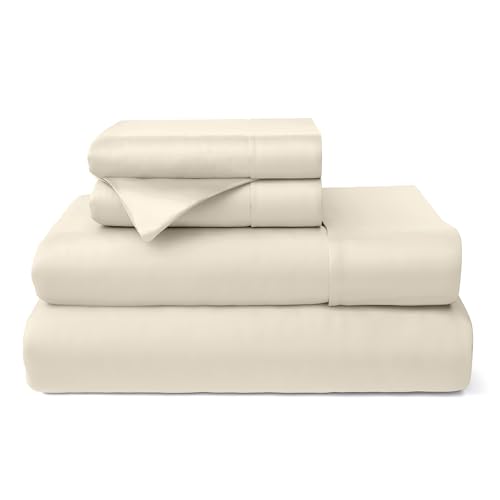
4. Cosy House Collection 100% Bamboo Sheet Set (Queen)
Cosy House sells two different bamboo lines, and this is the one that matches the guide’s advice to read the blend details carefully: this set is 100% rayon derived from bamboo, unlike the brand’s better-known Luxury line, which blends bamboo rayon with polyester microfiber. The four-piece queen set pairs a flat sheet and two pillowcases with a deep-pocket fitted sheet, and the maker describes the fabric as cooling, breathable and silky-soft, in line with the smooth feel most people buy bamboo for. Because the two Cosy House lines sit side by side on Amazon, it is worth double-checking the listing title for the words “100%” before ordering, exactly the kind of label check the guide recommends. The trade-off is that the listing gives less detail on weave and fabric weight than some rivals here. It suits buyers who want an all-bamboo fabric from a widely stocked brand and a deep pocket fit at a mid-level position in the range.

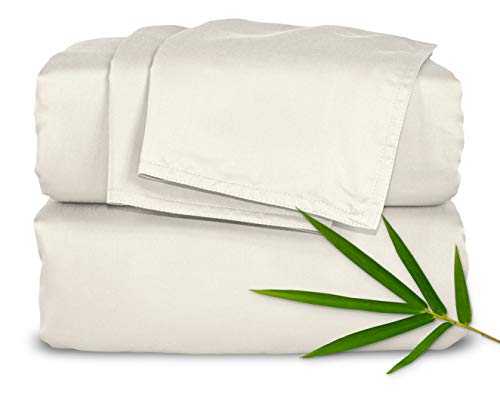
5. Pure Bamboo Sheets (Queen)
Pure Bamboo leads with the sourcing claim the guide tells readers to look for: the set is made from genuine 100% organic viscose derived from bamboo, with the fiber content stated in the product name itself rather than buried in the description. The queen set covers a 60 by 80 inch mattress and includes a fitted sheet, a flat sheet and two pillowcases. Construction details are the differentiator here — the maker highlights double stitching at the seams, which speaks to the guide’s point about how long a set lasts under regular washing, and backs the set with a two-year quality promise, a clearer support statement than most listings in this category offer. The fabric is described as soft and cooling with the loose drape typical of bamboo viscose. It suits buyers who put organic sourcing and seam construction at the top of their list, and who are comfortable following the gentler wash routine bamboo-derived fabric generally asks for.

What to Look For
| Factor | Why it matters | What to check |
|---|---|---|
| Fabric type | Changes feel and drape | See whether the listing says viscose, lyocell or a blend |
| Weave | Shapes texture and look | Look for sateen or twill and a described finish |
| Pocket depth | Decides fit on thick mattresses | Compare the listed depth with your mattress height |
| Set contents | Affect what else you need to buy | Check pillowcase count and sheet sizes |
| Certifications | Maker statements about materials | Note any named certifications and look for the issuing body |
| Care instructions | Affect how long the set lasts | Read wash temperature and drying guidance |
| Color and dye | Influence fading and feel | Look for notes on dye method and colorfast washing |
Setup and Care Tips
- Wash before first use on the cycle the label lists.
- Use mild detergent and skip fabric softener.
- Dry on low heat or hang to dry as the label advises.
- Remove sheets promptly to limit wrinkles.
- Rotate between two sets to spread out wear.
Mistakes to Avoid
- Assuming all bamboo sheets feel the same.
- Ignoring pocket depth on a thick mattress.
- Washing in hot water against the care label.
- Using bleach or harsh cleaners.
- Skipping the fabric blend details in the listing.
How do you choose bamboo sheets for your sleep style?
Choose bamboo sheets by matching three things: how warm you sleep, how you like fabric to feel against your skin, and how thick your mattress is. Everything else in a listing is secondary to those three.
Hot sleepers usually look for a lighter, looser fabric and a weave that moves air. Cold sleepers often prefer a slightly heavier or more textured feel, which can seem warmer when you first climb in. Neither is better; they simply suit different bedrooms and different bodies.
Feel is the second question. Some people want the smooth, drapey surface that sateen-style bamboo is known for, while others like the sturdier, ribbed hand of a twill weave. If you are unsure, think about which sheets you have enjoyed before and describe why. That description is more useful than any marketing word.
Partners complicate things. If one person runs hot and the other runs cold, a middle-of-the-road weight and a separate light blanket for the warmer sleeper can solve the problem without forcing either person to compromise on sheets.
Finally, think about how you wash. If you want sheets you can toss in with towels, a bamboo-derived fabric may frustrate you, because many makers recommend gentler settings. Being honest about your laundry habits now saves disappointment later.
- Warm sleepers: look for breathable, lighter-feeling fabric and read what the maker says about airflow.
- Cool sleepers: consider a twill weave or a snugger, fuller feel.
- Shared beds: pick a middle weight and layer blankets separately.
Bamboo viscose vs lyocell vs cotton: what is the difference?
Bamboo viscose and lyocell are both made by dissolving bamboo pulp and spinning it into fiber, while cotton is a natural fiber taken from the cotton plant. The difference in processing is why a listing that says bamboo can describe quite different cloth.
Viscose and rayon are closely related terms, and you will see both on labels. They generally describe fabric made from regenerated cellulose, which tends to feel smooth and drape loosely. Lyocell is a related process that some makers describe as more closed-loop, but check the listing rather than assuming, since the details vary by maker.
Cotton behaves differently. Many cotton sets feel crisper, especially in a percale weave, and they usually tolerate a wider range of washing and drying habits. If you like a cool, papery feel on a summer night, cotton percale may suit you better than any bamboo-derived set.
Blends sit in between. Some bamboo sets add polyester or other fibers to change durability or price. A blend is not automatically worse, but it changes how the sheets feel and how they should be washed, so the fiber line on the label matters.
- Bamboo viscose or rayon: smooth, drapey, often prefers gentle washing.
- Lyocell: similar softness; read the maker’s own description of the process.
- Cotton: crisper in many weaves and usually easier to care for.
- Blends: check the percentages before comparing with pure bamboo sets.
Which bamboo sheet set should you buy?
The right set depends on your mattress depth, your temperature, and how much you care about certifications and construction. Here is how the picks above map to different buyers, using only what each listing states.
- Thick pillow-top mattress or a deep topper: go for the Cozy Earth Luxury Bamboo Sheet Set, which has the deepest pockets in this group and states its fiber content plainly.
- Hot sleeper who likes a sturdier weave: choose the Bedsure Cooling Bamboo Sheet Set, which uses a twill weave and carries the certification named in its listing.
- Buyer who wants dimensions and fabric details spelled out: the Hotel Sheets Direct Bamboo Sheet Set lists its measurements and fiber content clearly, so it is easy to check against your bed.
- Buyer who wants all-bamboo fabric from a widely stocked brand: the Cosy House Collection 100% Bamboo Sheet Set fits, as long as you confirm the listing title says 100%.
- Buyer who values organic sourcing and seam construction: the Pure Bamboo Sheets stand out for the sourcing claim and the stitching the maker highlights.
If two picks seem close, let the mattress decide. A set that fits snugly will feel better and stay on the bed better than one chosen purely for fabric. After that, let your laundry routine break the tie. Sets that ask for line drying suit people with time and space to hang sheets; sets with simpler directions suit busy households.
Remember that all of these descriptions come from the makers. Use them as a guide for narrowing your list, then confirm the details on the current listing.
What to check before you buy bamboo sheets
Before you click buy, confirm the size, the pocket depth, what is in the box, and what the care label asks of you. A five-minute check prevents most returns.
- Mattress size and depth: measure the bed including any topper, then compare with the stated pocket depth on the listing.
- Size label: queen, king and other sizes are sold separately, so confirm the listing matches the size you selected.
- Set contents: count the pieces and pillowcases, and note whether a flat sheet is included if you use one.
- Fiber line: look for the words 100% or a stated blend, and watch for similar products from the same brand with different fabric.
- Weave and finish: check whether the maker describes sateen, twill or another weave.
- Certifications: if a certification is named, look for the issuing body and read what it covers.
- Care label: confirm wash temperature, whether softener is discouraged, and whether line drying is advised.
- Returns and warranty: read the return window and any support statement on the listing, since bedding is personal and fit is hard to judge on screen.
- Color: check the color name carefully, because photos and shades can differ across screens.
If a detail is missing, treat it as unknown. Look at the product page again or compare it against another listing before deciding.
Are bamboo sheets worth it, and who should skip them?
Bamboo sheets are worth it if you want a smooth, drapey feel and are willing to follow gentler care. They are not worth it if you prefer a crisp texture or want zero-fuss laundry.
Is it worth paying more? A higher tier may give you deeper pockets, clearer fiber labeling, or more careful construction. Those are real benefits if your mattress is thick or you plan to keep the set for years. If your bed is standard and you only want something soft, a mid-level set that states its fabric plainly can be enough.
The honest downsides are worth knowing:
- The feel can seem too soft or slippery if you like crisp cotton.
- Many makers recommend cooler washes and lower heat drying, which means more attention at laundry time.
- Smooth weaves may snag more easily on rough hands or jewelry.
- Claims such as cooling or moisture-wicking are maker descriptions, not guarantees, and comfort depends on your room and body.
You should skip bamboo sheets if you wash everything on hot, if you strongly prefer a papery feel, or if you need a very specific certification and cannot confirm it on the listing. If you have sensitive skin concerns, talk with a professional first.
Compare the picks above, check the current listing for size, pocket depth and what is included, then choose the set that fits your mattress and your laundry routine.
Choosing Bamboo sheets Around How You Will Actually Use Them
The most useful way to narrow down bamboo sheets is to start with a picture of an ordinary week, not with a feature list. Picture where the bamboo sheet set will live and be used: a bedroom where bedding is washed weekly and the feel of the fabric against skin matters night after night. Then picture who will use it, how often, and what usually goes wrong with the version you own now or have used before. Those answers matter more than any single headline feature, because a bamboo sheet set that suits one household can be a poor fit for another even when the listings look similar on the surface.
Consider three common situations. First, a hot sleeper who wants a cool, smooth feel through the night. Second, a couple choosing a set that fits a deep mattress without popping off. Third, a household that washes bedding often and needs fabric that stays soft. Each situation pushes the decision in a different direction, and each one makes a different compromise acceptable. Writing your own version of these three pictures, in your own words, takes a few minutes and prevents the most common buying mistake with bamboo sheets: paying for the wrong strengths and then working around the weaknesses every single day.
Once the use case is clear, work through the criteria that genuinely shape daily use: whether the fabric is bamboo viscose, lyocell or a blend, weave, pocket depth, elastic quality, stitching, and the care routine the maker recommends. For each one, decide what good enough looks like for you before you look at any particular model. That order matters. If you read listings first, every feature starts to sound essential. If you set your own thresholds first, you can scan a listing quickly, keep the models that clear your bar, and set the rest aside without second-guessing yourself.
It also helps to separate must-haves from nice-to-haves in writing. A must-have is something whose absence would stop you using the bamboo sheet set properly: the right size for the space, the right fit for the person, or a control layout you can manage confidently. A nice-to-have improves a good day but does not rescue a bad fit. With bamboo sheets, many returns and regrets trace back to a nice-to-have being treated as the deciding factor while a must-have, usually size, fit or upkeep, was never properly checked.
Finally, think about the total routine, not just the moment of use. How long does setup take, where does everything go afterwards, and what consumables, parts or accessories will you need to keep on hand? A bamboo sheet set that is pleasant to use but awkward to clean or store slowly falls out of use. The picks in this guide were chosen to cover different routines, so as you read the reviews above, keep asking which routine sounds most like yours, rather than which product sounds most impressive in isolation.
A Practical Routine: Setup, First Use and Everyday Habits
On the first day, resist the urge to judge bamboo sheets within the first few minutes. Unpack slowly, read the maker’s instructions all the way through once, and check that every part, fitting and accessory listed is present before anything is thrown away. Keep the packaging until you have completed a first proper use, because missing parts and early faults are far easier to sort out while everything is still together. Photographing how parts fit together as you assemble or set up the bamboo sheet set gives you a personal reference that is often clearer than a diagram.
For the first use, choose an easy, typical task rather than the hardest job you own. With bamboo sheets, a gentle first run shows you how the controls feel, how the bamboo sheet set behaves in your space, and what you need within reach, without the pressure of a deadline or an audience. Note anything that surprises you: a control that works the opposite way to your instinct, a part that needs more clearance than you expected, or a step in the routine you will want to prepare in advance next time.
From there, build a small repeatable routine. Prepare the same few things in the same order each time, keep the accessories you actually use together in one place, and put everything away while the steps are fresh in your mind. Routines sound dull, but with bamboo sheets they are what turn a good purchase into a reliable one. Most everyday problems, from lost parts to disappointing results, come from skipped preparation or rushed finishing rather than from the product itself.
Households with more than one user should agree the routine out loud. Who sets it up, who cleans it, where it lives, and what the house rules are for borrowing it or using it for a different job than usual. Shared bamboo sheets wear out fastest at exactly the points where two people assume the other has done the checking, charging, emptying or cleaning. A short conversation, and a note kept with the bamboo sheet set if needed, prevents most of that friction.
After a month of regular use, revisit your first impressions deliberately. Some features that seemed minor will have become the ones you value, and some headline features may never be touched. That review is useful twice over: it tells you which accessories or spare parts are genuinely worth keeping in stock, and it gives you a clear, honest picture of what you would choose differently, or exactly the same, when the time eventually comes to replace the bamboo sheet set.
Cleaning, Care and Storage in Detail
Care is where bamboo sheets are won or lost over years rather than weeks. The routine itself is rarely complicated: wash in cool water on a gentle cycle with similar fabrics, avoid harsh detergents and fabric softener unless the maker allows them, dry on low heat or on a line, and store folded in a dry drawer away from rough items that snag. What matters is doing it little and often. Dirt, moisture, residue and neglect rarely destroy a bamboo sheet set in one dramatic moment; they build up quietly until performance drops, a part sticks or wears, or a smell or stain becomes permanent.
Set a simple rhythm that matches how often you use the bamboo sheet set. A quick tidy after every use, a more thorough clean on a regular cycle, and a deeper check a few times a year for wear, looseness, damage and parts that are approaching the end of their life. Tie the deeper check to something you already do, such as changing a season’s routine or clearing the space where the bamboo sheet set is stored, so it actually happens instead of being endlessly postponed.
Storage deserves the same thought as cleaning. Keep the bamboo sheet set dry, out of harsh sunlight and away from extremes of heat and cold unless the maker says otherwise. Keep small parts, tools and instructions together, ideally in a labelled bag or box kept with the main item. If the bamboo sheet set will sit unused for a long stretch, clean it first, check it over, and store it in the state you would want to find it in, because the next user, often you in a hurry, will not thank you for a problem sealed away in a cupboard.
Safety belongs in the care routine too: check the maker’s care label before the first wash, test new colours separately to protect lighter bedding, and keep sheets away from bleach and high heat that weaken natural fibres. Make the checks part of the rhythm rather than a separate chore. Eyes on seals, cords, fastenings, surfaces and moving parts each time you clean will catch most problems while they are still cheap and simple to put right, and will tell you honestly when a part, or the whole bamboo sheet set, has reached the point where replacement is the sensible option.
How the Picks in This Guide Compare for Different Needs
Readers often ask for a single winner, but with bamboo sheets the honest answer is that each pick in this guide earns its place for a different reader. The comparison below uses only what the reviews above already describe about each model. Use it to match a pick to the situation you pictured earlier, and then re-read that model’s full review before deciding, because the detail in the review, not the summary here, is what should settle the choice.
1. It is presented in the guide as a cozy Earth Luxury Bamboo Sheet Set (Queen), aimed at deepest pockets and a premium feel. Choose it when that description matches your own situation closely, and when the routine described in its review, including setup, controls and upkeep, sounds like one you would happily repeat. Be more cautious if your space, your users or your main task differ from the ones the review emphasises, because a bamboo sheet set bought for someone else’s priorities rarely feels like a bargain for long, however well it is made.
2. It is presented in the guide as a bedsure Cooling Bamboo Sheet Set (Queen), aimed at hot sleepers who want a twill weave. Choose it when that description matches your own situation closely, and when the routine described in its review, including setup, controls and upkeep, sounds like one you would happily repeat. Be more cautious if your space, your users or your main task differ from the ones the review emphasises, because a bamboo sheet set bought for someone else’s priorities rarely feels like a bargain for long, however well it is made.
3. It is presented in the guide as a hotel Sheets Direct Bamboo Sheet Set (Queen), aimed at a long-running, no-blend staple. Choose it when that description matches your own situation closely, and when the routine described in its review, including setup, controls and upkeep, sounds like one you would happily repeat. Be more cautious if your space, your users or your main task differ from the ones the review emphasises, because a bamboo sheet set bought for someone else’s priorities rarely feels like a bargain for long, however well it is made.
4. It is presented in the guide as a cosy House Collection 100% Bamboo Sheet Set (Queen), aimed at pure bamboo fabric with a deep pocket. Choose it when that description matches your own situation closely, and when the routine described in its review, including setup, controls and upkeep, sounds like one you would happily repeat. Be more cautious if your space, your users or your main task differ from the ones the review emphasises, because a bamboo sheet set bought for someone else’s priorities rarely feels like a bargain for long, however well it is made.
5. It is presented in the guide as a pure Bamboo Sheets (Queen), aimed at organic viscose with reinforced stitching. Choose it when that description matches your own situation closely, and when the routine described in its review, including setup, controls and upkeep, sounds like one you would happily repeat. Be more cautious if your space, your users or your main task differ from the ones the review emphasises, because a bamboo sheet set bought for someone else’s priorities rarely feels like a bargain for long, however well it is made.
If you are torn between two picks, compare them on the three things you cannot change later: size and fit for your space and users, the upkeep routine each one demands, and how each one behaves at the exact task you do most often. Features can be worked around and accessories can be added, but those three fundamentals follow the bamboo sheet set home. If the two are still level, choose the one whose everyday routine sounds simpler, because the bamboo sheet set that is easier to live with is the one that gets used properly and lasts longest.
Troubleshooting, Wear Signs and Knowing When to Replace
When results disappoint, work through the simple causes first before blaming the bamboo sheet set itself. Check the setup against the maker’s instructions, step by step, in good light, without rushing. With bamboo sheets, a large share of problems trace back to one skipped step: something not fully fitted, not fully cleaned, not fully charged or filled, adjusted for a previous task, or used in a space or condition it was not chosen for. Correcting that one step, and then repeating the task calmly, resolves more issues than any accessory purchase.
Learn the ordinary wear signs for this category and check for them during your deeper cleans. Look for looseness where there was none, surfaces that no longer clean up properly, moving parts that feel gritty, stiff or uneven, fastenings that slip, and any change in sound, smell or behaviour during use. Any of these is information, not failure: caught early, most wear is a replaceable part, a thorough clean or a small adjustment. Ignored, the same wear is what turns a repairable bamboo sheet set into a write-off.
Keep a brief note, on paper or on your phone, of problems, fixes and part changes, with dates. Memory is unreliable about slow changes, and a short record makes patterns obvious: the part that keeps failing, the task that always causes trouble, the season when problems cluster. That record is also genuinely useful if you ever need to contact the maker, because a clear account of what happened, and what you already tried, gets a faster and better answer than a general complaint.
Replacement becomes the sensible conversation when repairs or parts cost a large share of a new bamboo sheet set, when a safety-related part is damaged, when the maker no longer supports the model with parts or guidance, or when your needs have simply changed and the old bamboo sheet set no longer fits your life. None of those is a failure of the original purchase. Bamboo sheets that have been used, cared for and finally replaced at the right moment have done exactly the job they were bought for, and your notes from owning one make the next choice far easier than the first.
A short planning checklist. Before you order, measure the space where the item will be used and stored, write down the main task and the main user, list the parts or supplies you will need in the first month, and decide where small accessories will live. Four lines on paper prevent most mismatched purchases, because they force the practical questions to be answered while returning or exchanging is still a simple option rather than a necessity.
Think about the season ahead. Many products in this category work harder, or face harder conditions, at particular times of year. If you are buying just before that busy season, allow time to learn the routine on easy tasks first, and order any spare parts or supplies before you need them urgently. If you are buying in the quiet season, use the breathing room to compare carefully and set everything up properly, so the first busy week is not also your first week of ownership.
Teach the next user properly. If someone else will use the item, a five-minute handover beats a written warning every time. Show them the setup order, the one mistake to avoid, and where things are stored. Most damage and most disappointing results in shared households come from a confident guess by someone who was never shown, not from carelessness, and a short demonstration removes that risk almost entirely.
More Questions Buyers Ask About Bamboo sheets
How long should bamboo sheets realistically last?
There is no honest single figure, because lifespan follows use and care far more than age. A bamboo sheet set used gently, cleaned on a routine and stored properly will usually serve far longer than the same model used hard, skipped on cleaning and stored damp or cramped. Judge yours by its condition and behaviour, the wear signs described above, rather than by the calendar, and replace parts promptly when they begin to affect use.
What should I check first when a bamboo sheet set stops working as expected?
Go back to the maker’s instructions and check the basics in order: correct setup, correct settings for the task, cleanliness, and the condition of the parts that wear. Work through one check at a time and test after each change, so you learn which step mattered. If a problem involves power, heat, water or anything the manual warns about, stop and follow the maker’s guidance or contact them, rather than experimenting.
Are accessories and spare parts worth buying in advance?
Only the ones your own routine proves you need. After a month of use you will know which parts wear, which accessories you reach for and which extras would sit in a drawer. Keeping one spare of a small, essential, wear-prone part is sensible for many bamboo sheets; buying a large bundle of extras on day one usually is not, because you end up storing options for a routine you never settled into.
Can one bamboo sheet set suit a whole household or group?
Often yes, provided the fundamentals fit everyone who will use it: size, controls everyone can manage, and a routine the whole household will actually follow. Where users differ a lot in size, strength, experience or needs, be honest about who the main user is and choose for them first. A bamboo sheet set chosen as a compromise for everyone can end up suiting nobody, while one chosen for its main user usually serves occasional users perfectly well too.
What is the best way to compare two listings for bamboo sheets side by side?
Put the same headings down the side of a page: size and fit, the criteria that matter for your main task, upkeep, parts and support, and what is actually included. Fill each column only from what the listing and the maker’s own information state, and mark anything unclear as unclear rather than assuming the better answer. The model with fewer unclear marks on the headings you care about is usually the safer choice, even if the other listing sounds more exciting.
FAQ
Are bamboo sheets soft right away?
Feel varies by weave and finish. Many people find them soft, but the care label and washing habits affect how they hold up.
How do bamboo sheets compare with cotton?
They tend to drape more loosely and feel smooth, while cotton can feel crisper. Choose by the feel you prefer.
Do bamboo sheets shrink in the wash?
Some can, especially if washed or dried on high heat. Follow the care label, use the cooler cycle it lists, and dry on low heat or hang to dry. Check the maker's guidance on the listing for your set.
Do bamboo sheets pill?
Any fabric can pill with friction and rough washing. Washing with similar soft items, skipping fabric softener and avoiding overloaded machines helps limit it. Check the care label for the maker's advice.
Are bamboo sheets good for hot sleepers?
Many hot sleepers like them because the fabric tends to feel smooth and light. Cooling and moisture-wicking are maker descriptions, so comfort still depends on your room and body. Read the weave and fiber details on the listing.
How often should you wash bamboo sheets?
Many people wash bedding about once a week, and the care label may suggest a gentle cycle. Washing more often in hot weather is common. Always follow the maker's directions for temperature.
How long do bamboo sheets last?
Lifespan depends on construction, washing habits and how often you rotate sets. Gentle washing and a second set to rotate help spread out wear. Look at stitching details and any support statement on the listing.
What does deep pocket mean on a fitted sheet?
Deep pocket describes how tall the corner pockets are, which decides whether the sheet stays on a thick mattress. Measure your bed including any topper and compare the number to the listing. A snug fit keeps corners from popping off.
Should you buy a size up for bamboo sheets?
Usually no, because the fitted sheet should match your mattress size. Choose the size that matches your bed and check the pocket depth instead. A larger size may look loose and bunch up.
Questions to Ask Before You Buy
Bedding is personal, so a few questions can keep you from guessing about size or feel.
- What are the exact dimensions of your mattress, including depth?
- Do you prefer a smooth, cool-to-touch feel, or something fuller and brushed?
- Do you share the bed with a partner who has different tastes?
- Do the sets include pillowcases, and how many?
- Does the maker mention the weave and how the fibers are processed?
- What are the washing and drying directions on the care label?
Matching Them to Your Bed
Mattress depth is the number most people overlook. Pillow-top and thick toppers often need deep pocket sheets, and a snug fit keeps corners from popping off. Measure from the bed’s bottom edge to the top surface, including any topper.
Think about the season and the room as well. A warm bedroom may call for a lighter, looser weave, while a cooler room can suit a heavier one. Remember that feel is subjective, so use the maker’s description as a guide rather than a guarantee.
Feature Trade-offs
| Choice | Upside | Downside |
|---|---|---|
| Sateen weave | Smooth, drapey surface | Can snag more easily |
| Twill weave | Textured, sturdy feel | Less sleek to the touch |
| Deep pockets | Fits thick mattresses | May look loose on thin ones |
| Full set | Everything matches | Extra pieces you may not use |
Who Should Skip Them
If you like a crisp, papery feel, bamboo-derived fabric may seem too soft. Those who prefer to toss everything in a hot wash and dryer should read the care label first, since many makers suggest gentler settings. If you have a sensitive skin concern, talk with a professional and read the maker’s materials list.
Storage Notes
Keep spare sets folded in a cool, dry closet or a breathable bag, away from direct light. Place a sachet or cedar block nearby if you like, and avoid plastic bins that trap moisture. Rotating between two sets spreads out wear, and a washed set stored clean is ready for the next change. Fold each set inside its own pillowcase so pieces stay together.
Wash new sheets once before use if the label recommends it, and measure your fitted sheet corners now and then, as fabric can shift slightly over many washes.
The Short Version
Measure your mattress including any topper, since pocket depth is the detail buyers overlook most often. Look for sets that list their fabric blend plainly, and compare the care label before you commit, because washing habits shape how any sheet set ages.Check the fabric type, weave and pocket depth, then follow the care label closely. Remember that most fabric claims come from the maker, so read descriptions carefully.