Disclosure: airfryerkitchensupply.com is reader-supported. When you buy through links on our site, we may earn an affiliate commission at no extra cost to you.
Where to buy
The fastest way to buy any of the best cookbook for slow cookers in this guide is through Amazon, where stock and editions change often, so check the current price on Amazon on the product page rather than relying on any number printed elsewhere. These are the six verified picks in this guide:
- Fix-It and Forget-It Big Cookbook: 1400 Best Slow Cooker Recipes (Good Books) — Check on Amazon
- The Complete Slow Cooker (America’s Test Kitchen) — Check on Amazon
- Skinnytaste Fast and Slow (Gina Homolka, Clarkson Potter) — Check on Amazon
- Martha Stewart’s Slow Cooker (Clarkson Potter / Crown) — Check on Amazon
- Betty Crocker’s Slow Cooker Cookbook (Harvest) — Check on Amazon
- The Ultimate Crock Pot Cookbook for Beginners (Majosta) — Check on Amazon
Cookbooks exist in print and digital editions whose prices and availability move independently; check the edition you actually want on the listing before ordering, and note that older classics like the Betty Crocker volume also circulate widely in used copies. For a first book, a clean used copy of a classic is a perfectly rational purchase — the recipes do not expire, and a book that will live beside a steaming crock does not need to arrive pristine.
The best cookbook for slow cookers is the one that matches how you actually use the crock — and slow-cooker households use it very differently. Some need a 1,400-recipe bench for a decade of weeknights. Some need a test kitchen to remove the luck from an appliance famous for variable results. Some need the repertoire rebuilt lighter, or polished for guests, or explained from zero. This guide reviews the six books that own those jobs, all verified against real listings.
A slow cooker cookbook earns its keep differently from other cookbooks. The appliance is forgiving but idiosyncratic — liquid does not reduce, flavors mute over long cooks, timing windows are wide but not infinite — and a good slow-cooker book is written inside those rules rather than adapted from stovetop recipes with the times changed. Every pick here is a native slow-cooker book, written or tested for the crock itself.
One honest note on counts: recipe totals in titles range from 110 to 1,400 in this guide, and the bigger number is not the better book. Count buys variety; testing buys reliability; editorial voice buys inspiration. The reviews say plainly which currency each book trades in, so you can spend on the one your kitchen actually needs.
The guide is organized to be used the way the books will be: start with the shortlist, read the review of the book whose badge sounds like you, then use the buying-guide sections to check the decision against format, crock size and the rest of your shelf. Cookbook purchases go wrong at the margins — wrong size assumption, wrong format, wrong reader — far more often than they go wrong on the recipes themselves.
In this guide
Quick Picks
If you only read one section, read this one. These are the six best slow cooker cookbooks we could verify with real Amazon listings, badged by reader rather than ranked by recipe count — because the right book for a beginner, a health-conscious household and a test-kitchen devotee are three different books. Read the badge lines first; they are the fastest honest summary of each book’s reader that we can give, and each review then argues the case in full, including the weaknesses we would want to know before spending our own money on any of them, at any point this year, in any format.
- Best Overall: Fix-It and Forget-It Big Cookbook: 1400 Best Slow Cooker Recipes (Good Books) — the biggest recipe bench in slow cooking — 1,400 community-tested recipes built for ordinary ingredients and ordinary weeknights. Check on Amazon
- Best Tested and Reliable: The Complete Slow Cooker (America’s Test Kitchen) — 400 recipes developed the ATK way — tested until they cannot fail — for cooks who want the slow cooker to be dependable, not lucky. Check on Amazon
- Best for Lighter, Health-Conscious Cooking: Skinnytaste Fast and Slow (Gina Homolka, Clarkson Potter) — the Skinnytaste approach applied to the crock: lighter, vegetable-forward slow cooking that still eats like comfort food. Check on Amazon
- Best for Entertaining and Polished Results: Martha Stewart’s Slow Cooker (Clarkson Potter / Crown) — 110 recipes with test-kitchen tips and strategies — the slow cooker presented as a serious entertaining tool. Check on Amazon
- Best Classic for Beginners: Betty Crocker’s Slow Cooker Cookbook (Harvest) — the trusted-name starter book: easy set-it-and-forget-it recipes from hearty dinners to dips and desserts, explained for new cooks. Check on Amazon
- Best Modern Beginner E-Book Pick: The Ultimate Crock Pot Cookbook for Beginners (Majosta) — a modern, beginner-organized crock pot collection spanning breakfast to desserts, built for new owners who read on a screen. Check on Amazon
How These Picks Were Chosen
Books were chosen as a working library, not a sales chart. The criteria: the book must be native to slow cooking (written and tested for the appliance, not adapted); it must own a clear job — biggest bench, most tested, lightest, most polished, best first book, best digital-native beginner book; and it must come from a publisher or author with a verifiable track record, checked against live retailer data for this site before any link was attached.
Recipe counts and coverage claims in the spec boxes come from the books’ own titles and listings, quoted as the publishers state them — they are the publishers’ numbers, presented as such, not independent audits. Prices are never printed in this guide: check the current price on Amazon on the listing, and remember that print and digital editions price separately.
One more selection principle deserves stating: currency of the listing, not just of the book. Slow-cooker classics have passed through many editions, and a recommendation is only useful if the edition described is the edition a buyer can actually get. Picks were checked as currently listed editions; where a beloved older edition differs materially, the review’s job is the current book, not nostalgia for the old one.
What was excluded matters too. Generic compilations with no identifiable author or testing process, books that are secretly stovetop collections with converted times, and out-of-print titles without a reliable current listing were all cut. A cookbook recommendation is a promise that a stranger’s Tuesday dinner will work; this guide only makes that promise for books with a real kitchen behind them.
The 6 Best Cookbooks for Slow Cookers, Reviewed
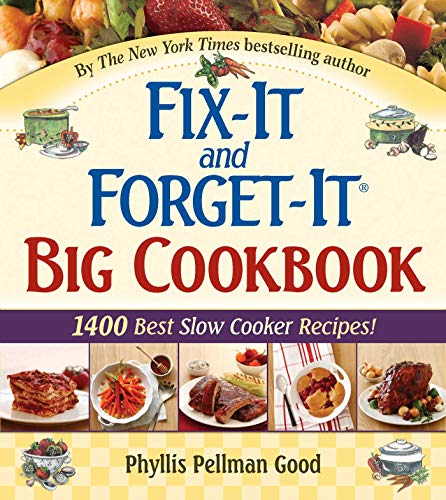
Fix-It and Forget-It Big Cookbook: 1400 Best Slow Cooker Recipes (Good Books) — Best Overall
If a slow cooker has an official cookbook in the public imagination, it is this one. The Fix-It and Forget-It Big Cookbook collects 1,400 recipes from home cooks — the tradition this series built its name on — and the result is less a cookbook than a bench: whatever is in your fridge, whatever the occasion, there is a slow-cooker version in here, written by someone who made it in a kitchen like yours.
That community sourcing is the strength and the flavor. Ingredients are the ones supermarkets stock; instructions assume a standard crock and a busy cook; timings are forgiving in the way real slow cooking is forgiving. For the household whose slow cooker is a weeknight appliance rather than a hobby, this is the book that will actually be opened on a Tuesday.
The honest caveat is editorial depth. Fourteen hundred recipes cannot all be masterpieces, and the book’s testing standard is “a good home cook made this work” rather than a test kitchen’s tenth iteration. Treat it as a vast, reliable starting point: find the twenty recipes your household loves, mark them, and the book has paid for itself many times over.
It also has a social dimension other books cannot replicate: because the recipes came from home cooks, cooking from it feels like borrowing a neighbor’s index card. Many households keep it as the gift copy — the book handed to anyone who just bought a slow cooker and looks overwhelmed — because its floor is so welcoming. A book can be a reference or a community; this one manages, unusually, to be both.
Strengths
- Enormous range: with 1,400 recipes, every cuisine lane and every leftover situation has an answer
- Recipes come from home cooks, so ingredients are supermarket-normal and steps are plain-spoken
- The Fix-It and Forget-It approach is built around real slow cookers, real schedules and forgiving timing
Trade-offs
- Sheer size means variable depth — the best recipes are excellent, the filler is merely fine
- Older community recipes sometimes assume older cooker sizes; check your crock capacity
- Not a technique book: it will fill your menu more than it will teach you theory
| Recipes | 1,400 (per title) |
| Publisher | Good Books |
| Series | Fix-It and Forget-It |
| Focus | Everyday home slow cooking |
Best for: households that use the slow cooker weekly and want endless weeknight options / Not suited for: cooks who want a small, tightly tested, technique-led book
Check on Amazon — check the current price on Amazon before you buy, because editions, bundles and stock change often.
The Complete Slow Cooker (America’s Test Kitchen) — Best Tested and Reliable
America’s Test Kitchen does one thing better than anyone: it removes luck. The Complete Slow Cooker applies that discipline to an appliance famous for variable results, developing 400 recipes through repeated testing and — just as valuably — explaining the mechanics underneath them. Why this cut, why this liquid level, why this timing window: the book teaches the pattern while it feeds you.
The coverage runs the cooker’s full repertoire, appetizers through desserts, which matters more than it sounds. Most slow cookers live a narrow life of stews and pulled pork; a book that credibly extends the same appliance to dips, sides, breakfasts and desserts multiplies the value of the cooker you already own.
Choose this book if your slow-cooker history includes disappointments you could not diagnose. The ATK approach is specifically engineered for that reader: fewer recipes than the Big Book, each one carrying more certainty. Cooks who already have a reliable repertoire and want raw variety should start with the Fix-It and Forget-It above; cooks who want to understand the appliance should start here.
There is a long-game benefit to the ATK approach: it makes you independent of the book. After a dozen recipes cooked with the explanations absorbed, you start adjusting other books’ recipes on instinct — less liquid here, a finishing acid there, a timing window widened because your crock runs cool. Test-kitchen books are the only ones that deliberately teach you to need them less, and that is a mark of confidence worth paying for.
Strengths
- Test-kitchen rigor: recipes are developed and re-tested, with the reasoning explained
- Covers the full arc from appetizers to desserts, so the cooker’s whole range gets used
- Troubleshooting intelligence — why a dish works, and what to adjust — is built into the book
Trade-offs
- 400 recipes is a third of the Big Book’s count; breadth buyers should look up-list
- ATK precision sometimes means a few more steps than dump-and-go cooks want
- Technique-forward style rewards reading, not just skimming
| Recipes | 400 (per title) |
| Publisher | America’s Test Kitchen |
| Series | The Complete ATK Cookbook Series |
| Focus | Tested, foolproof slow cooking |
Best for: cooks who value reliability and want to learn why recipes work / Not suited for: maximum-variety hunters who measure a book by recipe count alone
Check on Amazon — check the current price on Amazon before you buy, because editions, bundles and stock change often.

Skinnytaste Fast and Slow (Gina Homolka, Clarkson Potter) — Best for Lighter, Health-Conscious Cooking
Slow cooking has a richness problem: the classic repertoire leans on fatty cuts, creamy sauces and long, cozy calories. Skinnytaste Fast and Slow is the corrective from one of the most trusted lighter-cooking voices in print. Gina Homolka’s slow-cooker recipes keep the form — the soups, chilis, braises and family dinners — while rebuilding the nutritional profile underneath them.
The book’s structure is a second virtue: slow recipes sit alongside quick-fix versions of similar dishes, which matches how households actually cook across a week. The slow cooker handles Sunday and the planned nights; the quick fixes handle the rest, in the same flavor language. For a household managing health goals without cooking two separate menus, that pairing is the point.
Be clear about the trade: this is not the book for unapologetic classics — the richest version of a dish lives in the Big Book or the ATK volume. And only part of the content is slow cooking, so a buyer who wants a crock-only library should count that. For its reader — the health-conscious household that refuses to give up the slow cooker — nothing else in this guide is close.
Practical note: because the Skinnytaste audience cooks this way year-round, the recipes are notably weeknight-tested in the ways that matter — prep that fits before work, ingredients that hold up to a long cook without turning, and reheats that behave for lunches. Lighter slow cooking fails when it feels like a compromise at the table; this book’s recipes were clearly filtered by whether a family would ask for them again.
Strengths
- Lighter recipes designed for real nutrition goals without giving up comfort-food satisfaction
- Skinnytaste’s tested, reader-proven recipe style — clear, organized, weeknight-realistic
- Pairs slow-cooker recipes with quick-fix counterparts, so one book covers two schedules
Trade-offs
- Only part of the book is slow cooking — slow-cooker-only buyers get a partial book
- Lighter cooking means some classic rich dishes are reimagined rather than reproduced
- Assumes a reasonably stocked modern pantry
| Author | Gina Homolka (Skinnytaste) |
| Publisher | Clarkson Potter |
| Focus | Lighter slow cooker and quick-fix recipes |
| Style | Health-conscious comfort food |
Best for: households cooking lighter who still want slow-cooker comfort food / Not suited for: purists seeking the richest classic versions of dishes
Check on Amazon — check the current price on Amazon before you buy, because editions, bundles and stock change often.

Martha Stewart’s Slow Cooker (Clarkson Potter / Crown) — Best for Entertaining and Polished Results
Martha Stewart’s Slow Cooker treats the appliance the way her test kitchen treats everything: as a serious tool that happens to be convenient. The 110 recipes are composed rather than dumped — layered flavors, seasonal logic, dishes that arrive at the table looking intentional — and the book’s tips and strategies sections explain the handling that gets them there.
Its natural habitat is entertaining. A slow cooker is the host’s best secret: a main or a side that cooks itself while guests are greeted, served from the crock while it holds at temperature. This book is written by people who understand that use case deeply, including the desserts most slow-cooker books treat as an afterthought.
The count is the caveat — 110 recipes against the Big Book’s 1,400 — and some dishes ask more of a weeknight than a weeknight has. Buy this book for the meals that matter and the standard it sets; pair it with a big bench book for the everyday, and the two together cover the slow cooker’s whole life.
The strategies content deserves emphasis, because it is what separates this from a merely pretty book. Guidance on choosing cuts for the crock, on layering a cooker for even results, on holding and serving from it at a party — that operational knowledge transfers to every other recipe you own. Readers who entertain twice a year will use those pages more than any single recipe in the volume.
Strengths
- Editorial polish: recipes are composed, seasonal and presentation-aware
- Test-kitchen tips and strategies sections teach the appliance, not just the dishes
- Ideal for entertaining — the slow cooker as a host’s quiet second pair of hands
Trade-offs
- 110 recipes is the smallest bench in this guide — depth over breadth
- Some recipes aim higher than a Tuesday night requires
- Ingredient lists occasionally reach for the nicer version of things
| Recipes | 110 (per title) |
| Publisher | Crown / Clarkson Potter |
| Extras | Test-kitchen tips and strategies |
| Focus | Flavorful, foolproof dishes including desserts |
Best for: hosts and cooks who entertain, and anyone wanting polished slow-cooker results / Not suited for: high-volume weeknight cooking on autopilot
Check on Amazon — check the current price on Amazon before you buy, because editions, bundles and stock change often.

Betty Crocker’s Slow Cooker Cookbook (Harvest) — Best Classic for Beginners
Every cooking library has a first book, and for slow cooking the Betty Crocker volume is built to be it. The Betty Crocker test kitchens have taught beginners for generations, and the house style — clear steps, standard ingredients, no assumed knowledge — is exactly what a new slow-cooker owner needs while the appliance is still unfamiliar.
The coverage is sensibly aimed at the beginner’s actual first year: hearty dinners that build confidence, dips for the first party, desserts that surprise people who think the crock only does savory. Success early is what turns a gifted cooker into a used cooker, and this book is engineered for early success.
Its ceiling is the mirror of its floor: experienced cooks will find few surprises, and adventurous palates should look to the bigger or more editorial books in this guide. As a first book — or the book you gift with a slow cooker, which is a genuinely kind present — it remains the safest recommendation in the category.
One more virtue, easy to overlook: Betty Crocker recipes are written to be cooked by someone else. The steps carry no hidden assumptions, the timings are padded for real kitchens, and the ingredient lists avoid the specialty item that strands a beginner mid-recipe. If the book will be used by a teenager, a new spouse, or a parent cooking in an unfamiliar kitchen, that clarity is not a small thing — it is the whole thing.
Strengths
- Betty Crocker’s instructional clarity is ideal for a first slow-cooker book
- Coverage spans the beginner’s real needs — dinners, dips, desserts — in one volume
- Recipes assume standard equipment and supermarket ingredients throughout
Trade-offs
- Experienced cooks will find the repertoire familiar rather than adventurous
- Classic American focus; global-cuisine depth lives in other books
- Less technique discussion than the ATK or Martha volumes
| Brand | Betty Crocker |
| Publisher | Harvest |
| Focus | Easy set-it-and-forget-it meals |
| Coverage | Dinners through dips and desserts (per title) |
Best for: new slow-cooker owners and anyone gifting a cooker with a book / Not suited for: experienced cooks seeking new territory
Check on Amazon — check the current price on Amazon before you buy, because editions, bundles and stock change often.
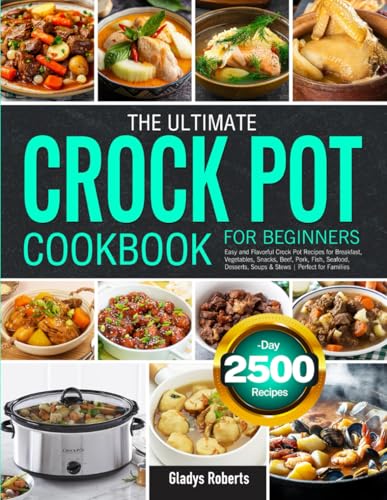
The Ultimate Crock Pot Cookbook for Beginners (Majosta) — Best Modern Beginner E-Book Pick
A newer kind of cookbook has grown up alongside the e-reader: the independent, digital-first collection, organized the way beginners actually search. The Ultimate Crock Pot Cookbook for Beginners is this guide’s representative — a family-oriented collection that runs from breakfasts through vegetables, beef, pork, seafood, soups and desserts, arranged so a new owner can find a workable dinner in minutes.
Its virtues are practical. The organization mirrors the beginner’s questions (what protein, what meal), the recipes aim at easy and flavorful rather than impressive, and the format suits the phone-on-the-counter reality of modern weeknight cooking. For a new owner who reads digitally, it may be the most usable book here on day one.
The trade-offs are about provenance. An independent production cannot match the test kitchens behind ATK or Betty Crocker for documented development, and the polish is simpler. Treat it as a working recipe file rather than a reference work: cook from it freely, but let the ATK or Betty volumes arbitrate technique questions. Within that honest framing, it earns its badge.
It is also, quietly, the most current book in this guide in one respect: it assumes the way people actually find recipes now — by craving, by protein, by what is already in the fridge — rather than by chapter. Legacy books are catching up in their newer editions, but a digital-native collection starts there. For the reader whose cookbook shelf is a phone, that starting point matters more than pedigree.
Strengths
- Organized explicitly for beginners, by meal and protein, so finding tonight’s dinner is fast
- Wide everyday coverage: breakfasts, vegetables, beef, pork, seafood, soups, stews and desserts
- Digital-native format suits cooks who keep recipes on a phone or tablet at the counter
Trade-offs
- Independent-publisher production values are simpler than the legacy houses’
- Recipe testing pedigree is less documented than ATK or Betty Crocker
- Beginner framing means advanced cooks will move past it quickly
| Publisher | Majosta |
| Focus | Beginner crock pot recipes for families |
| Coverage | Breakfast, vegetables, snacks, beef, pork, fish, seafood, desserts, soups and stews (per title) |
| Format | Modern digital-first cookbook |
Best for: new owners who cook from a phone or tablet and want fast organization / Not suited for: reference-book buyers who prioritize documented test-kitchen pedigree
Check on Amazon — check the current price on Amazon before you buy, because editions, bundles and stock change often.
Comparison Table
| Pick | Badge | Key spec | Best for |
|---|---|---|---|
| Fix-It and Forget-It Big Cookbook: 1400 Best Slow Cooker Recipes (Good Books) | Best Overall | 1,400 recipes, Good Books | households that use the slow cooker weekly and want endless weeknight options |
| The Complete Slow Cooker (America’s Test Kitchen) | Best Tested and Reliable | 400 recipes, America’s Test Kitchen | cooks who value reliability and want to learn why recipes work |
| Skinnytaste Fast and Slow (Gina Homolka, Clarkson Potter) | Best for Lighter, Health-Conscious Cooking | Slow cooker + quick-fix recipes, Clarkson Potter | households cooking lighter who still want slow-cooker comfort food |
| Martha Stewart’s Slow Cooker (Clarkson Potter / Crown) | Best for Entertaining and Polished Results | 110 recipes plus test-kitchen strategies | hosts and cooks who entertain, and anyone wanting polished slow-cooker results |
| Betty Crocker’s Slow Cooker Cookbook (Harvest) | Best Classic for Beginners | Beginner-friendly classics, Betty Crocker | new slow-cooker owners and anyone gifting a cooker with a book |
| The Ultimate Crock Pot Cookbook for Beginners (Majosta) | Best Modern Beginner E-Book Pick | Beginner-organized, breakfast to desserts | new owners who cook from a phone or tablet and want fast organization |
How to Choose a Slow Cooker Cookbook
Match the book to your failure mode. If your problem is boredom — the same four recipes rotating — buy count and variety: the Big Book’s 1,400 recipes exist for you. If your problem is reliability — dishes that come out watery, bland or overcooked and you do not know why — buy testing: the ATK book’s explanations will fix your cooking, not just your menu. If your problem is fit — health goals, guests, a brand-new appliance — buy the specialist: Skinnytaste, Martha, or Betty respectively.
Consider format honestly. A big print bench book lives in the kitchen and accumulates the sticky-page patina of a used tool; a digital book lives on the phone you already cook beside and searches instantly. Many households end with one of each, and this guide’s picks divide naturally that way. What does not work is the aspirational purchase — the beautiful book bought for a cook you are not. Buy for the Tuesday you actually have.
Also weigh the book’s pantry assumptions against your own. Community-sourced benches assume a standard supermarket; editorial books occasionally assume a farmers-market run; lighter-cooking books assume a modern whole-foods pantry. None is wrong, but a book whose shopping list fights your store will be cooked from less, and a slow-cooker book’s entire value is frequency of use. Skim an ingredient list or two before committing — it predicts your next year with the book better than the cover does.
Finally, check the size assumption. Books written for the classic 5- to 6-quart oval assume that crock; compact-cooker owners (3 quarts and under) will halve recipes, and 8-quart owners will scale up. A good book’s recipes scale gracefully — soups, braises and chilis do; delicate timing-dependent dishes do not — and the how-to section below covers the scaling rules that make any of these books work in any crock.
What makes a slow cooker recipe trustworthy?
Three marks separate a tested slow-cooker recipe from a converted one. First, the liquid is right: native slow-cooker recipes use less liquid than stovetop versions because the sealed crock loses almost none, and they say so. Second, the timing is a window with a reason — “6 to 8 hours on low” with a note on what changes across the window — rather than a single brittle number. Third, the seasoning is layered: long cooks mute aromatics, so trustworthy recipes season at the start for depth and finish with something fresh — herbs, acid, heat — at the end.
The books in this guide show those marks to different degrees, and the reviews are candid about it: the ATK volume is the gold standard, the community-sourced Big Book varies recipe by recipe, and the beginner books prioritize clarity over nuance. Knowing the marks lets you read any slow-cooker recipe — from any source — with a professional eye.
A fourth mark is subtler: dairy and delicate vegetables enter late. Sour cream stirred in at hour one breaks; peas added at hour six turn khaki. Books written natively for the crock stage their ingredients — roots and meats early, dairy and greens in the final half hour — and the staging is visible right in the ingredient order. When a recipe throws everything in at once, it is telling you something about how it was developed.
Do you need more than one slow cooker cookbook?
Eventually, most committed slow-cooker households own two: a bench and a voice. The bench (the Big Book, or Betty for beginners) answers “what can I make with this chicken” on any given night. The voice (ATK for technique, Martha for polish, Skinnytaste for lighter cooking) answers “how do I make this better.” One book can start the library — the guide’s badges point to the right starter for each reader — and the second usually arrives within the year, bought with a clear sense of what the first one lacks.
Resist the third and fourth book until your first two show wear. A cookbook’s value compounds with use: the marked pages, the adjusted timings in your handwriting, the twenty recipes your household claims as its own. That patina is the actual product, and it only forms on books that get cooked from weekly.
There is one more legitimate reason for a second book: a changed household. The bench book bought for a couple gets outgrown by a family; the classic repertoire gets rebuilt when health goals change; a new, larger cooker reopens the scaling question. The guide’s specialist picks exist for those transitions — buy the book for the household you have now, and let the library evolve with it rather than trying to buy once for every future.
Print, spiral or digital: which cookbook format works best at the crock?
Format is a cooking decision in this category because slow-cooker books are used differently across their life: browsed at leisure for ideas, then propped open, sauce-adjacent, during prep. Spiral and lay-flat print editions earn their keep at the second job — a book that stays open to the recipe while your hands are full is worth more than a beautiful hardcover that keeps closing. The Big Book tradition of practical bindings exists for this reason.
Digital editions win the first job and the search job: finding something for ground turkey across a thousand recipes is a search-box task, not an index task, and a phone is already in the kitchen. Their weakness is annotation — margin notes in your own handwriting are how a book becomes yours — though most reading apps now handle highlights and notes well enough for rotation-flagging.
The pragmatic answer many households land on: the bench book in print, where it accumulates patina, and the second book in digital, where it answers quick questions. Buy the format that matches the job each book does in your kitchen, not the format that looks best on the shelf.
How to Use a Slow Cooker Cookbook Well: Scaling, Converting and Annotating
Step one: scale with the crock, not just the recipe. Halving a recipe for a small crock works for braises, soups and chilis, but keep the liquid ratio slightly generous in small batches (small crocks lose proportionally more to evaporation around the lid) and check tenderness earlier than the printed window. Doubling for a big crock: keep the cook time in the same window, not doubled — time scales weakly in a slow cooker; mass mostly needs the window’s far end.
Step two: convert high and low correctly. The working equivalence is that one hour on high roughly equals two to two-and-a-half hours on low, and most recipes in these books give both. Convert in the direction your schedule needs, but never convert a recipe below a safe total cook for large cuts of meat, and remember that delicate vegetables belong in the last hour regardless of setting.
Step three: annotate like an owner. Every time you cook from the book, write three things in the margin: the date, your crock’s size, and one verdict word. After five cooks you will know your cooker’s personality — most run hot or cool relative to the book’s assumption — and your annotations convert a generic book into your kitchen’s manual. This is the single highest-value habit in cookbook ownership.
Step four: build your rotation deliberately. When a recipe earns a repeat, flag it. A household rotation of fifteen to twenty proven recipes — which any of these books can supply — is worth more than a thousand untested options, and it is what the big bench books are really for: auditioning candidates for a rotation that then runs your weeknights on rails.
Step five: protect the book and use its index like a tool. A wipeable cover or a stand keeps a print book alive in a working kitchen, and the index — by ingredient, not by chapter — is the fastest route from a fridge full of odds and ends to a plan. Once a month, flip through your flagged pages and promote the season’s winners into the coming weeks; a cookbook that is actively curated stays useful, while one that is merely owned quietly becomes furniture.
Common Buying Mistakes
Judging a cookbook by recipe count alone. Count buys variety, not reliability. A tested 400 can serve a household better than an untested 1,400 — choose by your failure mode, not by the biggest number on the cover
Following times without learning your cooker. Every crock runs slightly hot or cool. The first cooks from any book are calibration; annotate them, and the book becomes accurate for your kitchen
Adding stovetop liquid to a crock recipe. Adapted recipes drown in a sealed cooker. Native slow-cooker books already account for zero evaporation — trust their liquid levels
Seasoning only at the start. Long cooks mute aromatics. The trustworthy books finish dishes with fresh herbs, acid or heat at serving; if a recipe does not, add that step yourself
Never writing in the book. An unmarked cookbook stays generic forever. Dates, crock sizes, verdict words, adjusted timings — the margins are where a published book becomes your kitchen’s manual, and they cost nothing but a pencil kept nearby
Buying the aspirational book. The polished entertaining volume will not fix a weeknight problem, and the giant bench will not teach technique. Match the book to the job you actually have
Final Recommendation
If you buy one book from this guide, buy the Fix-It and Forget-It Big Cookbook for range or The Complete Slow Cooker for certainty — most households are honestly one or the other. Beginners should start with Betty Crocker, lighter-cooking households with Skinnytaste Fast and Slow, and hosts with Martha Stewart’s Slow Cooker.
Whichever you choose, cook from it weekly and write in it freely. A slow cooker cookbook is not a reference to keep pristine; it is a tool that gets better the more sauce lands on it, and the right one will quietly run your weeknights for years. Start this week: pick the recipe that matches what is already in your fridge, write the date in the margin when you cook it, and let the book begin becoming yours.
Related guides on this site: Best Cookbook For Stovetop Pressure Cookers Best Cookbooks For Pressure Cookers Best Cookbooks For Electric Pressure Cookers Best Commercial Slow Cookers Best 1 1 2 Qt Small Slow Cookers
Frequently Asked Questions
What is the best slow cooker cookbook for a beginner?
Betty Crocker’s Slow Cooker Cookbook is the classic answer — clear steps, standard ingredients, recipes chosen for early success. Digital-first beginners may prefer The Ultimate Crock Pot Cookbook for Beginners for its phone-friendly organization. Either way, start with a book that assumes nothing; technique books reward you more in year two than in week two. A practical test for any beginner book: open a middle recipe and read only the steps. If every action is something you could do without looking anything up — no unexplained terms, no assumed equipment beyond the cooker itself — the book will carry you through the first season.
Are 1,400-recipe books actually better than 110-recipe books?
They are better at variety and worse at focus. The Big Book will answer any “what can I make” question for years; Martha Stewart’s 110 recipes are individually more composed and instructive. Most committed households eventually own one of each type — a bench and a voice — and use them for different meals.
Can I use these cookbooks with a small or extra-large slow cooker?
Yes, with scaling judgment. Soups, braises and chilis scale up and down gracefully; keep total cook time in the printed window, adjust liquid slightly for small batches, and check tenderness at the window’s near end. Delicate, timing-critical recipes scale worst — cook those in the size the book assumes, or choose a different dish. Compact-cooker owners should also know that halved recipes usually want the shorter end of the timing window checked first, because small crocks cycle heat faster relative to their contents.
Do slow cooker cookbooks include desserts and breakfasts?
The good ones do, and the picks here are chosen partly for that range — the ATK book runs appetizers to desserts, Betty Crocker includes dips and desserts, and the beginner collection covers breakfasts explicitly. A slow cooker that only does dinner is half an appliance; a full-range book is how owners discover the other half.
How do I know if a slow cooker recipe book is out of date?
Check its assumptions rather than its year. A book that assumes one standard crock size, gives only single-setting times, and never mentions finishing a dish with fresh ingredients is working from an older playbook — the recipes may still be sound, but you will supply the modern judgment yourself. Books in this guide were chosen partly because their guidance — timing windows, staging, finishing — matches how the appliance is understood and used now.
Should I buy the same cookbook I gift to a new cooker owner?
Only if you are at the same stage. The gift logic in this guide points beginners to Betty Crocker or the beginner collection because early success is what makes a cooker stick. If you are an experienced cook buying for yourself, the same book will bore you within a month; buy your stage — the bench, the test kitchen, or the specialist — and gift theirs.
Why are there no prices in this guide?
Cookbook prices vary by edition — hardcover, paperback, spiral and digital all price differently — and by sale cycles, so a printed number would mislead. Each pick links to its Amazon listing so you can check the current price on Amazon for the exact edition you want.


