Disclosure: As an Amazon Associate, airfryerkitchensupply.com earns from qualifying purchases. Links to Amazon on this page are affiliate links; they cost you nothing extra. Listing details such as price and availability change often, so check the current Amazon listing before you buy.
The best kitchen wiping towels are absorbent enough to pick up a spill in one pass, smooth enough not to scratch a cooktop and easy enough to rinse and reuse that you reach for them instead of a roll of paper. If you want a quick answer, the Skoy Cloth is a good fit for shoppers who want a reusable cloth that replaces disposable sheets, the Aunt Martha’s Flour Sack Towels suit cooks who like a lint light cotton towel, and the Rubbermaid Commercial HYGEN Microfiber General Purpose Cloth suits busy kitchens that want a rugged microfiber cloth.
This guide is for anyone shopping for the best kitchen towels for wiping, whether you are cleaning a quartz counter, mopping up a sauce spill or buffing a glass cooktop. We compare six real products, show who each suits, list three strengths and one honest limitation, and finish with a buying checklist, common mistakes and a short set of answers to practical questions. Our information comes from maker listings and published descriptions, so check size and pack count on each page before you order.


In this guide
Quick Picks for Kitchen Wiping Towels
| Pick | Best for | Link |
|---|---|---|
| Best overall: Skoy Cloth Reusable Cleaning Cloth | Replacing paper sheets for counters and spills | Check on Amazon |
| Best cotton option: Aunt Martha’s Flour Sack Towels | Lint light wiping and drying | Check on Amazon |
| Best for busy kitchens: Rubbermaid Commercial HYGEN Microfiber General Purpose Cloth | Heavy, daily use on many surfaces | Check on Amazon |
| Best premium option: Vileda Professional MicronQuick Microfiber Cloth | Shoppers who want a professional style cloth | Check on Amazon |
| Best value for money wording: Full Circle Tidy Dish Cloths | Everyday cleanup in a small pack | Check on Amazon |
| Best for small spaces: Casabella Swedish Sponge Cloths | Compact kitchens that want a flat, quick drying cloth | Check on Amazon |
What Makes a Good Wiping Towel
A wiping towel has a different job from a dish towel. A dish towel dries clean plates, and a pot holder protects your hands. A wiping towel picks up messes, so it needs to absorb quickly, release dirt when rinsed and survive plenty of washes. If it also feels pleasant in your hand and does not scratch, you will use it every day.
The material matters. Cotton towels absorb into the fiber, which suits big spills and general wiping. Microfiber cloths trap dust and moisture in tiny gaps and tend to work well on smooth surfaces such as glass cooktops and stainless steel. Cellulose blends and Swedish style cloths absorb a lot of liquid for their thickness and dry flat. Each kind has a place in a kitchen.
It also helps to match texture to surface. A smooth cooktop and a polished counter reward a soft, smooth cloth. A textured backsplash or a stained stove top may need a cloth with a little more bite. Using the wrong texture can lead to streaks, or in the worst case to scratches on a delicate surface. When in doubt, test an unseen spot with a clean cloth and gentle pressure, and always follow the surface maker instructions.
1. Skoy Cloth Reusable Cleaning Cloth
Who it suits: Households that want to cut back on paper sheets and keep a durable cloth by the sink.
The Skoy Cloth is a reusable cleaning cloth made from a blend of cellulose and cotton, and it is sold as a more sustainable alternative to disposable sheets. It looks like a thin, flat sheet when dry and softens when wet.
- It absorbs liquid quickly, which helps with a counter spill.
- The thin shape rinses quickly and dries flat, so it is easy to hang on a faucet.
- The maker presents it as reusable and washable, which suits shoppers who want to reduce disposable products.
Honest limitation: It is a different feel from cotton terry, and the stiff dry texture takes some getting used to. It also relies on being rinsed and dried between uses.
The practical way to use it is as a replacement for the paper roll beside the sink. Wet it, wring it out, wipe the surface, then rinse and hang it. Since it dries flat, it is ready for the next job. Check the listing for the number of cloths and the size.
Choose it if you want a reusable alternative to sheets. Skip it if you prefer the soft feel of cotton or microfiber.
2. Aunt Martha’s Flour Sack Towels
Who it suits: Cooks who like traditional cotton towels and want a lint light cloth that works for wiping and drying.
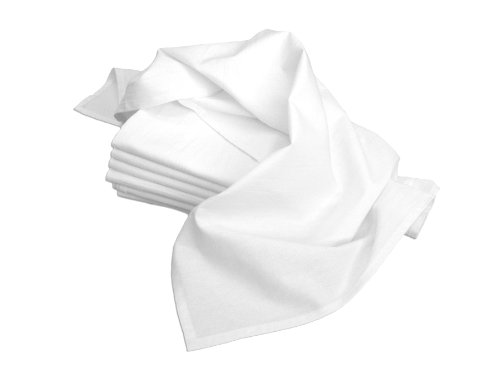
Flour sack towels are plain weave cotton squares that people have used in kitchens for generations. Aunt Martha’s is a recognized brand of them, often sold with simple embroidered or printed designs and in sets.
- The thin plain weave dries quickly and is easy to wring out.
- Cotton is gentle on most kitchen surfaces and suits glass as well as counters.
- The large size also lets you fold the towel into a thick pad when you need extra absorbency.
Honest limitation: Flour sack towels are thin and may need several passes for a big spill. New ones can also shed a bit of lint until they are washed.
These are an excellent multi tasker. Use a fresh one for wiping the counter in the morning, then move it to dish duty in the evening. They can also line a bread basket or cover rising dough. Read the listing for the pack count and the size.
Choose it if you like cotton and a classic look. Skip it if you want a thick, plush cloth.
3. Rubbermaid Commercial HYGEN Microfiber General Purpose Cloth
Who it suits: Busy kitchens, whether at home or in a small food business, that need a rugged cloth for constant use.
Rubbermaid Commercial Products makes cleaning tools for professional settings, and its HYGEN microfiber cloths carry that commercial attitude. They are a general purpose cloth meant for wiping surfaces over and over.
- The cloth is designed for repeated use and repeated washing.
- Color coding options help separate tasks in a busy kitchen.
- Microfiber construction picks up spills and dust without much pressure.
Honest limitation: It is a work cloth, not a decorative towel, and some home cooks may find the look too utilitarian.
If you cook for a crowd or run a home bakery, a cloth like this makes sense. Assign one color to counters, another to the cooktop and a third to the sink area, and wash them in batches. Look at the listing for the pack count and the exact size.
Choose it if you want a durable commercial style cloth. Skip it if you want something for display.

4. Vileda Professional MicronQuick Microfiber Cloth
Who it suits: Buyers who want a professional style microfiber cloth and are willing to pay a bit more for it.
Vileda Professional is a cleaning brand from Europe with a presence in commercial and household cleaning. The MicronQuick is a microfiber cloth aimed at professional use, with an emphasis on quick moisture pickup.
- It is designed for fast absorption on smooth surfaces.
- The professional positioning suggests it is built to handle repeated washing.
- Color options help you assign tasks.
Honest limitation: It sits at the higher end of the list and is a specialist cloth, so it may be more than a casual cook needs.
A cloth like this suits a kitchen where the counters and the cooktop get daily attention. It also makes a good gift for someone who likes quality tools. Check the listing for pack counts, sizes and the colors on offer.
Choose it if you want a professional style cloth. Skip it if you want a thick cotton towel.
5. Full Circle Tidy Dish Cloths
Who it suits: Cooks who want a simple cloth for rinsing, wiping and washing in the same spot.
Full Circle is a kitchen brand known for eco minded sponges, brushes and cloths. The Tidy Dish Cloths are a knit style cloth that is made to be used and washed again.
- The knit texture gives a little scrubbing action while still being flexible.
- They are sold in small packs, which suits a kitchen that does not need a large stock.
- The simple design fits next to the sink without looking out of place.
Honest limitation: A knit dish cloth is better for washing and general wiping than for polishing glass, and it can hold on to moisture if bunched up.
Hang it over a faucet or a rail after use so it can dry out. When it picks up stains, run it through a hot wash, following the care label. Read the listing for the number of cloths and the material.
Choose it if you want a simple sink cloth. Skip it if you want a smooth, streak free finish.

6. Casabella Swedish Sponge Cloths
Who it suits: Small kitchens and anyone who likes a flat cloth that dries fast and stores in a drawer.
Casabella is a household brand that has a long record in cleaning accessories. The Swedish sponge cloths are a cellulose and cotton product that behaves like a thin sponge: it soaks up water, then wrings out and dries flat.
- It absorbs far more liquid than its thin shape suggests.
- It dries flat and fits in a small drawer or on a faucet.
- The cloth is reusable and washable according to the maker.
Honest limitation: It is stiff when dry, which some people dislike, and heavy staining may lead you to retire it sooner.
A Swedish sponge cloth makes a good counter cloth for pouring spills and for wiping the stove top while it is still warm, but not hot. It rinses clean quickly. Check the listing for the pack count and the size.
Choose it if you want a thin, absorbent cloth. Skip it if you prefer a soft towel feel.
Side by Side Comparison
| Product | Size | Material | Key feature | Best use | Link |
|---|---|---|---|---|---|
| Skoy Cloth Reusable Cleaning Cloth | Flat sheet | Cellulose and cotton blend | Reusable sheet | Counter spills | Check on Amazon |
| Aunt Martha’s Flour Sack Towels | Large square | Cotton | Plain weave | Wiping and drying | Check on Amazon |
| Rubbermaid Commercial HYGEN Microfiber General Purpose Cloth | Pack of cloths | Microfiber | Commercial build | Heavy daily use | Check on Amazon |
| Vileda Professional MicronQuick Microfiber Cloth | Cloth pack | Microfiber | Quick moisture pickup | Smooth surfaces | Check on Amazon |
| Full Circle Tidy Dish Cloths | Small pack | Knit fabric | Gentle texture | Sink and general wiping | Check on Amazon |
| Casabella Swedish Sponge Cloths | Flat cloths | Cellulose and cotton blend | Absorbent, dries flat | Counters and spills | Check on Amazon |
How to Choose Kitchen Wiping Towels
- Match the cloth to the surface. Smooth cooktops and polished counters need a soft cloth, while stained stove tops may need more texture.
- Decide between cotton and microfiber. Cotton is familiar and absorbent, microfiber is excellent on smooth surfaces and dries fast.
- Look at pack count. A busy kitchen needs more cloths than a one person apartment.
- Think about drying. A cloth that dries quickly is easier to keep fresh. Thin and flat cloths dry fastest.
- Check the size. Large towels cover more ground, small cloths are easier to wring out.
- Plan color coding. Use different colors for the cooktop, the counters and the sink.
- Read the care label. Follow the maker instructions for temperature and fabric softener.
Common Buying Mistakes
The first mistake is buying only one cloth and using it for everything. A cloth that wipes the cooktop at night should not be used on the glassware in the morning. Even two cloths with different jobs give you a better result.
The second is choosing on look alone. A cheerful pattern is nice, but the fabric, the thickness and the care instructions matter more for a cloth that will spend its life wiping.
The third is leaving wet cloths in a heap. A damp bundle takes ages to dry and picks up a stale odor. Hang the cloth up, or lay it flat, as soon as you finish.
The fourth is using a cloth on a hot surface. Allow a cooktop to cool before you wipe it, and keep cloths away from open flames and hot burners.
Using Wiping Towels on Cooktops, Counters and Spills
For a glass cooktop, wait until it has cooled, then use a damp soft cloth to lift loose residue before moving to any recommended cleaner. A microfiber cloth works well for the final polish, since it picks up streaks. Always follow the cooktop maker guidance on cleaners and tools.
For counters, wipe in long strokes rather than small circles, and rinse the cloth often so you are not spreading crumbs. Stone, laminate and wood each have their own care advice, so check the surface instructions before using anything other than water and mild soap.
For spills, speed matters. Press and lift rather than rubbing, particularly with sugary or oily messes, then rinse the cloth and wipe again. A flat absorbent cloth like the Skoy or the Casabella is helpful for this because it picks up a pool of liquid in one go.
For appliances like the fridge door or the microwave exterior, a smooth microfiber cloth leaves fewer marks than a textured one. Dampen it slightly and finish with a dry pass.
A Simple Wiping Towel System for a Home Kitchen
You do not need a complicated setup, but a little structure keeps a kitchen cleaner for less effort. Think in terms of zones. The sink zone needs a cloth that handles wet hands, rinsed produce and the occasional splash. The counter zone needs a cloth that picks up crumbs and spills quickly. The cooktop zone needs a cloth kept apart from the rest, because it meets oil and cooked on residue.
For the sink zone, a knit dish cloth such as the Full Circle option or a flour sack towel works well, since both tolerate frequent rinsing. For the counter zone, an absorbent flat cloth such as the Skoy or the Casabella is hard to beat. For the cooktop zone, a microfiber cloth from Rubbermaid Commercial or Vileda gives a smooth finish and is easy to wash on its own.
Give each zone its own color or its own hook. That small step prevents the cooktop cloth from wandering to the counter and keeps odors from spreading. When a cloth gets too stained for the counter, it can be moved to the cooktop zone, which is the hardest on cloths anyway.
Finally, choose a laundry rhythm. Most households do well with a quick wash twice a week, but a very busy kitchen may need a daily load. If you find that you never have a clean cloth, buy more, because the number of towels is usually the real limit rather than their quality.
Cotton, Microfiber or Cellulose: A Quick Guide
Cotton is the traditional choice and feels familiar. It soaks up a lot, handles heat from washing and is easy to find. Its downside is that it can hold moisture for a long time if it is thick, and it may leave tiny fibers on glass.
Microfiber wins on smooth surfaces. It picks up streaks, leaves very little behind and dries quickly. It does not like very high heat or fabric softener, and it can feel slick to people who prefer cotton.
Cellulose and cotton blends, such as Swedish style cloths, behave like thin sponges. They absorb a lot, rinse clean and dry flat, which makes them popular for counters. They are less suited to polishing glass.
The best kitchens often combine two of the three. If you cannot decide, pick one cotton towel and one microfiber or cellulose cloth, and see which one you grab first.
One last tip is to keep a small stack of clean cloths in a visible place. If the clean towels are hidden in a back drawer, people reach for paper or for whatever is nearest, and good habits fade. A basket on the counter or a hook beside the stove makes the right choice the easy one, and it also tells guests where to find a cloth when they offer to help.
Care and Laundry
Wash wiping towels regularly, apart from heavy fabrics. Cotton towels can generally go in a warm or hot wash if the label allows, while microfiber prefers gentle handling and no fabric softener. Cellulose cloths such as the Skoy and Casabella often have their own care guidance, so read the label.
Dry them fully before folding. A cloth that goes into a drawer while damp can pick up an odor. Hanging them over a rail or laying them flat is a good habit.
Final Recommendation
Here is how we would match the picks to different cooks.
- For paper replacement: Skoy Cloth Reusable Cleaning Cloth.
- For cotton fans: Aunt Martha’s Flour Sack Towels.
- For heavy daily use: Rubbermaid Commercial HYGEN Microfiber General Purpose Cloth.
- For a polished look: Vileda Professional MicronQuick Microfiber Cloth.
- For compact kitchens: Casabella Swedish Sponge Cloths.
If you only want to try two, combine one cotton towel with one microfiber or sponge cloth and see which you reach for. Open the listings, compare the pack counts and sizes, and order the set that will keep your counters clear.
Choosing Kitchen Wiping Towels With More Care: The Details That Matter Most
The main guide above covers the essentials. This section goes one level deeper, into the details that separate a towel you are happy with for a month from one you are happy with for years. A wiping towel has the least glamorous job in the kitchen and the highest standards: it must leave every surface genuinely clean, not just visibly tidier. Work through these four checks and most buying mistakes in this category simply never happen.
Leaving the surface clean, not smeared
The wiping towel’s report card is the surface after it passes: a good one lifts grease, crumbs and moisture in a pass or two, while a poor one redistributes everything into a thin, even film. Texture is the mechanism — a weave with grip gathers; a flat, worn cloth skates. Test a new cloth on your greasiest regular job, the hob after frying, and judge it there rather than on a water splash.
Behavior when fully wet
Wiping towels work wet: rinsed, wrung and used again fifty times a day. The cloth must wring out properly — a cloth that holds a cup of water against your will drips across everything — and it must stay intact and pleasant to hold when sodden. Sponge-style cloths drink the most but can feel bulky; thin cloths wring driest but saturate fast. Your hand size and your sink habits decide which compromise suits you.
Rinsing clean between jobs
A wiping cloth is only as clean as its last rinse. Cloths that release crumbs, grease and soap under the tap reset fully between jobs; cloths that hoard debris carry yesterday’s counter into today’s. Smooth, open weaves rinse fastest; dense cloths need a proper wash to reset. If your routine is rinse-and-continue all day, rinse behavior outranks almost everything else on this page.
Durability at the edges
Wiping cloths die at the edges and corners, worried by wringing and caught on hob grilles and tap bases. Look for bound or well-finished edges and fabric that is even right out to the border. A cloth that frays in a month costs more than a sturdy one, however cheap the pack — and frayed edges leave fibers on the surfaces you just cleaned, which rather defeats the purpose.
Kitchen Wiping Towels in Everyday Life
Specifications are tidy; real life is not. Here is how the choice plays out in the situations where these towels actually earn their keep.
The post-dinner counter reset
After dinner the wiping towel does its defining circuit: counters, hob, table, fridge handle, sink rim. Work clean-to-dirty — surfaces that touch food first, the floor-level messes last — rinsing and wringing between zones. A good cloth finishes the circuit still working; a poor one gives up at the hob and smears grease onto everything after it. Two cloths, one for the food zone and one for everything else, make the circuit safer and faster.
Cooking with raw ingredients
Raw meat and poultry change the rules: the cloth that wipes that board or that splash is finished for food surfaces until it is properly washed. Disciplined cooks retire the cloth on the spot — into the laundry pile, not back onto the hook — and some keep disposable paper for exactly these moments. The wiping system only protects you if the retirement rule is absolute; a cloth ‘rinsed well’ after raw chicken is still a cloth that wiped raw chicken.
Glass, steel and stone surfaces
Modern kitchens are a museum of fussy surfaces. Glass hobs show every smear, steel shows every streak, and stone resents harsh treatment. A smooth, low-lint cloth, used barely damp for the final pass, is the finisher’s tool — different work from the heavy wiping of spills. Many kitchens keep one cloth for bulk work and one for finishing, and the finishing cloth, kept clean and separate, is what visitors think the whole kitchen is cleaned with.
Getting Ready for Guests, Seasons and Busy Weeks
Towels are never really tested on an ordinary Tuesday. A wiping towel has the least glamorous job in the kitchen and the highest standards: it must leave every surface genuinely clean, not just visibly tidier. They are tested when guests arrive, when the cooking doubles, when the weather turns humid for a week — the moments when demand spikes and drying slows down at exactly the same time. A little preparation keeps those weeks comfortable instead of chaotic.
Build a small reserve and keep it ready
Hold back a modest reserve of your best towels, washed and stored ready, rather than running your entire stock in daily rotation. When guests come or a busy week lands, the reserve comes out and daily life continues at the same standard; when the week ends, everything is washed and the reserve is rebuilt. The reserve also covers the small disasters — a washing machine fault or a spilled suitcase — that otherwise turn into an emergency purchase of whatever is available.
Plan for slow drying
In humid weather or a crowded house, towels dry more slowly, which means each position needs changing more often, not less. This is the week to shorten the rotation: swap towels sooner, spread them wider to dry, and run the laundry in smaller, more frequent loads so nothing waits damp in a pile. If you know a particular season is always damp in your home, that season — not the easy weeks — is the true measure of how many towels you need.
Reset afterwards
After the busy period, give the whole working set one honest review: wash everything, check for the stains and smells that crept in, demote what has dropped a level and note what needs replacing while the lesson is fresh. Ten minutes of reset after a hard week is what stops one hard week from permanently lowering the standard of the whole drawer.
How Many Towels You Actually Need: Building a Rotation That Works
Most towel problems are really rotation problems. A wiping towel has the least glamorous job in the kitchen and the highest standards: it must leave every surface genuinely clean, not just visibly tidier. Too few towels means each one is used while still damp, washed too hard and replaced too soon. Too many means money sitting in a drawer. The right number comes from your own routine, and it is easy to work out.
Count backwards from laundry day
Start with how often the towel is used, and how often you wash. If a towel is changed daily and laundry happens twice a week, each position in your home — each sink, stove side or bathroom rail — needs enough towels to cover the longest gap between washes, plus one in use and one in the wash itself. For most spots that lands between three and five towels per position. Busy households, homes with children and anyone who cooks several times a day should lean to the top of that range; a single person with a small kitchen can sit at the bottom.
Rest is part of the system
A towel that is allowed to dry completely between uses lasts longer and smells fresher than one that never fully dries. Rotation is what makes that rest possible. When every towel in the drawer is in constant service, none of them ever quite recover, and the whole set ages together. A working rotation spreads the wear: each towel is washed a little less often, dried a little more thoroughly, and the set as a whole can serve for far longer before any single piece looks tired.
Retire in stages, not all at once
When a towel finally fades, thins or loses its edge, demote it rather than binning it. Yesterday’s best towel becomes the backup for messy jobs, then the garage or pet towel, and only then a rag. Staging replacements this way means you only ever buy a few new towels at a time, your best positions always hold your best towels, and you always have something expendable on hand for the jobs that would ruin a good towel in a single afternoon.
Odor and Stain Troubleshooting, Step by Step
Sooner or later every working towel meets a stain that sets or a smell that survives the wash. A wiping towel has the least glamorous job in the kitchen and the highest standards: it must leave every surface genuinely clean, not just visibly tidier. The order in which you tackle these problems matters more than any special product: act early, treat before you wash, and never let heat set what water could have removed.
Smells: strip the build-up first
A towel that smells fine out of the wash but turns sour as soon as it gets wet is usually carrying a build-up of detergent, body oils and minerals rather than a hygiene problem. The fix is a reset wash: hot water as the care label allows, a normal measure of detergent, and an extra rinse — or, if the build-up is heavy, a first wash with no detergent at all so the rinse water can carry the residue away. Then dry the towel completely and promptly. If the smell survives two honest reset washes, the fibers are holding damage no routine will reverse, and the towel belongs in the demotion pile.
Stains: cold, quick and patient
For stains, speed beats strength. Rinse or blot the mark with cold water as soon as you can — heat, including a hot wash or the dryer, can set many common stains permanently. Work from the back of the fabric so the stain is pushed out the way it came in rather than deeper. A little detergent worked in gently and left to sit before washing handles most everyday marks. Colored towels deserve a cautious approach: test any stronger treatment on a hidden corner first, and accept that a faint shadow on a hard-working towel is a badge of service, not a failure.
Prevention that actually works
Most odor and stain trouble is prevented by three unglamorous habits: hang the towel to dry the moment its job is done instead of leaving it in a heap, wash working towels promptly rather than letting them sit damp in a hamper for days, and keep one older towel assigned to the messiest jobs so your good towels never meet them. Prevention is boring, but it is the whole secret.
How the Picks in This Guide Differ in Practice
The reviews above describe each pick on its own terms. This section puts them side by side in the way a buyer actually decides — by priority. The picks covered are Skoy Cloth Reusable Cleaning Cloth, Aunt Martha’s Flour Sack Towels, Rubbermaid Commercial HYGEN Microfiber Cloth, Vileda Professional MicronQuick Microfiber Cloth, Full Circle Tidy Dish Cloths and Casabella Swedish Sponge Cloths. None of them is the right answer for everyone; each earns its place for a different kind of household, and the honest differences between them matter more than any ranking.
Start with your dominant job. Every household has one task that accounts for most of its towel use, and the right pick is the one that performs that task best, even if it is merely adequate at the others. Buyers who choose by their rarest, most glamorous use case end up with a towel that is wrong fifty weeks a year. Read the per-pick reviews again with your dominant job in mind and notice how quickly the shortlist shortens itself.
Next, weigh the ownership experience rather than the first impression. Some picks ask more of you — a particular wash routine, a rotation, a little patience while they settle in — and repay that effort for years. Others ask nothing and give steady, unremarkable service. Neither profile is superior; the match between the towel’s demands and your household’s habits is what decides satisfaction. The most common disappointment in this category is a good towel living in the wrong routine.
Finally, consider buying in the order of your needs. If two picks appeal, the one that covers your daily work comes first; the specialist can follow later, when you know exactly which gap it fills. A drawer built this way — workhorse first, specialist second — ends up smaller, cheaper and better matched than a drawer bought all at once from a single afternoon’s enthusiasm.
Care Notes Specific to Kitchen Wiping Towels
Wiping cloths must be washed far more often than they look like they need — they handle everything, including the invisible. Rinse and wring the working cloth after each session and hang it spread over the tap or a rail so it dries between uses; a cloth left in a wet ball in the sink is a smell with a head start. Wash working cloths hot and regularly, keep them out of softener routines that coat them, and replace them on performance: a cloth that smears after washing is done, however intact it looks.
More Mistakes That Shorten a Towel’s Life
Beyond the buying mistakes covered earlier in this guide, these are the everyday errors that quietly undo good kitchen wiping towels — each one easy to avoid once it has been pointed out.
One cloth for the whole kitchen, all day
The same cloth cannot wipe the bin lid and then the chopping board. Zones and retirements are the system; one cloth is just a rumor of cleaning.
Leaving the cloth in the sink
A cloth stored wet in the sink never dries and greets every job pre-loaded. Hang it to dry between sessions, every time.
Judging cleanliness by looks
A cloth can look spotless and carry plenty. Wash on schedule, not on appearance — especially the cloths used around raw food.
Using the good dish towels for wiping
Wiping duty destroys towels and contaminates them for dish work. Dedicated cloths protect both jobs and both budgets.
Habits That Make the Difference
Give the towel air between jobs
The single most effective habit costs nothing: never leave a used towel in a heap. A towel spread over a rail, a tap or the back of a chair dries in a fraction of the time of the same towel balled on the counter, and drying is what stands between a fresh towel and a sour one. Build the hang into the end of every job — the last motion of wiping up is putting the towel where air can reach both its faces. In humid homes this habit matters more than any washing product you can buy, because a towel that dries fully every day rarely develops the deep, returning smell that forces early retirement.
Keep one honest spare within reach
Every towel system eventually faces the moment when the working towel is soaked, soiled or simply missing — and what happens next defines the system. If a clean spare is within arm’s reach, the moment costs two seconds. If it is in another room, the working towel gets used past its limit, or a good towel from another job gets conscripted. One spare, stored at the point of use and replaced whenever it is taken, is the cheapest insurance in the whole drawer.
Read the listing’s quiet details
The glamorous parts of a listing — the photographs, the headline claims — are the least useful parts. The dimensions, the fiber content, the pack composition and the care instructions are where the truth lives, and two minutes with them prevents most disappointments. Measure your space and compare real numbers rather than impressions of size. Check what a pack actually contains size by size. Towels are simple products; almost every regret in this category was visible in the small print before purchase.
Teach the system to the whole household
A towel routine known by one person is a hobby; known by everyone, it is a system. The rules worth teaching are few and physical: which towel lives where, what never crosses between jobs, and where a finished towel goes. Position teaches better than instruction — people follow the towel that is already hanging in the right place. When a new towel type joins the house, its place and its job should be decided on day one, not discovered by trial and error over a month.
Expect a break-in period
Many good towels are not at their best on day one. Finishes wash out, fibers relax, weaves settle — and the towel at week three is the towel you actually bought. Judge new towels after several washes rather than at first touch, and resist returning a sound towel for a first impression it was never going to keep. The exception is construction: loose hems, uneven weave and dye that will not settle are present from the start and do not improve. Learn to tell settling-in from genuine faults, and you will keep good towels and return bad ones with equal confidence.
Frequently Asked Questions
What is the difference between a wiping towel and a dish towel?
A dish towel is for drying clean dishes, while a wiping towel is for picking up messes. Many cloths can do both, but they wear faster when asked to.
Are microfiber cloths good for cooktops?
They are popular for polishing smooth surfaces. Follow your cooktop maker guidance and let the surface cool before wiping.
How many wiping towels do I need?
Most households do well with six to ten, so one is always clean while others are in the wash.
Can I use fabric softener?
Many makers advise against it for microfiber and cellulose cloths, because it can reduce absorbency. Check the label.
Will flour sack towels leave lint?
New ones can shed a little, which is why a first wash is recommended. After that they are known for being lint light.
How do I keep cloths from smelling stale?
Rinse them well, wring them out and hang them to dry. Avoid leaving them in a damp pile.
What if I do not like the cloth when it arrives?
Return terms depend on the seller and the listing. Check the policy on the product page before you buy.
How many wiping cloths should be in play at once?
Two working cloths is a practical minimum — one in use, one drying or in the wash — and three suits a busy kitchen better, with a small stock of spares behind them. The exact number matters less than the rule: a fresh cloth must always be reachable the moment one is retired. When you find yourself rinsing and reusing a cloth you know should be retired, the count is too low.
Should I use a different cloth for the bathroom?
Yes — kitchen and bathroom cloths should live entirely separate lives, ideally in different colors so the rule survives tired evenings and helpful guests. The same applies to floor cloths. Color-coding is not fussiness; it is the only version of the rule that works when someone else is helping and does not know your system.
Why does my wiping cloth leave streaks on the hob?
Streaks are usually residue: grease spread thin, too much cleaning product, or a cloth already loaded. Rinse the cloth clean, wring it well, use less product, and finish with a dry or barely damp pass. If a clean cloth still streaks, its surface is too smooth or too worn to gather the film — a more textured cloth, kept for finishing, solves it.
Can wiping cloths go in the dishwasher instead of the laundry?
Some households run cloths through a hot dishwasher cycle and find it adequate for a refresh, but laundry with detergent and a full rinse is the reliable reset, especially after raw-food duty. Whichever you use, the cloth must dry completely afterwards. Treat the dishwasher as a between-washes freshen-up if you use it at all, not as the system.
When should a wiping cloth be thrown away rather than washed?
When it smears after a proper wash, smells again the moment it gets wet, or has thinned and frayed so it leaves fibers behind. Cloths are consumables with a service life, not heirlooms. Retiring them on time is part of the hygiene you bought them for — a cloth kept past its life is worse than the paper it replaced.


