Cleaning an area rug is different from cleaning wall-to-wall carpet. You can lift it, flip it, and test a product on a hidden corner, but many rugs are made of wool, jute or viscose that do not tolerate harsh chemicals or a lot of water. The best cleaner for area rugs is the one that matches the fiber and the type of mess.
The six products below mix spot treatments, a shampoo style formula and two compact machines, so you can handle a fresh spill or give a whole rug a deeper wash. We have not used these products ourselves, so confirm fiber compatibility and directions on the current listing and the rug’s care label before you start.
As an Amazon Associate we earn from qualifying purchases. Links below are affiliate links, and they do not change the product information we give.
What to Look For
| Feature | Why it matters |
|---|---|
| Rug fiber | Wool, silk and viscose need gentler treatment than polypropylene or nylon |
| Form | Foam and sprays suit spots; shampoos and machines suit a whole rug |
| Pet use | Enzyme formulas break down organic stains and odors |
| Water use | Too much water can leave a rug damp, slow to dry or discolored |
| Colorfastness | Always test a hidden patch first |
In this guide
Specs at a Glance
| Product | Type | Best for | Notes |
|---|---|---|---|
| Folex Instant Carpet Spot Remover | Liquid spray | Fresh spots | Long-running spot cleaner |
| Resolve Pet Carpet Cleaner | Foam | Pet stains | Foam for spot treatment |
| Nature’s Miracle Advanced Stain and Odor Remover | Enzyme spray | Pet accidents | Targets odor |
| Hoover Paws and Claws Carpet Shampoo | Machine shampoo | Whole-rug cleaning | For use in a carpet machine |
| Rug Doctor Deep Carpet Cleaner formula | Machine solution | Whole-rug cleaning | Made for Rug Doctor machines |
| Bissell Little Green | Portable machine | Spot cleaning | Not a steam cleaner |
The 6 Best Cleaners for Area Rugs
Top pickBest for fresh spills
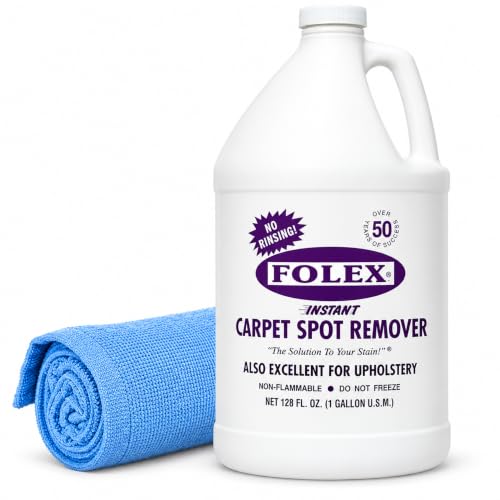
1. Folex Instant Carpet Spot Remover
A long-standing, ready-to-use spray that people reach for after coffee, wine or mud. It is a good first step because you can dab and blot rather than soak, which is gentler on a rug that is not meant to get very wet.
Suits: fresh spills. Strengths: simple, fast and widely used. Weaknesses: it is a spot product, not a deep clean. Skip it if the whole rug needs washing.

Best for small pet stains
2. Resolve Pet Carpet Cleaner Foam
A foam made for pet messes that you work into the stain and then blot away. Foam keeps the amount of liquid down, which helps when you want the best stain remover for rugs without wetting the backing.
Suits: small pet stains. Strengths: easy to spot treat. Weaknesses: older, set-in stains may need repeat treatment. Skip it if your rug is a delicate natural fiber.


Best for pet accidents
3. Nature’s Miracle Advanced Stain and Odor Remover
An enzymatic spray from a pet-focused brand. Enzyme cleaners are designed to break down organic matter, which is why they come up in lists of the best spot cleaner for rugs when there is a smell to deal with as well as a mark.
Suits: pet accidents. Strengths: works on odor, not just color. Weaknesses: needs time to work and should not be rushed. Skip it if you only have a simple dirt mark.
Best for whole-rug washing with a machine
4. Hoover Paws and Claws Deep Cleaning Carpet Shampoo
A liquid shampoo made to go into the tank of a carpet cleaning machine. It is the type of product people mean by the best rug shampoo when they want to clean an entire rug on a hard surface or outdoors.
Suits: whole-rug washing with a machine. Strengths: made for homes with pets. Weaknesses: you need a compatible machine. Skip it if you want to clean by hand.
View Hoover Paws and Claws Carpet Shampoo on Amazon
Best for larger rugs and heavy traffic
5. Rug Doctor Deep Carpet Cleaner Formula
The cleaning solution sold for Rug Doctor machines, which many people rent. Using the brand’s own formula in a Rug Doctor keeps the cleaner matched to the machine, and it is aimed at a deeper wash than a spray can give.
Suits: larger rugs and heavy traffic. Strengths: made for the machine. Weaknesses: not for hand use. Skip it if you do not have or rent the machine.
View Rug Doctor Deep Carpet Cleaner on Amazon

Best for spot cleaning small areas
6. Bissell Little Green Portable Carpet Cleaner
A compact, corded spot cleaner that sprays and then pulls the dirty water back up. Despite the usual search for steam cleaners for rugs, it is not a steam machine, but it is a handy way to treat stairs, upholstery and a small rug.
Suits: spot cleaning small areas. Strengths: small and easy to store. Weaknesses: slow for a large rug. Skip it if you want true steam cleaning.

Care and Setup
- Check the care label and test any cleaner on a hidden corner.
- Vacuum thoroughly before you use any liquid.
- Blot spills instead of rubbing them in.
- Let the rug dry fully, raised off the floor if possible.
Mistakes to Avoid
- Soaking a rug with a backing that can trap water.
- Using a machine shampoo on a delicate wool or silk rug.
- Scrubbing hard, which can fuzz the pile.
- Skipping the patch test.
Identify the Rug Fiber and Construction First
Cleaning advice for a rug depends on what the rug is made of and how it was built. Look for a care label on the back or the tag at one corner. It often states the fiber and gives cleaning guidance. Synthetic rugs, such as nylon, polyester and polypropylene, usually tolerate water and common cleaners better than natural fibers. Wool is resilient but can shrink, felt or bleed color when treated roughly or with strong alkaline products. Silk, viscose and rayon are delicate, can lose color or turn yellow when wet, and often need professional care.
Construction matters too. Hand-knotted and hand-woven rugs may use natural dyes that bleed. Rugs with jute or sisal backing can stain or warp when wet. Rugs with latex or rubber backing may degrade with some cleaners or heat. A shag or high-pile rug holds soil deeper and takes longer to dry than a flat weave.
Check the pile by pressing a damp white cloth on a hidden spot to see if color transfers. If the rug is antique, valuable or sentimental, or if the label says dry clean only, take it to a rug specialist. For everyday rugs, a gentle approach is usually best. Remember that no cleaner works on every fiber, so read the product directions to see which materials it is made for.
Start With Dry Soil Removal
Most of the dirt in a rug is dry grit, and removing it first makes every cleaner work better. Vacuum both sides of the rug when you can, using suction without a beater bar on delicate or shaggy rugs, since beater bars can pull fibers or tangle fringe. Go slowly over the pile in several directions. For small rugs, taking them outside and shaking or beating them gently can dislodge dust, though thin or fragile rugs should not be beaten.
If you apply liquid to a rug with dry soil still in it, the soil turns to mud that is hard to extract. That is why vacuuming comes first in most rug care routines, and why it appears at the top of cleaner directions. After vacuuming, check for stains, odors and worn areas, and decide whether a spot treatment or a full wash fits the problem.
- Lift the rug and vacuum the floor beneath it, because trapped grit wears the backing.
- Use a soft brush attachment on fringe and edges.
- Rotate the rug periodically so wear is spread evenly.
Regular vacuuming reduces how often you need a deep clean, and it often does more for the look of a rug than any product.
Treating Fresh Spills and Set-In Stains
Speed matters. For a fresh spill, blot with a clean white cloth or paper towel, working from the outside of the stain toward the center to limit spreading. Do not rub, which pushes the liquid deeper and can fuzz the pile. Remove as much liquid or solid as you can before using any product.
Then apply a cleaner suited to the stain and the fiber, using the amount in the directions. Test it on a hidden corner first and wait for it to dry to check for color change. Dab, do not scrub, then blot with a damp cloth to lift residue. Repeat in small steps rather than saturating the area. Residue left behind can attract dirt, so rinse lightly with water and blot dry.
- Pet accidents and other organic stains often respond to enzyme-based products, which are designed to break down organic matter. Give them the time the label states.
- Greasy marks may need a product made for oil, used sparingly.
- Do not mix cleaning products, since some combinations create harmful fumes.
Old, set-in stains are harder, and repeated treatment may be needed. Heat from a hot iron or a hot dryer can set some stains, so keep heat away until a stain is gone. If a stain persists, consider a professional.
Whole-Rug Washing and Machine Options
When a rug looks dull all over, spot treatment is not enough. A whole-rug wash with a shampoo or machine solution can lift general soil, but it carries more risk. Water that soaks through to the backing can lead to slow drying, odor and discoloration. Check that the rug and its backing tolerate wet cleaning, and follow the machine and solution directions for dilution and passes.
Portable machines spray cleaning solution and extract the dirty water. They differ in tank size, suction and whether they suit a large area, so check the listing. A small spot machine is handy for stairs, car interiors and small rugs, but slow for a big rug. Larger carpet machines are faster but need more room and care, and rental models are designed for wall-to-wall carpets, so a small area rug may need to be done outside on a hard surface or tilted to drain.
- Use only solutions the machine maker recommends or approves.
- Make several passes with the extraction setting to pull out as much water as you can.
- Avoid over-wetting. If water pools on the surface, stop and extract.
Rinse with clean water if the directions advise it, since leftover shampoo attracts new soil.
Drying, Safety and When to Call a Professional
Drying is where many rug cleaning jobs go wrong. A damp rug can develop mildew and odor within a day or two, and moisture trapped against the floor can damage floor finishes. After cleaning, blot as much water as possible with towels, then raise the rug so air can reach both sides, for example over a drying rack or across chair backs, if its size and weight allow. Use fans and open windows or a dehumidifier to speed drying. Keep the rug out of strong direct sun, which can fade colors, and avoid high heat.
Do not put furniture back until the rug is fully dry, and check the backing as well as the surface. A rug that still smells musty after drying may have been wetted too deeply and may need to be cleaned again or professionally treated.
Safety also matters. Ventilate the room while you clean, wear gloves if the label advises, and keep children and pets away from wet areas and cleaning products. Store products in their original containers. Read warnings on each label.
Call a specialist for antique, silk, hand-knotted or valuable rugs, for large pet damage, for rugs with dye that bleeds, and for water or mold damage. Compare budget levels by weighing the cost of products or machines against the value of the rug and how often you will clean it.
Spot Removers, Shampoos and Machines: Three Different Tools
The products in the list fall into three groups. Spot removers such as Folex Instant Carpet Spot Remover, Resolve Pet Carpet Cleaner Foam and Nature’s Miracle Advanced Stain and Odor Remover tackle small accidents quickly. Shampoo-style formulas, such as Hoover Paws and Claws and Rug Doctor Deep Carpet Cleaner Formula, are made for use in a machine to clean larger areas. The Bissell Little Green Portable Carpet Cleaner is a compact machine that bridges the two, helping with spills, stairs and car interiors.
| Product | Type | Best for |
|---|---|---|
| Folex Instant Carpet Spot Remover | Spot remover | Fresh spills and small marks |
| Resolve Pet Carpet Cleaner Foam | Foam spot cleaner | Pet accidents on carpet |
| Nature’s Miracle Advanced Stain and Odor Remover | Enzyme-style cleaner | Pet stains and odors, per the maker |
| Hoover Paws and Claws Deep Cleaning Shampoo | Machine formula | Whole-rug cleaning with a compatible machine |
| Rug Doctor Deep Carpet Cleaner Formula | Machine formula | Use with a rented or owned carpet cleaning machine |
| Bissell Little Green Portable Carpet Cleaner | Portable machine | Spot work, stairs and upholstery |
Test First, Then Clean
Rugs are made of many fibers and dyes, and not every cleaner suits every rug. Check the care label on the back, and note whether it says dry clean only, spot clean only or washable. Test any product on a small hidden area first, wait for it to dry and check for color transfer or fading. Wool, silk, viscose and antique rugs often need professional care, so contact a rug cleaning professional if the rug is valuable or delicate.
Always read the product label for directions on dilution, dwell time and rinsing. Do not mix cleaning products, since some combinations can be unsafe, and ventilate the room well while working.
A Spill Response Checklist
- Blot the spill with a clean white cloth, working from the edges toward the center.
- Lift off any solids with a spoon or dull knife.
- Apply the cleaner as directed, using a small amount at first.
- Blot again, without rubbing, to avoid pushing the stain deeper or damaging fibers.
- Rinse with a small amount of clean water and blot to remove residue.
- Let the area air dry, using a fan if you wish, and vacuum when dry.
Drying and Preventing Damage
Moisture trapped in a rug can cause odors and damage the backing or the floor beneath it. After cleaning, lift the rug if possible or prop up the edges so air circulates underneath. Use fans or open windows to speed drying, and avoid walking on a damp rug. Keep furniture off wet areas until they dry to prevent stains from legs. Vacuum regularly to remove dry soil, which wears fibers over time.
Common Mistakes
The first mistake is scrubbing, which spreads stains and frays fibers. The second is using too much cleaner or water. The third is skipping the patch test. The fourth is using a carpet formula in a machine not designed for it. Follow the labels, and call a professional for valuable rugs.
Rug Type Cheat Sheet
The right approach depends on what the rug is made of and how it was built. Use this as a general orientation, and always read the label or the maker’s care guidance first.
| Rug type | General caution |
|---|---|
| Synthetic machine-made | Usually the most forgiving, but still check the label |
| Wool | Can shrink or bleed, so avoid too much water and strong cleaners |
| Natural plant fibers such as jute | Can darken or stain when wet, so use as little moisture as possible |
| Hand-knotted or antique | Consult a professional rug specialist |
| Silk or viscose | Often delicate when damp, so seek professional advice |
Supplies to Gather Before You Begin
- Clean white cloths or paper towels that will not transfer color.
- A soft brush for working product into the pile gently.
- A bowl of clean water and a spray bottle.
- Fans or an open window to help the rug dry quickly.
- Gloves and an old towel to protect the floor underneath.
When to Skip DIY
If a rug is valuable, sentimental or very large, or if the stain is old and complex, a specialist cleaner is often the safer choice. Pet accidents that have soaked through the backing also deserve professional help. If you do try a product at home, test it on a hidden corner, and follow the directions on the cleaner exactly.
Prevention Habits
- Vacuum regularly with the suction and brush settings the rug can handle.
- Rotate the rug now and then so wear and sun exposure even out.
- Use a pad underneath to reduce slipping and wear.
- Place mats at entrances so less grit reaches the rug.
Choosing With More Care: The Details That Decide Satisfaction
Choosing rug cleaners starts with the stain and the surface, not the shelf of options. Fresh spills, old marks, pet accidents and general dullness are different problems, and a product that handles one gracefully may be wrong for another. Identify what your rug or carpet is made from and what its maker says about cleaning, because that sets the boundaries for everything else. The best cleaner for your home is the one matched to your actual messes and safe for your actual rug.
Next, consider how you like to work. Some people want a spray for small, frequent incidents, dealt with in minutes; others need a deeper clean for a whole room a few times a year, by machine or by hand. Be honest about which you will genuinely do, because a thorough method you dread will be postponed until stains have set. A realistic routine with the right product beats an ambitious one that lives unopened in the cupboard.
Matching Your Choice to Real Life
Households with pets should plan for speed above all. Accidents cleaned promptly, with a product suited to them, are a minor event; the same accident found hours later becomes a project. Keeping the cleaner, cloths and gloves together in one reachable place, rather than stored in a distant cupboard, is the difference between a two-minute job and a lingering problem. For homes with children, the same logic applies to the spills of meals, art projects and muddy entrances.
Occasional deep cleaning is a different scenario with its own planning. A whole-room clean needs a day when the rug can dry undisturbed, furniture moved once rather than twice, and enough ventilation to finish the job properly. Choosing that day deliberately, rather than starting impulsively before guests arrive, makes the difference between a refreshed rug and a damp room full of displaced furniture. Match the product and the method to the scale of the job in front of you.
Using It Well From the First Day
Whatever product you use, the technique around it decides the result. Remove loose dirt first, because cleaning over grit just works it deeper. Test the product in a hidden spot and wait to see the effect before treating the visible area, especially on coloured or delicate rugs. Work on stains from the outside inwards, blot rather than scrub, and use the amount the directions specify: more product than directed rarely cleans better and often leaves residue that attracts fresh dirt.
After cleaning, rinsing and drying deserve as much attention as the cleaning itself, in whatever form the product directions describe. Residue left behind is the hidden cause of the familiar complaint that a cleaned patch re-soils faster than the rest of the rug. Let the area dry completely before walking on it or replacing furniture, and keep pets and children off it until then. Good drying is not wasted time; it is the step that makes the cleaning last.
Care, Cleaning and Keeping It at Its Best
Caring for your cleaning supplies keeps them ready for the moment you need them. Store products upright, sealed, in their original labelled containers, away from children and pets, and check that spray triggers and caps still work before you are standing over a fresh stain. Keep a small kit together: the cleaner, clean cloths, gloves if you use them and a scraper or old card for lifting solids. A kit that is complete and findable turns emergencies back into chores.
The rug itself needs a gentler ongoing routine so that deep cleaning stays occasional. Regular vacuuming as the maker recommends, prompt attention to small marks, and doormats that stop grit at the threshold all reduce how hard any cleaner has to work. Rotate the rug where you can, so wear and light spread evenly. Prevention is unglamorous, but every minute of it is a minute of scrubbing you will never have to do.
How the Picks in This Guide Compare
The picks in this guide, Folex Instant Carpet Spot Remover, Resolve Pet Carpet Cleaner Foam, Nature’s Miracle Advanced Stain and Odor Remover, Hoover Paws and Claws Deep Cleaning Carpet Shampoo, Rug Doctor Deep Carpet Cleaner Formula and Bissell Little Green Portable Carpet Cleaner, were chosen to cover the situations most buyers actually face rather than to repeat the same idea several times over. Read their individual reviews above side by side and you will notice that each one leans towards a different strength: a different balance of comfort, practicality, ease of care and suitability for a particular setting. That spread is deliberate, and it means the best choice for you depends less on which pick is strongest in the abstract and more on which strength matches the job waiting for it in your home.
A useful way to compare them is to hold your main scenario steady and test each pick against it. Picture the same ordinary day, the same room, the same people and the same weather, and ask of each option in turn how it would cope. The pick that handles your ordinary day gracefully will almost always serve you better than the one that shines only in an ideal scenario. Where two picks seem close, let the care routine decide: the one whose cleaning, storage and upkeep fit your real habits is the one that will still please you in a year.
It also helps to decide in advance what would make you return or replace a purchase, because that reveals your real priorities. If the answer is about fit, measure twice and order once. If it is about upkeep, re-read the care sections of the reviews above before choosing. If it is about how the pick suits a particular person, involve that person in the decision now rather than after delivery. Clear priorities turn a long shortlist into a short decision, and they protect you from being swayed by whichever listing you happened to read last.
Reading Listings and Product Pages Critically
Read listings for rug cleaners by looking for the plain facts: what the product is for, which surfaces and materials it suits, how it is applied and what the directions ask of you afterwards. Claims about miracles deserve the same scepticism as claims about anything else; honest products describe their job and their limits. If a listing does not say whether the product suits your rug material, treat that silence as a reason to check with the maker rather than to experiment on a visible area.
Also consider the practical shape of the product in your life. A large container you will use twice a year needs storage and a shelf life you can live with, while a small bottle kept by the door may be the one that actually saves your rug. Scent, residue and drying time all matter in a lived-in room. Choose the product whose whole routine, from shelf to dry floor, fits your household, not just the one with the boldest promise.
Mistakes That Only Appear After a Few Weeks
The most damaging mistake is scrubbing. It feels productive and usually is not: it spreads the stain, roughens fibres and can set a mark that blotting would have lifted. The second mistake is skipping the hidden test patch, particularly on strong colours and natural fibres, and discovering on the centre of the rug that the product and the dye disagree. Both mistakes happen in the first excited minute, which is exactly why a calm, practised routine matters more than a powerful product.
Overuse is the quieter mistake. Flooding a stain with product, repeating applications without rinsing as directed, or cleaning a whole rug with a method its maker warns against can leave residue, stiffness or water damage that outlasts the original mark. When a stain resists the correct method, stopping and reassessing, or calling a professional for a valuable rug, is wiser than escalating. Knowing when not to continue is a cleaning skill in itself.
Building a Routine That Lasts
Build a small, repeatable response for spills so nobody in the household has to improvise: lift solids, blot liquids, treat as the product directs, rinse or extract as directed, then dry fully. Practised twice, it becomes automatic, and automatic is what you want at the moment a glass goes over. Note what worked on a card kept with the kit, including which product suited which mess, and future incidents get faster and calmer.
On a slower rhythm, review the rugs a few times a year. Look for the dull traffic lanes, the spot by the door, the place under the table, and decide whether a targeted clean or a full deep clean is due. Tie the review to something memorable, like the change of seasons, and check your supplies at the same time. This rhythm keeps cleaning in the category of maintenance rather than rescue, which is where both rugs and owners prefer it.
When to Repair, Replace or Rethink
Replace a cleaning product when it has been stored badly, mixed, decanted into an unlabelled bottle, or kept far beyond the period the maker suggests. Old or contaminated products can behave unpredictably on the very rug you are trying to protect. The same applies to cloths and tools that have become so soiled they spread more than they lift. Fresh supplies are a small part of the cost of caring for a rug properly.
Review your choices when your household changes. A new pet, a new baby, a different rug material or a move to a home with other flooring all change what you need. Let the record of what actually happened in your rooms guide the next purchase, rather than habit or advertising. The right cleaner is always the one matched to your real stains, your real rug and the routine you will actually follow.
A Practical Decision Worksheet
Start by writing your requirements down before you look at another listing. Divide a page into three short lists: what the purchase must do, what would be nice, and what you know you do not need. Be specific in the first list, because vague wishes produce vague purchases. Include the room or situation, the people involved, the surfaces and conditions it will face, and the care effort you can honestly sustain. Then read the reviews in this guide once more, scoring each pick only against your first list. Picks that fail a must-have leave the shortlist immediately, however appealing their extras, and what remains is usually a choice between two or three genuinely suitable options.
Now test that shortlist against the least convenient day, not the best one. Imagine the purchase in use when you are tired, rushed, short of space or dealing with guests, bad weather or a spill, because that is when design weaknesses stop being theoretical. Ask where it will be stored on that day, who else will handle it, and what could go wrong that a little planning would prevent. This unglamorous exercise is where experienced buyers earn their reputation: they do not buy for the photograph, they buy for the Tuesday evening when everything else is going wrong as well.
Planning Around Seasons and Household Changes
Seasons change what a home asks of its contents, and a wise purchase anticipates the change rather than discovering it. Think about the wettest, hottest, busiest and quietest times of your year and how this choice behaves in each. Some purchases work hardest in one season and rest in another, which is fine as long as storage and care for the resting months are planned. Others are asked to perform identically all year, which raises the bar for durability and for a care routine you can keep up when motivation dips in the middle of winter.
Households change too, sometimes gradually and sometimes overnight. Children grow, relatives visit or move in, pets arrive, jobs change the shape of the day, and a purchase that fits this year may be tested by next year circumstances. You cannot plan for everything, and you should not try, but favouring adaptable, forgiving choices over narrow, precious ones gives your home room to evolve. When you read the picks above, give a quiet bonus to the option that would still make sense if your household looked a little different in two years time.
Troubleshooting and the Long View
When something disappoints after purchase, troubleshoot before you replace. Most disappointments have a simple layer underneath: the wrong position, the wrong routine, the wrong pairing with another item, or expectations set by a photograph rather than by the job at hand. Change one variable at a time and live with the change for a few days before judging it, because several changes at once teach you nothing. Keep notes if the problem is subtle. A surprising share of purchases are rescued by a mat, a hook, a different wash, a moved shelf or a clearer house rule.
Finally, keep the long view. The purchases that serve a home best are rarely the most exciting ones; they are the ones still quietly working years later, maintained by habits so small they feel like nothing. Judge your shortlist by asking which option you would be happiest to clean, repair, store and rely on in three years, with its novelty long gone and its usefulness proven daily. That question cuts through presentation faster than any other, and it is the question this guide was written to help you answer well.
Rug Cleaner FAQ
Can I use carpet cleaner on an area rug?
Often yes for synthetic rugs, but check the care label first. Wool, silk and natural fiber rugs may need a gentler product or a professional.
What is the difference between a spot cleaner and a shampoo?
A spot cleaner treats one mark. A shampoo is a larger, machine-driven wash for the whole surface.
How do I dry a rug after cleaning?
Blot, lift it where you can, and use airflow. Do not put it back down on the floor until it is fully dry.
How often should I clean an area rug?
It depends on traffic, pets and household. Regular vacuuming helps between cleanings, and a deeper clean is usually done when the rug looks dull or smells, rather than on a fixed schedule.
Can I wash a rug in a regular washing machine?
Only if the care label says so, which is uncommon outside small washable rugs. Large or backed rugs can be damaged by a machine drum.
Why did my rug turn stiff after cleaning?
Leftover cleaner is a common cause. Light rinsing and thorough extraction help, and using less product next time may prevent it.
How do I remove pet odor from a rug?
Blot up the mess, then use a product made for pet odor, following the label. Enzyme-based products are designed to break down organic matter, but old odors may need repeat treatment.
Will a cleaner fade my rug?
It can if the dye is unstable or the product is harsh. Always test a hidden corner and wait for it to dry before treating the whole stain.
Is a steam cleaner safe for rugs?
Heat and moisture can harm some fibers and backings. Check the care label and the machine's directions first.
How can I tell if the rug is fully dry?
Press a clean white towel against both sides and check for dampness, and smell for mustiness. Leave it raised and ventilated longer if in doubt.
One More Consideration Before You Decide
The value question deserves a calm answer, because the most expensive option is rarely the one with the highest ticket and the cheapest is rarely the one bought twice. Think in terms of cost per year of good service: how long this purchase will realistically last in your home, how much effort it asks of you each week, and how likely you are to still be pleased with it once the novelty has gone. A choice that fits your routine so well that you stop thinking about it has usually earned whatever it cost, while a bargain that fights your habits charges you a small toll of annoyance every single day.
Accessibility is easy to overlook until it matters. Consider everyone who will use this purchase, including visitors, older relatives and anyone recovering from an injury or managing tired joints, and ask whether the choice works for them as well as for you. Height, weight, grip, balance and the amount of bending or reaching involved all change the experience for different bodies. A purchase that the whole household can use confidently is worth more than a slightly finer one that quietly excludes somebody.
Keep the paperwork and the proof. Save the maker instructions, the care guidance and your order details somewhere you can find them in a year, because the moment you need them is never the moment you expect. A note of when you bought the item, what you chose it for and any lesson from the first weeks turns future decisions, replacements, spare parts, cleaning questions and warranty conversations into simple lookups instead of guesswork. Households that keep this small record rarely repeat a buying mistake, because the evidence of the last one is sitting in the drawer.
Share what you learn with the people who share your home. A purchase used by several people succeeds when everyone knows the simple rules around it: where it lives, how it is cleaned, what it should never be asked to do and who to tell when something seems wrong. Two minutes of explanation at the start prevents the slow damage done by well-meaning misuse, and it turns care from one person burden into a household habit. Write the essentials on a card kept nearby if the routine has more than a couple of steps.
Give the decision a night to settle if you can. A shortlist that still looks right the next morning, checked once more against your must-have list and your least convenient day, is very unlikely to disappoint you. Urgency is usually a property of the listing, not of your life, and the few purchases that genuinely cannot wait are obvious. Calm, measured choosing is the whole method behind this guide, and it works just as well for the next purchase as it does for this one.
Finally, think about the footprint of the choice in your home and beyond it. Prefer the option you will keep for years over the one you will replace quickly, keep packaging only until you are sure the purchase is right, and pass on or recycle what you retire where you can. Durable, well-matched purchases are the simplest form of sustainability available to a household: fewer deliveries, fewer returns, less clutter, and a home filled with things that were chosen once and chosen well.
More Questions Buyers Ask
Should I always test a cleaner in a hidden spot first?
Yes, every time you use a product on a rug you have not used it on before. Apply a little where it will not show, wait as the directions suggest, and check for colour change or texture change before treating the visible area. It takes a few minutes and it is the only reliable way to learn how that product and that rug get along.
Why did the cleaned patch get dirty again so quickly?
Residue is the usual reason. Product left in the fibres stays slightly tacky and collects fresh dirt faster than the surrounding rug. Follow the directions on rinsing or extraction carefully, avoid using more product than specified, and let the area dry fully before use. Once residue is the problem, a careful rinse-only pass, as the maker allows, often improves things.
Can I use the same cleaner on every rug in the house?
Not safely by assumption. Rug materials and dyes differ, and a product that is gentle on one can be harsh on another. Check the product directions against each rug maker guidance, and test in a hidden spot on each rug. Many households end up with one general product and one kept for a delicate or valuable piece, which is a sensible arrangement.
What is the right way to handle an old, set stain?
Patiently, and with modest expectations. Work gently with the correct product, allow it the time the directions describe, and repeat a careful treatment rather than escalating to force. Some old stains lighten greatly; some, especially those previously treated with heat or the wrong product, may only improve. On a valuable rug, a professional opinion before home treatment is money well spent.
How long should a cleaned rug rest before furniture goes back?
Until it is completely dry, all the way through, not just dry on the surface. Putting furniture back onto a damp rug traps moisture, can mark both rug and floor, and undoes the point of cleaning. Ventilation helps, and patience finishes the job. If you must use the room, keep weight off the cleaned area until you are sure it is dry.
When is it time to call a professional instead?
When the rug is valuable, delicate, very large, or stained in a way your careful attempts have not improved, and whenever the maker guidance recommends professional care. Professionals bring extraction equipment and experience with materials that home methods cannot match. Calling one early, before home experiments complicate the problem, usually gives the best result and can be cheaper than replacing the rug.
The Short Version
For a quick spot, the Folex. For foam on pet marks, the Resolve. For odor, the Nature’s Miracle. For machine shampoo, the Hoover Paws and Claws. For a deeper wash, the Rug Doctor formula. For a compact machine, the Bissell Little Green.