Disclosure: As an Amazon Associate, airfryerkitchensupply.com earns from qualifying purchases. Links to Amazon on this page are affiliate links; they cost you nothing extra. Listing details such as price and availability change often, so check the current Amazon listing before you buy.
The best swivel bar chairs make a kitchen island or home bar easier to use: you can turn toward the cook, the television or the person beside you without dragging the seat across the floor. The right one matches your counter height, has a back or footrest you actually want, and is covered in something you will not mind wiping clean after breakfast.
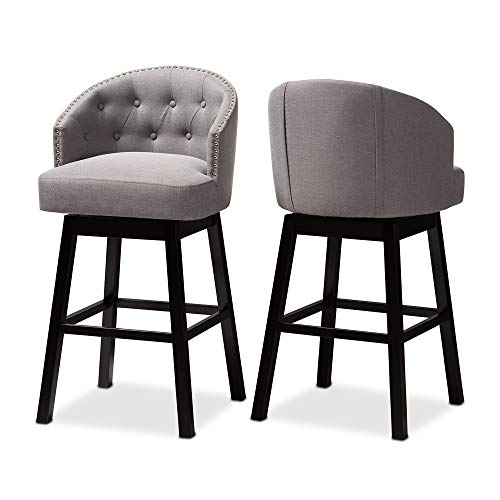
This guide compares six swivel stools that fit that brief: the Yaheetech Adjustable Swivel Bar Stool, the Roundhill Furniture Swivel Bar Stool, the Baxton Studio Swivel Bar Stool, the Flash Furniture Contemporary Swivel Counter Stool, the Christopher Knight Home Swivel Counter Stool and the Maison Arts Swivel Counter Height Stool. Each has a profile, a limitation and a choose-it-or-skip-it line, followed by a comparison table, a buying checklist and straight answers to common questions.


In this guide
Quick Picks for Home Bars and Islands
| Pick | Best for | Link |
|---|---|---|
| Yaheetech Adjustable Swivel Bar Stool | Best overall for flexible counter heights | Check on Amazon |
| Roundhill Furniture Swivel Bar Stool | Best value-for-money pick for everyday use | Check on Amazon |
| Baxton Studio Swivel Bar Stool | Best premium look for modern kitchens | Check on Amazon |
| Flash Furniture Contemporary Swivel Counter Stool | Best for a minimalist, slim profile | Check on Amazon |
| Christopher Knight Home Swivel Counter Stool | Best for cushioned seating at the island | Check on Amazon |
| Maison Arts Swivel Counter Height Stool | Best for small kitchens and tight corners | Check on Amazon |
How These Stools Were Picked
We have not sat on, assembled or used any of these stools. The list is built from manufacturer listings, published specifications and the way each style is typically described by the sellers. That is enough to compare features such as swivel action, back style, footrest and seat shape, but it is not a verdict on long-term wear, so we avoid saying how any chair will hold up.
We looked for six different roles: a flexible height stool, a plain everyday seat, a modern premium look, a slim minimalist form, a cushioned seat and a small-space option. The aim is to give you a spread, so that your own counter, your own room and the way your household actually eats will point to one of them.
The Six Swivel Bar Chairs Reviewed
Yaheetech Adjustable Swivel Bar Stool
Yaheetech is a brand known for value-focused home furniture sold in sets, and its adjustable swivel stools are a common starting point for people unsure what height they need. These designs typically use a gas-lift mechanism, so the seat can move up or down within a range, and a swivel base that turns a full circle.
Who it suits: households where the counter height is unusual, or where the same stools might move between a kitchen island and a bar. Strengths: the adjustable seat height removes some guesswork, the swivel makes it simple to turn, and the footrest ring gives your feet a place to rest. Honest limitation: gas-lift stools have more moving parts than a fixed stool, so read the listing for the height range and the assembly steps.
Choose it if you are unsure of your counter height. Skip it if you want a fixed, sculptural stool that never changes.

Roundhill Furniture Swivel Bar Stool
Roundhill Furniture offers many everyday dining and bar stools, and its swivel designs aim at the shopper who wants a respectable, simple seat for the island. Typical listings show a padded seat in faux leather or fabric, a footrest ring and a metal or wood base.
Who it suits: families furnishing a kitchen island with two or three stools and no desire for fuss. Strengths: the cushioned seat adds comfort for breakfast and homework, the footrest ring is a familiar shape, and the neutral look blends with many kitchens. Honest limitation: padded seats collect crumbs and spills, so a wipe-clean surface is helpful and the cleaning notes on the listing are worth reading.
Choose it if you want a no-surprises island stool. Skip it if you want a bold design statement.
Baxton Studio Swivel Bar Stool
Baxton Studio sells contemporary furniture with a design-led look, and its swivel bar stools are typically styled for modern kitchens, lofts and entertaining spaces. Expect clean lines, a shaped seat and a base in a metal finish, with colors that range from neutral to bold.
Who it suits: homeowners who think of the stools as part of the room design, and people who host often. Strengths: the shape reads as intentional rather than generic, the swivel action keeps conversation easy, and the finish options help you coordinate with cabinets or lighting. Honest limitation: designer stools can have a tighter seat or a higher visual cost than basic ones, so check the seat dimensions against your own preference.
Choose it if the look of the stool matters as much as the function. Skip it if you want a plain workhorse.

Flash Furniture Contemporary Swivel Counter Stool
Flash Furniture supplies stools for homes, cafes and restaurants, and its contemporary swivel counter stools lean on a slim metal frame. The look is minimalist, and the stool tucks neatly beneath a counter, which keeps a small kitchen from feeling crowded.
Who it suits: owners of compact apartments and anyone who prefers a streamlined look. Strengths: the slim profile saves floor space, the swivel seat adjusts your position without moving the chair, and the frame style is familiar from commercial settings. Honest limitation: a slim seat is not as plush as a deep cushioned model, so people who linger over meals may want something softer.
Choose it if you value a lean silhouette. Skip it if you want a deep, cushioned seat.
Christopher Knight Home Swivel Counter Stool
Christopher Knight Home produces furniture with a transitional, upholstered feel, and its counter stools often pair a cushioned seat with a back and a swivel base. For a kitchen island where people sit for long breakfasts, that combination is a draw.
Who it suits: households that treat the island as a place to eat, work and talk. Strengths: the padded seat and back make longer sits more pleasant, the swivel allows easy turns, and the upholstered look softens a hard kitchen. Honest limitation: cushioned stools usually need a little more upkeep, and fabric or leatherette varies by listing, so read the material details.
Choose it if comfort and a back matter most. Skip it if you prefer a metal stool you can hose down.
Maison Arts Swivel Counter Height Stool
Maison Arts is known for counter and bar stools sold in sets, and its swivel counter-height stools are aimed at everyday kitchens. In listings, these designs generally show a compact seat, a swivel mechanism and a base that does not take much room.
Who it suits: shoppers with a small kitchen, a narrow bar or a corner breakfast spot. Strengths: the compact footprint helps in tight spaces, the swivel makes it easy to slide in and out, and sets are convenient when you need several stools at once. Honest limitation: compact stools offer less seat width than a roomy model, so check the dimensions on the listing before you decide.
Choose it if floor space is your main limit. Skip it if you want a deep, wide seat.

Swivel Bar Chair Comparison
| Stool | Size style | Material | Key feature | Best use | Link |
|---|---|---|---|---|---|
| Yaheetech Adjustable Swivel Bar Stool | Adjustable height | Padded seat, metal base | Gas-lift and swivel | Mixed counter heights | Check on Amazon |
| Roundhill Furniture Swivel Bar Stool | Standard | Padded seat, metal or wood base | Footrest ring | Family island | Check on Amazon |
| Baxton Studio Swivel Bar Stool | Standard | Upholstered seat, metal base | Design-led shape | Modern kitchens | Check on Amazon |
| Flash Furniture Contemporary Swivel Counter Stool | Slim | Metal frame | Streamlined profile | Compact spaces | Check on Amazon |
| Christopher Knight Home Swivel Counter Stool | Full-size | Upholstered seat and back | Cushioned comfort | Long breakfasts | Check on Amazon |
| Maison Arts Swivel Counter Height Stool | Compact | Padded seat, metal base | Small footprint | Tight kitchens | Check on Amazon |
Counter Height or Bar Height
This is the first decision, and the one that causes the most returns. Counter stools are meant for counters at kitchen-worktop height, while bar stools are meant for taller bars. The two are not interchangeable, because a stool that is too tall leaves your knees jammed against the underside, and one that is too short leaves you reaching up to the surface.
Measure from the floor to the underside of your counter or bar top, then check the listing for the seat height. A comfortable gap between the seat and the underside of the counter is generally what you are aiming for. If the numbers do not match and you do not want to guess, an adjustable stool such as the Yaheetech gives you room to fine-tune.
Back, No Back and Footrest Choices
A backless stool slides under the counter and keeps the room feeling open, while a stool with a back is easier to settle into for a long meal. A low back is a middle path, offering something to lean on without dominating the view. The Flash Furniture and Maison Arts lean toward the lean, small-space look, while the Christopher Knight Home and Roundhill are more about settling in.
A footrest ring is not just decoration. On a tall stool, feet need somewhere to rest, otherwise the legs dangle. Look for a ring that is placed at a height you can reach, and check that it does not scuff your floor or the stool legs. If you have young children, remember that a footrest can double as a climbing step, so it is worth considering how they will use it.
Seat Materials and Easy Cleaning
Faux leather and vinyl wipe clean quickly, which is why many family kitchens favor them. Fabric adds warmth but needs more care, and solid wood or metal seats are the easiest to rinse but the least forgiving to sit on. Think about how your household eats: if breakfast means cereal and juice at speed, a wipe-clean surface will save time every day.
Whichever you choose, follow the maker’s cleaning notes. Some surfaces dislike strong chemicals, and a quick spot test on a hidden corner is a sensible step before you use a new cleaner on the whole seat.
How to Choose Your Swivel Bar Chairs
- Measure your counter or bar height and compare it with the listed seat height.
- Count the stools you need and leave a comfortable gap between each seat along the counter.
- Decide on a back, a low back or no back, based on how long you sit.
- Pick a seat material that matches your cleaning habits.
- Check the swivel range and whether it is a full-circle turn.
- Look at the base. A flat-bottomed base is stable on tile, while some bases are intended for carpet.
- Confirm the stated weight limit on the listing and compare it with the people who will sit.
- Read the assembly notes and the return terms before you order.
Common Buying Mistakes
The most common mistake is buying without measuring. Stools that look right online can be an inch or two off, and that difference changes how the seat sits against the counter.
Next is overcrowding the counter. Stools need elbow room, and packing too many into one island makes it hard to get in and out. Give each seat a little space on either side.
Another is ignoring the floor. Metal feet on hardwood can leave marks, so felt pads or glides are a smart add-on. Finally, many buyers forget about swivel noise, so check that the base looks smooth and not rattly in the listing, and tighten the fixings after assembly.
Protecting Your Floors
Swivel stools turn, slide and get pulled in and out constantly, so floors take a beating if the feet are bare. Self-adhesive felt pads work well on hardwood and laminate, while rubber glides give grip on tile. Check the base shape first, since a footrest ring may also touch the floor when a stool is moved.
Every few months, check the pads for grit. A little sand trapped under a pad can scratch more than the stool itself, so wipe the underside and replace worn pads. If you live in a home with bare, shiny floors, a thin rug under the stool area can also reduce wear.
Care Tips for Swivel Stools
Wipe the seat regularly, follow the maker’s cleaning notes and keep liquids from soaking into stitching. Check the screws on the base and the seat now and then, because swiveling can loosen fixings over time. If the swivel makes noise, look at the instructions on the listing or contact the seller instead of forcing it.
Planning the Seating Along an Island
Once you know the stool you like, work out how many you can seat. A common approach is to leave a comfortable amount of elbow room between each seat, so people are not bumping shoulders when they turn. Use painter’s tape on the counter edge to mark where each stool would sit, then stand back and imagine a morning rush. If the layout feels tight, drop one stool or choose a slimmer model.
Think about how the stools move. A swivel stool needs room behind it to turn, and the walkway behind the island must still be clear when people are seated. Leave enough space for someone to walk past, or for the dishwasher door to open without touching a seat. In many kitchens, three stools along a longer island is a better fit than four crowded ones.
It also helps to think about who sits where. A stool with a back suits the person who stays longest, while a backless one can be tucked away when it is not needed. Mixing two styles can look intentional if the finish matches, and it gives you flexibility for guests.
Using Swivel Chairs at a Home Bar
A home bar changes the demands on a stool. People arrive, mingle, turn toward the room and stand up often, so the swivel earns its keep. Choose a seat that is easy to climb onto and off, and consider a footrest ring so guests have somewhere to put their feet. A stool with a softer seat is welcome when conversations run long, while a streamlined model keeps the room open when the bar is quiet.
Lighting matters too. Glossy faux leather and bright metal pick up reflections from pendant lights, which can look sleek or harsh depending on your room. If you have a darker bar area, a matte upholstery in a deep color tends to look warm and forgiving. The Baxton Studio style leans toward the polished look, while the Christopher Knight Home style leans toward a softer, lounge-like feel.
For entertaining, durability of the surface matters. Spilled drinks happen, so a seat that wipes clean is a quiet advantage. Check the listing for the material and wipe spills straight away to keep the finish looking its best.
Matching Stools With Your Decor
Stools are one of the easiest places to bring color or texture into a kitchen. In a white or light kitchen, dark stools anchor the space and make the island look intentional. In a dark kitchen, a lighter seat adds balance. If your cabinets are wood, a metal base in black or brushed steel works as an accent, and matching the metal to your faucet or lighting ties the room together.
Do not feel pressured to match everything. A pair of stools that echoes one color from the room, such as the tone of a rug or a piece of art, looks considered without feeling staged. Whatever you choose, check the finish name and photographs on the listing, since colors can look different on a screen than in your home.
Final Recommendation
If you are unsure about height, choose the Yaheetech Adjustable Swivel Bar Stool. For an everyday island seat, choose the Roundhill Furniture Swivel Bar Stool. For a modern, design-conscious room, choose the Baxton Studio Swivel Bar Stool. For a slim profile, choose the Flash Furniture Contemporary Swivel Counter Stool. For cushioned comfort and a back, choose the Christopher Knight Home Swivel Counter Stool, and for a small kitchen, choose the Maison Arts Swivel Counter Height Stool.
Measure your counter, pick the stool style that fits, and take a look at the two most requested choices below.
A Deeper Look at How to Choose Swivel bar chairs
Most guides stop at a list of features, but the swivel bar chairs you will be happy with a year from now are chosen by how they fit your life, not by how they read on a listing. Start with the setting. These chairs will be used pulled up to a kitchen island or a home bar, where people perch, turn and talk as much as they sit, and that single fact should filter every other decision: the ground or floor underneath, the weather or wear they will meet, and the people who will sit in them most often. Height is the first decision and the easiest to get wrong: the gap between the seat and the underside of the counter decides whether knees fit and elbows rest naturally, so measure your counter before anything else. After that, judge the swivel for smoothness and the base for stability. Then be honest about time. A chair used for twenty minutes of morning coffee is a different purchase from one that hosts three-hour dinners, whole tournaments or entire afternoons, and comfort features that seem like luxuries on paper become essentials somewhere around the second hour.
Work through the basics in order. First, the seat: its height decides whose feet rest comfortably and how easily people get up, and its depth decides whether shorter legs dangle or taller sitters feel perched. Second, the back: the angle and support should match how you actually sit, upright for eating and working, more relaxed for lounging and watching. Third, the structure: frames, joints and fixings should feel calm and silent when you shift your weight, because movement and noise in week one only grow with use. Finally, look at the surface you will live with. Finishes, fabrics and weaves decide how the chair handles spills, sunlight, pets and cleaning, and they decide how the chair looks after a season of real life rather than after a photo shoot. A slightly less fashionable choice that cleans easily will be loved longer than a showpiece you are afraid to use.
It also helps to think about who else will sit here. Guests, grandparents and children all test a chair differently: guests notice wobble, grandparents notice how easy a chair is to rise from, and children test every joint and finish at once. If your household includes all three, weight your decision toward stability, a seat height that suits standing up, and surfaces that forgive. The reviews above flag where each pick leans, so use them with your own household in mind rather than chasing a single universal winner. And measure your space before you fall for a silhouette. Chairs need room to be pulled out, walked around and, where relevant, folded, reclined or rocked through their full motion. A chair that fits its footprint on paper but blocks a walkway or bangs a wall in use will quietly be resented every day.
Matching Swivel bar chairs to Real Life
Bar seating is social seating: people swivel to join a conversation, slide off to help in the kitchen, and lean on the footrest through long evenings, so the chair is in near-constant gentle motion. The scenarios below are the ones buyers describe most often when they write about what worked and what did not, and matching your own routine to them is a faster route to the right pick than comparing one more feature.
Everyday, unthinking use
The best everyday chair is the one nobody has to think about. It is where it should be, it feels right without adjustment, and it survives being moved, bumped and sat in by people who are thinking about something else entirely. For daily use, favour the pick above that balances comfort with indifference to wear, and be suspicious of any chair that needs careful handling to stay pleasant, because daily life will not provide careful handling for long. If the chair will be moved often, test the idea in your head: can one person move it easily, does it pass through your doors and gates, and does it store without a fight? Chairs that fail the moving test end up stranded in the wrong room or left outside in weather they were not chosen for.
Guests and longer occasions
Guest use changes the priorities. People sit longer, dress better and notice discomfort they would ignore at home, so back support and a seat that does not numb legs matter more, and so does simple dignity: a chair should let every guest sit down and stand up gracefully. If you regularly host, consider buying for the longest occasion you host rather than the average day, because the average day forgives almost any chair and the long evening forgives almost none. Think about numbers, too. A set that seats your household perfectly but leaves regular guests on mismatched spares is worth reconsidering, and where the picks above are sold in pairs or sets, matching them keeps the room calm and the comfort even.
Quiet time and personal rituals
Most homes have one chair that becomes a ritual: the reading chair, the coffee chair, the chair by the window. If that is what you are really buying, be selfish in the right way. Choose for your body, your posture and your habits, in the light and the corner where the chair will actually live, and let the rest of the household adapt. A chair bought honestly for one beloved routine gets used daily; a chair bought as a compromise for everyone often suits no one’s ritual at all.
Settling In: Placement, Setup and the First Weeks
Where a chair lives changes how it feels. Place swivel bar chairs pulled up to a kitchen island or a home bar, where people perch, turn and talk as much as they sit and then sit in the spot at different times of day before you commit to an arrangement: light, breeze, foot traffic and noise all shift, and a position that is perfect at breakfast can be a thoroughfare by evening. Leave honest clearance around the chair for getting in and out, and for the movement the chair itself makes. When a new chair arrives, inspect it the way you would inspect anything that will hold your weight daily: check every joint and fixing, sit and shift deliberately, and look at feet and contact points so you can add protection to floors before the first scratch rather than after. Keep the packaging and paperwork until you have lived with the chair through a few real occasions, because first impressions in a doorway are a poor predictor of third-hour comfort.
Give the chair a fair first month. Materials settle, your body learns the seat, and small placement changes — a cushion moved, an angle turned toward the light, a side table brought within reach — often transform a good chair into the right chair. But distinguish settling-in from making excuses: a wobble, a creak that grows, or a seat that leaves you stiff after twenty minutes will not improve with patience, and that is what returns windows are for. If you bought more than one, live with them as a set for a while before judging. Sets reveal their quality in chorus: matching heights at a table, even comfort across a group, and how the room feels when all of them are occupied at once.
Care, Cleaning and Storage in More Detail
The swivel mechanism and the footrest take the wear. Keep the mechanism clean and free of crumbs and grit, tighten any accessible fixings if the chair starts to feel loose, and protect the floor under the base, because a swivel chair travels in a small circle all day long. Whatever the material, start with the maker guidance that comes with the chair, because it overrides general advice, including this guide. Test any cleaner on a hidden patch first, work gently rather than thoroughly, and let everything dry completely before the chair goes back into service or storage.
Build a light routine instead of an occasional rescue mission. A quick brush, shake or wipe on a regular rhythm stops dirt becoming ground-in, and a monthly once-over — joints, feet, fixings, surfaces — catches small problems while they are still small. Chairs rarely fail suddenly; they loosen, fade and stain gradually, and the owners who notice early are the ones still pleased years later. Storage, when the season or the occasion demands it, should be clean, dry and unhurried. Clean the chair first, dry it fully, and store it somewhere air can move and damp cannot settle. Stack or fold only as the design intends, protect surfaces from rubbing against each other, and never store a chair dirty on the theory that you will deal with it in spring; spring-you will not thank past-you.
Small repairs done early prevent big disappointments. A loose fixing tightened, a felt pad replaced, a small mark treated before it sets: these two-minute jobs are the difference between a chair that ages gracefully and one that quietly becomes garage furniture. When a chair does reach the end of its best life, retire it honestly to lighter duties rather than keeping it in front-line service where its weaknesses annoy someone daily.
How the Picks in This Guide Compare With Each Other
Readers often ask how the options in this guide differ in practice, because several share similar descriptions. The honest answer is that they differ in emphasis rather than in kind: each pick leans toward a particular mix of comfort, build, portability and easy care, and the review notes for each one say where its strength lies. Use the comparison below as a way of thinking, then confirm the details that matter to you on the listing before you order.
Take the first pick covered above, the Yaheetech Adjustable Swivel Bar Stool, as your reference point: it represents the balance this guide recommends for the widest range of buyers. Measure every other option against it by asking two plain questions — what do I gain, and what do I give up? If the gain touches your daily life and the sacrifice does not, the alternative deserves your attention; if the gain is a feature you will use twice a year, stay with the reference point.
The Roundhill Furniture Swivel Bar Stool suits buyers whose priorities lean a slightly different way — perhaps a different feel in the seat, a different balance between weight and sturdiness, or a look that fits their room or garden better. Neither pick is simply better; they answer slightly different briefs. If you are torn between two, decide by your setting and your longest typical sit, the two factors that shape daily satisfaction most.
Options such as the Baxton Studio Swivel Bar Stool show the range within this category: some lean toward comfort, others toward easy handling or a particular style. A useful exercise is to rank the picks by the one quality you care about most, then rank them again by practicalities like size, care and storage, and see which name survives both rankings. That survivor, or the pair of survivors, is where your final decision should live.
Whichever you choose, check the returns terms before ordering and keep the packaging until the chair has survived a few real occasions. Judging a chair takes longer than judging most purchases, because comfort is a third-hour quality, and the honest test is your own routine repeated over several days.
Common Mistakes and How to Avoid Them
The most common mistake is buying for the photograph instead of the floor plan. A chair that looks perfect in a styled listing can be the wrong scale, the wrong height or the wrong weight for your room, and no amount of beauty compensates for a chair that blocks a doorway or dwarfs a table. Measure the space, the table and the people, in that order, and let the numbers veto your favourites when they must. The second mistake is testing comfort for thirty seconds. Almost every chair feels fine for half a minute; the differences arrive at minute forty, in the lower back, behind the knees and in the urge to shift position. When you cannot test in person, read the reviews above for exactly those long-sit clues and favour the pick whose comfort story matches your longest typical occasion.
Third, shoppers often ignore the floor or ground entirely. Feet, runners and bases interact with decking, tiles, grass and sand in ways that decide stability, noise and damage, and a chair that is wonderful on one surface can be a nuisance on another. Picture the chair on your actual surface, in your actual weather, before you picture it anywhere else. Finally, many people buy exactly the number of chairs they need today and regret it at the first gathering, or buy a full set when two would have revealed the right choice. Where the budget allows, a staged approach works well: start with the number you are sure about, live with them, and add matching chairs while the same model is easy to find.
More Questions Buyers Ask
How many swivel bar chairs should I buy to start with?
Buy for your regular life first: the number used on an ordinary day, plus one spare if you host often. It is easier to add matching chairs soon after than to store extras you rarely use, and living with the first chairs for a few weeks tells you whether you truly want more of the same.
How do I know if a chair will suit my height?
Compare the seat height and depth in the listing with a chair you already sit in comfortably, and think about your usual sitters rather than an average person. If your household spans very different heights, favour the middle ground and use cushions to fine-tune for the shortest sitters.
Can I use swivel bar chairs in more than one setting?
Often, yes, provided the materials suit both places and you accept the carrying between them. A chair that moves between rooms or between house and garden should be light enough to move without dread and finished for the harsher of the two settings. When in doubt, buy for the tougher setting and enjoy the bonus durability indoors.
What should I check when the chair arrives?
Unpack it fully, check every joint, foot and surface, sit in it and shift your weight deliberately, and compare the size and finish with the listing. Then use it for real occasions over several days before removing packaging and paperwork, because comfort and stability only reveal themselves in use.
Why does a new chair creak, and should I worry?
A faint settling sound in the first days can be materials finding their place, but a creak that grows, localises in one joint or arrives with visible movement is worth acting on while returns are simple. Tighten any fixings the maker intends owners to check, and if the noise persists, contact the seller rather than hoping it fades.
How long should good swivel bar chairs last?
With sensible use and the light care routine described above, a well-made chair should give years of daily service. Lifespan is decided less by the badge than by matching the chair to its setting, keeping joints and surfaces maintained, and retiring it to gentler duties when the structure finally tires.
Is it better to buy a matched set or mix styles?
A matched set gives even comfort and a calm look, which suits dining and formal rooms; mixing suits relaxed spaces and lets you add a special chair for one person or purpose. If you mix, keep one element consistent — height, material tone or colour family — so the group looks chosen rather than accumulated by accident.
What matters more for swivel bar chairs: comfort or looks?
Comfort decides whether the chair is used; looks decide whether it is loved. A beautiful chair that hurts will be avoided, and a comfortable chair that clashes will be forgiven daily. If you must compromise, compromise on looks, then close the gap with cushions, throws or placement, which are far easier to change than a seat.
A Step-by-Step Shortlist You Can Actually Use
If the guide has left you with three or four candidates and no clear winner, work through this shortlist method in order and let it eliminate rather than persuade. Step one: write down your setting in a single sentence — the room or ground, the weather or wear, and who sits most often. Any pick whose reviews do not speak to that sentence goes first, however appealing its photograph. Step two: list your longest typical occasion, because that is the comfort test that matters, and remove any pick whose seat story sounds like hard work at that length. Step three: check the unglamorous practicalities one by one — overall size against your measured space, weight against whoever will move the chair, and care demands against the routine you will honestly keep. A chair fails this step more often than any other, and failing it on paper is far cheaper than failing it in your hallway.
Step four: read the surviving reviews once more, but backwards — start with each pick’s honest limitation and ask whether that specific weakness touches your life. A limitation that describes someone else’s household is no limitation at all, and a strength that describes someone else’s routine is no strength either. This single habit explains most of the difference between buyers who are pleased a year later and buyers who are shopping again. Step five: decide, and then stop researching. Every additional hour of comparison after the shortlist stage buys anxiety rather than information, because the remaining differences are matters of taste that only living with the chair can settle. Order with returns terms you have actually read, keep the packaging through the trial period described earlier, and spend the saved hours enjoying the seat you chose.
Owning the Chair Well: A Seasonal Rhythm
Long-term satisfaction settles into a rhythm. Once a season, give the chair ten honest minutes: sit in it as a stranger would, shift your weight, listen for new sounds, look at the feet and the surfaces in daylight, and deal with whatever you find while it is still a two-minute job. Once a year, do the slightly deeper version — a proper clean, a check of every fixing the maker allows you to check, and a decision about whether the chair still belongs in its current job or should trade places with another in the house. That rhythm matters because chairs age by accumulation, not by event. Sunlight fades one side a shade at a time, a loose joint works a fraction looser each week, and a finish thins exactly where hands and heels touch it daily. Owners who catch those changes early describe their chairs as lasting for years; owners who wait for a failure describe the same chairs as suddenly falling apart. The difference is rarely the chair. It is the ten minutes, four times a year, and the willingness to act on what those minutes reveal — tightening, cleaning, rotating the chair out of the harshest sun patch, or moving it to a gentler role before a small weakness becomes the reason it leaves the house.
A last word on value
Value in a chair is measured in cost per comfortable year, not in the number on the day it arrives. A chair that suits its setting, survives its routine and is still the seat people choose in year five has repaid its buyer many times over, whatever it cost, while a bargain that wobbles, fades or sits empty in a corner was expensive at any price. That is why this guide keeps returning to fit, setting and honest care: they are the terms on which value is actually delivered. Choose the pick that matches your life as it is, look after it with the light rhythm described above, and the arithmetic of value tends to take care of itself.
What to do if two picks still tie
Ties are usually broken by the household, not the chair. Ask which pick suits the second-most-common use, not just the main one; ask which surface will forgive your floors, your weather and your cleaning habits; and ask which one you would still choose if a guest, a grandparent or a muddy dog used it this weekend. The chair that survives those questions is rarely the wrong answer, and where the tie survives even that, choose the one that is easier to live with — lighter to move, simpler to clean, kinder to store — because daily ease compounds quietly into long-term satisfaction.
Frequently Asked Questions
How do I know if I need counter height or bar height stools?
Measure from the floor to the underside of the surface, then compare it with the seat height on the listing. Counter surfaces are lower than bar tops, so the stools are not interchangeable.
Do swivel stools damage floors?
Bare feet can scratch hard floors, so add felt pads or glides that suit your floor type. Check them regularly for grit.
Are adjustable stools better than fixed ones?
Adjustable stools are flexible, but they have more moving parts. Fixed stools are simpler, so choose according to whether you value flexibility or simplicity.
Can I buy a single stool, or must I buy a set?
Some listings sell sets and some sell singles, so read the title and options carefully before you order.
How hard is assembly?
Most stools arrive with a few parts and a small tool. Set aside a quiet half hour, lay out the parts and follow the sheet.
What if the stools do not fit my counter?
Check the seller’s return policy before you buy, and keep the packaging until you have tried one in place.
Can the stools go on carpet?
Many can, but swivel bases may drag on thick carpet, so a hard floor or a low rug is generally easier.