On the course a towel does more than wipe your hands. It cleans grooves before a shot, dries a grip when it rains and keeps a ball free of mud. Most golfers clip one to the bag, and the right fabric makes a big difference in how well it scrubs and how fast it dries.
The six towels below are mostly from the big golf brands, and they range from waffle-weave to microfiber designs. We have not used these products ourselves, so the notes reflect general product knowledge. Check the listing for size, fabric, any magnet or clip, and personalization options before you buy.
As an Amazon Associate we earn from qualifying purchases. Links below are affiliate links, and they do not change the product information we give.
What to Look For
| Feature | Why it matters |
|---|---|
| Weave | Waffle and ribbed weaves scrub grooves; microfiber wicks water |
| Attachment | A grommet, carabiner or magnet keeps it on the bag |
| Size | A bigger towel covers more but can drag |
| Color | Darker towels hide grass and dirt stains |
In this guide
Specs at a Glance
| Towel | Weave | Fabric type | Notes |
|---|---|---|---|
| Titleist Players Towel | Waffle-style | Cotton blend | Brand logo |
| TaylorMade Golf Tour Towel | Check the listing | Check the listing | White, small size; brand logo |
| Callaway Tour Towel | Textured | Cotton blend | Brand logo |
| Club Glove Tour Towel | Textured | Cotton or blend | Golf accessory brand |
| FootJoy Microfiber Towel | Soft microfiber | Microfiber | Apparel-brand towel |
| Srixon Microfiber Caddy Towel | Check the listing | Microfiber | Black; 17 x 40 in per the listing |
The 6 Best Golf Towels
Top pickBest for everyday rounds
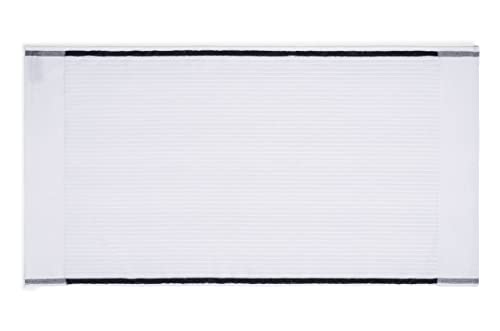
1. Titleist Players Towel
A classic tour-style towel from the biggest name in golf balls. It has a textured waffle-style surface for scrubbing grooves and balls, with a grommet for hanging on a bag.
Suits: everyday rounds. Strengths: a trusted brand and a proven shape. Weaknesses: cotton stays damp longer than microfiber. Skip it if you want a fast-drying cloth.

Best for golfers who like a branded bag
2. TaylorMade Golf Tour Towel, White
A white tour towel from TaylorMade, listed in a small size. It is a simple bag towel for wiping hands, grips and clubfaces.
Suits: golfers who like a branded bag. Strengths: a major club-maker name and easy clip-on use. Weaknesses: white shows dirt quickly. Skip it if you want a dark towel.


Best for a matching bag set
3. Callaway Tour Towel
A tour-style cotton-blend towel with a textured finish. Callaway offers several colors, so you can match your bag.
Suits: a matching bag set. Strengths: a range of designs. Weaknesses: sizes differ between listings. Skip it if size accuracy matters to you.

Best for golfers who like accessory brands
4. Club Glove Tour Towel
A towel from a company known for golf bag covers and travel gear. It is a no-fuss tour towel intended to hang on the bag.
Suits: golfers who like accessory brands. Strengths: a practical build. Weaknesses: less of a name in the towel category. Skip it if you want a big-maker logo.
View Club Glove Tour Towel on Amazon
Best for wet-weather rounds
5. FootJoy Microfiber Golf Towel
A soft microfiber towel from a golf shoe and glove brand. It is better at pulling water from grips and gloves than a cotton waffle towel.
Suits: wet-weather rounds. Strengths: drying speed. Weaknesses: not as scratchy for scrubbing grooves. Skip it if you want a rough waffle surface.
View FootJoy Microfiber Golf Towel on Amazon
Best for a second towel for the bag
6. Srixon Microfiber Caddy Towel
A black microfiber caddy towel from Srixon, listed at 17 by 40 inches. Its long cut gives plenty of cloth to wipe clubs and hands.
Suits: a second towel for the bag. Strengths: microfiber in a long, dark format. Weaknesses: not a waffle weave. Skip it if you want a cotton waffle towel.
View Srixon Microfiber Caddy Towel on Amazon
Care and Setup
- Keep one half damp for clubs and one half dry for grips.
- Rinse out sand and grass after each round.
- Avoid fabric softener, which can reduce absorbency.
- Hang the towel to air out before you stow the bag.
Mistakes to Avoid
- Using one towel for grips and dirty balls without rotating the cloth.
- Clipping it where it drags on the ground.
- Assuming every towel has a magnet.
- Buying a light color if you play muddy courses.
Questions to Ask Before You Buy
- Do you want it for wiping clubs, hands, the ball or all three?
- How will it attach to the bag: a clip, a carabiner, a grommet or a magnet?
- Does the maker’s listing give the dimensions, and will it hang without dragging on the ground?
- Does it need to look good for gifts or club events, or only work on the course?
- How many do you want so you can rotate a clean one into the bag?
- Does the listing describe care instructions for washing?
Storage and Care Notes
A towel that stays wet in a bag turns musty quickly. Hang it in a garage or closet after each round so it can dry fully before the next one. If it collects grass stains or sand, shake it out first and rinse before the fabric dries on the dirt. Wash it apart from delicate items, since grit can wear on other fabrics.
Follow the maker’s care label on temperature and drying. Strong bleach can weaken fibers and fade embroidery, so check the listing before using it. Keep a spare in the car so you are never stuck with a soaked towel on a rainy day.
Who Should Skip It
Casual players who only visit a driving range now and then may be fine with an old hand towel or a few cloths from the kitchen drawer. Anyone who plays in a cart with a built-in cleaning station might not need a large towel at all. If you prefer to keep the bag light, a small cloth that clips inside a pocket may suit you better than a big hanging one.
How Towel Fabrics Behave on the Course
Golf towels look alike on a bag, yet the fabric changes how they work. Cotton waffle and ribbed weaves have raised texture that scrubs mud out of grooves and off the ball. They absorb a fair amount of water, but once soaked they hold it for a long time and feel heavy. Cotton blends try to balance scrubbing ability with a little faster drying, though how well they do depends on the blend, which the listing may or may not describe.
Microfiber is made of very fine synthetic fibers that pull moisture off a surface quickly and release it more readily as the towel dries. It is gentle on grips, gloves and phone screens, which makes it handy for wet rounds. The downside is that it does not scrub as aggressively as a coarse waffle weave, and it can hold on to oils and grass stains if you do not rinse it. Fabric softener can clog the fibers and reduce performance in both materials.
Many golfers solve the debate by carrying two towels: a textured one for cleaning clubs and a soft one reserved for grips and hands. If you only want one, think about your usual conditions. Dry, dusty courses favor a rougher cotton cloth. Rain, dew and morning rounds favor microfiber. When the listing is vague about fabric, look for any care label text or ask the seller before buying.
Size, Shape and Attachment Choices
Towel size is a balance between coverage and hassle. A large towel gives you clean cloth to work with but can sway in the wind, drag along the ground or catch on a cart. A smaller one stays tidy but may soak through in a downpour. The Srixon caddy towel in this list is described as long and narrow, and a long format can be draped over a bag strap or tucked through a handle. Always check the dimensions on the listing, because sizes are not standard across brands.
Attachment hardware matters more than most people expect. A grommet with a clip or carabiner is the traditional route and works with most bags. A magnet can stick to a cart frame or a metal part, but it will not help on a stand bag made of fabric. Some towels come with no hardware at all, so you need to supply a clip of your own. If a listing does not mention hardware, assume you may need to add it.
Think about placement as well. Towels clipped near the top of the bag are easy to grab but can get wet from rain. Towels hung from the side get dirty from passing clubs. Choose a location that keeps the cloth out of the way of your swing and off the ground, and let the hardware hold up to the weight of a wet towel.
Using the Towel Efficiently During a Round
A little routine makes one towel go a long way. Dampen a corner at the ball washer or a water source, wipe the clubface and grooves, then switch to a dry section to remove moisture before you swing. Wiping grooves matters because debris between the grooves can change how the ball leaves the face, though how much depends on the club and the conditions.
Keep the grips dry. A damp grip can slip, especially in cold or wet weather. Take a moment to wipe each grip and your hands before important shots, and swap to a dry area of the towel if the first section is wet. On a rainy day, a second towel in a plastic bag or the bag pocket can be the difference between a workable grip and a slick one.
Keep a sense of order about which part of the towel does what. Use one end for dirty work, such as brushing mud off a ball, and the other end for hands and grips. Shake out grass and sand as you go so grit does not scratch clubfaces. Many players also carry a small brush or tee for clearing deep grooves, since a towel alone may not reach everything. At the end of the round, give the towel a quick wring and hang it in a place where air can reach it.
Budget Tiers, Gifts and Personalization
Golf towels are one of the more affordable accessories, and the spread between basic and premium models is mostly about branding, embroidery and fabric thickness. A simple towel from a major club maker will do the job. A premium or specially embroidered one may feel nicer and look sharper on the bag, but it will not change your swing. Spend more only if the extra feel or look matters to you.
Towels are popular gifts because they are small, useful and easy to match to a favorite brand. If you are shopping for a golfer, check whether they already use a certain brand of clubs, balls or bag, and look for a matching color or logo. Remember that many golfers use a towel until it is stained and worn, so a fresh one is a welcome replacement.
Personalization is common among custom shops but, as noted in the FAQ, brand-name towels like those listed here usually do not offer it. If you want initials or a club logo, look for a seller that clearly lists embroidery options, check how long it takes to make, and confirm the placement and thread colors before ordering. Do not assume a personalized item can be returned, since policies vary.
Signs It Is Time to Retire a Towel and How Many to Own
A golf towel does not last forever. Replace one when it stays damp after drying, smells musty after washing, feels thin or stiff, or has lost its ability to pick up moisture. A towel that has been soaked in mud, sunscreen or oil can build up residue that normal washing does not fully remove. Fraying edges or a torn grommet are also signs it is time to move on.
Owning more than one lets you rotate. A reasonable setup is a main towel on the bag, a clean spare in the car and perhaps a dedicated microfiber cloth for grips. That way you always have a dry option, and you can wash one while another is in use. Label them if you like, or choose different colors so you can tell which is which at a glance.
For washing, check the care label on the product or listing. Many cotton towels can be machine washed, but heat and harsh detergents can shorten the life of printed logos. Dry them fully before storing, because trapped moisture is the main reason a towel turns smelly. If a towel still looks fine but no longer absorbs well, a wash without softener can sometimes help, though a worn one may simply need replacing.
Waffle, Terry or Microfiber: Fabric Differences on the Course
A golf towel does simple jobs, such as wiping a ball, drying a club face and cleaning grooves, but fabric choice makes those jobs easier or harder. Waffle weave towels have a textured surface with small pockets that catch dirt and grass, and they dry quickly. Terry towels are thicker and absorb more water, so they handle wet mornings and rain. Microfiber towels are light and compact, and they dry fast, though they can feel less absorbent in a heavy downpour. Think about the weather where you play, how long you stay on the course, and whether you like a towel that looks sharp on the bag.
| Fabric | Good for | Keep in mind |
|---|---|---|
| Waffle weave | Scrubbing grooves, quick drying | Less plush on the hands |
| Terry cotton | Wet conditions and soaking water | Heavier and slower to dry |
| Microfiber | Light carry and quick cleanups | May hold dirt that needs rinsing |
Size, Attachment and Placement on the Bag
Towel dimensions range from a compact hand towel to a long bag towel. A longer towel gives more surface for cleaning clubs and drying hands, while a smaller one stays out of the way. Look at how the towel attaches. A metal grommet with a carabiner clip is common, and some towels have a loop or a magnetic patch. Place it where you can reach it from the cart or on the walk, perhaps near the putter well or on the side of the bag. Keep a second towel in the bag for wet days.
Washing Without Wearing Out the Fabric
Dirt, grass and sunscreen build up on a towel. Check the care label, and wash with a mild detergent on a gentle cycle, then let it air dry or tumble on low. Avoid fabric softener, which can reduce absorbency, and skip bleach unless the label allows it. Wash dark and light towels separately, and remove dried-on dirt with a brush before washing. Replace towels that have worn threads or lost their grip.
Etiquette and Other Uses
Many golfers carry a towel for grips as well. A damp corner cleans a tacky grip, and a dry corner keeps hands from slipping. Rinse the towel at a ball washer if one is available.
Gift Ideas and Team Orders
Golf towels are popular as small gifts and as club or event giveaways. If you buy for a group, check that the fabric takes embroidery or printing, and ask about color options. For personal use, choose a color that does not blend into the grass, so it is easy to spot when you leave it at a tee. A spare towel in the trunk is handy after a round.
Choosing With More Care: The Details That Decide Satisfaction
The first decision with golf towels is matching the fabric to the job it actually has to do, rather than buying on softness alone. A towel that feels wonderful in a shop can still disappoint if it dries slowly, sheds lint or loses its absorbency after a few washes. Think about how the towel will be used most days: wiped, wrapped, hung in a damp room, thrown into a sports bag or spread out outdoors. That everyday pattern matters more than any single impressive feature, because a towel earns its keep through hundreds of ordinary uses, not through its first impression.
Size and weight deserve the same honest look. A larger towel covers more and can feel generous, but it also takes longer to dry, fills a washing machine faster and needs more storage space. A lighter towel is easy to carry and quick to hang, yet it may feel thin if you expected something plush. Picture the exact spot where the towel will live and be used, measure if you are unsure, and choose the size that fits that space comfortably instead of assuming that bigger is always better.
Matching Your Choice to Real Life
Consider the busiest moment in your routine and shop for that moment. If several people share one bathroom, towels that dry quickly between uses and can be told apart at a glance save daily friction. If the towel travels with you, how it packs, how it smells after being folded damp for a few hours and how fast it dries on a hook become the deciding factors. Writing down your own busiest scenario before ordering sounds simple, but it stops most disappointing purchases.
Guests and occasional use call for a slightly different judgement. A towel kept for visitors should look tidy after long storage, wash without fuss and suit different preferences, while your everyday towel can be chosen purely around your own habits. Many households end up happiest with a small rotation: a dependable everyday set, one or two spares for guests or laundry days, and nothing kept ‘for best’ that never actually gets used and slowly turns musty in a cupboard.
Using It Well From the First Day
How you use a towel in its first weeks sets how it performs for the rest of its life. New towels often carry a finish from manufacturing that can make them feel smooth but absorb less, so a wash before first use is a sensible habit unless the maker says otherwise. During use, press and pat rather than dragging roughly across skin or hair, and hang the towel fully open afterwards instead of leaving it bunched on a hook, because airflow between the folds is what actually dries it.
Where a towel dries matters as much as how it was made. A steamy, closed bathroom slows drying and invites stale smells, while a ventilated spot with the towel spread wide keeps it fresher between washes. If you share a home, agree on simple habits: one towel per person, a regular wash day, and a rule that damp towels never stay sealed in a bag or hamper. These small routines do more for freshness than any scented product.
Care, Cleaning and Keeping It at Its Best
Washing is where most towels are quietly ruined. Very hot water, heavy doses of detergent and fabric softener can leave residue that coats the fibres and makes the towel push water around instead of soaking it up. A moderate amount of detergent, a proper rinse and an occasional wash without softener usually keep absorbency closer to how the towel performed when new. Always follow the care label on your specific towel, since blends and finishes differ.
Drying and storage finish the job. Shake the towel out before hanging or machine drying so the loops stand up rather than matting flat, and make sure it is completely dry before folding it away. Storing a slightly damp towel in a closed cupboard is the fastest route to a stale smell that then needs extra washing to remove. Store folded towels loosely, rotate the stack so the same towel is not always on top, and keep spares somewhere airy rather than sealed in plastic.
How the Picks in This Guide Compare
The picks in this guide, Titleist Players Towel, TaylorMade Golf Tour Towel, White, Callaway Tour Towel, Club Glove Tour Towel, FootJoy Microfiber Golf Towel and Srixon Microfiber Caddy Towel, were chosen to cover the situations most buyers actually face rather than to repeat the same idea several times over. Read their individual reviews above side by side and you will notice that each one leans towards a different strength: a different balance of comfort, practicality, ease of care and suitability for a particular setting. That spread is deliberate, and it means the best choice for you depends less on which pick is strongest in the abstract and more on which strength matches the job waiting for it in your home.
A useful way to compare them is to hold your main scenario steady and test each pick against it. Picture the same ordinary day, the same room, the same people and the same weather, and ask of each option in turn how it would cope. The pick that handles your ordinary day gracefully will almost always serve you better than the one that shines only in an ideal scenario. Where two picks seem close, let the care routine decide: the one whose cleaning, storage and upkeep fit your real habits is the one that will still please you in a year.
It also helps to decide in advance what would make you return or replace a purchase, because that reveals your real priorities. If the answer is about fit, measure twice and order once. If it is about upkeep, re-read the care sections of the reviews above before choosing. If it is about how the pick suits a particular person, involve that person in the decision now rather than after delivery. Clear priorities turn a long shortlist into a short decision, and they protect you from being swayed by whichever listing you happened to read last.
Reading Listings and Product Pages Critically
Reading a listing for golf towels rewards a sceptical eye. Look for the plain facts first: the fabric, the dimensions and the care instructions. Vague words about luxury or hotel quality tell you very little, while a clear statement of material and size lets you compare two options fairly. Photos can flatter thickness and colour, so treat the written details as the real description and the pictures as a rough guide to style.
It also helps to separate what the towel is from how it is sold. Sets can look like great value while mixing sizes you will never use, and a single premium towel can be the smarter buy if it matches your routine exactly. Count what you will genuinely use each week, check the return terms before ordering more than one, and start with a small quantity when trying a new style. You can always add matching pieces later once the first one has survived a few washes.
Mistakes That Only Appear After a Few Weeks
One common mistake is judging a towel only by how thick it feels on day one. Thickness can come from long loops that dry slowly and feel heavy when wet, which is a poor trade in a humid bathroom or a travel bag. The opposite mistake is choosing the thinnest, fastest option and then feeling short-changed every time you use it. The right answer sits in the middle for most people and depends entirely on where the towel will dry and how often it will be washed.
Another mistake is washing every towel the same way regardless of fabric or colour. Dark towels can fade with harsh washing, light towels show stains that need prompt attention, and delicate finishes suffer in crowded, overloaded loads. Sorting laundry with even a little care, washing similar items together and not overloading the machine so water can circulate all extend the useful life of the whole set without adding real effort to laundry day.
Building a Routine That Lasts
A simple rotation routine keeps golf towels performing well without any special effort. Keep enough towels in circulation that none is used again while still damp from last time, hang each one open after use, and wash on a regular rhythm rather than waiting for smells to force the issue. If a towel starts to feel less absorbent, check for detergent build-up first: an extra rinse or a wash with less detergent often restores performance before you conclude the towel itself has worn out.
Every few months, take a honest look at the whole collection. Towels that have gone thin, developed holes, lost their edges or kept a stale smell through several careful washes are telling you they are done. Retire them to cleaning duty rather than letting them linger in the main rotation, and replace one or two at a time so the set stays consistent. This gradual approach spreads the effort and means you are never forced into replacing everything at once.
When to Repair, Replace or Rethink
Knowing when to replace a towel is mostly about function, not appearance. A towel that still looks fine but leaves you damp, feels scratchy after washing or dries so slowly that it smells between uses has stopped doing its job. Fading alone is cosmetic and no reason to throw a working towel away, but persistent odour, thinning fabric and frayed edges that catch and tear are practical signs that replacement will genuinely improve daily life.
When you do replace, buy for the routine you have now, not the one you had years ago. Households change: children grow, sports start or stop, bathrooms are renovated and laundry habits shift. A short list of what the new towel must do, checked against the guidance in this article, will serve you better than simply reordering whatever you bought last time. Keep one retired towel for messy jobs and let the new set start its life doing the work it was chosen for.
A Practical Decision Worksheet
Start by writing your requirements down before you look at another listing. Divide a page into three short lists: what the purchase must do, what would be nice, and what you know you do not need. Be specific in the first list, because vague wishes produce vague purchases. Include the room or situation, the people involved, the surfaces and conditions it will face, and the care effort you can honestly sustain. Then read the reviews in this guide once more, scoring each pick only against your first list. Picks that fail a must-have leave the shortlist immediately, however appealing their extras, and what remains is usually a choice between two or three genuinely suitable options.
Now test that shortlist against the least convenient day, not the best one. Imagine the purchase in use when you are tired, rushed, short of space or dealing with guests, bad weather or a spill, because that is when design weaknesses stop being theoretical. Ask where it will be stored on that day, who else will handle it, and what could go wrong that a little planning would prevent. This unglamorous exercise is where experienced buyers earn their reputation: they do not buy for the photograph, they buy for the Tuesday evening when everything else is going wrong as well.
Planning Around Seasons and Household Changes
Seasons change what a home asks of its contents, and a wise purchase anticipates the change rather than discovering it. Think about the wettest, hottest, busiest and quietest times of your year and how this choice behaves in each. Some purchases work hardest in one season and rest in another, which is fine as long as storage and care for the resting months are planned. Others are asked to perform identically all year, which raises the bar for durability and for a care routine you can keep up when motivation dips in the middle of winter.
Households change too, sometimes gradually and sometimes overnight. Children grow, relatives visit or move in, pets arrive, jobs change the shape of the day, and a purchase that fits this year may be tested by next year circumstances. You cannot plan for everything, and you should not try, but favouring adaptable, forgiving choices over narrow, precious ones gives your home room to evolve. When you read the picks above, give a quiet bonus to the option that would still make sense if your household looked a little different in two years time.
Troubleshooting and the Long View
When something disappoints after purchase, troubleshoot before you replace. Most disappointments have a simple layer underneath: the wrong position, the wrong routine, the wrong pairing with another item, or expectations set by a photograph rather than by the job at hand. Change one variable at a time and live with the change for a few days before judging it, because several changes at once teach you nothing. Keep notes if the problem is subtle. A surprising share of purchases are rescued by a mat, a hook, a different wash, a moved shelf or a clearer house rule.
Finally, keep the long view. The purchases that serve a home best are rarely the most exciting ones; they are the ones still quietly working years later, maintained by habits so small they feel like nothing. Judge your shortlist by asking which option you would be happiest to clean, repair, store and rely on in three years, with its novelty long gone and its usefulness proven daily. That question cuts through presentation faster than any other, and it is the question this guide was written to help you answer well.
Golf Towel FAQ
Are magnetic golf towels worth it?
They can be handy for clipping to a cart rail. Check that the listing mentions a magnet.
Waffle or microfiber, which is better?
Waffle scrubs grooves; microfiber dries grips better. Some golfers carry both.
Can I get a personalized golf towel?
Many sellers offer custom embroidery, but brand-name towels like those above usually do not. Look for a custom shop for that.
How should I keep a golf towel clean on the course?
Wet one corner at the ball washer, use the dry end for grips, and shake out grass and sand between holes. After the round, rinse it, let it air out and wash it at home. A towel that stays soaked in a bag will smell, so do not leave it clipped there for days.
How big should a golf towel be?
It depends on how you carry it. Bigger towels give more clean cloth but can drag or flap, while smaller ones stay neat. Check the listing's dimensions and compare them with the height of your bag.
Can I use a golf towel on my phone or sunglasses?
Soft microfiber is usually gentler than coarse cotton waffle for screens and lenses. Keep a clean section for these items so grit from clubs does not scratch them.
How often should I wash my golf towel?
Many golfers wash it after every round or two, especially if it was wet or muddy. Rinse out grit first and let it dry fully before it goes back in the bag.
Why does my golf towel smell?
A towel left damp in a bag grows odors quickly. Wash it, dry it completely and hang it to air out between rounds. If the smell stays after washing, consider replacing it.
Should I get a dark or light towel?
Dark colors hide grass and mud stains better, while light colors show dirt but can look cleaner when new. Pick based on how muddy your courses tend to be.
Do golf towels work for cleaning the ball?
Yes, a damp section works well on a ball, and a dry section can finish the job. Use a different part of the cloth than the one you use for grips.
Is a hook or carabiner better for hanging?
A carabiner or clip is easy to attach and remove, while a fixed hook can be more secure. Check what hardware, if any, the listing says is included.
Can I put a golf towel in the dryer?
Many can, but follow the care instructions on the product. High heat can shrink or fade some fabrics, so a lower setting or air drying may be a safer choice.
One More Consideration Before You Decide
The value question deserves a calm answer, because the most expensive option is rarely the one with the highest ticket and the cheapest is rarely the one bought twice. Think in terms of cost per year of good service: how long this purchase will realistically last in your home, how much effort it asks of you each week, and how likely you are to still be pleased with it once the novelty has gone. A choice that fits your routine so well that you stop thinking about it has usually earned whatever it cost, while a bargain that fights your habits charges you a small toll of annoyance every single day.
Accessibility is easy to overlook until it matters. Consider everyone who will use this purchase, including visitors, older relatives and anyone recovering from an injury or managing tired joints, and ask whether the choice works for them as well as for you. Height, weight, grip, balance and the amount of bending or reaching involved all change the experience for different bodies. A purchase that the whole household can use confidently is worth more than a slightly finer one that quietly excludes somebody.
Keep the paperwork and the proof. Save the maker instructions, the care guidance and your order details somewhere you can find them in a year, because the moment you need them is never the moment you expect. A note of when you bought the item, what you chose it for and any lesson from the first weeks turns future decisions, replacements, spare parts, cleaning questions and warranty conversations into simple lookups instead of guesswork. Households that keep this small record rarely repeat a buying mistake, because the evidence of the last one is sitting in the drawer.
Share what you learn with the people who share your home. A purchase used by several people succeeds when everyone knows the simple rules around it: where it lives, how it is cleaned, what it should never be asked to do and who to tell when something seems wrong. Two minutes of explanation at the start prevents the slow damage done by well-meaning misuse, and it turns care from one person burden into a household habit. Write the essentials on a card kept nearby if the routine has more than a couple of steps.
Give the decision a night to settle if you can. A shortlist that still looks right the next morning, checked once more against your must-have list and your least convenient day, is very unlikely to disappoint you. Urgency is usually a property of the listing, not of your life, and the few purchases that genuinely cannot wait are obvious. Calm, measured choosing is the whole method behind this guide, and it works just as well for the next purchase as it does for this one.
Finally, think about the footprint of the choice in your home and beyond it. Prefer the option you will keep for years over the one you will replace quickly, keep packaging only until you are sure the purchase is right, and pass on or recycle what you retire where you can. Durable, well-matched purchases are the simplest form of sustainability available to a household: fewer deliveries, fewer returns, less clutter, and a home filled with things that were chosen once and chosen well.
More Questions Buyers Ask
How many should I own to start with?
Enough that a clean, dry one is always ready while others are in the wash. For most people that means a small rotation rather than a single towel, with the exact number set by how often you do laundry and how many people are sharing the set. Start modestly, live with the rotation for a few weeks, and add pieces only if you keep running short.
Why does my towel feel less absorbent than when it was new?
Residue is the usual suspect. Detergent, fabric softener and minerals from the water can coat the fibres over time, so the towel slides over moisture instead of taking it up. Try washing with a smaller amount of detergent, skip the softener and add an extra rinse. If absorbency returns, build-up was the problem rather than the towel itself.
Is it better to air dry or machine dry?
Either can work well when it is done properly. Air drying is gentle and cheap, but the towel needs space and airflow so it dries fully rather than stiffening in a damp room. Machine drying is convenient and can leave towels feeling softer, provided you follow the care label and do not leave them sitting damp in the drum afterwards. Fully dry is the rule that matters most.
Can I wash different colours together?
It is safer to wash similar colours together, especially for the first few washes when dye is most likely to move. Whites stay brighter washed separately, and dark towels keep their depth for longer away from harsh treatment meant for lighter loads. Sorting adds a minute to laundry and saves the slow fading and greying that otherwise creeps in unnoticed.
How should I store spares so they stay fresh?
Store them clean, completely dry and somewhere air can circulate. A ventilated shelf or cupboard works well, while sealed bags and damp cupboards invite stale smells. Rotating the stack, using the towel at the bottom as often as the one at the top, keeps the whole set evenly used and prevents one forgotten towel sitting untouched for months.
What should I check first if a new towel disappoints me?
Check the fit with your routine before blaming the towel. Was it washed before use, is it drying fully between uses, and is it the right size and weight for the job you gave it? Many disappointments trace back to one of those simple mismatches, and they are cheaper to fix than replacing the towel and repeating the same pattern.
The Short Version
For a classic, the Titleist. For a waffle weave, the TaylorMade. For color choice, the Callaway. For an accessory brand, the Club Glove. For wet rounds, the FootJoy microfiber. For a spare, the Srixon.