Disclosure: As an Amazon Associate, airfryerkitchensupply.com earns from qualifying purchases. Links to Amazon on this page are affiliate links; they cost you nothing extra. Listing details such as price and availability change often, so check the current Amazon listing before you buy.
Most beach chairs sit close to the ground. That low profile is fine for sinking into the sand, but plenty of people want the opposite: a seat that raises them up, keeps them out of the hot surface and makes it simple to step out of the chair when the kids call. If that sounds like you, the best tall beach chairs deserve a careful look, and this guide compares four folding options that come up often in that conversation.
It is written for beachgoers who find low chairs awkward, for families sharing a spot on the shore, and for anyone who wants a seat with more height for the pool deck or a boardwalk as well. Expect a quick table, short profiles of each chair, picks by situation, a checklist for choosing, care tips and straight answers to the questions that often come before an order.

Quick Comparison
| Product | Best for | Main point | Link |
|---|---|---|---|
| Rio Brands Hi-Boy Beach Chair | Higher seating on sand | Raised folding frame built for the shore | Check on Amazon |
| Tommy Bahama Backpack Beach Chair | Walking to the water | Carry straps and a recognizable name | Check on Amazon |
| Kelsyus Original Canopy Chair | Sunny days | Built-in shade over the seat | Check on Amazon |
| ALPS Mountaineering King Kong Chair | Roomy seat for varied outings | Large camp-style frame | Check on Amazon |
In this guide
How These Options Were Chosen
These picks come from manufacturer listings and published product descriptions. We have not used or measured these chairs ourselves, so we are not describing personal experience. We looked for chairs that makers present as taller than a typical low-slung beach chair or that are widely used where a higher seat helps, and we kept each pick distinct. Seat height varies by model and by how the chair is set up, so please check the exact figure in the current listing before ordering.
The Best Tall Beach Chairs to Compare
Rio Brands Hi-Boy Beach Chair
The name gives away the idea. A hi-boy chair raises the seat above the usual low beach profile, and Rio Brands has built a line around folding chairs for the shore. This one is the most direct answer to the question of how to sit higher on the sand.
Who is it for? People who find getting down to a low seat inconvenient, anyone who prefers to keep their feet off a hot surface, and families who want one chair that is easy to stand up from. The frame is designed to be set up quickly, and it should fold flat for the car.
The compromises come with height. A taller seat has a higher center, so it will not feel as planted as a low chair on soft sand, and wind can make it feel less steady if you are sitting with a light load. Raised chairs also tend to be a little harder to tuck into a crowded trunk. Read the listing for seat height, frame material and fabric type.
Skip it if you want to lie back close to the ground or if you need the smallest possible pack size. Confirm whether the chair includes arms, a carrying handle or straps.
Tommy Bahama Backpack Beach Chair
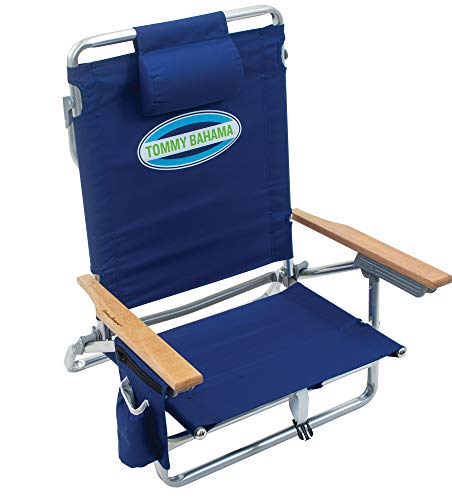
The Tommy Bahama Backpack Beach Chair is a familiar name at beach entrances and in warehouse club aisles. Its main selling point is the backpack straps, which free your hands for the cooler, towels and kids on the way down to the water.
It suits readers who walk some distance from the car and want a chair that carries like a bag. Many buyers like that it reclines in several positions, and that it often comes with extras such as a storage pouch or a cup holder. Check the current listing for which of those features apply to your version, since makers vary them.
The trade-off is that a backpack-style chair is often built around portability rather than a very high seat. It may sit higher than a bare-bones low chair, but you should compare the seat height against the Hi-Boy before assuming it is a tall option. Strap padding, towel bars and fabric type also differ between versions.
Skip it if your first priority is the highest seat possible, or if you prefer the simplicity of a plain fold-and-go frame. Read the listing carefully for dimensions and what is in the box.

Kelsyus Original Canopy Chair
The Kelsyus Original Canopy Chair attaches a shade canopy to a folding seat. For long afternoons on an exposed beach, that built-in cover can matter as much as the seat itself, because it cuts down on how often you have to move an umbrella.
It fits readers who want relief from direct sun, who sit in one spot for hours or who watch a field or pool without any shade nearby. A chair with its own roof also saves you from carrying a separate umbrella, which is a relief when your hands are full.
The trade-offs are about wind and bulk. A canopy catches a breeze, so you may need to angle the chair or lower the shade when gusts pick up. A canopy chair is also larger to carry than a plain one. And while it provides welcome shade, it is not described as a tall seat in particular, so compare the listed seat height with the others in this guide.
Skip it if you plan to move around the beach or if you hate carrying extra bulk. Check the listing for canopy details and folded size.
ALPS Mountaineering King Kong Chair
The ALPS Mountaineering King Kong Chair is a large camp-style folding chair, and it appears here because buyers who want a roomier, taller sitting position sometimes look beyond beach-only brands. It is built on the camp chair idea, with a wide seat and a full back.
It will appeal to readers who want a chair for several settings: the beach, a campsite, a tailgate or a sideline. Its size makes it comfortable to settle into, and a camp-style design often includes armrests and a cup holder, though you should confirm that on the listing.
The compromise is that it is not a dedicated beach product. Camp chairs have legs that can sink in soft sand, and the wide frame is bulkier to carry on a long walk. It also offers no canopy or backpack straps unless the listing says so. Think of it as a generous, general-purpose chair that happens to raise you up more than a low beach seat.
Skip it if you want ultra-light packing or sand-specific features. Read the listing for seat height, folded size and what comes in the bag.

Best for Hot Sand
The Rio Brands Hi-Boy gets the nod here. Raising the seat off the surface is exactly what it is for, and the folding frame keeps setup simple. Wear sandals when you step around the chair, because the ground can stay hot.
Best for Long Walks to the Water
If the car is far from the shore, the Tommy Bahama Backpack Beach Chair is easy to carry with hands free. Padded straps can make a real difference when you are also hauling towels and snacks.
Best for Bright, Open Beaches
The Kelsyus Original Canopy Chair brings its own shade, which suits open stretches with no natural cover. Angle the canopy away from the wind when it picks up.
Best for Mixed Use
For a chair that moves from the beach to a campsite or a ball game, the ALPS Mountaineering King Kong Chair is the flexible pick. Its generous proportions suit relaxed sitting wherever you set it up.
How to Choose a Tall Beach Chair
Seat height is the number that matters most, yet it is the figure many listings bury. Look for the measurement from the ground to the top of the seat, and compare it with a chair at home that feels comfortable to get in and out of. A taller chair is only an advantage if the height is real.
Next, think about stability on sand. Legs with wide feet spread weight better than narrow tips, and a broader stance reduces sinking. If the listing mentions foot pads or wide feet, that is a good sign. Remember that higher chairs sit on a higher center, so they feel different from low ones on soft ground.
Consider how you will carry it. Backpack straps, shoulder bags and carry handles each suit different walks. A tall chair takes up more room when folded, so check dimensions against your trunk and your arm length.
Check the fabric and frame descriptions as well. Saltwater and sun are hard on gear, so look for materials the maker lists as suited to outdoor use, and plan to rinse the chair after trips. Features such as cup holders, pockets, headrests and arm padding add convenience but also add moving parts.
It also helps to picture the whole beach day. Think about whether you will sit for a quick hour or settle in until sunset, how many items you must carry besides the chair, and whether other people will share it. A family that arrives with umbrellas, coolers and toys will weigh packing size differently from a solo reader with a single bag. Matching the chair to that routine usually settles the decision faster than comparing every small feature.
Avoid the common mistakes: ordering on looks alone, ignoring folded size, forgetting that taller seats may need a little more space behind them, and skipping the maker’s guidance on proper use. If you share a chair among several people, keep the adjustments simple.
Setup, Safety and Use Notes
Open the chair on firm, level sand and push the legs down evenly so it does not lean. Make sure all locks and joints are engaged before sitting, and sit down in the way the maker describes. Do not stand on the chair, do not rock it on two legs and keep it clear of surf and strong wind. A canopy chair should be lowered or turned when gusts pick up.
Check any beach rules for umbrellas, canopies and chairs, since some areas restrict them. If any part looks bent, cracked or frayed, stop using it and contact the seller or manufacturer.
Care and Troubleshooting
Rinse the frame and fabric with fresh water after each beach day, then dry the chair in the shade before folding it. Salt and sand collect in joints, and a brief rinse keeps them moving freely.
| Issue | What to try |
|---|---|
| Gritty hinges | Rinse with fresh water and let dry |
| Chair sinks | Press legs into firmer sand or use wider feet if offered |
| Faded fabric | Store out of direct sun between trips |
| Strap wear | Inspect after each season and follow the maker’s notes |
Comparing Tall Beach Chair Listings
A tall beach chair promises a higher seat, but the number on the listing can mean different things. Some sellers quote seat height, others quote overall height with the backrest included, and a few mix the two. Before you compare anything else, work out which measurement each listing gives, then line them up on the same basis.
| Detail | Why it matters |
|---|---|
| Seat height | How far you sit above the sand |
| Overall height | Includes backrest or canopy |
| Folded size | Trunk fit and carrying comfort |
| Carry method | Straps, bag or backpack harness |
| Extras | Cup holder, pocket, canopy |
Photos with a person seated give a real sense of scale. Use them to judge leg room, since a higher seat changes how your knees and feet meet the ground. Follow the maker’s stated limits for every chair you consider.
It helps to picture the whole day at the beach, including the walk from the car. A tall chair that carries well and sets up quickly often gets more use than one that is only comfortable once you are seated. Think about stairs, boardwalks and parking distances when you read each listing.
Materials, Frames and Construction
Raising the seat puts more leverage on the frame, so construction details are worth studying. Tall chairs often use aluminum for the structure because it keeps carrying weight down, while hardware and fabric choices decide how pleasant the chair is in daily use.
Frame and joints
Look for descriptions of how the legs connect and how the chair locks open. Simple, positive locks are easier to manage with sandy hands. Plastic parts are common at the feet and joints, and well designed ones can resist the sun.
Fabric and padding
Breathable, quick drying fabric suits warm days and wet swimsuits. Padded arms add comfort but can hold moisture, so check what the listing says about drying.
Canopies and extras
A built in canopy offers shade without extra gear, but it adds bulk and catches wind. Treat any shade feature as a convenience rather than a replacement for sun protection measures recommended by professionals.
Seat height also changes how you share space with others. A group of low chairs and one tall chair can look uneven, and the person in the tall seat may feel left out of the conversation. If you buy several, matching heights tends to keep the group feeling connected.
Fit, Height and Where You Will Use It
A higher seat can be easier to get out of, and it keeps you a bit farther from hot sand. It also moves your center of gravity upward, so level ground matters more. Open the chair on a firm, flat patch and press each leg into the sand before sitting.
Consider who will use the chair. Someone who likes a low, laid back seat may find a tall model less natural, while a person who dislikes lowering themselves to the ground may love it. If several people will share, check adjustability and seat width.
- Hot sand: extra height keeps you further from the surface.
- Long walks: a backpack harness frees your hands.
- Bright, open beaches: a canopy model adds shade.
- Mixed use: a simple frame moves easily to a park or a picnic.
Wind is a real factor with any tall design. Face the chair sensibly, avoid leaving it open and unattended, and fold it when you walk away.
Different sands behave differently. Dry, fine sand shifts underfoot, while damp sand is firmer. Pressing the feet down a little before you sit and checking that the frame is level are habits worth building with any raised seat, and they apply to every model in this guide.
Common Mistakes with Tall Beach Chairs
A frequent error is buying height without checking folded size. A chair that stands tall in use may also fold long, and that can be a problem in small cars or on public transit. Compare the folded dimensions with the space you actually have.
Another is ignoring carry comfort. A backpack style chair is convenient, but check how the straps sit and whether the bag closes properly. If you plan to walk some distance, test the carrying setup at home first.
Some shoppers forget upkeep. Salt left on metal parts can cause trouble, so rinse with fresh water and dry the chair fully before storing it. Wipe the locks and any moving parts, and keep the chair out of damp sheds.
Finally, do not assume every tall chair suits every sand type. Feet that work on firm sand may sink in a softer patch. Read comments from other buyers about stability, and follow the maker’s guidance on setup and use.
Think about the end of the day as well. Shake out the sand, rinse the frame with fresh water if the maker allows it, and let everything dry fully before folding. A chair that is looked after in this way stays easier to open and close, and it keeps its good looks for longer.
Final Recommendation
For an easy to recommend tall option, the Rio Brands Hi-Boy Beach Chair brings the higher seat that gives this guide its theme, and it suits hot days on the sand. For long walks to the water, the Tommy Bahama Backpack Beach Chair is a handy second pick thanks to its carry friendly design.
Check folded dimensions, confirm the maker’s guidance and look at the current listing before you order.
Judging tall beach chairs More Carefully: What Actually Matters Day to Day
A list of tall beach chairs can look deceptively simple. Every option promises comfort, every photo is taken in good light, and the differences that decide whether you keep a chair for years or replace it within a season are rarely the ones shown largest on the page. The most useful way to judge the picks in this guide is to work through your own routine first: where the chair will live, who will use it most often, how long a typical session lasts, and what happens to it between uses. A choice that suits a quiet household of two may frustrate a busy family, and the reverse is just as true. The picks covered earlier in this guide – Rio Brands Hi-Boy Beach Chair, Tommy Bahama Backpack Beach Chair, Kelsyus Original Canopy Chair, ALPS Mountaineering King Kong Chair and the others in the comparison table – are the only models this extra guidance refers to, so use it alongside the individual reviews above rather than instead of them.
Start with fit, because fit is the one thing you cannot adjust later with accessories or good intentions. For tall beach chairs, fit means the honest match between the dimensions given on the listing and the space and the people involved. Measure the space in its real state, with neighbouring furniture, doors, radiators and walkways exactly as they are, rather than measuring an empty room and imagining the rest. Then compare those measurements with the listed size of each pick, allowing a little breathing room on every side. A chair that only just fits on paper usually feels cramped in practice, while one with a small margin tends to be the one people describe as easy to live with months later.
Comfort is the second test, and it helps to think of comfort as something that changes over the length of a session rather than something you feel in the first minute. Many tall beach chairs feel fine at first and only reveal their weaknesses after an hour, when pressure builds in one spot, heat gathers, or a seam starts to make itself known. When you read the individual reviews above, pay attention to the notes about support over time, about how the surface behaves once it has warmed up or settled, and about who each pick suits best. Those details matter more than a dramatic first impression, because most owners judge their purchase on ordinary evenings, not on the day it arrives.
Materials deserve a slower look than they usually get. The listing for each pick in this guide names its main materials, and those names carry practical consequences: how the surface feels against skin or clothing, how it responds to spills, sunlight, pet hair or grit, how much noise it makes in use, and how it ages. Rather than chasing a single fashionable material, match the material to the hardest condition it will actually face in your home. A chair used daily in a busy room needs a surface that forgives; one used occasionally in a calm room can prioritise feel over toughness. The reviews above flag the honest limitation of each pick, and those limitations are usually material stories in disguise.
Finally, judge the whole ownership picture rather than the object alone. How does it arrive, how much assembly or preparation does it need, where will it be stored when it is not in use, and what does routine cleaning involve? Owners rarely abandon a chair because of one dramatic fault; they drift away from it because small frictions add up – it is awkward to move, slow to clean, or always in the way. The picks in this guide were chosen to keep those frictions low, but they differ in where the remaining friction sits, and the right choice is the one whose friction lands where you mind it least.
Using tall beach chairs in Real Life: Scenarios Worth Picturing Before You Buy
Picture the most ordinary use first, because ordinary use is what you are really buying for. With tall beach chairs in place, an average day might mean a short session in the morning, a longer one in the evening, and several brief ones in between, each with slightly different needs. In the morning people tend to want straightforward support and an easy start; in the evening they settle in for longer and notice comfort, warmth and small annoyances far more. Running through that daily rhythm in your head, with a specific pick in mind, quickly shows whether its strengths line up with the hours you will actually spend on it or whether you are buying for a version of your routine that rarely happens.
Now picture the social version. Guests change everything: they use a chair differently from its owner, they do not know its quirks, and they will not treat it as carefully as you do. If your home regularly hosts friends, family, children or colleagues, favour the pick whose reviews emphasise sturdiness, simple adjustment and forgiving surfaces, even if another pick feels slightly more refined for solo use. It also helps to think about where a second person sits, sleeps or walks, and whether the arrangement still works when the room is at its busiest rather than at its tidiest. Many disappointing purchases are simply solo choices that were asked to do social work.
Consider the edge cases too, because they are the moments owners remember. A hot week, a spilled drink, a visiting pet, a child with muddy shoes, a grandparent who needs extra help getting comfortable, a week when someone is unwell and spends far longer than usual in one spot – each of these tests a different quality. When you compare the picks above, ask which one handles your most likely edge case with the least fuss. You cannot optimise for every possibility, and you should not try, but naming the one or two hard moments your household genuinely faces turns a vague sense of quality into a concrete, confident decision.
Season and setting matter more than most listings admit. A room that is bright and warm in summer may be cool and draughty in winter; a space used barefoot in July is used in socks and slippers in January. Think about how tall beach chairs will feel across that whole cycle: whether the surface runs warm or cool, whether colours will show summer dust or winter mud more, and whether the pick you favour still makes sense when the light changes and the room is used after dark. The strongest picks in this guide are the ones whose reviews suggest steady performance across those shifts rather than brilliance in a single set of conditions.
Setup, First Use and Getting Comfortable
When your choice arrives, resist the urge to judge it within the first few minutes. Unpack it in the room where it will live, keep the packaging until you are sure it is staying, and follow the maker’s guidance on the listing for any preparation, assembly or airing it needs. Many tall beach chairs change noticeably during their first days of use as materials relax, folds settle and surfaces reach the state the reviews describe. Give the chair that settling period in its real position, under real use, before deciding whether something is wrong. A surprising share of returns are simply first impressions that would have resolved themselves within the week.
Positioning is the cheapest comfort upgrade there is. Small changes – a slight shift in angle, a little more or less distance from a wall, table, bed or walkway, a change in what sits beside or beneath it – can transform how a chair feels without spending anything. Work in small steps and live with each change for a full session before adjusting again, because comfort judgements made in thirty seconds are unreliable. If more than one person uses it, agree on a compromise position and mark it in some simple way, so the chair does not drift a little further from ideal every time the room is cleaned or rearranged.
Build a tiny routine around daily use. A quick check as you settle in – is everything aligned, is anything trapped, worn or twisted, does anything feel different from yesterday – catches small problems while they are still free to fix. Pair the chair with the accessories you already own before buying anything new; households often discover that a cushion, throw, pad, lamp or side table they already have completes the setup perfectly well. Add one thing at a time, use it for several days, and keep only what clearly earns its place. Setups assembled slowly, from experience, almost always work better than setups bought all at once from a photograph.
If the chair will be shared, agree on the house rules early and keep them kind and simple: how it is adjusted, what stays off its surface, where drinks and remotes and books are allowed to live, and how it is left for the next person. Most wear that owners blame on quality is actually the accumulated result of small, uncoordinated habits. A short conversation at the start prevents the slow resentment of discovering, months later, that everyone has been using the same chair in a different way and each person assumed their way was the obvious one.
Cleaning, Care and Storage That Keep It at Its Best
Regular light care beats occasional heroic cleaning, for tall beach chairs as much as for anything in the home. Dust, crumbs, hair and grit do their damage slowly and quietly, working into seams, fibres and moving parts long before they become visible on the surface. A brief, frequent once-over – shaking out, brushing down, wiping or vacuuming as the material requires – keeps that build-up from ever becoming a project. Always follow the care guidance on the listing for your specific pick, because materials that look similar can want quite different treatment, and the maker’s instructions override any general advice, including the advice in this section.
Deal with spills and marks promptly, but gently. Blot rather than scrub, work from the outside of a mark towards its centre so it does not spread, and test any cleaning product on a hidden area first, even a product you have used safely on something else. Harsh treatment often does more harm than the original spill: it can lift colour, roughen a surface, or leave a clean patch that stands out more than the mark did. Let the area dry fully before using the chair again, since damp materials pick up dirt faster and can develop odours that are far harder to remove than the first stain was.
Storage is where many good purchases quietly go wrong. When a chair is put away – for a season, for a move, or simply between uses – clean it first, dry it completely, and store it somewhere dry, shaded and off the floor where air can move around it. Avoid crushing it under heavy items or sealing it away while it still holds any moisture, and keep it away from direct heat. If storage space is tight, it is better to keep the chair in gentle use somewhere in the home than folded, stacked or bagged in a damp corner, where a single season can undo years of careful ownership.
Once in a while, give the whole setup a proper review. Check seams, edges, fastenings, feet, fillings and moving parts for the early signs of wear: looseness, thinning, sagging, squeaks or small tears. Caught early, most of these are minor – something to tighten, rotate, redistribute or mend. Rotation deserves a special mention, because using a chair in exactly the same way every day wears exactly the same spots; turning it, swapping ends, alternating sides or varying your position spreads that wear across the whole piece and can noticeably extend the period during which it feels as good as it did when it arrived.
Comparing the Picks in This Guide, Head to Head in Practice
Readers often ask how the picks in this guide really differ once the marketing language is stripped away, so it helps to compare them the way an owner experiences them. Take Rio Brands Hi-Boy Beach Chair as a starting point: the review above sets out who it suits and where its honest limitation lies, and that pairing of strength and limitation is the fairest summary of any pick here. Set it beside Tommy Bahama Backpack Beach Chair and the contrast is usually about priorities rather than quality – one leans towards one kind of user or room, the other towards a different one, and the better choice is simply the one whose priorities match your household.
Kelsyus Original Canopy Chair rewards a different kind of comparison again. Where Rio Brands Hi-Boy Beach Chair and Tommy Bahama Backpack Beach Chair may compete for the same buyer, Kelsyus Original Canopy Chair often makes most sense for the reader whose circumstances are slightly unusual – a tighter space, a heavier schedule of use, a stronger preference about feel or appearance. That is a pattern worth remembering across this whole guide: the pick that looks like a compromise on a comparison table is frequently the one that fits a real, specific home best, because real homes are specific. Read its limitation in the review above and ask honestly whether that limitation would ever actually arise in your routine; if it would not, you may be looking at your best value.
The remaining picks – ALPS Mountaineering King Kong Chair, Frame and joints, Fabric and padding – are best approached by use case rather than by ranking. The guide flags the situations each one is made for, including best for hot sand; best for long walks to the water; best for bright, open beaches, and those flags are more reliable than any overall score. Shortlist by situation first: write down the two or three ways your household will genuinely use tall beach chairs, match each way to the pick described for it, and only then compare the survivors on the practical details such as size, materials and care. This order of operations prevents the common error of falling for a pick that excels at something you will rarely ask it to do.
One more comparison habit is worth adopting: compare total effort, not just the object. Two picks can look evenly matched until you add up what each asks of you across a year – the cleaning it needs, the space it occupies when idle, the care its materials demand, the accessories it requires to feel complete. The pick that asks slightly less, every week, is usually the one owners are still pleased with long after the novelty of the other has faded. The comparison table near the top of this guide is the quickest place to run that check, because it puts the key facts of every pick side by side without the surrounding persuasion of the full reviews.
Troubleshooting: When Something Feels Off
If a new chair feels less comfortable than expected, work through the simple causes before blaming the product. Check its position and alignment first, then what sits on, under or beside it, then whether it has had time to settle into shape. Check, too, whether your expectation came from a photograph rather than from the listed facts: many disappointments trace back to a size, firmness or colour that was imagined rather than read. The listing for each pick in this guide states its key facts plainly, and re-reading them with the chair in front of you often reveals that it is behaving exactly as described – in a room or routine slightly different from the one it was described for.
Noise, movement and instability are worth investigating early, because they tend to have mechanical causes with simple remedies: something uneven beneath, a fastening not fully secured, a floor or surface the chair was not settling onto properly. Work through the base and contact points methodically, on a calm occasion rather than mid-use, and consult the maker’s guidance before improvising fixes that might damage finishes or fabrics. If a problem persists despite sensible checks, contact the seller while the purchase is recent and your options are widest, and describe the issue plainly and specifically – vague complaints get vague answers, while a clear description usually gets a useful one.
Appearance changes deserve a calm response as well. Fading tends to follow sunlight, flattening tends to follow one favourite spot, and surface marks tend to follow the busiest route through a room. Each has a partial remedy – repositioning, rotating, shading, cleaning – and none of them means the chair has failed. Owners who build those small corrections into their routine keep tall beach chairs looking and feeling right for far longer than owners who wait for a problem to become impossible to ignore. Think of care not as rescuing a purchase but as the ordinary rent you pay for comfort, week by week, in small and painless instalments.
Frequently Asked Questions
How tall is a tall beach chair?
There is no fixed standard. Look for the listed seat height and compare it with your own chairs at home.
Do taller chairs sink more in sand?
They can feel less settled, especially on soft ground. Wide feet and firm sand help.
Is a canopy chair better than an umbrella?
It depends. A canopy is attached and convenient, while an umbrella can cover more than one person.
Can I use these chairs away from the beach?
Many folding chairs work at campsites, pools and ball games, but check the maker’s notes for each model.
What should I look for in a backpack chair?
Padded straps, a manageable folded size and clear details on reclining positions are all useful.
How do I keep salt off the frame?
Rinse it with fresh water after each trip and dry it fully before storing.
How long should I give a new chair before deciding whether it suits me?
Give it at least several full sessions in its real position, spread across different times of day, before judging. Materials settle, bodies adapt, and first impressions – good and bad – are unreliable. With tall beach chairs, the honest test is an ordinary week of use: if it still feels right on a tired weekday evening, it suits you. If a specific problem persists after that settling period, re-read the listing details for your pick, because the cause is often a size or positioning issue that can still be corrected.
Can one choice of tall beach chairs suit everyone in the household?
Rarely perfectly, and that is normal. People differ in size, posture, warmth and taste, so a shared chair is always a negotiated compromise. Aim for the pick whose strengths serve the person who uses it most, then use small additions – a cushion, a throw, a pad or a change of position – to fine-tune it for everyone else. If two people will use it heavily and want opposite things, two different picks in the same room usually make both people happier than one expensive compromise that fully satisfies neither.
What is the most common reason people replace tall beach chairs sooner than they expected?
Usually it is a fit problem that was visible on the listing from the start: a size that only just worked, a material unsuited to the room it ended up in, or a style chosen for a photograph rather than for daily life. Wear itself is seldom the first cause. That is why this guide keeps returning to measuring honestly, reading the stated limitation of each pick, and picturing your real routine. A chair chosen that way tends to be kept, because nothing about it comes as a surprise.
How do I keep tall beach chairs feeling good between deeper cleans?
Little and often is the whole secret. A quick shake, brush, wipe or vacuum on a regular rhythm stops dust and grit from settling into the places that are hard to reach later, and a prompt blot deals with most marks before they set. Let everything dry fully after any damp cleaning, rotate or turn the chair if its design allows it, and keep it out of harsh direct sun when you can. Always follow the care guidance on the listing for your specific pick, since materials differ.
Is it worth buying a second, different style as well?
It can be, when the two styles genuinely serve different jobs – for example a primary chair for long sessions and a lighter or simpler one for guests, another room or a different season. It is less worthwhile when the second purchase is really an attempt to fix a first choice that never fitted properly; in that case, solving the fit problem comes first. Households that end up happiest usually own fewer, better-matched pieces rather than a cupboard of near misses.
What should I check first if my chair starts to feel different from when it arrived?
Check position, then condition, then routine. Has it shifted, twisted or been moved during cleaning? Has one area been used far more than the rest, or has something underneath it changed? Has the room changed around it – new flooring, new furniture, a different season? Work through those questions in order, correct the simplest cause you find, and give the change a few sessions to prove itself before concluding that the chair itself has worn out.
How should I choose between two picks in this guide that both seem right?
Compare them on the details you will live with weekly rather than the features you will notice once: listed size against your measured space, materials against your cleaning habits, and each pick’s stated limitation against your routine. Then imagine the harder day – guests arriving, a spill, a heatwave, a long session when you are tired – and ask which pick handles that day better. If they are still level, choose the one that asks less of you in storage, care and setup, because that small weekly difference compounds.
Bottom Line
If a higher seat is your main goal, the Rio Brands Hi-Boy is the most direct choice. The Tommy Bahama Backpack Beach Chair suits long walks, the Kelsyus Original Canopy Chair adds shade and the ALPS Mountaineering King Kong Chair works across several outdoor settings. Whichever you pick, confirm seat height and folded size on the live listing, and set it up on firm sand following the maker’s instructions.