Disclosure: As an Amazon Associate, airfryerkitchensupply.com earns from qualifying purchases. Links to Amazon on this page are affiliate links; they cost you nothing extra. Listing details such as price and availability change often, so check the current Amazon listing before you buy.
A good camp kitchen begins with somewhere to put things down and somewhere to sit. Anyone who has balanced a plate on a cooler lid knows how quickly an otherwise lovely evening becomes a juggling act. A folding table with a pair of chairs fixes that, and it packs away when the trip is over.
This guide looks at the best folding camp table and chairs for adults, built around real products you can pair into a set. Some are compact and made for backpackers and kayak campers. Others are bigger and aimed at car campers who want to spread out with a stove, a lantern and a family meal.
You will find a comparison table, notes on five products, practical advice on matching tables to chairs, and a section on care. We keep the language plain and the claims modest, because we are working from published listings rather than field use.


Quick Comparison
| Product | Best for | Main point | Link |
|---|---|---|---|
| Helinox Table One Hard Top | Compact, tidy camp setups | Small folding table from a compact-gear specialist | Check on Amazon |
| Helinox Chair One | Pairing with the table above | Packable chair with a long following | Check on Amazon |
| Coleman Pack-Away 4-in-1 Adjustable Height Table | Family car camping | Table with adjustable height settings | Check on Amazon |
| Coleman Portable Camping Quad Chair | Easy, familiar seating | Classic four-leg camp chair from a big name | Check on Amazon |
| ALPS Mountaineering Dining Table | Group meals and cooking | Larger roll-style table | Check on Amazon |
In this guide
How These Options Were Chosen
We built this list from manufacturer pages, published specifications and the way each product is described for outdoor use. We have not used these items ourselves, and we avoid making claims about how they perform in the field.
We looked for recognizable outdoor brands, a spread of table sizes, and chairs that pair naturally with them. Because a set is really two or three items bought together, we explain how the tables and chairs fit, rather than treating each in isolation. Always confirm dimensions and what is included on the current listing, since makers update their lines.
The 5 Best Folding Camp Tables and Chairs for Adults
Helinox Table One Hard Top
Helinox is a name that backpackers recognize, thanks to its focus on compact folding furniture. The Table One Hard Top is a small table with a rigid top, aimed at campers who want a clean surface for a stove, a mug or a meal for two.
It suits solo trips, couples, and anyone camping from a small vehicle or a canoe, where every item must earn its space. A neat top means pots and plates sit level, which many people appreciate compared with soft roll-up tables.
The trade-off is surface area. A small table does not host a big family spread, and you will probably want a second surface for food prep. Check the listing for the packed and open sizes before you buy.

Helinox Chair One
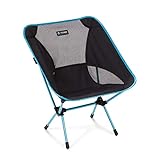
The Chair One is the best-known chair in the Helinox range, and it makes sense next to the Table One. The two share a similar aim: fold small, set up quickly and look neat around camp.
It is a good match for people who walk to their site or want chairs that disappear into a bag. If you camp with a partner, two of these next to a compact table make a tidy dining corner. The seat is low and relaxed in feel, which many campers like around a fire.
The downsides are straightforward. A compact chair costs more attention to packing than a plain folding seat, and a low profile may not suit people who prefer to sit tall at a table. Look at the listing for seat height and the dimensions when packed.
Coleman Pack-Away 4-in-1 Adjustable Height Table
Coleman has been making camping gear for generations, and this table is a good example of its practical approach. The headline feature is adjustable height, which lets one table serve as a low side table, a dining surface or a prep counter.
It suits family trips by car, when you have room for a few items and want one table to do several jobs. If you cook outdoors, the adjustable range is handy because a stove often sits better on a different level than a plate.
The trade-off is bulk. A table with several settings is larger to pack than a minimal one, and you may need a few attempts to learn the adjustment. Check the listing for open dimensions and any extras that come with it.
Coleman Portable Camping Quad Chair
The quad chair is the classic camp seat, and Coleman’s version is a familiar sight at campgrounds. It uses a four-leg frame with a fabric seat and back, and many models include a cup holder and a carry bag, though you should confirm that on the listing.
This chair suits campers who value familiarity over novelty. It is easy to understand, it opens quickly, and it pairs well with a standard folding table. Buy a pair, or a set of four, and your campsite dining is sorted.
The weak point, as with any quad chair, is size. It is larger to pack than a minimalist chair, so it favors car camping over carrying it any distance. Check the listing for the packed length and what is included.
ALPS Mountaineering Dining Table
ALPS Mountaineering is a well-regarded name in outdoor gear, and this table is aimed at groups who cook and eat together. Its larger, roll-style top gives you a decent working area for plates, pots and utensils.
It suits larger parties, long weekends and people who like to lay out an entire meal rather than eat from laps. It pairs naturally with a few quad chairs, giving you a proper dining space away from home.
Because it is larger, it is less suited to small vehicles or walk-in sites. A roll-style top can also feel different from a rigid one, so think about whether you prefer a hard or a soft surface. Check the listing for the folded size.
Pairing Tables and Chairs for Adults
Adults tend to notice mismatched heights faster than children do. If you sit with your elbows level with the table edge, meals feel natural; if the table is far above your seat you end up reaching up for every bite. Before you buy, write down the seat height from the chair listing and the top height from the table listing, then compare.
Layout matters too. At a two-person site, a small table can sit between the chairs near a fire ring. For four or more, many people line the table along one side and sit on the other three, which leaves room to reach the stove. Think about where the cooler, the lantern and the stove will go, and choose a table with enough surface to hold them without crowding the plates.
Finally, remember that a set is only useful if it gets used. Pick a combination that you can open in a few minutes without tools, because gear that is a hassle tends to stay in the trunk.
Best for Solo Trips
Pair the Helinox Table One Hard Top with the Chair One. Together they form the most compact set here, and both are built for travelers who count every item in their pack.
Best for Couples
Two Helinox Chair One seats around the Table One make a neat corner for two. If you drive to your site, the Coleman Quad Chair is a roomier alternative with a familiar feel.
Best for Family Camping
The Coleman 4-in-1 table gives you flexible heights for different tasks, and a group of Coleman quad chairs completes the picture. This is an easy set to understand, which suits mixed ages.
Best for Group Meals
When friends join you, the ALPS Mountaineering Dining Table gives you real surface area. Add extra folding seats and you have a communal dining space.
How to Choose
Begin by deciding how you travel. Walk-in campers and paddlers need packable gear, so small tables and compact chairs like the Helinox pair matter. Car campers can afford larger items, which opens the door to bigger tables and classic quad chairs.
Next, match table height to seat height. A low chair beside a high table is awkward at mealtime, and a very low table suits low chairs best. The Coleman adjustable table is useful because you can try different heights. When looking at a listing, check seat height and table height in the specifications.
Think about surface and material. A rigid top gives a firm plate rest, while a roll-style top packs smaller and flatter. Consider what you cook and eat. A stove may need a heat-tolerant surface, so read the maker’s notes on what the table top can handle.
Count your group. A pair of chairs and a small table suit two adults, but a family needs more seats. Buying matching chairs also helps with packing, since identical items stack and carry together.
Finally, consider how you store gear at home. Large quad chairs take space in a garage, while compact ones fit in a closet. Common mistakes include buying for a single big trip you rarely take, ignoring packed dimensions, and forgetting to check what is in the box. Read the listing carefully before you commit.
What to Pack With a Table and Chair Set
A few small extras make the set more useful. A tablecloth with clips keeps light items from sliding in a breeze, and a washable mat protects the top from hot pans if the maker allows pots on it. A small bin or bag for rubbish keeps the table clear during meals, and a lantern hung nearby lights the surface after dark. None of these are essential, but together they turn a plain table into a comfortable outdoor kitchen. Keep everything in one tote so setup is quick when you reach camp, and so packing up at the end of the trip is just as simple.
Setup and Local Rules
Open each item on level ground and follow the maker’s instructions for locking legs or extending frames. Avoid forcing a joint that does not move easily.
Campgrounds and parks set their own rules about fires, stoves and what can be placed near them. We do not cite any particular rule, so check the posted regulations at your site, and keep a table clear of open flames according to the maker’s guidance.
Care and Troubleshooting
Wipe tables and chairs with a damp cloth after use, let them dry fully before packing, and keep them out of damp storage so fabric does not smell stale.
| Issue | What to try |
|---|---|
| Joint feels stiff | Brush off grit and check for debris around moving parts |
| Fabric looks grimy | Wipe with mild soap and water, then dry in shade |
| Table wobbles on rough ground | Move it to a flatter spot or adjust the legs if your model allows |
A final tip concerns timing. Set up the table and chairs before you unpack the rest of the car, so there is somewhere to put things as they come out. When you pack up, wipe the surfaces first and let them air while you take down the tent. Matching gear into one bag or bin also means you will not leave a chair behind at the site, which is surprisingly common after a long weekend.
How to Compare Camp Furniture Listings
Camp tables and chairs are judged by a different set of numbers than home furniture. Packed size and carry weight often matter more than raw dimensions, because you are the one lugging them from the car to the site. Open each listing and write down three figures: the folded size, the unfolded surface or seat height, and the stated carry weight.
Seat height and table height also need to work together. A chair that sits low paired with a tall table leaves you reaching up to your plate, while the reverse has you slouching. Compare those heights across brands before assuming two products will pair naturally.
| Detail | Why it matters |
|---|---|
| Folded dimensions | Decides whether it fits in a trunk or on a pack |
| Table surface type | Rigid tops stay flat; roll-up tops pack smaller |
| Seat height | Should line up comfortably with the table edge |
| Carry bag included | Makes transport and storage simpler |
| Setup steps | Quick unfolding saves effort at camp |
Looking at the customer photos can also help. Real campsite pictures show how a table behaves on uneven ground, which marketing shots rarely reveal.
Materials and Construction
Most portable furniture combines a metal frame with a fabric or composite surface. Aluminum frames keep weight down and resist rust, while steel frames are usually heavier and tend to feel sturdier. Frame joints deserve a close look, since folding hardware is where repeated use shows first.
Tabletops
Rigid tops, often made from composite or aluminum panels, give a flat and stable surface for cooking gear and cups. Roll-up slat tops compress into a slim tube, which is great for packing but can feel a little bouncy. Think about what will sit on the table before choosing.
Chair fabrics
Polyester and similar woven fabrics are common because they dry quickly and clean easily. Mesh sections help air move, while thicker panels feel more cushioned. Look at the stitching around stress points such as the seat corners and armrests.
A nice bonus is a design that includes feet or end caps meant to spread contact with soft ground. If you camp on sand or grass often, that detail can make a noticeable difference in how steady the furniture feels.
Weight distribution is another quiet factor. Tables with legs placed near the corners tend to feel steadier than those with a central pedestal, though each design has its own strengths. Adjustable legs are useful on sloping ground because you can level the surface. Check how the adjustment works, and make sure it is simple enough to manage with cold hands at an early morning camp.
Common Buying Mistakes
People new to camp furniture often buy on looks and then discover practical gaps. One classic error is choosing a table that is too small for the group. A tiny solo table will not hold a stove, a few plates and a drink without crowding, so match the surface to how many people eat from it.
- Pairing chairs and a table with mismatched heights
- Ignoring the packed size and then running out of room in the car
- Buying ultralight gear for casual car camping when a roomier option would be more comfortable
- Overlooking ground conditions, since narrow feet sink into soft soil
- Skipping a check of the folded bag shape, which affects how easily it stores
Another mistake is expecting every piece to serve every trip. A compact, light set suits backpackers and day hikes, while a larger, sturdier setup is more relaxed for a long weekend at a drive-in site. It is perfectly reasonable to own both.
Finally, remember to follow the maker instructions for loading and use, rather than assuming a piece can handle anything.
Consider your vehicle and your route too. A hatchback with a full load of gear leaves little room for bulky furniture, while a hiking trip rules out anything heavy. Be realistic about how far you will carry each piece and how often you will actually set it up, then buy for that real pattern of use instead of an imagined ideal.
Who Should Skip Which Type
Ultralight, packable chairs are brilliant for hikers and anyone who values a small footprint, but they may feel stiff or low for people who want to sit for hours. If comfort is your priority, a wider chair with a supportive back and armrests is more sensible, even if it weighs more.
Roll-up tables are not the best fit for those who want a rock-steady surface for chopping or cooking. Choose a rigid top in that case. On the other hand, a rigid top may be overkill for a solo traveler who simply needs a spot for a mug and a book.
Quick guide
- Solo trips: a compact table and one packable chair
- Couples: a mid-sized table with two matching chairs
- Families: a larger adjustable table and extra chairs that stack in the car
- Group meals: more than one table, so the cooking and dining areas stay apart
Check campground rules and follow local guidance on where furniture may be set up.
Final Recommendation
For a lightweight pairing that suits solo trips and tidy packing, Helinox Table One Hard Top and Helinox Chair One make a natural duo. If you would rather build a roomier setup for the family, Coleman Pack-Away 4-in-1 Adjustable Height Table offers flexible sizing. Compare the folded size, carry details and setup notes on each listing before you order.
A Deeper Look at the Criteria Behind These Picks
A chair is a promise about how you will spend time: reading, eating, working, watching a sunset or supervising children in the water. Judging one well means starting with the sitting itself rather than the silhouette. Think about how long a typical session lasts, because a chair that delights for twenty minutes can punish at two hours. Think about who will use it most, including the tallest and broadest regular user, and about the ground or floor it will stand on, since stability and comfort both change with the surface. The reviews above describe each pick’s design and trade-offs; matching those notes to your real sessions, rather than to an imagined best-case afternoon, is how you end up with a chair that gets used daily instead of admired occasionally.
Support, posture and the long-sit test
Comfort over time comes from support in the right places rather than from softness alone. Notice how a chair treats your lower back when you settle rather than perch, whether the seat depth lets your feet rest naturally, and whether armrests, where fitted, sit at a height that lets your shoulders drop. If you can, judge a design by its geometry as described in the listing: seat height relative to your usual table or desk, the angle of the back, and how the maker says the weight is distributed. People often blame themselves for fidgeting in a chair that simply does not fit them. The right chair disappears underneath you; the wrong one keeps reminding you it is there, and the per-product notes above are written to help you tell the difference before you commit.
Materials, weather and the life the chair will lead
Every chair in this guide will meet water, sun, grit or spilled drinks sooner or later, in proportions set by where it lives. Read the listing’s material and care notes with your setting in mind: a chair that lives under cover ages differently from one that stays out all season, and a chair that travels needs hinges, joints and fabrics that tolerate being packed and unpacked repeatedly. Finishes and fabrics also decide the maintenance rhythm, from a quick wipe to a proper wash and dry. There is no shame in choosing the lower-maintenance option; a chair you keep clean without resentment will look better in year two than a finer chair you neglect. Match the upkeep to the effort you will honestly give it.
Putting the Chair to Work in Real Life
Picture the chair across an ordinary week. It may host a morning coffee, a working afternoon, children climbing where they should not, and a guest who stays longer than planned. It may be dragged toward the sun or the shade, folded away for a storm, or borrowed for a bigger gathering than it was bought for. A camp set lives or dies by how it travels: packed size in the car, how fast it sets up at dusk, and whether the table stays steady on grass. Comfort matters, but logistics come first on a real trip. A chair that handles the unglamorous version of your life gracefully, wobbling on nothing, drying without fuss and staying comfortable for the second hour, is worth more than a chair that only shines in its listing photograph.
Placement shapes comfort as much as construction. A seat angled toward a view or a conversation area gets used; a seat facing a wall or a walkway becomes a clothes stand. Think about sun path and shade through the day, about how far the chair is from the door it came through, and about what your feet rest on. Small things, a side surface for a drink, a cushion that lives nearby rather than in a cupboard, a clear path that does not require moving the chair to pass, decide whether a good chair becomes a habit. When two picks above look evenly matched, let the placement you actually have arbitrate between them.
Sharing the chair: guests, children and second users
Few chairs serve only one person. Guests arrive in different sizes and with different confidence about unfamiliar furniture, children treat every chair as climbing equipment and a fort component, and partners quietly adopt whichever seat is best. A chair that adjusts, reclines or simply forgives a range of bodies will serve a household better than one tuned to a single sitter. Consider also how the chair behaves when misused in the ordinary ways: leant back on, perched on an arm, dragged instead of lifted. The listings and reviews above note construction and intended use; weigh those notes against your household’s real behaviour, not its best behaviour.
Setup, Cleaning and Storage
When a chair arrives or comes out for the season, set it up on a level surface and check every joint, fastener and moving part before anyone sits down. Follow the maker’s assembly and use instructions from the listing or packaging where they differ from habit, and re-check fixings after the first few uses, because new assemblies often settle. Learn the folding or adjustment mechanism with two hands and no audience; the moment to discover how a chair collapses is not while you are sitting in it. If cushions or covers are removable, note how they attach before the first wash, so reassembly is not a puzzle.
Routine care is mostly about rhythm. Brush or shake off grit before it works into fabric and joints, wipe spills while they are fresh, and let everything dry fully before folding or storing, because trapped moisture is what turns a stored chair musty and shortens the life of fabrics and finishes. Store chairs somewhere dry, out of prolonged direct sun, and avoid stacking weight on folded frames or cushions. At the end of a season, a proper clean, a check of screws and feet, and honest storage will return the chair to you next year in the condition you hoped for. These habits sound basic, yet they are the entire difference between chairs that serve for years and chairs that are replaced in disappointment.
Troubleshooting the common complaints
Most chair complaints trace back to fit, surface or setup rather than defects. A wobble is usually an uneven surface or a foot that needs adjusting, not a failing frame. Squeaks often come from a joint that wants tightening or a gritty hinge that wants cleaning. A chair that feels less comfortable than expected is frequently sitting at the wrong height for its table, its user or its cushion arrangement, all of which you can change for free. Work through the simple causes first, in that order, before concluding the chair itself is wrong for you; a surprising share of disappointing chairs are one adjustment away from being the favourite seat in the house.
Reading Dimensions and Descriptions Like a Designer
Chair listings reward the same close reading as any other furniture. Start with the three numbers that decide fit: the seat height, which should suit both the sitter’s legs and the table or surface the chair serves; the seat depth, which decides whether shorter sitters can use the backrest without a cushion behind them; and the overall footprint, which decides whether the chair can live where you intend without blocking doors, drawers or walkways. Then read the description for what it says about the frame and the moving parts, because those are what you will still be relying on in five years. Where a listing is vague about a dimension you care about, treat the vagueness itself as information and favour the option whose maker answers the question plainly.
Weight, capacity and honest use
Every chair is designed around an intended user and an intended kind of use, and the listings in this guide state those intentions in their descriptions. Respect them in the ordinary sense: a chair built for relaxed lounging is not a step stool, a folding chair is not a ladder, and a float is not a diving platform. This sounds obvious until a holiday weekend, when chairs get borrowed for jobs they were never meant to do. Choosing the chair whose stated purpose matches your real plans, and then using it for that purpose, is the simplest longevity advice there is, and it costs nothing.
A Season of Use, From First Day to Storage
The first week with a new chair is about positioning: try it in its intended spot at different times of day, because light, shade and traffic change how a seat feels, and small rotations of angle can transform a chair from overlooked to occupied. The first month is about rhythm: the chair finds its place in the household’s habits, second users adopt or reject it, and any setup niggles, a foot that rocks, a joint that wants tightening, announce themselves while they are still trivial to fix. The middle of the season is where construction quality quietly shows, in whether cushions still feel supportive, fabrics still look even and mechanisms still move the way they did in week one.
The end of the season deserves as much care as the beginning. Clean the chair properly before it is stored or covered, let it dry completely, check every fastener and foot, and store it the way the maker suggests rather than the way that merely fits the available space. Chairs that are put away well come back well; chairs that are put away damp, dirty or strained come back as next year’s disappointment. Keep any tools or spare parts the chair arrived with together in one labelled place, because the time you will want them is precisely the time you will not want to hunt for them. With that small discipline, the chair you choose from this guide should still be the household’s favourite seat several seasons from now.
Comparing the Picks in This Guide, Side by Side
With the individual reviews read, the most useful final step is a deliberate comparison, because the picks above were chosen to differ from one another rather than to repeat the same formula. Use the comparison as a shortlisting exercise: for each option, write down the one strength from its review that matters most to you and the one trade-off you would have to accept. Most buyers find that a single option survives that exercise clearly, and the rest were attractive mainly in photographs. The notes below walk through the picks in the order they appear above and frame the question each one asks you.
Take the Helinox Table One Hard Top first. The question it asks is whether its particular balance, as set out in its review above, matches the main job you wrote down for this purchase. Re-read its stated strengths with your room, routine or sleeping habits in front of you, and be strict: a strength you will never use is not a strength. Its trade-offs deserve the same honesty, because a trade-off that touches something you do daily will grow, while one that touches something you rarely do may never matter at all.
Next, the Helinox Chair One. Compare it directly against the option you have just considered rather than against an ideal that does not exist. Where the two differ, in construction, in intended use or in the care they ask for, ask which difference your household will actually feel. Listings make small differences look large and large ones look small; the reviews above are there to restore the proportions, so use the contrast between them as your sharpest tool.
The Coleman Pack-Away 4-in-1 Adjustable Height Table rewards a different kind of attention. Look at how it is meant to be used across a whole season or a whole year rather than on its first day, because designs in this part of a shortlist often justify themselves through durability of feel: how they settle, recover or hold up once novelty has gone. If your priority is a purchase you stop thinking about, that long-view quality may matter more than any first impression.
With the Coleman Portable Camping Quad Chair, focus on fit in the broadest sense: fit with your space, your other furniture or bedding, and the people who will share it. A product can be excellent in isolation and wrong in combination, and this is the pick where the combination question is worth asking twice. Picture it in place on an ordinary evening, surrounded by the things it will actually live with, before you let its individual merits decide you.
Finally, the ALPS Mountaineering Dining Table is the option to measure your shortlist against if you are still undecided. Its review above makes its case plainly; if, having read all the others, you keep returning to it, that instinct usually reflects a real match between its character and your priorities. If instead its trade-offs are the ones you keep circling, take the hint and promote whichever alternative removes them.
One more comparison habit is worth adopting: compare the total proposition, not the headline. That means the product as described, plus whatever you will genuinely add to it, a pad, a protector, a cover, a cushion or a storage bag, plus the care routine you will actually keep up. Two options that look close on the listing can separate quickly once their real ownership costs in time and extras are counted. Conversely, an option that looks plain can win once you realise it needs nothing added and nothing special done to it. Let the reviews above supply the facts and let your own routine supply the verdict.
A Short Decision Checklist Before You Order
Before you buy, run through the checks that catch the mistakes returns are made of. Confirm the dimensions on the live listing, including the footprint when the chair is open, reclined or hung, and measure your space for that full footprint rather than the tidy one. Check the stated materials and care notes against where the chair will live and how it will travel or be stored. Think about the heaviest, tallest regular user and the longest session it must support. Decide at the same time where the chair will be kept when it is not in use, because a chair without a home becomes clutter. Finally, re-read the review above for your chosen option, including its trade-offs, and buy it for the strengths it actually has. A chair chosen that carefully tends to become the seat everyone gravitates to, which is the only review that ultimately counts.
Notes for the Longer Term
Consider the chair’s second life as well. The seats that earn their keep in a home tend to migrate: the reading chair becomes the guest chair, the camp chair becomes the extra seat at a family barbecue, the pool lounger becomes the most contested spot of every summer weekend. A design that is easy to move, simple to clean and comfortable for more than one body type collects these second jobs naturally. When you make your final choice among the picks above, the chair you can picture in three places is often a wiser buy than the chair that is perfect in exactly one.
Noise and movement are part of ownership too. A chair that creaks, scrapes or tips when a sitter shifts will be quietly avoided, whatever it cost. As you read the reviews above, note what each design says about its frame, feet and moving parts, and picture it on your actual surface: boards, tiles, grass, decking or a pool shelf all ask different things of a chair’s feet. Matching the chair to the surface is as much a part of the purchase as matching it to the sitter.
And give the new chair a fair first week. People sit oddly in unfamiliar chairs, testing them like examiners instead of relaxing like owners. Use it for the ordinary things it was bought for, at the ordinary times, and adjust its position, cushion or angle before judging. Most good chairs reveal themselves across a week of real use rather than in a single deliberate trial, and the ones in this guide were shortlisted to be judged exactly that way.
One more habit separates satisfied chair owners from frustrated ones: they keep the maker’s instructions and any assembly tools together, labelled, in one place. Chairs ask for small attentions over their lives, a tightened bolt, a checked hinge, a cover refitted after washing, and those jobs take minutes when the paperwork and tools are at hand and become weekend projects when they are not. The chair you maintain in minutes is the chair that is still in service, and still comfortable, years after a neglected one has been replaced.
And when a chair is not being used, give it a resting place that respects what it is: out of the worst weather, off damp ground, and not buried under stored clutter that bends frames and crushes cushions. A chair stored with a little care returns to service as the chair you bought; a chair stored as an afterthought returns as a chore. That difference, repeated over seasons, is most of what people mean when they say one chair lasted and another did not.
Frequently Asked Questions
Can I mix brands for a table and chairs?
Yes, as long as seat and table heights suit each other. Check both listings for height measurements.
How many chairs should I buy per table?
Match the seats to the people. A small table suits two, while a larger one can host four or more.
Is a rigid top better than a roll-up top?
A rigid top gives a firm surface, while a roll-up packs smaller. It depends on your priorities.
Do these fit in a small car?
Compact items like the Helinox pair do. Larger tables take more space, so compare packed dimensions first.
Can I use camp furniture at home?
Many people do, on patios and in yards, though maker guidance is for outdoor camp use.
How do I clean camp furniture?
A damp cloth and mild soap handle most grime. Dry fully before storing.
How do I judge whether a chair will fit my space?
Measure for the chair in its most expansive state: reclined, rocked, swung or surrounded by the people using it, not folded or posed. Tape the footprint on the floor and live with the outline for a day, checking walkways and door swings against it.
What matters most for comfort in a long sitting session?
Support that keeps its shape: a back that meets your lower back, a seat depth that lets your feet rest naturally and a sitting angle you do not have to fight. Softness impresses in the first minutes; support is what you are grateful for in the second hour.
How should I clean a chair that lives outdoors or travels?
Brush off grit before it works into joints and fabric, deal with spills while they are fresh, and let everything dry completely before folding or storing it. Follow the maker’s care notes for the specific materials, and never store a chair damp.
Why does my chair wobble on ground that looks level?
Small surface variations show up immediately under four legs or a frame. Try the chair in a slightly different position, check that every foot is fully extended or seated, and make sure the surface, deck boards, grass or pool shelf, is not the real culprit before blaming the chair.
How can I make a chair last more than a couple of seasons?
Clean it before storage, store it dry and out of prolonged sun, tighten fixings when they ask for it and keep moving parts free of grit. Most chairs are retired by storage conditions and neglected joints rather than by the sitting they were built for.
Is it worth buying a cover or storage bag?
If the chair lives outside, travels in a vehicle or is stored in a busy garage or shed, protection usually pays for itself in cleanliness and surface condition alone. Choose protection that fits loosely enough for air to circulate and only cover a chair that is already clean and dry.
What should I check first if a chair feels less comfortable than expected?
Check the setup before the chair: the height relative to its table or surface, the angle it sits at, the cushion arrangement and whether the ground is truly level. Many disappointing chairs are one free adjustment away from feeling right.
Bottom Line
The best set depends on how you camp. For solo trips and tight packing, the Helinox pair is the neat option. For family weekends, the Coleman table and quad chairs are an easy, familiar match. For group meals, the ALPS table gives you space. Check each listing for dimensions and contents, then pick the set that fits your trip.