Disclosure: airfryerkitchensupply.com is reader-supported. When you buy through links on our site, we may earn an affiliate commission at no extra cost to you.
Where to buy
Every product in this guide to the best built charcoal grills and smokers was verified as a current Amazon listing before inclusion, or is clearly marked as a recommendation without a link where no listing could be confirmed with confidence. Models in this category are sold in several sizes, finishes and model years, so use the links below to check the current price on Amazon and confirm the exact configuration before ordering.
Quick links to the picks in this guide: Oklahoma Joe’s Highland Offset Charcoal Smoker Grill; Char-Griller Smokin’ Pro Charcoal Grill and Offset Smoker; Royal Gourmet CC1830S Charcoal Grill and Offset Smoker; Char-Griller Barrel Pro Charcoal Grill, 785 Sq. In.; Dyna-Glo Wide Body Vertical Offset Charcoal Smoker (DGO1890BDC-D); Weber Master-Touch Charcoal Grill, 22-Inch, Black.
Looking for the best built charcoal grills and smokers means you want one fire to do two jobs — sear at high heat today, hold a low, steady smoke for ten hours tomorrow — and you want the hardware to survive doing both for years. That dual duty is hard on equipment: a combination unit cycles between gentle heat and fierce heat, breathes smoke and grease for whole days, and collects ash in quantities a pure grill never sees. Build quality is therefore not a luxury in this category; it is the whole purchase.
This guide judges six combination designs on construction: firebox and door fit, steel behaviour at the fire line, damper quality, grate material, and how ash and grease are managed over a long cook. The field splits into offset smokers that grill, barrel grill-smokers, a vertical offset, and one premium kettle that smokes honestly — and each review is frank about which job its pick does best.
A truth worth stating at the start: no combination unit matches a dedicated smoker for capacity or a dedicated grill for searing area at the same price. What the best-built ones offer is one well-made firebox, honestly sealed, that does both jobs well enough that most households never need the second appliance.
One more framing note: combination units attract two kinds of disappointment, and both are avoidable at purchase. The first is buying a smoker’s capacity for a griller’s life, and resenting the tending. The second is buying a grill with a smoker badge for a smoker’s life, and discovering the firebox is a drawer. The six picks here are honest members of their sub-types, and the reviews name each one’s true centre of gravity so neither disappointment happens to you.
In this guide
Quick Picks
Oklahoma Joe’s Highland Offset Charcoal Smoker Grill — Best Overall: The benchmark offset in its class: a separate firebox, a large cooking chamber and the door and damper hardware that make low-and-slow controllable — and it grills directly over the firebox when asked. — Check the current price on Amazon
Char-Griller Smokin’ Pro Charcoal Grill and Offset Smoker — Best for Grill-First Smokers: A big barrel grill with a genuine side firebox: 1,130 square inches in total, dual damper control, and a warming rack — the grill-first household’s route into real offset smoking. — Check the current price on Amazon
Royal Gourmet CC1830S Charcoal Grill and Offset Smoker — Best Value Combination: The honest budget route to a real offset combination: 783 square inches, an adjustable charcoal pan, and front and side tables — with build expectations set fairly for its tier. — Check the current price on Amazon
Char-Griller Barrel Pro Charcoal Grill, 785 Sq. In. — Best Barrel Build: A barrel built around fire management: an adjustable charcoal tray for heat control and an EasyDump ash pan that removes the worst chore in barrel ownership. — Check the current price on Amazon
Dyna-Glo Wide Body Vertical Offset Charcoal Smoker (DGO1890BDC-D) — Best Vertical Capacity: Capacity stacked upward instead of outward: a wide-body vertical cabinet fed by an offset firebox, for cooks who smoke in volume on a small patio footprint. — Check the current price on Amazon
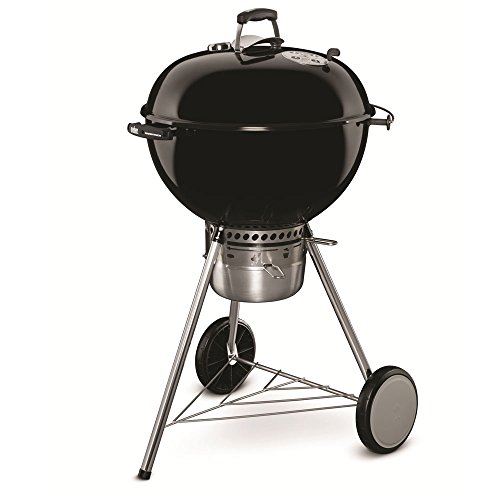
Weber Master-Touch Charcoal Grill, 22-Inch, Black — Best Kettle for Both Jobs: The porcelain-enamelled kettle that smokes by technique — a coal snake or two-zone fire — and grills as well as anything made, with the deepest parts support in the guide. — Check the current price on Amazon
How These Picks Were Chosen
Candidates were verified against the current Amazon catalogue connection, and only listings whose returned title matched the exact model were linked. Construction judgements rest on what the verified listings state — format, cooking area, damper and grate details — and on each design’s long public record in backyard use.
To qualify, a unit had to smoke credibly (a firebox or fire management system separate enough to hold low temperatures) and grill credibly (direct access to the fire for searing), with ash handling that works mid-cook. Thin single-wall novelties and unverifiable listings were excluded.
The six survivors divide by philosophy: offsets that prioritise smoking, barrels that prioritise grilling with a smoker attached, a vertical cabinet that stacks capacity upward, and a kettle that does both with technique instead of hardware.
A note on what did not qualify: several combination units with impressive headline areas were excluded because their smoking side was a shallow drawer or a token box that cannot hold a fire separate from the food. The test applied throughout was functional — can this unit hold a low, clean fire for six hours while food sits elsewhere in it? Every pick passes it; the excluded designs, whatever their badges, do not.
The 6 Best Built Charcoal Grills and Smokers

Oklahoma Joe’s Highland Offset Charcoal Smoker Grill — Best Overall
Check the current price on Amazon
The Highland is the reference point for factory offsets: a horizontal cooking chamber fed by a side firebox, so smoke and heat travel across the food while the fire itself stays accessible for tending, refuelling and direct grilling. Its 900 square inches of cooking area swallow briskets and multiple racks without crowding, and the firebox grate doubles as a small, fierce sear station.
Strengths
- Separate firebox keeps the fire tended without opening the cooking chamber and dumping heat
- Generous chamber capacity handles briskets, multiple rib racks and party batches
- Firebox doubles as a direct grill for searing and small quick cooks
Trade-offs
- Offsets ask for fire-tending every hour or so — this is a cook’s smoker, not an appliance
- Factory offsets benefit from simple sealing tweaks around doors for best smoke retention
- It is a large, heavy unit that needs a permanent patio position
| Specification | Detail |
|---|---|
| Format | Offset smoker and grill |
| Cooking area | 900 sq. in. |
Build, in an offset, means door fit and damper control. The Highland’s doors and dampers are the honest factory standard: functional, adjustable, and improvable with inexpensive gasket and latches if you chase competition-level sealing. The steel at the firebox is where seasons will show; keep ash out of it between cooks and season the interior, and it ages gracefully.
As a grill-and-smoker in one, its balance is right for most buyers: smoking is its first language, grilling a strong second. If your weekends lean toward brisket and ribs with the occasional steak seared over the firebox, this is the best-built answer in the guide.
The Highland also rewards the commonest owner upgrade path in offset cooking: a season of use, then inexpensive gasket and latch improvements once you know your unit. Its bones justify the tinkering, which is more than can be said for thinner offsets.
Highland owners cooking in wind should site the firebox intake out of the gusts: offsets breathe through that door, and a windy day is a damper lesson no manual can teach as well.
Best for: smoke-first households that also want real grilling ability / Not suited for: set-and-forget cooks who want to ignore the fire for eight hours

Char-Griller Smokin’ Pro Charcoal Grill and Offset Smoker — Best for Grill-First Smokers
Check the current price on Amazon
The Smokin’ Pro reverses the Highland’s priorities: it is a full-size barrel grill first, with a side firebox that turns it into a true offset smoker when the day calls for it. Dual dampers give control at both the fire and the chimney, the cast-iron-style barrel format sears across a wide grate, and the total cooking area — 1,130 square inches including the firebox and warming rack — is the largest in this guide.
Strengths
- Genuine offset firebox, not a smoke-in-name-only attachment
- Dual damper control at fire and exhaust for steadier temperatures
- Huge total area suits parties that mix grilling and smoking
Trade-offs
- Barrel steel needs cover discipline and prompt ash removal to stay ahead of rust
- Long cooks need the same hourly tending as any offset
- Chrome warming rack is a convenience surface, not a cooking grate
| Specification | Detail |
|---|---|
| Format | Barrel grill with side fire box |
| Total area | 1,130 sq. in. |
| Control | Dual damper control |
Char-Griller’s barrel construction is straightforward heavy-formed steel, and its longevity rules are equally straightforward: season it, cover it, empty it. The firebox attachment is the design’s strength — because the fire sits genuinely beside the chamber, smoke quality and temperature control are real, not simulated.
Choose the Smokin’ Pro if grilling is your weekly habit and smoking your monthly project. It gives up a little of the Highland’s chamber refinement and gains a grill you will use three times as often — for many households, the better-built choice is the one that fits the cooking they actually do.
Note how the Smokin’ Pro’s warming rack changes party logistics: grilled items hold above the fire while the next batch sears, which is how one grill feeds a crowd without a warming drawer or a cold side dish.
The Smokin’ Pro’s firebox grate doubles as a small direct grill for the cook’s own lunch while the chamber smokes — a tradition among offset owners that this design supports particularly well.
Best for: grill-first households adding serious smoking capacity / Not suited for: smoke purists who want a chamber designed only for low-and-slow

Royal Gourmet CC1830S Charcoal Grill and Offset Smoker — Best Value Combination
Check the current price on Amazon
The CC1830S proves the combination format does not require a premium budget. The barrel offers 783 square inches with an attached offset smoker, an adjustable-height charcoal pan that gives grillers real heat control, and working tables front and side. Its steel and fittings are built to a price — the reviews below are frank about that — but the layout is the correct one, and layout is what cheap combinations usually get wrong.
Strengths
- Correct offset layout with a real side firebox at a value tier
- Adjustable charcoal pan adds genuine temperature control for grilling
- Front and side tables make it a workable station out of the box
Trade-offs
- Thinner steel than the premium picks — seasoning and covering are mandatory, not optional
- Door fit is functional rather than tight; expect some smoke leakage
- Hardware benefits from a careful, patient assembly
| Specification | Detail |
|---|---|
| Format | Barrel charcoal grill and offset smoker |
| Area | 783 sq. in. |
| Fire control | Adjustable charcoal pan |
Judge this grill by its tier’s rules. The firebox and chamber are honestly arranged, the adjustable pan is a feature some pricier barrels lack, and the whole unit teaches both crafts — grilling with height control, smoking with a side fire — in one footprint. What the price cannot buy is steel thickness, so the ownership routine matters more here: ash out after every cook, cover always, oil the interior seasonally.
For a first combination unit, or a second property where it will cook monthly rather than weekly, that trade is rational. You learn whether offset cooking suits you on a grill that does it properly, without premium money at stake.
The adjustable charcoal pan deserves a second mention for beginners: raising the fire to sear and lowering it to finish is the most intuitive temperature control in charcoal cooking, and it forgives the fuel miscalculations every new griller makes.
On the Royal Gourmet, treat the first season as the seasoning season in both senses: cook often, keep it oiled inside, and the barrel’s interior will build the protective layer its steel wants.
Best for: first-time combination buyers and occasional smokers on a budget / Not suited for: daily grillers who need decade-grade steel

Char-Griller Barrel Pro Charcoal Grill, 785 Sq. In. — Best Barrel Build
Check the current price on Amazon
The Barrel Pro is Char-Griller’s answer to the two things barrel owners complain about: heat control and ash. Its adjustable charcoal tray raises and lowers the fire relative to the food — the simplest, most effective temperature control a grill can have — and the EasyDump ash pan slides out to empty, instead of asking you to shovel ash from a barrel interior. With 785 square inches and the barrel’s natural convection, it grills big and smokes credibly with a two-zone fire.
Strengths
- Adjustable charcoal tray gives direct, mechanical heat control
- EasyDump ash pan makes the essential longevity chore genuinely easy
- 785 sq. in. barrel suits large batches and two-zone smoking setups
Trade-offs
- Smoking is two-zone technique rather than a separate firebox — capacity for long cooks is smaller than the offsets
- Steel barrel rules apply: cover it, season it, empty it
- Its size and weight make it a fixed patio resident
| Specification | Detail |
|---|---|
| Format | Barrel charcoal grill |
| Area | 785 sq. in. |
| Features | Adjustable charcoal tray, EasyDump Ash Pan |
Construction-wise, the ash pan deserves its headline. Ash left in a barrel is the main reason barrels die young; a pan that empties in seconds means ash actually leaves after every cook, and the firebox floor survives. The adjustable tray likewise reduces the thermal abuse of the grate area by letting you lower the fire instead of letting food burn.
Pick the Barrel Pro if your smoking is ribs, chicken and the occasional shoulder done with a two-zone fire, and your grilling is frequent and large. It is the best-built pure barrel here, trading the offsets’ dedicated firebox for simplicity and control.
Barrel Pro owners should mark the ash pan as the feature to demonstrate to sceptics: after a long two-zone cook, sliding out the pan and emptying it in seconds is the moment the design’s maintenance argument becomes undeniable.
The Barrel Pro’s adjustable tray makes it the best teaching grill in this guide: a new griller can see, mechanically and immediately, what fire distance does to food.
Best for: frequent grillers who smoke with two-zone fires / Not suited for: brisket specialists who need a separate firebox for all-night cooks

Dyna-Glo Wide Body Vertical Offset Charcoal Smoker (DGO1890BDC-D) — Best Vertical Capacity
Check the current price on Amazon
The Wide Body Vertical Offset arranges its smoking capacity in a tall cabinet beside an offset firebox. Smoke and heat rise through multiple racks, so the footprint stays patio-friendly while the throughput suits batch cooking — jerky, sausages, multiple shoulders, party ribs. As a grill it works over the firebox and on the cabinet’s lower positions, but be clear-eyed: this is a smoker that can grill, the mirror image of the Smokin’ Pro.
Strengths
- Vertical cabinet gives large smoking capacity per square foot of patio
- Offset firebox keeps fire-tending outside the cooking chamber
- Multiple racks suit batch foods — jerky, sausage, ribs — exceptionally well
Trade-offs
- Grilling area is modest; this is not the pick for steak night for eight
- Vertical cabinets need door-seal attention to hold smoke over long cooks
- Temperature varies by shelf height, which is a tool once learned and a surprise before
| Specification | Detail |
|---|---|
| Format | Wide body vertical offset smoker |
| Model | DGO1890BDC-D |
The build questions for a vertical are door fit and firebox durability, and the Dyna-Glo’s wide-body format keeps both manageable: the cabinet is a straightforward steel box that seasons into a stable smoking environment, and the offset box concentrates fire wear in the smallest, most serviceable part of the unit.
Choose it when smoking volume is the point — club cooks, batch preservers, big-family gatherings — and grilling is the supporting act. On a small patio where a horizontal offset will not fit, it may be the only honest way to get this much smoking capacity.
The vertical’s shelf-to-shelf temperature gradient, once mapped with a couple of cooks, becomes a feature: delicate items ride high, robust ones low, and a full cabinet cooks in managed layers rather than in anxious uniformity.
Map the Dyna-Glo’s shelves with two cheap probe thermometers on your first long cook, and write the gradient on the inside of the cabinet door. Every vertical owner eventually does this; do it first.
Best for: batch smokers with limited patio space / Not suited for: grill-first households
Weber Master-Touch Charcoal Grill, 22-Inch, Black — Best Kettle for Both Jobs
Check the current price on Amazon
Not every grill-and-smoker needs a firebox. The Master-Touch smokes the way kettle cooks have for generations: a slow-burning snake of coals around the bowl’s edge, or a two-zone fire with a water pan, holding low temperatures for ribs, chicken and shoulders while remaining the best pure grill in this guide. Its construction — porcelain enamel over steel, One-Touch ash sweeping, a lid that seats true — is the benchmark the others are measured against.
Strengths
- Porcelain-enamelled construction with decades-proven longevity and full parts support
- Superb at grilling, and genuinely capable at smoking with snake or two-zone technique
- One-Touch ash system keeps the essential maintenance to seconds
Trade-offs
- Smoking capacity is one grate’s worth — no multi-rack batch cooking
- Long smokes need technique and occasional coal management rather than a firebox door
- No insulation, so winter smoking burns more fuel
| Specification | Detail |
|---|---|
| Size | 22-inch kettle |
| Finish | Porcelain-enamelled |
| Ash system | One-Touch cleaning system |
| Lid | Tuck-Away lid holder |
The kettle’s build case is cumulative: the enamel resists the smoke-and-grease environment, the vents give repeatable control once learned, and every wear part — grate, dampers, handles — is replaceable indefinitely. A kettle bought today is supportable for as long as you care to cook on it, which is a form of build quality no specification sheet captures.
If your smoking is a monthly rack of ribs or a shoulder, and your grilling is weekly, the Master-Touch is the rational combination: one appliance, honestly built, doing both jobs at the level most households actually need.
The Master-Touch’s smoking ceiling is worth stating precisely: a full brisket flat is beyond its comfortable span, but ribs, chicken, pork shoulder and even a trimmed brisket flat are all well within the snake method’s honest range.
Kettle smokers should know the water pan’s real job: it is a heat sink that steadies temperature and a humidity source, in that order — and in the Master-Touch’s bowl it fits without stealing the grate.
Best for: grill-first households whose smoking fits on one grate / Not suited for: high-volume smokers feeding crowds from the smoker
Comparison Table
| Pick | Badge | Key spec | Best for |
|---|---|---|---|
| Oklahoma Joe’s Highland Offset Charcoal Smoker Grill | Best Overall | Offset format, 900 sq. in. chamber | smoke-first households that also want real grilling ability |
| Char-Griller Smokin’ Pro Charcoal Grill and Offset Smoker | Best for Grill-First Smokers | Barrel grill plus true offset firebox, 1,130 sq. in. | grill-first households adding serious smoking capacity |
| Royal Gourmet CC1830S Charcoal Grill and Offset Smoker | Best Value Combination | 783 sq. in. barrel plus offset, adjustable pan | first-time combination buyers and occasional smokers on a budget |
| Char-Griller Barrel Pro Charcoal Grill, 785 Sq. In. | Best Barrel Build | Adjustable tray barrel, EasyDump ash pan, 785 sq. in. | frequent grillers who smoke with two-zone fires |
| Dyna-Glo Wide Body Vertical Offset Charcoal Smoker (DGO1890BDC-D) | Best Vertical Capacity | Vertical offset cabinet, multi-rack capacity | batch smokers with limited patio space |
| Weber Master-Touch Charcoal Grill, 22-Inch, Black | Best Kettle for Both Jobs | 22-inch enamelled kettle, snake-method smoking | grill-first households whose smoking fits on one grate |
How to Choose Between a Grill-Smoker, an Offset and a Kettle
Start with your ratio. If smoking is the main event and grilling the sideline, an offset — the Highland, or the vertical Dyna-Glo for volume — puts the fire in its own box where it can be tended for hours without disturbing the food. If grilling dominates and smoking is occasional, a barrel with a firebox (Smokin’ Pro), a barrel with two-zone technique (Barrel Pro), or a kettle (Master-Touch) will serve you better, because you will use the grill side three times as often and resent a compromise there.
Then be honest about tending. Every offset in this guide wants attention roughly hourly: a split of wood or a handful of coals, a damper nudge. Many cooks love exactly that ritual; others discover they wanted an appliance. Kettle and barrel two-zone smoking is less demanding per hour but caps your capacity and duration. There is no wrong answer — there is only the answer that matches the cook you are.
Finally, size for the smoke, not the grill. Grilling food can batch in rounds; a brisket cannot. The chamber or grate must fit your largest planned low-and-slow cook lying flat with air around it, and that measurement, checked before buying, prevents the commonest disappointment in this category.
Fire Management: The Skill That Makes the Hardware Work
Combination units reward one core skill: building a fire sized to the job. For smoking, that means a modest, steady fire — a bed of lit coals fed with small additions — rather than a roaring one choked down by dampers, which makes bitter smoke. Clean smoke is thin and nearly blue; white billows mean the fire is starving. Every design here, from offset to kettle snake, is really a machine for keeping a small fire breathing freely for hours.
For grilling, the same fireboxes invert: open the dampers, spread the coals, and let the fire run. Adjustable pans and trays — on the Royal Gourmet and the Barrel Pro — are the mechanical shortcut, moving the fire instead of waiting for it to change. Two-zone arrangement is the universal technique: fire on one side, none on the other, so everything on the grill has both a searing station and a refuge.
Fuel choice supports both jobs. Lump charcoal lights fast and burns clean for grilling; briquettes burn longer and steadier for smoking, and are the usual choice for kettle snakes and offset coal beds, with wood chunks added for smoke flavour. Keep a chimney starter as your only lighting tool and the flavours stay as clean as the fires.
Keeping a Grill-Smoker Alive: Ash, Seasoning and Seals
Combination units live a harder life than grills alone: long smokes deposit grease and moisture, and ash volumes are larger. The care routine scales accordingly. Empty ash after every cook, without exception — in an offset, the firebox ash is both a rust risk and an airflow problem for the next cook. Wipe grease from chamber floors before it pools, and keep drain paths clear.
Seasoning is the steel’s internal armour: a light coat of cooking oil on interior surfaces, heated through, polymerises into a layer that resists rust and sheds moisture. Renew it when you see bare, grey metal inside. Exterior paint or enamel chips should be touched up for the same reason — the fire line and the ash line are where these units age first.
Seals deserve a yearly check. Doors warp microscopically with heat cycles, dampers loosen, and gaskets — where fitted or added — compress. A smoker that leaked a little in year one leaks more in year five unless you adjust a latch or add a gasket strip. None of this is difficult; all of it is the difference between a combination unit that serves a decade and one that disappoints by year three.
Smoke Quality: Why Construction Decides Flavour
It is tempting to credit smoke flavour to wood choice, and wood matters — but construction decides whether that wood burns cleanly in the first place. A firebox with controllable intake, a chamber that draws evenly, and doors that do not leak randomly together produce the thin, clean smoke that flavours food gently for hours. The same wood in a leaky, starved firebox produces the thick white smoke that coats food in bitterness. When experienced cooks say a smoker ‘runs clean’, they are describing its construction as much as its operator.
This is why the offsets in this guide are judged on dampers and door fit before capacity. The Highland’s separate firebox gives the operator a clean-burning fire whose products travel across the food; the vertical Dyna-Glo’s stacked chamber uses that same clean flow across many racks. Even the kettle’s snake method is a construction story: a precisely vented bowl lets a line of briquettes burn one small, clean section at a time, for hours, without intervention.
The practical test when shopping is draw: with a small fire lit, a well-built combination unit pulls smoke steadily from fire to chimney and out. Stagnant smoke, or smoke escaping from every seam except the chimney, predicts acrid food and frustrating temperature control. Everything in this guide passes that test in its own way; the differences are in capacity, ratio and tending style, not in basic competence.
Capacity Planning: How Much Grill-Smoker Do You Actually Need?
Combination units tempt buyers to add the grill area and the smoker area and call the sum capacity. Resist it: the two numbers serve different cooks. Grilling capacity is about simultaneous pieces at searing temperature — a party metric. Smoking capacity is about the largest single item, lying flat with airflow around it — a brisket metric. A unit can be generous at one and tight at the other, and the reviews above score them separately for exactly that reason.
Work backwards from your real calendar. If the smoker runs six times a year for ribs and chicken, a barrel or kettle’s smoking capacity is not a compromise — it is the correct size, and the money saved belongs in the grill side you use weekly. If the smoker runs monthly for briskets and batch jerky, the offset or vertical’s chamber is not an indulgence; it is the tool the hobby requires, and undersizing it will annoy you for a decade.
Also count the support act: warming racks, firebox grates and side tables appear in several picks’ totals, and they are genuinely useful — for holding finished food, searing small items, and staging. Just do not let a headline area figure that includes them substitute for the chamber measurement your brisket needs.
Wood Choice for Combination Units: Chunks, Splits and Restraint
Offsets burn the most wood of any design here, and reward the real thing: small splits of seasoned hardwood, added to a coal base, give the cleanest smoke and the steadiest heat. Fruitwoods — apple, cherry — are the gentle all-rounders for pork and poultry; oak is the neutral backbone; hickory is the strong traditional note for beef and should be used with a lighter hand than enthusiasm suggests. Mesquite burns hot and assertive, and suits short grilling better than long smoking in most hands.
Barrels, kettles and the vertical use wood in smaller doses: chunks, not splits, buried in or laid on the coal bed so they smoulder steadily rather than flare. Two or three fist-sized chunks carry a kettle snake through a rib cook; the beginner’s error is doubling that and smoking the food in a white cloud for the first hour. Smoke should season the cook, not dominate its first act.
Whatever the unit, wood must be dry and seasoned. Green or damp wood is the other great source of bitter smoke, and no damper setting fixes it. Buy wood as you buy charcoal — from a source that stores it dry — and keep your own store covered and ventilated. In combination cooking, fuel quality is not an ingredient choice; it is part of the equipment.
Learning Your Unit: The First Three Cooks
Cook one should be a burn-in and a cheap, forgiving food — chicken pieces, sausages — while you learn where the unit’s thermometer disagrees with reality and how its dampers answer. Cook two should be a medium smoke, ribs or a small shoulder, where the tending rhythm is practised without a dinner party depending on it. Cook three can be the brisket. Skipping this apprenticeship is how good equipment gets blamed for a syllabus it was never allowed to teach.
Keep notes, briefly: fuel used, weather, damper positions, results. Combination cooking has too many variables for memory, and the notebook is the difference between a cook who improves monthly and one who repeats the same surprises for years. Every pitmaster’s famous consistency is, up close, a notebook and a unit they know — and the units in this guide reward that knowledge for a long time.
How to Run a Grill-Smoker for Both Jobs, Step by Step
For a smoking session: build a coal bed in the firebox (or a snake in the kettle), light a small amount in a chimney, and bring the chamber to temperature gradually with dampers open, then settle them to hold your target. Add the food only when the smoke runs thin and clean. Tend in small interventions — a little fuel, a small damper change — and wait ten minutes after each before judging it; combination units respond slowly, and chasing the thermometer is the beginner’s classic error.
For grilling: open everything, spread a full chimney of lit coals in a two-zone layout, and give the grate ten minutes to heat. Sear over the fire, finish in the indirect zone, and use the lid to tame flare-ups rather than a spray bottle, which showers ash over the food. On adjustable-pan models, raise the fire for the sear and lower it to finish — the mechanical control is faster than any damper.
Between jobs, the transition is cleaning: brush the grate hot, let the unit cool fully, empty all ash — firebox, chamber and pan — and wipe the grease. Store covered. A grill-smoker cleaned this way lights faster, tastes cleaner and lasts measurably longer, because you have removed the two things that corrode it and the residue that flavours the next cook with the last one.
Common Buying Mistakes
Buying an offset for set-and-forget cooking. Offsets need hourly tending. If you want to ignore the fire, that is a different appliance category — do not blame the offset.
Choking a big fire instead of building a small one. Starved fires make bitter smoke. Build the fire to the temperature, not above it.
Never cleaning the firebox. Ash in an offset firebox rusts the thinnest, hottest steel in the unit and strangles the next fire’s airflow.
Judging combination units by grill area alone. For smokers, chamber fit for your largest cook — a brisket lying flat — is the measurement that matters.
Skipping seasoning on steel interiors. Bare steel inside a smoker rusts. A seasoned, oiled interior is the unit’s first line of defence.
Opening the chamber to check constantly. Every look dumps the heat and smoke you spent an hour building. Trust the process and the thermometer.
Final Recommendation
For most households, the Oklahoma Joe’s Highland is the best-built combination here: a proper offset that grills honestly over its firebox. Grill-first buyers should look at the Smokin’ Pro or the Barrel Pro, budget buyers at the Royal Gourmet, batch smokers at the Dyna-Glo vertical, and technique-happy kettle loyalists at the Master-Touch — the only pick here likely to outlive its owner’s interest in replacing it.
Whichever you choose, buy the design that matches your grilling-to-smoking ratio, and commit to the ash-and-cover routine. In this category, care is the second half of build quality.
Judge your shortlist by a single imagined day: a Saturday that starts with ribs at noon and ends with steaks at seven. Walk each candidate through that day — where the fire lives at each hour, what you open, what you tend, where the finished food rests. The unit whose day flows without a moment of ‘how would I…’ is your grill-smoker, and it will usually be the one this guide ranked highest for your ratio.
Buy it, season it, and give it a full season before judging it. Combination units have learning curves measured in cooks, not hours, and the second season on any of these six is dramatically better than the first — not because the steel changes, but because the cook does.
Related guides in this series: Best Built Charcoal Grills Best Built Gas Grills Best Built Bbq Smokers Best Offset Smokers Best Charcoal Grills
Frequently Asked Questions
Can one unit really grill and smoke well?
Yes, with honest expectations. The offsets and combination barrels here smoke properly — a separate or well-managed fire — and grill properly over direct coals. What they do not do is match a dedicated smoker’s capacity or a large dedicated grill’s searing area at the same time. For most households, the combination is the right single purchase.
Offset smoker or kettle for smoking?
An offset gives you fire-tending without opening the chamber, larger capacity and a purer low-and-slow workflow, at the cost of hourly attention and patio space. A kettle smokes smaller loads with technique — a coal snake or two-zone fire — and remains the better grill. Choose by capacity and by how much tending you enjoy.
How do I keep an offset from rusting?
Empty the firebox ash after every cook, keep the interior seasoned with a light coat of cooking oil, touch up exterior paint chips, and store it covered. Ash plus moisture at the fire line is the killer; remove the ash and the steel lasts for years.
What fuel is best for a grill-smoker?
Briquettes for smoking — they burn long and steady — with wood chunks for flavour; lump charcoal for fast, hot grilling. Many combination cooks keep both and blend: a briquette base for duration, lump for heat when grilling.
Why does my smoker leak smoke around the doors?
Factory doors are fitted to a price, and heat cycles change fit over time. Small leaks are normal and mostly harmless; if temperatures are hard to hold, an inexpensive high-heat gasket strip and latch adjustment are the standard, effective fixes.
How often does an offset need tending?
Plan on checking and adjusting roughly every 45 to 60 minutes — adding a small amount of fuel, nudging a damper. That rhythm is the nature of offset cooking and the reason its results taste the way they do.
Can I cold-smoke or smoke cheese in a grill-smoker?
With care, yes: cheese and fish are smoked with the smallest possible fire — a few coals or a smoke tube — in cool weather, using the chamber as a smoke cabinet. The vertical and offset designs suit this best because the fire sits furthest from the food. Keep temperatures genuinely low and sessions short while you learn your unit.
How long does a combination grill-smoker last?
With ash discipline and a cover, the steel designs here serve for many years; the enamelled kettle is the longevity outlier, with a service life measured in decades and full parts support. Fireboxes are the wear frontier on offsets — the first place to inspect each season and the cheapest place to intervene early.
What is the best first cook on a new grill-smoker?
Chicken. It is forgiving of temperature swings, quick enough to practise a full fire cycle, and it teaches you the unit’s hot spots and smoke behaviour in one afternoon. Follow with ribs for tending practice, and save the overnight brisket for the third cook, when the dampers are familiar.
Is a grill-smoker a good gift or first big purchase for a new homeowner?
It is one of the best, provided the household’s cooking ratio is known. A kettle-based pick suits almost anyone, because grilling is universal and the smoking is a bonus they can grow into. An offset is the right gift only for someone who has already expressed the low-and-slow ambition — it is a hobby commitment as much as an appliance, and given to the right person, it is the present that gets used for a decade.


